工业机器人

Search documents
【研选行业+公司】从教育硬件到工业机器人 这家公司未来三年净利预冲15亿
第一财经· 2025-10-26 11:57
Group 1 - The article emphasizes the importance of selecting valuable research reports and understanding market trends to avoid missing investment opportunities [1] - The company has maintained a market share of 45.3% for 13 consecutive years, with an overseas growth rate of 22%, indicating strong future growth potential [1] - The company is projected to achieve a net profit of 1.5 billion in the next three years, driven by advancements from educational hardware to industrial robotics [1] Group 2 - Global capital expenditure on AI infrastructure is surging, marking the beginning of a golden decade for the PCB industry chain [1] - The Dongguan PCB cluster is identified as a key beneficiary of AI opportunities, with analysts highlighting the most promising companies in this sector [1]


智元精灵G2,工业机器人标杆还是资本的新故事?
Tai Mei Ti A P P· 2025-10-26 11:26
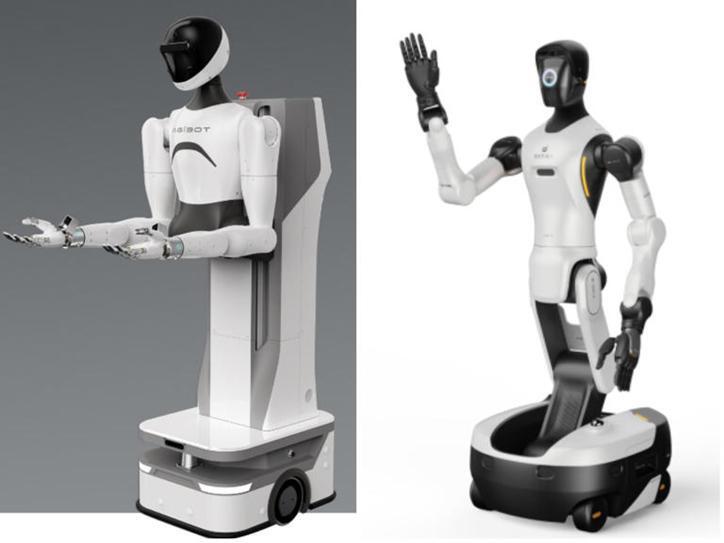
Core Viewpoint - The launch of the industrial-grade interactive embodied robot, Spirit G2, by Zhiyuan Robotics is positioned as a "global benchmark," supported by significant orders from Junsheng Group and Longqi Technology, raising questions about the authenticity of these claims and the underlying business relationships [1][7][12]. Group 1: Product Development and Features - The Spirit G2 is an upgraded version of the Spirit G1, which was initially aimed at the research and education sectors. The G1 has reportedly shipped over 1,000 units since its release in November 2023, providing a foundation for the G2's development [1][4]. - Key upgrades in the G2 include industrial adaptability, featuring the world's first cross-wrist force-controlled arm and high-precision joint torque sensors, enabling it to respond delicately to external forces. It also boasts a dual-battery hot-swappable system for 24-hour continuous operation [3][4]. - The G2 has completed over 130 extreme tests, demonstrating stable operation in various environments, including temperature ranges from -15°C to 50°C. Its capabilities were showcased through real-time demonstrations in automotive and logistics settings [4][5]. Group 2: Business Relationships and Orders - The significant orders from Junsheng Group and Longqi Technology are not merely from independent third-party clients, as both companies have close ties with Zhiyuan Robotics. Longqi became a shareholder during the B-round financing and holds a 0.7394% stake [1][7][9]. - The partnership with Junsheng Group involves both procurement and component supply, indicating a complex relationship that may not reflect purely market-driven demand [9][12]. - The orders are structured to be completed by the end of 2025, with actual deployment in early 2026, suggesting a preliminary binding based on cooperative intentions rather than immediate market needs [7][12]. Group 3: Team Dynamics and Market Perception - There have been notable departures of key personnel from Zhiyuan Robotics, including co-founders and leaders in critical areas such as design and control, raising concerns about the company's technical capabilities and project progression [5][12]. - The timing of the announcement regarding the large orders coincides with the company's need to bolster market confidence and attract further investment, especially given its recent funding rounds from major investors like Tencent and LG Electronics [12][16]. - The G2's positioning as a "benchmark" product is questioned, as its actual performance and market acceptance will require validation through extensive real-world application and data accumulation over time [16].

宁波方正(300998.SZ)与山东未来机器人达成战略合作 共同推动工业机器人领域的产业发展
Ge Long Hui A P P· 2025-10-26 08:49
Core Viewpoint - Ningbo Founder (300998.SZ) has signed a strategic cooperation agreement with Shandong Future Robotics Co., Ltd. to enhance collaboration in the industrial robotics sector, focusing on mutual benefits and long-term cooperation [1] Group 1: Strategic Cooperation Agreement - The agreement aims to establish an industrial cooperation relationship while adhering to national laws and regulations [1] - The principles of the cooperation include complementary advantages, mutual benefits, honesty, and long-term collaboration [1] Group 2: Areas of Cooperation - Component Cooperation: Focus on the research, production, and commercialization of deep-sea robot mechanical components, with a priority for collaboration under fair market conditions [1] - Technology R&D and Application Exploration: Shandong Future Robotics will provide deep-sea robot service solutions, while Ningbo Founder will leverage its advantages in intelligent manufacturing for skill training and application scenario exploration [1] - Market Development: Both parties will utilize their social and industry resources to promote the sales of deep-sea robot products in offshore wind power, deep-sea mining, underwater communication, and strategic resource development [1] Group 3: Strategic Importance - The signing of the agreement is a strategic decision by the company, considering its development strategy, overall business layout, and national industrial policies [1] - The collaboration is expected to effectively integrate the advantages of both parties, enhance the company's core competitiveness, and align with its long-term interests [1]
宁波方正:与山东未来机器人有限公司签署了《战略合作协议》
Mei Ri Jing Ji Xin Wen· 2025-10-26 08:39
Group 1 - Ningbo Fangzheng has signed a strategic cooperation agreement with Shandong Future Robot Co., Ltd to enhance industrial development in the field of industrial robots, adhering to principles of mutual benefit and long-term cooperation [1] - As of January to June 2025, the revenue composition of Ningbo Fangzheng shows that other businesses account for 70.29% while new energy structural components account for 29.71% [1] - The current market capitalization of Ningbo Fangzheng is 3.4 billion yuan [2]
宁波方正与山东未来机器人签署战略合作协议
Zhi Tong Cai Jing· 2025-10-26 08:23
Core Viewpoint - Ningbo Founder (300998.SZ) has signed a strategic cooperation agreement with Shandong Future Robot Co., Ltd. to jointly promote the development of the industrial robot sector, focusing on deep-sea robot components and applications [1] Group 1: Strategic Cooperation - The agreement establishes a strategic partnership aimed at advancing the industrial robot field [1] - Both parties will prioritize collaboration on the research, production, and commercialization of deep-sea robot mechanical components [1] Group 2: Market Development - Shandong Future Robot will preferentially choose Ningbo Founder for related component products under fair market pricing conditions [1] - The collaboration will leverage both companies' resources to promote deep-sea robot products in sectors such as offshore wind power, deep-sea mining, underwater communication, and strategic resource development [1] - Joint efforts will be made to explore application scenarios and conduct skills training for deep-sea robots [1]
杀出重围!常州这家企业冲击港股,要抢“工业具身智能机器人第一股”,毛利率碾压同行!
机器人大讲堂· 2025-10-25 13:31
Core Insights - The article discusses the rise of Weiyi Intelligent Manufacturing, a company aiming to become the first publicly listed industrial embodied intelligent robot supplier in Hong Kong, addressing key industry pain points and achieving significant revenue growth [1][3]. EIIR Growth Insights - Weiyi Intelligent Manufacturing has built a comprehensive technology chain focusing on "hands, eyes, brain, and cloud" to facilitate rapid digital transformation in industrial enterprises [3]. - The company was established in 2018 and initially operated as an "industrial AI technology equipment solution integrator," entering the defect detection market with AI and robotic arms [5]. - In December 2022, the company made a pivotal acquisition of Jiangsu Zhiyun Tiangong, enhancing its algorithm and platform development capabilities [5]. - The leadership change brought by Zhang Zhiqi, a former executive from Baidu and Alibaba, led to a product-centric transformation, resulting in a profitable turnaround in 2024 [5][6]. Financial Performance - Revenue increased from 221 million yuan in 2022 to 600 million yuan in 2024, reflecting a compound annual growth rate (CAGR) of 64.7% [6]. - In the first half of 2025, revenue surged by 187% year-on-year, reaching 412 million yuan [6]. - The EIIR product line became the main revenue driver, with its contribution to total revenue rising from 15.3% in 2022 to 53.6% in the first half of 2025 [7]. Market Position and Recognition - Weiyi Intelligent Manufacturing is recognized as the largest supplier of industrial embodied intelligent robots in China, holding the top market share in 2024 [9]. - The company addresses critical industry challenges, such as flexibility and high deployment costs associated with traditional robotic arms, by offering adaptable and cost-effective EIIR solutions [10][11]. Technological Advancements - The EIIR products are designed to operate without complex programming, allowing for quick deployment and adaptability across various tasks and industries [14][16]. - The company's technology framework integrates cloud, edge, and terminal systems, enabling enhanced flexibility and efficiency in manufacturing processes [16]. Global Expansion Strategy - Weiyi Intelligent Manufacturing plans to expand internationally, targeting major manufacturing markets in the U.S. and Europe starting in 2025 [19]. - The company aims to establish a localized overseas sales and service network, enhancing its global business footprint [22]. Conclusion - The rise of Weiyi Intelligent Manufacturing signifies a transformative shift in the industrial robotics sector, moving from traditional automation to intelligent solutions [23].

帮主郑重:超千家三季报扎堆出,别光看涨跌,这3个信号才定生死
Sou Hu Cai Jing· 2025-10-25 08:48
Core Insights - The overall performance of companies in the third quarter is mixed, with some showing stable growth while others are struggling with inventory issues and slower sales [3][4] Industry Analysis - In the high-end manufacturing sector, particularly in industrial robotics, companies reported revenue growth of 15%-20% and a 2% increase in gross margins, indicating strong demand [3] - The renewable energy sector shows significant divergence, with solar component companies experiencing profit declines of 10%-15% due to weak overseas demand, while energy storage inverter companies saw profits surge by over 40% driven by demand in Europe and Southeast Asia [4] - The semiconductor industry is showing signs of recovery, with orders for upstream equipment companies increasing by 12% quarter-over-quarter, while some consumer electronics companies are beginning to reduce inventory levels [4] - In the consumer sector, essential goods like grains and oils maintain stable revenue growth around 5%, while discretionary items like home appliances are experiencing a mixed recovery, with high-end models performing well but mid-range products lagging [4] Financial Metrics - Companies should focus on three key metrics when evaluating quarterly reports: trends over multiple quarters, cash flow, and industry position [5] - A company showing a trend of revenue and profit growth over several quarters is more reliable than one with a single strong quarter but declining performance in previous periods [5] - Negative cash flow despite profit increases indicates potential issues, as it suggests reliance on accounts receivable rather than actual cash generation [5] - Companies gaining market share even in a declining industry are likely to outperform their peers in the long run [5] Investment Strategy - A three-pronged strategy for long-term investment includes: eliminating companies with consecutive declines in revenue and profit along with worsening cash flow, identifying companies in a recovery phase with decreasing inventory and improving gross margins, and avoiding companies that rely on one-time gains from asset sales or government subsidies [6] - An example of a company that is managing inventory effectively is a white liquor company, which, despite slow revenue growth, reduced inventory by 10% and improved sales velocity, indicating a positive trend [6]

差距这么大?美国前8个月出口额13148亿美元,中国出口额让人意外
Sou Hu Cai Jing· 2025-10-25 02:49
Core Insights - The export performance of the United States has significantly declined, with a total export value of $1.314868 trillion in the first eight months of 2025, showing a drop from a positive growth of 6.4% in Q1 to a negative growth of -7.7% in Q2, and further declining to an average of -14.1% in July and August [1][3][5] - In contrast, China's export value reached $2.31 trillion in the same period, maintaining a stable growth rate of 4.6%, showcasing resilience against global demand contraction [5][8] US Export Performance - In the first quarter, the US exports totaled $238.936 billion, with a year-on-year growth of 6.4%, driven by a high growth rate of 12.4% in January [3] - The second quarter saw a total export of $531.532 billion, with a negative growth of -7.7%, marking the first instance of negative growth [3] - The decline continued into July and August, with an average export growth rate of -14.1%, indicating a consistent downward trend over five months [5][8] Factors Affecting US Exports - The introduction of new tariff policies in April 2025 has significantly impacted US exports, particularly in agricultural products, which saw a 51.8% decrease in exports to China [10][12] - Energy products, while still showing a 3.2% growth, have seen a substantial decline from the previous year's growth of 10.2% [13] - The reliance on traditional export categories such as agriculture and energy has exposed the US to vulnerabilities in international market fluctuations and trade policies [30] China Export Performance - China's exports are bolstered by machinery and electronics, which accounted for 60.2% of total exports, with a growth rate of 9.2% in the first eight months [23] - Notable growth was observed in specific categories such as integrated circuits (23.3% growth) and automobiles (11.9% growth), contributing to the overall increase in machinery and electronics exports [23] - The home appliance sector has also shown strong performance, with a 14.7% increase in exports, supported by global demand for appliance upgrades and increased brand recognition [25] Emerging Trends in China - New categories related to advanced manufacturing have demonstrated impressive growth, with industrial robots and wind power equipment exports increasing by 54.9% and 23.9%, respectively [27] - Labor-intensive products have shown signs of recovery, with reduced export declines in textiles, plastics, and furniture, indicating a stabilization in these sectors [27] Comparative Analysis - The structural differences in exports between the US and China highlight the US's reliance on traditional sectors, while China is successfully transitioning towards high-tech and high-value-added products [30][32] - China's diversified export markets, including ASEAN, Africa, and Latin America, provide a buffer against fluctuations in demand from traditional markets, unlike the US, which is heavily dependent on a few key markets [34] Conclusion - The stark contrast in export performance between the US and China in the first eight months of 2025 is attributed to various factors, including export structure, trade partner diversification, and responses to external pressures [36][38] - The ongoing trade dynamics between the two nations underscore the importance of stable bilateral trade relations for mutual benefit in the global market [40]

将创新势能转化为产业动能
Jing Ji Ri Bao· 2025-10-24 22:09
Core Insights - China's manufacturing sector is increasingly transforming innovation potential into industrial momentum, with manufacturing value added accounting for nearly 30% of the global total and maintaining the world's largest scale for 15 consecutive years [1][2] Group 1: Manufacturing Sector - The manufacturing value added in China has exceeded 30 trillion yuan annually since the 14th Five-Year Plan, indicating a strong foundation for the real economy [1] - China's manufacturing capabilities are improving, with a significant reduction in the number of products that cannot be manufactured domestically [1] Group 2: Technological Innovation - The new round of technological revolution and industrial transformation is deeply developing, with technology innovation being the core driving force for industrial upgrading [2] - The integration of technological and industrial innovation is accelerating, supported by a restructured technology management system during the 14th Five-Year Plan period [2] Group 3: Future Outlook - The path of new-type industrialization presents opportunities but also challenges, including key technology breakthroughs and optimization of industrial structure [2] - Artificial intelligence has become a critical area in global technological competition, essential for empowering various industries and achieving new-type industrialization [2]
从车间到供应链,谁在让工业大模型真正落地?【502线上同行】
虎嗅APP· 2025-10-24 09:53
Core Viewpoint - The article emphasizes that industrial large models are becoming a key driving force for digitalization in the manufacturing industry, transitioning from algorithm innovation to scenario creation [6]. Group 1: Industrial Applications - The article highlights the most advanced industrial intelligence practices, showcasing real-world experiences from "lighthouse factories" and embodied intelligent robots, covering the entire application chain from workshop scheduling to supply chain collaboration [8]. - It discusses the application of AI in manufacturing, focusing on the return on investment (ROI) and ecological collaboration, bringing together perspectives from technology experts, industry leaders, and investment capital [9]. Group 2: Event Agenda - The agenda includes a theme sharing session where experts will discuss how embodied intelligent robots can evolve from specialized to general-purpose through large models, focusing on human-machine collaboration and smart assembly line practices [11]. - Another session will feature Midea Group sharing its experiences in AI scheduling, inventory forecasting, and supplier collaboration, illustrating how large models can achieve a closed-loop supply chain from single-point optimization [12]. - A roundtable discussion will address the critical points and future of large models in manufacturing, including how to transition models from laboratories to workshops and how to quantify ROI [14][15]. Group 3: Key Insights and Participants - The event aims to provide insights into the landing routes and future evolution of industrial large models over the next five years, offering real case studies from production workshops to supply chains [16]. - Participants include executives from manufacturing companies, AI technology firms, industrial software and automation solution providers, and investment institution researchers, indicating a diverse audience focused on industrial AI [17].