
生物技术

Search documents
靖因药业闯关港交所IPO 暂未产生收入 两年合计亏损6.5亿元
Zhong Guo Neng Yuan Wang· 2025-10-05 01:50
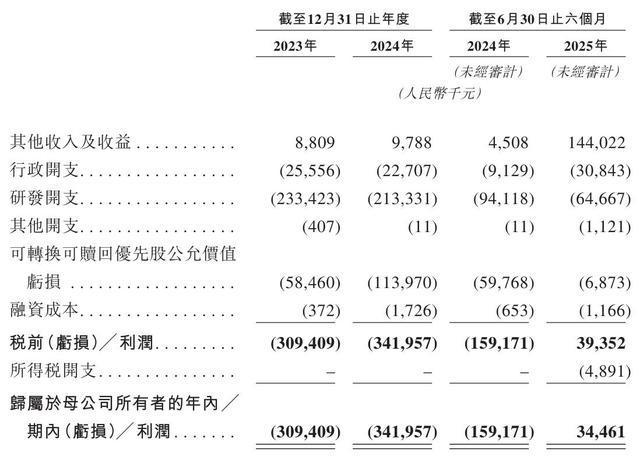
Core Viewpoint - Sirius Therapeutics has submitted its prospectus for an IPO on the Hong Kong Stock Exchange, aiming to raise funds for the development of its core products and pipeline projects in the cardiovascular disease sector [1]. Group 1: Company Overview - Sirius Therapeutics was founded in 2021 by OrbiMed Entities and Creacion Ventures, focusing on innovative nucleic acid therapies [1]. - The company has not generated any revenue or sales costs to date [1]. Group 2: Financial Performance - The company reported losses of RMB 309 million and RMB 342 million for 2023 and 2024, respectively [2]. - In the first half of 2025, Sirius Therapeutics achieved a profit of RMB 34.46 million, compared to a loss of RMB 159 million in the same period the previous year, primarily due to non-recurring gains from its collaboration with CRISPR [1][2]. Group 3: Funding and Valuation - In April 2025, Sirius Therapeutics entered into a B2 round share purchase agreement, raising approximately USD 47.5 million, resulting in a valuation of USD 253 million [3]. - OrbiMed Entities is the controlling shareholder, with significant stakes held by OrbiMed Asia, OrbiMed U.S., and Creacion Ventures [3].

央行“印钞机”下的资产保卫战:你的钱该“藏”在哪里才安全?
Sou Hu Cai Jing· 2025-10-04 08:17
Core Viewpoint - The central theme highlights the impact of excessive money printing by central banks, leading to the dilution of purchasing power and the necessity for individuals to rethink asset allocation to combat currency devaluation [1][3]. Group 1: Logic of Currency Overproduction - The primary goal of central banks' money printing is to stimulate economic growth and maintain market liquidity, but the newly created money does not distribute evenly across society [3][4]. Group 2: Strategies Against Devaluation - To outperform currency devaluation, investment portfolios must meet two criteria: scarcity and growth potential [5]. Scarcity Anchors - Asset price inflation occurs as new funds preferentially flow into financial markets and quality assets, driving up prices of stocks, real estate, and gold [7]. - Gold serves as a historical defense against fiat currency devaluation due to its limited supply and independence from government credit [7]. - Quality real estate in core cities retains value due to land scarcity, acting as a stabilizing asset for ordinary families amidst currency overproduction [7]. Embracing Growth - Investment in technology and innovation-driven companies, such as those in AI, biotechnology, and renewable energy, can yield excess profits that counteract currency devaluation [7]. - Core asset index funds, like the Nasdaq 100, allow indirect investment in high-growth companies, benefiting from their premium valuations [7]. Group 3: Strategies for Ordinary Individuals - Responding to central bank actions requires discipline rather than speculation [9]. - Transitioning from cash holders to owners of quality assets is essential, as central banks redistribute rather than create wealth [10]. - Implementing a disciplined dollar-cost averaging strategy can help mitigate the effects of market volatility and ensure consistent investment in quality assets [10]. - Global diversification of assets can reduce risks associated with single currency devaluation by investing in overseas markets or global bond funds [10]. - Investing in personal skills and knowledge remains the most reliable form of "hard currency," as it is least affected by currency devaluation [10].
White Mountains Insurance, Rumble, Mesoblast And Other Big Stocks Moving Higher On Friday - Diginex (NASDAQ:DGNX), Cipher Mining (NASDAQ:CIFR)
Benzinga· 2025-10-03 14:36
Group 1 - U.S. stocks experienced an upward trend, with the Dow Jones index increasing by over 350 points on Friday [1] - White Mountains Insurance Group announced plans to sell a controlling interest in its technology-driven homeowners' insurance distribution platform, Bamboo, to CVC Capital Partners, leading to a significant rise in its stock price [1][2] - The deal values Bamboo at $1.75 billion, and the company specializes in data-enabled underwriting and distribution for the residential property market in California and Texas [2] Group 2 - White Mountains Insurance Group shares surged by 9.2%, reaching $1,817.83 on Friday following the announcement of the Bamboo deal [2] - Other notable stock gains included Anbio Biotechnology, which rose by 69.6% to $43.07, and Lithium Americas Corp., which increased by 29.1% to $8.85 [4] - USA Rare Earth, Inc. shares climbed 21.4% to $27.56 amid reports of discussions with the White House [4]




深夜,中概股大爆发!美联储,降息大消息!
Sou Hu Cai Jing· 2025-10-02 14:46
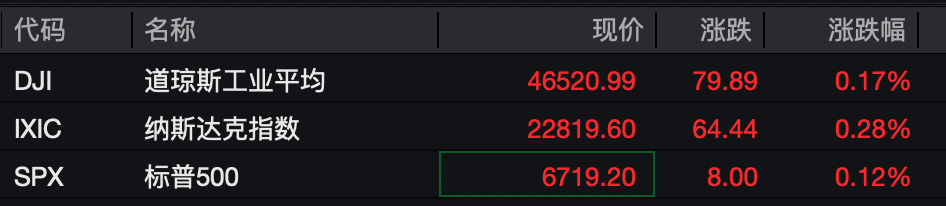
Market Overview - US stock markets experienced a broad rally on October 2, with the Dow Jones Industrial Average, Nasdaq, and S&P 500 all showing positive gains [1] - The Dow Jones Industrial Average rose by 79.89 points, or 0.17%, closing at 46,520.99 [2] - The Nasdaq index increased by 64.44 points, or 0.28%, reaching 22,819.60 [2] - The S&P 500 saw a rise of 8.00 points, or 0.12%, ending at 6,719.20 [2] Chinese Stocks Performance - Chinese concept stocks surged, with indices such as the Wind Chinese Technology Leaders Index and Nasdaq China Golden Dragon Index rising over 2% [2] - The Wind Chinese Technology Leaders Index increased by 128.76 points, or 2.58%, to 5,127.37 [3] - The Nasdaq China Golden Dragon Index rose by 177.82 points, or 2.03%, to 8,937.52 [3] - The Wind Chinese Stocks 100 Index gained 95.60 points, or 2.75%, reaching 3,566.03 [3] Sector Performance - Key sectors leading the gains included Chinese pharmaceuticals, biotechnology, and cloud computing [3] - The Chinese Pharmaceutical Index rose by 4.81% to 8,673.05 [4] - The Chinese Biotechnology Index increased by 4.30% to 33,719.73 [4] - The Chinese Cloud Computing Index saw a rise of 3.70% to 85,721.67 [4] Individual Stock Movements - Notable individual stock performances included Baidu Group, which rose by 4.66% to 143.84, and Alibaba, which increased by 4.35% to 190.74 [5] - Other significant gainers included NetEase, up 2.47% to 153.72, and Pinduoduo, which rose by 1.42% to 136.31 [5] Cryptocurrency Market - The cryptocurrency market experienced significant gains, with Bitcoin surpassing $119,000 and Ethereum exceeding $4,400 [6] - Notable stock movements in the cryptocurrency sector included Canaan Inc., which surged over 28%, and GD CULTURE, which rose over 11% [6] Precious Metals - Gold and silver continued their strong performance, with spot gold and silver rising by 0.47% and 0.46%, respectively [7] - Spot silver briefly surpassed $48 per ounce, marking a new high since May 2011 [7] Economic Indicators - The delay in the release of initial jobless claims data due to the US government shutdown has heightened market anticipation regarding Federal Reserve policy decisions [7] - Analysts suggest that the government shutdown may reinforce expectations for a rate cut by the Federal Reserve in October [8] - Current probabilities for a rate cut have risen to 100%, with a 99% chance of a 25 basis point cut [8] Investor Sentiment - Recent surveys indicate a significant increase in investor interest in Chinese stocks, with over 90% of US investors expressing plans to increase their exposure [8] - European investor confidence in the Chinese stock market has also shown a notable rebound, with nearly 70% of investors in Paris and close to 100% in London expecting a continued rebound in Chinese stocks [8]
传化集团与萧山区人民政府签订战略合作协议
Zheng Quan Shi Bao Wang· 2025-10-01 06:16
Core Insights - The strategic cooperation agreement between Transfar Group and the Xiaoshan District People's Government aims to promote deep integration of technological and industrial innovation through the "2+3+X" advanced manufacturing system [1] - The initiative focuses on developing industrial clusters in chemical engineering, biotechnology, and intelligent technology, enhancing the development capabilities of Transfar Science City [1] - The project includes the construction of a major innovation platform for "pilot testing-industrialization" and aims to establish Xiaoshan as a world-class hub for biotechnology and intelligent technology [1] - Additionally, the collaboration will support the construction of the "Five Good and Two Suitable" model village in Xiejing'an, contributing to common prosperity and rural revitalization [1]

《2025年全球创新指数报告》发布,中国首次跻身全球前十——中国创新向世界展现新图景
Ren Min Ri Bao· 2025-10-01 01:53
Group 1: Global Innovation Index and Rankings - China has improved its ranking to 10th in the 2025 Global Innovation Index, marking its first entry into the top ten and leading among 36 upper-middle-income economies, having risen 25 places since 2013 [1] - In terms of innovation input, China ranks 19th globally, up 4 places from the previous year, while its innovation output ranks 5th, an increase of 2 places [3] Group 2: Investment in R&D - In 2024, China's total R&D expenditure exceeded 3.6 trillion yuan, reflecting an 8.3% increase from the previous year, with a steady rise in R&D investment intensity and rapid growth in basic research funding [2] - China has the largest R&D workforce globally, with 26 of the world's top 100 technology innovation clusters, and over 460,000 high-tech enterprises [2] Group 3: Innovation Output and Intellectual Property - China ranks first globally in several intellectual property metrics, including design patent applications per unit of GDP, utility model patent applications, and trademark applications [2] - The efficiency of technology transfer has significantly improved, with the development cycle for consumer products like drones and mobile cameras reduced from years to months or even weeks [3] Group 4: AI and International Cooperation - China is actively promoting AI technology and has launched initiatives like the "AI+" international cooperation initiative to enhance collaboration and benefit various sectors globally [4][5] - The "Artificial Intelligence Global Governance Action Plan" aims to promote inclusive and equitable development of AI through effective international cooperation [5] Group 5: Advancements in Key Technologies - China is making significant strides in core technologies, particularly in AI, with over 1,500 large models developed, many of which are open-source and competitive with international standards [7] - The biotechnology sector in China is experiencing a structural transformation, with over 1,250 innovative drugs in the R&D phase, meeting advanced global standards [7] Group 6: Recommendations for Enhancing Innovation - Experts suggest breaking down disciplinary boundaries to foster collaboration between natural sciences, engineering, and social sciences, enhancing the integration of technology with social ethics and cultural contexts [9] - Recommendations include strengthening the innovation ecosystem, increasing investment in basic research, and establishing a unified framework for AI technology assessment and governance [10]
港股收评:恒科指大涨2.24%,半导体、苹果概念强势,三桶油全天低迷
Ge Long Hui· 2025-09-30 08:29
Market Performance - The Hong Kong stock market indices experienced significant gains, with the Hang Seng Tech Index rising by 2.24%, reaching a new high for the period [1] - In September, the Hang Seng Tech Index accumulated a nearly 14% increase, while the Hang Seng Index and the National Enterprises Index rose by 7.09% and 6.79%, respectively [1][2] Sector Highlights - Major technology stocks saw collective gains, with Kuaishou leading with a rise of over 7%, followed by Alibaba and NetEase with increases of 2% [2][4] - Semiconductor stocks remained strong, with Huahong Semiconductor surging nearly 11% to set a new high [2][8] - Apple-related stocks also saw gains as Apple reportedly notified its supply chain to increase production capacity [2][9] Gold and Copper Stocks - Gold stocks rallied, with Zijin Mining International soaring over 68%, and other gold-related companies also showing strong performance [6] - Copper stocks followed suit, with China Molybdenum rising by 11.84% and Jiangxi Copper gaining over 8% [7] Biopharmaceutical Sector - The biopharmaceutical sector showed positive movement, with WuXi AppTec increasing by over 8% and other companies like Zai Lab and BeiGene also experiencing gains [12][13] Airline Industry - Airline stocks generally rose, with China Eastern Airlines up by 6.73% and both China Southern Airlines and Air China increasing by over 4% [11] - Citic Securities noted strong demand for air travel during the upcoming holidays, suggesting potential for positive performance in the sector [11] Oil and Gas Sector - Oil stocks collectively declined, with China Petroleum falling by 2.75% and other major oil companies also experiencing losses [14] - Reports indicated that OPEC+ plans to increase oil production in November, contributing to the downward pressure on oil prices [14] Gaming and Telecom Stocks - Casino and gaming stocks mostly fell, with Sands China down by 2.25% and other major gaming companies following suit [15] - Telecom stocks also saw declines, with China Telecom and China Mobile both experiencing slight drops [17] Capital Inflows - Southbound capital saw a net inflow of HKD 15.48 billion, indicating strong investor interest in the Hong Kong market [19] Future Outlook - Everbright Securities highlighted the strong overall profitability of Hong Kong stocks, particularly in sectors like internet, new consumption, and innovative pharmaceuticals, suggesting that despite recent gains, valuations remain low and long-term investment potential is high [19]




法国生物技术公司瓦尔内欧股股价上涨6.7%
Mei Ri Jing Ji Xin Wen· 2025-09-30 07:29
每经AI快讯,9月30日,法国生物技术公司瓦尔内欧股股价上涨6.7%,创8月底以来最大单日涨幅。 ...
上市公司 Applied DNA Sciences 拟私募最高 5800 万美元以启动 BNB...
Xin Lang Cai Jing· 2025-09-30 03:22
Core Viewpoint - Applied DNA Sciences has announced a PIPE investment commitment of up to $58 million to initiate a digital asset financial strategy based on BNB [1] Group 1: Investment Details - The company has secured $27 million in subscriptions, which includes cash, stablecoins, and OBNB trust units [1] - There is potential to raise an additional $31 million through warrants [1] - The transaction is expected to be completed by October 1, 2025 [1] Group 2: Strategic Partnerships - The company has signed a five-year strategic services agreement with Cypress LLC for the full management of BNB reserves [1]

AI不再是“唯一宠儿”?华尔街大佬正关注股市这些领域
Feng Huang Wang· 2025-09-30 03:14
Group 1 - Major global investors are focusing on long-term government spending to address geopolitical, technological, and demographic pressures, with investments in infrastructure, energy transition, healthcare, and defense [1][2] - UBS Chief Investment Officer Mark Haefele highlights that many investors have underestimated the impact of fiscal stimulus on real and financial assets due to concerns over rising fiscal debt in some countries [1][2] - Asset management firms are diversifying their investments in sectors such as electricity, resources, healthcare, and defense, following government actions [1][2] Group 2 - The U.S. July tax cuts and spending bill extends previous tax policies and increases funding for border security and defense, contributing to a multi-trillion dollar increase in government debt [2] - European fiscal support, including Germany's €500 billion infrastructure fund and NATO members' commitment to raise defense spending to 3.5% of GDP, has garnered attention from Wall Street [2] - Generali Asset Management's Antonio Cavarero notes that the scale and durability of these fiscal commitments are unprecedented compared to previous market cycles, leading to structural adjustments over several years [2][3] Group 3 - Cavarero emphasizes that sectors like nuclear power, energy infrastructure, biotechnology innovation, and defense are critical and cannot be ignored by the market [3] - The S&P 500 index has risen nearly 14% this year, primarily driven by AI-related momentum, while the European Stoxx 600 index has seen a more modest increase of 9.5% [3] - The European aerospace and defense stock index has surged nearly 68%, indicating a rising importance of defense and industrial sectors amid a broader market dominated by AI [3] Group 4 - Nuveen's Chief Investment Officer Saira Malik anticipates that market gains will expand from tech stocks to cyclical stocks, small-cap stocks, and value stocks [3][4] - Malik advises investors to maintain a balanced portfolio with a slight preference for U.S. markets, while also identifying opportunities in infrastructure, utilities, and waste management as effective inflation hedges [4] - Both UBS and Nuveen emphasize the importance of active management over passive strategies in the current investment climate [4]