投资银行

Search documents
瑞银:香港IPO集资额明年有望超3000亿港元 外资继续回流
2 1 Shi Ji Jing Ji Bao Dao· 2025-12-11 12:07
Core Viewpoint - UBS predicts that Hong Kong will see over 150 to 200 new IPOs in 2026, raising a total of over 300 billion HKD, maintaining its position as the global leader in IPO fundraising [1] Group 1: IPO Market Outlook - The expected increase in IPOs will provide a richer selection of investment opportunities, enhancing market activity and attracting more capital and attention [1] - UBS anticipates that there may be super-sized IPOs exceeding 40 billion HKD in 2026, with several projects over 10 billion HKD expected in the first quarter, primarily in specialized technology and consumer sectors [2] - Over 300 companies have already submitted listing applications, and regulatory bodies are emphasizing the importance of maintaining overall listing quality amid the anticipated surge in IPO projects [2] Group 2: Market Drivers - Continuous foreign investment in the Chinese stock market is bringing new capital to Hong Kong, supported by the Federal Reserve's interest rate cuts [1] - The ongoing recovery of the mainland economy is also contributing to the rebound of the stock market [1] - Current valuations of Hong Kong tech stocks remain significantly discounted compared to US counterparts, presenting clear attractiveness [1]

企业如今才开始统计美国政府停摆造成的影响
Xin Lang Cai Jing· 2025-12-11 12:02
Core Insights - The longest government shutdown in U.S. history, lasting 43 days, has ended, but its consequences are just beginning to manifest in domestic and international businesses [1] - Companies closely tied to federal government spending, contracts, and regulatory approvals are assessing the impact on their revenues and profits, with warnings ranging from cautious to downward revisions of earnings guidance [1] Group 1: Impact on Specific Companies - Clearfield, a manufacturer of fiber and telecom products, reported that the entire industry's fiber supply is constrained, and delays in the $42.5 billion Broadband Equity, Access, and Deployment (BEAD) program approvals have created uncertainty in the community broadband market [1] - Spectrum AI, which applies AI tools in medical diagnostics, has lowered its revenue guidance due to anticipated reductions in contract-related work with the Biomedical Advanced Research and Development Authority as a result of the shutdown [6] - Kejie, a molecular diagnostics company, stated that the shutdown has negatively impacted sales, exacerbating funding constraints in the academic and research sectors [7] Group 2: Broader Industry Effects - The advertising agency WPP, listed in London, significantly lowered its earnings guidance due to a decline in revenue from its government public relations services, which led to a drop in its stock price [3] - Hilton Foods, a meat and fish packaging company, issued a profit warning stating that its Greek smoked salmon factory would not restart production this year due to U.S. freight regulatory restrictions not being lifted in time [8] - DiamondRock Hospitality and Red Robin Gourmet Burgers attributed reduced customer traffic and low consumer sentiment to the government shutdown, leading DiamondRock to lower its fourth-quarter earnings expectations [9] Group 3: Capital Market Implications - UBS identified the government shutdown as a potential negative factor for initial public offerings (IPOs), indicating that delays in the IPO schedule could impact equity capital market revenues [9] - Unilever postponed the spin-off of its Magnum ice cream business due to the U.S. Securities and Exchange Commission's inability to timely declare the necessary registration statement effective for its stock listing [9] - The overall economic impact of the shutdown is significant, with some companies or industries experiencing far greater negative effects than average, although the duration of these impacts remains uncertain [3][10]
中国经济增长前景连获国际“信任票”
Zhong Guo Xin Wen Wang· 2025-12-11 09:43
Group 1 - Multiple authoritative institutions have raised their economic growth forecasts for China for the next two years, indicating optimism about the economic outlook [1] - The World Bank has increased its 2025 growth forecast for China by 0.4 percentage points, attributing this to more proactive fiscal policies and moderately loose monetary policies supporting domestic consumption and investment [1] - The International Monetary Fund (IMF) has also raised its 2025 growth forecast for China to 5%, up by 0.2 percentage points, citing effective macroeconomic stimulus measures and lower-than-expected tariffs on exports [1] Group 2 - Goldman Sachs projects that China's export volume will grow by 5% to 6% annually in the coming years, contributing to overall economic expansion [2] - Deutsche Bank reports that major projects under the "14th Five-Year Plan" will provide strong support for infrastructure investment, with a rebound in investment growth contributing to GDP in 2026 [2] - Morgan Stanley's chief economist for China notes that timely policy adjustments have boosted market confidence and increased foreign interest in Chinese assets, predicting a steady accumulation trend in foreign investments in Chinese stocks by 2026 [2] Group 3 - China's macroeconomic data has shown a recovery this year, with GDP growth of 5.2% year-on-year in the first three quarters, ranking among the top in major economies [3] - China's foreign trade has maintained growth for ten consecutive months, supported by proactive measures in response to external pressures [3] - Investment in high-tech sectors has been growing rapidly, with significant expansions in new energy, new materials, and artificial intelligence, contributing to stable economic performance [3] Group 4 - The World Bank emphasizes that future economic growth in China will increasingly rely on domestic demand, necessitating structural reforms in the social security system and creating a more predictable business environment [4] - The IMF highlights the need for China to transition to a consumption-driven growth model and suggests more robust policy measures to support this transition [4] - The upcoming Central Economic Work Conference will serve as an important indicator of China's economic policy direction for the coming year, particularly in navigating complex domestic and international challenges [4]
黄金明年4900?高盛:美国私人投资仓位“严重不足”,配置每增1个基点金价将涨1.4%
Hua Er Jie Jian Wen· 2025-12-11 07:40
高盛认为,美国私人投资组合中的黄金配置处于历史低位,为金价在未来一年半内冲击每盎司4900美元的目标创造了巨大空间。 据追风交易台,高盛分析师Lina Thomas和Daan Struyven在最新报告中指出,美国黄金ETF目前仅占私人非现金金融投资组合的 0.17%,较2012年峰值水平低约6个基点。这一配置比例远低于花旗、瑞银、桥水等机构建议的中高个位数百分比配置。 高盛估算,美国金融投资组合中黄金份额每增加1个基点——由增量投资者购买而非价格上涨驱动——将推动金价上涨约1.4%。分 析师表示,如果多元化资金流动从央行扩展至私人投资者,其4900美元的金价目标面临"显著上行风险"。 截至目前,现货黄金报4213.2美元/盎司,日内跌0.36%,本周呈现反弹趋势。 根据13F文件数据,在管理超过1亿美元资产的美国大型机构投资者中,不到一半持有任何黄金ETF敞口。即使在持有黄金的机构 中,配置比例通常也仅为0.1%至0.5%。 据2025年第三季度13F文件数据,美国机构投资者的黄金参与率为46%,高于2020年学术研究中约30%的水平。在有黄金敞口的机构 中,等权重平均配置为1.7%,而价值加权平均配置为0 ...


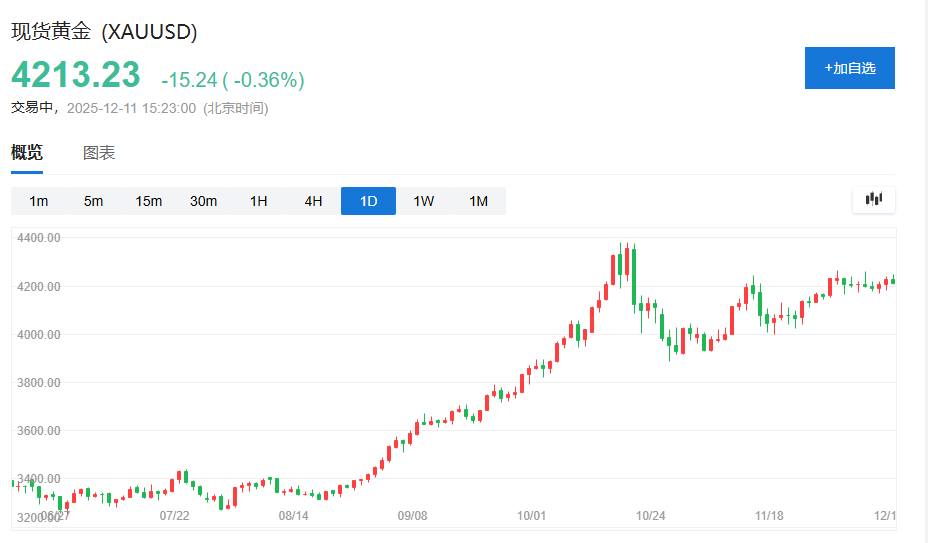
现货黄金日内小幅下跌!高盛预计4,900美元的金价预期有上调空间 ETF资金流入将是推动力
Xin Lang Cai Jing· 2025-12-11 07:40
高盛集团表示,如果美国私人投资者将资金部署到黄金交易所交易基金(ETF)中,那么到2026年底金 价达到每盎司4,900美元的预期有很大上调空间。黄金ETF在私人金融投资组合中的占比仅为0.17%。 分析师认为黄金ETF是衡量美国市场黄金敞口的最通用工具。目前的黄金敞口仍低于2012年峰值,"当 前黄金持仓仍然很低"。高盛估计,美国金融投资组合中黄金占比每增加一个基点,金价就会上涨 1.4%。这是基于新增购买的影响,而不是现有持仓的价格上涨。 报告指出,"长期资本配置者正在考虑增加黄金配置,将其作为战略性投资组合多元化工具。即使从全 球债券和股票投资组合中抽出资金适度重新配置黄金,也可能大幅推高规模相对较小黄金市场的价 格"。 据高盛对13F文件的分析,美国最大的投资者中,持有黄金ETF的不到一半。 新浪合作大平台期货开户 安全快捷有保障 新浪合作大平台期货开户 安全快捷有保障 热点栏目 自选股 数据中心 行情中心 资金流向 模拟交易 客户端 高盛集团表示,如果美国私人投资者将资金部署到黄金交易所交易基金(ETF)中,那么到2026年底金 价达到每盎司4,900美元的预期有很大上调空间。黄金ETF在私人金融投 ...
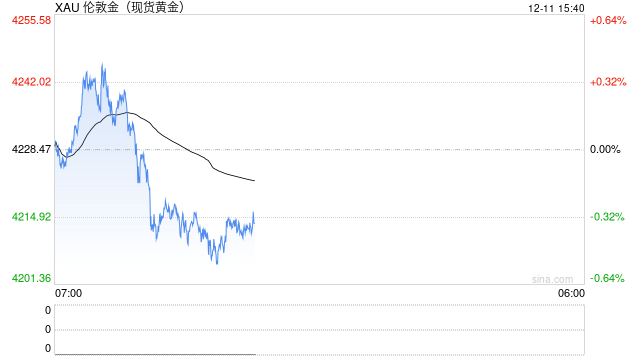
高盛预计4,900美元的金价预期有上调空间 ETF资金流入将是推动力
Xin Lang Cai Jing· 2025-12-11 06:45
高盛集团在一封电邮公告中表示,如果美国私人投资者将资金部署到黄金交易所交易基金(ETF)中, 那么到2026年底金价达到每盎司4,900美元的预期有很大上调空间。 分析师Lina Thomas和Daan Struyven称,黄金ETF在私人金融投资组合中的占比仅为0.17%。分析师认为 黄金ETF是衡量美国市场黄金敞口的最通用工具。 分析师表示,目前的黄金敞口仍低于2012年峰值,"当前黄金持仓仍然很低"。 高盛估计,美国金融投资组合中黄金占比每增加一个基点,金价就会上涨1.4%。 这是基于新增购买的影响,而不是现有持仓的价格上涨。 报告指出,"长期资本配置者正在考虑增加黄金配置,将其作为战略性投资组合多元化工具。即使从全 球债券和股票投资组合中抽出资金适度重新配置黄金,也可能大幅推高规模相对较小黄金市场的价 格"。 据高盛对13F文件的分析,美国最大的投资者中,持有黄金ETF的不到一半。 高盛估计,美国金融投资组合中黄金占比每增加一个基点,金价就会上涨1.4%。 这是基于新增购买的影响,而不是现有持仓的价格上涨。 报告指出,"长期资本配置者正在考虑增加黄金配置,将其作为战略性投资组合多元化工具。即使从全 球 ...
港交所致函保荐人要求确保IPO申请质量
Cai Jing Wang· 2025-12-11 03:58
【#港交所致函保荐人要求IPO申请保证质量#[话筒]】今日,有消息称香港证监会、港交所近日联名致 函IPO保荐人,旨在确保提交的上市申请文件的数据内容完整并维持高质素。该信函统一发给了所有具 备IPO保荐资质的投资银行。 记者获悉,目前港交所拟IPO上市申请已超过300家,个别投资银行为了抓住机遇抢占市场,可能团队 经验不足或人手储备有限,部分IPO上市申请文件存在粗制滥造的现象,甚至在一些关键阶段未按规定 的时间表和流程推进。 对此,港交所向券商中国记者确认了统一发函事宜,意在提醒保荐人在增加IPO申请数量的同时保证质 量,并表示将进一步提升上市市场的质素,致力巩固香港作为全球领先上市地的地位。(券商中国) 记者获悉,目前港交所拟IPO上市申请已超过300家,个 别投资银行为了抓住机遇抢占市场,可能团队经验不足或 人手储备有限,部分IPO上市申请文件存在粗制滥造的现 象,甚至在一些关键阶段未按规定的时间表和流程推 进。 对此,港交所向券商中国记者确认了统一发函事宜. 意在 提醒保荐人在增加IPO申请数量的同时保证质量,并表示 将进一步提升上市市场的质素,致力巩固香港作为全球领 先上市地的地位。 倍加关注IP ...


关注美劳动市场走向沪银上涨
Jin Tou Wang· 2025-12-11 03:48
Group 1 - Silver futures are currently trading above 14,358, with a recent price of 14,444, reflecting a 2.75% increase, and have reached a high of 14,665 and a low of 14,068 during the session [1] - The current sentiment in the silver market remains bullish, with prices having risen to 14,570, indicating strong upward momentum, and support is noted around 14,200 [2] - The silver premium in the morning was 20 yuan per gram, equating to a 380 yuan per kilogram increase, setting a new historical high, with a target price of 15,000 and a trading range of 14,000 to 15,000 for the main silver contract [2] Group 2 - Goldman Sachs analyst Kay Haigh suggests that the Federal Reserve has reached the end of "preventive rate cuts," indicating that further weakness in labor market data is necessary to justify additional easing [2] - Federal Reserve Chairman Jerome Powell noted that despite recent government shutdowns affecting some economic data, the employment and inflation outlook has not significantly changed since the October FOMC meeting, with the economy expanding at a "moderate pace" [2] - Labor market indicators show low levels of layoffs and hiring activity, with Powell emphasizing that the slowdown in job growth reflects reduced immigration and weakened labor demand, indicating rising downside risks in the job market [2]
独家洞察 | 大局已定!美数据掀底牌:12月必须降息
慧甚FactSet· 2025-12-11 02:57
Core Viewpoint - The Federal Reserve is expected to announce a 25 basis point interest rate cut during its December meeting, with a high probability of 88.6% according to CME data, indicating a shift towards a more accommodative policy environment due to declining inflation and signs of cooling employment [1]. Group 1: Inflation Trends - The PCE price index for September showed a month-on-month increase of 0.3% and a year-on-year increase of 2.8%, which is better than the previous value of 2.7% [3]. - The core PCE price index also rose by 0.2% month-on-month and 2.8% year-on-year, slightly lower than the previous year's 2.9%, indicating a stable inflation environment that supports the case for monetary policy easing [3]. - Overall, consumer spending has stagnated, reflecting financial strain among Americans prior to the government shutdown, which further supports the argument for a more lenient monetary policy [3]. Group 2: Employment Market Dynamics - The latest ADP employment data indicates an average weekly addition of 4,750 jobs in private enterprises, showing improvement from previous negative growth, but highlights significant structural disparities, particularly affecting small businesses [4]. - Small businesses experienced a net job loss of 120,000 in November, while larger firms added approximately 90,000 jobs, indicating a troubling trend for the overall employment landscape [4]. - The non-farm payroll data for September showed an addition of 119,000 jobs, exceeding expectations, but the unemployment rate rose to a four-year high of 4.4%, suggesting underlying weaknesses in the labor market [5]. Group 3: Interest Rate Cut Expectations - Goldman Sachs has indicated that a December rate cut is "basically a done deal," with market pricing reflecting a probability exceeding 85%, driven by labor market slowdowns and risk management needs [6]. - The report emphasizes that despite strong non-farm job additions, rising unemployment and increased layoffs signal a weakening labor structure, supporting the case for a "preventive rate cut" to mitigate economic slowdown risks [6]. - Looking ahead, fiscal policies, such as infrastructure and industrial stimulus measures, are expected to drive economic growth, with projections of U.S. economic growth remaining in the 2%–2.5% range [6].

对话联合国绿色气候基金首席投资官:破解中小企业气候融资困局,构建包容发展新生态
Xin Lang Cai Jing· 2025-12-11 02:32
登录新浪财经APP 搜索【信披】查看更多考评等级 当前,全球气候行动正从承诺向落地深化,在ESG投资理念逐步普及、各国国家自主贡献(NDCs)目 标加速推进的背景下,联合国绿色气候基金(Green Climate Fund, 简称GCF)作为全球重要的多边气候 融资机制,正通过资金催化与伙伴协作助力全球低碳转型。但当前气候融资领域仍面临诸多阻碍:ESG 被部分地区过度政治化、中小企业减碳融资门槛高、最脆弱群体及社区的气候项目易被忽视,这些问题 如何破解?绿色气候基金在撬动私营部门参与、支持发展中国家气候项目上已取得哪些切实成效?针对 气候项目中"短期成本压力"与"长期可持续影响"的核心矛盾,绿色气候基金的资助模式又具备哪些创新 优势?近日,新浪财经对话联合国绿色气候基金首席投资官亨利·冈萨雷斯(Henry Gonzalez),共同深 入探讨全球气候融资的现实瓶颈与突破路径,以及绿色气候基金如何为各国气候行动提供兼具资金支持 与系统性解决方案。 Gonzalez 联合国绿色气候基金首席投资官Henry 以下为对话实录: Q:我们了解到您在可持续发展与影响力投资领域拥有超过25年的专业经验,在ESG及影响力投资领 ...