生物技术

Search documents
高质量完成“十四五”规划 | “十四五”以来中央企业在战略性新兴产业领域累计投资8.6万亿元
Xin Hua She· 2025-09-17 08:24
Core Insights - The central enterprises have invested a total of 8.6 trillion yuan in strategic emerging industries since the beginning of the "14th Five-Year Plan" [1] - The focus on strategic emerging industries has led to significant advancements in fields such as integrated circuits, biotechnology, and new energy vehicles, with breakthroughs in cutting-edge areas like humanoid robots and superconducting quantum computing [1] - The revenue from strategic emerging industries for central enterprises is projected to exceed 11 trillion yuan in 2024, with a contribution increase of 8 percentage points over the past two years [2] Investment and Development Strategies - Central enterprises are implementing various initiatives such as industrial renewal and the "AI+" action plan to strengthen their presence in new fields and sectors [1] - The development of strategic emerging industries is expected to create new pillar industries that will lead future competition and enhance new productive forces [2] - A focus on integrating industrial chains has led to the release of nearly 10,000 supply-demand lists, and the establishment of venture capital funds targeting technology-driven and emerging sectors [2]
央企聚焦战略性新兴产业 ,“十四五”以来累计投资8.6万亿元
Sou Hu Cai Jing· 2025-09-17 07:01
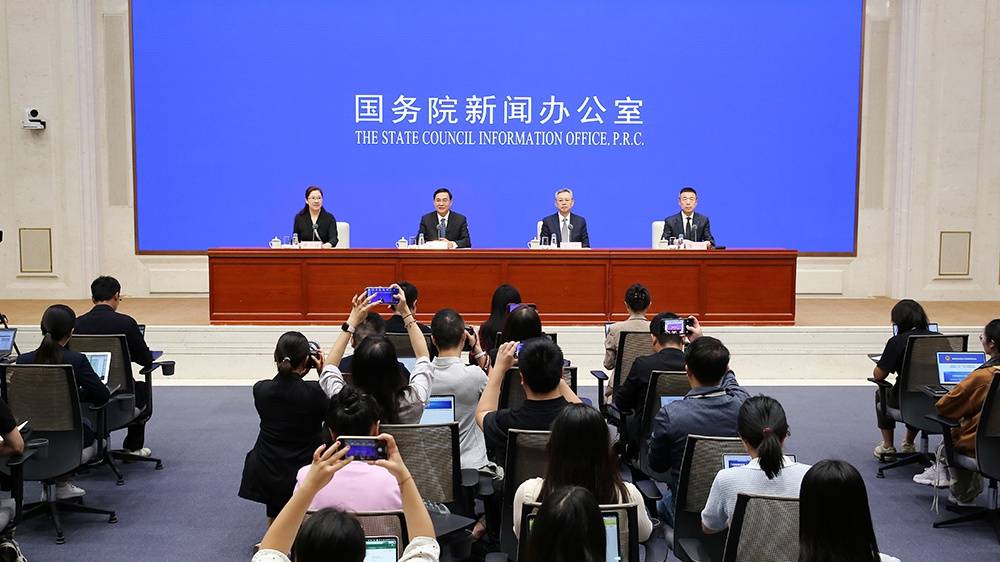
Core Viewpoint - The press conference highlighted the achievements of central enterprises in China during the "14th Five-Year Plan" period, focusing on high-quality development and strategic investments in emerging industries [3][4]. Group 1: Strategic Investments - Central enterprises have focused on nine strategic emerging industries and six future industries, leading to a systematic layout that has significantly increased investment to 8.6 trillion yuan during the "14th Five-Year Plan," a substantial rise compared to the "13th Five-Year Plan" [3]. - Development in key sectors such as integrated circuits, biotechnology, and new energy vehicles has accelerated, with breakthroughs in cutting-edge fields like humanoid robots and superconducting quantum computing [3]. Group 2: Revenue Growth - Central enterprises are projected to exceed 11 trillion yuan in revenue from strategic emerging industries in 2024, with an 8 percentage point increase in revenue contribution over the past two years [4]. - Five sectors, including new generation information technology and high-end equipment, are expected to each generate over 1 trillion yuan in revenue [4]. - The cumulative installed capacity of renewable energy generation by central enterprises accounts for approximately half of the national total, and the industrial software market size represents over 20% of the national market [4]. Group 3: Development Models - The acceleration of strategic emerging industries has led to new development models, including the establishment of nearly 1,000 supply-demand lists to promote industry cooperation [4]. - Central enterprises have set up venture capital funds totaling close to 100 billion yuan, focusing on technology-driven and emerging fields, fostering a new model of industry-finance integration [4]. - The implementation of the "AI+" initiative has facilitated the application of general and industry-specific models, effectively enabling the digital transformation of traditional industries [4].

国资委:“十四五”以来中央企业在战新产业投资达到8.6万亿元
Xin Lang Cai Jing· 2025-09-17 03:13
Core Insights - The State-owned Assets Supervision and Administration Commission (SASAC) emphasizes the focus of central enterprises on nine strategic emerging industries and six future industries, indicating a significant shift in investment strategy [1] - Since the beginning of the 14th Five-Year Plan, central enterprises have invested 8.6 trillion yuan in strategic emerging industries, marking a substantial increase compared to the 13th Five-Year Plan [1] - There has been notable acceleration in development within sectors such as integrated circuits, biotechnology, and new energy vehicles, alongside breakthroughs in cutting-edge fields like humanoid robots and superconducting quantum computing [1] - The industrial foundation in areas like industrial mother machines and new materials has been strengthened, showcasing a new pattern of industry development characterized by tiered expansion and collaborative progress [1]
投资促进局欧洲代表处组织欧洲企业团考察铜陵
Shang Wu Bu Wang Zhan· 2025-09-16 11:48
Group 1 - The investment promotion bureau's European representative office organized a delegation of technology companies from the UK, Belgium, Italy, and Hungary to conduct investment promotion activities in Tongling City [1] - Tongling city officials, including the mayor and party secretary, welcomed the European technology companies and introduced the city's open innovation history and thriving export-oriented economy [1] - During the investment environment promotion meeting, European companies expressed their willingness to invest and cooperate in China, showcasing projects from companies like A&B Smart Materials, Hyper Wind, and Clan Healthcare [1] Group 2 - The investment promotion bureau's deputy director emphasized the vast opportunities in the Chinese market for innovation and pledged to assist companies in their investment and cooperation efforts [1] - Tongling city maintains a highly open attitude towards international cooperation and aims to create an internationalized, market-oriented, and standardized business investment environment [1] - The European delegation visited the Tongling Economic and Technological Development Zone and learned about the development of new productive forces at local companies [2]
窄幅震荡,耐心等待靴子落地
Sou Hu Cai Jing· 2025-09-16 05:27
Market Overview - A-share market showed a fluctuating and differentiated trend, with major indices mostly declining while the Sci-Tech 50 Index rose against the trend, indicating resilience in the technology growth sector [1][2] - The Hong Kong stock market continued its upward trend, with the Hang Seng Technology Index slightly rising, driven by active performances in sectors like brain-computer interfaces and biotechnology [1][2] Index Performance - A-share indices experienced notable fluctuations, with the Shanghai Composite Index closing at 3856.45 points, down 0.1%, and the Shenzhen Component Index down 0.26% at 12971.8 points; the ChiNext Index fell 0.32% to 3056.3 points, influenced by the new energy industry chain [2] - The Sci-Tech 50 Index surged 1.52% to 1360.78 points, driven by hard technology sectors such as AI chips and computing infrastructure [2] - In the Hong Kong market, the Hang Seng Index rose 0.07% to 26465.87 points, while the Hang Seng Technology Index increased by 0.39% to 6067.05 points, marking three consecutive days of gains [2] Sector Highlights and Driving Logic - The A-share market exhibited a structural characteristic of "technology leading and consumption recovering," with policy-sensitive sectors and industrial transformation aligning [3] - The retail sector led gains, with the Wande Retail Index rising 1.36%, boosted by positive developments in U.S.-China trade talks regarding TikTok [3] - The electronics and computer sectors saw significant gains, with the GPU concept maintaining strength and the logic of domestic substitution for AI chips being reinforced [3] - In the Hong Kong market, technology growth and medical innovation drove performance, with brain-computer interface concepts experiencing a surge following product certifications [3] Underperforming Sectors and Driving Logic - A-share resource cyclical stocks and previously popular sectors collectively retreated, negatively impacting market sentiment; the non-ferrous metals sector fell 2.28% [4] - The lithium battery industry chain weakened for two consecutive days due to intensified competition and rising raw material costs [4] - In the Hong Kong market, cyclical and consumer sectors showed mixed performance, with the materials index dropping 2.96% due to industrial metal price corrections [4] Investment Strategy Recommendations - The current market is at a convergence of an "event vacuum period" and a "policy observation period," with cautious sentiment prevailing ahead of the Federal Reserve's meeting [5] - For A-shares, a focus on "technology independence and consumption recovery" is recommended, particularly in AI computing infrastructure and semiconductor equipment [6] - In the Hong Kong market, structural opportunities in "technology growth and medical innovation" should be seized, with attention on AI applications and core technology barriers [6]
港股异动丨MIRXES飙升35%,再创上市新高
Ge Long Hui· 2025-09-16 02:01
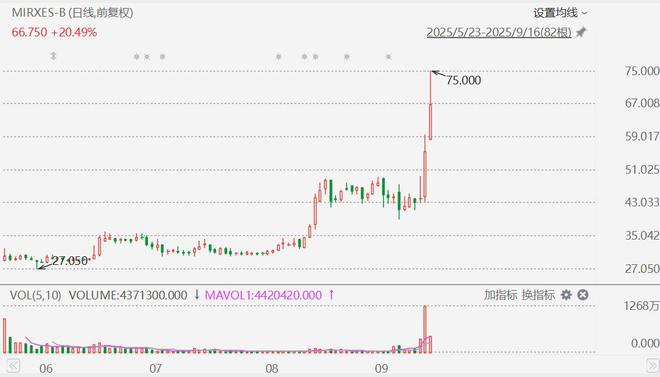
Group 1 - Mirxes-B (2629.HK) experienced a significant price surge, rising over 35% to reach 75 HKD, marking a new all-time high since its IPO [1] - The company's market capitalization has surpassed 20 billion HKD [1] - Since its listing on May 23, the stock price has increased by 220% from the IPO price of 23.3 HKD [1] Group 2 - Mirxes is a Singapore-based company specializing in microRNA technology, focusing on making disease screening and diagnostic solutions accessible in key Asian markets [1] - The company was recently included in the Hang Seng Composite Index, effective from September 8, and has officially become a Hong Kong Stock Connect eligible stock [1]
新元素药业递表港交所 中信证券为独家保荐人
Zheng Quan Shi Bao Wang· 2025-09-16 00:11
Core Viewpoint - New Element Pharmaceuticals has submitted a listing application to the Hong Kong Stock Exchange, with CITIC Securities as its sole sponsor [1] Group 1: Company Overview - New Element Pharmaceuticals is a biotechnology company focused on developing therapies for metabolic, inflammatory, and cardiovascular diseases [1] - The company's core product, ABP-671, is a URAT1 inhibitor currently undergoing Phase 2b/3 clinical trials in China and the United States, with the potential to become a first-line treatment for gout and hyperuricemia [1] - ABP-671 has also shown preclinical potential in treating chronic kidney disease (CKD) with hyperuricemia and refractory gout [1] Group 2: Product Pipeline - The company has a drug discovery platform based on structural metabolic analysis, which has led to the development of clinical-stage candidates ABP-671 and ABP-745 [1] - In addition to its clinical candidates, the company has a series of preclinical pipelines, including AT6616, ABP-6016, and ABP-6118 [1]

前瞻全球产业早报:西贝正式道歉,承诺部分菜品调整为门店现做
Sou Hu Cai Jing· 2025-09-15 23:18
Economic Indicators - In August, the industrial added value above designated size grew by 5.2% year-on-year, with a month-on-month increase of 0.37% [1] - From January to August, the industrial added value increased by 6.2% year-on-year [1] Policy Developments - New policies to promote private investment are being formulated, including minimum shareholding requirements for private investment in major projects in sectors like railways, nuclear power, and oil and gas pipelines [1] - Beijing's GDP is expected to exceed 5 trillion yuan by the end of the 14th Five-Year Plan in 2025 [1] Industry Innovations - Shanghai is accelerating the development and application of AI technologies in the high-end medical device industry, focusing on building a high-quality health corpus and promoting smart product upgrades [1] Corporate Actions - Xibei Restaurant Group announced adjustments to its menu, including using non-GMO soybean oil and preparing certain dishes fresh in-store by October 1, 2025 [2] - Xiaomi's upcoming smartphone series, renamed from Xiaomi 16 to Xiaomi 17, aims to compete directly with the iPhone [3] - 17 major automotive companies, including BYD and NIO, are committed to a payment initiative to enhance collaboration with suppliers [4] Market Trends - Nvidia is under investigation for violating antitrust laws related to its acquisition of Mellanox Technologies [3] - Tesla's German factory plans to increase production due to strong sales data [11] - Apple's first smart glasses are expected to launch within the next 12 to 16 months [7]
韩政府公布150万亿韩元规模国家增长基金方案
Shang Wu Bu Wang Zhan· 2025-09-15 16:03
Group 1 - The South Korean government announced an increase in the National Growth Fund to 150 trillion KRW, with 75 trillion KRW sourced from pension funds, financial institutions, and private capital, and the remaining 75 trillion KRW established by the Korea Development Bank (KDB) for advanced strategic industry funding [1] - The National Growth Fund will support key industries aligned with President Lee Jae-myung's vision of becoming one of the top three AI nations, achieving a potential growth rate of 3%, and ranking among the world's top five economies, with specific allocations of 30 trillion KRW for AI, 20.9 trillion KRW for semiconductors, 15.4 trillion KRW for mobile transportation, 11.6 trillion KRW for biotechnology and vaccines, and 7.9 trillion KRW for secondary batteries [1] - The Vice Chairman of the Financial Services Commission emphasized that the fund will prioritize large projects that can create significant ripple effects in the industry and serve as turning points for economic growth, aiming to create a "Korean version of Nvidia" [1] Group 2 - The financial industry suggests that to ensure participation and sustainability of the fund, tax incentives and a robust management system should be established to enhance fund returns [1]
开盘暴涨49%!57亿美元!Monte Rosa获得了1.2亿美元的预付款 诺华再次押注新型分子胶降解剂治疗免疫疾病
美股IPO· 2025-09-15 14:07
Core Viewpoint - Monte Rosa Therapeutics announced a collaboration with Novartis to develop novel molecular glue degraders (MGDs) for immune-mediated diseases, marking a significant advancement in their partnership and the potential for innovative treatments in this area [2][12][14]. Group 1: Collaboration Details - The collaboration is Monte Rosa's second agreement with Novartis, following a previous global exclusive license for the VAV1-directed degraders, including MRT-6160 [2][4]. - Monte Rosa will receive an upfront payment of $120 million, with the potential for up to $2.1 billion in development, regulatory, and sales milestone payments, as well as tiered royalties on global net sales [4][9]. - The agreement aims to accelerate the clinical development of MRT-6160 while allowing Monte Rosa to retain substantial value from the collaboration [4][12]. Group 2: Financial Aspects - The total deal value for the collaboration could reach $5.7 billion, which includes various milestone payments and royalties [9][12]. - Monte Rosa is eligible for a 30% share of profits and losses in the U.S. and tiered royalties outside the U.S. [4][9]. Group 3: Strategic Goals - The partnership is designed to expedite the development of MGDs targeting immune-mediated diseases, leveraging Monte Rosa's proprietary AI/ML-supported QuEEN™ platform and Novartis's capabilities [6][12][14]. - The collaboration aims to broaden the scope of clinical development and discover new insights for previously undruggable targets in cancer and neurological diseases [4][12]. Group 4: Technology and Innovation - Monte Rosa's QuEEN™ platform utilizes advanced AI/ML algorithms for rapid discovery and optimization of MGDs, supported by a growing library of compounds and specialized assays [16][23]. - The platform's capabilities include in silico discovery, structure-based design, and integrated proteomics to identify novel targets and enhance drug development [16][17][21].