贸易

Search documents
湖北千鸟盛源生成贸易有限公司成立 注册资本5万人民币
Sou Hu Cai Jing· 2025-10-23 04:51
Core Viewpoint - A new company, Hubei Qian Niao Sheng Yuan Generation Trade Co., Ltd., has been established with a registered capital of 50,000 RMB, indicating a focus on various trade and retail activities in the region [1] Company Summary - The legal representative of the company is Tian Aiguo, which may suggest a local leadership presence [1] - The registered capital of the company is 50,000 RMB, reflecting a modest initial investment [1] - The company’s business scope includes wholesale and retail of clothing and accessories, indicating a focus on the apparel market [1] - Additional services offered by the company include business agency services, trade brokerage, and daily necessities sales, showcasing a diverse operational strategy [1] - The company is also involved in the production, sales, processing, transportation, and storage of agricultural products, which may indicate a potential expansion into the agricultural sector [1] - Internet sales and personal internet live streaming services are part of the business model, aligning with current e-commerce trends [1]
于都县东布顺泰贸易商行(个体工商户)成立 注册资本10万人民币
Sou Hu Cai Jing· 2025-10-23 03:52
Core Points - A new individual business named Dongbushuntai Trading Firm has been established in Yudu County, with a registered capital of 100,000 RMB [1] - The legal representative of the firm is Ling Zhenyu [1] - The business scope includes licensed projects such as liquor sales, food sales, internet food sales, and retail of tobacco products, which require approval from relevant authorities [1] Business Scope - The firm is authorized to engage in food sales, specifically only pre-packaged food [1] - It also includes the sale of health food (pre-packaged), agricultural and sideline products, daily necessities, office supplies, and internet sales (excluding items that require licenses) [1] - Retail activities encompass edible agricultural products, fresh vegetables, fresh fruits, wholesale of daily necessities, and retail of sports goods and equipment (excluding projects that require approval) [1]
前三季度湖南对非进出口445.2亿元 长沙56.7%增速领跑全省
Chang Sha Wan Bao· 2025-10-23 03:11
Core Insights - Hunan Province's total import and export value to Africa reached 44.52 billion yuan in the first three quarters of 2025, a year-on-year increase of 19.4% [1] - Exports amounted to 21.21 billion yuan, growing by 8.3%, while imports surged by 31.7% to 23.31 billion yuan [1] - Changsha City accounted for 53.7% of the province's total trade with Africa, with a remarkable growth rate of 56.7% [1] Trade Growth Drivers - The China-Africa Economic and Trade Expo, held in Changsha since 2019, has facilitated significant trade growth, with 336 projects signed and a total value of 53.32 billion USD [2] - The fourth expo saw 62 projects signed, amounting to 3.8 billion USD, marking increases of 77% and 117% respectively compared to the previous expo [2] Logistics and Infrastructure - A new cargo flight route from Changsha to Addis Ababa has been established, increasing frequency to five flights per week [3] - The "Xiangyuefei" rail-sea intermodal transport channel has shipped over 200,000 TEUs, enhancing logistics networks [3] Industry Contributions - Major enterprises like SANY, Zoomlion, and Hunan Nonferrous Metals are accelerating their presence in the African market, with the Changsha Free Trade Zone expected to reach 12 billion yuan in trade with Africa [5] - The province's exports of electromechanical products to Africa reached 12.24 billion yuan, with automotive and electrical equipment growing by 57.7% and 149.1% respectively [4] Trade Mode Transformation - Hunan's trade with Africa is shifting from traditional models to diversified operations, with processing trade and bonded logistics growing by 210.5% and 389.3% respectively [6] - Innovative policies and infrastructure upgrades, such as the establishment of a bonded logistics center, have significantly reduced logistics costs and customs clearance times [6] Market Dynamics - Private enterprises dominate Hunan's trade with Africa, accounting for 76.6% of the total import and export value [8] - The Changsha International Trade Group reported a 3.9-fold increase in trade with Africa, reaching 2.438 billion yuan [8] Resource Complementarity - Hunan's imports from Africa saw a significant increase, with bulk commodities growing by 86.1% to 10.97 billion yuan, including a 162.2% rise in natural rubber imports [10] - The province's exports are aligning with African demand, particularly in new energy vehicles, lithium-ion batteries, and photovoltaic products, which saw a 462.4% increase [11] Future Outlook - Continued deepening of cross-border capacity cooperation and the establishment of overseas warehouses in Africa are recommended to enhance supply chains [12]
定州孙蒋李贸易站(个体工商户)成立 注册资本1万人民币
Sou Hu Cai Jing· 2025-10-22 22:56
天眼查App显示,近日,定州孙蒋李贸易站(个体工商户)成立,法定代表人为孙怡萱,注册资本1万 人民币,经营范围为一般项目:珠宝首饰零售;美发饰品销售;珠宝首饰批发;工艺美术品及礼仪用品 销售(象牙及其制品除外);日用杂品销售;汽车装饰用品销售;箱包销售;日用木制品销售;互联网 销售(除销售需要许可的商品);服装服饰零售。(除依法须经批准的项目外,凭营业执照依法自主开 展经营活动)。 ...
纽安欧德(保定)贸易有限公司成立 注册资本5万人民币
Sou Hu Cai Jing· 2025-10-22 22:12
Core Insights - A new company, Nuoan Ouder (Baoding) Trading Co., Ltd., has been established with a registered capital of 50,000 RMB and is represented by Malik Usman [1] Company Overview - The company operates in various sectors including sales of machinery and equipment, sales of mechanical parts and components, processing of mechanical parts, sales of electronic products, automobile sales, and sales of construction machinery [1] - Additional activities include retail of auto parts, second-hand car brokerage, import and export of goods, and technology import and export [1] - The company is allowed to conduct business activities independently based on its business license, except for projects that require government approval [1]
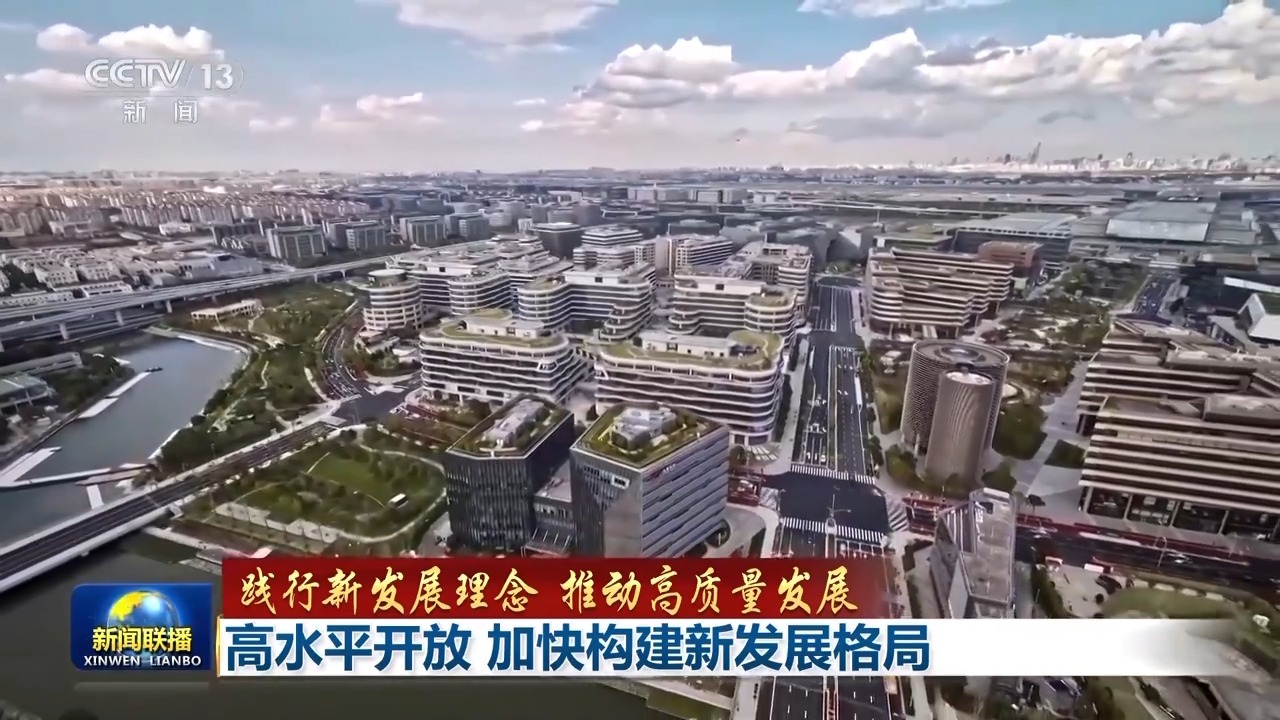
高水平开放 加快构建新发展格局
Yang Shi Xin Wen· 2025-10-22 13:08
Core Insights - The article emphasizes the importance of a new development model that promotes a higher level of open economy and high-quality development in China [1] Group 1: Shanghai Free Trade Zone Developments - Shanghai has expanded its Free Trade Zone to include eight key areas and five national economic and technological development zones, transitioning from "single-point experiments" to a multi-point linkage model [3] - Since the 14th Five-Year Plan, Shanghai's Free Trade Zone has implemented significant innovations, including data export management regulations and negative lists in finance, trade, and shipping [3] Group 2: Economic Growth in Pudong New Area - Pudong New Area aims for its three leading industries—integrated circuits, biomedicine, and artificial intelligence—to reach a scale of 832.3 billion yuan by 2024, with an average annual growth rate of 11.7% over the past three years [5] Group 3: Nationwide Free Trade Zone Initiatives - China has established 22 Free Trade Zones across the country, facilitating institutional openness and enhancing trade efficiency, particularly in Qingdao and Dalian [7] - In Hainan, efforts are underway to prepare for the island's full closure operation by December 18, creating a conducive environment for the free flow of people, goods, and capital [9] Group 4: Belt and Road Initiative and Regional Development - The Belt and Road Initiative is opening new development opportunities for central and western regions, with significant increases in trade volumes through key ports like Alashankou and Horgos [11] - In the first three quarters of this year, Hunan's trade with Africa reached 44.52 billion yuan, marking a nearly 20% year-on-year increase [11] Group 5: Infrastructure and Connectivity Enhancements - The Western Land-Sea New Corridor has reached 127 countries and regions, with a record import-export volume of 702.42 billion yuan in the first three quarters, reflecting a 17% year-on-year growth [13] - The Guangxi region is enhancing connectivity with ASEAN countries, projecting a 37.1% increase in port cargo volume by 2024 compared to the end of the 13th Five-Year Plan [15]

36万亿美债压顶和2A股流动性承压,十月该盯哪些信号?
Sou Hu Cai Jing· 2025-10-22 11:47
Group 1: US Monetary Policy and Market Liquidity - The Federal Reserve has recently implemented a preventive rate cut of 25 basis points, but has continued its balance sheet reduction, leading to tighter liquidity conditions in the US financial markets [1][4] - In September, the Fed's total assets decreased by $15 billion, bringing the total to $6.59 trillion, with a cumulative reduction of $2.38 trillion since April 2022 [3][4] - The current pace of balance sheet reduction is approximately $22 billion per month, raising concerns about potential liquidity crises similar to those experienced in September 2019 [9][4] Group 2: US Fiscal Policy and Tariff Revenue - The US federal government's tariff revenue reached a record net income of $30 billion in September, largely due to increased tariffs implemented since April 2025 [9][11] - The cumulative tariff revenue for the first half of the year is projected to be $152 billion, with an annual estimate of $300 billion, which could alleviate some fiscal pressures [11] - However, industries reliant on imports, such as manufacturing and retail, have faced significant challenges due to these tariffs, impacting their second-quarter performance [11] Group 3: US Treasury Market Dynamics - The US economy showed a GDP growth of 3.8% in Q2, driven by AI technology and policies from the Trump administration, yet investor confidence in dollar assets remains divided [13][15] - Many central banks are adjusting their foreign exchange reserves by selling US Treasuries and buying gold, indicating a shift towards safer assets [15] - The volatility in the US Treasury market has increased, with long-term investors like central banks and pension funds becoming more cautious about entering the market [17][19] Group 4: A-Share Market Outlook - The A-share market is experiencing pressure on macro liquidity due to a slowdown in government bond issuance and the expiration of several monetary policy tools [22][24] - With valuations returning to historical averages, the market may face adjustment risks, although the upcoming Q3 earnings reports could provide clarity on performance expectations [24][26] - The overall liquidity in the A-share market is closely tied to the inflow of capital, with current conditions suggesting a stable range around 4000 points [24][26] Group 5: Long-term Market Trends - The global monetary system is undergoing changes, and domestic industries are upgrading, presenting potential structural opportunities in sectors like gold and technology [28]

贸易板块10月22日跌0.45%,怡亚通领跌,主力资金净流入9681.12万元
Zheng Xing Xing Ye Ri Bao· 2025-10-22 08:20
Market Overview - The trade sector experienced a decline of 0.45% on October 22, with Yiatong leading the drop [1] - The Shanghai Composite Index closed at 3913.76, down 0.07%, while the Shenzhen Component Index closed at 12996.61, down 0.62% [1] Stock Performance - Notable gainers included: - CITIC Metal (601061) with a closing price of 11.49, up 2.22% on a trading volume of 860,000 shares and a turnover of 98.26 million yuan [1] - Zhongcheng Co. (000151) closed at 12.82, up 2.15% with a trading volume of 139,600 shares and a turnover of 179 million yuan [1] - Yiatong (002183) was the biggest loser, closing at 4.98, down 2.35% with a trading volume of 672,700 shares and a turnover of 334 million yuan [2] Capital Flow - The trade sector saw a net inflow of 96.81 million yuan from institutional investors, while retail investors experienced a net outflow of 80.74 million yuan [2] - The capital flow for key stocks showed: - CITIC Metal had a net inflow of 1.75 billion yuan from institutional investors, accounting for 17.79% of its total [3] - Yiatong had a net outflow of 203.05 million yuan from institutional investors, with retail investors contributing a net inflow of 215.32 million yuan [3]



全景东盟双周报(2025年第10期):“链联通”构筑中国—东盟人工智能合作新生态-20251022
Yin He Zheng Quan· 2025-10-22 06:34
Group 1: Diplomatic Dynamics - The 35th anniversary of diplomatic relations between China and Singapore is marked in 2025[5] - The cooperation between China and Singapore has evolved from resource and industry complementarity to institutional alignment and rule-making[9] Group 2: Economic Dynamics - ASEAN's economic growth forecast for 2025 is projected at 4.2%, with a slight decrease to 4.1% in 2026[17] - In the first three quarters of 2025, China's exports to Singapore reached $61.5 billion, accounting for 12.6% of China's total exports to ASEAN[9] Group 3: Policy Dynamics - The focus is on stabilizing the economy while promoting institutional innovation, green transformation, and digital development[25] - The GDP growth target for 2025 is set at 4.75%, with a fiscal policy aimed at supporting economic stability[25] Group 4: China-ASEAN Industrial Cooperation - The "Chain Connectivity" initiative is driving rapid development in AI cooperation between China and ASEAN[29] - The AI market in ASEAN is expected to grow by 51.7% in 2024, reaching $8.5 billion in 2025[12]
日本经济蓝皮书:中国市场对日本企业仍至关重要
Sou Hu Cai Jing· 2025-10-22 02:19
Core Viewpoint - The "Japan Economic Blue Book: Research Report on Japan's Economy and China-Japan Economic and Trade Relations (2025)" indicates that the Chinese market remains crucial for Japanese companies, presenting opportunities for deepened cooperation in China-Japan economic relations [1]. Economic Outlook - In 2024, Japan's economy is expected to show signs of recovery, albeit at a slow pace, with nominal GDP projected to exceed 600 trillion yen, marking the highest level on record. However, the real GDP growth rate is anticipated to remain low, continuing a trend of ultra-slow growth. Japan's nominal GDP is still smaller than Germany's, making it the fourth-largest economy in the world [3]. - Factors such as improved employment conditions, increased investment demand, expanded consumption from tourists, and growth in export trade are expected to support Japan's economic recovery. However, challenges such as rising U.S. trade protectionism, geopolitical tensions, global supply chain disruptions, and slowing world economic growth may exert significant pressure on Japan's recovery [3]. China-Japan Trade Relations - Despite the widening asymmetry in trade dependence, the complementary nature of trade between China and Japan remains significant. Japanese direct investment in China has declined due to various internal and external factors, yet the Chinese market is still vital for Japanese enterprises. Under the Regional Comprehensive Economic Partnership (RCEP), China-Japan economic cooperation continues to deepen [4]. - In 2025, amid challenges like escalating protectionism, global supply chain fragmentation, and slowing economic growth, there are opportunities for enhanced cooperation in China-Japan economic relations. Both countries are encouraged to deepen economic cooperation in the Asia-Pacific region and under the Belt and Road Initiative, focusing on structural complementarity to unleash collaborative potential in areas such as the "silver economy," "dual carbon," and digital economy [4]. Japan's Global Economic Diplomacy - The status of the Global South in Japan's economic diplomacy is beginning to rise. Historically, Japan has not given sufficient attention to developing countries, but since former Prime Minister Shinzo Abe's administration, there has been a shift towards a more proactive diplomatic stance, emphasizing economic strength, technological advantages, and the dissemination of values to shape Japan's role in the international community [4][5]. - Abe's initiatives, such as "Earth Observation Diplomacy" and the "Free and Open Indo-Pacific Strategy," reflect Japan's active diplomatic efforts to include the Global South, including Africa, in its foreign policy to enhance its international influence [5].