
海上风电

Search documents
倒计时4天!中能建/中电建/中海油/华能/国电投/三峡上海院/龙源振华/海油工程/明阳智能/运达股份/天科院/国网/南网……
DT新材料· 2025-07-19 12:05
Core Viewpoint - The 2025 Marine Clean Energy Technology and Equipment Summit Forum will be held from July 23-25 in Nantong, focusing on innovative technologies needed for integrated development, rapid scaling of successful demonstration projects, and solutions to deep-sea construction cost challenges [1]. Group 1: Forum Overview - The forum will include discussions on key topics such as innovative technology drivers for integrated development and strategies for scaling successful demonstration projects [1]. - Concurrent events include the Youth Scientist 10² Forum, an industry development and innovation technology conference, and various specialized forums [1]. Group 2: Organizing Institutions - The forum is jointly organized by the Yangtze River Delta Shipbuilding and Offshore Equipment Technology Innovation Center, the Yangtze River Delta Offshore Wind Power Intelligent Operation and Maintenance Innovation Alliance, and the Jiangsu University of Science and Technology [4]. - Notable co-organizers include Southeast University, Harbin Engineering University, and Ningbo University [4]. Group 3: Keynote Speakers and Topics - The forum will feature prominent speakers such as Torgeir Moan, a foreign academician of the Chinese Academy of Engineering, and Xu Lixin, director of the Yangtze River Delta Shipbuilding and Offshore Equipment Technology Innovation Center [4]. - Specialized forums will cover topics like offshore wind power, marine energy, and Power to X technologies, with expert conveners leading discussions [5][6]. Group 4: Agenda Highlights - The agenda includes a focus on the development trends of the marine clean energy industry, the "14th Five-Year Plan" policy outlook, and the integration and collaboration of related topics [12]. - Key presentations will address the challenges of deep-sea development and cost reduction, as well as innovations in construction equipment and power generation devices [13]. Group 5: Registration and Participation - Registration fees are set at ¥3200 for corporate representatives who register and pay in advance, and ¥2800 for research representatives [47]. - Participants are required to register upon arrival and will receive materials such as badges and meal vouchers [44].


集美大学朱文涛:推动“海上福建”建设,需补齐海洋科创短板
Zhong Guo Jing Ying Bao· 2025-07-19 02:56
Core Viewpoint - Fujian Province is actively promoting the "blue economy" under the policy of "driving high-quality development of the marine economy" [1][4] Group 1: Marine Economic Development - Fujian Province has formed two marine industry clusters worth 500 billion yuan each in green petrochemicals and marine tourism, and three clusters worth 100 billion yuan each in marine fisheries, shipping logistics, and marine information [1] - The marine production value of Xiamen City is expected to reach 258.8 billion yuan in 2024, with a year-on-year growth of 8.95%, accounting for 30.1% of the city's GDP [1] - The marine emerging industries in Xiamen, such as marine biomedicine and high-end marine equipment, contribute nearly 40% to the marine production value [1] Group 2: Strategic Planning and Goals - The "14th Five-Year Plan" for building a strong marine province aims to achieve significant progress by 2025 and elevate the marine economy's comprehensive strength by 2035 [2] - The development of the marine economy enhances the resilience, innovation, and inclusiveness of Fujian's economy, injecting new momentum for high-quality development [2] Group 3: Advantages and Challenges - Fujian Province has four core advantages for developing the marine economy: leading resource endowment, solid marine industry foundation, unique "multi-zone overlap" policy advantages, and strong marine technological innovation momentum [5][6] - Despite these advantages, challenges include a low proportion of emerging marine industries and weak marine technological innovation capabilities [2][8] Group 4: Recommendations for Development - To convert advantages into economic output, Fujian should strengthen port hubs and coastal industries, activate the value of island resources, and drive the transformation and upgrading of marine industries [6][7] - Key emerging industries to focus on include marine biomedicine, marine engineering equipment, marine renewable energy, marine electronic information, marine environmental protection, and modern marine services [9]

江苏省建行系统首笔“项目前期贷”落地射阳
Jiang Nan Shi Bao· 2025-07-18 06:56
Core Insights - China Construction Bank's Yancheng branch successfully provided a "pre-project loan" of 280 million yuan for the "Guoneng Longyuan Shiyang 1 million kW offshore wind power project," marking the first such loan in Jiangsu province and showcasing innovation in financial services for major project construction [1][2] Group 1: Project Significance - The Guoneng Longyuan Shiyang offshore wind power project has a total investment exceeding 10 billion yuan and is crucial for promoting energy structure adjustment and green low-carbon development in Jiangsu province [1] - Upon completion, the project will significantly enhance Jiangsu's clean energy supply capacity and contribute to carbon emission reduction, aiding in achieving the "dual carbon" goals [1] Group 2: Financial Support and Innovation - The Yancheng branch of China Construction Bank identified the urgent funding needs and limited financing channels during the project's preparatory phase and responded proactively to national policy directions [1][2] - A specialized service team was formed to tailor financial service solutions, ensuring that every detail from funding needs to repayment arrangements was meticulously crafted to meet the project's actual conditions [1] - The project became the first successful implementation of the new regulatory framework for "pre-project loans" in the province, creating a new paradigm for financial services and providing timely funding support during the preparatory phase [2] Group 3: Operational Efficiency - The project was processed from application to approval in just four working days, demonstrating the "Construction Bank speed" through efficient collaboration among provincial, municipal, and county-level branches [2] - The successful implementation of the first "pre-project loan" enhances China Construction Bank's market competitiveness and brand influence in Yancheng and across Jiangsu province, serving as a valuable reference for other financial institutions [3]

十年激变!全球海洋经济进入“重构纪元”——中国如何引领蓝色质变?
Sou Hu Cai Jing· 2025-07-18 03:45
Group 1 - The global ocean economy is undergoing a significant transformation due to the dual pressures of climate crisis and geopolitical tensions, with a stark contrast between optimistic past predictions and current realities [2][3] - The OECD's report warns that if energy transition does not accelerate, the global ocean economy's gross value added (GVA) could shrink by 20% by 2050, while a rapid shift to clean technologies could lead to a 40% growth [2][3] - In 2020, the global ocean economy's GVA reached $2.6 trillion, accounting for 3%-4% of the global GVA, with coastal tourism and offshore oil and gas extraction as the main pillars [2] Group 2 - The OECD report outlines three potential scenarios for the future of the ocean economy: a baseline scenario with slow growth, an accelerated transformation scenario leading to a 40% increase in GVA, and a stagnation scenario resulting in a 20% decline [3] - The accelerated transformation scenario envisions significant growth in offshore wind energy, marine aquaculture, and digital port operations, while the share of offshore oil and gas would decrease from 33% to 20% [3] Group 3 - China is positioned to lead a blue transformation in the global ocean economy, emphasizing the need for breakthroughs in both hard and soft power, including high-end equipment and marine carbon trading [5][6] - The Chinese shipbuilding industry is expected to capture over 50% of the global market share by the end of 2024, with significant advancements in offshore wind energy capacity [6][8] - The global shipbuilding industry is projected to experience a prolonged boom due to the International Maritime Organization's 2050 greenhouse gas emissions targets, creating a substantial market for retrofitting vessels [8] Group 4 - Europe aims to establish itself as a climate leader in the ocean economy but faces structural challenges, including declining shipbuilding capabilities and slow digital transformation [11][12] - The UK has set ambitious targets for zero carbon shipping by 2050 and significant offshore wind capacity by 2030, while Norway seeks to lead global marine carbon standards [11] Group 5 - The future competition in the ocean economy will focus on technological innovation and rule-making rather than traditional oil and gas platforms, with key areas including offshore renewable energy, deep-sea intelligent equipment, and blue carbon economy [13][14] - China should prioritize investments in offshore infrastructure and new technologies, enhance regional cooperation, and attract global talent to establish itself as a leader in the sustainable ocean economy [14]
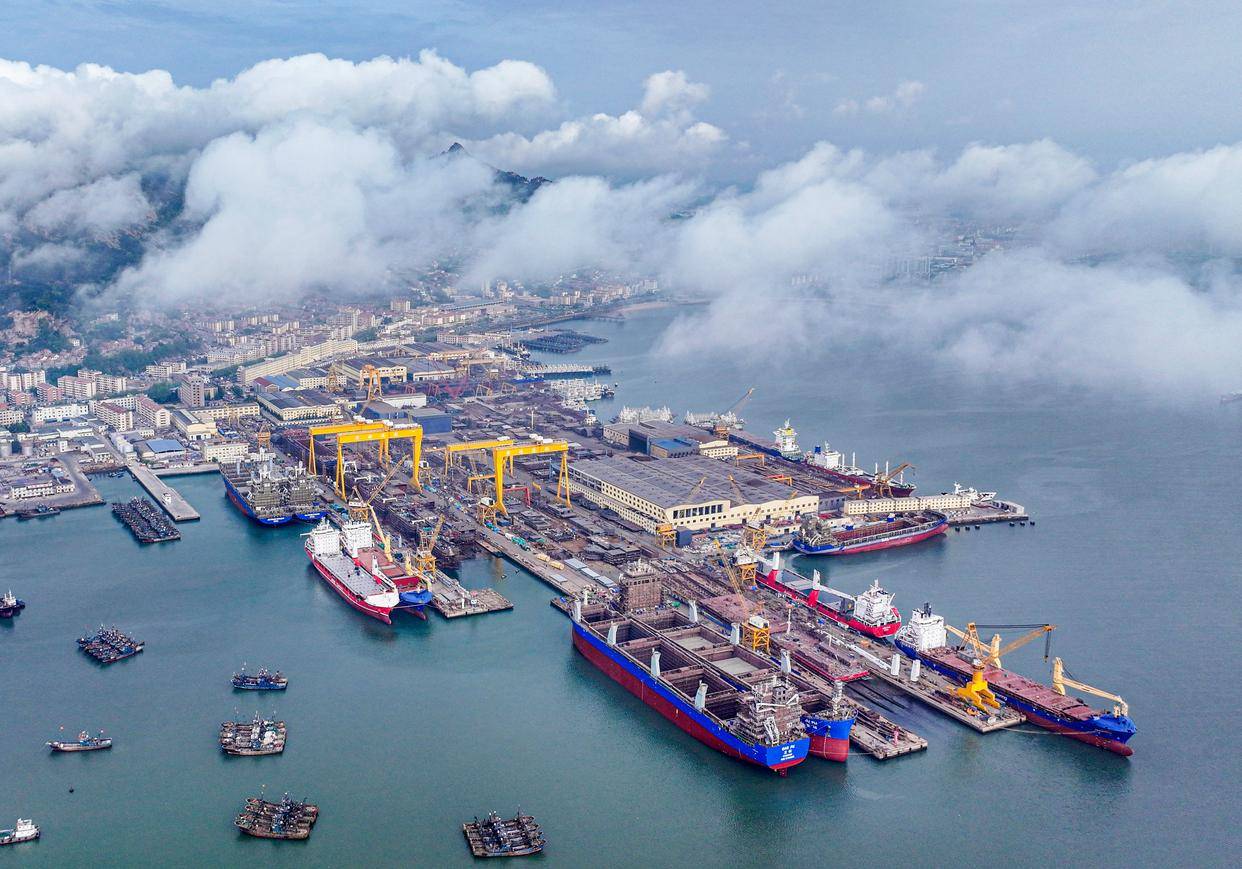
全球海上风电步入关键转折期 欧美市场面临挑战颇多
Zhong Guo Chan Ye Jing Ji Xin Xi Wang· 2025-07-17 22:23
Core Insights - The Global Wind Energy Council's report indicates that in 2024, the global offshore wind power installed capacity will increase by 8 GW, marking the fourth highest year in history, with a total capacity reaching 83 GW by the end of 2024, capable of providing low-carbon electricity to 73 million households [1][2] - China remains the dominant force in global offshore wind power installation, accounting for 50.47% of the new capacity and 50.3% of the cumulative capacity, solidifying its position as the world's largest offshore wind market [2][4] - Despite the growth in installed capacity, the report highlights a 26% year-on-year decline in new offshore wind installations globally, attributed to macroeconomic challenges, geopolitical conflicts, and uncertainties in the investment landscape [4][5] Global Offshore Wind Power Landscape - By the end of 2024, the global cumulative offshore wind power installed capacity is projected to reach 83.2 GW, with Europe adding 2.7 GW from 9 new offshore wind farms, while the U.S. has only 174 MW due to project delays [2][4] - Floating wind power technology is gaining attention, with a global installed capacity of 278 MW by the end of 2024, led by Norway, the UK, China, and France [2] Future Growth Potential - The report anticipates a compound annual growth rate of approximately 21% for offshore wind installations over the next decade, with an expected addition of around 350 GW by the end of 2034, bringing the total capacity to 441 GW [6][7] - Record auction capacity of 56 GW for offshore wind projects in 2024 and 48 GW of projects under construction indicate significant growth potential, particularly driven by strong installation growth in China and emerging markets in the Asia-Pacific region [7][8]
专题:国内海风项目建设进展如何?
Changjiang Securities· 2025-07-17 14:12
Investment Rating - The industry investment rating is "Positive" and maintained [9] Core Viewpoints - The market is focused on the construction pace of offshore wind projects expected to be connected to the grid in 2025, with an estimated addition of 10-12 GW of new capacity [2][4] - Major provinces contributing to the 2025 offshore wind capacity include Guangdong (4.4 GW), Jiangsu (2.7 GW), and Zhejiang (1.4 GW) [4][16] - The total capacity of offshore wind projects that have been tendered, approved, and competitively allocated is approximately 91.15 GW, indicating significant future growth potential [5][24] Summary by Sections 1. 2025 Offshore Wind Construction Progress - Approximately 10-12 GW of new offshore wind projects are expected to be connected to the grid in 2025, with specific contributions from various provinces [4][16] - The current status of projects includes approximately 1.60 GW tendered, 7.05 GW under construction, and 3.80 GW already connected [4][16] 2. Offshore Wind Project Reserve Capacity - The cumulative capacities for tendered, approved, and competitively allocated offshore wind projects are 17.4 GW, 24.3 GW, and 49.4 GW respectively, totaling about 91.15 GW [5][24] - Potential project capacities by region include Guangdong (28.9 GW), Zhejiang (10.5 GW), and Hainan (10.5 GW) [5][24] 3. Investment Recommendations - The report emphasizes that offshore wind installations are expected to see significant growth in 2025, with a potential industry turning point as construction accelerates [7][41] - The approval process for deep-sea offshore wind projects is speeding up, which may open up long-term growth opportunities [7][41] - Continued recommendations focus on domestic offshore wind and related sectors such as pile foundations, submarine cables, and wind turbines [7][41]
兴业证券:布局海上风电等新兴产业 推进海洋经济区域协同
Zhi Tong Cai Jing· 2025-07-17 03:59
Core Insights - The central government emphasizes the strategic importance of the marine economy, aiming for a total marine production value exceeding 10 trillion yuan in 2024, reflecting a year-on-year growth of 5.9% [1][2] - The emerging marine industry is projected to account for 24.4% of the main marine industry value added in 2024, with a compound annual growth rate (CAGR) of 9.0% over the past five years [1][4] Group 1: Marine Economic Development - The Central Financial Committee's sixth meeting highlights the need for high-quality development of the marine economy, reinforcing its strategic position following the inclusion of "deep-sea technology" in the new productive forces category [1][3] - The marine economy's total production value is expected to reach 10,543.8 billion yuan in 2024, contributing 7.8% to the national GDP, with significant growth in marine shipbuilding and marine power sectors, both exceeding 14% [2] Group 2: Policy Support and Regional Development - Policies are being implemented to support emerging marine industries, with a focus on enhancing marine strategic technology and promoting regional coordinated development through the establishment of high-quality marine economic demonstration zones [3][5] - The three major marine economic circles in China are the Bohai Rim, Yangtze River Delta, and South China Sea, each contributing to regional development through their unique advantages and integration strategies [5] Group 3: Emerging Marine Industries - The emerging marine industry's value added is expected to grow significantly, with marine power and shipbuilding sectors showing CAGRs of 19.7% and 12.8% respectively over the past five years, indicating strong market potential [4] - The offshore wind power market is projected to reach an installed capacity of 70.2 GW in 2024, with a year-on-year increase of 13.6%, and forecasts suggest a substantial increase to 389.3 GW by 2035 [4]

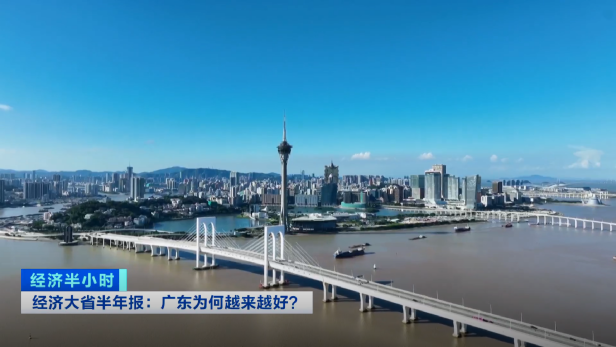
经济大省半年报:广东为何越来越好?
Nan Fang Du Shi Bao· 2025-07-16 15:06
Group 1: Economic Performance - Guangdong province has shown resilience in maintaining its foreign trade amidst a complex international environment, being the largest foreign trade province in China [5] - In the first half of 2025, China's total goods trade reached 21.79 trillion yuan, with exports amounting to 13 trillion yuan, marking a 7.2% increase and the first time exports surpassed 13 trillion yuan in the same period [3][5] Group 2: Technological Innovation - Guangdong has ranked first in regional innovation capability for eight consecutive years, with the "Shenzhen-Hong Kong-Guangzhou" technology cluster being second globally in innovation index for five years [11] - The province has over 1,500 core artificial intelligence enterprises, including 24 unicorns and 147 "little giant" enterprises, leading the nation in these categories [23] Group 3: Manufacturing and Robotics - The manufacturing sector in Guangdong is thriving, with companies like Dongguan Jin Hongsheng Electric Co. reporting a 10% increase in mobile air conditioner orders in the first half of the year [7] - Guangdong has launched multiple new types of robots in the first half of the year, benefiting from a strong local supply chain, with 90% of suppliers located in the Greater Bay Area [21] Group 4: Marine Economy - Guangdong's marine economy is expanding, with the province creating 15 national-level marine ranch demonstration zones, leading the country in this area [31] - As of June 2023, Guangdong's offshore wind power installed capacity exceeded 12.51 million kilowatts, ranking first in the nation and generating approximately 30 billion kilowatt-hours of electricity [33]
新能源产业重塑山东就业市场!岗位需求增幅东营夺冠地级市开挂
Qi Lu Wan Bao· 2025-07-16 11:41
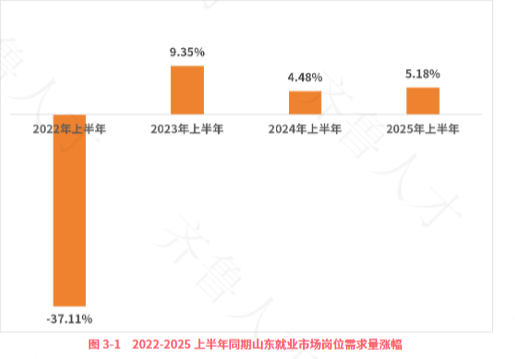
Group 1 - The core viewpoint of the article highlights that Shandong has maintained a high talent retention rate of over 90% for three consecutive years, driven by the development of new energy industries and the concentration of talent in key cities like Jinan and Qingdao [1][7][30] - The report indicates that the demand for talent in the traditional manufacturing sector remains strong, while the demand for new energy professionals has surged by 2.85% [2][10] - Job seeker activity in Shandong has shown a recovery trajectory from the pandemic, stabilizing at a high level, although there is a noted conservative approach among job seekers favoring stable employment in state-owned enterprises and industries [3][5] Group 2 - The report reveals that the demand for positions in the new energy sector, such as electrical engineers and energy storage technology experts, has seen explosive growth, with annual salaries around 300,000 yuan [1][10][37] - Among cities, Dongying leads in job demand growth at 9.56%, attributed to its deep engagement in energy and high-end equipment manufacturing [14][16] - The report also highlights that Shandong's county-level economies are increasingly attracting talent, with cities like Longkou and Jiaozhou showing significant job demand due to their industrial strengths [20][22] Group 3 - The article notes that Shandong's talent outflow is primarily directed towards the three major economic regions: Beijing-Tianjin-Hebei, Yangtze River Delta, and Pearl River Delta, which collectively account for over 60% of the outflow [30][32] - The influx of talent into Shandong is characterized by a significant concentration from neighboring provinces, indicating a strong regional appeal due to low migration costs and industrial synergies [33][35] - High-paying positions such as artificial intelligence algorithm engineers and new energy technology experts are attracting talent to Shandong, reflecting the province's strategic focus on emerging industries [37][38]
海上风力发电要积极评估极端天气影响丨能源思考
Di Yi Cai Jing· 2025-07-16 10:50
Core Insights - The article emphasizes the importance of addressing the impact of extreme weather on offshore wind power, highlighting China's shortcomings and risks in this sector, and the need for targeted measures to ensure sustainable development [1][2]. Industry Overview - Offshore wind power is becoming a core area for renewable energy development in China, driven by carbon neutrality goals and energy structure transformation. The country has included offshore wind power in its national energy security strategy, focusing on optimizing nearshore and deep-sea wind power planning [3]. - As of September 2023, China's cumulative installed capacity for offshore wind power reached 31.89 million kilowatts, contributing to a global total of 75.2 gigawatts [3]. Risks and Shortcomings - Extreme weather events such as typhoons pose significant threats to offshore wind power equipment, affecting operational safety and potentially leading to substantial economic losses. For instance, Typhoon "Semba" in July 2022 caused damage to wind turbine foundations in Guangdong [2]. - Current design standards and core technology for offshore wind turbines in China need improvement to withstand extreme weather conditions. Many turbines are inadequately designed for high-intensity weather, particularly in typhoon-prone areas [4]. - The lack of a comprehensive risk assessment system and the concentration of wind power projects in high-risk areas increase vulnerability to extreme weather events, which could lead to widespread damage and economic loss [5]. Policy Recommendations - It is recommended to enhance design standards for extreme weather resilience and promote breakthroughs in core technologies. This includes revising design standards based on local conditions and investing in independent research and development [7]. - Upgrading equipment to improve smart capabilities is crucial. Implementing advanced sensors and data analysis technologies can facilitate real-time monitoring and adaptive responses to extreme weather [8]. - Establishing a comprehensive risk assessment system for site selection and layout is essential. This should include evaluating the probability and intensity of extreme weather events to avoid high-risk areas [8]. - Strengthening marine ecological environment protection and restoration is vital to enhance system resilience. This involves adhering to environmental regulations and implementing measures to minimize ecological disruption during construction and operation [9][10].