
装备制造

Search documents
以改革开放培塑陕西发展新动能新优势
Shan Xi Ri Bao· 2025-12-18 22:59
Core Viewpoint - The article highlights the significant reforms and innovations in Shaanxi province, emphasizing the importance of reform and opening-up as a driving force for economic growth and modernization in China. Group 1: Reform Initiatives - Shaanxi has implemented 19 reform pilot experiences that are being replicated nationwide, showcasing innovative reforms that stimulate new vitality [1] - The province has introduced 9 new national-level reform pilot projects and 190 new measures to optimize the business environment this year [2] - Strategic restructuring in state-owned enterprises across various sectors, including transportation and energy, has led to enhanced core competitiveness [1][2] Group 2: Economic Performance - From January to October this year, Shaanxi's total import and export value increased by 12.2%, surpassing the national average of 8.6% [5] - The actual use of domestic capital grew by 12.5%, and over 10,000 technology transfer achievements were made, resulting in the establishment of 905 technology transfer companies [5] - The technology contract transaction amount exceeded 370 billion yuan, addressing 761 key industry chain technology challenges [5] Group 3: Innovation and Technology - The Qin Chuang Yuan innovation-driven platform is facilitating the transition of research achievements from laboratories to production lines [1] - The province is promoting the integration of technological innovation and industrial innovation, with initiatives like the "three reforms" pilot for technology achievement transformation [3][4] - A provincial technology innovation mother fund of 10 billion yuan has been initiated to support technological advancements [3] Group 4: International Trade and Connectivity - The opening of new air routes, such as the direct flight from Xi'an to Kazakhstan, enhances Shaanxi's connectivity with Central Asia [7] - The province's exports to Central Asian countries increased by 48.1%, with direct investments in Belt and Road countries growing by 135.5% [7] - The Shaanxi Free Trade Zone has introduced over 20 innovative reform measures to streamline customs processes, reducing export clearance times by 50% and transportation costs by over 15% [9] Group 5: Future Outlook - The "15th Five-Year Plan" aims for greater breakthroughs in building an inland reform and opening-up highland, positioning Shaanxi as a model for the western region [10] - Continuous deep-level reforms and high-level opening-up are essential for overcoming bottlenecks and enhancing productivity [10]
十大国产PLM系统,全球供应链协同款!
Sou Hu Cai Jing· 2025-12-18 18:28
Core Insights - The article emphasizes that Product Lifecycle Management (PLM) systems are no longer exclusive to large multinational corporations but are increasingly being adopted by Chinese manufacturing enterprises to enhance their core business processes [2] - Domestic PLM systems are designed to address complex global supply chain challenges, offering unique advantages in aligning with local operational models and facilitating cross-regional and cross-enterprise collaboration [2] Group 1: Collaborative Capabilities of Domestic PLM Systems - To assess whether a PLM system possesses the "global supply chain collaboration" capability, it is essential to examine its internal logic architecture that supports the entire lifecycle data flow from concept to disposal [3] - A significant barrier to global collaboration is "data silos," where different departments may not be able to access or utilize the same data effectively. A robust PLM system acts as a powerful data hub, enforcing a single source of truth for all participants [4] - Real-time and transparent data synchronization in PLM systems helps avoid rework and waste caused by information delays, with experts noting that the success of PLM implementation largely depends on the standardization and unified management of data [4] Group 2: Process Integration and Automation - The core value of collaborative PLM lies in managing processes rather than just outcomes, enabling the automation of complex engineering change processes and new product introduction workflows [5] - In a collaborative PLM environment, all relevant personnel receive tasks and can view change details, comment, and approve online, significantly speeding up decision-making and ensuring compliance and consistency in processes [5] Group 3: Overview of Leading Domestic PLM Systems - The article identifies ten prominent PLM systems in the domestic market based on market share, technological advancement, industry reputation, and supply chain collaboration features [6] - CAXA PLM is highlighted as a leading solution, providing an integrated platform that connects design and manufacturing processes, showcasing its capability to manage complex product data effectively [9] - Other notable systems include Yonyou PLM, Kingdee PLM, and Siemens Teamcenter (localized version), each with unique strengths tailored to specific industries [9] Group 4: Future of PLM Systems - The evolution of domestic PLM systems is increasingly focused on "global supply chain collaboration," which is essential for maintaining resilience and agility in a competitive global landscape [10] - The integration of technologies such as artificial intelligence, industrial internet, and digital twin technology is expected to make PLM systems more intelligent and proactive in predicting supply chain risks and optimizing R&D paths [10]


中集集团拟斥资约2.93亿元购买东莞市松山湖中集智荟园188套住宅
Zhi Tong Cai Jing· 2025-12-18 12:56
Group 1 - The core point of the article is that CIMC Group plans to purchase 188 residential units in Dongguan for approximately RMB 293 million to meet the housing needs of its employees in the region [1] - The acquisition will be conducted by CIMC's wholly-owned subsidiary, Shenzhen CIMC Innovation Industry Development Co., Ltd [1] - The purpose of this purchase is to attract and retain core talent for the company's operations in Dongguan [1] Group 2 - The residential units are located in the Songshan Lake area of Dongguan, which is part of CIMC's overall industrial and corporate layout in the region [1] - This strategic move reflects the company's commitment to enhancing employee welfare and supporting its business operations in Dongguan [1] - The transaction highlights CIMC's focus on long-term investment in employee housing as a means to strengthen its workforce [1]

浪涌潮退
Zhao Yin Guo Ji· 2025-12-18 11:06
Macro Economic Outlook - In 2026, the U.S. midterm elections, Japan and Europe’s defense spending demands, and China's growth stabilization will lead to continued policy easing in the first half of the year. However, the actual space for macro policy is limited due to high inflation, rising government debt, and previous policy overreach [7] - The AI boom is expected to enhance efficiency and market valuations but may also exacerbate job losses and economic K-shaped divergence. Global liquidity easing and a weaker dollar may lead to rising inflation in the second half of the year, potentially causing volatility in high-valuation assets [7] Chinese Internet Software Sector - 2026 is seen as a critical year for capturing user mindshare in the AI era, focusing on lowering usage barriers and enhancing decision-making efficiency. Companies with stable cash flows supporting AI investments and strong operational capabilities are expected to have higher long-term investment value [8] - Recommended stocks include Tencent, Alibaba, and Kuaishou for AI-driven growth, and NetEase and Trip.com for stable earnings growth [8] Overseas Internet Software Sector - The competition in the large model industry is expected to intensify, with AI application monetization continuing to grow. Companies like Microsoft, Google, Amazon, and Palantir are recommended for their potential in AI revenue generation [9] Chinese Semiconductor Sector - The sector is expected to focus on AI-driven structural growth, self-sufficiency trends, high-yield defensive allocations, and industry consolidation. The global semiconductor market is projected to grow by 26% to $975 billion in 2026, with AI-related segments leading the growth [10] Chinese Technology Sector - The global tech industry will experience demand differentiation and accelerated AI innovation. The expansion of computing power and the introduction of AI products are expected to drive growth, with a focus on AI infrastructure and end-user AI products [11] Chinese Essential Consumer Sector - The core constraint on consumer spending in 2026 is expected to be asset shrinkage and slow income recovery. Investment themes include the deepening of consumer stratification and a focus on essential survival needs [12] Chinese Discretionary Consumer Sector - The overall retail sales growth is projected to slow to about 3.5% in 2026. Investment strategies should focus on survival-type consumption, compensatory consumption, and defensive stocks [13] Chinese Automotive Sector - Despite pressures from subsidy reductions, the automotive industry is expected to show resilience, with retail sales of passenger vehicles projected to remain stable. Key trends include intensified competition and the growth of plug-in hybrid vehicles [14] Chinese Pharmaceutical Sector - The innovative drug sector has seen significant growth driven by overseas licensing deals. Future catalysts are expected to shift from upfront payments to milestone payments as clinical progress is made [15] Chinese Equipment Manufacturing Sector - The mining machinery sector is anticipated to be a major growth area, driven by high capital expenditures from global mining companies. Companies like Zoomlion and Sany Heavy Industry are expected to benefit [16] Natural Uranium Sector - The global supply of natural uranium is expected to remain tight, supporting a rising price trend. Demand may exceed expectations due to the recovery of U.S. nuclear power plants [17] Chinese Insurance Sector - The life insurance sector is undergoing a transformation towards dividend insurance, with expectations of improved profitability and valuation recovery. Companies like Ping An and China Life are recommended for their strong growth potential [18] Chinese Real Estate and Property Management Sector - The real estate market is expected to face continued sales declines, with a focus on stock market-related opportunities and resilient property management companies. Recommendations include China Resources and Beike [19]






研判2026年工业经济:《赛迪展望2026》系列成果正式发布
Jing Ji Wang· 2025-12-18 08:59
Core Insights - The 17th New Industrialization Lecture hosted by the China Electronic Information Industry Development Research Institute (CCID) focused on "Industrial Economy 2026: New Starting Point and New Momentum" [1] - The CCID released the "CCID Outlook 2026," which includes 9 comprehensive articles and 12 industry-specific articles, providing an authoritative reference for promoting high-quality industrial economic development in the context of the 14th Five-Year Plan [1] Group 1: Industrial Economic Outlook - The chief researcher of industrial economic operation at CCID, Qiao Baohua, forecasts that by 2026, the industrial economy will continue to develop towards high, new, and green directions, driven by reforms and stable growth policies [1] - Recommendations include solidifying foundations, enhancing supply-demand coordination, promoting integrated development, and improving enterprise services to achieve qualitative and reasonable quantitative growth in the industrial economy [1] Group 2: Industry-Specific Insights - Various industry experts presented their outlooks for 2026, including: - Ma Beibei on the electronic information manufacturing industry [2] - Zhang Hailiang on the raw materials industry [2] - Yin Xunfei on the equipment manufacturing industry [2] - Yu Juan on the consumer goods industry [2] - Li Yiming on future industries [2] - Liu Lichao on the artificial intelligence industry [2] - Zhu Junyu on the low-altitude economy [2]
领航工厂的“成长密码”
Zhong Guo Fa Zhan Wang· 2025-12-18 08:01
Core Insights - The Ministry of Industry and Information Technology and five other departments have announced the first batch of 15 leading smart factories for 2025, which serve as benchmark examples for technological innovation and industrial upgrading in key sectors such as equipment manufacturing, raw materials, electronic information, and consumer goods [1][2] Group 1: Smart Factory Levels - Smart factories are categorized into four levels: basic, advanced, excellent, and leading, with the leading level representing the highest standard in China's manufacturing sector [2] - As of now, over 30,000 basic smart factories, 7,000 advanced smart factories, and 504 excellent smart factories have been established, with the addition of 15 leading smart factories [2] Group 2: Industry Distribution - The first batch of 15 leading smart factories includes 4 from equipment manufacturing, 3 from raw materials, 5 from electronic information, and 3 from consumer goods, covering critical areas of China's manufacturing transformation [2] Group 3: Development Trends - The leading smart factories utilize artificial intelligence in over 70% of their applications, with more than 6,000 AI models and over 1,700 key technology equipment breakthroughs, reflecting six core development trends: virtual-real integration, lean leap, extreme flexibility, unconventional manufacturing, all-domain collaboration, and intelligent embedding [3] Group 4: Regional Focus - The Yangtze River Delta region, including Shanghai, Jiangsu, and Zhejiang, has emerged as a significant hub for leading smart factories, benefiting from a strong industrial base, active innovation ecosystem, and policy collaboration [4][5] - Shanghai has cultivated 2 national leading smart factories, 28 excellent smart factories, and over 300 advanced smart factories, maintaining the highest number of national-level smart factories in the country [5] Group 5: Ecosystem Development - The emergence of leading smart factories marks a shift from isolated "smart workshops" to a collaborative ecosystem involving head enterprises, industrial internet, and data as production factors, aimed at addressing the challenges of the manufacturing sector [7] - Leading smart factories are positioned as the central nodes in this ecosystem, possessing capabilities in technology spillover, resource integration, and standard-setting [7] Group 6: Future Directions - The integration of technologies such as 5G, AI, and industrial internet will continue to expand the boundaries of leading smart factories, enhancing their role as core competitive advantages and providing replicable experiences for global manufacturing digital transformation [8] - The Ministry of Industry and Information Technology emphasizes the importance of encouraging leading smart factories to share advanced experiences and solutions to enhance the competitiveness of the entire industrial ecosystem [9]
2025新能源发展大会在甘肃敦煌举办
Zhong Guo Jing Ji Wang· 2025-12-18 06:11
Core Insights - The 2025 New Energy Development Conference was held in Dunhuang, Gansu, focusing on the achievements and future opportunities in the new energy sector during the 14th Five-Year Plan period [1][2] - Gansu province has made significant progress in both traditional industry upgrades and the development of new energy sectors, with a focus on creating a comprehensive industrial chain [1] Group 1: Industry Development - Gansu's new materials industry is projected to reach a value of 130.5 billion yuan by 2024, while the new energy and new energy equipment manufacturing industry is expected to reach 83 billion yuan [1] - The province's installed capacity of new energy reached 77.62 million kilowatts, accounting for 64.1% of the total installed capacity, achieving its 14th Five-Year Plan goals ahead of schedule [1] - Gansu's new energy installed capacity is expected to exceed 80 million kilowatts by the end of this year, which is 3.4 times that of the end of the 13th Five-Year Plan [3] Group 2: Policy and Strategic Initiatives - The province has implemented a series of policy improvements and major project constructions, resulting in five key transformations in the energy sector [2] - These transformations include the shift of new energy from a supplementary power source to a main power source, and the evolution of the equipment manufacturing industry from a fragmented approach to a clustered model [2] - Gansu aims to establish itself as a significant base for new energy and new energy equipment manufacturing in China, with ongoing efforts to enhance resource regulation and grid connectivity [2]
赛迪研究院发布《赛迪展望2026》系列成果
Zheng Quan Shi Bao Wang· 2025-12-18 03:19
Core Viewpoint - The report from the China Center for Information Industry Development (CCID) forecasts stable growth in China's industrial economy by 2026, driven by reform measures, advancements in new productivity, and accelerated transformation of traditional industries [1] Group 1: Reform Measures - Reform initiatives are expected to accelerate during the 14th Five-Year Plan period, playing a crucial role in achieving socialist modernization and enhancing strategic advantages in international competition [1] - Policies aimed at counter-cyclical adjustments will help address bottlenecks and strengthen weaknesses in the industrial sector [1] Group 2: Development of New Productivity - Rapid breakthroughs and applications of new technologies, such as artificial intelligence, will drive the high-end, intelligent, and green transformation of industries [1] - The electronic information industry, including integrated circuits and wearable smart devices, is projected to grow quickly, alongside strong growth in the new energy and electric vehicle sectors [1] - Emerging sectors like low-altitude economy and commercial aerospace are also expected to develop rapidly, with advancements in smart robots and humanoid robots contributing to the cultivation of new economic drivers [1] Group 3: Transformation of Traditional Industries - Digital transformation is being deeply integrated into traditional industries such as raw materials, machinery, food, textiles, light industry, and parks, significantly enhancing their levels of intelligence in R&D, manufacturing, and management [1] - Key industries like steel, non-ferrous metals, petrochemicals, and building materials are undergoing comprehensive green transformation across raw materials, energy use, processes, and products, promoting a leap in productivity [1]
东北地区科技金融印象
Jin Rong Shi Bao· 2025-12-18 02:25
Group 1 - The Northeast region of China is increasingly focusing on technological innovation and financial services, despite being traditionally viewed as an industrial and agricultural area [1] - The region's efforts are highlighted through various case studies in technology finance, showcasing support for industries such as biopharmaceuticals and smart manufacturing [1] - The aim is to draw attention to the Northeast's commitment to innovation in technology finance and its role in promoting scientific and technological development [1] Group 2 - Jilin Tonghua Jianxin Technology Co., Ltd. has been recognized as a "Manufacturing Industry Single Champion Demonstration Enterprise" and a national-level specialized and innovative small giant enterprise, receiving significant financial support from local banks [3] - Heilongjiang Fulun Agricultural Technology Co., Ltd. is one of the first batch of integrated seed enterprises, benefiting from increased loan support to meet its cash flow needs [5] - Heilongjiang Huida Technology Co., Ltd. integrates advanced technologies like Beidou navigation and artificial intelligence to produce smart agricultural equipment, receiving substantial financial backing from multiple banks [7] - China Construction Bank's Jilin branch has provided over 200 million yuan in financial support to key semiconductor enterprise Huamei Electronics, aligning with the needs of high-tech companies in the Northeast [9]

为企业铺就数字化之路
Liao Ning Ri Bao· 2025-12-18 01:45
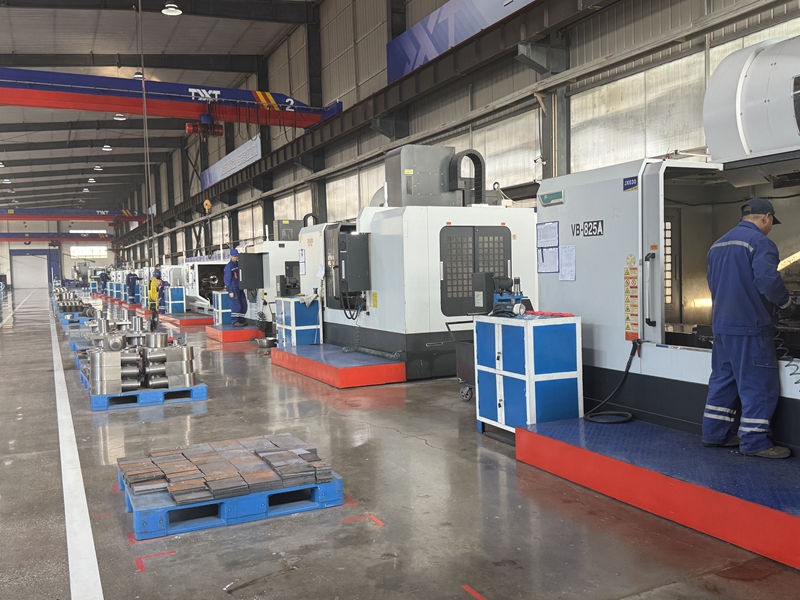
Core Insights - The articles highlight the significant impact of digital transformation on manufacturing companies in the Yingkou Free Trade Zone, emphasizing improvements in production efficiency and cost reduction through the adoption of digital management systems [1][2][3] Group 1: Digital Transformation Benefits - Yingkou Forging Machine Tool Co., Ltd. has implemented a digital management system that allows employees to access production data via mobile devices, resulting in a nearly 10% increase in production efficiency [1] - The introduction of a digital management system at Xianghong Automatic Automobile Repair Equipment (Liaoning) Co., Ltd. has led to improved production efficiency and reduced energy costs, allowing for better oversight of operations [2] - The digital management system has reportedly increased production efficiency by over 15%, improved equipment utilization by over 5%, and shortened production cycles by 11% [3] Group 2: Support for Digital Economy - The Yingkou Free Trade Zone is establishing an Industrial Internet Digital Empowerment Center to provide comprehensive services, including digital diagnostics and training, to over 100 companies [2] - The Yingkou Free Trade Zone has developed policies to support digital transformation, focusing on optimizing digital infrastructure and attracting quality digital economy enterprises [3] - A practical training base has been established to educate students in logistics, supply chain, and electrical engineering, promoting the integration of talent, industry, and innovation [3]