
调味品

Search documents
中炬高新(600872.SH):公司目前海外业务尚处于起步阶段
Ge Long Hui· 2025-11-21 08:20
Core Viewpoint - The company is in the early stages of its overseas business and plans to increase investment in overseas market marketing, brand promotion, and customer development [1] Group 1 - The company aims to establish a professional overseas team and optimize its overseas supply chain [1] - The focus will remain on the core condiment business while gradually expanding into overseas markets [1] - This strategy is intended to create a second growth curve for long-term growth [1]

中式风味出海潮下,天味食品如何讲好“中国味道”故事?
Zhi Tong Cai Jing· 2025-11-21 03:05
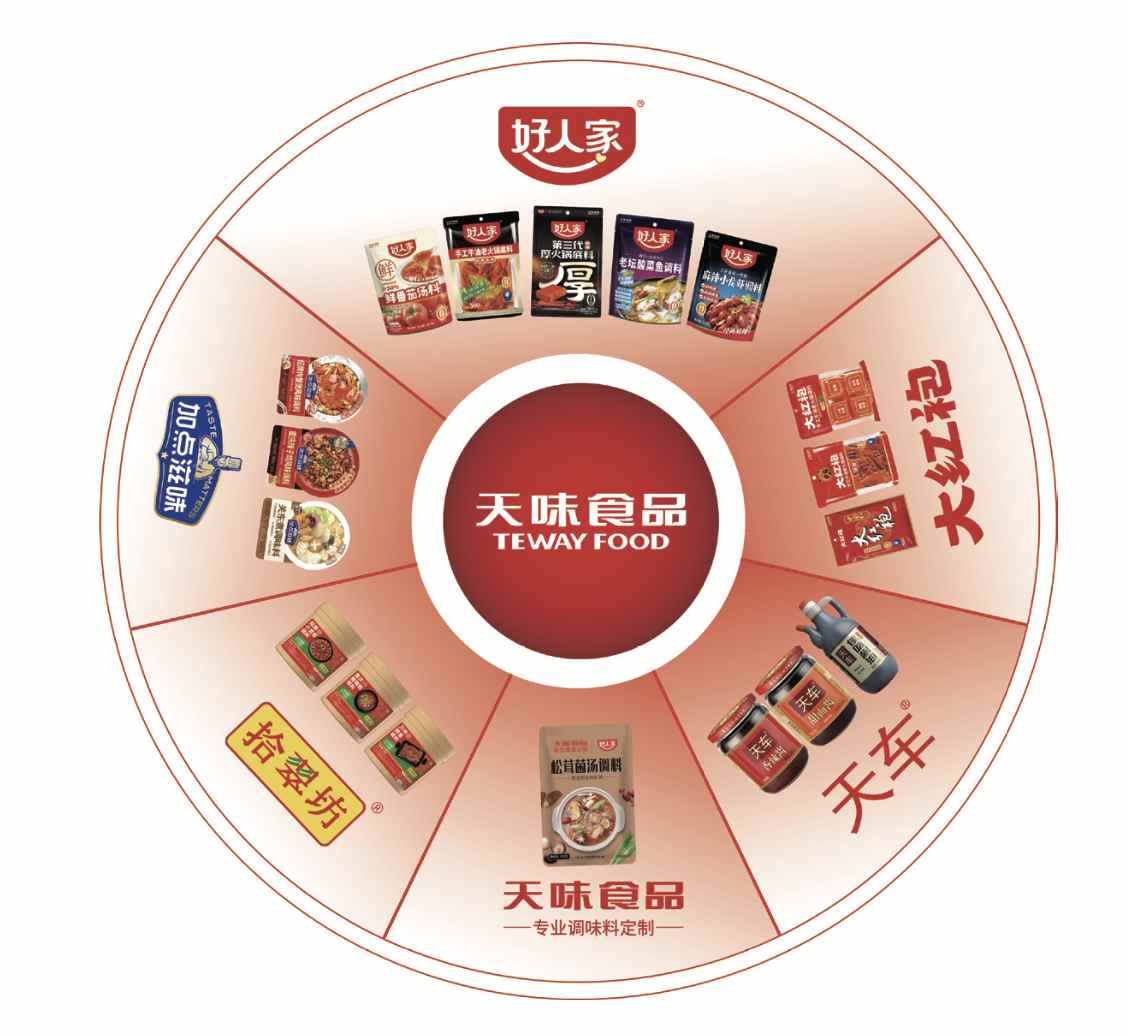
Core Viewpoint - The Chinese compound seasoning industry, particularly represented by hot pot base ingredients, is experiencing rapid growth, attracting significant attention from the capital market as consumer demand for convenient cooking and diverse flavors continues to rise [1][8]. Company Overview - Tianwei Food, known as the "first stock of hot pot base ingredients" in A-shares, has submitted an application for H-share listing on the Hong Kong Stock Exchange, with CICC serving as the sole sponsor [1][9]. - The company is recognized as a leading and rapidly growing compound seasoning company in China, ranking fourth in revenue among Chinese compound seasoning companies by 2024, and is the fastest-growing among the top five from 2022 to 2024 [2][4]. Financial Performance - Tianwei Food's revenue for 2022, 2023, and 2024 is projected to be 2.676 billion, 3.126 billion, and 3.447 billion RMB, respectively, with a compound annual growth rate (CAGR) of 13.5% [4][5]. - Net profit for the same period is expected to be 341 million, 466 million, and 645 million RMB, with a CAGR of 37.5%, indicating strong cost control and operational efficiency [4][5]. Product Segmentation - The company has developed a diverse brand matrix, including "Haorenjia," "Dahongpao," and others, targeting various consumer segments and avoiding internal competition [2][4]. - Recipe-based seasonings have become the primary revenue source, with revenue growing from 1.375 billion RMB in 2022 to 2.086 billion RMB in 2024, representing a CAGR of 18.2% and increasing its share of total revenue from 51.4% to 60.5% [5][6]. Market Position and Strategy - The hot pot seasoning segment has shown slower growth, with revenue increasing from 1.192 billion RMB in 2022 to 1.256 billion RMB in 2024, reflecting a CAGR of only 2.9% [6]. - The company has established a comprehensive sales network across China, with over 3,251 distributors and more than 1 million terminal points, leading in terminal coverage among listed companies focused on compound seasonings [6][7]. International Expansion - Tianwei Food has begun international expansion, exporting products to over 50 countries and regions, enhancing global brand recognition through various marketing strategies [7][9]. - The upcoming Hong Kong listing is seen as a strategic move to attract international investors and support the company's global branding efforts [9][10]. Industry Outlook - The Chinese seasoning market is projected to grow to 498.1 billion RMB by 2024, with compound seasonings expected to grow at a CAGR of 6.4% [8]. - Recipe-based seasonings are anticipated to be the fastest-growing segment, with a market size of 21.6 billion RMB by 2024, driven by consumer demand for convenient cooking solutions [8].


靠外卖起家的虎邦辣酱,回到老干妈统治的战场
Zheng Quan Shi Bao· 2025-11-21 02:36
Core Viewpoint - Tiger Brand Chili Sauce has achieved over 600 million in revenue by the end of October this year, marking a nearly 40% growth compared to the same period last year, driven primarily by product and channel expansion [1] Product Summary - The strongest product performance comes from a series of regional specialty chili sauces, such as the Northeast-flavored egg sauce [2] - Tiger Brand plans to continue focusing on chili sauce while expanding regional specialty products, with the fastest-growing being the Northeast-flavored egg sauce, which is also a key product for international markets in North America and Southeast Asia [5] Channel Summary - The growth in channels is attributed to the deepening of new retail models like Hema and Pang Donglai, as well as the exploration of instant retail [3] - Tiger Brand has begun to penetrate supermarkets since 2022, focusing on regional markets and gradually expanding [5] - The most important channel currently is new retail, where Tiger Brand ranks high on Hema's chili sauce repurchase and rising lists [5] Competitive Landscape - The chili sauce market is highly fragmented, with competition not only from traditional brands but also from regional and private label products [4] - Online platforms show that many best-selling chili sauces come from smaller brands, often priced lower than Tiger Brand [6] - Offline competition includes established brands like Lao Gan Ma and others of similar scale [7] Challenges - Tiger Brand's reliance on fresh pepper preservation technology requires cold chain logistics, which poses challenges in instant retail due to the dispersed nature of flash warehouses [8] - The deepening of supermarket channels brings Tiger Brand closer to traditional competitors, necessitating not just flavor differentiation but also channel promotion and supply chain optimization [8] - The company is currently focusing resources on product development and supply chain upgrades, with no immediate plans for external financing, acquisitions, or an IPO [8]
交银国际每日晨报-20251121
BOCOM International· 2025-11-21 02:29
Group 1: Xiaomi Group (1810 HK) - The automotive business achieved profitability for the first time in Q3 2025, generating an operating profit of 700 million yuan [1] - Smartphone gross margin declined by 0.4 percentage points to 11.1% in Q3 2025 due to rising storage prices, which exceeded previous market expectations [1][2] - The target price for Xiaomi has been adjusted down to HKD 50, corresponding to a 26 times P/E ratio for 2026, while maintaining a "Buy" rating [2] Group 2: Gaotu (GOTU US) - The company is expected to see a revenue growth of 35% in 2025 and 20% in 2026, despite a projected adjusted operating loss of approximately 510 million yuan for 2025 [3] - The long-term development trend for K12 education services remains positive, supported by the company's online education advantages and demographic changes [3] - The target price for Gaotu is set at USD 5.20, reflecting a 15 times P/E ratio for 2026, with a "Buy" rating maintained [3]

新股前瞻|中式风味出海潮下,天味食品如何讲好“中国味道”故事?
智通财经网· 2025-11-21 02:16
Core Viewpoint - The Chinese compound seasoning industry, particularly represented by hot pot culture, is experiencing rapid growth, attracting significant attention from the capital market. The demand for convenient cooking, standardized flavors, and diverse tastes is driving the growth of compound seasonings, especially hot pot bases and recipe-style seasonings, making them one of the fastest-growing segments in the seasoning industry [1][8]. Company Overview - Sichuan Tianwei Food Group Co., Ltd. (Tianwei Food) is a leading and rapidly growing compound seasoning company in China, having listed on the Shanghai Stock Exchange in 2019. According to Frost & Sullivan, by 2024, the company is projected to be the fourth largest compound seasoning company in China and the fastest-growing among the top five in terms of revenue growth from 2022 to 2024 [1][8]. Financial Performance - Tianwei Food's revenue for 2022, 2023, and 2024 is projected to be 2.676 billion RMB, 3.126 billion RMB, and 3.447 billion RMB, respectively, with a compound annual growth rate (CAGR) of 13.5%. Net profit for the same years is expected to be 341 million RMB, 466 million RMB, and 645 million RMB, reflecting a CAGR of 37.5%, significantly outpacing revenue growth [4][5]. Product Segmentation - The company has a diverse product matrix, including recipe-style seasonings, hot pot seasonings, sauces, and other compound seasonings. Recipe-style seasonings have become the most important revenue source, with revenue growing from 1.375 billion RMB in 2022 to 2.086 billion RMB in 2024, achieving a CAGR of 18.2% and accounting for 60.5% of total revenue by 2024 [5][6]. Market Position - In the recipe-style seasoning segment, Tianwei Food holds a market share of 9.7%, significantly higher than the second-place competitor's 2.6%. The company is also the second-largest in the hot pot seasoning market with a 4.8% market share [8][9]. Sales Network - Tianwei Food has established a comprehensive sales network across China, with 3,251 distributors and over 1 million retail points. The company leads in terminal coverage among listed companies focused on compound seasonings [6][8]. International Expansion - The company has begun internationalizing its brand, exporting products to over 50 countries and regions. The upcoming listing in Hong Kong is seen as a strategic move to enhance global brand recognition and access international investors [7][9]. Industry Outlook - The Chinese seasoning market is projected to reach 498.1 billion RMB by 2024, with compound seasonings growing at a CAGR of 6.4%. Recipe-style seasonings are expected to grow even faster, with a projected market size of 21.6 billion RMB by 2024 [8][9].
海天味业11月20日获融资买入3220.51万元,融资余额10.98亿元
Xin Lang Cai Jing· 2025-11-21 01:25
Core Insights - Haitan Flavor Industry experienced a slight decline of 0.13% on November 20, with a trading volume of 316 million yuan [1] - The company reported a net financing purchase of 5.43 million yuan on the same day, indicating strong investor interest despite the minor price drop [1] Financing Overview - On November 20, Haitan Flavor Industry had a financing buy-in amount of 32.21 million yuan, with a total financing balance of 1.10 billion yuan, representing 0.52% of its market capitalization [1] - The financing balance is above the 70th percentile of the past year, indicating a relatively high level of leverage [1] Short Selling Activity - On the same day, the company saw a short selling repayment of 17,500 shares and a short selling amount of 2,400 shares, totaling approximately 90,600 yuan [1] - The remaining short selling volume was 240,900 shares, with a short selling balance of 9.09 million yuan, exceeding the 90th percentile of the past year, suggesting high short interest [1] Company Profile - Haitan Flavor Industry, established on April 8, 2000, and listed on February 11, 2014, is primarily engaged in the production and sale of condiments, including soy sauce, seasoning sauces, oyster sauce, chicken essence, and vinegar [2] - The revenue composition for the company includes soy sauce (52.05%), other products (16.45%), oyster sauce (16.43%), seasoning sauces (10.68%), and miscellaneous (4.39%) [2] Financial Performance - For the period from January to September 2025, Haitan Flavor Industry achieved a revenue of 21.63 billion yuan, reflecting a year-on-year growth of 6.02% [2] - The net profit attributable to shareholders was 5.32 billion yuan, marking a year-on-year increase of 10.54% [2] Dividend Distribution - Since its A-share listing, Haitan Flavor Industry has distributed a total of 32.71 billion yuan in dividends, with 13.20 billion yuan distributed over the past three years [3] Shareholder Structure - As of September 30, 2025, the number of shareholders increased to 211,200, up by 6.01% from the previous period [2] - Hong Kong Central Clearing Limited is the fifth-largest shareholder, holding 149 million shares, a decrease of 46.83 million shares from the previous period [3]

卖调味品年入34亿,四川成都冲出一家IPO,三年半派息近13亿
3 6 Ke· 2025-11-21 01:03
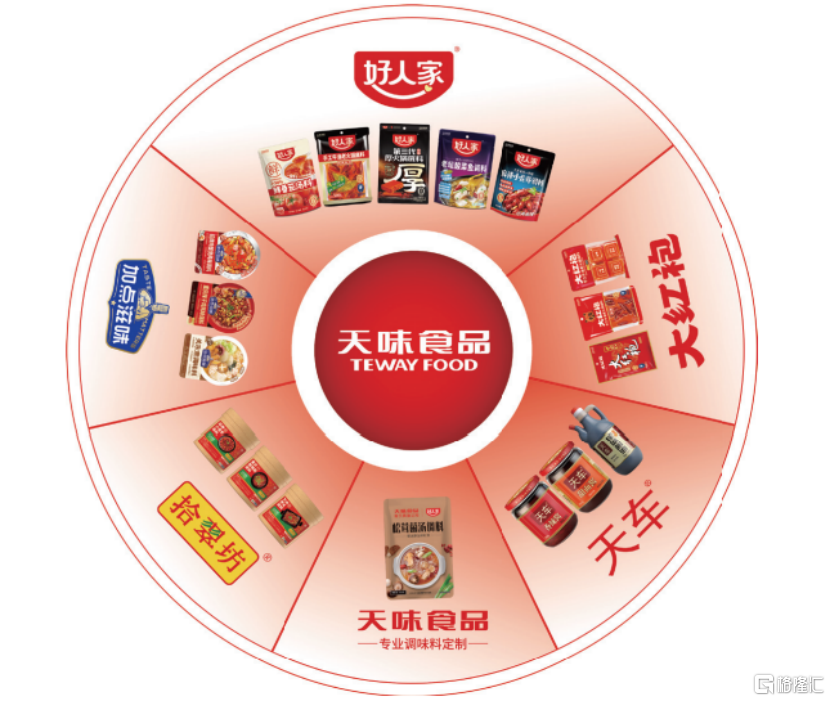
Core Viewpoint - The Chinese seasoning market is experiencing significant growth, with the market size expected to reach 498.1 billion RMB in 2024, driven by increasing disposable income, urbanization, and diverse product offerings [1][9]. Company Overview - Tianwei Foods, a leading player in the compound seasoning sector, has submitted an IPO application to the Hong Kong Stock Exchange, aiming to expand its market presence [1][17]. - The company was established in 2007 and has a market capitalization of approximately 13.7 billion RMB as of November 20 [1][17]. Product Segmentation - Tianwei Foods focuses on compound seasonings, which account for over 50% of its revenue, with hot pot seasonings contributing more than 30% [6][10]. - The company offers various popular products, including "Good People" brand pickled fish seasoning and handmade beef hot pot base [4][6]. Financial Performance - The company's revenue has shown a growth trend, with figures of approximately 2.68 billion RMB in 2022, 3.13 billion RMB in 2023, and projected 3.45 billion RMB in 2024 [10][11]. - The gross profit margin has improved from 33.9% in 2022 to 39.4% in 2024 [10][13]. Market Position - Tianwei Foods ranks as the fourth largest compound seasoning company in China, holding a market share of 2.7% [14][15]. - The overall compound seasoning market in China is expected to grow at a compound annual growth rate (CAGR) of 6.4% from 2024 to 2029 [9][14]. Competitive Landscape - The Chinese seasoning market is highly competitive, with over a thousand participants, including major brands like Haitian Flavoring and Zhongju High-tech [14][15]. - The market is characterized by low concentration, with the top five companies holding only 15.9% of the market share [14][15]. Supply Chain and Production - Tianwei Foods sources raw materials from multiple suppliers, with the top five suppliers accounting for 44.2% of total procurement in recent years [8]. - The company operates four production bases in Sichuan and utilizes third-party manufacturers for certain products [8][10]. Marketing and Sales Strategy - The company has increased its online sales efforts, with direct sales revenue rising from 15% to 32.4% during the reporting period [8]. - Marketing expenses significantly exceed research and development costs, indicating a strong focus on brand promotion [11][17]. Future Outlook - The company plans to use funds from its IPO for brand building, expanding sales networks, and enhancing supply chain capabilities [17]. - Despite growth opportunities, Tianwei Foods faces challenges such as raw material price fluctuations and intense competition in the seasoning market [17].
天味食品赴港IPO,卖调味品年入34亿,三年半派息近13亿
Ge Long Hui· 2025-11-20 09:29
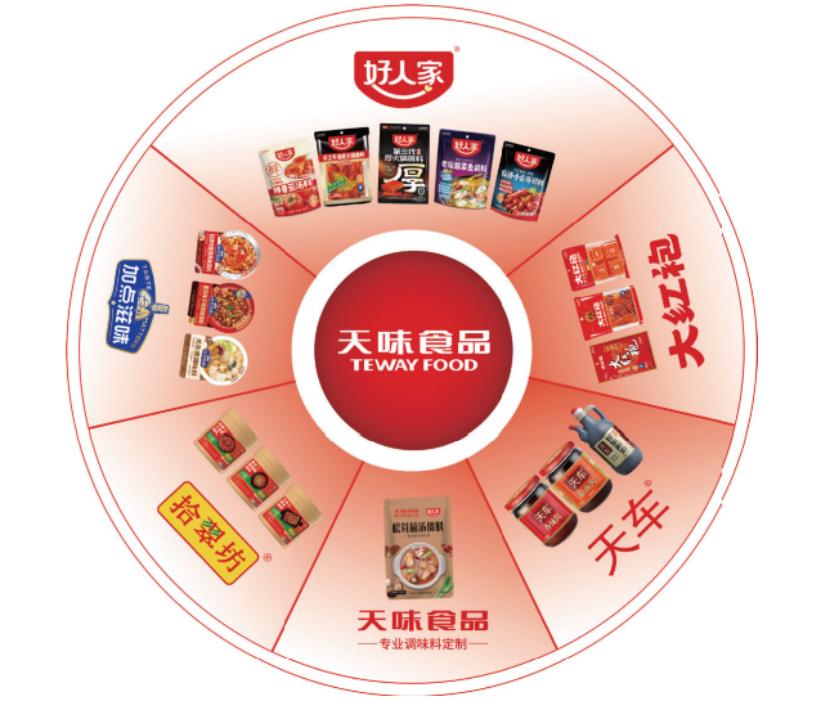
Core Viewpoint - The Chinese seasoning market is experiencing significant growth, with the market size expected to reach 498.1 billion RMB in 2024, driven by increasing disposable income, urbanization, and diversification of seasoning products [1][12]. Company Overview - Tianwei Foods, also known as Sichuan Tianwei Food Group Co., Ltd., is focusing on compound seasoning products and has recently submitted an IPO application to the Hong Kong Stock Exchange [1][21]. - The company was listed on the Shanghai Stock Exchange in 2019 and has a current market capitalization of approximately 13.7 billion RMB as of November 20 [1]. Product Categories - Seasonings are categorized into single and compound seasonings, with Tianwei Foods specializing in various compound seasoning products, including hot pot bases and customized sauces [4][5]. - In the reporting period from 2022 to the first half of 2025, recipe-based seasonings contributed over 50% of the company's revenue, while hot pot seasonings accounted for more than 30% [7]. Financial Performance - Tianwei Foods has shown a growth trend in revenue, with figures of approximately 2.68 billion RMB in 2022, 3.13 billion RMB in 2023, and projected 3.45 billion RMB in 2024 [14]. - The company’s gross profit margin has improved from 33.9% in 2022 to 39.4% in 2024, indicating better cost management and pricing strategies [14]. Market Position - Tianwei Foods ranks as the fourth largest compound seasoning company in China, holding a market share of 2.7% in 2024, amidst a competitive landscape with over a thousand market participants [17][19]. - The global seasoning market is projected to grow from approximately 2.14 trillion RMB in 2024 to 2.87 trillion RMB by 2029, with compound seasonings expected to grow at a faster rate due to changing consumer preferences [12]. Sales Channels - The company has expanded its sales channels significantly, with direct sales revenue increasing from 15% to 32.4% due to the development of online sales [10]. - Tianwei Foods has established a nationwide distribution network with over 3,251 distributors and is actively expanding into international markets [9]. Future Prospects - The IPO proceeds are intended for brand building, expanding sales networks, enhancing supply chain capabilities, and increasing product innovation [23]. - The compound seasoning market in China is still in its early development stage, suggesting potential for future growth as consumer preferences evolve [17].
卖调味品年入34亿!四川成都冲出一家IPO,三年半派息近13亿
格隆汇APP· 2025-11-20 09:14
格隆汇新股 卖调味品年入34亿!四川成都冲出一家IPO,三年半派息近13亿 原创 阅读全文 ...
大行评级丨交银国际:首予海天味业H股“买入”评级及目标价39.1港元 行业龙头地位稳固
Ge Long Hui· 2025-11-20 07:36
Core Viewpoint - The report from CMB International initiates a "Buy" rating for Haitian Flavor Industry's H-shares with a target price of HKD 39.1, highlighting the company's strong position in the Chinese condiment industry and potential for overseas expansion [1] Group 1: Company Overview - Haitian Flavor Industry is recognized as a leader in the Chinese condiment market [1] - The company's overseas business is still in its early stages but is expected to benefit from the trend of Chinese restaurant brands expanding internationally [1] Group 2: Financial Projections - CMB International estimates that Haitian's overseas revenue could achieve double-digit compound growth over the next three years, leading to an increase in the proportion of overseas revenue [1] - The forecasted compound annual growth rate (CAGR) for Haitian's revenue from 2024 to 2027 is approximately 8%, while net profit is expected to maintain a growth rate of around 10% [1]