
化工产业

Search documents
美国关税冲击台湾传统产业 台积电亦面临困局
Zhong Guo Xin Wen Wang· 2025-08-20 23:20
Group 1 - The U.S. has imposed a temporary 20% tariff on Taiwan, significantly impacting traditional industries, particularly machinery and chemicals, which are crucial to Taiwan's export-driven economy [1] - The second quarter saw a decline in traditional industry output, while the information electronics sector remained robust, indicating a structural imbalance exacerbated by tariffs [1] - Major companies in the machinery sector, such as Baide Machinery and Cheng Tai Machinery, are implementing reduced work schedules due to operational pressures, with warnings of potential large-scale layoffs if conditions do not improve [1] Group 2 - The automotive market in Taiwan is experiencing a downturn, attributed to consumer concerns over tariff-induced price fluctuations, leading to a cautious market atmosphere [2] - TSMC, a key player in the semiconductor industry, is facing challenges as the U.S. considers direct investments in companies benefiting from the "Chip Act," causing a significant drop in TSMC's stock price by 4.22% [2] - The semiconductor sector is under threat from potential U.S. tariffs of up to 300%, aimed at encouraging domestic investment, which could lead to a restructuring of Taiwan's semiconductor supply chain [2] Group 3 - Growing skepticism towards the U.S. is evident among the Taiwanese public, as concerns rise over whether Taiwan is merely being used as a bargaining chip in U.S. trade policies [3] - The Taiwanese government's handling of tariff negotiations has led to a trust deficit, as initial communications downplayed the actual impact of the tariffs, causing suspicion among industry stakeholders and the public [3]

以“水”之变透视山水间新活力 创新科技赋能产业链“闭环”减排
Yang Shi Wang· 2025-08-20 07:23
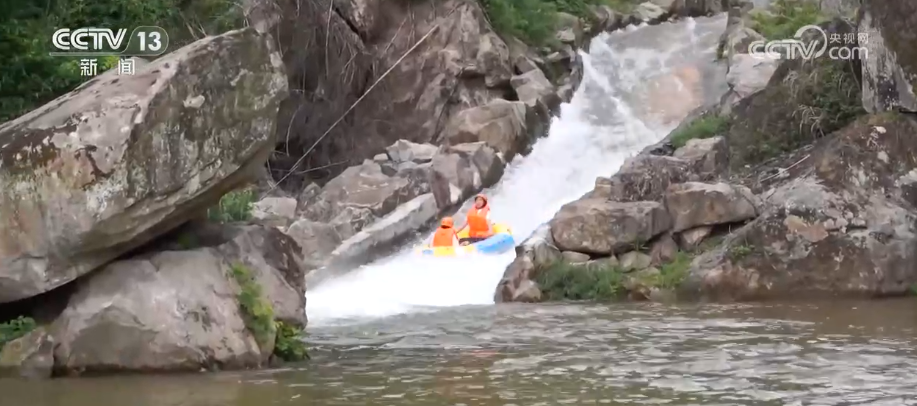
Group 1 - The article highlights the emergence of various cooling activities in Chongqing during the summer, driven by water-related tourism and services [1][5] - New tourism projects such as rafting have been introduced along the tributaries of the Yangtze River, providing visitors with refreshing experiences [5] - The local government has been actively promoting the transition of fishermen to other livelihoods, with support services like subsidies and low-interest loans [7][11] Group 2 - Since the implementation of fishing bans, the number of fish species in the Yangtze River's Chongqing section has increased by 58, indicating improved ecological conditions [13] - The water quality in the Yangtze River has been monitored, showing a consistent improvement over the past eight years, with the water quality now classified as Grade II [11][14] - The Chongqing ecological environment bureau has established a comprehensive monitoring system to oversee pollution and water quality across the city [21][23] Group 3 - The Baidao Chemical Industrial Park has seen a significant increase in the number of enterprises, growing from 26 to 60 over the past decade, while maintaining ecological improvements [26][29] - The park's wastewater treatment facility can process over 30,000 tons of industrial wastewater daily, ensuring that the discharged water meets national standards [25] - The industrial output value in the park has increased from 12.2 billion to 64.9 billion yuan, with an average annual growth rate of 23% [29][30]

山东省工信厅、省化工专项行动办走进章丘开展主题党日与社区服务
Qi Lu Wan Bao· 2025-08-20 03:52
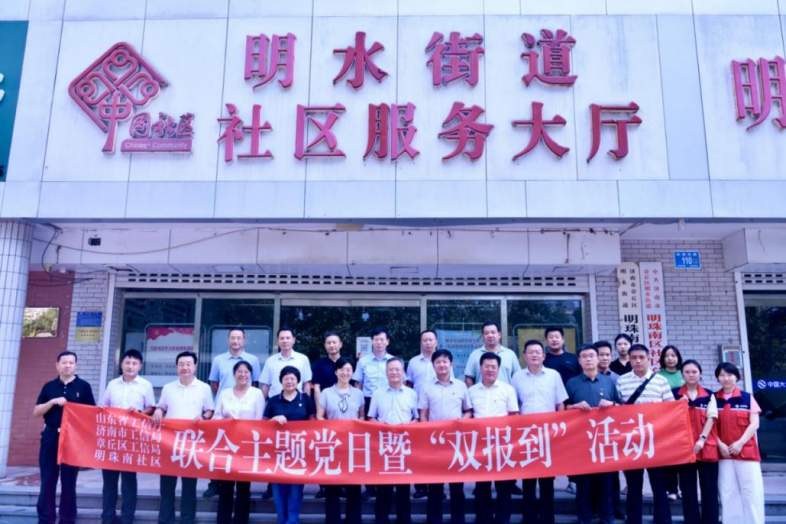
Group 1 - The event was organized to commemorate the 80th anniversary of the victory in the Chinese People's Anti-Japanese War and the World Anti-Fascist War, under the guidance of the provincial party committee's "double reporting" work deployment [1] - Participants included various party branches from the provincial industrial and information technology department, local government, and community organizations, emphasizing collaboration and community service [3][5] - The activities included visiting retired soldiers and underprivileged residents, providing care packages, and engaging in immersive party education at historical sites [3] Group 2 - The event facilitated discussions on using community ties to support industrial development in Zhangqiu, focusing on safety, green transformation, and the integration of party building with business operations [5] - Future initiatives will aim to shift service work from a temporary to a regular basis, expanding from single support to multi-faceted collaboration to enhance community well-being [5]
59.1%增长率!日本化工企业为何重新押注中国市场?
Sou Hu Cai Jing· 2025-08-19 06:12
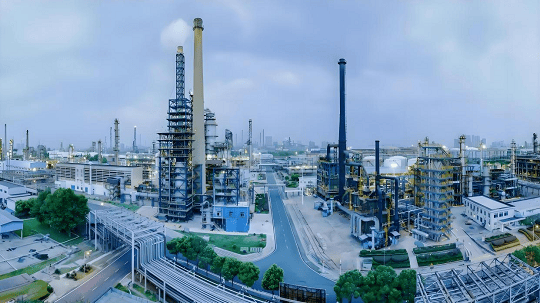
Core Viewpoint - Japan's investment in China has significantly increased by 59.1% in the first half of 2025, indicating a potential reversal of the declining trend observed since 2021, with a record high investment intention among Japanese companies [2][4]. Group 1: Investment Growth and Trends - In the chemical sector, Japan's investment in China's chemical industry has shown rapid growth, with over 8 investments totaling more than 3 billion yuan in the past year [2][3]. - Japanese companies are focusing their investments on high-end materials, new energy support, and green technology, with investment amounts ranging from tens of millions to billions of dollars [2][4]. Group 2: Drivers of Investment - The rapid growth of Japan's investment in China's chemical industry is driven by the adjustment of industrial structures in both countries, long-term development dividends in the Chinese market, and multiple strategic considerations [4][5]. - China's chemical industry is experiencing structural demand surges due to the new energy revolution, consumption upgrades, and accelerated infrastructure development, which attract Japanese investments [5][6]. - Japanese chemical companies are undergoing necessary strategic transformations due to domestic market saturation and strict environmental regulations, leading them to seek opportunities in China [5][6]. Group 3: Impact on China's Chemical Industry - Japanese investments are beneficial for driving China's industrial upgrade and ecological optimization, as they bring advanced technologies and practices that enhance the efficiency and completeness of China's chemical industry [7][8]. - The influx of Japanese capital is expected to stimulate innovation and management upgrades among local Chinese chemical companies, creating a competitive environment that fosters growth [7][8]. - Japanese investments are concentrated in key regions like the Yangtze River Delta and the Pearl River Delta, generating significant employment opportunities and boosting local economies [8]. Group 4: Potential Challenges - There are concerns regarding the risk of core technology control, as Japanese companies often employ strategies that limit the transfer of critical technologies to Chinese firms [9][10]. - The potential for "invisible monopolies" in certain high-end chemical materials may restrict the competitive space for Chinese companies, particularly in sectors like OLED materials and semiconductor packaging [9][10]. - Japanese investments could accelerate the consumption of China's natural resources, raising concerns about sustainability and resource management [9][10]. Group 5: Opportunities for Chinese Companies - Chinese chemical companies can adopt a "precise absorption + independent breakthrough" model to mitigate reliance on Japanese technology, focusing on high-end production lines established by Japanese firms [11][12]. - There is an opportunity for Chinese firms to differentiate themselves by expanding in areas where Japanese companies have less presence, such as bio-based chemicals and low-carbon technologies [12]. - By emphasizing "joint R&D" and "local talent cultivation" in applications for high-end foreign investment projects, Chinese companies can leverage policy advantages to enhance their competitive position [12].
陕西化工企业探索风险管理新路径
Qi Huo Ri Bao Wang· 2025-08-18 16:26
Core Viewpoint - The chemical industry in Shaanxi is at a critical juncture for transformation and upgrading, with a focus on risk management solutions through innovative financial tools in response to intensified competition and commodity price volatility [1][4]. Group 1: Industry Context - Shaanxi is a core region of China's energy and chemical industry, with a coal-based olefin industry chain that generates an annual output value exceeding 100 billion [2]. - The DCE is implementing three major initiatives to support the high-quality development of the chemical industry in Shaanxi, including expanding polyethylene delivery areas and innovating product designs [2]. Group 2: Financial Tools and Innovations - The DCE introduced three chemical monthly average price futures, which feature innovative pricing, lower annual volatility, and diverse strategies for risk management [2]. - Monthly average price futures provide enterprises with a smoother price curve, offering a reference for price trends with characteristics of gradual increases and decreases [2]. Group 3: Risk Management Practices - A framework for internal control of hedging was discussed, emphasizing a three-tier approval mechanism involving senior management, risk control, and the board of directors [3]. - Practical applications of futures derivatives in the industry were shared, highlighting how traders can optimize hedging effects and manage risks through various trading models [3]. Group 4: Training Outcomes - The successful training session marked a significant step for the Shaanxi chemical industry in risk management, with futures derivatives becoming essential tools for addressing market volatility [4]. - Innovative financial tools and models, such as monthly average price futures and basis trading, are transforming traditional business practices in the chemical sector [4].
案例|数商云赋能化工产业:某大型化工集团B2B平台数字化转型实践与生态重构
Sou Hu Cai Jing· 2025-08-13 02:56
Core Insights - Traditional chemical enterprises face significant challenges such as inefficient supply chains, high transaction costs, and data silos, particularly in the context of increasing competition and stricter environmental policies [2] - A Group, a leading chemical company, is implementing a specialized B2B platform in collaboration with Shushangyun to enhance supply chain efficiency by 40%, reduce procurement costs by 15%, and improve customer satisfaction by 30% [2][9] Group 1: Project Background - A Group's supply chain involves thousands of suppliers and customers, leading to four major pain points: inefficient supply chain collaboration, cumbersome transaction processes, severe data silos, and slow customer response times [3][4] - Shushangyun has designed a comprehensive B2B platform that covers the entire supply chain from procurement to sales, utilizing a hybrid architecture of distributed microservices, cloud-native technology, and blockchain [3][4] Group 2: Technical Architecture - The platform's distributed microservices architecture decomposes core functions into over 30 independent services, allowing for flexible development and deployment [4] - Cloud-native technology is employed to create a distributed infrastructure, enhancing resource efficiency and operational intelligence [5] - Blockchain technology ensures data security and integrity, making transaction data immutable and protecting sensitive information [5] Group 3: Core Functional Modules - The platform includes features such as intelligent supply chain collaboration, full-process online transactions, and a data platform that shifts decision-making from experience-based to data-driven [6][7] - Specific functionalities include online bidding, dynamic inventory management, supplier performance evaluation, electronic contract signing, multi-currency settlement, and logistics tracking [7][8] Group 4: Implementation Path - The implementation follows a five-step method: current state diagnosis, process modeling, system selection, data migration, and continuous optimization [6][9] - The platform has demonstrated significant results, including a 40% increase in supply chain collaboration efficiency and a 20% reduction in operational costs [9] Group 5: Industry Demonstration Value - The B2B platform's success in the chemical industry serves as a model for other sectors, including manufacturing and agriculture, showcasing its replicability [9][10] - Future developments will focus on integrating AI, blockchain, and green computing to enhance supply chain finance and sustainability [10]

瑞达期货甲醇产业日报-20250731
Rui Da Qi Huo· 2025-07-31 09:50
甲醇产业日报 2025-07-31 | 项目类别 | 数据指标 | 最新 | 环比 数据指标 | 最新 | 环比 | | --- | --- | --- | --- | --- | --- | | 期货市场 | 主力合约收盘价甲醇(日,元/吨) | 2405 | -14 甲醇9-1价差(日,元/吨) | -88 | 3 | | | 主力合约持仓量:甲醇(日,手) | 564414 | -14931 期货前20名持仓:净买单量:甲醇(日,手) | -95446 | -7265 | | | 仓单数量:甲醇(日,张) | 8716 | -118 | | | | 现货市场 | 江苏太仓(日,元/吨) | 2395 | -5 内蒙古(日,元/吨) | 2060 | 2.5 | | | 华东-西北价差(日,元/吨) | 335 | -7.5 郑醇主力合约基差(日,元/吨) | -10 | 9 | | | 甲醇:CFR中国主港(日,美元/吨) | 275 | 0 CFR东南亚(日,美元/吨) | 333 | 0 | | | FOB鹿特丹(日,欧元/吨) | 246 | 7 中国主港-东南亚价差(日,美元/吨) | -58 ...
瑞达期货甲醇产业日报-20250722
Rui Da Qi Huo· 2025-07-22 09:21
Report Summary 1. Report Industry Investment Rating No investment rating information is provided in the report. 2. Core Viewpoints - The overall methanol production decreased slightly last week as the loss of production capacity due to domestic methanol maintenance and production cuts exceeded the output of restored production capacity. The overall inventory showed a downward trend as some olefin plants consumed the previously accumulated methanol inventory after resumption, but the methanol port inventory continued to increase. The MA2509 contract is expected to fluctuate in the range of 2430 - 2500 in the short - term [2][3]. - The overall inventory of methanol showed a downward trend last week, but the port inventory continued to increase. The olefin industry's overall start - up increased slightly last week, and the short - term overall start - up rate is expected to increase slightly [2]. 3. Summary by Relevant Catalogs 3.1 Futures Market - The closing price of the main methanol contract was 2457 yuan/ton, up 46 yuan/ton; the 9 - 1 spread of methanol was - 79 yuan/ton, down 8 yuan/ton. The main contract's open interest was 660,678 lots, an increase of 10,223 lots. The net long position of the top 20 futures holders was - 111,147 lots, an increase of 4086 lots. The number of warehouse receipts was 10,344, unchanged [2]. 3.2 Spot Market - The price in Jiangsu Taicang was 2390 yuan/ton, unchanged; the price in Inner Mongolia was 1985 yuan/ton, up 2.5 yuan/ton. The price difference between East China and Northwest China was 405 yuan/ton, up 12.5 yuan/ton. The basis of the main Zhengzhou methanol contract was - 67 yuan/ton, down 46 yuan/ton. The CFR price at the main Chinese port was 275 US dollars/ton, up 2 US dollars/ton; the CFR price in Southeast Asia was 330 US dollars/ton, unchanged. The FOB price in Rotterdam was 223 euros/ton, up 1 euro/ton. The price difference between the main Chinese port and Southeast Asia was - 55 US dollars/ton, up 2 US dollars/ton [2]. 3.3 Upstream Situation - The price of NYMEX natural gas was 3.32 US dollars/million British thermal units, down 0.25 US dollars [2]. 3.4 Industry Situation - The inventory at East China ports was 63.4 tons, an increase of 6.35 tons; the inventory at South China ports was 15.62 tons, an increase of 0.78 tons. The import profit of methanol was 3.44 yuan/ton, down 7.04 yuan/ton. The monthly import volume was 122.02 tons, a decrease of 7.21 tons. The inventory of inland enterprises was 352,300 tons, a decrease of 4600 tons. The methanol enterprise start - up rate was 82.69%, down 2.06 percentage points [2]. 3.5 Downstream Situation - The start - up rate of formaldehyde was 43.65%, down 1.59 percentage points; the start - up rate of acetic acid was 90.59%, down 3.32 percentage points; the start - up rate of dimethyl ether was 5.19%, unchanged; the start - up rate of MTBE was 67.63%, up 0.77 percentage points. The start - up rate of olefins was 85.1%, down 0.05 percentage points. The methanol - to - olefins disk profit was - 1003 yuan/ton, down 61 yuan/ton [2]. 3.6 Option Market - The 20 - day historical volatility of methanol was 14.65%, down 7.99 percentage points; the 40 - day historical volatility was 23.16%, up 0.39 percentage points. The implied volatility of at - the - money call options and put options for methanol was 18.99%, up 3.43 percentage points [2]. 3.7 Industry News - As of July 16, the inventory of Chinese methanol sample production enterprises was 35.23 tons, a decrease of 0.46 tons from the previous period, a month - on - month decrease of 1.28%; the orders to be delivered of sample enterprises were 24.31 tons, an increase of 2.19 tons from the previous period, a month - on - month increase of 9.89% [2]. - As of July 16, the total inventory of Chinese methanol ports was 79.02 tons, an increase of 7.13 tons from the previous data. The inventory in East China and South China increased by 6.35 tons and 0.78 tons respectively [2]. - As of July 17, as of July 16, 2025 (the 29th week), the inventory of Chinese high - cis butadiene rubber sample enterprises was 3.23 tons, a decrease of 0.05 tons from the previous period, a month - on - month decrease of 1.59% [2]. 3.8 Suggested Attention - Pay attention to the inventory of Longzhong enterprises and ports on Wednesday [2].
瑞达期货甲醇产业日报-20250716
Rui Da Qi Huo· 2025-07-16 09:32
Report Summary 1. Report Industry Investment Rating No relevant content provided. 2. Core Viewpoints - The overall methanol production has slightly decreased recently as the loss of production capacity due to domestic methanol maintenance and production cuts exceeds the output of restored production capacity. The inventory performance of inland enterprises varies. Some enterprises' inventory continues to accumulate due to weak downstream demand, while the inventory of some olefin plants decreases as the pre - accumulated methanol inventory is gradually consumed after restoration. The methanol port inventory continues to accumulate. The downstream demand remains weak, and the MA2509 contract is expected to fluctuate in the range of 2360 - 2430 yuan/ton in the short term [2][3]. 3. Summary by Related Catalogs 3.1 Futures Market - The closing price of the main methanol contract is 2367 yuan/ton, down 19 yuan; the 9 - 1 spread is - 67 yuan/ton, up 2 yuan. The main contract's open interest is 654,082 lots, up 3,207 lots; the net long position of the top 20 futures holders is - 121,457 lots, down 9,436 lots. The number of warehouse receipts is 8,931, down 320 [2]. 3.2 Spot Market - The price in Jiangsu Taicang is 2375 yuan/ton, down 10 yuan; in Inner Mongolia, it is 1972.5 yuan/ton, down 2.5 yuan. The price difference between East China and Northwest is 402.5 yuan/ton, down 7.5 yuan; the basis of the main Zhengzhou methanol contract is 8 yuan. The CFR price at the main Chinese port is 277 US dollars/ton, unchanged; CFR Southeast Asia is 333 US dollars/ton, unchanged. The FOB price in Rotterdam is 241 euros/ton, unchanged. The price difference between the main Chinese port and Southeast Asia is - 56 US dollars/ton, unchanged [2]. 3.3 Upstream Situation - The price of NYMEX natural gas is 3.51 US dollars/million British thermal units, up 0.06 US dollars [2]. 3.4 Industry Situation - The inventory in East China ports is 57.05 tons, up 6.1 tons; in South China ports, it is 14.84 tons, down 1.58 tons. The methanol import profit is - 21.11 yuan/ton, up 5 yuan. The monthly import volume is 129.23 tons, up 50.46 tons. The inventory of inland enterprises is 356,900 tons, up 4,600 tons. The methanol enterprise operating rate is 84.75%, down 3.43 percentage points [2]. 3.5 Downstream Situation - The formaldehyde operating rate is 45.24%, down 0.83 percentage points; the acetic acid operating rate is 93.91%. The dimethyl ether operating rate is 5.19%; the MTBE operating rate is 66.86%, up 1.8 percentage points. The olefin operating rate is 85.15%, up 0.55 percentage points. The methanol - to - olefin profit on the disk is - 888 yuan/ton, up 55 yuan [2]. 3.6 Option Market - The 20 - day historical volatility of methanol is 21.83%, down 2.05 percentage points; the 40 - day historical volatility is 22.77%, up 0.02 percentage points. The implied volatility of at - the - money call options is 17.24%, up 0.3 percentage points; the implied volatility of at - the - money put options is 17.23%, up 0.28 percentage points [2]. 3.7 Industry News - As of July 16, the inventory of Chinese methanol sample production enterprises is 35.23 tons, down 0.46 tons from the previous period, a 1.28% decrease; the pending orders of sample enterprises are 24.31 tons, up 2.19 tons from the previous period, a 9.89% increase. The total port inventory of Chinese methanol is 79.02 tons, up 7.13 tons from the previous data. The domestic methanol - to - olefin device capacity utilization rate is 85.94%, up 0.55 percentage points [2].
摩洛哥计划高专署预测摩2025年经济增长率为4.4%
Shang Wu Bu Wang Zhan· 2025-07-16 05:52
Economic Growth Outlook - Morocco's economy is expected to maintain robust growth, with projected growth rates of 4.4% in 2025 and 4% in 2026, driven by agricultural recovery and strong domestic demand despite external uncertainties [1][2] Agricultural Sector - The 2024/2025 agricultural season is anticipated to see a grain production of 4.4 million tons, a 41% increase year-on-year, contributing 0.5 percentage points to GDP growth in 2025 and 0.3 percentage points in 2026 [1] - Agricultural value added is expected to grow by 4.7% in 2025 and 3.3% in 2026 [1] Non-Agricultural Sectors - The non-agricultural sectors are projected to grow by 4.3% in 2025 and 4.0% in 2026, with industrial, construction, and service sectors as key drivers [2] - The secondary sector is expected to contribute 1.1 percentage points to GDP growth in both years, with specific growth rates of 4.2% and 4.1% for 2025 and 2026 respectively [2] - The construction sector is projected to grow by 4.9% in 2025 and 4.1% in 2026, supported by events like the Africa Cup in 2025 and the World Cup in 2030 [2] Domestic Demand - Domestic demand is anticipated to be the core growth driver, with expected growth rates of 5.4% in 2025 and 4.6% in 2026, contributing 5.8 and 5 percentage points to GDP respectively [2] - Household consumption is projected to increase by 3.6% in 2025 and 3.4% in 2026, while government consumption is expected to maintain a growth rate of around 4% [2] - Fixed asset investment is forecasted to grow by 9.8% in 2025 and 7.2% in 2026, following a 10.9% increase in 2024 [2] Trade and External Factors - Net exports are expected to continue dragging down economic growth, with the trade deficit projected to rise from 19.1% of GDP in 2024 to 20.1% in 2026 [3] - The current account deficit is expected to remain in the range of 1.8% to 1.9% [3] Fiscal Outlook - Fiscal revenue is projected to increase to 19.3% of GDP in 2025 and 19.4% in 2026, with the fiscal deficit rate expected to decrease from 4% in 2024 to 3.4% in 2026 [3] - Government debt is expected to improve, with domestic debt decreasing by 3 percentage points over three years [3] Monetary Policy - Non-financial sector credit is expected to grow by 7% in 2025, with broad money supply growth remaining above 6% [3] - Foreign exchange reserves are projected to cover five months of import needs [3]