
客运

Search documents
江苏便民快巴上线一周年,实现全省覆盖,累计服务旅客超220万人次!
Jiang Nan Shi Bao· 2025-12-05 04:29
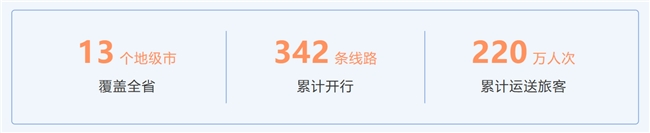
Core Insights - The "Convenient Bus" project by Bus Butler has successfully completed its first year, covering 13 prefecture-level cities in Jiangsu Province and extending services to 35 cities, with a total of 342 diverse routes and 2.2 million passengers served [1][5] Group 1: Model Innovation - The success of the Convenient Bus project stems from a profound innovation in traditional passenger transport models, breaking the limitations of fixed schedules and stations [2] - The project integrates online smart reservations with efficient offline services, creating a "dynamic travel network" across the province [2] - Passengers can easily book various travel services, including intercity pickups, direct scenic area buses, airport shuttles, high-speed rail connections, campus lines, and event shuttles through multiple channels [2] Group 2: Operational Achievements - The one-year operational data reflects the strong market vitality and social value of the Convenient Bus project, achieving seamless coverage of all prefecture-level cities in the province [3] - The service network is densely packed, with 88% of stops located outside traditional stations, effectively bringing services closer to passengers' homes [3] - The product matrix is diversified, catering to different scenario needs from commuting and business travel to tourism and school returns, particularly enhancing the integration of "transportation + tourism" [3] Group 3: Social Impact - Serving 2.2 million passengers is a direct reflection of the project's social benefits and user reputation, effectively alleviating peak travel pressure and promoting a green and shared travel concept [5] Group 4: Future Outlook - The achievements of the Convenient Bus project represent not just numerical growth but a profound restructuring of the traditional travel ecosystem [6] - By efficiently matching dispersed travel demands with transport resources through technology and service innovation, the project enhances individual travel experiences and promotes intercity personnel exchanges and economic cultural interactions [6] - The project aims to continue deepening smart operations, optimizing service experiences, and acting as a bridge connecting urban and rural areas, invigorating cultural tourism, and serving public needs, thereby contributing to a modern comprehensive transportation system that enhances quality of life [6]

MOBICO GROUP PLC (NXPGF) Q3 2025 Sales Call Transcript
Seeking Alpha· 2025-12-01 18:23
PresentationPhilip WhiteExecutive Chairman of the Board Good morning, everyone. Welcome to our Q3 2025 trading update. I'm Phil White. I'm joined today by Brian Egan. As you can see from the announcement this morning, group revenue year-to-date has increased by over 5% versus the prior year, and we're on track to deliver on full year operating profit guidance but towards the lower end of the GBP 180 million to GBP 195 million range. As you expect, ALSA is again performing strongly with 4% growth against a v ...

全国超110个地市开通滴滴站点巴士业务 让城际出行更加便捷安全
Ren Min Ri Bao· 2025-11-30 22:19
Core Insights - Didi's station bus service combines digital technology with traditional passenger transport, enhancing convenience and efficiency for users [2][3][4] Group 1: Service Features - Didi's station buses feature city-specific designs, such as the "Qinghua Porcelain" bus in Nanchang and the "Rainforest" bus in Xishuangbanna, creating a unique urban experience [2] - The service allows for online ticket purchasing, nearby boarding, and dynamic visibility, transforming traditional transport into a multi-point connection model [3] - The service network includes specialized routes like the "College Express" in Guangxi and the "Health Line" in Zhejiang, catering to specific community needs [3] Group 2: Industry Transformation - Traditional passenger transport companies are facing declining ridership and are compelled to undergo digital transformation [4] - Didi's platform provides online traffic and operational solutions, enabling partner companies to better understand market demand and optimize resource allocation [4] - Since partnering with Didi, companies like Guangdong Yuyun Transportation have seen significant increases in passenger flow and vehicle occupancy rates [4] Group 3: Expansion and Collaboration - Didi has established partnerships with over 200 passenger transport companies across more than 110 cities in over 20 provinces [5] - The company aims to collaborate with more transport enterprises to accelerate their transformation and enhance user experience in intercity travel [5]

今年前10个月我国交通运输经济运行稳中有进
Yang Shi Wang· 2025-11-28 11:49
Core Insights - The overall transportation economy in China has shown a stable and progressive development trend in the first ten months of the year [1] Investment and Economic Performance - Fixed asset investment in transportation remains high, reaching 2.95 trillion yuan [1] - The total freight volume completed in the first ten months was 48.29 billion tons, reflecting a year-on-year growth of 3.5% [1] - Cross-regional personnel flow has also been robust, with a total of 56.88 billion person-times, marking a year-on-year increase of 3.6% [1] Port Operations - Port throughput has experienced significant growth, with a total cargo throughput of 15.13 billion tons, up 4.3% year-on-year [1] - The container throughput at ports reached 29 million TEUs, representing a year-on-year increase of 6.4% [1]
国泰海通:消费景气线索增多 科技制造延续增长
Zhi Tong Cai Jing· 2025-11-27 22:44
Core Insights - The report from Guotai Junan indicates an increase in consumer sentiment and continued growth in the technology manufacturing sector, with notable trends in various industries [1] Consumer Sector - Domestic demand indicators are improving, with tourism and long-distance travel showing continuous recovery, suggesting a shift towards service-oriented and mass consumer goods consumption despite a contraction in real estate and durable goods [1] - Real estate transactions in 30 major cities saw a year-on-year decline of 25.8%, with first, second, and third-tier cities experiencing declines of 49.8%, 12.6%, and 22.3% respectively; the sales volume in major cities continues to struggle [1] - Durable goods consumption remains under pressure, with average daily retail sales of passenger cars declining year-on-year; in October, domestic sales and exports of air conditioners fell by 21.3% and 19.0% respectively [1][2] Technology & Manufacturing - The technology hardware sector is experiencing marginal growth slowdown, influenced by AI infrastructure investments; however, the overall sentiment remains strong, with October's PCB exports increasing by 23.4% year-on-year, despite a decline in growth rate [3] - Construction demand is still weak, with slight recovery in steel prices due to reduced operating rates of blast furnaces; prices for glass and cement continue to be under pressure [3] - The new energy lithium battery sector remains robust, with a year-on-year increase in power battery sales of 49.9% from January to October, while prices for lithium hexafluorophosphate and lithium carbonate continue to rise [3] Logistics & Transportation - Long-distance travel demand has improved significantly, with the Baidu migration index showing a month-on-month increase of 3.8% and a year-on-year increase of 18.0%; airline passenger load factors are high, indicating a recovery in business and tourism travel [4] - Freight logistics have seen a month-on-month decline, with highway truck traffic and railway freight volumes decreasing by 2.2% and 0.3% respectively; postal and express delivery volumes also fell significantly post "Double Eleven" [4] - Maritime transport prices for dry bulk and oil have risen sharply, driven by increased demand from iron ore and crude oil production [5]

国泰海通|策略:消费景气线索增多,科技制造延续增长——中观景气11月第5期
国泰海通证券研究· 2025-11-27 14:14
Core Viewpoint - The article highlights a differentiated growth pattern in the macroeconomic landscape, with strong performance in emerging technologies, ongoing price increases in TMT hardware and lithium battery materials, and improvements in tourism and travel, while demand for durable goods in real estate remains under pressure [1]. Group 1: Downstream Consumption - Real estate transactions in 30 major cities saw a year-on-year decline of 25.8%, with first, second, and third-tier cities experiencing declines of 49.8%, 12.6%, and 22.3% respectively [2]. - Durable goods consumption continues to show signs of overextension, with daily retail sales of passenger cars still declining year-on-year [2]. - Tourism consumption prices in Hainan increased by 4.2% month-on-month, indicating a sustained improvement in tourism [2]. Group 2: Technology & Manufacturing - The TMT hardware sector continues to show strong performance driven by AI infrastructure investment, although growth momentum is slightly slowing [3]. - The construction demand remains weak, with a slight rebound in steel prices due to a decrease in high furnace operating rates [3]. - The lithium battery industry remains robust, with a year-on-year increase in power battery sales of 49.9% from January to October, and prices of hexafluorophosphate lithium and lithium carbonate continue to rise [3]. Group 3: Upstream Resources - Coal prices remain high due to supply constraints and strong heating and electricity demand [3]. - Industrial metal prices have declined amid fluctuations in overseas interest rate expectations [3]. Group 4: Passenger and Freight Logistics - Long-distance travel demand has improved significantly, with the Baidu migration index increasing by 3.8% month-on-month and 18.0% year-on-year [4]. - Freight logistics have seen a decline, with nationwide highway truck traffic and railway freight volume decreasing by 2.2% and 0.3% respectively [4]. - Shipping prices for dry bulk and oil have risen significantly, driven by increased demand from iron ore and crude oil production [4].

交通减排堵点在哪?郑州深度案例剖析来了!
Zhong Guo Huan Jing Bao· 2025-11-17 01:40
Core Insights - The transportation sector's low-carbon transition is crucial for the implementation of the national "dual carbon" strategy, with 2024 data indicating a 3.8% growth in total freight volume, linked to a 4.3% increase in energy consumption, highlighting urgent issues in emission reduction [1] Group 1: Challenges in Zhengzhou's Transportation Emission Reduction - Zhengzhou faces significant "high carbon lock-in" due to a high proportion of long-distance road freight [2] - Despite notable advancements in urban public transport electrification, the rapid increase in private car ownership has become the main source of rising passenger transport emissions [2] - Key technologies for emission reduction, such as hydrogen fuel cell heavy trucks, have not achieved breakthroughs, with hydrogen consumption at 8.2 kg per 100 km, exceeding international standards [2] Group 2: Systemic and Mechanism Barriers - Insufficient policy support is evident, with existing laws lacking quantifiable emission reduction mandates and limited coverage of carbon trading systems [3] - Local automotive companies show inadequate high-end R&D capabilities, with less than 8% of their revenue allocated to research, leading to reliance on imported technologies [3] - Limited green finance coverage and a significant drop in sales of pure electric light trucks after subsidy reductions have created funding challenges for small and medium logistics enterprises [3] Group 3: Recommendations for Enhancing Emission Reduction - Establish a regulatory framework by implementing the "Zhengzhou Road Traffic Carbon Peak Action Plan" with phased targets and a smart traffic carbon management platform [4] - Optimize transportation structure by improving bus punctuality, which can increase ridership, and addressing bottlenecks in shifting freight from road to rail [4] - Promote clean energy alternatives, including full electrification of taxis and 100% clean vehicles for new buses, along with a timeline for banning diesel vehicles [4] - Implement low-carbon road construction and maintenance practices, such as using warm-mix recycled asphalt, which can reduce carbon emissions by 120,000 tons annually [5]
四川富临运业集团股份有限公司关于出售子公司股权的公告
Shang Hai Zheng Quan Bao· 2025-11-14 19:13
Core Viewpoint - Sichuan Fulian Transportation Group Co., Ltd. plans to sell 100% equity of Sichuan Fulian Transportation Group Chengdu Co., Ltd. and 60% equity of Chengdu North Transportation Co., Ltd. to Chengdu Jiaotou Tourism Transportation Development Co., Ltd. for a total transaction price of 424.77 million yuan [2][3][29]. Group 1: Transaction Overview - The transaction involves the transfer of 100% equity of Chengdu Shares for 246.10 million yuan and 60% equity of North Transportation for 178.67 million yuan, totaling 424.77 million yuan [3][24]. - The board of directors approved the transaction, which is expected to generate profits exceeding 50% of the company's audited net profit for the last fiscal year [4][29]. Group 2: Transaction Parties - The buyer, Chengdu Jiaotou Tourism Transportation Development Co., Ltd., is a limited liability company established on December 26, 1992, with a registered capital of 138 million yuan [5][6]. - Chengdu Jiaotou is wholly owned by Chengdu Transportation Investment Group Co., Ltd., which is controlled by the State-owned Assets Supervision and Administration Commission of Chengdu [7]. Group 3: Target Companies - Chengdu Shares was established on April 16, 1984, with a registered capital of 7.4969 million yuan, focusing on transportation and logistics services [8][9]. - North Transportation was established on October 25, 2002, with a registered capital of 35 million yuan, providing passenger station operations and related services [16][17]. Group 4: Financial Impact - The transaction is expected to optimize asset allocation and enhance the company's sustainable development, with the two target companies no longer included in the consolidated financial statements post-transaction [29][30]. - The transaction price reflects a fair market value based on professional asset evaluation reports [24].

国泰海通 · 晨报1113|宏观、策略、储能设备及系统集成
国泰海通证券研究· 2025-11-12 14:02
Macro - The monetary policy maintains a tone of "implementing a moderately loose monetary policy" and "keeping financial total growth reasonable" [3] - The third quarter report emphasizes the combination of "counter-cyclical and cross-cyclical adjustments," indicating a subtle shift in policy focus [3] - The central bank addresses concerns about "tightening monetary policy," "weak financing," and "ineffective interest rates," suggesting a broader focus beyond short-term counter-cyclical support [3] - The pressure to achieve annual economic targets is manageable, reducing the urgency for short-term monetary easing, with a focus on implementing previous policies and preparing for cross-cyclical adjustments [3] - There remains room for interest rate cuts next year if economic growth pressures increase, especially considering low inflation and historically high real interest rates [3] Strategy - The technology manufacturing sector continues to show high prosperity, while real estate and durable goods demand remain weak [5] - Global AI infrastructure investment is driving the prosperity of the electronic semiconductor and power facility sectors, with storage demand rebounding and battery sales significantly increasing [5] - Real estate construction demand is entering a low season, with a widening decline in housing sales and a marginal decrease in demand for construction resources [5] - Upstream resource prices are mixed, with international metal prices declining while coal prices surge due to heating demand [5] Downstream Consumption - Real estate sales have seen a significant decline of 41.4% year-on-year, with first, second, and third-tier cities experiencing drops of 45.2%, 38.2%, and 43.9% respectively [9] - Durable goods consumption, particularly passenger car retail, has decreased by 0.8% year-on-year in October, influenced by changes in subsidy policies [9] - Agricultural prices show a mixed trend, with live pig prices down 3.1% month-on-month, while domestic staple grain prices continue to rise [9] - Service consumption indicators, such as tourism and movie box office revenues, indicate a slight decline in activity [9] Technology & Manufacturing - The electronic industry continues to thrive, with explosive growth in storage demand driven by AI, and semiconductor sales increasing by 15% year-on-year in September [10] - Construction demand remains weak, with seasonal factors leading to a decline in building material demand [10] - The lithium battery industry is experiencing heightened prosperity, with significant price increases for lithium hexafluorophosphate [10] - Coal prices have reached new highs due to tightened supply and increased heating demand, while international metal prices have declined [10] Energy Storage - The introduction of a capacity pricing mechanism is expected to enhance the economic viability of energy storage across more provinces [15] - Inner Mongolia's compensation for energy storage discharge in 2026 is set at 0.28 yuan/kWh, which, despite being lower than the previous year's rate, will stimulate demand [16] - The bidding volume for energy storage in October 2025 shows significant year-on-year growth, indicating a robust market demand [16]

前三季度交通运输行业经济运行稳中有进
Zhong Yang Ji Wei Guo Jia Jian Wei Wang Zhan· 2025-10-29 09:48
Core Insights - The transportation industry in China has shown stable economic performance in the first three quarters of the year, with steady growth in freight volume and significant increases in port cargo throughput and foreign trade container resilience [1][2] Group 1: Freight Volume - In the first three quarters, the total operating freight volume reached 432.5 billion tons, representing a year-on-year growth of 3.89%, with a 3.9% increase in the third quarter, accelerating by 0.9 percentage points compared to the second quarter [1] - By mode of transport, freight volumes were as follows: railways at 39.1 billion tons (up 2.8%), highways at 319.1 billion tons (up 4.1%), waterways at 74.2 billion tons (up 3.7%), and civil aviation at 740 million tons (up 14%) [1] Group 2: Port Cargo Throughput - The total port cargo throughput in the first three quarters was 135.7 billion tons, with a year-on-year increase of 4.6%, and a 5.8% increase in the third quarter, accelerating by 1.1 percentage points compared to the second quarter [1] - Container throughput reached 26 million TEUs, marking a year-on-year growth of 6.3%, with domestic and foreign trade throughput increasing by 3.2% and 8.4%, respectively [1] Group 3: Personnel Flow - The cross-regional personnel flow reached 5.06 billion person-times in the first three quarters, reflecting a year-on-year growth of 3.1% [2] - By mode of transport, passenger volumes were as follows: railways at 3.54 billion person-times (up 6%), civil aviation at 580 million person-times (up 5.2%), highways at 46.28 billion person-times (up 2.9%), and waterways at 20 million person-times [2] Group 4: Fixed Asset Investment - The total fixed asset investment in transportation for the first three quarters was 2.6 trillion yuan, with railway investment at 593.7 billion yuan and highway investment at 1.78 trillion yuan [2] - Specific highway investments included 929.6 billion yuan for expressways, 434.3 billion yuan for ordinary national and provincial roads, and 275.3 billion yuan for rural roads, while waterway investment was 160.5 billion yuan and civil aviation investment was 82.9 billion yuan [2]