
有色金属等

Search documents
粤开市场日报-20250915
Yuekai Securities· 2025-09-15 08:15
Market Overview - The A-share market showed mixed performance today, with the Shanghai Composite Index down by 0.26% closing at 3860.50 points, while the Shenzhen Component Index rose by 0.63% to 13005.77 points. The ChiNext Index increased by 1.51% to 3066.18 points, and the Sci-Tech 50 Index rose by 0.18% to 1340.40 points. Overall, there were 1913 stocks that rose and 3371 that fell, with a total trading volume of 22774 billion yuan, a decrease of 2435 billion yuan from the previous trading day [1][12][10]. Industry Performance - Among the Shenwan first-level industries, the leading sectors included Power Equipment, Media, Agriculture, Automotive, and Coal, with respective gains of 2.22%, 1.94%, 1.79%, 1.44%, and 1.32%. Conversely, the sectors that experienced declines included Comprehensive, Communication, National Defense and Military Industry, Banking, and Non-ferrous Metals, with losses of 1.80%, 1.52%, 1.05%, 0.90%, and 0.81% respectively [1][12][10]. Concept Sectors - The top-performing concept sectors today were High Send Transfer, CRO, Online Games, Pig Industry, Animal Vaccines, Biological Breeding, Chicken Industry, New Energy Vehicles, Auto Parts, Coal Mining, First Board, and Unmanned Driving, among others [2][11].
65只股收盘价创历史新高
Zheng Quan Shi Bao Wang· 2025-09-05 10:10
Core Points - The Shanghai Composite Index rose by 1.24%, with 65 stocks reaching historical closing highs today [1] - Among the tradable A-shares, 4,857 stocks increased in price, accounting for 89.66%, while 473 stocks decreased, representing 8.73% [1] - The average price increase for stocks that reached historical highs was 9.86%, with notable gainers including Hongxi Technology, Patel, and Tianhong Lithium [1][2] Group 1: Stock Performance - A total of 65 stocks closed at historical highs, with 26 from the main board, 14 from the ChiNext, and 4 from the Sci-Tech Innovation Board [1] - The sectors with the most stocks reaching historical highs included machinery, power equipment, and electronics, with 15, 9, and 8 stocks respectively [1] - The stock with the highest closing price was Shenghong Technology at 295.80 yuan, which increased by 20.00% [1][2] Group 2: Capital Flow - The total net inflow of main funds into stocks that reached historical highs was 6.532 billion yuan, with 33 stocks experiencing net inflows [2] - The stocks with the highest net inflows included Shenghong Technology, Wolong Electric Drive, and Sunshine Power, with inflows of 1.356 billion yuan, 1.191 billion yuan, and 0.953 billion yuan respectively [2] - The average total market capitalization of stocks reaching historical highs was 48.111 billion yuan, with Industrial Fulian, Zijin Mining, and Sunshine Power having the highest market capitalizations of 1,108.754 billion yuan, 520.277 billion yuan, and 280.588 billion yuan respectively [2] Group 3: Innovation and Growth - The ability to reach historical highs is considered an indicator of stock strength, with stocks like Bidet Technology achieving 14 new highs in the past month [2] - Other notable stocks with multiple new highs include Zijin Mining, Hengsheng Energy, and Shengyi Electronics, with 13, 11, and 10 new highs respectively [2]




今日共58只个股发生大宗交易,总成交14.51亿元
Di Yi Cai Jing· 2025-09-04 10:38
Group 1 - A total of 58 stocks experienced block trading in the A-share market on September 4, with a total transaction value of 1.451 billion yuan [1] - The top three stocks by transaction value were Aorijun (3.34 billion yuan), Hengli Petrochemical (200 million yuan), and Keda Intelligent (176 million yuan) [1] - Among the stocks, 10 were traded at par, 5 at a premium, and 43 at a discount; the highest premium rates were for Zhangqu Technology (18.18%), Sichuan Jiuzhou (11.29%), and Guangxun Technology (9.57%) [1] Group 2 - The ranking of institutional buy amounts was led by Aorijun (334 million yuan), followed by Xinmei Co. (48.56 million yuan) and Zhongji United (18.09 million yuan) [2] - Other notable institutional purchases included Artis (14.28 million yuan), Mankalon (13.21 million yuan), and Chengfa Environment (11.81 million yuan) [2] Group 3 - The top three stocks by institutional sell amounts were Zhongjian Technology (9.952 million yuan), Yinzhijie (2.475 million yuan), and Zhongji Xuchuang (2.2148 million yuan) [3]

数据复盘丨通信、电力设备等行业走强 80股获主力资金净流入超1亿元
Zheng Quan Shi Bao Wang· 2025-09-03 10:34
Market Overview - The Shanghai Composite Index closed at 3813.56 points, down 1.16%, with a trading volume of 10123 billion yuan [1] - The Shenzhen Component Index closed at 12472.00 points, down 0.65%, with a trading volume of 13517.9 billion yuan [1] - The ChiNext Index closed at 2899.37 points, up 0.95%, with a trading volume of 6575.71 billion yuan [1] - The STAR Market 50 Index closed at 1306.48 points, down 1.64%, with a trading volume of 682 million yuan [1] - Total trading volume for both markets was 23640.9 billion yuan, a decrease of 5109.24 billion yuan from the previous trading day [1] Sector Performance - Communication and power equipment sectors showed strength, while defense, securities, insurance, and computer sectors experienced significant declines [3][4] - Among 31 primary sectors, 8 sectors saw net inflows of funds, with the power equipment sector leading at a net inflow of 2.63 billion yuan [5] - The defense industry had the highest net outflow of funds, totaling 7.43 billion yuan [5] Individual Stock Movements - A total of 777 stocks rose, while 4334 stocks fell, with 39 stocks hitting the daily limit up and 23 stocks hitting the limit down [3] - Tianpu Co. achieved a remarkable 9 consecutive limit-up days, leading the market in this regard [3] - 80 stocks received net inflows exceeding 1 billion yuan, with Yanshan Technology receiving the highest at 3.018 billion yuan [7] - 184 stocks experienced net outflows exceeding 1 billion yuan, with Dongfang Wealth seeing the largest outflow at 3.474 billion yuan [9] Institutional Activity - Institutions had a net buying of approximately 50.26 million yuan, with the highest net purchase in Chenxin Pharmaceutical at about 116 million yuan [10]

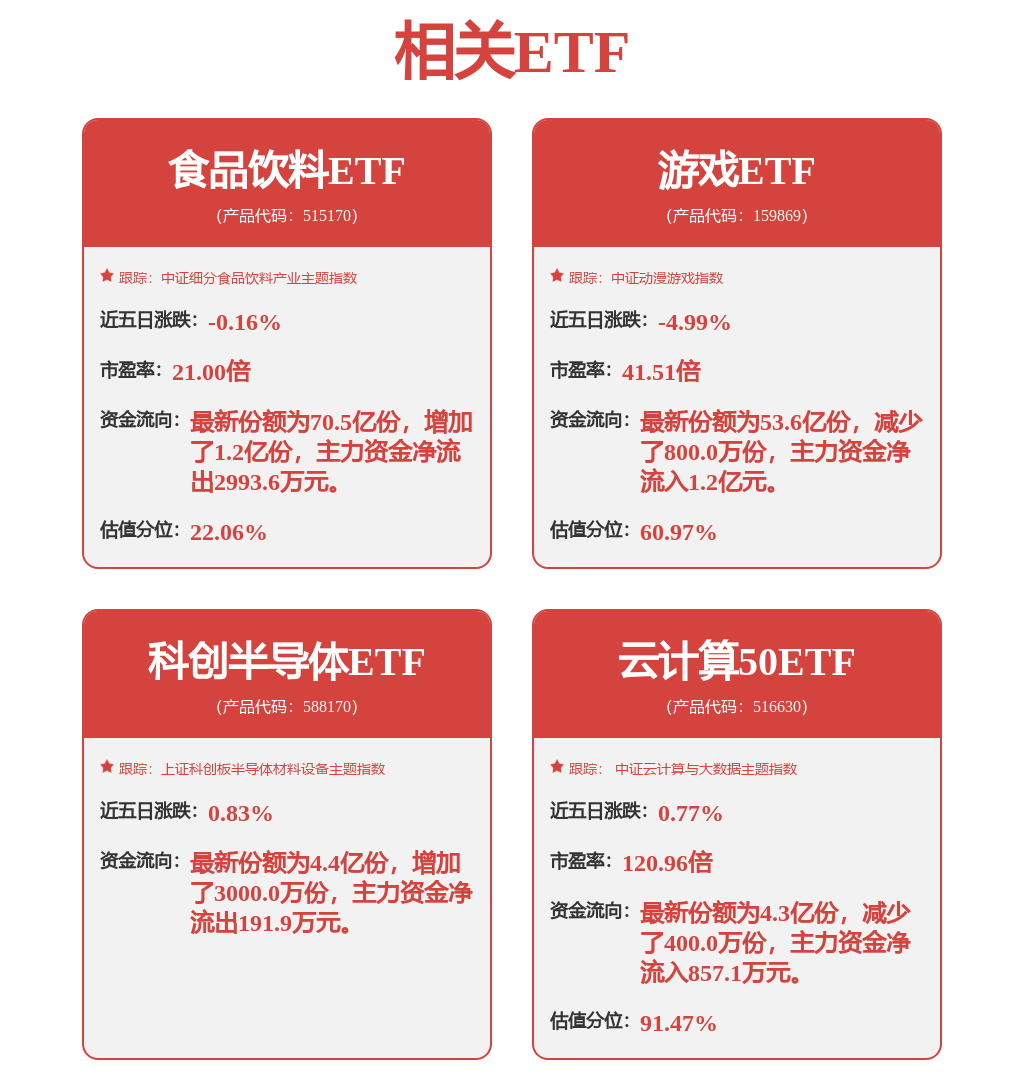
金工ETF点评:跨境ETF单日净流入56.42亿元,通信、电子、有色拥挤延续高位
Tai Ping Yang Zheng Quan· 2025-09-02 11:45
Quantitative Models and Construction Methods 1. Model Name: Industry Crowding Monitoring Model - **Model Construction Idea**: This model is designed to monitor the crowding levels of Shenwan First-Level Industry Indices on a daily basis, identifying industries with high or low crowding levels to provide insights for potential investment opportunities[3] - **Model Construction Process**: The model calculates the crowding levels of various industries based on daily data. It identifies industries with the highest crowding levels (e.g., non-ferrous metals, electronics, and communication) and those with the lowest levels (e.g., media, coal, and petrochemicals). Additionally, it tracks significant changes in crowding levels for specific industries (e.g., food and beverage, comprehensive, and non-bank financials)[3] - **Model Evaluation**: The model provides a systematic approach to assess industry crowding dynamics, offering valuable insights for sector allocation strategies[3] 2. Model Name: Premium Rate Z-Score Model - **Model Construction Idea**: This model is used to screen ETF products for potential arbitrage opportunities by calculating the Z-score of premium rates on a rolling basis[4] - **Model Construction Process**: The model involves the following steps: 1. Calculate the premium rate of an ETF product 2. Compute the Z-score of the premium rate over a rolling window 3. Identify ETFs with significant deviations in Z-scores, which may indicate potential arbitrage opportunities or risks of price corrections[4] - **Model Evaluation**: The model effectively identifies ETFs with potential mispricing, aiding in arbitrage decision-making[4] --- Model Backtesting Results 1. Industry Crowding Monitoring Model - **Top Crowded Industries**: Non-ferrous metals, electronics, and communication were identified as the most crowded industries on the previous trading day[3] - **Least Crowded Industries**: Media, coal, and petrochemicals exhibited the lowest crowding levels[3] - **Significant Changes**: Food and beverage, comprehensive, and non-bank financials showed notable variations in crowding levels[3] 2. Premium Rate Z-Score Model - **Arbitrage Signals**: The model flagged ETFs with significant Z-score deviations, suggesting potential arbitrage opportunities. Specific ETFs and their corresponding signals were not detailed in the report[4] --- Quantitative Factors and Construction Methods No specific quantitative factors were explicitly mentioned or constructed in the report. The focus was primarily on the models described above.
每日解盘:九月开门红!创业板指涨超2%,贵金属板块爆发-9月1日
Sou Hu Cai Jing· 2025-09-01 10:14
Market Overview - The three major indices collectively rose on September 1, 2025, with the Shanghai Composite Index up 0.46% to 3875.53 points, the Shenzhen Component Index up 1.05% to 12828.95 points, and the ChiNext Index up 2.29% to 2956.37 points. The total trading volume in the two markets was 27,496 billion yuan, a decrease of approximately 483 billion yuan compared to the previous trading day [1][2]. Index Performance - The ChiNext Index increased by 2.3% year-to-date, with a 5-day increase of 7.0% and a 30-day increase of 28.7% [2]. - The STAR 50 Index rose by 1.2% with a 5-day increase of 5.4% and a 30-day increase of 34.7% [2]. - The Shenzhen Component Index saw a 1.0% increase, with a 5-day increase of 3.1% and a 30-day increase of 16.5% [2]. - The Shanghai Composite Index increased by 0.5% year-to-date, with a 5-day increase of -0.2% and a 30-day increase of 8.9% [2]. Sector Performance - The communication sector rose by 5.2%, with a year-to-date increase of 71.4% [3][4]. - The comprehensive sector increased by 4.3%, with a year-to-date increase of 44.1% [4]. - The non-bank financial sector saw a decline of 1.3% year-to-date, while the banking sector decreased by 1.0% [4]. Concept Themes - The gold concept sector rose by 4.4% year-to-date, with a 5-day increase of 4.3% [5]. - The zinc metal sector increased by 3.1% year-to-date, with a 5-day increase of 3.9% [5]. - The internet insurance sector declined by 0.7% year-to-date [5]. Hot Industry - Communication - The communication sector's rise is attributed to better-than-expected performance, with companies in this sector benefiting from AI integration and increasing global market share. The sector is expected to maintain a valuation range of 20-30x based on future earnings projections [6].

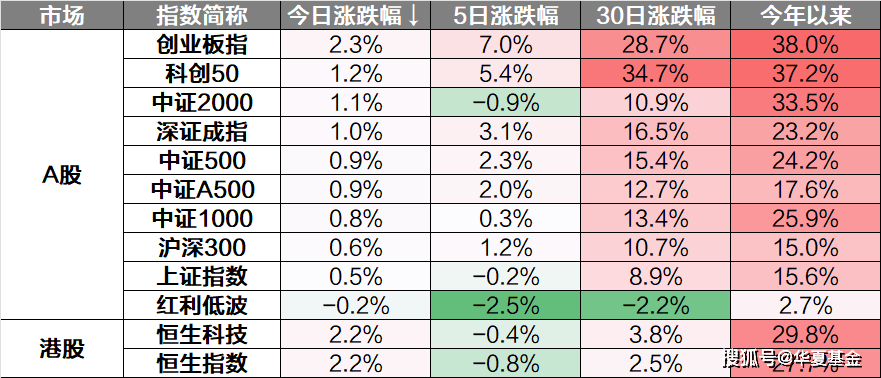
基金8月27日参与44家公司的调研活动
Zheng Quan Shi Bao Wang· 2025-08-28 03:53
Group 1 - A total of 44 companies were investigated by funds on August 27, with significant interest in Yinlun Co., Ltd. (002126), Shennan Circuit Co., Ltd. (002916), and Dongfang Tantalum Industry Co., Ltd. (000962) [1] - Among the companies investigated, 36 funds participated in the research of Yinlun Co., Ltd., while Shennan Circuit Co., Ltd. and Dongfang Tantalum Industry Co., Ltd. attracted 33 and 25 funds respectively [1] - The companies under investigation are distributed across 17 industries, with the electronics, machinery equipment, and automotive sectors having the highest representation, each with 6 stocks [1] Group 2 - In terms of market performance, 20 stocks among the investigated companies increased in value over the past five days, with the highest gainers being Zhangyuan Tungsten Industry Co., Ltd. (002378) at 46.67%, Zhongji Xuchuang (300308) at 21.40%, and Dongtian Micro (301183) at 21.20% [2] - Conversely, 24 stocks experienced declines, with the largest drops seen in Weiman Sealing (301161) at -17.67%, Boji Medical (300404) at -11.65%, and Xiangxin Technology (002965) at -10.22% [2] - Among the companies investigated, 44 have released their semi-annual reports, with the highest net profit growth reported by Zhite New Materials (300986) at 906.32% and Tongfei Co., Ltd. (300990) at 466.71% [2] Group 3 - The total market capitalization of the investigated companies includes 3 with a market cap exceeding 500 billion, and 2 exceeding 1 trillion, such as Zhongji Xuchuang (300308) and Wens Foodstuff Group Co., Ltd. (300498) [1] - There are 22 companies with a market cap below 100 billion, including Hengda New Materials (301469), Tengya Precision (301125), and Ruijia Technology (002066) [1]



一周市场数据复盘20250822
HUAXI Securities· 2025-08-24 13:18
- The report uses the Mahalanobis distance of recent weekly price and trading volume changes to measure industry crowding[3][17] - Last week, the home appliances and non-ferrous metals industries experienced significant short-term crowding[4][17] - The first quadrant represents industries with rising prices and volumes, while the third quadrant represents industries with falling prices and volumes. Points outside the ellipse indicate industries with price and volume deviations exceeding the 99% confidence level, signifying short-term significant crowding[17]
投资者微观行为洞察手册:8月第3期:主动外资重燃信心内资热钱延续流入
GUOTAI HAITONG SECURITIES· 2025-08-19 07:29
Market Activity - The trading activity in the A-share market has increased, with the average daily trading volume rising to CNY 2.1 trillion, and the turnover rate for the Shanghai Composite Index reaching 93%[4] - The number of stocks hitting the daily limit up has increased to 74.4, with a maximum consecutive limit up of 5 stocks[4] - The proportion of stocks that rose has decreased to 54.4%, with the median weekly return for all A-shares dropping to 0.4%[4] Fund Flows - Foreign capital has turned to inflow, with a net inflow of USD 2.7 million as of August 13, while the northbound trading volume accounted for 11.0%[4] - Public funds saw a decrease in new issuance to CNY 5.947 billion, while overall stock positions increased[4] - Private equity confidence index slightly rebounded, with positions decreasing marginally[4] Sector Performance - Significant inflows were observed in the electronics sector (+CNY 13.27 billion) and machinery equipment (+CNY 4.01 billion), while outflows were noted in coal (-CNY 0.23 billion) and textiles (-CNY 0.01 billion)[4] - The ETF market experienced a net outflow of CNY 27.93 billion, with passive trading volume increasing to 5.4%[4] Global Market Trends - Southbound capital inflows increased to CNY 38.12 billion, marking the 92nd percentile since 2022[4] - Global foreign capital saw a net inflow of USD 68.5 billion into developed markets, with the US and UK leading the inflows[4] - The Hang Seng Index rose by 1.7%, reflecting a broader global market uptrend, with Indonesia's index leading at +4.8%[4]
8月12日电子、计算机、电力设备等行业融资净买入额居前
Sou Hu Cai Jing· 2025-08-13 01:45
Core Insights - As of August 12, the latest market financing balance reached 2020.365 billion yuan, an increase of 8.165 billion yuan compared to the previous trading day [1] - Among the 22 primary industries under Shenwan, the electronic industry saw the largest increase in financing balance, rising by 4.352 billion yuan [1] - The real estate sector recorded the highest percentage increase in financing balance at 2.32%, while the non-ferrous metals and textile industries experienced significant declines [1][2] Industry Summary - **Electronic Industry**: Latest financing balance is 238.66 billion yuan, increased by 4.352 billion yuan, with a growth rate of 1.86% [1] - **Computer Industry**: Latest financing balance is 155.192 billion yuan, increased by 1.111 billion yuan, with a growth rate of 0.72% [1] - **Power Equipment**: Latest financing balance is 146.794 billion yuan, increased by 0.917 billion yuan, with a growth rate of 0.63% [1] - **Real Estate**: Latest financing balance is 31.786 billion yuan, increased by 0.719 billion yuan, with a growth rate of 2.32% [1] - **Communication**: Latest financing balance is 71.224 billion yuan, increased by 0.707 billion yuan, with a growth rate of 1.00% [1] - **Non-Ferrous Metals**: Latest financing balance is 90.835 billion yuan, decreased by 1.463 billion yuan, with a decline rate of 1.58% [2] - **Banking**: Latest financing balance is 62.487 billion yuan, decreased by 0.12 billion yuan, with a decline rate of 0.19% [2] - **Textile and Apparel**: Latest financing balance is 7.383 billion yuan, decreased by 0.094 billion yuan, with a decline rate of 1.25% [2]