
火箭制造

Search documents
影响市场重大事件:央行将于2025年12月5日开展10000亿元买断式逆回购操作;OpenAI探讨投资火箭公司与SpaceX展开竞争;“千帆星座”通信在轨业务测试结果符合预期
Mei Ri Jing Ji Xin Wen· 2025-12-05 00:09
每经记者|杨建 每经编辑|彭水萍 |2025年12月5日 星期五| NO.3 "千帆星座"通信在轨业务测试结果符合预期 在12月4日开幕的2025卫星互联网产业生态大会上,垣信卫星CTO李国通透露了"千帆星座"的最新建设 情况。他表示,千帆星座通信在轨业务测试结果符合预期,已全面开展国外应用场景测试,实测业务体 验良好。千帆星座已在马来西亚、蒙古、哈萨克斯坦等国外应用场景开展测试,实测业务体验良好。例 如,与客户在哈萨克斯坦完成4k视频、网页浏览、微信视频通话等业务演示,业务稳定流畅。 NO.4 商务部:加快推进消费新业态、新模式、新场景试点和国际化消费环境建设工作 商务部发言人何亚东在12月4日商务部例行新闻发布会上表示,岁末年初是传统的消费旺季,商务部将 坚持惠民生和促消费紧密结合,扩大优质商品和服务供给,创新消费场景,更好地满足人民美好生活需 要。何亚东介绍,商务部将加快推进消费新业态、新模式、新场景试点和国际化消费环境建设工作,打 造更加舒适便捷的消费环境。同时指导各地打造一批带动面广、显示度高的消费新场景,包括服务消 费、数字消费、绿色消费、人工智能+消费等领域。 NO.5 乘联分会:扩内需增强内循 ...
和马斯克杠上了 美媒:奥特曼想投资火箭公司与SpaceX竞争
Feng Huang Wang· 2025-12-04 02:23
Core Insights - OpenAI CEO Sam Altman is exploring the possibility of raising funds to acquire or partner with a rocket company to compete with Elon Musk's SpaceX [1] - Discussions have reportedly accelerated this fall, with at least one rocket manufacturer, Stoke Space, being approached during the summer [1] - Altman's proposal includes a series of equity investments in Stoke Space, potentially leading to a controlling stake, with investments expected to cost billions of dollars [1] - Current negotiations are no longer actively progressing according to sources close to OpenAI [1] - Altman has previously mentioned the potential of establishing a "rocket company" and the feasibility of building data centers in space [1]
朱雀三号重复使用火箭入轨成功,一子级回收遗憾失败
Yang Zi Wan Bao Wang· 2025-12-03 11:35
Core Viewpoint - The successful launch of the Zhuque-3 rocket by Blue Arrow Aerospace marks significant technological advancements in reusable rocket technology, despite a failure in the recovery test of the first stage [1][2]. Group 1: Launch Details - The Zhuque-3 rocket was launched from the Dongfeng Commercial Aerospace Innovation Test Area and completed its flight mission as planned, with the second stage entering the designated orbit [1]. - Key flight actions, including liftoff, stage separation, and engine ignition, were executed as scheduled, demonstrating stable and reliable performance [2]. Group 2: Technological Breakthroughs - The mission achieved several technological breakthroughs, including the first domestic flight of a new reusable liquid oxygen-methane rocket design, and the integration of a nine-engine parallel liquid oxygen-methane propulsion system [2]. - Innovations included the use of high-strength stainless steel and advanced laser welding techniques for fuel tank manufacturing, as well as high-precision return navigation and control technology for reusable rockets [2]. Group 3: Future Prospects - Despite the failure of the recovery test, multiple reusable rockets are set to be tested in China, indicating imminent breakthroughs in the country's reusable rocket capabilities [2].
最新版“星舰”测试时外壳突然破裂,专家解读
Huan Qiu Shi Bao· 2025-11-23 22:55
Group 1 - The "Starship" Super Heavy rocket's V3 version has encountered a significant failure during testing, complicating SpaceX's efforts to demonstrate its lunar capabilities to NASA [1][2] - The booster experienced a shell rupture during a pressure test, leading to a need for investigation and potential delays in the testing schedule [1][3] - SpaceX is under pressure from NASA to meet the timeline for the Artemis 3 mission, originally planned for 2027, but recent setbacks may push the timeline to 2028 [2][3] Group 2 - The V2 version of the "Starship" rocket faced multiple failures, with three out of five test flights resulting in explosions, which has severely impacted the development timeline [3] - The damaged V3 booster was the only complete version available for testing new technologies, and its failure disrupts the planned static fire and orbital flight tests [3] - The incident is likely to delay critical demonstrations of orbital refueling technology, pushing back the original schedule for manned lunar missions [3]
英伟达跌逾2%,“木头姐”买入;贝索斯旗下公司计划建造新型运载火箭;OpenAI向全球用户推出ChatGPT群聊功能【美股盘前】
Mei Ri Jing Ji Xin Wen· 2025-11-21 12:14
Group 1 - Major stock index futures show mixed performance, with Dow futures up 0.36%, S&P 500 futures up 0.11%, and Nasdaq futures down 0.05% [1] - Cathie Wood's ARK Investment Management purchased 93,374 shares of Nvidia following the company's strong earnings report, marking the first purchase of Nvidia shares since August 4 [1] - Bitcoin experienced a significant drop, falling below $82,000 and reaching a low of $81,330, marking the lowest point since April 7, with a daily decline exceeding 9% [1] Group 2 - Blue Origin, founded by Amazon's Jeff Bezos, announced plans to build a new heavy-lift rocket that will be larger and more powerful than its existing New Glenn rocket [1] - Middle Eastern airlines made substantial aircraft orders at the Dubai Airshow, with Boeing and Airbus receiving multi-billion dollar contracts, including Emirates' order for 65 Boeing 777-9 aircraft [1] Group 3 - OpenAI has officially launched the ChatGPT group chat feature globally, available to all users across different subscription plans [2] - Barclays predicts that AI will become the most significant macroeconomic variable by 2026, surpassing traditional monetary and trade policy factors [2] - The Trump administration announced a new offshore oil and gas development plan, facing strong opposition from local governments and environmental organizations [2]



四川县域经济“十四五”画像 从“金字塔型”迈向橄榄型
Si Chuan Ri Bao· 2025-11-21 00:19
Core Viewpoint - The economic development of counties in Sichuan is transitioning from an unbalanced structure to a more balanced "olive-shaped" model, with significant growth in the middle-tier counties and a reduction in the number of lower-tier counties [4][6]. Economic Growth - The average GDP of counties (cities, districts) in Sichuan is projected to reach 35.37 billion yuan in 2024, an increase of 8.81 billion yuan from 2020 [3]. - The number of counties with an economic total exceeding 60 billion yuan will rise to 27 by 2024, up from 14 in 2020 [5]. - The number of counties with GDP below 20 billion yuan is expected to decrease from 106 in 2020 to 78 in 2024 [6]. Structural Changes - The economic structure is evolving from a "pyramid" shape to an "olive" shape, indicating a healthier distribution of economic strength among counties [4][6]. - The number of counties with GDP between 20 billion and 60 billion yuan has increased by 15, now totaling 78, which constitutes 42.6% of all counties in Sichuan [6]. Development Strategies - The provincial government is implementing a strategy of "grasping the strong, strengthening the middle, and uplifting the weak" to foster county-level economic development [7][9]. - Specific policies are being tailored for each county to support industrial development and infrastructure, with a focus on creating "single champions" in niche markets [7][8]. Future Outlook - The next five years will focus on maintaining growth across all 183 counties, ensuring that no county is left behind [10][12]. - The development strategy will continue to emphasize innovation and collaboration among counties with complementary industries [10][11].
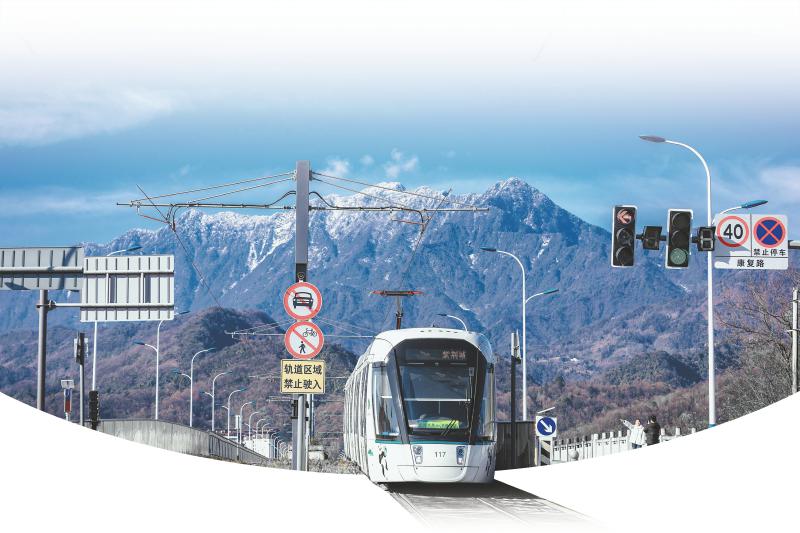
快、稳、暖 资阳力拼“全年红” 从三个关键字看资阳如何打好收官战
Si Chuan Ri Bao· 2025-11-13 06:30
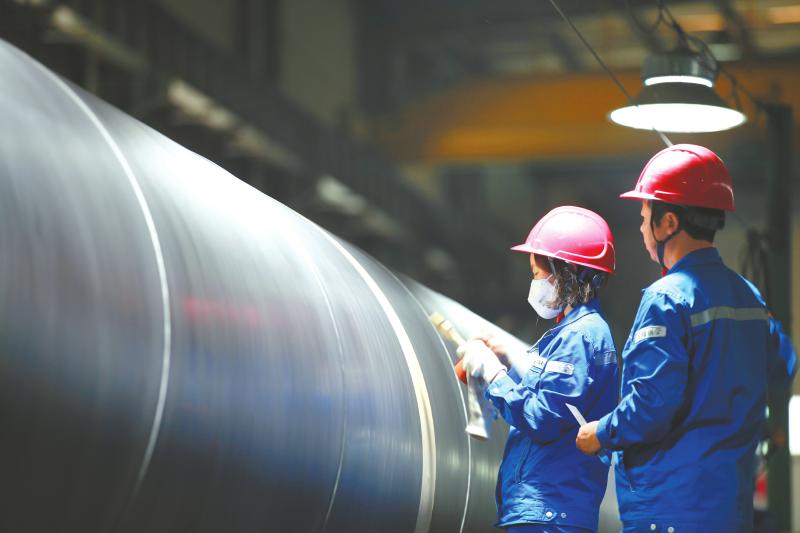
Economic Performance - The GDP of Ziyang region grew by 5.9% year-on-year in the first three quarters [2] - The industrial added value above designated size increased by 14.4% year-on-year, maintaining the highest growth rate in the province for 21 consecutive months [2][3] - A total of 157 industrial projects were successfully signed this year, with an investment amount of 21.608 billion [6] Industrial Development - The Ziyang Petroleum Steel Pipe Company is operating at full capacity, producing 150,000 tons of spiral pipes and oil casing by the end of October, exceeding the annual plan by 20,000 tons [4] - The company expects to achieve an annual output of 180,000 tons, generating an estimated revenue of 1 billion [4] - Sichuan Shared Casting Co., Ltd. reported a sales revenue of 130 million in the first three quarters, with an expected annual revenue of 180 million, reflecting an 18% year-on-year growth [4] Project Implementation - The Ziyang region has initiated 118 new projects and put 100 projects into operation this year [6] - The construction of the Beijing Xinghe Power Valley rocket project is underway, expected to be completed in the first half of 2026, with an annual capacity of 30 solid rocket launches [6] - The local government is enhancing project implementation efficiency by ensuring necessary resources for signed but unstarted projects [7] Business Environment - The establishment of the "Enterprise Home" service system has improved the investment confidence of companies, providing timely and professional responses to various inquiries [8][10] - The Ziyang region has collected and resolved 653 enterprise requests since the launch of the service system, significantly enhancing enterprise satisfaction [10]
国产可重复使用火箭“智神星一号”完成海上试车
Ren Min Ri Bao· 2025-11-11 22:40
Core Insights - The successful sea test of the "Zhishen Star One" reusable liquid rocket by Xinghe Power marks a significant milestone in its development, completing all major ground tests [1] - The rocket has a takeoff mass of approximately 283 tons and a maximum payload capacity of 7 tons for low Earth orbit, targeting the large satellite launch market [1] - The rocket is designed for at least 25 reuse cycles, with its first flight mission planned at the Dongfeng Commercial Space Innovation Test Zone in Gansu [2] Technical Innovations - The engine features a simple and efficient pin-injector technology, allowing thrust adjustment between 50 tons and 20 tons, which is crucial for vertical precision landing [1] - The rocket employs a seven-engine parallel configuration with "single-engine failure" fault tolerance, enabling continued stable flight even if one engine fails [1] Future Plans - The construction of the launch site for the "Zhishen Star One" is nearing completion, which will enable autonomous testing, fueling, and launch capabilities [2] - Recovery tests for the rocket are scheduled to take place in 2026 alongside its launch missions [2]
五向图强”焕新力
Hai Nan Ri Bao· 2025-11-05 01:36
Core Viewpoint - The article highlights the industrial upgrades and emerging sectors in Hainan Free Trade Port, showcasing various projects and initiatives that align with national strategies for developing new and future industries [12]. Group 1: Aerospace and Technology - The establishment of the Star Glory rocket assembly and testing factory in Wenchang signifies Hainan's commitment to aerospace development [2]. - The Hainan Aerospace Technology Industry Group is focused on creating a competitive semiconductor industry chain, addressing gaps in Hainan's electronic information manufacturing sector [10]. Group 2: Marine and Energy - The completion of the underwater intelligent computing center in Lingshui marks a significant step in marine data processing capabilities [6]. - The "Deep Sea No. 1" energy station represents advancements in energy infrastructure within the region [12]. Group 3: Aviation and Maintenance - A one-stop aircraft maintenance industrial base in Hainan is actively servicing foreign aircraft, indicating growth in the aviation maintenance sector [4]. Group 4: Agriculture and Research - The National South Breeding Research Institute in Sanya is conducting rice experiments, contributing to agricultural innovation [8]. Group 5: Tourism and Leisure - The cruise and yacht industry in Sanya is experiencing rapid growth, with vessels like the "Star Navigator" ferrying tourists, reflecting the tourism sector's expansion [14]. Group 6: Environmental Initiatives - The Dongyu Island zero-carbon demonstration zone has achieved a comprehensive carbon reduction layout, showcasing Hainan's commitment to sustainable development [16].
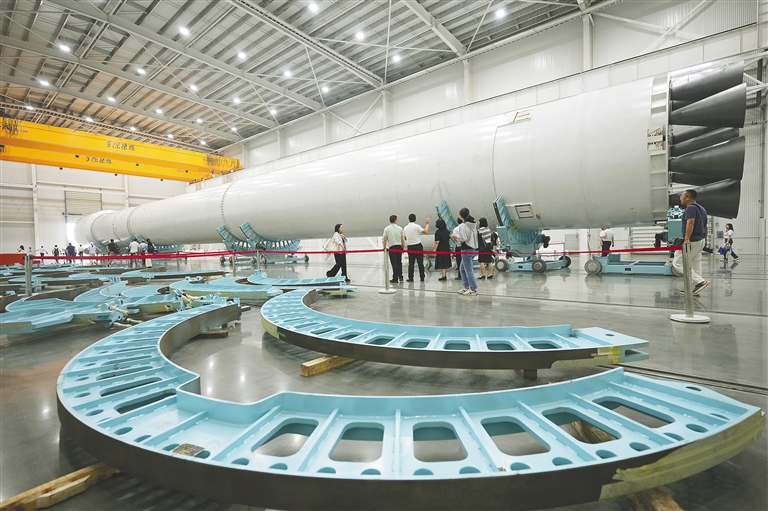
智神星一号复用火箭一级动力海上试车成功
Ke Ji Ri Bao· 2025-11-04 23:52
Core Insights - The company successfully completed the engine system test for the Zhishen-1 reusable liquid launch vehicle, marking a significant milestone towards its maiden flight scheduled for 2026 [1][2] - Zhishen-1 is designed for at least 25 reuse cycles and has a maximum payload capacity of 7 tons to low Earth orbit [1] - The company has developed several key technologies for the rocket's recovery and reuse, including a unique seven-engine parallel configuration and advanced manufacturing techniques [2] Group 1 - The Zhishen-1 rocket's first stage engine system test was successfully conducted at the Dongfang Spaceport, indicating that all major ground tests are complete and the rocket is ready for its first flight [1] - The rocket's first stage utilizes a configuration of seven self-developed CQ-50 engines, with a takeoff mass of approximately 283 tons [1] - The recent test validated the operational feasibility of the rocket's fueling and storage processes, as well as the compatibility of the pressurization and engine systems [1] Group 2 - The Zhishen-1's maiden flight is planned to take place at the Jiuquan "Dongfeng Commercial Aerospace Innovation Test Zone," where the company is finalizing its self-built launch facility [2] - The facility will have capabilities for autonomous testing, fueling, and launching (recovery), and is nearing completion [2] - The company has conducted wind tunnel tests for the recovery guidance control system, providing critical data for its design [2]