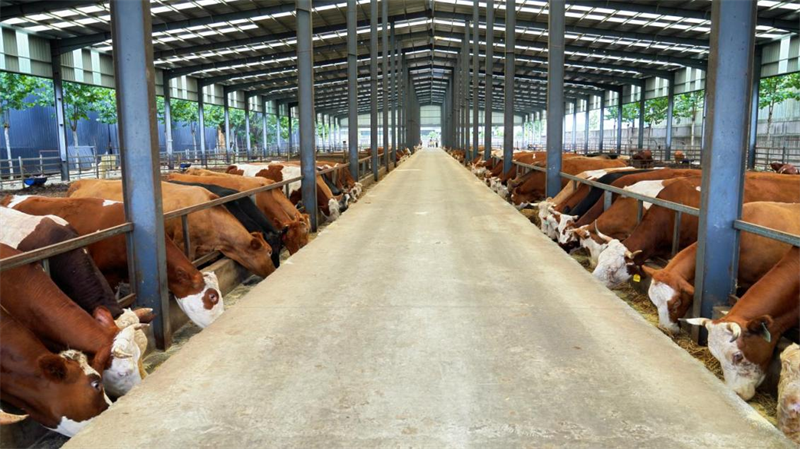
肉牛养殖

Search documents
中咨公司定点帮扶30年 助力扶贫攻坚重点县跻身安徽县域经济20强
Xin Lang Cai Jing· 2025-11-21 15:35
Core Viewpoint - The China International Engineering Consulting Co., Ltd. (CIECC) has successfully transformed Lixin County from a national-level poverty-stricken area to one of the top 20 counties in Anhui's economy over the past 30 years, emphasizing the importance of agricultural modernization and rural revitalization as key components of China's overall modernization strategy [1][2]. Group 1: Achievements and Progress - Lixin County has evolved from a national poverty-stricken county to a top 20 county in Anhui's economic rankings, recognized as a "New Emerging Textile Industry Base County" and a "Pilot County for Characteristic Advantage Industries" in Anhui [1]. - The gross regional product of Lixin County increased from 2.64 billion yuan in 1995 to 48.86 billion yuan in 2024, representing an increase of over 18 times [2]. Group 2: Strategic Initiatives - CIECC has tailored over 30 strategic plans for Lixin, including the "Rural Revitalization Strategy Implementation Plan" and the "Coal-Electricity Cycle Industrial Park Plan," which have been instrumental in local economic development [2]. - The company emphasizes a planning-first approach, ensuring that scientific planning serves as a guiding framework for Lixin's leapfrog development across various sectors, including poverty alleviation, industrial development, ecological protection, and rural revitalization [2]. Group 3: Future Directions - For traditional agricultural counties like Lixin, the focus will be on leveraging characteristic advantage industries and advancing modern agricultural practices, particularly in grain production, cattle raising, and vegetable cultivation [2]. - The implementation of the "Ten Thousand Projects" experience will be crucial in optimizing county infrastructure and village layouts, transforming rural potential into significant development assets [2].
全国肉牛养殖连续六个月盈利!后续价格怎么走?专家分析→
Sou Hu Cai Jing· 2025-11-09 07:51
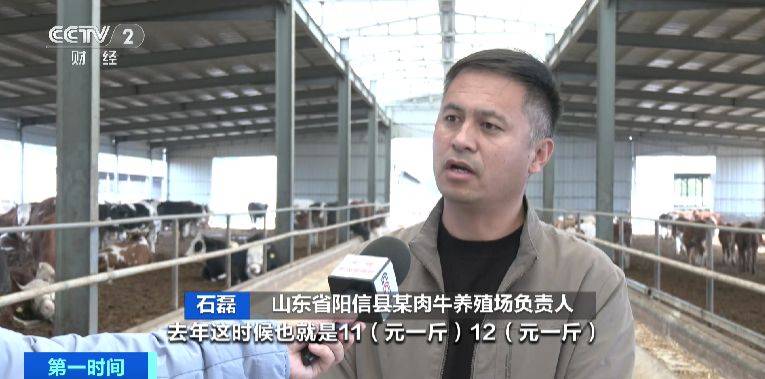
Group 1 - The beef market is experiencing a peak season with strong supply and demand as colder weather approaches, leading to overall profitability in cattle farming for six consecutive months [1][11] - In Shandong province, the price of beef has increased to approximately 14 yuan per kilogram, up from 11-12 yuan per kilogram last year, resulting in profits of around 3000 yuan per cattle sold [3][12] - The decline in cattle inventory due to low beef prices in previous years has created a temporary supply tightness, with a reported decrease of over 20% in cattle inventory in some areas [5] Group 2 - Some farmers are adopting precision feeding and smart management techniques to enhance profitability, with reports of profits exceeding 4000 yuan per cattle in certain regions [7][11] - The use of central kitchens for precise feed formulation and ear tags for monitoring cattle health has been noted to improve profit margins by 10% to 15% within a 2 to 3 month period [9] - The national average price for beef in October was around 27 yuan per kilogram, reflecting a year-on-year increase of approximately 20%, with average profits of about 1700 yuan per cattle sold [12]

居民“菜篮子”物丰价稳 牛肉消费市场供销两旺、活力迸发
Yang Shi Wang· 2025-11-09 07:33
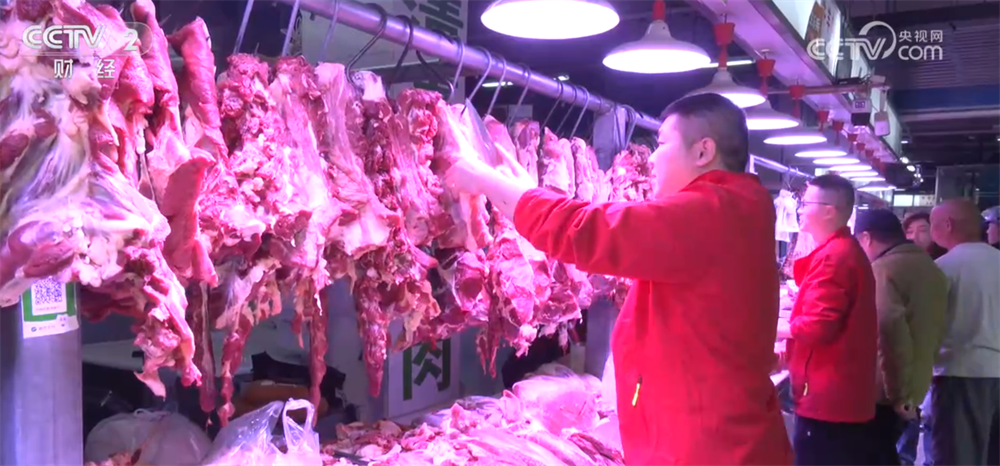
Group 1 - The beef market is experiencing a peak season with increased supply and demand as colder weather approaches [1] - Beef prices have rebounded since March, with a cumulative increase of approximately 10% after a period of stability in autumn [1][5] - In the first week of November, the national beef price was 71.46 yuan per kilogram, reflecting a week-on-week increase of 0.2% and a year-on-year increase of 6.5% [5] Group 2 - The slaughtering volume of beef cattle is increasing, with a slaughterhouse in Shandong processing 100 cattle daily, supplying major cities like Beijing, Shanghai, and Guangzhou [3] - The beef cattle farming sector has achieved profitability for six consecutive months, with average profits of 1,700 yuan per cattle sold [6][10] - In some regions, such as Shandong, profits for fattened cattle can exceed 4,000 yuan [13] Group 3 - The decline in beef cattle inventory over the past two years due to low prices has led to a temporary tightening of supply [8][11] - Farmers are adopting precision feeding and smart management techniques to enhance profitability in response to market changes [10] - The demand for beef is expected to continue growing as the winter season progresses, with an anticipated increase in slaughter volume by 6% [13]
粤黔双向奔赴!“媒体+”助力贵州小黄牛“卖爆”大湾区|潮汕牛肉火锅文化节
Nan Fang Nong Cun Bao· 2025-11-07 15:34
Core Viewpoint - The collaboration between Guangdong and Guizhou provinces is enhancing the market presence of Guizhou's small yellow cattle in the Guangdong-Hong Kong-Macao Greater Bay Area, driven by a strong demand for high-quality beef and supported by media initiatives [7][31][70]. Group 1: Market Demand and Supply - The Greater Bay Area is a key beef consumption region in China, with an annual beef consumption exceeding 800,000 tons, and the Chaozhou beef hotpot segment holds two-thirds of the market share [13][14]. - In 2024, Guangdong's beef production is projected to be only 45,000 tons, with a self-sufficiency rate below 6%, leading to a reliance on imports for 65% of its beef supply [19][21]. - Guizhou, as a major beef-producing province, has a cattle inventory of 4.6916 million heads and a beef output of 228,900 tons in 2024, reflecting a year-on-year growth of 3.3% [22][23]. Group 2: Quality and Competitive Advantage - Guizhou's small yellow cattle are recognized for their ecological farming characteristics, offering high amino acid, high protein, and low-fat advantages, making them ideal for the fresh-cut requirements of Chaozhou hotpot [28][30]. - The geographical advantages of Guizhou, including its high forest coverage and natural pastures, contribute to the optimal growth conditions for small yellow cattle [25][27]. Group 3: Collaborative Initiatives - The "Media+" initiative is facilitating the integration of production and sales between Guangdong and Guizhou, enhancing the branding and market reach of Guizhou's beef products [9][56]. - The upcoming Guangdong Chaozhou Beef Hotpot Cultural Festival aims to further elevate the brand recognition of Guizhou beef and streamline sales channels in the Greater Bay Area [33][65]. - A recent collaboration resulted in a signing of cooperation agreements worth approximately 400 million yuan during the "Qian Niu Ben Yue" production and sales connection conference [39][40]. Group 4: Future Prospects - The ongoing collaboration is expected to expand Guizhou's small yellow cattle market from the Greater Bay Area to the national level, establishing a replicable model for "Media+Industry" integration [70][72].

2025年中国肉牛养殖行业市场规模、进入壁垒及投资战略研究
Sou Hu Cai Jing· 2025-11-04 07:14
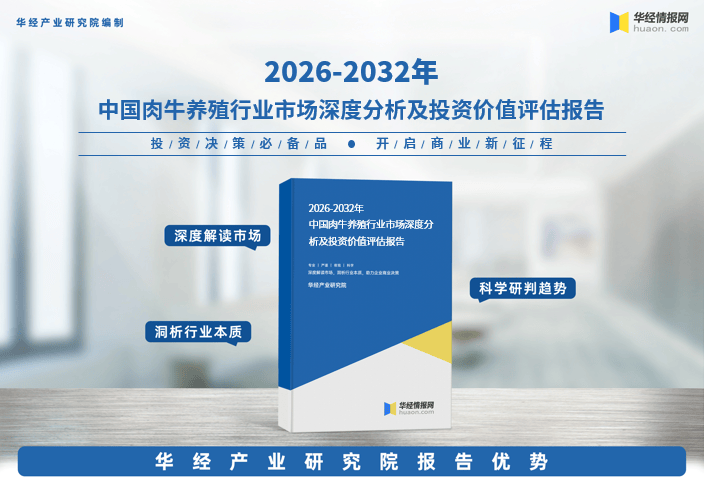
Core Insights - The report titled "2026-2032 China Beef Cattle Breeding Industry Market Deep Analysis and Investment Value Assessment" aims to provide insights into the development trends and future prospects of the beef cattle breeding industry in China [1][23] - The beef cattle breeding industry is characterized by scientific management practices aimed at improving growth rates and meat quality while ensuring animal welfare [1][8] Industry Overview - Beef cattle breeding involves selecting, feeding, disease prevention, and environmental control to enhance growth and meat quality, ultimately supplying beef products to the market [1][8] - The industry integrates various technologies, including genetic breeding and nutrition, to meet consumer demands for both quantity and quality of beef [1][8] Industry Chain Analysis - The beef cattle breeding industry chain encompasses production, processing, and distribution, with upstream activities focused on breeding and feed production, while downstream activities include slaughtering, processing, and logistics [2][9] - The market size of the beef cattle breeding industry is projected to reach approximately 768 billion yuan by 2024, driven by consumer demand and supportive industry policies [2][14] Competitive Landscape - The competitive structure of the beef cattle breeding industry is shifting from a fragmented market to a more concentrated one, with leading companies like Yili, Mengniu, and New Hope dominating the first tier through mergers and technological innovation [3][16] - Regional leaders and small-scale farmers face increasing pressure to consolidate or partner with larger firms to survive [3][16] Market Dynamics - The cold chain logistics sector supporting the beef industry is expected to generate revenues of 536.1 billion yuan in 2024, reflecting a 3.7% year-on-year growth, which enhances the efficiency of beef distribution [12][13] - The industry is transitioning from quantity expansion to quality enhancement, with a growing emphasis on premium beef products [2][14] Future Outlook - The report provides a comprehensive analysis of the favorable and unfavorable factors affecting the beef cattle breeding industry, including policy support and rising consumer demand, as well as challenges such as disease risks and insufficient quality beef sources [23][41] - The investment strategy section outlines potential investment opportunities and risks in the beef cattle breeding sector from 2026 to 2032 [41][42]
乡村振兴在行动|安徽灵璧:“一头牛”闯出全链条发展新路子
Xin Hua Wang· 2025-10-27 10:06
Core Viewpoint - The article highlights the development of a modern and ecological beef cattle farming industry in Lingbi County, Anhui Province, emphasizing scientific breeding practices, technological integration, and sustainable agricultural methods to boost local economic growth and rural revitalization [2][3][14]. Group 1: Industry Development - Lingbi County has established a "1+8+N" production system to enhance beef cattle farming, aiming for orderly expansion and full-chain development, with a projected beef output value of 756 million yuan in 2024 [3][14]. - The county's beef cattle industry includes 36 specialized cooperatives and 1,813 farming households, with 17 large-scale farms housing over 1,000 cattle each [14]. Group 2: Technological Integration - The use of hybrid breeds, such as the Anhui Yellow Cattle and Simmental, has improved growth rates and meat quality, with electronic chips tracking each cow's breeding process [6][7]. - The implementation of digital technologies, including IoT and big data, has led to the creation of smart farms that enable precise feeding, intelligent environmental control, and disease monitoring [7][10]. Group 3: Ecological Practices - Lingbi County promotes a circular agricultural model that integrates straw utilization, beef cattle farming, and mushroom cultivation, achieving a 92.69% utilization rate of manure and reducing chemical fertilizer use by 30% [10][11]. - The county processes 500,000 tons of straw annually into high-quality feed, contributing to a sustainable agricultural ecosystem [11]. Group 4: Brand Development - The local beef brand "Lingbi Yellow Cattle" has gained recognition, with products receiving national certifications and awards, enhancing the market presence of Lingbi beef [13][14]. - The establishment of the regional public brand "Lingnong Bixuan" aims to promote high-quality beef products and expand market reach through innovative marketing strategies [13][14].
华福证券:情绪助推猪价反弹 关注二育进场持续性
智通财经网· 2025-10-27 06:15
Core Viewpoint - The recent increase in pig prices is driven by emotional factors and seasonal consumption recovery, with a focus on the sustainability of secondary fattening entry [2][3] Pig Farming Sector - The concentration of large pig sales has led to a decrease in large pig inventory, widening the price gap and increasing the enthusiasm for secondary fattening, with a sales proportion of 2.09% from October 11-20, up by 1.07 percentage points [1][2] - The national average pig price on October 24 was 11.81 yuan/kg, an increase of 0.63 yuan/kg week-on-week [2] - The average weight of pigs sold continues to decline, with an average weight of 127.90 kg for the week of October 24, down by 0.35 kg week-on-week [2] - Long-term expectations indicate a downward shift in pig prices, with increasing losses in farming and enhanced expectations for capacity reduction policies, which may lead to a long-term upward shift in the price center [1][3] Cattle Sector - Short-term prices for beef cattle have slightly declined, while long-term trends suggest a potential upward cycle for beef prices due to previous long-term losses leading to capacity clearance [4] Dairy Sector - Raw milk prices are currently at a cyclical low, with a price of 3.04 yuan/kg as of October 17, remaining stable week-on-week but down 31% from the cyclical high [4] - The ongoing losses in raw milk are expected to drive continued capacity reduction, potentially stabilizing prices in the future [4] Poultry Sector - The price of white chickens remains stable, with a price of 6.88 yuan/kg as of October 24, reflecting a slight increase week-on-week [5] - Egg prices have decreased, with an average price of 6.06 yuan/kg, while chick prices remain stable [5] Agricultural Products - Soybean meal prices have rebounded from a low, with a current price of 2984 yuan/ton as of October 24, down by 26 yuan/ton week-on-week [7] - The futures market for soybean meal showed a recovery, with the main contract closing at 2933 yuan/ton, up by 65 yuan/ton week-on-week [7]
在东西部协作村企结对帮扶下,达州市宣汉县建起牧草基地 川东大山深处长出万亩牧草
Si Chuan Ri Bao· 2025-10-26 01:34
Core Insights - The establishment of a large-scale grass planting base in Lockxia Village has significantly boosted local cattle farming, with the number of cattle increasing from over 50 in 2021 to over 600 currently [1][2][3] - The introduction of new grass varieties has improved yield and water content, allowing one acre of grass to support two cattle instead of one [2] - The local economy has benefited, with over 10,000 villagers employed in grass planting and beef cattle farming, leading to an average annual income increase of over 3,000 yuan per person [2][3] Group 1 - The grass planting base covers nearly 700 acres, up from 120 acres in 2022, thanks to expert guidance and investment from Zhejiang Guarantee Group [2] - The total grass planting area in Dacheng Town has reached 12,000 acres, attracting leading cattle farming enterprises to establish standardized farms [2][3] - The village has developed a straw collection and storage point to facilitate the sale of excess grass, including to customers outside the province [3] Group 2 - The local cattle farming market is sensitive to fluctuations, which could impact grass planting and harvesting [3] - The construction of a breeding base for mother cows is underway, expected to produce over 400 cows annually, further expanding the cattle farming scale in Dacheng Town [3] - There is potential for an additional 11,000 head of cattle in the region, based on current grass planting capacity [3]
天风证券晨会集萃-20251016
Tianfeng Securities· 2025-10-16 00:14
Group 1: Dairy Industry Insights - The report indicates that despite short-term support for milk prices due to holiday consumption, the trend of capacity reduction in dairy companies continues, and the peak of milk prices is expected to be reached soon [3] - The report highlights a significant decline in beef exports from the US to mainland China, which fell by 46% year-on-year in the first seven months of 2025, creating favorable conditions for price increases [3] - The recovery in culling cow prices is anticipated to directly improve the performance of dairy companies, with a long-term trend of narrowing losses in culling cows expected to persist [3] Group 2: Cobalt Market Analysis - The report discusses the recent quota distribution for cobalt from the Democratic Republic of Congo, with a total quota of 96,600 tons, which is significantly lower than last year's export volume, indicating a potential supply shortage [23][26] - Current inventory levels are critical, with an estimated four months of inventory in the supply chain, which could lead to increased prices as demand rises [26] - The report suggests focusing on companies less affected by Congolese policies, such as Huayou Cobalt and Luoyang Molybdenum, which are expected to benefit from the recent quota announcements [27] Group 3: Automotive Sector Overview - The report covers Futec Technology as a leading supplier of high-voltage power systems for electric vehicles, with a strong customer base including major automotive brands [20][21] - The company is expected to see significant revenue growth, with projected revenues of 2.996 billion, 3.608 billion, and 4.272 billion yuan from 2025 to 2027 [22] - The automotive power supply industry is characterized by trends towards higher voltage, integration, and diversification of functions, positioning Futec Technology favorably for future growth [21] Group 4: Construction and Steel Industry - Honglu Steel Structure reported a year-on-year increase in new orders, with a total of 22.267 billion yuan in new contracts signed in the first three quarters of 2025, indicating a positive outlook for Q4 production [10] - The report emphasizes the potential for improved profit margins due to rising steel prices, which could enhance the company's net profit per ton significantly [10] - The company has invested in advanced welding technology, which is expected to improve production efficiency and reduce costs [10]
内蒙肉牛价格逆势增长近50%,牛肉供不应求的格局反转!
Sou Hu Cai Jing· 2025-10-14 22:33
Core Insights - The Inner Mongolia beef industry has transformed from a low point of 20 yuan per kilogram to nearly 30 yuan by 2025, reversing a two-year loss to a supply-demand imbalance, driven by the Inner Mongolia Beef Industry Association's coordinated efforts with local governments focusing on "production and sales collaboration and brand empowerment" [3][5]. Group 1: Production and Sales Collaboration - The core issue in the industry was the misalignment between production and sales, which the association addressed by eliminating intermediaries and establishing direct connections with major consumer markets like Guangdong [5]. - At the Inner Mongolia beef industry conference in May 2024, the price of live cattle increased by 1-2 yuan per kilogram, resulting in an average increase of around 1,000 yuan per head [5]. - Subsequent agreements led to the signing of orders for 300,000 high-end beef cattle and a 10.7 billion yuan cooperation deal, boosting the entire industry chain's output value to over 30 billion yuan [5]. Group 2: Brand Development and Quality Assurance - The association is shifting the focus from "resource output" to "brand output" by promoting the "Prairie Fresh Flavor" brand and establishing quality standards for beef products [7]. - A comprehensive quality traceability system has been implemented, making "Inner Mongolia beef" synonymous with "high-end, green, and traceable" products [7]. - Technological advancements have improved beef yield by 30% and reduced the feeding cycle by 60 days, enhancing the quality of beef products significantly [7]. Group 3: Industry Events and Resource Mobilization - National industry conferences have become crucial for consensus building and resource mobilization, with significant participation from industry elites [8]. - These events facilitate order signing between companies and promote the establishment of a sustainable "North Beef South Use" industry community [8]. - The association has also created financial support channels for breeding enterprises, including low-interest loans and policy coordination to strengthen the industry's resilience [8].