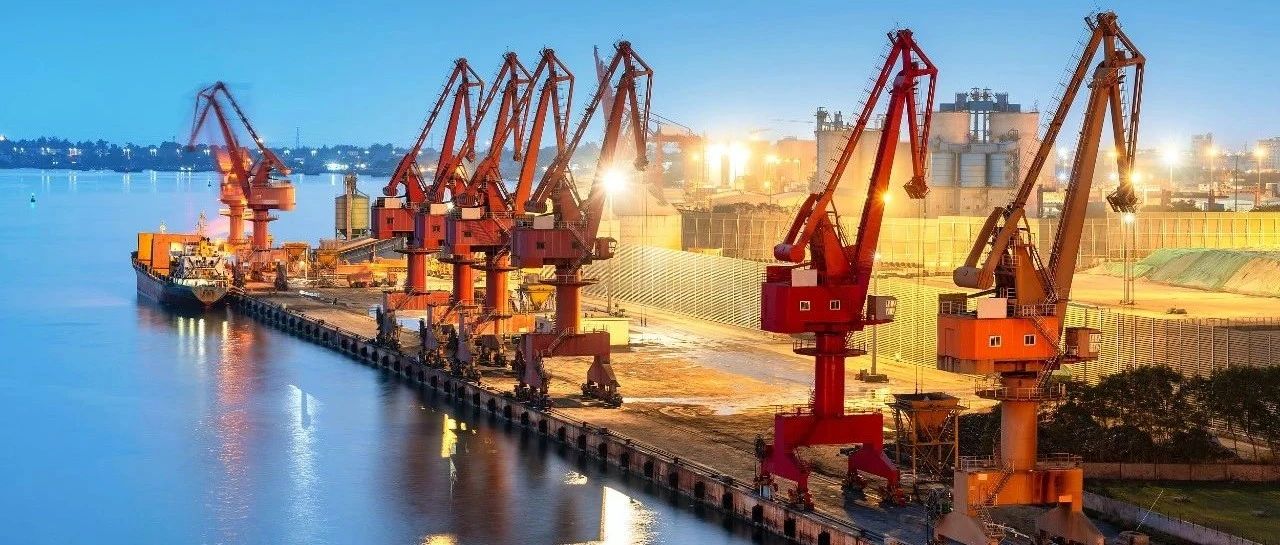
跨境金融

Search documents
深圳为跨境资金开通“高速路”
Shen Zhen Shang Bao· 2025-08-20 06:23
Core Insights - Shenzhen has significantly improved the efficiency of cross-border fund collection for multinational companies, reducing the process from 10 days to just 10 minutes, showcasing the city's financial reform achievements [1] - As of July 2023, 55 multinational companies have participated in the pilot program for cross-border fund pools, benefiting nearly 2,000 member enterprises with a total business volume of $350 billion [1] Group 1: Reform Opportunities - Shenzhen serves as a natural testing ground for financial reforms due to its active outward-oriented economy and dense cluster of multinational company headquarters [2] - The pilot program for cross-border fund pools is a systematic institutional innovation focusing on three breakthroughs: account integration, quota enhancement, and process simplification, which directly benefit multinational enterprises [2] Group 2: National Demonstration - The successful experience of Shenzhen's pilot program has attracted national attention, leading to the promotion of 22 innovative measures by the National Development and Reform Commission in October 2023, including the cross-border fund pool initiative [3] - In December 2024, the State Administration of Foreign Exchange further optimized the pilot policies in Shenzhen and 10 other provinces, enhancing support for cross-border investment and financing for multinational companies [3] - The development trajectory of Shenzhen's cross-border fund pool reflects a strategic path of financial reform, starting from enterprise pain points, innovating through systems, and ultimately forming replicable experiences [3]
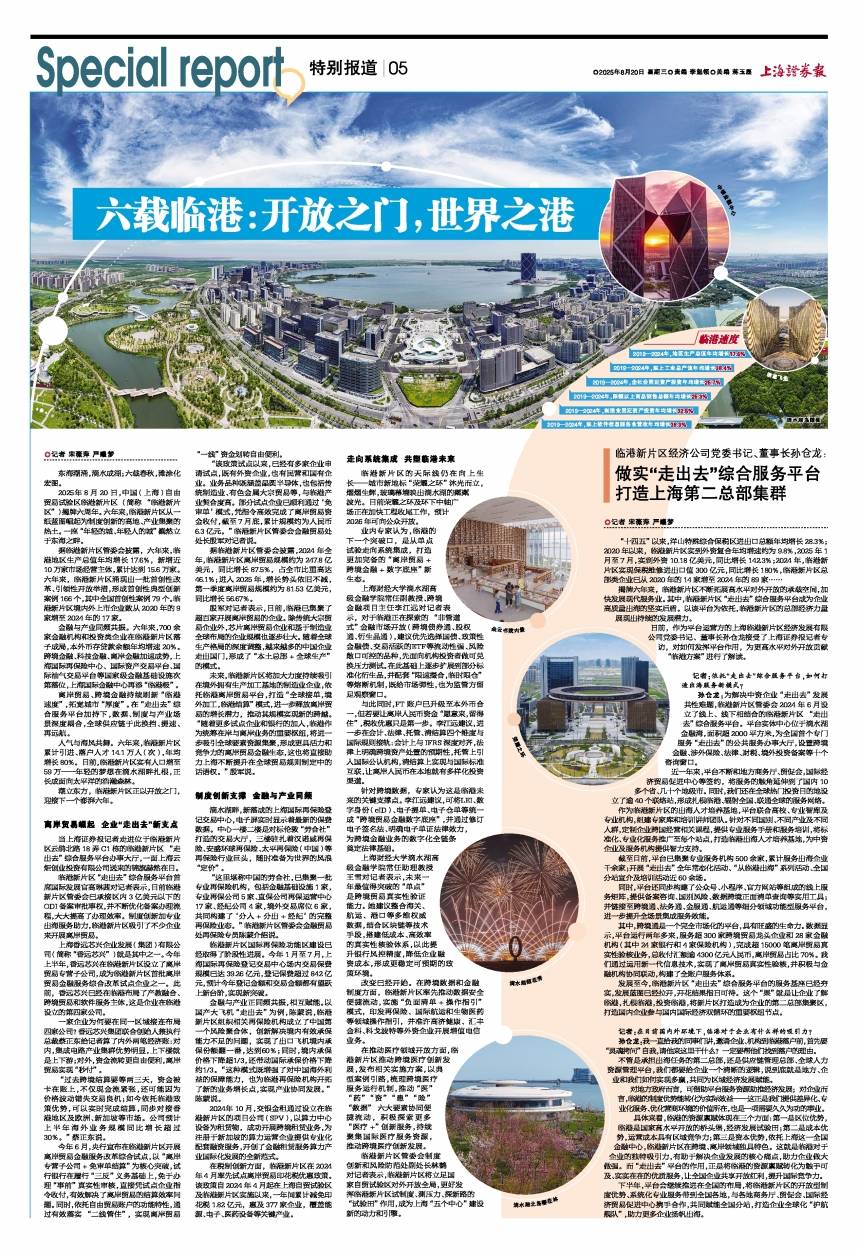
临港新片区经济公司党委书记、董事长孙仓龙:做实“走出去”综合服务平台 打造第二总部集群
Sou Hu Cai Jing· 2025-08-19 23:59
Core Viewpoint - The Shanghai Lingang New Area is enhancing its role as a platform for higher-level opening-up, contributing to the "Lingang Plan" for international trade and investment [1][14]. Economic Growth and Development - The Lingang New Area has seen an average annual growth rate of 17.6% in regional production value over the past six years, with the number of market entities increasing to 156,000 [3]. - The area has introduced 166 innovative or leading open measures, with 79 being nationally pioneering cases [3]. - The number of listed companies in the Lingang New Area has increased from 9 in 2020 to 17 in 2024 [3]. Talent and Population - The Lingang New Area has attracted 141,000 talents, with a population of 580,000, reflecting a growth rate of 80% [4]. Offshore Trade and Services - The "Going Out" comprehensive service platform was established to assist Chinese enterprises in international expansion, featuring over 500 professional service institutions [15][16]. - The platform has facilitated over 15,000 offshore trade authenticity verifications, with total payment amounts exceeding 430 billion RMB, accounting for 70% of offshore trade [16]. Financial and Insurance Innovations - The area has developed a reinsurance market, with a trading scale of 39.26 billion RMB and premium registration exceeding 84.2 billion RMB [7]. - The establishment of a risk-sharing mechanism for the aviation industry has led to a reduction in insurance prices by over one-third [8]. Future Plans and Strategic Goals - The Lingang New Area aims to enhance its service network by expanding its presence across China and establishing over 40 liaison stations globally [15]. - The area is focused on integrating offshore trade, financial services, and digital solutions to create a comprehensive support system for enterprises [9][10]. Institutional Innovation - The Lingang New Area is positioned as a "testbed" for institutional innovation, contributing to Shanghai's development as a global financial center [10][17]. - The area emphasizes the importance of aligning local regulations with international standards to facilitate cross-border trade and investment [17].

深圳为跨境资金开通“高速路” 率先开展跨国公司本外币跨境资金池业务试点,业务额已达3500亿美元
Shen Zhen Shang Bao· 2025-08-19 17:52
Core Insights - Shenzhen has significantly improved the efficiency of cross-border fund collection for multinational companies, reducing the process from 10 days to just 10 minutes, showcasing the city's financial reform achievements [1] - As of July 2023, 55 multinational companies have participated in the pilot program for cross-border fund pools, benefiting nearly 2,000 member enterprises with a total business volume of $350 billion [1] Group 1: Reform Opportunities - Shenzhen serves as a natural testing ground for financial reforms due to its active outward-oriented economy and concentration of multinational company headquarters [2] - The pilot program for cross-border fund pools is a systematic institutional innovation focusing on three breakthroughs: account integration, quota enhancement, and process simplification, which directly benefit multinational enterprises [2] Group 2: National Demonstration - The successful experience of Shenzhen's pilot program has attracted national attention, leading to the promotion of 22 innovative measures by the National Development and Reform Commission in October 2023, including the cross-border fund pool initiative [3] - In December 2024, the State Administration of Foreign Exchange further optimized the pilot policies in Shenzhen and 10 other provinces, enhancing support for cross-border investment and financing for multinational companies [3] - The development trajectory of the cross-border fund pool pilot reflects Shenzhen's strategic path in financial reform, starting from enterprise pain points, innovating through systems, and ultimately forming replicable experiences [3]
深圳市罗湖区经济“半年报”出炉,GDP同比增长4.2%
Nan Fang Du Shi Bao· 2025-08-07 13:00
Economic Overview - In the first half of 2025, Luohu District's GDP reached 126.34 billion yuan, with a year-on-year growth of 4.2% at constant prices [1] - The added value of the secondary industry was 9.069 billion yuan, growing by 10.3% year-on-year, while the tertiary industry added value was 117.257 billion yuan, increasing by 3.9% [1][4] Industrial Growth - The industrial added value above designated size grew by 8.9%, indicating a strong performance driven by the rapid development of emerging industries [4] - Luohu is focusing on enhancing its industrial ecosystem, aiming for high-end, high value-added, and competitive industry structures [5] Strategic Plans - The district has launched four major plans: "Ascend" for traditional industries, "Peak" for characteristic industries, "Doubling" for emerging industries, and "Nursery" for future industries [5] - Key emerging industries include software information, artificial intelligence, life health, and new materials, with a strategic focus on developing a modern industrial system [5][6] Investment and Infrastructure - Fixed asset investment in Luohu increased by 5.6% year-on-year, indicating robust economic growth potential [7] - Major projects include the integration of the Shenshan Railway and various cultural and industrial developments, aimed at enhancing infrastructure to support emerging industries [7][8] Consumption Trends - The total retail sales of social consumer goods reached 62.483 billion yuan, with a year-on-year growth of 2.2%, reflecting a positive consumption market [10][11] - Luohu is actively promoting itself as an international consumption center, integrating tourism, culture, and commerce to enhance consumer engagement [11][12] New Business Developments - The district is fostering new consumption models, including first-store economies and digital consumption, with significant foot traffic reported in new commercial areas [13] - Luohu's strategic initiatives are aimed at optimizing economic structure and enhancing growth momentum through innovative projects and consumer engagement [13]

浙江印发《加快完善海外综合服务体系若干举措》
Zhong Guo Chan Ye Jing Ji Xin Xi Wang· 2025-07-31 22:08
Core Viewpoint - Zhejiang Province has introduced measures to enhance its overseas comprehensive service system, effective from August 18, focusing on providing efficient support for enterprises going global [1][2]. Group 1: Service Platform Development - Zhejiang aims to create an online comprehensive service portal that integrates resources from government, professional institutions, and industry organizations to support enterprises [1]. - The establishment of the Zhejiang Overseas Comprehensive Service Port in the Hangzhou area of the China (Zhejiang) Free Trade Pilot Zone will facilitate alignment with high-standard international trade rules [1]. Group 2: Investment Management Optimization - The province will implement a "one-window" approach for foreign investment filing, utilizing the overseas service platform to streamline the acceptance of investment documentation [1]. - The promotion of electronic investment certificates will enhance service efficiency for enterprises venturing abroad [1]. Group 3: Strengthening Overseas Service Networks - A comprehensive strategy involving the improvement of country-specific trade information networks, cross-border logistics services, and overseas safety protection networks will be deployed to support enterprises [1]. - This strategy aims to provide dynamic information guidance, logistics infrastructure services, and risk warnings for companies operating overseas [1]. Group 4: Professional Service Resource Aggregation - Zhejiang will establish a global legal service network for enterprises, offering services such as global development strategy planning, overseas project proposals, and tax planning [2]. - Collaboration between local universities and outbound enterprises will be encouraged to create "Silk Road Colleges" for training and support [2]. Group 5: Financial Support Enhancement - The province will encourage financial institutions to increase loan support for enterprises' foreign investments, particularly through specialized financing windows [2]. - Strengthening cooperation between policy banks and commercial banks will enhance financial backing for enterprises going global [2]. Group 6: Monitoring and Risk Assessment - Zhejiang will implement dynamic monitoring of foreign investment projects to support orderly and reasonable investment activities [2]. - Continuous iteration of service content and innovation in service methods will be pursued to bolster the international competitiveness of Zhejiang enterprises [2].
海南自贸港跨境金融扩容增量
Xin Hua She· 2025-07-30 11:28
Group 1 - The core viewpoint is that Hainan Free Trade Port is expanding its cross-border financial services, achieving significant growth in cross-border trade and asset management [1][2] - In the first half of the year, Hainan added 273 multi-functional free trade accounts (EF accounts), an increase of 115 compared to the previous year, with a total transaction volume of RMB 917.97 billion, up by RMB 256.9 billion year-on-year [1] - Cross-border fund transfers amounted to RMB 673.39 billion for first-line transfers and RMB 244.58 billion for second-line transfers, with transactions occurring with 57 countries and regions including Singapore and Hong Kong [1] Group 2 - The pilot program for high-level opening of cross-border trade investment is progressing steadily, with a total of USD 402.2 billion in current account pilot business benefiting 179 quality enterprises, and approximately USD 24.7 billion in capital account pilot business benefiting 89 quality enterprises [1] - The first domestic enterprise overseas listing registration business handled by a bank in Hainan Free Trade Port has been successfully implemented [1] - The implementation details for the cross-border asset management pilot business have been issued, supporting foreign investors in investing in financial products issued by financial institutions within Hainan Free Trade Port [2]
儋州首个跨境资金集中运营中心落地
Hai Nan Ri Bao· 2025-07-30 01:33
Core Insights - The establishment of the first cross-border capital centralized operation center in Danzhou marks a significant breakthrough in Hainan's free trade port's cross-border financial innovation [2][3] - Yancheng Technology (Hainan) Co., Ltd. is the first company in Danzhou to be approved for this qualification, contributing to the growth of cross-border financial services in the region [2] Group 1 - The Danzhou municipal government has formed a special investment promotion team to engage with large state-owned enterprises and quality private enterprises, creating a comprehensive service system for policy promotion, demand matching, and qualification application [2][3] - The newly approved Yancheng Technology will leverage its cross-border capital centralized operation center qualification to achieve global capital management, significantly reducing financial costs and enhancing capital utilization efficiency [2][3] Group 2 - As of now, there are four recognized cross-border capital centralized operation centers in Hainan's free trade port, with the first batch of approvals completed by the provincial financial bureau in May [3] - Establishing a cross-border capital centralized operation center in Hainan allows enterprises to utilize domestic market resources for financing, foreign exchange, and asset management, thereby lowering capital costs and improving management efficiency [3]
XTransfer亮相2025世界人工智能大会 以AI风控助力中小微企业合规发展
Zheng Quan Ri Bao Wang· 2025-07-29 13:47
Core Insights - XTransfer has been recognized at the WAIC 2025 as a leading solution for AI-driven anti-money laundering risk control, specifically for SMEs in cross-border payments [1] - The company is the only one in the cross-border financial sector to be selected, highlighting its innovative approach and authority in the field [1] Company Summary - XTransfer's AI risk control solution addresses the compliance challenges faced by SMEs in cross-border payments, providing a secure, efficient, and low-cost financial infrastructure [1] - The company showcased its AI-driven anti-money laundering risk control infrastructure at the event, demonstrating its practical applications to government representatives, SMEs, and technology partners [1] Industry Context - SMEs are crucial participants in B2B cross-border trade but face significant payment challenges such as difficulty in account opening, account freezes, high costs, slow processing times, and complex procedures [1] - Traditional banking risk control systems are inadequate for the unique characteristics of SMEs' small, frequent, and fragmented B2B cross-border transactions [1] - XTransfer's innovative solution aims to facilitate cross-border financial services for SMEs while ensuring safety and compliance [1]
21社论丨海南封关运行,打开中国外资外贸新通道
21世纪经济报道· 2025-07-24 23:45
Core Viewpoint - The official announcement of the Hainan Free Trade Port's full island closure operation starting December 18, 2025, marks a significant step in China's high-level opening-up strategy, showcasing the country's commitment to expanding its economic openness [1] Group 1: Policy Framework - The Hainan Free Trade Port will implement a policy system characterized by "one line open, two lines controlled, and island-wide freedom," which aims to create a more open economic system and serve as a testing ground for national reform and opening-up [1] - The "one line open" approach will feature zero tariffs for goods entering from outside China, while the "two lines controlled" mechanism will ensure precise management of goods entering the mainland to protect local markets [1] - The "island-wide freedom" policy allows for relatively free circulation of various factors within the island, enabling tax exemptions on imported goods traded among local enterprises [1] Group 2: Economic Impact - The zero-tariff negative list management covering 74% of product categories will facilitate low-cost global factor aggregation in Hainan, enhancing the inflow of global resources [2] - The policy allows for the free flow of people, logistics, capital, and data, with 85 countries' citizens enjoying visa-free entry and cross-border capital transfers being unrestricted [2] - The processing and value-added policies will enable Hainan to become a global processing hub, allowing for the transformation of raw materials into high-value products within a closed environment [2] Group 3: Trade and Investment Facilitation - The "two lines controlled" mechanism will categorize and regulate goods entering the mainland, allowing products with over 30% value-added to enter without import duties [3] - Hainan's strategic location as an RCEP hub will facilitate the processing of Southeast Asian raw materials for export to markets like Japan and South Korea, leveraging RCEP's preferential rules [4] - The establishment of a multi-functional free trade account system will support cross-border asset management, data flow, and RMB settlement, creating new channels for foreign trade and investment [4]
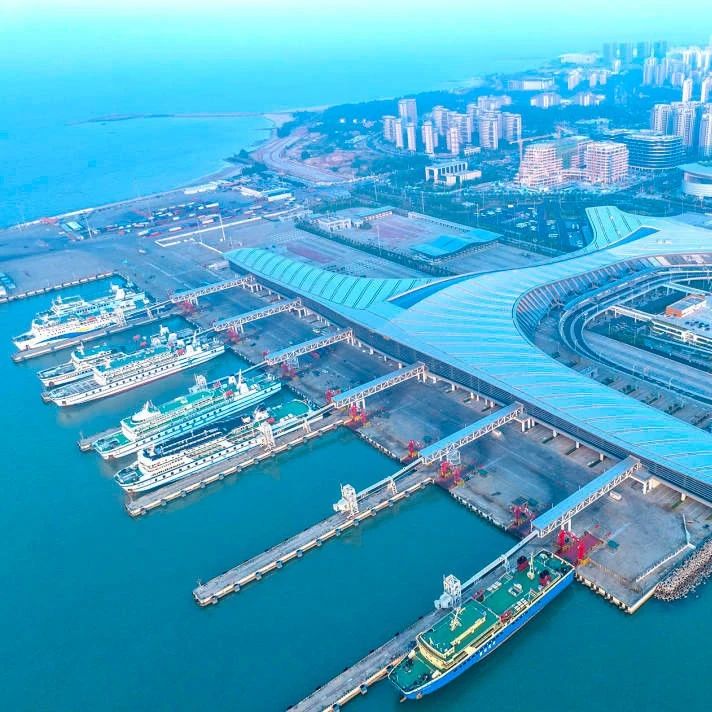
海南自贸港封关时间定了!封关后有哪些新变化?一文看懂
财联社· 2025-07-23 04:40
Core Viewpoint - The establishment of the Hainan Free Trade Port (FTP) is a significant milestone in China's efforts to expand its openness and facilitate trade, with a focus on implementing a "one line open, two lines controlled, and free flow within the island" policy [2][7]. Policy Framework - The Hainan FTP has initially established a policy system that allows visa-free entry for personnel from 85 countries [3]. - The official launch date for the full island closure operation is set for December 18, 2025 [4]. Current Measures - The current closure policy measures can be summarized as "four more" enhancements: 1. More favorable "zero tariff" policies, increasing the proportion of zero-tariff goods from 21% to 74% [5]. 2. More relaxed trade management measures, allowing for open arrangements for previously restricted imports [5]. 3. More convenient passage measures through designated ports [5]. 4. More efficient and precise regulatory models for zero-tariff goods [6]. Trade and Investment - After the closure, there will be a significant increase in the coverage of zero-tariff goods, expanding from approximately 1,900 to about 6,600 tax items, which represents a 53 percentage point increase [10]. - The Ministry of Finance will continue to deepen tax reforms to ensure sustained policy benefits, including adjustments to the import tax item catalog and optimizing duty-free shopping policies [11][12]. Market Access - New measures will be introduced to further relax market access, particularly in service trade, and to create a transparent investment environment [9][15]. - The customs authority will simplify the declaration process for goods leaving the island, reducing the number of required declaration items from 105 to 42 [18]. Economic Performance - Over the past five years, Hainan has attracted a total of 102.5 billion yuan in foreign investment, with an annual growth rate of 14.6% [21].