
新材料

Search documents
报告发布丨中智咨询《央企A股上市公司战新产业布局和模式路径比较研究报告》
Sou Hu Cai Jing· 2026-01-20 08:25
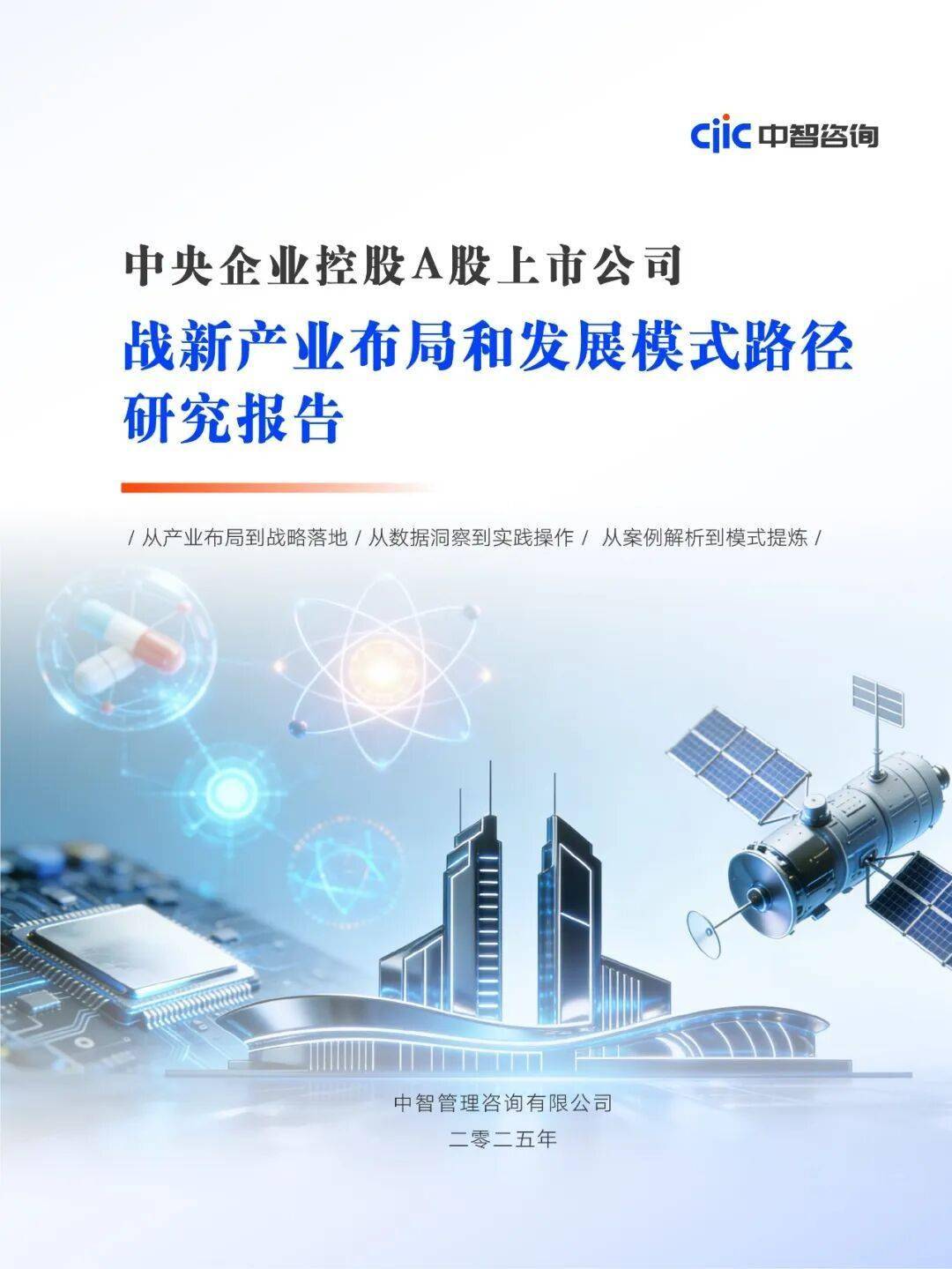
Core Insights - Strategic emerging industries have become the core battlefield for state-owned enterprises (SOEs) to explore a "second growth curve" under the national strategy of cultivating new productive forces [1] Group 1: Industry Overview - A report by Zhongzhi Consulting indicates that among 402 SOE-controlled A-share listed companies, 257 have over 30% of their revenue from strategic emerging industries, which are included in the study [6] - By the end of 2024, strategic emerging industry enterprises are expected to contribute 26% of operating income and 31.27% of total profit with approximately 25% of total assets, showing a net asset return rate superior to traditional industries [7] Group 2: Structural Layout - Nearly 80% of enterprises focus on advantageous fields such as new-generation information technology, new materials, and new energy, but there is a relative weakness in key areas like industrial mother machines and biomanufacturing, necessitating increased investment to enhance industry influence [8] - 43.85% of manufacturing enterprises in strategic emerging industries are actively upgrading to high-value-added segments like new materials and high-end equipment, while the share of strategic emerging business in transportation and financial service companies is less than 1% [9] Group 3: R&D Investment - Overall R&D investment intensity in strategic emerging industry enterprises is higher than that of traditional industries, but sectors like biotechnology, new materials, and energy conservation have lower R&D investment intensity compared to the average level of SOE A-shares (5.86%), indicating a gap with industry leaders [12] Group 4: Sector-Specific Insights - In the new energy sector, SOEs have established a full industrial chain layout covering power generation operations, equipment manufacturing, and technical services, transitioning from "scale competition" to "quality and efficiency competition" [14] - In the new materials sector, advanced steel materials face industry pressures, while advanced non-ferrous metal materials show high profitability and R&D investment, with companies adopting niche market and industry chain extension strategies [16] - In the biotechnology sector, many enterprises are positioned in relatively mature areas like raw materials and trade, but there is insufficient investment in innovative drugs and precision instruments, indicating a need to strengthen overall industry resilience [18] Group 5: Strategic Recommendations - Establish a full-cycle evaluation and adjustment mechanism for emerging industries, transitioning from experience-based to data-driven decision-making [21] - Implement a "one enterprise, one strategy; one industry, one model" incubation path to guide enterprises in selecting flexible combinations of business extensions, platform incubation, equity cooperation, and fund investment [21] - Optimize resource allocation mechanisms driven by innovation and capital, enhancing collaborative innovation resources and establishing special funds for emerging development [21] - Focus on creating an economic empowerment organization characterized by "small teams, large platforms" to enhance industry leadership and ecological construction capabilities [21]


国家发改委最新发声,释放四大重磅信号
21世纪经济报道· 2026-01-20 08:25
Core Viewpoint - The article discusses the implementation of the Central Economic Work Conference's spirit, focusing on achieving a good start for the "14th Five-Year Plan" with a projected GDP of 140.19 trillion yuan in 2025, reflecting a 5% growth compared to the previous year, which positions China among the leading global economies [1][10]. Economic Growth and Structure - By 2025, China's GDP is expected to reach 140 trillion yuan, achieving a 5% growth target, which is significant in the context of global economic performance [1]. - The National Development and Reform Commission emphasizes the need for strategic determination and effective measures to enhance economic quality and reasonable growth [1][10]. Innovation and Industry Development - The article highlights the importance of innovation-driven development, with a focus on key technologies in artificial intelligence, biomedicine, and robotics, which are leading globally [2]. - The manufacturing sector's added value has ranked first globally for 16 consecutive years, showcasing China's robust industrial capabilities [2]. Future Economic Outlook - By 2026, the economic structure is expected to continue improving, with new production capacities and significant development potential across consumption, investment, technology, and regional dynamics [5]. - New economic growth points are emerging in sectors like renewable energy, aerospace, and quantum technology, with new energy storage capacity exceeding 100 million kilowatts, accounting for over 40% of the global total [6]. Policy Measures for Demand and Supply - The article outlines the need to address the current economic imbalance characterized by strong supply and weak demand, emphasizing the importance of expanding domestic demand and optimizing supply [10]. - Key strategies include focusing macroeconomic policies on strengthening domestic circulation and adapting to demand upgrades through innovative measures [10][11]. Price Stability and Consumer Prices - In 2025, the Consumer Price Index (CPI) is expected to remain stable, while the Producer Price Index (PPI) is projected to decline by 2.6%, indicating a low overall price level [13]. - Recent trends show a positive shift in prices, with CPI rising by 0.8% year-on-year in December, marking a 34-month high [14]. Consumer and Investment Strategies - The government plans to implement a consumption boost initiative and a rural resident income increase plan, focusing on enhancing consumer capacity and optimizing supply [17]. - Investment strategies will emphasize both material and human capital, aiming to improve investment efficiency and promote job creation [17][18].
新材料科技成果转化路径与创业孵化机遇——2025新材料创业者大会圆桌论坛实录
AMI埃米空间· 2026-01-20 06:38
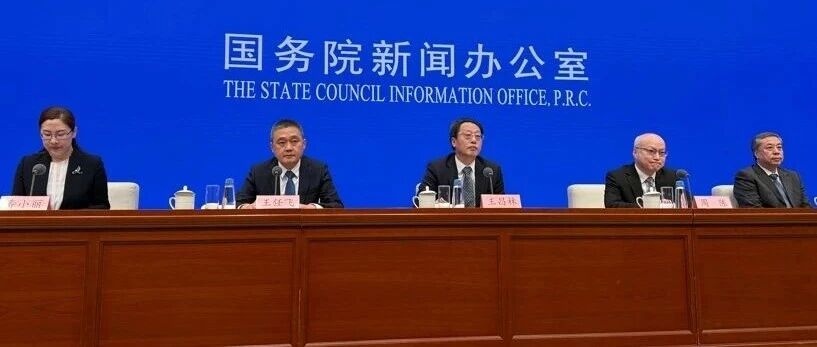
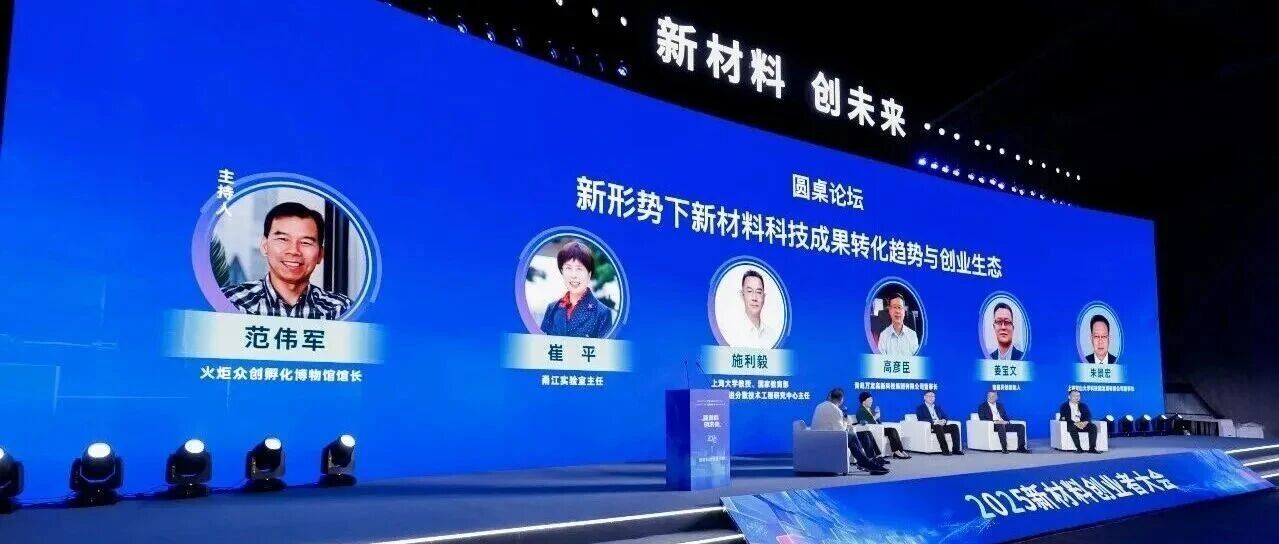
Core Insights - The forum focused on the challenges and breakthroughs in the technology transfer of new materials, emphasizing the unique characteristics and difficulties faced by entrepreneurs in this sector [1][15]. Group 1: Guest Introductions and Backgrounds - Professor Shi Li-yi has over 30 years of experience in nanomaterials research and commercialization, having played significant roles in technology transfer at Shanghai University [2]. - Director Cui Ping has a strong background in material research and technology transfer, having established the Ningbo Materials Institute and now leading the Yongjiang Laboratory [4]. - Gao Yancheng, representing the entrepreneurial perspective, has been involved in the transformation of scientific achievements into marketable products, with a focus on technology transfer [6][7]. - Jiang Baowen, with extensive experience in multinational corporations, co-founded a startup focusing on critical materials, achieving significant breakthroughs in domestic production [10][12]. - Zhu Jinghong has developed a technology transfer platform at Shanghai Baoshan University, supporting numerous hard technology projects with substantial funding [13][14]. Group 2: Challenges in New Materials Entrepreneurship - The new materials sector faces high difficulty, high investment, and long development cycles, which are referred to as the "three highs and three longs" challenges [15]. - The core difficulty in new materials entrepreneurship lies in the "unknowns," where unforeseen risks can lead to project failures if not managed by a professional team [19]. - Unique challenges in the materials field include indirect value presentation, long R&D cycles, and difficulties in application promotion, which require a strategic approach to overcome [20]. Group 3: Strategies for Overcoming Challenges - Building a supportive entrepreneurial ecosystem is crucial, with initiatives like the Sanjiang Innovation Forum aimed at fostering collaboration and resource sharing among entrepreneurs [16]. - Entrepreneurs should adopt a mindset of innovation and resilience, focusing on core problem-solving and technological breakthroughs rather than merely aiming for market entry [21][22]. - Collaboration with external professional resources and leveraging successful entrepreneurs' experiences can significantly enhance the success rate of new ventures [19][17]. Group 4: Future Opportunities and Recommendations - The shift towards high-quality development in China's economy presents new opportunities for technology-driven entrepreneurship, emphasizing the importance of specialized service platforms [19]. - Entrepreneurs are encouraged to build collaborative innovation ecosystems to address national strategic needs and enhance product value [23]. - The current era is seen as a prime time for material development, with a call for young entrepreneurs to harness their innovative spirit for success [23].
厦门炬科启航二期基金启动
FOFWEEKLY· 2026-01-20 04:40
Group 1 - The core viewpoint of the article highlights the successful signing of the Xiamen Juke Qihang Phase II Fund, marking the completion of the first phase and the initiation of the second fund's operations [1] - The Xiamen Juke Qihang Phase II Fund has a scale of 100 million yuan, continuing the strategy of "technology value + industrial synergy" [1] - The fund will focus on strategic emerging industries and future industries, particularly in sectors such as new materials, semiconductors, intelligent manufacturing, and aerospace [1]

国家发展改革委:综合整治“内卷式”竞争,实现从卷价格向优价值转变
Qi Huo Ri Bao· 2026-01-20 04:36
Core Viewpoint - The Chinese government is focusing on expanding domestic demand and optimizing supply to achieve a dynamic balance and virtuous cycle in the economy, emphasizing the need for a new economic development model driven by domestic demand and consumption [2][3][4]. Group 1: Economic Strategy - The National Development and Reform Commission (NDRC) is developing a strategic plan for expanding domestic demand from 2026 to 2030, addressing the current issues of insufficient demand and supply [2]. - The strategy aims to strengthen the domestic circulation of the economy, adapting to the trend of demand upgrading and aligning with the new technological revolution and industrial transformation [2]. Group 2: Focus on Real Economy - The emphasis is placed on developing the real economy and constructing a modern industrial system, which is seen as the foundation of China's economic development [3]. - The approach includes fostering new supply through innovation and creating new job opportunities, with a focus on intelligent, green, and integrated development [3]. Group 3: Market Regulation and Competition - The government aims to enhance market vitality by advancing the construction of a unified national market and addressing issues of "involution" in competition [3]. - Measures will be taken to improve market access, ensure fair competition, and regulate prices in key industries to promote a healthy market order [3]. Group 4: Innovation and Development Potential - By 2026, China's economic structure is expected to continue improving, with new productive forces developing steadily and significant potential being released across consumption, investment, technology, and regional development [4]. - New economic growth points are emerging in sectors such as renewable energy, aerospace, and quantum technology, with new energy storage capacity exceeding 100 million kilowatts, accounting for over 40% of the global total [4][5]. Group 5: Regional Innovation and Investment - China has 24 global top 100 innovation clusters, leading the world for three consecutive years, with plans to establish major international technology innovation centers in key regions [5]. - The establishment of national venture capital funds aims to enhance regional investment and innovation, contributing to the creation of a global technology innovation hub [5].
东莞东寮创联新材料基金启动
Zhong Guo Hua Gong Bao· 2026-01-20 04:24
Core Viewpoint - The establishment of the Dongliao Chuanglian New Materials Venture Capital Fund, with a total scale of 94.5 million yuan, aims to support high-quality projects in the new materials sector and contribute to the development of Dongguan's strategic emerging industry cluster [1] Group 1: Fund Overview - The fund is initiated by the People's Government of Liaobu Town, Dongguan Science and Technology Innovation Group, Changlian Technology, and Dongguan Securities [1] - The total scale of the fund is 94.5 million yuan, focusing on the new materials industry [1] Group 2: Investment Focus - The fund will prioritize investments in growth-stage companies with technological barriers and significant market potential [1] - Key investment areas include semiconductor new materials such as photoresists, semiconductor packaging materials, and wafer-level materials; new energy materials like cathode materials for power batteries, separators, and electrolytes; and advanced manufacturing materials such as high-end alloy materials, composite materials, and functional ceramics [1] Group 3: Strategic Context - Dongguan has incorporated the new materials industry into its "7+1" strategic emerging industries, which include new generation information technology, high-end equipment manufacturing, new materials, new energy, biomedicine, energy conservation and environmental protection, and marine economy, with "1" representing future industries [1] - The city is promoting industrial clustering and upgrading through the establishment of guiding funds and supportive policies [1]
国家发改委:航空航天、量子科技等新经济增长点正在蓄势待发
Zhong Guo Xin Wen Wang· 2026-01-20 04:08
Group 1 - The core viewpoint of the article emphasizes the strategic planning and initiatives by the National Development and Reform Commission (NDRC) to promote high-tech industries during the 14th Five-Year Plan period, aiming for a strong economic start [1][3] - By 2026, the economic structure of China is expected to continue improving, with new development momentum emerging from consumption, investment, technology, and industry, indicating significant growth potential [1][3] - New economic growth points are emerging in sectors such as renewable energy, new materials, aerospace, quantum technology, and biomanufacturing, with new energy storage installations exceeding 100 million kilowatts, accounting for over 40% of the global total [1][2] Group 2 - The integration of innovation, industry, and talent is accelerating, supported by a complete industrial system and a large-scale market of over 1.4 billion people, with over 5 million graduates in science, technology, engineering, and mathematics each year [2] - The digital economy is projected to reach a value of 49 trillion yuan by 2025, representing approximately 35% of GDP, creating substantial market opportunities [2] - China has 24 global top 100 innovation clusters, with the "Shenzhen-Hong Kong-Guangzhou" cluster ranking first globally, and the establishment of international technology innovation centers in Beijing, Shanghai, and the Guangdong-Hong Kong-Macau Greater Bay Area [2]
国家发改委:今年将释放消费投资、科技产业、城乡区域潜能
Nan Fang Du Shi Bao· 2026-01-20 04:01
Core Viewpoint - The Chinese economy is poised for significant growth and transformation, with a focus on leveraging its super-large market potential and fostering innovation to drive new economic momentum as it enters the 14th Five-Year Plan period in 2026 [1][3]. Group 1: Economic Structure and Growth Potential - The economic structure of China is expected to continue improving, with development momentum shifting towards new sectors, leading to a favorable overall development trend [1]. - Key growth areas include new technologies and products in sectors such as renewable energy, aerospace, quantum technology, and intelligent manufacturing, which are anticipated to drive substantial economic growth [3]. Group 2: Innovation and Talent Integration - The integration of innovation, industry, and talent is accelerating, supported by a complete industrial system and a large population, which provides a robust talent pool of over 5 million graduates in science, technology, engineering, and mathematics each year [4]. - The digital economy is projected to reach a value of 49 trillion yuan by 2025, accounting for approximately 35% of GDP, indicating significant market expansion opportunities [4]. Group 3: Regional Innovation and Development - China boasts 24 of the world's top 100 innovation clusters, with the "Shenzhen-Hong Kong-Guangzhou" cluster ranking first globally, highlighting the country's strong position in global innovation [4][5]. - The establishment of international technology innovation centers in Beijing, Shanghai, and the Guangdong-Hong Kong-Macau Greater Bay Area is part of a strategic initiative to enhance regional innovation capabilities and foster new industries [5].
破解三维预制体成形“卡点”,编中新材获北极光创投天使轮投资|硬氪首发
3 6 Ke· 2026-01-20 02:17
Financing Information - Shenzhen Bianzhong New Material Technology Co., Ltd. has completed its angel round financing, with the investment from Northern Light Venture Capital [1] - The funds will be used for production line construction and equipment research and development [1] Company Overview - Bianzhong New Material was established in 2025 and is headquartered in Shenzhen, Guangdong Province [1] - The company has developed a fully automated weaving equipment for three-dimensional prefabricated bodies, which is currently the only one in China capable of large width, large thickness, high warp density, high weft density, and high volume ratio [1][3] Market Analysis - High-strength fiber composite three-dimensional prefabricated bodies are primarily used in aerospace, national defense, and infrastructure construction [2] - The domestic industry chain for high-strength fiber production and prefabricated body composite processes is relatively mature, but the forming equipment for three-dimensional prefabricated bodies has long relied on manual or low-level modified equipment, leading to low efficiency and high costs [2] Technical Highlights - The equipment developed by Bianzhong New Material can adapt to various high-strength fiber materials, including quartz fiber, carbon fiber, aramid, glass fiber, ultra-high molecular weight polyethylene, and basalt fiber [3] - The equipment supports various typical three-dimensional structures for automated weaving [3] Commercial Validation - The equipment has been validated by downstream major customers and has reached commercial application standards [4] Team Background - The founder, Dr. Lin Fusheng, has a background in high-strength fiber composite material research and has served as a professor and director of the 3D Textile Engineering Research Center [5] - The co-founder, Zhou Zhan, has project management experience from a large listed company, and over 50% of the team consists of R&D personnel [5] Business Strategy - The company focuses on the development and production of three-dimensional prefabricated body forming equipment, with plans to expand into process design and production weaving [7] - The company aims to provide equipment and technical support while also considering contract manufacturing for long-term partners to help reduce costs [7] Future Plans - The funds from the recent financing will be allocated to three main areas: further optimization of existing equipment, construction of a demonstration production line, and expansion of production capacity to manufacture 3-4 forming equipment simultaneously [8]

道生天合1月19日获融资买入1393.64万元,融资余额1.28亿元
Xin Lang Cai Jing· 2026-01-20 02:07
Group 1 - The core viewpoint of the news is that Daosheng Tianhe has shown significant growth in both revenue and net profit, indicating strong business performance and investor interest [2] - As of January 19, Daosheng Tianhe's financing balance reached 128 million yuan, accounting for 5.78% of its market capitalization [1] - The company specializes in the research, production, and sales of new materials, with a revenue composition heavily focused on epoxy resin for wind turbine blades, which constitutes 68.56% of its main business income [1] Group 2 - As of October 17, the number of shareholders for Daosheng Tianhe increased to 151,200, reflecting a significant rise of 840,111.11% [2] - For the period from January to September 2025, Daosheng Tianhe achieved a revenue of 2.698 billion yuan, representing a year-on-year growth of 26.92%, while the net profit attributable to shareholders was 153 million yuan, up 56.89% year-on-year [2] - Since its A-share listing, Daosheng Tianhe has distributed a total of 98.91 million yuan in dividends [2]