
科技创新

Search documents
香港创新科技及工业局:2024年香港初创企业升至近4700家 科创生态越趋蓬勃
智通财经网· 2025-05-07 06:29
今年国家《政府工作报告》大力支持包括各发展阶段在内的科创企业发展,全方位布局以加速发展新兴 及未来产业。为主动对接国家的发展战略,推动科技创新和产业创新,过去两年多来,港府一直遵循 《香港创新科技发展蓝图》所订立的顶层设计,采取多管齐下的策略,一方面着力培育本港科创初创企 业;另一方面积极吸引企业来港落户,充分发挥香港在"一国两制"下"背靠祖国、联通世界"的独特优 势,抓住新一轮科技创新与产业变革所带来的历史机遇。 香港科创及工业局及创新科技署于近年出台落实了不少政策,大力重点支援各发展阶段的科创企业,包 括对初创企业的培育。比如2023年推出100亿港元的"产学研1+计划",以配对形式资助有潜质成为成功 初创企业的大学研发团队将其科研成果转化及商品化。为鼓励更多风险投资基金共同投资于本地科创初 创企业,当局于去年底推出"科创创投基金"优化计划,调拨最多15亿港元与业界配对成立联合基金,投 资策略性产业的科创初创企业,进一步加大对本地初创企业的融资支持。 此外,香港科创及工业局亦正筹备推出"科创加速器先导计划",吸引海内外具丰富经验的专业初创企业 服务机构在香港建立加速器基地,壮大初创企业,完善科创生态圈。 ...
央行、证监会联合发布关于支持发行科技创新债券有关事宜的公告
智通财经网· 2025-05-07 04:58
Core Viewpoint - The announcement by the People's Bank of China and the China Securities Regulatory Commission aims to support the issuance of technology innovation bonds, enhancing the financing channels for technology innovation enterprises and promoting the development of a multi-level bond market that aligns with technological innovation [1][4]. Group 1: Measures to Support Technology Innovation Bonds - The announcement outlines several measures to support the issuance of technology innovation bonds, including allowing financial institutions, technology enterprises, private equity investment institutions, and venture capital institutions to issue these bonds [2][4]. - Issuers are encouraged to set flexible bond terms and issue long-term bonds to better match the funding needs of the technology innovation sector [2][5]. - The announcement emphasizes the need to optimize bond issuance management, simplify information disclosure, and innovate the credit rating system to facilitate financing for technology innovation bonds [2][6]. Group 2: Enhancements to the Bond Market - The measures include establishing a special underwriting evaluation system and market-making mechanism for technology innovation bonds, which will improve the underwriting and market-making processes [7]. - Financial institutions and asset management institutions are encouraged to invest in technology innovation bonds, and the creation of indices related to these bonds is promoted [7][8]. - Local governments are encouraged to provide interest subsidies and guarantees to support the issuance of technology innovation bonds [8]. Group 3: Regulatory and Support Mechanisms - The announcement highlights the importance of ensuring that the funds raised through technology innovation bonds are used for supporting the development of the technology sector [8]. - It calls for the integration of technology innovation bonds into the evaluation of financial institutions' technology financial service quality [8]. - The bond market's self-regulatory organizations are urged to improve the supporting rules for technology innovation bonds and provide specialized services for issuance, trading, and settlement [8].
刚刚!央行,证监会,重磅发布“13条”!
券商中国· 2025-05-07 04:56
Core Viewpoint - The announcement by the People's Bank of China and the China Securities Regulatory Commission aims to support the issuance of technology innovation bonds, aligning with the spirit of the 20th National Congress of the Communist Party of China, to enhance financing channels for technology innovation enterprises and stimulate market vitality [1][2]. Group 1: Support for Technology Innovation Bonds - The announcement outlines measures to enrich the product system for technology innovation bonds, allowing financial institutions, technology enterprises, private equity investment institutions, and venture capital institutions to issue these bonds [2][3]. - Issuers are encouraged to flexibly set bond terms and issue long-term bonds to better match the funding needs of the technology innovation sector [2][4]. - The announcement emphasizes optimizing the issuance management of technology innovation bonds, simplifying information disclosure, and innovating the credit rating system to facilitate financing [2][5]. Group 2: Mechanisms for Financing Support - Financial institutions and asset management institutions, as well as social security funds, corporate annuities, and insurance funds, are encouraged to invest in technology innovation bonds [5][6]. - A risk-sharing mechanism is to be established, allowing various financial institutions to support the issuance and trading of technology innovation bonds through credit protection tools and guarantees [5][6]. - Local governments are encouraged to provide interest subsidies and guarantees to support technology innovation bonds, leveraging their financial resources [5][6]. Group 3: Evaluation and Management - The management of technology innovation bonds will be strengthened to ensure that raised funds are used for supporting technology innovation development [5][6]. - The announcement includes plans for the interbank bond market and exchange bond market self-regulatory organizations to improve supporting rules for technology innovation bonds [5][6].


瞭望 | 瑞士的战略地位很独特
Sou Hu Cai Jing· 2025-05-06 09:41
瑞士凭借制度性权力、金融网络和创新能力,在国际体系中占据着独特的战略地位 作为外交事务斡旋中间人,瑞士的中立政策使其成为全球冲突斡旋和外交对话的重要平台 通过熊猫债券、绿色金融、资本市场互联互通及金融科技等方面的合作,中瑞金融关系有望持续深化,这也有利 于促进全球金融体系多元化 文 | 顾苏 瑞士国土面积仅4.1万平方公里,人口不足900万。历史上,这个农业受限、资源匮乏的山地国家曾是欧洲最贫穷 的角落之一。然而,凭借灵活的经济策略、高效的治理模式,瑞士逐渐从一个封闭的小体量国家蜕变为全球最富 裕、最具影响力的国家之一。 如今,无论是在全球金融、外交斡旋,还是在科技创新领域,瑞士都展现出远超其体量的国际影响力,堪称"小国 大业"的典范。 更重要的是,瑞士并不是国际政治的旁观者,而是全球治理的主动参与者。 滑雪爱好者在瑞士采尔马特滑雪(2023 年 12 月 10 日摄) 连漪摄 / 本刊 以中立为立国之基 1291年建国以来,瑞士长期处于欧洲强国的交汇地带和权力博弈的漩涡之中,同时,内部的文化多元性与宗教差 异也加剧了国家的不稳定性。为了在动荡中求存,瑞士采取了务实灵活的外交策略。 16世纪,瑞士中立雏形初现 ...

香港理工大学两个创新中心落地北京朝阳
Zhong Guo Xin Wen Wang· 2025-04-30 12:10
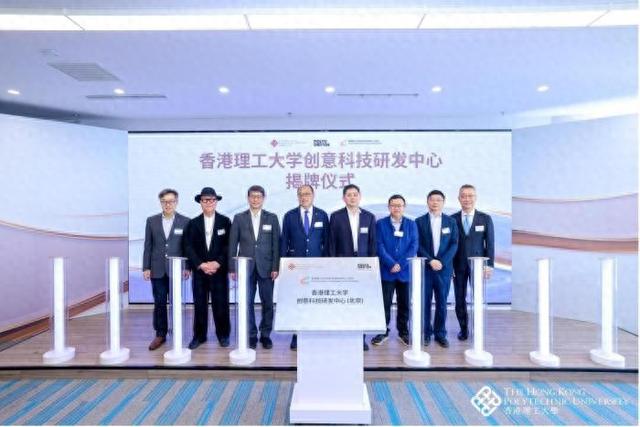
中新网北京4月30日电 (记者 吕少威)香港理工大学创意科技研发中心30日落地北京朝阳元宇宙产业基 地。现场,香港理工大学科技及创新政策研究中心(北京)也正式揭牌。两个创新中心的落地,将为朝阳 区数字经济注入国际化要素,为香港理工大学科技成果转化扩展广阔空间,共同推动京港两地科技创新 产业蓬勃发展。 活动中,香港理工大学创意科技研发中心在朝阳正式揭牌,该中心是朝阳区与香港理工大学合作共建的 国际化产学研科技创新平台。中心以人工智能与元宇宙产业为核心方向,成立后将系统推进学科体系构 建与人才培养机制优化,设立合作机制支持两地学生交流,并引进高端科技人才参与指导工作,为高端 科技人才与青年人才提供创新创业的沃土。 与此同时,中心将作为京港两地及国际合作交流的平台,通过孵化、赛事等活动,加强产业上中下游协 同交流,推进核心技术攻关、场景应用落地和商业化闭环,加速科技成果向产业产品转化,促进国际合 作项目的落地与推广。 朝阳区有关负责人表示,未来,双方将在政策、人才、技术、产品、生态上展开全方位、深层次的科创 合作,通过人才交流、企业合作、科技成果转化等创新举措,为朝阳区数字经济注入国际化要素,为香 港理工大学科技成 ...
自贸试验区再升级,重庆怎样抢抓机遇?
Sou Hu Cai Jing· 2025-04-29 15:45
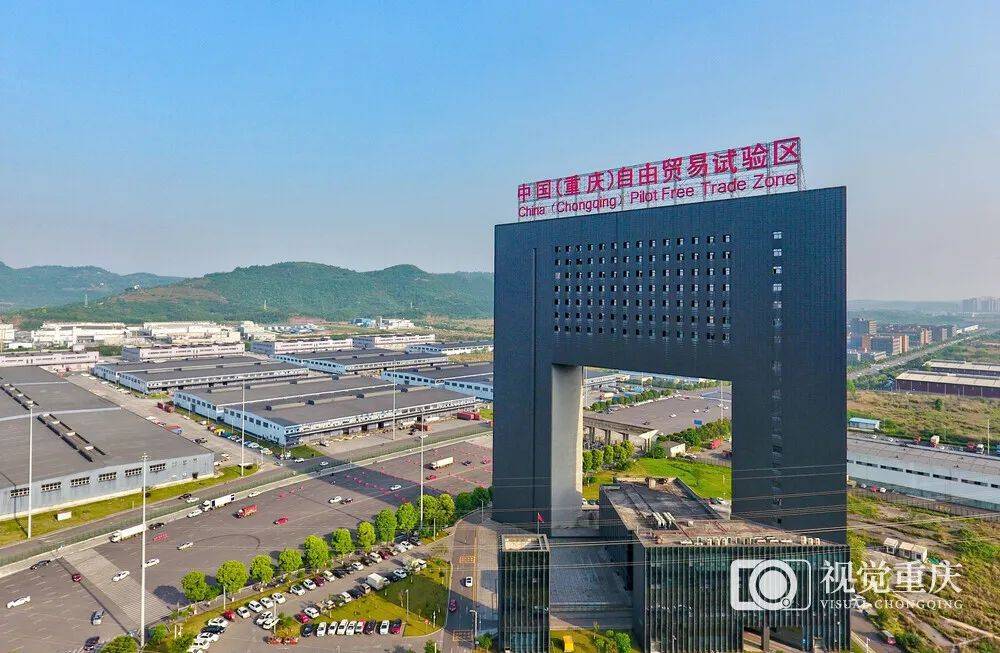
Core Viewpoint - The recent issuance of the "Opinions on Implementing the Strategic Enhancement of Free Trade Pilot Zones" by the Central Committee of the Communist Party of China and the State Council aims to inject more stability and certainty into global trade and investment development, particularly benefiting the Chongqing Free Trade Zone [1][3]. Group 1: Policy and Strategic Importance - The Chongqing Free Trade Zone has been a pioneer in reform and opening-up since its establishment in April 2017, contributing significantly to the national economy through innovative institutional achievements [1][4]. - The timing of the "Opinions" is crucial, as it reflects China's commitment to expanding openness and countering tariff bullying amid global economic challenges [3][6]. - The "Opinions" signal a clear intention to enhance the level of institutional openness and the quality of the open economy in the Chongqing Free Trade Zone [3][6]. Group 2: Economic Contributions and Achievements - The Chongqing Free Trade Zone occupies only 1.46% of the city's area but accounts for over 10% of new enterprises, nearly 50% of actual foreign investment, and about 66% of the total foreign trade import and export volume in the city [4]. - The zone has made significant strides in creating a high-level free trade park, focusing on investment and trade facilitation, high-end industry aggregation, efficient regulation, and improved financial services [4][6]. Group 3: Future Development and Recommendations - The "Opinions" provide a clear path for the future development of the Chongqing Free Trade Zone, emphasizing the need to leverage policy advantages and create replicable experiences for national reform and opening-up [9][10]. - The zone should enhance its influence in the western region and nationally, collaborating with various platforms to expand cross-border e-commerce and international cooperation [9][10]. - There is a need to address fragmentation in the construction of the Free Trade Zone and aim for the establishment of the first inland free trade port [10][11].
促进民营经济,北京今年安排59条具体措施
Xin Jing Bao· 2025-04-29 02:38
Group 1 - The core viewpoint of the news is the release of the "Beijing Action Plan for Promoting the Healthy and High-Quality Development of the Private Economy," which outlines 59 specific measures across 7 major areas to support private enterprises [1][2] - The plan includes measures such as promoting fair access to national major scientific research infrastructure for private enterprises and supporting the construction of national and municipal pilot platforms [1][3] - It aims to address key issues faced by private enterprises, including reducing financing costs and administrative burdens through unified regulations and financial services [2][6] Group 2 - The action plan emphasizes the importance of supporting private enterprises in participating in major technological breakthroughs and project construction, with a total investment of no less than 200 billion yuan in major projects promoted to private capital [2][4] - It also highlights the need for collaboration between private enterprises and strategic scientific forces, aiming to break through over 100 key core technologies [3] - The plan includes initiatives to enhance the business environment, such as providing guarantees for small and micro enterprises and optimizing the credit supply for private enterprises [5][6]
湖北6维22策“施工” 整体提升支点创新策源力
Chang Jiang Shang Bao· 2025-04-28 23:52
Core Viewpoint - Hubei Province is implementing a science and technology innovation strategy to enhance its innovation capabilities, aiming to become a national and global leader in technological innovation by 2035 [1] Group 1: Action Plan Overview - The action plan outlines three phases of goals: significantly enhancing innovation capabilities by 2027, establishing a nationally influential technology innovation hub by 2030, and becoming a global source of original innovation by 2035 [1] - The plan includes 22 key tasks across six areas: capacity building, spatial layout, technological breakthroughs, results transformation, talent aggregation, and innovation ecosystem [2] Group 2: Capacity Building - Key tasks include developing high-level laboratory systems, building major technological infrastructure clusters, enhancing the innovation capabilities of research universities and institutions, and expanding the number of leading technology enterprises [2] - By 2030, the goal is to add 1-2 national laboratories or bases and have around 10 major technological infrastructures in place [2] Group 3: Spatial Layout Optimization - The plan aims to create innovation growth poles, strengthen a supportive innovation "Golden Triangle," and establish an integrated innovation "Central Triangle" [2] - By 2030, Wuhan's research cities and innovation clusters are expected to rank in the global top 10, with approximately five national high-tech zones ranked in the national top 50 [2] Group 4: Technological Breakthroughs - The focus is on advancing basic research, addressing critical core technologies, and optimizing research organization mechanisms [3] - A funding system combining national and provincial resources will be established to support disruptive technology development, with annual breakthroughs targeted at achieving "61020" [3] Group 5: Results Transformation - The plan emphasizes optimizing the results transformation mechanism, enhancing service systems, and strengthening intellectual property operations [3] - By 2030, the goal is to establish 100 concept verification centers and 200 pilot bases in manufacturing, with over 50% of listed companies in Hubei coming from the science and technology sector [3] Group 6: Talent Aggregation - The strategy includes increasing talent recruitment and retention efforts, with a target of cultivating and attracting 10 strategic scientists, 100 leading technology talents, and 10,000 outstanding young scientists by 2030 [4] - A comprehensive support mechanism for high-level talent will be established to enhance their development [4] Group 7: Innovation Ecosystem - The plan aims to strengthen technology coordination, increase innovation incentives, deepen open cooperation, and create a favorable environment for innovation [4] - By 2027, R&D expenditure is expected to reach 2.9% of GDP, with basic research accounting for 9% of total R&D spending, increasing to 3.2% and 10% respectively by 2030 [4] Group 8: Role of Higher Education - Higher education institutions are identified as key players in integrating education, technology, and talent development to enhance Hubei's innovation capabilities [5] - The education department plans to implement a "71020" innovation system in universities, focusing on world-class development and optimizing academic structures [6] Group 9: Financial Support for Innovation - Hubei is guiding credit funds towards technology enterprises and enhancing equity investment to accelerate the listing of tech companies [7] - As of March 2025, the province's technology guarantee business reached 17,266 cases with a balance of 52.55 billion yuan, showing significant year-on-year growth [7]
丘成桐的一小步,深圳科技创新一大步|湾区观察
Di Yi Cai Jing· 2025-04-28 12:34
Core Viewpoint - The arrival of top scientists like Shing-Tung Yau and Efim Zelmanov in Shenzhen signifies the city's efforts to enhance its innovation resources and promote original innovation [1][2]. Group 1: Shenzhen's Scientific Landscape - Shenzhen is eager to attract top scientists to strengthen its relatively weak foundational research compared to other innovation hubs [3]. - The city has a low proportion of foundational research investment relative to its overall R&D spending, which limits its original innovation capabilities [3]. - Shenzhen aims to become a globally influential industrial innovation center by focusing on foundational research, particularly in mathematics, which is considered the core of basic sciences [3]. Group 2: Advantages for Scientists - Shenzhen offers significant industrial and talent advantages, with strategic emerging industries projected to exceed 1.5 trillion yuan in output by 2024, accounting for 42.34% of its GDP [4]. - The city has over 25,000 national high-tech enterprises, the highest density among Chinese cities, and a total talent pool of 7 million, including 26,200 high-level talents [4]. - Shenzhen has made substantial progress in addressing its foundational research shortcomings through various initiatives and legislative measures [4]. Group 3: Research Institutions and Focus Areas - The newly established He Tao Institute of Mathematics and Interdisciplinary Research will focus on foundational mathematics, applied mathematics, and the intersection of mathematics with artificial intelligence [6]. - The Peking University School of Intelligent Science aims to create an innovative ecosystem that integrates artificial intelligence with foundational sciences, training interdisciplinary talents [6]. - The presence of these institutions aligns perfectly with Shenzhen's goal of transitioning from "following innovation" to "leading innovation" [6].
提升支点创新策源力,湖北准备这么干
Di Yi Cai Jing· 2025-04-28 11:42
Core Viewpoint - Hubei aims to enhance its innovation capabilities significantly by 2030, with a focus on increasing the number of listed companies on the Sci-Tech Innovation Board, Growth Enterprise Market, and Beijing Stock Exchange to over 50% of the total listed companies in the province [1][2] Group 1: Strategic Goals - By 2030, Hubei plans to add 1-2 national laboratories or bases and rank among the top 10 globally for research cities and innovation clusters [1] - The province aims to establish around 10 major scientific infrastructure projects and cultivate a number of leading and high-growth technology enterprises [1] Group 2: Innovation Ecosystem - Hubei will focus on transforming the Wuhan regional technology innovation center into a core hub, with the goal of having five national high-tech zones ranked in the top 50 nationwide by 2030 [2] - The province intends to enhance the efficiency of technology transfer from universities, aiming to set up 100 concept verification centers and 200 manufacturing pilot bases by 2030 [2] Group 3: Economic and Industrial Development - Hubei's strategy includes linking technological strength to industrial and economic growth, thereby enhancing its overall strength and competitiveness as a rising hub in central China [2]