
预制菜

Search documents
万商聚广州 智造通天下
Guang Zhou Ri Bao· 2025-05-02 22:22
Group 1 - The 137th Canton Fair has successfully attracted over 220,000 overseas buyers from 219 countries and regions since its opening on April 15, setting a historical record for the same period [1][2] - The fair showcases both "Chinese manufacturing" and "Chinese intelligence," highlighting the country's efforts in promoting high-end, intelligent, and green transformations in global supply chains [2] - The introduction of a service robot section and the focus on emerging industries such as artificial intelligence, new energy vehicles, and lithium batteries are notable highlights of this year's fair [1] Group 2 - The fair reflects China's commitment to openness and global cooperation, as evidenced by the presence of buyers from Belt and Road Initiative countries, BRICS nations, and RCEP member states [1][2] - The event serves as a platform for cultural exchange, with products like pre-packaged dishes not only showcasing quality and price advantages but also conveying cultural significance [2] - Guangzhou is positioning itself as a high-level open city, signaling that China's doors to global trade will continue to open wider despite the challenges posed by global supply chain restructuring [2]
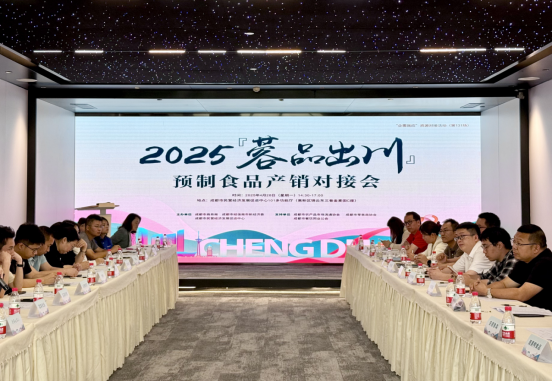
2025“蓉品出川”预制食品产销对接会 助力成都预制菜品牌走向全国
Mei Ri Jing Ji Xin Wen· 2025-04-29 03:25
Group 1 - The event "2025 Rongpin Out of Sichuan Prepared Food Supply and Demand Matching Conference" was held to promote Chengdu's quality products to the national market and help local enterprises expand sales channels [1][2] - The conference gathered prepared food producers and representatives from the catering, commerce, and e-commerce sectors to facilitate direct connections and collaborations [1][2] - The prepared food industry is a key focus for Chengdu's modernization of the food industry and integration of the tertiary sector, with a complete industrial chain already established [2][3] Group 2 - The conference featured a product display area showcasing innovative technologies and core products from participating companies, enhancing trust in Chengdu's prepared foods among buyers [3][5] - Representatives from various sectors expressed interest in establishing long-term partnerships with quality producers to promote the prevalence of prepared foods in restaurants, online platforms, and supermarkets [3][5] - The event successfully facilitated multiple cooperation intentions between producers and buyers, indicating a strong market demand for prepared foods [3][6] Group 3 - Chengdu's government aims to continue supporting local enterprises by integrating resources and promoting quality products to enhance competitiveness and market reach [6] - The event highlighted the innovative achievements and brand strength of Chengdu's prepared food industry, providing solid support for market expansion [6] - Future plans include further collaboration between catering associations and prepared food companies to enhance product standardization and chain restaurant development [5][6]

龙大美食(002726) - 002726龙大美食投资者关系管理信息20250428
2025-04-28 10:04
Group 1: Financial Performance - The company achieved a revenue of 10.99 billion CNY and a net profit of 22 million CNY in the reporting period, marking a 101.41% increase year-on-year, successfully turning losses into profits [5] - The recovery in the pig and pork market prices significantly contributed to the company's turnaround, alongside the sale of a subsidiary which generated investment income [3] Group 2: Product Development and Innovation - The company focused on new product development with a strategy centered on large single products and differentiation, launching multiple new products throughout the year [3] - The "Fresh Food Record Juicy Sausage" achieved over 10,000 online sales on its first day, and the "Sauce-flavored Beef" averaged monthly sales exceeding 2 million CNY, with total sales surpassing 10 million CNY [3] - The introduction of the "Fried Goods + Marinated Goods" growth curve contributed over 50 million CNY to overall sales [3] Group 3: Market Strategy and Expansion - The company plans to deepen its focus on the food sector, primarily targeting B-end customers while also catering to C-end customers [4] - A dedicated service team has been established to enhance customized services for major clients, aiming to expand market share through industry integration and policy responsiveness [4] - The company is committed to strengthening its presence in new retail channels, leveraging live streaming and private domain operations for product promotion [5] Group 4: Quality Control and Safety Measures - The company has implemented a comprehensive food safety assurance system, ensuring traceability and quality control throughout the production process [5] - A national-level testing agency under the company conducts extensive safety inspections, with over 40,000 samples tested annually, enhancing food safety measures [5] Group 5: Industry Outlook - The prepared food industry is expected to experience significant growth, transitioning towards standardization and integration, favoring large enterprises with upstream raw material and channel advantages [6]

安徽宿州全力打造预制菜产业高地
Zhong Guo Chan Ye Jing Ji Xin Xi Wang· 2025-04-28 00:36
Core Viewpoint - The city of Suzhou in Anhui Province is accelerating the high-quality development of the prepared food industry by leveraging its agricultural resource advantages and implementing a "5+4+1" industrial layout, resulting in nearly 200 prepared food production enterprises and over 1,000 varieties of prepared dishes [1][2]. Group 1: Policy Support - Suzhou has introduced a series of supportive policies for the prepared food industry, including the "Implementation Opinions on Accelerating the High-Quality Development of the Prepared Food Industry" and the establishment of a prepared food industrial park [1]. - The city is the first in the province to implement supportive policies, develop group standards for prepared food, and establish a prepared food association, enhancing standardization in the industry [1]. Group 2: Industry Cluster Development - The city focuses on integrated agricultural practices, establishing large-scale vegetable and fruit planting bases, and standardized livestock farms to ensure high-quality raw material supply for the prepared food industry [2]. - A cultivation database for prepared food enterprises has been established, targeting key industries such as Fuli Ji roast chicken and Dangshan fruit preserves [2]. Group 3: Technological Innovation - Suzhou is enhancing research and development in the prepared food sector by collaborating with universities to create innovation research institutes and technology transfer centers [3]. - The city has established a professional talent pool for the prepared food industry, training over 110 specialized professionals to improve product competitiveness [3].
跨省养牛的潮州湘桥人,如何捶打出百亿牛肉丸产业?丨聚焦“三博会”
2 1 Shi Ji Jing Ji Bao Dao· 2025-04-23 08:08
Core Insights - The Chaozhou beef ball industry has successfully transformed external ingredients into a renowned culinary product, with a daily beef consumption of 100,000 kg in a population of approximately 15 million [1] - The industry has achieved a projected output value of 2 billion yuan in 2024, showcasing its growth and market potential [1] Group 1: Industry Structure and Supply Chain - The Chaozhou beef ball industry relies on a cross-provincial cattle breeding model to ensure high-quality raw materials, utilizing breeds like Yunnan-Guizhou-Sichuan mountain yellow cattle and Qin Chuan cattle [2] - The transportation and processing of cattle are optimized to maintain freshness, with a slaughter-to-store time of under 20 minutes [2] - A complete supply chain system has been established, including fresh and frozen meat production, ensuring quality control and standardization [3] Group 2: Production Techniques and Standards - Traditional production methods involve multiple steps, with the pounding process being crucial for achieving the desired texture and elasticity [3] - The introduction of mechanized production has significantly increased output, with production lines capable of producing over 2,000 kg per day compared to manual methods [3] - A group standard for Chaozhou beef balls was established in 2021, mandating a minimum of 80% beef content and restricting the use of other meat types [4] Group 3: Quality Control and Regulatory Measures - Issues with standard enforcement have been identified, including recalls due to non-compliance with safety standards [5] - A comprehensive quality control system has been implemented, focusing on raw material quality and processing practices, alongside market surveillance to combat false advertising [5] Group 4: Cultural and Economic Integration - The Chaozhou beef ball's production technique is recognized as an intangible cultural heritage, enhancing its cultural value and market appeal [6] - The industry is exploring the integration of agriculture, culture, and tourism, with initiatives like the Chaozhou Ancient City Beef Ball Cultural and Creative Industry Park attracting visitors and boosting economic growth [6][7] - The establishment of a composite platform for the beef ball theme aims to enhance brand value and cultural significance, positioning it as a key player in the market [7]
瞄准海外预制菜市场“蓝海” 粤企打造全国首个预制菜出口平台
Nan Fang Ri Bao Wang Luo Ban· 2025-04-22 08:11
Core Insights - The article discusses the rapid growth and potential of the prepared food industry in Guangdong, particularly focusing on the export opportunities for pre-made dishes to overseas markets, especially targeting the Chinese diaspora [1][2][5] Group 1: Market Potential - The overseas market for prepared dishes has a potential consumer base of approximately 300 million people, primarily consisting of overseas Chinese, estimated at around 60 million [2] - The market for Chinese restaurants abroad is significant, with around 500,000 establishments and a market size exceeding $250 billion [2] Group 2: Company Strategy - Guangzhou Xueyin has shifted its focus from the domestic market to international exports after initial failures in the domestic prepared food sector, establishing a partnership with a U.S. company specializing in supplying prepared dishes to Chinese restaurants [2][5] - The company has set up a prepared food export platform in Nansha, leveraging its strategic location with the largest container hub in South China and various supportive policies [2][3] Group 3: Operational Challenges - Exporting prepared dishes involves navigating complex regulations, including obtaining various certifications and ensuring compliance with foreign market standards [3][4] - The company has developed a "five-fold rule" for inventory management to mitigate supply chain disruptions and ensure stable product availability in overseas markets [4] Group 4: Financial Outlook - The platform is projected to achieve a cumulative export transaction volume exceeding 10 billion RMB this year, despite challenges posed by U.S. tariff policies [5] - The company plans to expand its presence by establishing prepared food experience centers and warehouses in 20 countries, enhancing its ability to deliver products efficiently [5][6] Group 5: Competitive Advantage - The company emphasizes the importance of identifying market trends early and strategically planning to gain a competitive edge, which has allowed it to establish connections with overseas chain restaurants and adapt quickly to market demands [6]
聚焦“三博会”:预制菜出海如何破局“舌尖上的贸易”?
2 1 Shi Ji Jing Ji Bao Dao· 2025-04-21 09:18
Core Insights - The event "2025 Pre-made Food Going Global" highlights the potential of pre-made food as a cultural bridge and a means to meet diverse consumer demands through standardized production [1][2] - China's agricultural exports are expected to grow in 2024, with high-quality products like fruits, vegetables, and seafood becoming international representatives of Chinese agriculture [1] - Guangdong province leads the pre-made food industry in China, successfully entering international markets such as the UK, South Korea, and Singapore, positioning pre-made food as a new engine for agricultural modernization [1] Industry Challenges - The global economic landscape is currently affected by unilateralism and trade protectionism, creating uncertainties in international trade, including high trade barriers and rising logistics costs [2] - The path for pre-made food exports is complicated, requiring adherence to international food safety standards and addressing issues related to local market adaptation [2] Strategic Recommendations - To promote high-quality development of the pre-made food industry, it is essential to focus on standardization, innovation in cold chain logistics, and brand storytelling to enhance cultural value [2] - Government support is crucial for simplifying customs processes, while companies must focus on quality and global market strategies, including cross-border e-commerce and overseas warehouses [2] - The export of pre-made food represents not only an industry breakthrough but also a declaration of China's agricultural presence on the global stage [2]
海外“共享工厂”如何重塑全球食品供应链丨聚焦“三博会”
2 1 Shi Ji Jing Ji Bao Dao· 2025-04-21 09:18
Core Insights - A silent revolution in the food industry is occurring in California, where a Chinese automated dumpling production line processes 10 tons of dough daily, producing frozen shrimp dumplings that are 40% cheaper than those made in local Chinese restaurants [1][2] - The new model for Chinese prepared food companies focuses on "technology + supply chain sharing," integrating with California's agricultural resources to create a new industrial collaboration paradigm [2][3] - The establishment of overseas "shared factories" addresses the rising food prices in California's Asian restaurants, driven by increased labor costs and raw material prices [2][3] Market Dynamics - The demand for high-quality Asian food in California is growing due to rising consumer expectations for health and convenience, as well as cultural identity among Asian immigrants [3][4] - California has 5,038 Asian restaurants and 4,697 supermarkets, with Costco being the largest food retailer, providing a broad sales platform for Asian food products [3] Operational Advantages - The "shared factory" model allows for rapid research, production, and distribution, leveraging local agricultural resources while utilizing advanced automated production lines from Chinese food companies [3][4] - This model can standardize production processes, such as producing 50,000 dumplings daily for distribution to over 200 local Chinese restaurants, while reducing logistics costs by 40% [3] Strategic Implications - The essence of the prepared food export strategy is a new resource integration method that mitigates trade barriers and enhances the synergy between Chinese technology and the U.S. market [4]
武力:新中餐大航海时代,供应链如何重构全球版图?
2 1 Shi Ji Jing Ji Bao Dao· 2025-04-21 09:18
Core Insights - The global Chinese cuisine market is experiencing significant growth, with an annual increase of 11%, expected to surpass $1.2 trillion in 2023 [1] - The export of prepared dishes is a key growth driver, with the Chinese prepared food industry projected to reach 600 billion RMB in 2024 and potentially exceed 1 trillion RMB in the next 1-2 years [1] - The globalization of supply chains is crucial for the successful international expansion of Chinese cuisine, which is seen as an "invisible battlefield" [1] Industry Overview - In 2024, the overall output value of China's food industry is estimated to be around 12 trillion RMB, with agriculture at 9 trillion RMB and restaurant revenue at 5.5 trillion RMB [2] - The total GDP of China in 2024 is projected to be 135 trillion RMB, with agriculture and the restaurant industry together exceeding 20 trillion RMB, making it the largest livelihood industry [2] - China's agricultural product export value is expected to reach approximately $90 billion in 2024, with prepared food exports amounting to 173.2 billion RMB, accounting for 27% of agricultural exports [2] Market Dynamics - The rapid development of the prepared food industry is attributed to significant changes in the supply chain structure, technological innovations, and shifts in consumer perceptions, particularly due to advancements in cold chain logistics [2] - The historical context of Chinese cuisine's international presence dates back to the large-scale labor exports starting in 1860, with a significant number of Chinese restaurants now operating globally [2] - There are approximately 1,566 million Chinese restaurants in China, employing fewer than 40 million people, indicating a strong trend towards international expansion [3] Regional Insights - Guangdong province is highlighted as a potential leader in the prepared food industry, with a GDP of 14 trillion RMB and restaurant revenue of 600 million RMB in 2024, positioning it as a key player in the global food industry [3]
观察│“三博会”创新办会的底气和锐气
Nan Fang Nong Cun Bao· 2025-04-21 08:35
Core Viewpoint - The 14th Guangdong Modern Agricultural Expo, referred to as "Sanbohui," successfully concluded in Dongguan, showcasing innovations in agriculture and food industries, with a focus on AI applications and market integration [10][12][14]. Group 1: Event Overview - The "Sanbohui" was held alongside the 9th China International Food and Ingredients Expo and the 3rd China International Prepared Food Industry Expo, attracting 1,351 exhibitors from 31 provinces and over 20 countries, with more than 20,000 attendees, including around 7,000 buyers [15][16]. - The event featured over ten discussion activities focusing on AI applications, food safety, and the development of local economies, demonstrating a commitment to innovative and practical event organization [17][18]. Group 2: Youth Engagement and Cultural Integration - The expo adopted a modern approach by creating immersive cultural experiences such as "Internet celebrity markets" and "intangible cultural heritage food streets," effectively attracting younger audiences [27][28]. - The event included an "open mic" stage where various stakeholders shared local specialties and promoted traditional food techniques, enhancing audience engagement [31][32]. Group 3: AI and Digital Agriculture - The "Sanbohui" marked the first AI agricultural food expo in China, showcasing AI applications like unmanned restaurants and agricultural drones, highlighting the future direction of agricultural modernization [53][56]. - The event emphasized the integration of AI with agriculture, including the establishment of data platforms that improved pest diagnosis accuracy to 95% and increased production efficiency by 30% [68][69]. Group 4: Market Integration and Cooperation - The expo promoted a "four sharing" model for inter-provincial agricultural cooperation, focusing on shared market systems, production facilities, storage, and research platforms [80][81]. - In response to the challenges posed by the US-China trade war, the event facilitated discussions on shifting agricultural exports to domestic markets and exploring new international markets [85][86]. Group 5: Food Safety and Prepared Food Industry - The "Sanbohui" addressed critical challenges in the prepared food industry, focusing on food safety standards and the development of a comprehensive cold chain system [120][121]. - Guangdong's leadership in the prepared food sector was highlighted, with initiatives aimed at enhancing production standards and expanding market reach [124][125]. Group 6: Branding and Market Development - The event showcased the "Starry Avenue," featuring regional public brands of agricultural products, emphasizing the importance of branding in agricultural market development [132][134]. - The "12221" market system, initiated to address sales challenges for local products, has been pivotal in establishing a comprehensive service platform for modern agriculture in Guangdong [137][138].
