网约车

Search documents
人民日报关注:网约车保费贵投保难 “车主喊贵险企喊亏”何解
Ren Min Ri Bao· 2025-09-22 00:12
Core Viewpoint - The ride-hailing industry, with over 500 million users, faces significant challenges due to rising insurance premiums and difficulties in obtaining coverage, particularly for electric vehicles, which hampers its growth [1][5]. Insurance Premium Trends - Insurance premiums for electric ride-hailing vehicles have been increasing significantly, with some drivers reporting annual premiums rising from 8,500 yuan to 14,000 yuan, reflecting a surge of over 64% [2][3]. - In 2025, one driver experienced a 30% increase in premiums, raising costs from 6,500 yuan to 8,500 yuan [2]. - Another driver noted a premium increase from 8,500 yuan in 2024 to 9,800 yuan in 2025, exceeding 15% [3]. Challenges in Obtaining Insurance - Many insurance companies classify electric vehicles as high-risk, leading to difficulties in obtaining coverage, with some drivers being forced to renew at inflated rates due to lack of alternatives [2][3][5]. - A significant number of ride-hailing vehicles are unable to operate due to high insurance quotes, with some companies reporting premiums as high as 25,000 yuan annually [3]. Factors Contributing to High Premiums - The insurance industry cites high accident rates and repair costs associated with electric vehicles as primary reasons for elevated premiums [6][7]. - Current insurance pricing models rely on static indicators like vehicle age and brand, failing to account for dynamic factors such as driving behavior and usage patterns, which are critical for ride-hailing operations [7][10]. Recommendations for Improvement - Experts suggest developing a multi-dimensional pricing model that incorporates real-time driving data, such as sudden acceleration and nighttime driving, to better reflect the risks associated with ride-hailing [10][11]. - There is a call for collaboration between regulatory bodies, insurance companies, and ride-hailing platforms to create a risk assessment platform that enhances premium pricing accuracy [11]. - The establishment of a risk-sharing mechanism and the optimization of insurance product offerings are recommended to address the high costs and accessibility issues faced by ride-hailing drivers [9][10].


如何破解“车主喊贵、险企喊亏”(金台视线)
Ren Min Ri Bao· 2025-09-21 22:22
Core Viewpoint - The rising insurance premiums for ride-hailing vehicles, especially electric ones, are significantly impacting the industry, making it difficult for drivers to secure affordable coverage and threatening the stability of the ride-hailing market [3][4][6]. Summary by Sections Insurance Premiums and Challenges - Ride-hailing drivers are facing substantial increases in insurance premiums, with some reporting annual costs rising from 8,500 yuan to 9,800 yuan, a hike of over 15% [4]. - The insurance costs for electric vehicles are particularly high, with some drivers unable to find coverage due to their vehicles being classified as high-risk [3][4]. - A driver in Nanjing reported a 30% increase in insurance premiums from 6,500 yuan to 8,500 yuan after a minor accident, highlighting the financial strain on drivers [3]. Market Dynamics - The insurance market for ride-hailing is limited, with few companies willing to underwrite these risks, leading to high premiums and stringent conditions for coverage [4][5]. - Some insurance companies are only willing to renew existing policies and are not accepting new applications, further complicating the situation for drivers [4]. Risk Assessment and Pricing Mechanism - The high premiums are attributed to the elevated risk associated with ride-hailing, particularly for electric vehicles, which have higher repair costs and claim rates [6][7]. - Experts suggest that the current pricing models do not adequately reflect the dynamic nature of ride-hailing operations, which include factors like driving behavior and usage patterns [7][10]. Regulatory and Industry Responses - Regulatory bodies are urged to enhance oversight and encourage collaboration between the ride-hailing and insurance sectors to develop a more balanced risk-sharing mechanism [9][10]. - Recent initiatives include the launch of a platform to facilitate direct insurance purchases for electric vehicle owners, aiming to streamline the process and reduce costs [10]. Recommendations for Improvement - Experts recommend developing a multi-dimensional pricing model that incorporates real-time driving data to better align insurance costs with actual risk [10][11]. - There is a call for improved data sharing among financial regulators, transportation authorities, and ride-hailing platforms to enhance risk assessment and pricing accuracy [11].

网约车保费贵、投保难,给网约车从业者带来不小压力—— 如何破解“车主喊贵、险企喊亏”(金台视线)
Ren Min Ri Bao· 2025-09-21 22:05
Core Viewpoint - The ride-hailing industry is facing significant challenges due to rising insurance premiums and difficulties in obtaining coverage, particularly for electric vehicles, which is impacting the stability and growth of the sector [1][4][8]. Group 1: Insurance Premium Trends - Insurance premiums for electric ride-hailing vehicles have been increasing significantly, with some drivers reporting annual premiums rising from 8,500 yuan to 9,800 yuan, a more than 15% increase [3][4]. - Drivers have reported that the cost of insurance for electric vehicles is often much higher than for traditional fuel vehicles, with some premiums reaching as high as 25,000 yuan per year for certain models [3][4]. - The insurance market for ride-hailing is limited, with most coverage concentrated among a few major insurers, leading to high premiums and strict underwriting conditions [3][4][6]. Group 2: Challenges in Obtaining Insurance - Many ride-hailing drivers face difficulties in obtaining insurance, with some insurers refusing to cover high-risk vehicles or charging exorbitant rates [2][4][6]. - A significant number of drivers resort to purchasing non-operational insurance to avoid high premiums, which can lead to denied claims in the event of an accident [6][7]. - The lack of comprehensive data on driver behavior and vehicle usage patterns contributes to the inability of insurers to accurately assess risk, leading to higher premiums [5][10]. Group 3: Regulatory and Industry Responses - Regulatory bodies are recognizing the need for a balanced approach to address the high costs and risks associated with ride-hailing insurance, suggesting the establishment of a risk-sharing mechanism and optimization of pricing strategies [8][9]. - Recent initiatives include the launch of platforms to facilitate direct insurance purchases for electric vehicle owners, aiming to reduce intermediaries and improve access to affordable coverage [9]. - Experts recommend the development of a multi-dimensional pricing model that incorporates real-time driving data to better reflect the risk associated with ride-hailing operations [10][11].
中国公司全球化周报|DeepSeek-R1成为全球首个经过同行评审的主流大语言模型/曼格纳与小鹏汽车达成整车组装合约
3 6 Ke· 2025-09-21 06:54
Company Developments - DeepSeek's R1 reasoning model research paper, co-authored by Liang Wenfeng, has been featured on the cover of the prestigious journal Nature, marking it as the first mainstream large language model to undergo peer review [2] - The global first AI Agent marketplace, MuleRun, developed by Alibaba's team, has officially launched, providing a platform for AI digital labor [2] - Magna International has signed a vehicle assembly contract with Xiaopeng Motors for the European market, marking Magna's first assembly project for a Chinese automaker, with production set to start in Q3 2025 [2] Market Expansion - Geely's Galaxy Starship 7 EM-i has officially launched in Australia, marking the second smart electric vehicle from Geely in the Australian market, with a sales growth rate exceeding 50% [3] - Didi's subsidiary 99 announced a 2 billion Brazilian real (approximately 2.6 billion yuan) investment in its food delivery platform 99Food, aiming to expand its services to 15 cities by the end of the year [4] - Keeta, Meituan's international food delivery brand, has launched operations in Kuwait, following its success in Saudi Arabia and Qatar [4] Partnerships and Collaborations - Grab has partnered with WeRide to launch autonomous driving services in Singapore, with an initial fleet of 11 vehicles [3] - WeRide and Pony.ai have announced plans to introduce fixed-route autonomous driving services in Singapore, pending regulatory approval [3] - The Saudi Central Bank has signed an agreement with Ant Group to launch Alipay+ cross-border payment services in Saudi Arabia by 2026 [5] Financing Activities - Yilujigou has completed a Series B financing round, raising several million yuan to expand its overseas warehouse network [6] - Enruikainuo has completed over 200 million yuan in Series A financing to accelerate innovative drug development and global expansion [6] - Qingyun New Materials has completed a Series C financing round, focusing on the development of new super materials and global capacity expansion [7] Regulatory Developments - Thailand's Trade Competition Commission is advancing new regulatory guidelines for digital e-commerce platforms, aiming to prevent market abuse and ensure fair competition [8]

蔚来副总裁任少卿加入中科大;鸿蒙智行:尚界H5开启试驾丨汽车交通日报
创业邦· 2025-09-20 11:09
2.【鸿蒙智行:尚界H5开启试驾】9月20日,鸿蒙智行宣布,华为与上汽合作的首款车型尚界H5现 已开启试驾,试驾车正陆续到达全国逾200座城市1000余家门店。(IT之家) 3.【两家自动驾驶出租车企业宣布将在新加坡推出服务】两家中国企业将与新加坡本地公司合作,在 该国推出自动驾驶出租车服务。网约车运营商 Grab 于周六宣布,将与中国的文远知行(WeRide) 合作,于明年启动相关服务。小马智行则正与康福德高(ComfortDelGro)联手推进类似服务,目前 双方正等待监管部门批准。(新浪财经) 4.【特斯拉获准在亚利桑那州测试自动驾驶汽车】特斯拉已获准在亚利桑那州开始测试配备安全员的 自动驾驶汽车,这是该公司将自动驾驶出租车业务拓展至奥斯汀以外城市和州的关键一步。这家电动 汽车制造商于 6 月下旬首次与亚利桑那州交通部联系,开始自动驾驶汽车共享乘车服务的认证流程, 该部门首先向媒体证实了这一消息。特斯拉告知该部门,其目标是在菲尼克斯都会区推出服务。(新 浪科技) 更多汽车出行资讯 …… 关注 AIGC 等热门垂直赛道,扫码可订阅产业日报 欢迎加入 睿兽分析会员 ,解锁 AI、汽车、智能制造 等相关 行业 ...

城市24小时 | 增速回正,“外贸第一城”继续守位
Mei Ri Jing Ji Xin Wen· 2025-09-19 16:22
Core Insights - Shenzhen has regained its position as the "foreign trade capital" of China, surpassing Shanghai for the first time in ten years, with a total import and export volume of 2.96 trillion yuan in the first eight months of the year, reflecting a year-on-year growth of 0.3% [1][2][6] - The export value reached 1.79 trillion yuan, while imports totaled 1.17 trillion yuan, showing a significant increase of 9% [1] - The trade structure indicates that general trade accounted for 54.6% of Shenzhen's total trade, with a notable growth in bonded logistics and processing trade [1][9] Trade Partners and Growth - Shenzhen's trade with its top ten partners amounted to 2.31 trillion yuan, marking a growth of 2.8% and increasing its share of total trade to 78.1% [1] - Significant growth was observed in trade with Hong Kong (8.1%), Taiwan (20.8%), and Japan (14.8%) [1] Trade Composition - Private enterprises played a crucial role in Shenzhen's foreign trade, accounting for 69.6% of the total import and export value, with a total of 2.06 trillion yuan [9] - Foreign-invested enterprises also showed robust performance, with imports and exports reaching 788 billion yuan, a year-on-year increase of 11.6% [9] Product Categories - Mechanical and electrical products remain the backbone of Shenzhen's exports, totaling 1.35 trillion yuan, which is 75% of the total export value [9] - Notable growth was seen in the export of integrated circuits (40.2%) and lithium batteries (35.9%) [9] Import Dynamics - The import of mechanical and electrical products reached 949.16 billion yuan, growing by 12.5% and constituting 81.4% of total imports [9] - The import of integrated circuits alone was 519.68 billion yuan, reflecting an 18.8% increase [9] Comparative Analysis - Both Shenzhen and Shanghai have shown resilience in their foreign trade, with Shanghai's imports and exports growing by 4.5% in the same period [10] - The competition for the title of "foreign trade capital" remains uncertain as both cities adapt to changing external environments [10]

该让每次出门都更加随心了
虎嗅APP· 2025-09-19 13:55
Core Viewpoint - The article emphasizes the shift in user expectations from basic transportation needs to personalized service experiences in the ride-hailing industry, particularly highlighting Didi Chuxing's initiatives to enhance user satisfaction through tailored services [4][5][24]. Group 1: User Demand and Service Personalization - Didi Chuxing's recent user feedback initiative revealed that features like "female passengers can choose female drivers," "block smelly cars," and "pet-friendly rides" are in high demand [2][4]. - The brand's upgrade from "taking every ride seriously" to "going towards every kind of life" reflects a commitment to addressing diverse user needs and enhancing the overall travel experience [5][24]. - The introduction of services such as overseas travel, pet transportation, and elderly-friendly rides demonstrates Didi's responsiveness to evolving user demands and the necessity for continuous product optimization [8][14]. Group 2: Emotional Connection and User Experience - The increasing variety of personalized services is reshaping the relationship between users and ride-hailing platforms, fostering emotional connections beyond mere transactional interactions [18][22]. - Didi's elderly-friendly ride service, which includes features like simplified booking and priority dispatch for seniors, has significantly improved user satisfaction and loyalty among older demographics [19][21]. - By addressing unfulfilled emotional needs and pain points, Didi is not only solving practical transportation issues but also enhancing users' feelings of being understood and valued [22]. Group 3: Market Position and Financial Performance - Didi remains a market leader in the ride-hailing industry, with a reported revenue of 56.4 billion yuan in Q2 2025, reflecting a year-on-year growth of 10.88% [24]. - The company's focus on meaningful service enhancements signifies a strategic shift from merely being useful to becoming an integral part of users' lives, aiming to establish itself as a reliable partner [24][26]. - Didi's ongoing exploration of partnerships with other sectors, such as hospitality and dining, indicates a strategy to broaden its service offerings and enhance user experience [26].

麦科田拟港股IPO获中国证监会接收材料
Zhi Tong Cai Jing· 2025-09-19 12:22
Group 1: Macotian - Macotian plans to conduct an IPO in Hong Kong and has received material acceptance from the China Securities Regulatory Commission for its full circulation application [1] - The company offers a comprehensive product portfolio that meets clinical needs across various healthcare settings, including hospitals and community health centers [1] - As of June 30, 2025, Macotian has commercialized over 50 life support products, 80 minimally invasive products, and 210 in vitro diagnostic products, with a presence in over 140 countries and regions [1] Group 2: Shengwei Times - Shengwei Times is a provider of urban ride-hailing services and intercity passenger transport information services in China, ranking 14th in the ride-hailing market by GTV in 2024 [2] - The company has undertaken digital passenger transport projects in 17 provinces, autonomous regions, and municipalities as of June 30, 2025 [2] - Shengwei Times collaborates with various passenger transport companies to offer customized services, establishing operations in over 30 provinces and regions [2] Group 3: Zhongrun Solar Energy - Zhongrun Solar Energy specializes in the manufacturing and sales of N-type and P-type photovoltaic cells, with vertical expansion into the photovoltaic module industry [3] - The company ranks second globally in photovoltaic cell manufacturing by external shipment volume, holding a market share of 14.6% for the year 2024 [3] - Zhongrun Solar Energy has a market share of 18.3% among specialized photovoltaic cell manufacturers, serving over 1,000 customers across more than 32 countries and regions [3]
新股消息 | 麦科田拟港股IPO获中国证监会接收材料
智通财经网· 2025-09-19 12:21
Group 1: Company Overview - 麦科田 is planning an IPO in Hong Kong and has a comprehensive product portfolio that meets clinical needs across various healthcare settings [1] - 盛威时代 ranks 14th in China's ride-hailing service market based on 2024 GTV and has undertaken digital projects in 17 provinces [2] - 中润光能 is a leading manufacturer of photovoltaic cells, with a market share of 14.6% in global shipments and 18.3% among specialized manufacturers [3] Group 2: Product and Service Offerings - 麦科田 has commercialized over 50 life support products, 80 minimally invasive products, and 210 in vitro diagnostic products, serving over 6,000 hospitals in China [1] - 盛威时代 provides urban ride-hailing and intercity passenger transport services, collaborating with various transport companies to offer customized services [2] - 中润光能 has expanded vertically into the photovoltaic module industry while maintaining a focus on photovoltaic cell production [3] Group 3: Market Presence - 麦科田's products are available in over 140 countries and regions, covering approximately 90% of China's top-tier hospitals [1] - 盛威时代 has established operations in over 30 provinces and regions, enhancing its service offerings [2] - 中润光能 operates in over 32 countries and regions, serving more than 1,000 customers globally [3]
新股前瞻|盛威时代二递表:城乡出行“隐形冠军”的翻倍增长与盈利困局
智通财经网· 2025-09-19 05:53
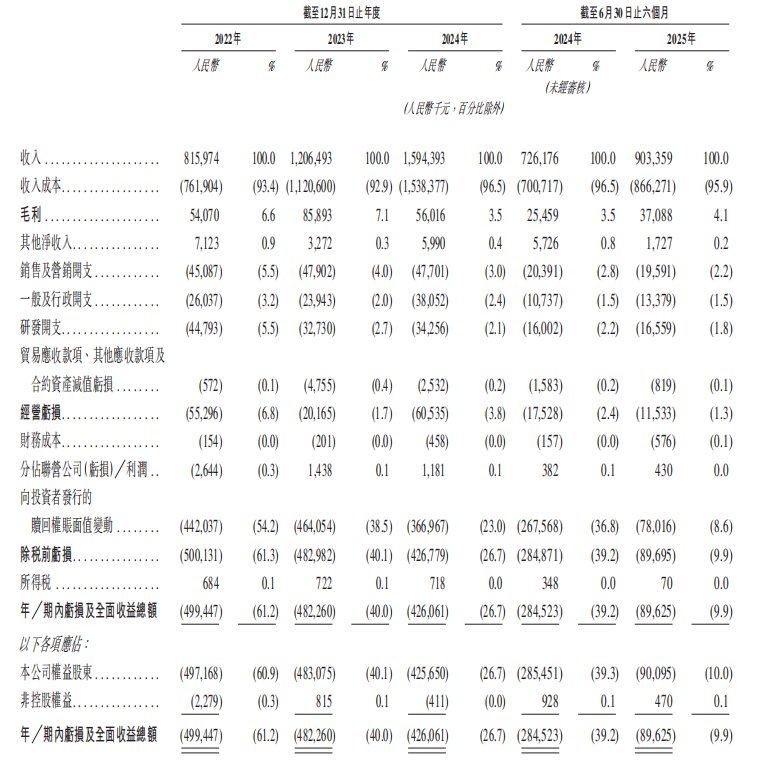
Core Insights - The article discusses the competitive landscape of China's ride-hailing market, highlighting the differentiated strategy of Shengwei Times Technology Co., Ltd. as it seeks to establish itself amid industry giants [1][2]. Company Overview - Shengwei Times has submitted a new listing application to the Hong Kong Stock Exchange, marking its second attempt since its initial submission in November 2024 [1]. - The company focuses on digital services for road passenger transport and has become a key player in 17 provinces and municipalities in China [2]. Market Potential - In 2024, China's total passenger transport volume reached 10.2 billion trips, with road transport accounting for 48% of this figure, indicating a significant market opportunity [2]. - The total rural road mileage in China increased from 42 million kilometers in 2019 to 46 million kilometers in 2024, reflecting a compound annual growth rate of 1.8% and showcasing the potential of lower-tier markets [2]. Business Model - Shengwei Times employs a "dual-engine" business model, focusing on both urban ride-hailing services and intercity road passenger transport, with the latter being its core strength [2]. - The company has developed customized passenger transport services in collaboration with various transport enterprises, enhancing its network effect across over 30 provinces and municipalities by June 30, 2025 [3]. Financial Performance - Revenue grew from 816 million RMB in 2022 to 1.594 billion RMB in 2024, nearly doubling, with 903 million RMB reported in the first half of 2025 [3][5]. - Despite revenue growth, the company's gross margin has been low, dropping from 6.6% in 2022 to 3.5% in 2024, indicating low profitability [3][5]. - The net loss for the company was 499 million RMB in 2022, 482 million RMB in 2023, and 426 million RMB in 2024, totaling nearly 1.4 billion RMB in cumulative losses [4][5]. Challenges - The average net commission rate plummeted from 2.9% in 2022 to -0.2% in 2024, indicating that the company was losing money on each transaction due to high subsidy costs [5][7]. - The company's liquidity crisis is evident, with net current liabilities increasing from 1.533 billion RMB in 2022 to 2.534 billion RMB in mid-2025, and total liabilities exceeding total assets [8]. Strategic Outlook - Shengwei Times aims to create an integrated travel platform combining intercity and urban services, leveraging its ride-hailing user base to drive profitability in its higher-margin digital services [9]. - The upcoming IPO is seen as a crucial opportunity for the company to raise funds for business expansion and technology development, potentially leading to a turnaround in profitability [9][10].