
超市

Search documents
永辉超市:2025年上半年净亏损2.41亿元
Xin Lang Cai Jing· 2025-08-20 11:48
永辉超市公告,2025年上半年营业收入299.48亿元,同比下降20.73%。归属于上市公司股东的净亏损 2.41亿元,上年同期净利润2.75亿元。 ...

锐评|“胖改”怎么改?诚信才是最好的生意经
Sou Hu Cai Jing· 2025-08-20 07:08
Core Insights - The success of Pang Donglai supermarket is attributed to its focus on trust and integrity in business practices, which has led to a strong reputation and customer loyalty [3][4] - The supermarket's policies, such as "no-reason return and exchange" and a "500 yuan complaint reward," are seen as both a moral choice and a smart business strategy that enhances its brand image [3] - Many companies are attempting to emulate Pang Donglai's approach, emphasizing the importance of understanding and respecting customers [4] Group 1 - Pang Donglai supermarket has gained significant attention and has influenced other supermarkets to adopt its business model [1] - The chairman, Yu Donglai, emphasizes that business should not only be profit-driven but should also build trust with consumers [3] - The supermarket's commitment to integrity is highlighted as a key factor in its operational success, demonstrating that trust is a valuable asset in the market economy [3] Group 2 - Companies are encouraged to focus on customer service and quality, ensuring transparency and addressing consumer needs effectively [4] - The challenge for businesses lies in consistently applying these principles, as many are tempted to pursue short-term profits through deceptive practices [4] - Modern consumers prioritize product quality and emotional value over mere pricing, indicating a shift in market expectations [4]

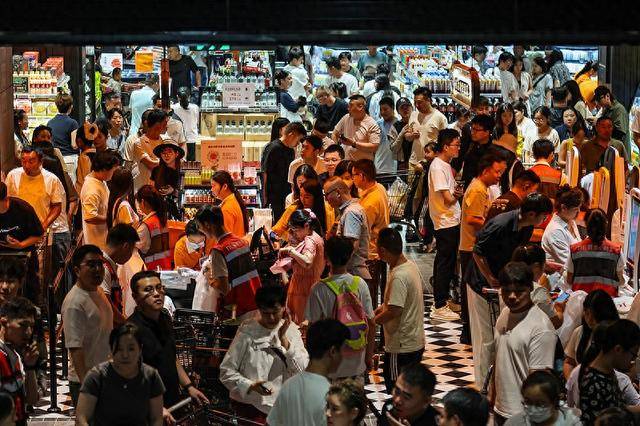
盒马放弃做山姆学徒,离山姆却越来越近了
3 6 Ke· 2025-08-19 12:07
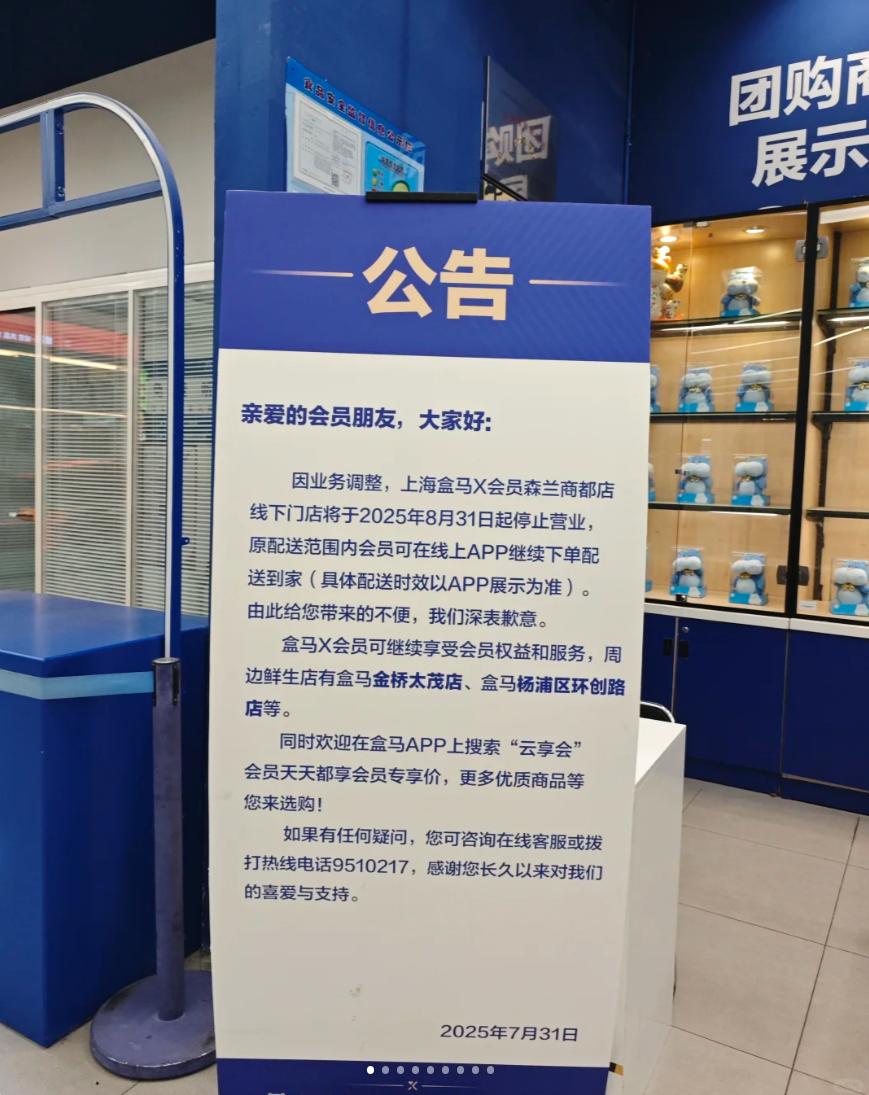
Group 1 - The core point of the article is the strategic shift of Hema, which has decided to abandon its Hema X membership stores in favor of more profitable models like Hema Fresh and Hema NB, planning to open nearly 100 new Hema Fresh stores in over 50 new cities by FY2026 [1][5][7] - Hema X membership stores, once seen as a promising growth avenue, generated approximately 3 billion yuan in annual revenue at their peak but faced operational challenges and frequent management changes, leading to their closure [1][2][5] - The competitive landscape shows that Hema is positioned to potentially surpass current second-place retailer RT-Mart in sales by 2025, as both RT-Mart and Yonghui are undergoing transformation challenges [5][7][10] Group 2 - Hema's strategy has narrowed down to two main formats: Hema Fresh and Hema NB, targeting both high-end and community markets, which reflects a response to the increasingly segmented consumer demand in China [10][13] - The company has experienced significant growth in member numbers due to collaborations with Alibaba, such as the integration of Hema with Taobao's 88VIP program, which has led to a doubling of membership [16][19] - However, Hema faces risks related to operational management, service capabilities, and product innovation, which are critical for maintaining competitive advantage in the rapidly expanding retail market [16][19][20]
合百集团: 2025年半年度报告
Zheng Quan Zhi Xing· 2025-08-19 11:12
Core Viewpoint - The report highlights the financial performance and operational status of Hefei Department Store Group Co., Ltd. for the first half of 2025, indicating a slight increase in revenue but a decline in net profit, alongside ongoing challenges in the retail sector and strategic adjustments being made by the company [1][2]. Company Overview and Financial Indicators - The company reported a total revenue of approximately CNY 3.7 billion, a marginal increase of 0.02% compared to the previous year [2][12]. - The net profit attributable to shareholders decreased by 9.93% to approximately CNY 170.86 million [2][12]. - The company plans not to distribute cash dividends or issue bonus shares [1]. Business Operations - The main business segments include retail and agricultural product trading, with a total of 240 physical stores across various cities in Anhui province [3][4]. - The retail business encompasses department stores, home appliances, supermarkets, e-commerce, and wholesale trade [3][4]. - The agricultural product trading business operates through subsidiaries, with the Zhougudui International Agricultural Logistics Park being a key player in the market [3]. Industry Position and Market Conditions - The company ranks 9th among China's top retail companies and 49th among the top chain companies [5][6]. - The retail sector is experiencing a transformation with increasing online and offline integration, driven by changing consumer behaviors and technological advancements [5][6]. - The overall consumer market is recovering, but consumer confidence remains fragile, leading to intensified competition in the retail industry [5]. Financial Performance Analysis - The company's operating costs increased by 3.84% to approximately CNY 2.77 billion, while sales expenses rose by 7.27% [12]. - The cash flow from operating activities showed a significant decline, with a net outflow of approximately CNY 444.11 million, a 242.58% decrease compared to the previous year [12]. - The total assets decreased by 5.49% to approximately CNY 12.49 billion, while the net assets attributable to shareholders increased by 1.91% to approximately CNY 4.79 billion [2][12]. Operational Challenges and Strategic Adjustments - The company is facing pressure in the department store sector, necessitating a transformation and optimization of its business model [5][11]. - Efforts are being made to enhance operational efficiency, including upgrading existing stores and strategically closing underperforming locations [5][11]. - The company is also focusing on expanding its online sales channels, with a reported GMV of approximately CNY 10.67 million from its own platform and CNY 39.07 million from third-party platforms [5][11].

科尔尼2025消费者压力指数报告:消费者不是压力太大,而是无趣太久
科尔尼管理咨询· 2025-08-19 09:40
Core Viewpoint - The article discusses the evolving consumer behavior amidst economic pressures, highlighting a shift from impulsive spending to more intentional and selective purchasing decisions. Consumers are adapting to uncertainties and maintaining a sense of control over their spending choices [2][6][21]. Group 1: Consumer Pressure Index - The latest Consumer Pressure Index report from Kearney indicates that while economic pressures persist, they have not significantly increased in most regions [2][4]. - Inflation and housing costs are identified as the two main sources of anxiety for global consumers, with rising expenses in food and energy contributing to ongoing stress [4][5]. Group 2: Changing Consumer Behavior - Consumers are transitioning from a mindset of "buying everything" to "selectively choosing," reflecting a return to a sense of control over their purchases [7][8]. - The concept of "revenge spending" has evolved into a more restrained yet powerful form of consumer expression, where individuals make conscious choices to assert their preferences in a volatile market [8][21]. Group 3: Consumer Mindsets - Consumers can be categorized into three psychological states: "Enjoyment Tribe," "Scarcity Tribe," and "Neutral Tribe," each exhibiting different spending behaviors based on external circumstances [16][11]. - The article suggests that consumers are not merely reacting to pressure but are also seeking novelty and meaningful experiences in their purchases [17][19]. Group 4: Trends and Implications for Brands - The market is entering a phase of brand consolidation, where established brands may struggle if they do not adapt to changing consumer values that prioritize relevance over mere recognition [22][23]. - Brands that focus on delivering emotional value and joy, rather than amplifying consumer anxiety, are more likely to succeed in the current environment [21][26]. - The article highlights three emerging trends: the rise of selective purchasing, the importance of emotional engagement in branding, and the redefinition of everyday value through smarter consumption [22][25][26].
以小业态换赛道!中百集团董事长汪梅方:力争2027年实现盈利
Zhong Guo Zheng Quan Bao· 2025-08-19 04:45
Core Viewpoint - The company plans to close unprofitable stores as a key strategy to reduce losses and aims to achieve profitability by 2027 through various operational adjustments and digital transformation initiatives [1][3]. Group 1: Store Closure and Adjustment Strategy - The company will focus on closing underperforming stores to mitigate losses, with a target to optimize large-format stores from 147 to around 100 [4][8]. - The company has already closed 13 large-format and 42 small-format stores, with over 60 small-format stores undergoing adjustments while remaining operational [2][4]. - Adjusted stores have shown a sales increase of over 10%, while unadjusted stores experienced an 18% decline in sales [2][3]. Group 2: Business Model Transformation - The company is shifting towards a "thousand stores, thousand faces" model, moving away from a uniform approach to better meet local market demands [7]. - The focus will be on expanding small-format stores, particularly through partnerships and franchising, with a goal of reaching 1,600 small-format stores in three years [5][6]. - The integration of various service offerings, such as community services and convenience features, is part of the strategy to enhance customer experience [7][8]. Group 3: Digital Transformation and Supply Chain Optimization - The company has established a digital platform to integrate over 40 systems, aiming to improve operational efficiency and reduce costs [6][8]. - A decentralized ordering system will allow stores to make decisions based on local demand, supported by automated replenishment processes [8]. - The logistics strategy includes the opening of a new central warehouse to streamline distribution across different store formats, enhancing delivery efficiency [8]. Group 4: Future Outlook and Goals - The company aims to navigate through a critical period over the next 2-3 years, focusing on resolving loss issues and achieving profitability by 2027 [8]. - The commitment to maintaining a strong retail presence while enhancing community services positions the company as a comprehensive neighborhood service provider [8].

中秋国庆消费前瞻:永辉超市以沉浸式场景与精准选品迎双节
Sou Hu Cai Jing· 2025-08-19 04:18
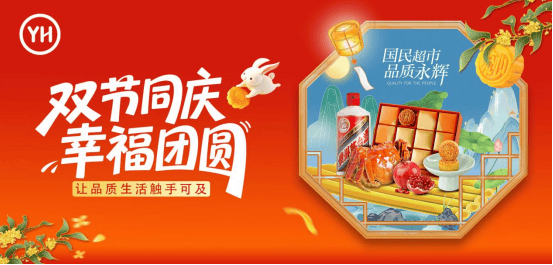
Core Insights - The upcoming Mid-Autumn Festival and National Day are expected to boost consumer market activity, prompting Yonghui Supermarket to hold a joint online and offline selection meeting to align its offerings with consumer demand for quality products and warm services [1][14] - Yonghui's strategy for the dual festivals reflects a significant upgrade, focusing on four core family consumption scenarios: reunion, home, travel, and gifting, aiming to create a consumer ecosystem centered around user needs [3][14] Strategic Transformation - Yonghui is transitioning from merely providing products to creating value and emotional resonance, enhancing the shopping experience beyond traditional promotions [3][8] - The company emphasizes collaboration and service efficiency, learning from competitors to enhance the quality and enjoyment of the shopping experience [5][8] Product Innovation - The product matrix for the dual festivals showcases the effectiveness of Yonghui's supply chain reforms, with a focus on high-quality seafood and seasonal fruit gift boxes, alongside innovative health-focused baked goods and regional specialties [6][8] - Yonghui is strategically positioning products for both gifting and leisure, offering a range of items from premium alcohol and health supplements to convenient snacks and home goods [6][8] Experience Enhancement - To improve the shopping experience, Yonghui stores will create themed consumption spaces infused with humanistic care, including gift zones and convenient services like free gift wrapping and customized greeting cards [9][11] - Interactive marketing activities will be launched to enhance the festive atmosphere and consumer engagement, such as traditional games and social media campaigns [11][12] Commitment to Quality - Yonghui's leadership emphasizes that every important holiday is an opportunity to uphold its core principles of quality, price, and reputation, ensuring consumers receive not just products but also quality assurance and attentive service [12][14] - The company aims to fulfill its promise as a "national supermarket" by implementing deep supply chain reforms and creating immersive shopping experiences during the festive season [14]
家乐福谢幕!零售业「黄埔军校」缘何败北
Bei Jing Shang Bao· 2025-08-19 01:57
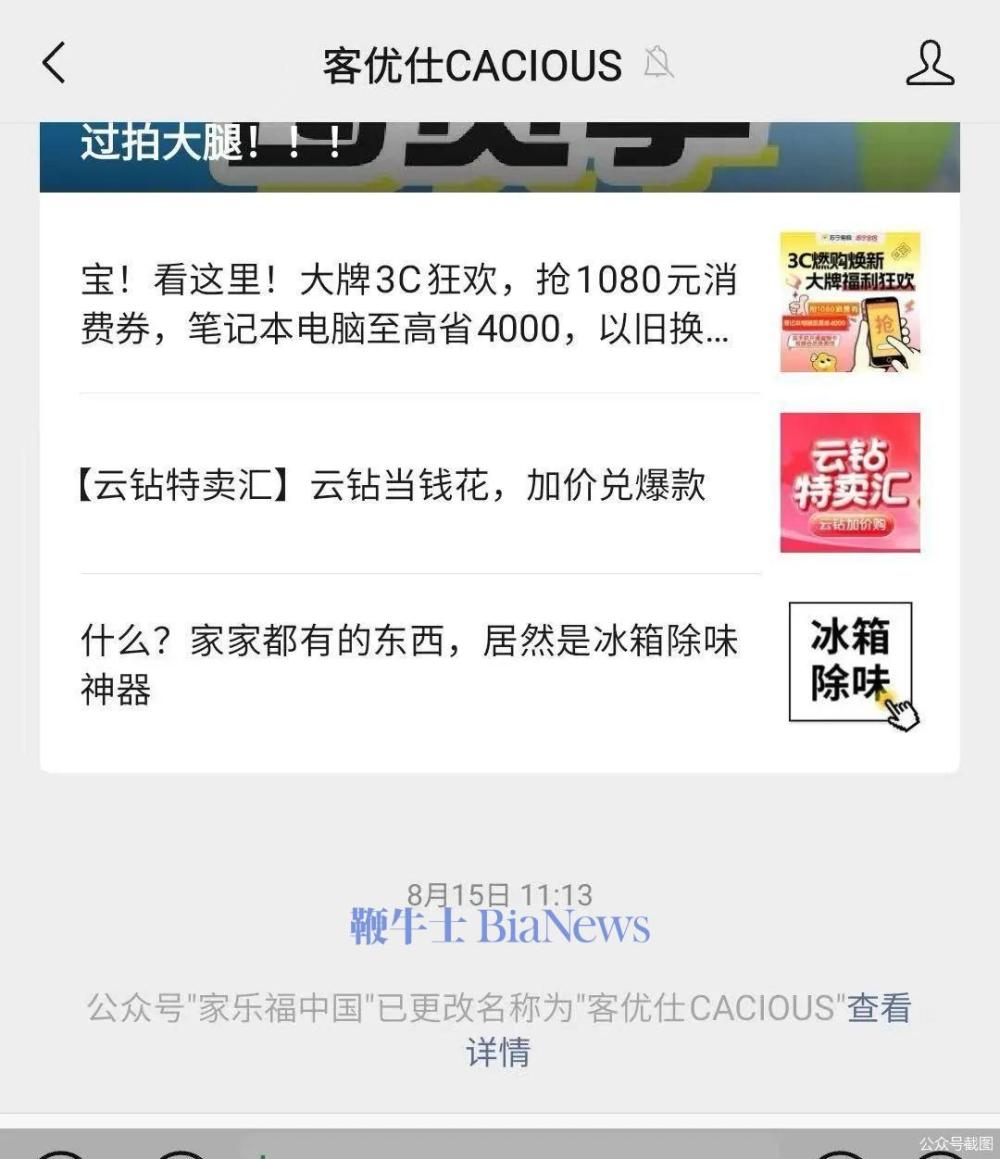
Core Viewpoint - Carrefour is set to completely exit the Chinese market, marking a significant shift in the retail landscape as traditional hypermarket models lose their competitive edge to local retailers with agile supply chains and digital capabilities [1][5][14]. Company Summary - Carrefour's official WeChat account has been renamed from "Carrefour China" to "CACIOUS," indicating a rebranding effort following a debt settlement agreement with Suning.com [1][3]. - The agreement involves Suning International paying Carrefour Group 220 million RMB to resolve all outstanding disputes since the acquisition in 2019, allowing Suning to fully control Carrefour China [5][6]. - Carrefour's operational decline in China has led to significant financial losses, with reported losses of 10.99 billion RMB in 2017 and 5.78 billion RMB in 2018, culminating in a total asset value of 11.5 billion RMB against liabilities of 13.8 billion RMB by the end of 2018 [11][12]. Industry Summary - The exit of Carrefour symbolizes the decline of traditional large-scale supermarkets in China, as local competitors rapidly expand and adapt to changing consumer demands [1][14]. - The retail sector is undergoing a transformation driven by e-commerce and new business models, which have pressured traditional supermarkets to innovate or face closure [16]. - New retail formats such as Hema and Fresh Hema are taking over Carrefour's former locations, indicating a shift towards more consumer-centric and technology-driven retail experiences [16].

中百集团董事长汪梅方:以小业态换赛道 2-3年攻坚盈利关
Zhong Guo Zheng Quan Bao· 2025-08-18 22:23
Core Viewpoint - The company plans to close unprofitable stores as a key strategy over the next 2-3 years to achieve profitability by 2027, while focusing on small format expansion, digital transformation, and community service [2][4]. Group 1: Company Strategy - The company is a large retail chain with various formats including hypermarkets, community supermarkets, and convenience stores, and aims to optimize its operational structure to ensure sustainable development [3][5]. - The company has already closed 13 large format and 42 small format stores, with over 60 small format stores undergoing adjustments while remaining operational [3][5]. - The company plans to reduce large format stores from 147 to around 100, focusing on closing long-term loss-making stores [5][6]. Group 2: Small Format Development - The company aims to expand its small format stores, specifically targeting the "中百罗森" and "中百超市" brands, with a goal of reaching 1,600 small format stores in three years [6]. - The company will maintain at least 500 "中百超市" stores, primarily through a franchise model to lower customer entry costs [6][8]. - The integration of small format stores is expected to enhance consumer recognition and is seen as a key part of the company's strategy to shift business focus [6][8]. Group 3: Digital Transformation - The company established a digital cloud company to integrate over 40 systems and 100 applications, aiming to reduce costs and improve efficiency [7]. - Future digital initiatives will include developing a franchise system for small formats and enhancing online-to-offline services through proprietary platforms [7][9]. Group 4: Supply Chain Optimization - The company plans to decentralize ordering authority to stores, allowing them to make decisions based on local demand, supported by digital management for automatic replenishment [9]. - The new central warehouse, set to launch in August, will improve logistics efficiency by enabling multi-format deliveries on the same route [9]. Group 5: Market Adaptation - The company is breaking away from the "one-size-fits-all" model, adopting a "one store, one strategy" approach to better adapt to market needs [8]. - The company is exploring new competitive models, including discount stores, and has recently opened two new discount locations [8][9].
以小业态换赛道 2-3年攻坚盈利关
Zhong Guo Zheng Quan Bao· 2025-08-18 20:14
Core Viewpoint - The company aims to close unprofitable stores as a key strategy over the next 2-3 years, focusing on small format expansion, "thousand stores, thousand faces" transformation, and digital empowerment to achieve profitability by 2027 while enhancing community services [1][2][3] Group 1: Store Optimization and Performance - The company has closed 13 large format and 42 small format stores, with over 60 small format stores undergoing adjustments while operating [2] - Adjusted stores have shown a sales increase of over 10%, while unadjusted stores experienced an 18% decline in sales [2] - The company plans to reduce large format stores from 147 to around 100, focusing on closing long-term unprofitable locations [3] Group 2: Small Format Development - The company aims to expand small formats, particularly focusing on Zhongbai Rosen and Zhongbai Supermarket, targeting a total of 1,600 small format stores in three years [3][4] - Zhongbai Rosen has nearly 900 stores and leads in profitability within its system, while Zhongbai Supermarket has faced over 100 million yuan in losses [3][4] - The expansion of small formats will primarily be through franchising, reducing customer entry costs [3][4] Group 3: Digital Transformation - The company established a digital cloud company to integrate over 40 systems and 100 applications, focusing on cost reduction, efficiency, quality improvement, and risk control [4] - Future digital initiatives will include developing a franchise system for small formats and enhancing online-to-offline services through self-operated platforms [4] Group 4: Supply Chain and Operational Efficiency - The company is implementing a decentralized ordering system, allowing stores to make decisions based on local demand, supported by digital management for automatic replenishment [5] - The central warehouse's second phase will enhance storage and delivery efficiency, allowing for multi-format deliveries on the same route [5] Group 5: Management and Incentives - The company has eliminated regional management layers, allowing direct headquarters-store connections and granting stores more autonomy [6] - An incentive model based on target completion, profit sharing, and special rewards will be introduced to motivate store performance [6] Group 6: Long-term Vision - The company is committed to addressing losses and aims to achieve profitability by 2027 while focusing on community services and becoming a comprehensive neighborhood service provider [6]