港口航运

Search documents
创业板指半日跌2.37%,科创50指数跌2.62%
Mei Ri Jing Ji Xin Wen· 2025-10-17 03:44
Core Viewpoint - The market experienced a downward trend in early trading on October 17, with significant declines in major indices, reflecting a mixed performance across various sectors [1] Market Performance - The Shenzhen Component Index and the ChiNext Index both fell over 2% at one point during the trading session [1] - The total trading volume in the Shanghai and Shenzhen markets was 1.18 trillion, a decrease of 32.6 billion compared to the previous trading day [1] - By the end of the trading session, the Shanghai Composite Index fell by 1%, the Shenzhen Component Index by 1.99%, the ChiNext Index by 2.37%, and the Sci-Tech 50 Index by 2.62% [1] Sector Performance - Defensive sectors showed strong performance, with coal and gas stocks collectively rising; Da You Energy achieved five consecutive trading limits in six days, while Guo Xin Energy had three trading limits in four days [1] - The banking sector experienced fluctuations, with Agricultural Bank of China rising over 2% to reach a historical high [1] - Conversely, the data center power supply concept faced significant declines, with stocks like Igor and Zhongheng Electric hitting the daily limit down [1] - Major weight stocks such as Sunshine Power, ZTE, and Luxshare Precision saw substantial drops [1] Leading and Lagging Sectors - The sectors with the highest gains included gas, precious metals, port shipping, and coal [1] - In contrast, sectors such as wind power and photovoltaics experienced the largest declines [1]

午评:创业板指半日跌2.37% 农业银行创历史新高
Xin Lang Cai Jing· 2025-10-17 03:42
Core Viewpoint - The market experienced a downward trend with the ChiNext Index falling by 2.37%, while Agricultural Bank reached a historical high [1] Market Performance - The market saw a decline in early trading, with the Shenzhen Component and ChiNext Index both dropping over 2% - The total trading volume in the Shanghai and Shenzhen markets was 1.18 trillion, a decrease of 32.6 billion compared to the previous trading day [1] Sector Performance - Defensive sectors showed strong performance, with coal and gas stocks rising collectively - Notable stocks included Daya Energy, which achieved five consecutive trading limits, and Guo Xin Energy, which had three limits in four days [1] - The banking sector experienced fluctuations, with Agricultural Bank rising over 2% to reach a historical high [1] Declining Stocks - The data center power concept faced significant losses, with stocks like Igor and Zhongheng Electric hitting the daily limit down - Major weight stocks such as Sungrow Power Supply, ZTE Corporation, and Luxshare Precision fell sharply [1] Overall Index Movement - By the end of the trading session, the Shanghai Composite Index fell by 1%, the Shenzhen Component dropped by 1.99%, and the ChiNext Index decreased by 2.37% [1]

市场震荡下挫,创业板指半日跌2.37%,农业银行创历史新高
Feng Huang Wang Cai Jing· 2025-10-17 03:42
Market Overview - The market experienced a downward trend in the early session, with the Shenzhen Component Index and the ChiNext Index dropping over 2% at one point [1] - As of the midday close, the Shanghai Composite Index fell by 1%, the Shenzhen Component Index by 1.99%, and the ChiNext Index by 2.37% [1] - The total trading volume in the Shanghai and Shenzhen markets was 1.18 trillion, a decrease of 32.6 billion compared to the previous trading day [1][6] Index Performance - The Shanghai Composite Index closed at 3877.20, down by 1.00 points, with 498 gainers and 1743 decliners [2] - The Shenzhen Component Index closed at 12825.85, down by 1.99 points, with 597 gainers and 2225 decliners [2] - The ChiNext Index closed at 2965.47, down by 2.37 points, with 221 gainers and 1157 decliners [2] Sector Performance - Defensive sectors such as coal and gas stocks showed strong performance, with major energy stocks experiencing significant gains [2][3] - The port and shipping sector continued its strong trend, with Haitong Development achieving two consecutive trading limits [2] - Conversely, sectors like data center power concepts faced severe declines, with stocks like Igor and Zhongheng Electric hitting the daily limit down [2] Market Sentiment - 50.76% of users expressed a bullish outlook on the market [4] - The market saw 1128 stocks rise, 174 remain unchanged, and 4136 stocks decline [5]


A股午评:创业板指跌2.37%,超4100股下跌!黄金、煤炭、银行板块逆势上涨
Ge Long Hui· 2025-10-17 03:41
Market Overview - The three major A-share indices collectively declined in the morning session, with the Shanghai Composite Index down by 1% to 3877.2 points, the Shenzhen Component Index down by 1.99%, and the ChiNext Index down by 2.37% [1] - The total trading volume in the Shanghai and Shenzhen markets reached 11.89 billion yuan, a decrease of 34 billion yuan compared to the previous day, with over 4100 stocks declining [1] Sector Performance - Gold stocks continued to rise, with Western Gold increasing by over 5%, and Shandong Gold and China National Gold both rising by over 3%. Spot gold prices surpassed 4380 USD per ounce, marking a five-day consecutive high [1] - The coal mining and processing sector showed localized activity, with Dayou Energy achieving four consecutive trading limits and Antai Group hitting the daily limit, driven by increased demand for downstream coal stockpiling as winter approaches [1] - Banking stocks performed well against the trend, with Agricultural Bank of China rising for eight consecutive days to reach a historical high, and Qingdao Bank and Xiamen Bank both increasing by over 2% [1] - The port and shipping sector rebounded, with Haitong Development achieving two consecutive trading limits and Xiamen Port Authority hitting the daily limit [1] Declining Sectors - The photovoltaic equipment sector experienced significant declines, with Tongrun Equipment falling by over 9%, and Sunshine Energy and Haiyou New Materials both dropping by approximately 8% [1] - The cultivated diamond sector also faced adjustments, with Power Diamond, Yellow River Spiral, and Huifeng Diamond all decreasing by over 8% [1] - The CPO concept continued to decline, with Shijia Photon dropping by over 18% and Zhongfu Circuit falling by over 10% [1]
农业银行,再创历史新高
财联社· 2025-10-17 03:40
Market Overview - A-shares experienced a volatile decline in the morning session, with the Shenzhen Component Index and ChiNext Index dropping over 2% at one point [1] - The total trading volume in the Shanghai and Shenzhen markets was 1.18 trillion, a decrease of 32.6 billion compared to the previous trading day [1] Sector Performance - The port and shipping sector continued its strong performance, with Haitong Development achieving two consecutive trading limits [1] - Defensive sectors showed active performance, with coal and gas stocks collectively strengthening; Dayou Energy recorded five trading limits in six days, and Guo New Energy had three trading limits in four days [1] - The banking sector saw a rebound, with Agricultural Bank of China rising over 2% to reach a historical high [3] - Conversely, the data center power supply concept faced significant declines, with stocks like Igor and Zhongheng Electric hitting the daily limit down [3] - Major weight stocks such as Sungrow Power Supply, ZTE, and Luxshare Precision experienced substantial drops [3] Closing Summary - By the end of the trading session, the Shanghai Composite Index fell by 1%, the Shenzhen Component Index dropped by 1.99%, and the ChiNext Index decreased by 2.37% [3] - Sectors with notable gains included gas, precious metals, port and shipping, and coal, while wind power and photovoltaic sectors saw significant declines [3]

港口航运板块拉升,海峡股份盘中创新高
Xin Lang Cai Jing· 2025-10-17 01:48
Core Viewpoint - The port and shipping sector experienced a significant rally, with several companies reaching new highs and hitting the daily limit up [1] Group 1: Company Performance - Haixia Co., Ltd. reached an intraday high [1] - Haitong Development hit the daily limit up [1] - Other companies such as Nanjing Port, Antong Holdings, Xiamen Port Authority, China National Ocean Shipping, and Ningbo Ocean Shipping also saw increases [1]


每日解盘:三大指数涨跌不一,成交额跌破2万亿,煤炭与银行板块领涨-10月16日
Sou Hu Cai Jing· 2025-10-17 01:24
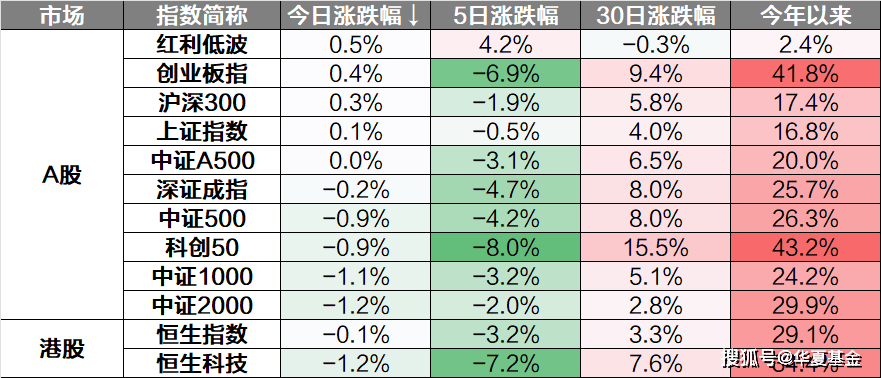
Market Overview - On October 16, 2025, the three major indices showed mixed results, with the Shanghai Composite Index rising by 0.10% to close at 3916.23 points, while the Shenzhen Component Index fell by 0.25% to 13086.41 points, and the ChiNext Index increased by 0.38% to 3037.44 points. The total trading volume in the two markets was 19,309 billion yuan, a decrease of approximately 1,417 billion yuan compared to the previous trading day [1]. Index Performance - The performance of various indices showed fluctuations, with the Dividend Low Volatility Index rising by 0.5% over the day, while the ChiNext Index saw a decline of 0.4% over the past five days. Year-to-date, the ChiNext Index has increased by 41.8% [2]. - The banking sector saw a rise of 1.4%, while the coal sector increased by 2.3%. Conversely, the steel and non-ferrous metals sectors experienced declines [3][4]. Sector Analysis - The coal sector has shown a significant increase of 2.3% today, with a 6.3% rise over the past five days and a 12.4% increase over the past 30 days. The banking sector also performed well, with a 1.4% increase today [4]. - Other sectors such as food and beverage saw a slight increase of 1.0%, while sectors like steel and building materials faced declines of 2.1% and 1.9%, respectively [3][4]. Conceptual Themes - The Hainan Free Trade Zone, cultivated diamonds, and free trade ports have shown positive performance, with increases of 2.6%, 0.9%, and 0.7% respectively. In contrast, sectors like controlled nuclear fusion and photothermal power have seen declines [5]. - The coal industry is expected to benefit from supply-side tightening, with potential increases in coal prices, which could lead to improved valuations for high-dividend companies [6]. Key News Highlights - The Chinese government is focusing on optimizing standards in digital technology and artificial intelligence, which may impact various sectors positively [6]. - The successful cold test of the "Linglong No. 1" nuclear reactor is expected to generate significant electricity, potentially reducing carbon emissions substantially [6].
沪指窄幅震荡微涨0.1%,A500ETF易方达(159361)、沪深300ETF易方达(510310)等助力布局核心资产
Sou Hu Cai Jing· 2025-10-16 12:49
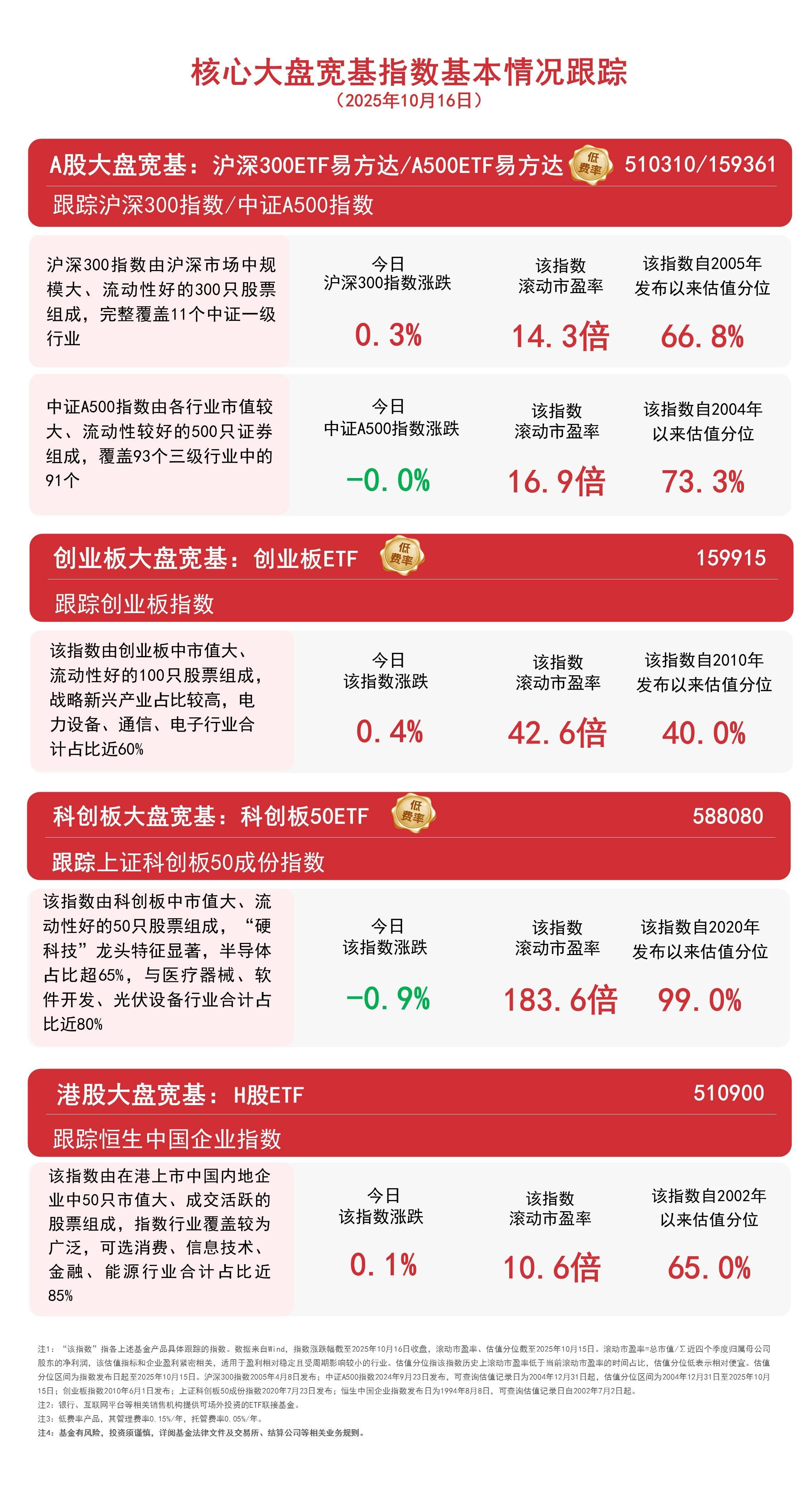
Group 1 - The A-share market showed mixed performance with the Shanghai Composite Index slightly up by 0.1%, maintaining above the 3900-point level [1] - Sectors such as insurance, coal mining and processing, port shipping, banking, liquor, and traditional Chinese medicine saw significant gains, while small metals, steel, wind power equipment, rare earth permanent magnets, and PEEK materials concepts experienced declines [1] - The CSI A500 Index fell by 0.04%, the CSI 300 Index rose by 0.3%, the ChiNext Index increased by 0.4%, the STAR Market 50 Index dropped by 0.9%, and the Hang Seng China Enterprises Index rose by 0.1% [1] Group 2 - The ChiNext ETF tracks the ChiNext Index, which consists of 100 stocks with high market capitalization and liquidity, with a significant proportion in strategic emerging industries, particularly in power equipment, telecommunications, and electronics, accounting for nearly 60% [3] - The STAR Market 50 ETF tracks the STAR Market 50 Index, composed of 50 stocks with high market capitalization and liquidity, prominently featuring "hard technology" leaders, with semiconductors making up over 65% and combined with medical devices and software development, accounting for 80% [3]
深圳三大集装箱港区实现LNG加注业务“全覆盖”
2 1 Shi Ji Jing Ji Bao Dao· 2025-10-16 11:57
Core Insights - Shenzhen's Dalanwan Port has successfully completed its first bonded LNG refueling operation, marking a significant milestone in the port's capabilities and expanding its LNG refueling services across three major container port areas [1][2] Group 1: LNG Refueling Operations - The "Xin Ao Pu Tuo" LNG refueling vessel efficiently supplied approximately 2,000 tons of bonded LNG fuel to the international vessel "Star JASPER" through a ship-to-ship method [1] - The LNG refueling operation achieved "zero delay" in unloading and refueling, saving over 36 hours in transit time and significantly reducing overall transportation costs [2] Group 2: Growth and Expansion - Since the first international LNG refueling operation on November 22, 2022, Shenzhen Port has become the fourth globally and the second nationally to possess simultaneous loading and LNG refueling capabilities [2] - In the first nine months of this year, Shenzhen Port conducted 81 LNG refueling operations, with a total refueling volume of 370,600 cubic meters, representing a year-on-year increase of 103%, surpassing the total volume for the previous year [2] Group 3: Future Developments - Shenzhen Customs plans to continue optimizing regulatory and service measures to facilitate logistics and support the expansion of LNG and biofuel oil refueling operations, promoting connectivity among the ports in the Guangdong-Hong Kong-Macao Greater Bay Area [2]
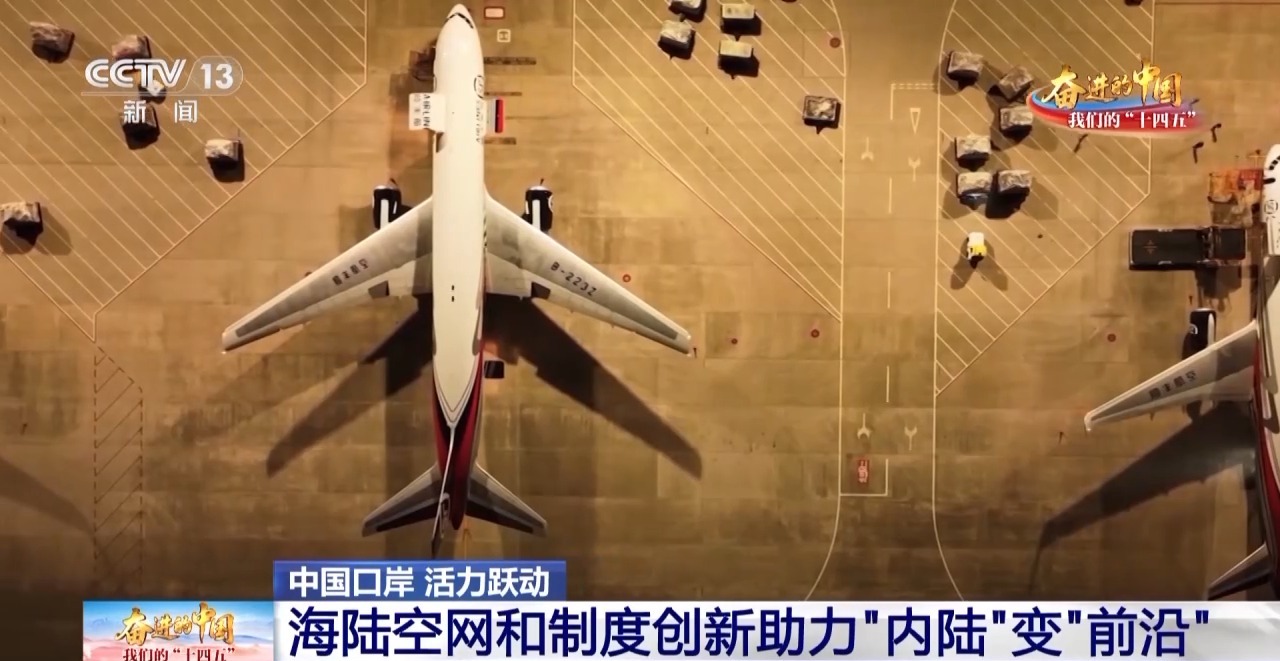
内陆腹地变开放前沿 这波“神操作”了解一下
Yang Shi Xin Wen Ke Hu Duan· 2025-10-16 11:39
Group 1 - Zhengzhou Airport in Henan has achieved impressive performance this year, with cross-border cargo throughput exceeding 470,000 tons, completing last year's total two months ahead of schedule, and showing a year-on-year growth of over 40% [1] - The airport has become the first aviation port in Central China to surpass 10,000 flights, leveraging high-speed rail networks, air transport hubs, and institutional innovations during the 14th Five-Year Plan period [1] - Zhengzhou has opened eight intercontinental routes to cities like Luxembourg, Frankfurt, and Amsterdam, connecting to over 200 cities globally, and has developed modern logistics parks and cross-border e-commerce clusters around the airport [1] Group 2 - Hubei's Ezhou Huahu International Airport is the first professional cargo hub in Asia, projected to handle over 1.2 million tons of cargo in 2024, with 90 domestic and international cargo routes covering 26 countries and regions [3] - Jiangxi's Ganzhou has established a westward corridor through the China-Europe Railway Express, impacting over 100 cities in more than 20 countries, with the furniture industry’s annual output value increasing from 30 billion to 280 billion [5] - Shanxi has implemented a "port + industry" dual-drive strategy, achieving "foreign trade in every county" by 2024, with three major aviation ports and 26 China-Europe Railway Express routes connecting to 17 countries and 48 cities [5] - Ports in Anhui and Hunan have upgraded waterways to facilitate efficient integration into the global logistics network, enabling shipping to the east and rail connections to Europe [5]