
电商平台

Search documents
传媒互联网产业行业研究:调整后再出发
SINOLINK SECURITIES· 2025-08-03 14:38
Investment Rating - The report suggests a positive outlook on the Hong Kong stock market, particularly focusing on internet assets and traditional virtual asset companies, indicating a strong medium to long-term logic despite short-term adjustments [9]. Core Insights - The report emphasizes the need for a cautious approach as financial data and verification logic become critical with the onset of new earnings reports from overseas Chinese assets [9]. - It highlights the ongoing trends in blockchain and virtual assets, noting a temporary cooling but a long-term positive trajectory supported by regulatory developments in the U.S. and Hong Kong [9]. - The report identifies potential risks related to U.S.-China tariff issues and the need for vigilance regarding the performance of overseas Chinese assets [9]. Industry Summaries Education - The education index decreased by 0.49%, outperforming major indices like the CSI 300 and Hang Seng Index [10]. - Key players such as New Oriental and TAL Education reported mixed results, with New Oriental's revenue increasing by 9.4% year-on-year [24][10]. - The competitive landscape is intensifying due to the recovery of smaller institutions, leading to a slowdown in growth for leading companies [4]. Luxury Goods - The luxury goods sector faced challenges, with the S&P Global Luxury Goods Index dropping by 6.63% [20]. - Notable companies like Hermès and Prada showed varied performance, with Hermès reporting a 7% increase in revenue while Prada's growth was more modest at 9.1% [25][20]. Coffee and Tea - The coffee sector remains robust, with Luckin Coffee reporting a 47.1% year-on-year revenue increase [29]. - The tea beverage market is under pressure due to regulatory changes affecting promotional activities [4]. E-commerce - The e-commerce sector is experiencing a slowdown, with the Hang Seng Internet Technology Index down by 2.67% [32]. - Companies like Alibaba and Tencent reported declines in stock performance, reflecting ongoing competitive pressures [32]. Streaming Platforms - The media index fell by 1.9%, with major players like Spotify and Tencent Music experiencing significant stock declines [36]. - Spotify's Q2 revenue growth was below expectations, indicating challenges in the streaming market [36]. Virtual Assets & Trading Platforms - The global cryptocurrency market capitalization decreased by 4.7%, with Bitcoin and Ethereum prices also declining [41]. - Regulatory developments, such as the SEC's "Project Crypto," are expected to shape the future of the virtual asset market positively [47]. Real Estate Transactions - Real estate transactions in major cities showed mixed results, with year-on-year changes in transaction volumes ranging from -17% in Beijing to 0% in Shenzhen [36]. Automotive Services - The automotive repair industry is projected to maintain a positive outlook, with a focus on the aftermarket ecosystem [4].
降低平台内中小商户负担方能促进平台可持续发展
Di Yi Cai Jing· 2025-08-03 13:29
Core Viewpoint - The newly released "Compliance Guidelines for Charging Behavior of Online Trading Platforms" aims to reduce the burden on platform operators, enhance self-discipline, and standardize charging behaviors within the platform economy [1][2]. Summary by Relevant Sections Platform Economy Development - As of December 2024, China's online shopping user base is projected to reach 974 million, accounting for nearly 90% of internet users. The online retail sales of physical goods are expected to reach 13,081.6 billion yuan, representing 26.8% of total retail sales of consumer goods. The platform economy has also created approximately 200 million jobs [1]. Issues in Charging Practices - The compliance guidelines address various issues in charging practices, including numerous and complex fee structures, lack of transparency, and coercive practices forcing operators to purchase services or participate in promotional activities [1][3]. Unreasonable Charging Behaviors - The guidelines identify several unreasonable charging behaviors, such as duplicate charges, charging without providing services, shifting costs that should be borne by the platform, and price discrimination among operators with similar transaction conditions [3][4]. Compliance as a Foundation - Compliance is emphasized as a fundamental requirement, which includes adherence to laws and industry standards. The guidelines encourage industry associations to strengthen self-discipline and establish communication mechanisms with platforms to regulate charging behaviors [4]. Support for Small and Medium-sized Enterprises - The guidelines advocate for platforms to provide preferential services and support to small and medium-sized enterprises (SMEs), recognizing their vulnerable position and the importance of their participation in the platform economy [5][6]. Sustainable Development of Platform Economy - The guidelines stress the need to balance the interests of platforms, operators, and consumers to achieve healthy and sustainable development of the platform economy [6].
新蛋上涨2.71%,报65.52美元/股,总市值12.71亿美元
Jin Rong Jie· 2025-08-01 14:06
Core Viewpoint - Newegg's stock experienced a 2.71% increase, reaching $65.52 per share, with a total market capitalization of $1.271 billion as of August 1 [1] Financial Performance - For the fiscal year ending December 31, 2024, Newegg reported total revenue of $1.236 billion, reflecting a year-over-year decrease of 17.46% [1] - The company recorded a net loss attributable to shareholders of $43.328 million, which represents a year-over-year increase of 26.55% [1] Company Overview - Newegg Commerce, Inc., formerly known as Lianluo Smart Limited, is a leading e-commerce company based in Industry, California [1] - The company specializes in direct sales and online marketplace platforms for IT computer components, consumer electronics, entertainment, smart home, and gaming products, and also provides third-party logistics services globally [1]

92%毛利拖鞋出海背后:1688想成为所有生意人的“AI搭子”
Hua Xia Shi Bao· 2025-08-01 12:24
Core Insights - The article discusses the challenges faced by small and medium-sized businesses (SMBs) in the B2B e-commerce sector, particularly in the context of market oversupply and the need for certainty in business operations. The introduction of AI models is seen as a potential solution to these challenges [1] Group 1: AI Integration in Business - Alibaba's 1688 platform has launched the 1688 AI version App aimed at simplifying business operations for SMBs, focusing on the entire business process from opportunity discovery to product design [3] - The new app features core capabilities such as AI product selection, AI search, and AI design, with plans to integrate additional functionalities by August [3] - The platform aims to become a fundamental resource for SMBs, likening its role to essential utilities like water and electricity [1] Group 2: Success Stories and Business Impact - A case study from Liu Shiqi, a buyer on the 1688 platform, illustrates the effectiveness of AI in product design, enabling his company to produce over a hundred new shoe designs in a day, achieving a gross margin of nearly 92% [2] - Liu's company has fully automated its product selection process using AI, significantly improving operational efficiency with an average productivity level exceeding 5 million yuan [2] Group 3: Lowering Barriers to AI Adoption - 1688 has introduced digital assistants to help less capable businesses leverage AI, significantly lowering the barriers to entry for small enterprises [4] - The latest version of the digital assistant can support businesses through the entire process from diagnosis to execution, making AI accessible even to those unfamiliar with the technology [4] Group 4: Competitive Landscape and User Retention - The platform faces competition from other AI models that are expanding into the B2B market, with many SMBs already experimenting with alternatives [6] - 1688's extensive e-commerce data is viewed as a competitive advantage, providing unique insights and capabilities that other AI models may lack [6] - The company is focused on user growth and experience enhancement rather than immediate commercialization, aiming for long-term supply chain improvements [7]
eBay(EBAY.US)战略转型获认可!花旗升评级至“买入”
Zhi Tong Cai Jing· 2025-08-01 08:53
Core Viewpoint - Citigroup upgraded eBay's rating from "Neutral" to "Buy," significantly raising the target price to $100, reflecting the effectiveness of the company's strategic transformation [1] Financial Performance - eBay's Q2 financial report showed that its Focus Category GMV grew over 10% year-on-year, significantly outpacing the overall company growth [1] - The collectibles category led the growth, with trading card GMV accelerating for the 10th consecutive quarter [1] - Management raised the FY2025 guidance, expecting revenue growth of 4-6% and a non-GAAP EPS increase of 10-12% to $5.43, more specific than the previous "high single-digit" growth forecast [1] - The U.S. market GMV growth of 7% was a major driver, supported by improved consumer demand and weaker-than-expected tariff impacts [1] Strategic Transformation - eBay's strategic transformation focuses on technology upgrades and platform optimization, utilizing generative AI to enhance Google PLA listing titles and improve quality scores and rankings [2] - The proprietary large language model (LLM) is used to detect and replace low-quality listings, achieving a listing acceptance rate of over 90% [2] - The introduction of AI shopping assistants and professional agents has further enhanced platform interaction efficiency, driving accelerated GMV growth in core categories [2] Valuation and Market Confidence - Citigroup's DCF valuation model estimates eBay's value at $98, with an additional approximately $2 per share in minority shareholder equity, leading to a target price of $100 [2] - eBay's expected EV/EBITDA multiple of 14.0x and P/E multiple of 22.0x for 2026 are both above the five-year average, indicating a revaluation of its growth prospects in the e-commerce sector [2] Market Position and Risks - Despite challenges in the European market, eBay's focus on the C2C sector has mitigated international market risks [3] - The company is establishing a competitive moat in specific verticals through differentiated strategies, which is beginning to show value [3] - The rating adjustment reflects market recognition of eBay's transformation success, but ongoing attention is needed on the commercialization efficiency of technology investments and the sustainability of core category growth [3]

京东商家货款被冻结能否强制提现?
Sou Hu Cai Jing· 2025-08-01 06:20
Core Insights - The article discusses the issue of frozen funds for merchants on the JD platform, emphasizing that forced withdrawal of these funds is not permitted due to established rules and processes [1][3] Group 1: Reasons for Fund Freezing - Common reasons for fund freezing include transaction disputes or complaints, where funds are temporarily frozen for investigation, as seen in a case where a home goods store faced a collective complaint leading to a 200,000 yuan freeze for 15 days [1] - Suspicion of violations such as fake transactions or selling counterfeit goods can lead to account freezes and penalties, as demonstrated by a digital accessory store that faced sanctions for engaging in fraudulent activities [1] - Insufficient security deposits or expired contracts can also result in restricted fund movement, along with judicial freezes due to debt disputes or legal actions [1] Group 2: Reasons Against Forced Withdrawal - Technical limitations prevent merchants from executing forced withdrawals, as the JD platform's fund management system is strictly controlled by the platform [3] - Legal risks arise if merchants attempt to bypass freezes through illegal means, which could lead to criminal charges, as evidenced by a case in 2024 where a merchant was prosecuted for forging court documents [3] - Attempting forced withdrawals may damage a merchant's credit standing, potentially resulting in severe penalties such as account downgrades or even store closures [3] Group 3: Recommended Actions for Merchants - Merchants should proactively communicate to clarify the reasons for fund freezing by checking notifications in the JD merchant backend or contacting customer service for specific codes [4] - Providing relevant documentation is crucial, such as shipping records or quality inspection reports for transaction disputes, and acknowledging any wrongdoing if violations are suspected [4] - Utilizing the platform's appeal mechanisms and taking preventive measures, such as diversifying fund management and ensuring compliance with operational standards, can help mitigate risks [4]



在拼多多“电商西进”中掘金蓝海市场,腰部商家掀“头脑风暴”
Sou Hu Cai Jing· 2025-08-01 05:45
Core Insights - The article highlights the success stories of two entrepreneurs, Zheng Leilei and Zheng Mingliang, who have carved out niche markets in the hat industry by focusing on specific consumer needs and leveraging e-commerce platforms like Pinduoduo [1][14]. Group 1: Company Overview - Zheng Leilei, the founder of the hat brand "Big Head Planet," achieved over 100 million in sales last year and opened multiple stores on Pinduoduo in 2023 [2][11]. - Zheng Mingliang, also in the hat industry, focused on a niche market with fan sun hats, experiencing a 30% increase in sales in western regions [1][14]. - Both entrepreneurs emphasize the importance of product differentiation and quality control in their respective businesses [8][9]. Group 2: Market Strategy - Zheng Leilei identified a gap in the market for large-sized hats (61-62cm) after noticing consumer complaints about standard sizes [2][3]. - The "Big Head Planet" brand became synonymous with large-sized hats, achieving daily sales of 5,000 units on Pinduoduo [3][8]. - Zheng Mingliang's fan sun hats cater to outdoor workers, addressing their specific needs for sun protection and cooling [6][9]. Group 3: E-commerce Impact - Pinduoduo's initiatives, such as the "Billion Subsidy" program, have significantly boosted sales for both entrepreneurs, with Zheng Leilei's store contributing 40% to overall revenue [11][13]. - The platform's logistics support has reduced shipping costs, particularly for orders to remote areas, leading to a 40% increase in shipments to these regions [13][14]. - Both entrepreneurs have successfully utilized Pinduoduo's promotional activities to enhance visibility and sales, with Zheng Leilei's sales increasing three to four times during promotional events [11][14].


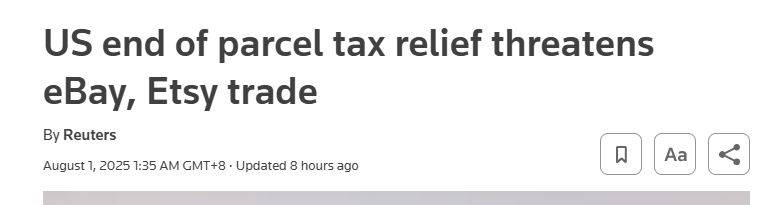
从“创意集市”到“关税战场”:Etsy手工艺人被迫卷入贸易战
Sou Hu Cai Jing· 2025-08-01 03:23
Core Points - The U.S. government has announced the cancellation of the "de minimis" tax exemption for imported goods valued under $800, effective August 29, 2023, nearly two years earlier than previously planned [1][2]. Group 1: Impact on E-commerce Platforms - C2C e-commerce platforms like eBay and Etsy will face significant challenges as international transactions for second-hand, vintage, and handmade goods may incur high tariffs, leading to increased consumer costs and reduced purchasing choices [2][3]. - Sellers on platforms like Etsy anticipate a 30%-50% decrease in order volume due to the new tariffs, which will make their products less competitive [3][5]. - eBay has stated that the policy change will harm consumer interests and reduce market diversity, while Etsy warns that it may force small sellers off the platform [3][4]. Group 2: Consumer Reactions and Concerns - Consumers are expected to face higher costs, with some items potentially doubling in price due to tariffs, taxes, and handling fees, which could lead to a significant reduction in purchases of international goods [2][3]. - Consumer advocacy groups have expressed concerns that the policy will deprive Americans of access to unique, low-cost products and increase the overall cost of living [3][6]. Group 3: Industry and Economic Implications - The International Secondhand Trade Association (IBTA) has warned that the policy could destroy a multi-billion dollar industry and lead to significant job losses [5]. - Delivery companies like FedEx and UPS have cautioned that the new tariff declaration process may cause package backlogs and delays in delivery times [6]. - The U.S. Trade Representative's Office has reiterated that the policy change will not be altered, emphasizing a shift away from being a "dumping ground" for cheap goods [6].

小众兴趣撬动实体经济新增量,抖音电商启动“兴趣产业带扶持计划”
Sou Hu Cai Jing· 2025-08-01 01:21
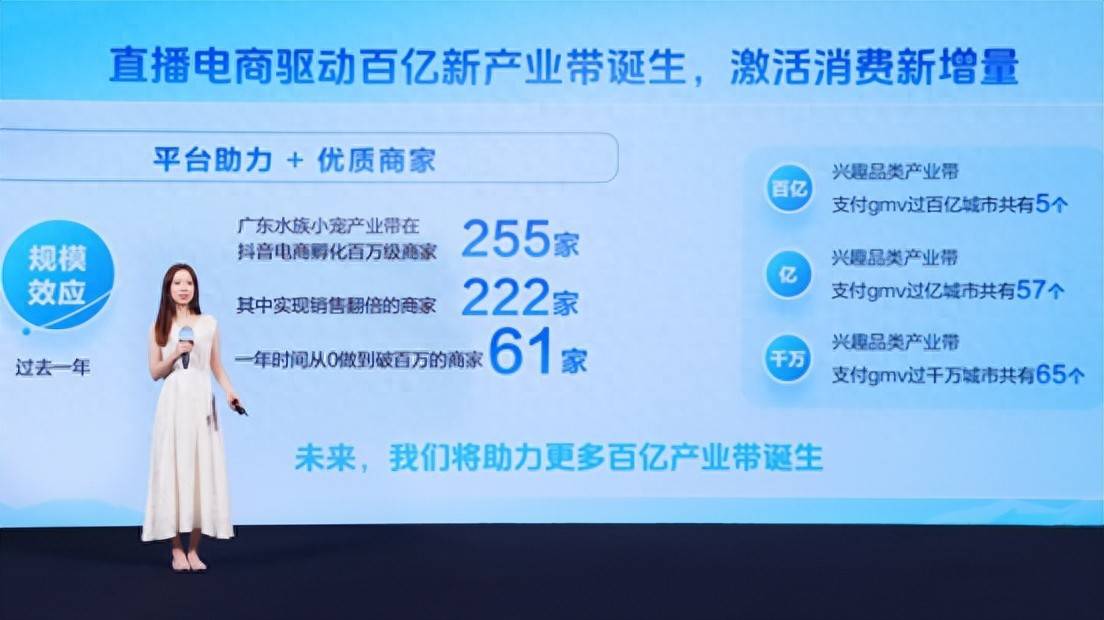
Core Insights - Douyin E-commerce is transforming niche interests into billion-dollar industry clusters, injecting new growth into the real economy [1][2][10] - The launch of the "Interest Industry Support Plan" aims to reduce operational costs for merchants and enhance efficiency through various incentives [1][7] Group 1: Industry Growth and Trends - In the past year, five interest industry clusters achieved a payment GMV exceeding 10 billion, with 57 clusters surpassing 100 million and 65 exceeding 10 million [1][2] - The number of interest industry merchants on the platform is expected to grow by 39% from June 2024 to June 2025 [2] - The sales volume of interest industry merchants through live streaming increased by 54.8% year-on-year, with over 14,000 merchants achieving GMV over 1 million [4][10] Group 2: Support Initiatives - The "Interest Industry Support Plan" includes zero-cost entry for new merchants, zero commission on product cards, and exclusive incentives to lower operational costs [1][7] - Douyin E-commerce is collaborating with local governments, such as the Guangzhou Municipal Bureau of Commerce, to promote high-quality development in specific interest industry clusters [7][8] Group 3: Case Studies and Success Stories - Merchants like @Bluer深蓝 have successfully utilized short videos and live streaming to educate consumers and build trust, leading to significant sales growth [4][8] - The brand "沉香女儿珍藏阁" has leveraged Douyin E-commerce to transform traditional products into popular brands, achieving monthly sales of 10 million [5][6] Group 4: Market Dynamics - The integration of short videos and live streaming has become an effective channel for reaching consumers, allowing factories to transition from OEM to self-branded products [5][10] - The interest-driven approach of Douyin E-commerce is meeting the evolving emotional and spiritual needs of consumers, thereby expanding market opportunities for merchants [10]
美股异动 | eBay(EBAY.US)涨超18% 二季度总营收同比增长6%
智通财经网· 2025-07-31 15:51
Core Viewpoint - eBay's stock price surged over 18% following the release of its second-quarter financial results, indicating strong performance and positive market reaction [1] Financial Performance - eBay reported total revenue of $2.7 billion for Q2, representing a year-over-year growth of 6% [1] - The Gross Merchandise Volume (GMV) reached $19.5 billion, also showing a year-over-year increase of 6% [1] - The GAAP net income from continuing operations was $369 million, with a GAAP operating margin of 17.7% [1] - Non-GAAP net income stood at $643 million, with a Non-GAAP operating margin of 28.4% [1] Advertising Business - Total revenue from eBay's advertising business was $482 million, accounting for 2.5% of GMV [1] - Revenue from first-party advertising products was $455 million, reflecting a year-over-year growth of 19% [1] Cash Flow and Shareholder Returns - Operating cash flow for the quarter was $307 million, while free cash flow amounted to $441 million [1] - eBay returned $759 million to shareholders, which included $625 million in stock buybacks and $134 million in cash dividends [1]