
高端装备

Search documents
重磅文件定调!增强超大特大城市综合竞争力
Di Yi Cai Jing· 2025-08-29 13:03
Group 1 - The core viewpoint of the article is that China is transitioning from a rapid urbanization phase to a stable development phase, focusing on improving existing urban areas rather than large-scale expansion [1] - The "Opinions" released by the Central Committee and the State Council outline a blueprint for future urban development in China, emphasizing high-quality urban growth [1][2] - The development of urban agglomerations and metropolitan areas is prioritized, with a focus on enhancing the competitiveness of mega cities and promoting coordinated regional development [2][4] Group 2 - The article highlights the importance of metropolitan areas and urban agglomerations as platforms for international competition, where central cities drive innovation and surrounding areas support manufacturing [3][6] - The Yangtze River Delta region is cited as an example of successful industrial clustering, with significant advancements in sectors like aerospace and biotechnology, showcasing a collaborative innovation model [3] - The article notes that the domestic manufacturing rate for large aircraft has increased from 10% to 60% due to effective collaboration within the Yangtze River Delta [3] Group 3 - The article discusses the potential for investment in urban infrastructure, particularly in rail transport, with new high-speed rail projects being approved, such as the Shanghai-Hangzhou line [4] - The "Opinions" stress the need to enhance the comprehensive competitiveness of mega cities, advocating for the optimization of core functions and the control of urban scale [4][6] - The article mentions the classification of cities based on permanent resident population, identifying super cities and mega cities, which are crucial for economic development [5][6] Group 4 - The article emphasizes the need to improve the capacity of small and medium-sized cities and county towns, advocating for infrastructure optimization and public service enhancement [7] - It highlights the economic disparities between small and large counties, with some small counties achieving significant economic growth through industrial clusters [7][9] - The article notes that as of 2024, the number of counties with a GDP exceeding 1 billion yuan has increased, indicating a trend of economic growth in smaller regions [7][8]
科创板指数进行2025年三季度调样 指数代表性进一步提升
Zheng Quan Ri Bao Wang· 2025-08-29 13:00
Group 1 - The core viewpoint of the news is that the Sci-Tech Innovation Board (STAR Market) is experiencing significant growth and stability, with the upcoming quarterly adjustments to the Sci-Tech indices reflecting this trend [1][2][3] Group 2 - The Sci-Tech 50, 100, and 200 indices represent large, medium, and small-cap stocks on the STAR Market, with year-to-date increases of 43.3%, 35.6%, 46.8%, and 54.9% respectively, reaching new highs since September 24 of the previous year [1] - The total market capitalization of the Sci-Tech 50 index is 3.1 trillion yuan, covering 38.9% of the market, while the Sci-Tech 100 index has a total market capitalization of 1.9 trillion yuan, covering 24.4% [2] - The combined market capitalization coverage of the Sci-Tech 50, 100, and 200 indices is 84.6%, an increase of 0.5% from before the adjustments, indicating improved representation of the STAR Market [2] - The top five constituent stocks in the Sci-Tech 50 and 100 indices have remained largely unchanged, reflecting a stable market capitalization structure within the STAR Market [2] - Since the release of the "Eight Measures" to deepen the reform of the STAR Market, the number of indices has increased to 32, providing diverse investment options for medium to long-term capital [3] - The total scale of Sci-Tech index products has surpassed 320 billion yuan, with the flagship Sci-Tech 50 product exceeding 190 billion yuan, making it the fifth largest broad-based index product in the domestic market [3] - The STAR Market's "1+6" policy measures are expected to further enhance index investment, supporting high-level technological self-reliance and the development of new productive forces [3]
中国中冶(01618) - 海外监管公告 - 2025年半年度报告、半年度报告摘要
2025-08-29 12:45
香港交易及結算所有限公司及香港聯合交易所有限公司對本公告的內 容 概 不 負 責,對 其 準 確 性 或 完 整 性 亦 不 發 表 任 何 聲 明,並 明 確 表 示,概 不對因本公告全部或任何部份內容而產生或因倚賴該等內容而引致的 任 何 損 失 承 擔 任 何 責 任。 海外監管公告 本公告乃根據香港聯合交易所有限公司證券上市規則第13.10B條而發表。 以下為中國冶金科工股份有限公司(「本公司」)於二零二 五 年 八月二十 九 日 在 上 海 證 券 交 易 所 網 站 刊 發 的 資 料 全 文,僅 供 提 供 信 息 之 用。 承董事會命 中國冶金科工股份有限公司 常 琦 聯席公司秘書 北 京,中 國 二零二五年 八 月 二 十 九 日 於 本 公 告 日 期,本 公 司 董 事 會 包 括 執 行 董 事:陳 建 光 先 生 及 白 小 虎 先 生; 非 執 行 董 事:郎 加 先 生 及 閆 愛 中 先 生(職工代表董事);以 及 獨 立 非 執 行 董 事:劉力先生、吳 嘉 寧 先 生 及 周 國 萍 女 士。 * 僅供識別 中国冶金科工股份有限公司 2025 年半年度报告 公司代码:601 ...
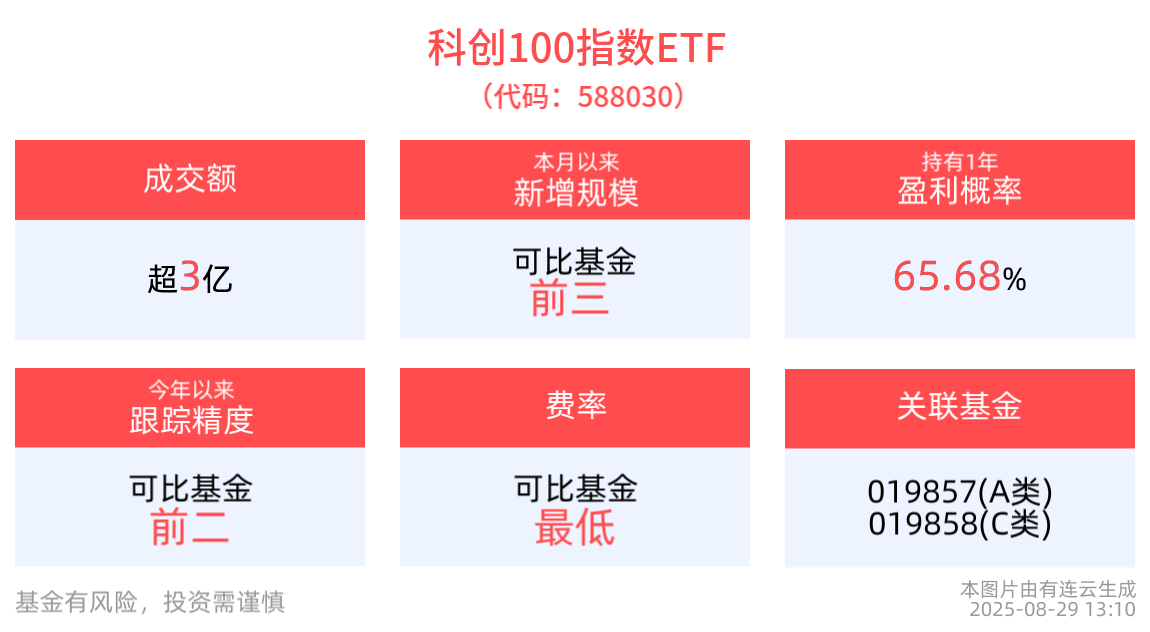
科创100指数ETF(588030)本月规模增长近5亿元实现显著增长,半年报渐次披露,科技行业景气上行
Sou Hu Cai Jing· 2025-08-29 05:41
Core Insights - The Sci-Tech 100 Index (000698) has shown a slight decline of 0.18% as of August 29, 2025, with mixed performance among constituent stocks, highlighting a significant increase in profitability for many companies within the index [3] - A total of 83 companies have reported their half-year results for 2025, showing an average net profit of 0.8386 billion yuan and a remarkable year-on-year growth rate of 27%, indicating a strong enhancement in the profitability of tech enterprises represented by the index [3] Industry Analysis - The current A-share market has a clear investment focus on technology growth sectors, particularly those with performance verification capabilities, although there are rising risks associated with high volatility in specific sub-sectors like chips and communications [4] - The Sci-Tech 100 Index offers a diversified industry exposure, covering sectors such as semiconductors, renewable energy, biomedicine, and high-end equipment, which helps mitigate risks associated with over-reliance on any single industry [4] - The index's constituent stocks are primarily growth-oriented companies with core technologies and high R&D investments, benefiting from the ongoing upgrade of the domestic technology industry [4] ETF Performance - The Sci-Tech 100 Index ETF (588030) has seen a significant increase in scale, growing by 4.85 million yuan this month, with a net buying amount of 136.63 thousand yuan in leveraged funds [5] - The ETF has achieved a net value increase of 100.17% over the past year, ranking in the top 8.02% among comparable funds, with a historical one-year profit probability of 65.68% [5] - The ETF's management fee is 0.15%, and its tracking error is 0.019%, indicating a competitive cost structure and high tracking precision compared to similar funds [6] Index Composition - The Sci-Tech 100 Index is composed of 100 securities selected from the Shanghai Stock Exchange's Sci-Tech Board, focusing on medium market capitalization and liquidity [7] - The top ten weighted stocks in the index account for 23.52% of the total, including companies like BeiGene (688235) and Huahong Semiconductor (688347) [7]

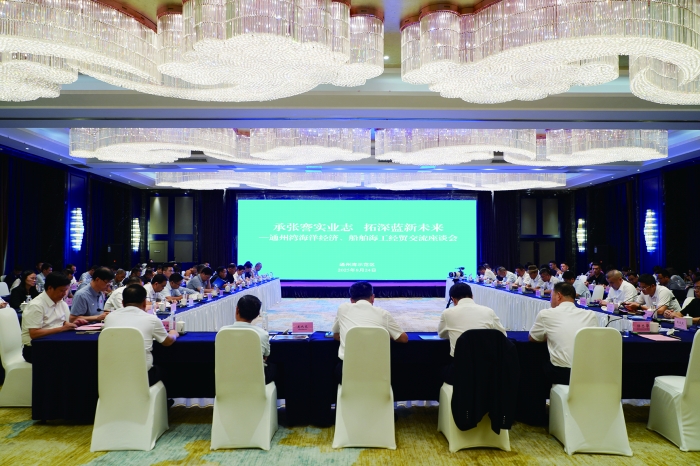
近百家优强企业走进南通共探海洋经济发展新路径
Shang Hai Zheng Quan Bao· 2025-08-28 19:45
Group 1 - The "Tongzhou Bay Marine Economy and Shipbuilding Industry Economic Exchange Symposium" was held in Nantong, focusing on marine economic development opportunities and industry cooperation [3][4] - Nantong has developed six trillion-level industrial clusters, including shipbuilding, electronic information, and high-end equipment, with a total market capitalization of listed companies reaching 400 billion [4][5] - The city aims to enhance its business environment and attract quality enterprises and investment institutions to foster the marine economy and blue economy [4][5] Group 2 - Nantong's GDP is projected to reach 1,242.19 billion in 2024, with a year-on-year growth of 6.2%, ranking second among China's trillion-level cities [5] - The Tongzhou Bay Demonstration Zone has consistently led Nantong's GDP growth, with a remarkable growth rate of 11.8% in the first half of 2025 [5] - The marine economy is expected to contribute 260 billion to Nantong's GDP in 2024, accounting for a quarter of the province's total [5][6] Group 3 - Various companies expressed interest in collaborating with Nantong, highlighting the city's favorable business environment and industrial planning [6][7] - Companies like Taily Technology and Hunan Tianqiao Hoisting emphasized the alignment of their strategic directions with Nantong's industrial strengths [6][7] - Financial representatives suggested leveraging Nantong's fixed asset investment for bond financing and capital operation to support industrial development [8]
河源224个项目集中签约动工竣工投产
Nan Fang Ri Bao Wang Luo Ban· 2025-08-28 07:56
Group 1 - A total of 224 projects were signed, started, completed, and put into production in Heyuan, covering high-end equipment, food and beverage, electronic information, and modern service industries, with a total planned investment of 403 billion yuan [1] - New projects signed include 72 with a total investment of 158 billion yuan, while 79 projects started with an investment of 113 billion yuan, and 73 projects completed with a total investment of 132 billion yuan [1] - New projects are expected to generate an annual output value of 183 billion yuan and an annual tax revenue of 6.6 billion yuan [1] Group 2 - Heyuan National High-tech Zone is a key driver of economic growth and industrial development, leading the city in project signing, commencement, completion, and investment amounts [2] - Since April, 14 industrial projects have been signed in the high-tech zone with a total investment of 43.75 billion yuan, including one project over 10 billion yuan and two over 5 billion yuan [2] - The project by China Shipbuilding Power (Nanjing) Technology Co., Ltd. has an investment of approximately 6 billion yuan and is expected to achieve an annual output value of 10 billion yuan and tax revenue exceeding 30 million yuan [2] Group 3 - The adjustment of the event location to county and district levels reflects Heyuan's incentive for grassroots industrial development [3] - From January to July, the industrial added value in the source district reached 44.87 billion yuan, growing by 14.4%, ranking first in the city for four consecutive months [3] - The company YINENGZHE (Heyuan) Electronic Technology Co., Ltd. aims to invest 10% of its revenue in technology research over the next three years to overcome technical bottlenecks in domestic computer and AI server production [3] Group 4 - Since the launch of the industrial construction "campaign," Heyuan has focused on optimizing platforms, attracting investment, project construction, enterprise cultivation, and service enhancement [4] - In the first half of the year, Heyuan's packaged drinking water manufacturing industry revenue ranked first in the country, with a 5.7% year-on-year growth in industrial added value from January to July, ranking fourth in the province [4] - The water beverage and food industry achieved a rapid growth rate of 49.6%, and future actions will focus on improving the business environment, financial support, trade networks, digital empowerment, and park services [4]
聚焦项目突破 巩固向好态势 攻坚决胜全年
Shan Xi Ri Bao· 2025-08-27 23:07
Group 1 - The core viewpoint emphasizes the acceleration and efficiency of high-quality project construction in the province, which supports sustained economic improvement [1][4] - Fixed investment increased by 4.6%, industrial investment rose by 19.1%, and new industrial capacity projects generated a value of 96.7 billion yuan from January to July [1] - A total of 12 key projects were observed during the video conference, covering high-end equipment manufacturing, modern energy chemical and new materials, and modern agriculture, with a total investment exceeding 30 billion yuan [1] Group 2 - The Yulin coal deep processing base project has a planned total investment of over 20 billion yuan and focuses on green low-carbon development [2] - The Yangling organic agriculture circular industry demonstration park project has established a complete ecological cycle chain, significantly reducing agricultural non-point source pollution [2] Group 3 - Various regions in the province are advancing high-quality projects, including high-end equipment manufacturing, new materials, and clean energy utilization, which enhance industrial clusters and development momentum [3] - The provincial development and reform commission aims to improve project conversion rates and investment quality, while planning a batch of high-quality projects in line with the 14th Five-Year Plan [4] Group 4 - The meeting highlighted the importance of stabilizing employment, enterprises, markets, and expectations through effective policy measures to release consumption potential and expand effective investment [4] - Local leaders are focusing on enhancing industrial development levels, accelerating coal production capacity, and promoting the construction of key projects in traditional industries like gold mining [5]
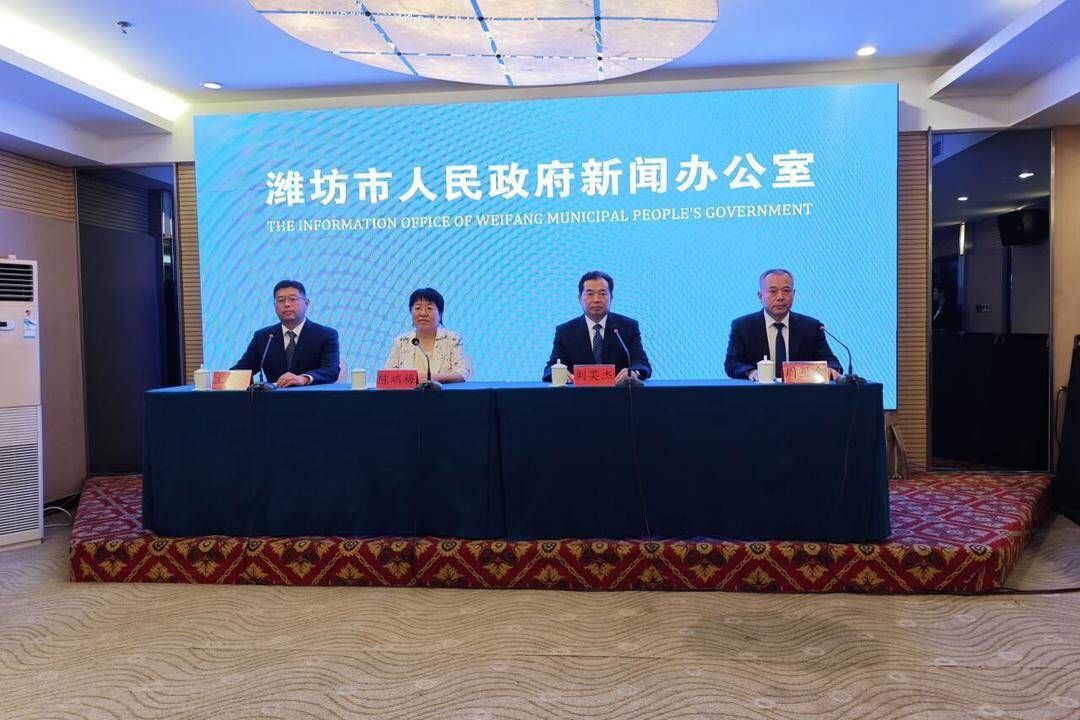
潍坊已全面完成国家科技创新标准化城市试点建设
Qi Lu Wan Bao Wang· 2025-08-27 14:40
Group 1 - Weifang City has completed the construction of a national pilot city for technological innovation standardization, focusing on advanced manufacturing and modern agriculture [1][2] - During the pilot period, Weifang formulated 6 international standards, 545 national and industry standards, and established 34 provincial-level standardization pilot demonstration projects [3] - The city has built a comprehensive industrial standard system with 3,335 key indicators, led by Weichai Power, and has published 7 international standards, 22 national standards, and 34 industry standards [4] Group 2 - The city has established a national-level standardization pilot for high-end equipment, contributing to the formulation of over 10 national standards and 20 industry standards in this sector [4][5] - Weifang has initiated a carbon peak and carbon neutrality standardization project, developing over 20 national standards related to water conservation, energy saving, and carbon emission accounting [5] - The establishment of a national technical standard innovation base for magnetic levitation technology is aimed at accelerating the industrialization of cutting-edge technologies [5]
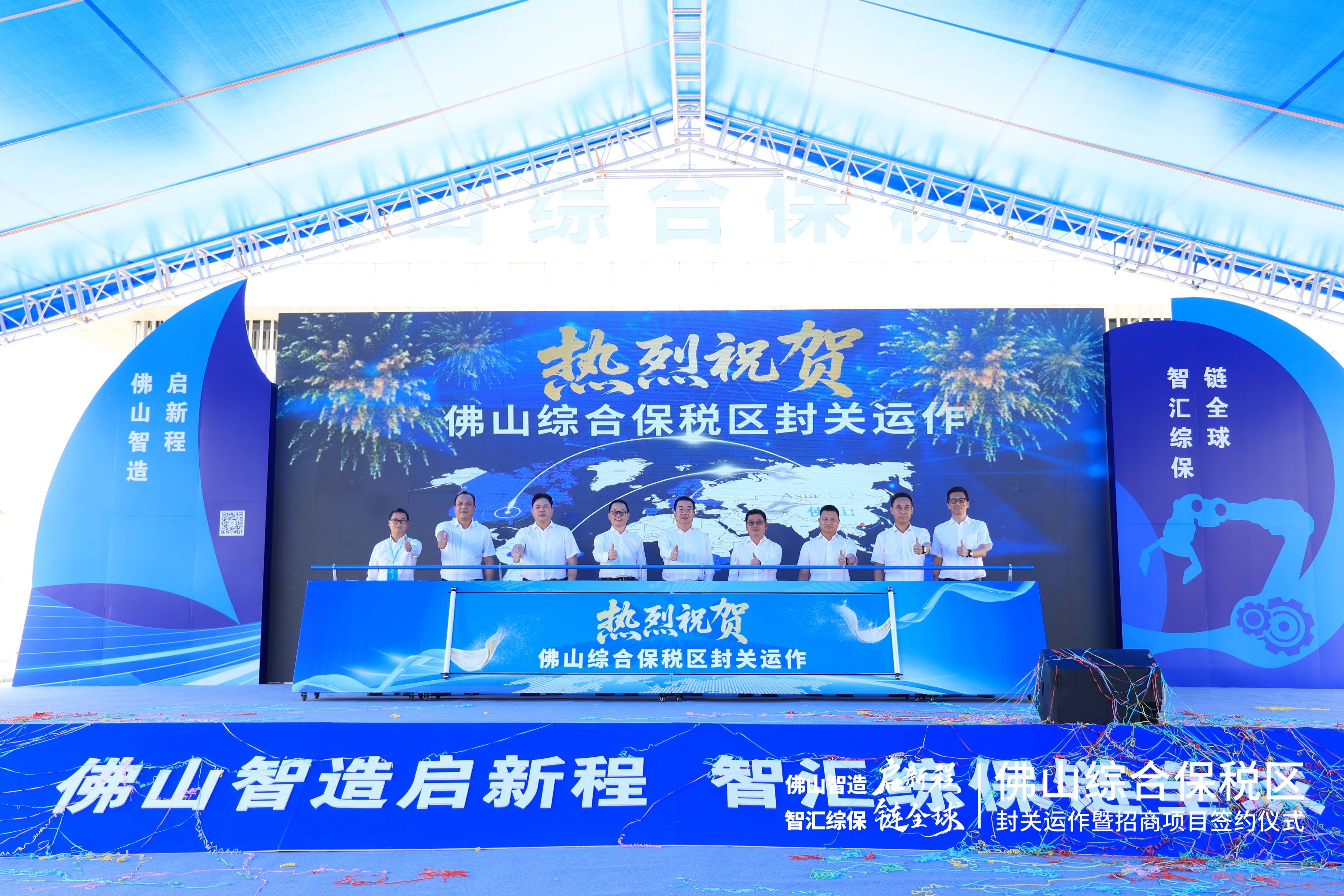
佛山综保区封关运作,将为顺德带来什么?
Sou Hu Cai Jing· 2025-08-27 13:29
Core Viewpoint - The operation of the Foshan Comprehensive Bonded Zone marks a significant step for the Shunde district in achieving its dual goals of becoming a "world-class intelligent manufacturing hub" and a "world-class tourist destination" by enhancing global connectivity [1][4]. Group 1: Operational Highlights - The Foshan Comprehensive Bonded Zone is the first national-level open platform in Foshan, integrating functions of bonded zones, export processing zones, bonded logistics zones, and ports, facilitating international transit, distribution, procurement, re-export trade, and export processing [4]. - The zone's "domestic outside" attribute is expected to provide substantial benefits to Shunde enterprises, particularly in stabilizing the development of key industries such as smart home appliances and high-end equipment [4][7]. - Logistics costs are projected to decrease significantly, with one company estimating annual savings of 50 million yuan due to the policy advantages of the bonded zone [4]. Group 2: Business Development Opportunities - The bonded zone is set to focus on developing ten key sectors, including smart home appliances and high-end equipment, leveraging Foshan's manufacturing base [4][7]. - The logistics cycle for importing raw materials from Southeast Asia has been shortened by 30%, enhancing operational efficiency for businesses in the zone [7]. - The establishment of international bonded warehousing, bonded logistics, and bonded processing platforms is underway, expected to be completed by early next year, promoting a "front store and back warehouse" ecosystem [7][10]. Group 3: Food Industry Expansion - The operation of the bonded zone presents new opportunities for Shunde's culinary sector, addressing challenges such as slow customs clearance and high spoilage rates for imported food ingredients [10]. - Solutions like temperature-controlled storage for perishable goods will extend shelf life and streamline the sales process, reducing operational risks and costs for food businesses [10]. - The zone aims to develop a food processing industry that could create a closed-loop system for global procurement, in-zone processing, and global sales, enhancing the international reach of Shunde's culinary offerings [10].
济宁|上半年济宁规上工业增加值增长7.4%
Da Zhong Ri Bao· 2025-08-27 01:07
Core Viewpoint - Jining's economy shows a steady improvement with a 7.4% growth in industrial added value in the first half of the year, indicating a positive trend in economic performance [1] Economic Performance - The city's GDP reached 302.2 billion yuan, reflecting a year-on-year growth of 6.0% [1] - The added value of the secondary industry was 115.4 billion yuan, growing by 5.0% [1] - Among eight major industries, 32 sectors reported growth, an increase of 7.9 percentage points compared to the first quarter [1] Industrial Development - Jining has established a cultivation database for manufacturing champions, with 15 national-level and 90 provincial-level manufacturing champions recognized [1] - The mining industry grew by 3.3%, with a quarter-on-quarter increase of 0.7 percentage points [1] - The manufacturing sector experienced a significant growth of 11.1%, up by 0.4 percentage points from the first quarter, laying a solid foundation for achieving annual targets [1]