光伏

Search documents
24小时跌掉36%,白银的惊魂夜,撕开了多少人的幻想,但它的故事远不止是穷人的黄金
Sou Hu Cai Jing· 2026-02-16 19:24
Group 1: Market Dynamics - The silver market experienced a dramatic "flash crash" on January 30, 2026, with spot silver prices plummeting over 36% from a historical high of $121.64/oz to a low of $74.28/oz, leading to significant losses for retail and leveraged investors [1][3] - The immediate trigger for the crash was the nomination of Kevin Walsh, perceived as hawkish, for the next Federal Reserve Chair, coupled with higher-than-expected core Producer Price Index (PPI) data, which raised market expectations for prolonged high interest rates [3] - Prior to the crash, the silver market had accumulated substantial risk, with COMEX silver futures' open interest reaching historical peaks, indicating a concentration of speculative funds that exacerbated the sell-off when prices began to decline [3] Group 2: Industrial Demand and Supply - Over 60% of the annual silver production is utilized in industrial applications, including electronics and solar energy, making silver's price closely tied to global industrial production [4][6] - The solar industry has been a major driver of silver demand, with rising costs leading manufacturers to seek alternatives, such as "silver-coated copper," to mitigate expenses as silver prices soared [6][12] - The World Silver Association projected a supply shortage in the global silver market for the sixth consecutive year, with a deficit of approximately 67 million ounces (about 2,083 tons), primarily due to the nature of silver extraction as a byproduct of mining other metals [7][9] Group 3: Market Reactions and Investment Implications - The volatility in the silver market affected investment products, such as the Guotou Ruijin Silver LOF fund, which faced a trading halt and subsequent drop upon reopening, highlighting the disconnect between market prices and net asset values [10] - The recent price fluctuations have complex implications for consumers; while lower prices may benefit those purchasing silver jewelry, investors must recognize the higher volatility of silver compared to gold and the diverging market dynamics between the two metals [10][12] - The silver market is now characterized by a dual demand dynamic, with traditional industrial uses being challenged by technological advancements in AI and data centers, which are increasing silver consumption [12]


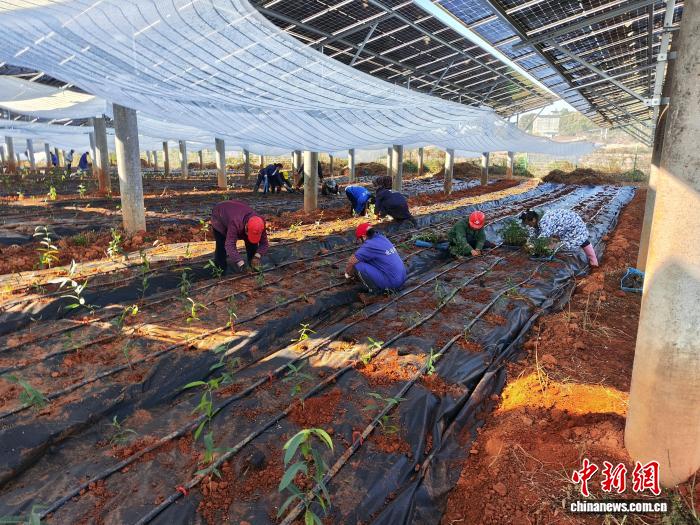
(新春走基层)板上发电、板下种药 农光互补让村民“借光”生财
Zhong Guo Xin Wen Wang· 2026-02-16 07:33
Core Insights - The article discusses a successful "agriculture-photovoltaics complementary" project in Jishui County, Jiangxi Province, which combines solar power generation with the cultivation of medicinal herbs, specifically the local herb "Shan Xiang Yuan" [1][2]. Group 1: Project Overview - The project involves the installation of over 174,000 solar panels that generate approximately 110 million kilowatt-hours of electricity annually, yielding over 40 million yuan in revenue [3][4]. - The project has transformed previously underutilized land into productive agricultural space, allowing for the cultivation of high-demand medicinal herbs while simultaneously generating solar energy [2][3]. Group 2: Economic Impact - The cultivation of Shan Xiang Yuan can yield an annual income of 10,000 yuan per acre, which is five times higher than traditional crops, with a stable market price of 30 to 32 yuan per kilogram [3][4]. - The project has created significant income opportunities for local villagers, with an average annual increase of 5,000 yuan per household, benefiting around 80 households [4][5]. Group 3: Community Engagement - The project has facilitated land leasing, labor opportunities, and skill training for villagers, contributing to a collective annual dividend of 240,000 yuan for the village [4]. - Local farmer Zhu Xingchang has become a model for success, using his earnings from the project to invest in further solar initiatives and diversify agricultural practices [5].
从马斯克太空数据中心构想拉动中国光伏股看到的
日经中文网· 2026-02-16 00:33
Core Viewpoint - The article discusses the significant rise in Chinese photovoltaic (PV) stocks driven by Elon Musk's proposal for a space-based data center, highlighting the dominance of Chinese companies in the global supply chain [2][4]. Group 1: Market Reactions - Chinese PV stocks have surged since the beginning of the year, with major companies like JinkoSolar and TCL Zhonghuan experiencing significant price increases, attributed to Musk's space data center concept [2][4]. - On February 4, reports of Musk's secret contacts with leading PV companies led to a notable spike in stock prices, with JinkoSolar rising by 20% and TCL Zhonghuan by approximately 10% [4]. - Despite the stock price increases, companies quickly clarified that they had no existing partnerships or orders related to Musk's space solar power initiative [4]. Group 2: Industry Developments - Musk announced plans to establish a space data center within three years, aiming to produce 100 gigawatts of solar power equipment annually, emphasizing the reliance of AI growth on solar energy [6]. - Chinese PV companies are keenly interested in space solar power, with reports indicating that the energy density in space is 7 to 10 times higher than on the ground, and operational time could increase fourfold [6]. - The Chinese government reported that renewable energy generation capacity, including solar, has surpassed thermal power for the first time, with Chinese firms controlling over 80% of the global PV supply chain [7]. Group 3: Regulatory Changes - Starting April, the Chinese government will eliminate the 9% VAT rebate on PV product exports, which could significantly impact company earnings if costs cannot be passed on to consumers [8]. - This regulatory change is part of a broader effort to address overcapacity in the PV industry, which has seen significant losses, with projections indicating a net loss exceeding 60 billion yuan for the industry in 2024 [8]. - The cancellation of the VAT rebate has prompted overseas PV companies to accelerate procurement of components before the deadline, potentially leading to demand being pulled forward [8].

或终止项目或剥离资产,部分A股“追光者”止损
Shang Hai Zheng Quan Bao· 2026-02-16 00:07
Core Viewpoint - The photovoltaic industry is transitioning from oversupply to a phase of accelerated capacity clearance, with expectations of a more intense market correction in 2026 compared to 2025, driven by weakening demand forecasts and increased competitive pressure [1][4]. Group 1: Company Actions - Several photovoltaic companies, including Mingguan New Materials and Trina Solar, have halted or adjusted their projects due to unfavorable market conditions, with Mingguan New Materials terminating a project with an initial investment plan of 5 billion yuan, having only invested approximately 163 thousand yuan so far [2]. - Trina Solar announced a reduction in funding for its original project to redirect resources towards a new distributed smart photovoltaic power station project, which is expected to contribute a net profit of 94.91 million yuan annually [2]. - Some companies, like Oujing Technology and Tianyi New Materials, have temporarily suspended production due to decreased demand from downstream customers, with Tianyi reporting a capacity utilization rate of only 14.66% for its subsidiaries [3]. Group 2: Industry Trends - The photovoltaic industry is facing significant overcapacity, with analysts noting that the supply-demand imbalance is worsening, leading to accelerated industry consolidation and a potential return to profitability if the market correction is decisive enough [4][6]. - The China Photovoltaic Industry Association projects a decline in new photovoltaic installations in 2026, estimating a range of 180 GW to 240 GW compared to 315.07 GW in 2025, indicating a decrease of 24% to 43% [4]. - Global photovoltaic installation growth is also expected to slow, with projections for 2026 ranging from 500 GW to 667 GW, down from 580 GW in 2025 [4]. Group 3: Future Strategies - Companies are exploring new avenues for growth, such as cost control and efficiency improvements, to maintain competitiveness in a challenging market [8]. - The industry is encouraged to develop a "Photovoltaic+" strategy, integrating photovoltaic technology with energy storage, hydrogen energy, and new applications in commercial aerospace and consumer electronics [8]. - Trina Solar has set ambitious performance targets, aiming for a net profit of no less than 200 million yuan in 2026, reflecting confidence in recovering profitability through enhanced product margins and rapid growth in energy storage and system solutions [8].


闲置屋顶晒出阳光收益
Xin Lang Cai Jing· 2026-02-15 22:17
Core Viewpoint - The implementation of a distributed photovoltaic system in Jiamusi City represents a significant step towards reducing carbon emissions and promoting green energy, showcasing a successful model of public-private partnership in energy management [1][2]. Group 1: Project Overview - The photovoltaic system has a capacity of 205 kW and has been operational since January 17, resulting in a reduction of approximately 3.8 tons of CO2 emissions within a week [1]. - The project utilizes around 1,500 square meters of rooftop space, with an expected annual electricity generation of 266,500 kWh, potentially saving over 1.8 million yuan in fiscal costs over 20 years [1]. Group 2: Economic and Environmental Impact - The project is expected to reduce electricity costs by 23.64%, with the price per kWh dropping from 0.76 yuan to approximately 0.38 yuan [2]. - The carbon emissions reduction is equivalent to planting 7,800 trees annually, highlighting the ecological benefits alongside economic savings [2]. Group 3: Innovative Management Model - The project employs a market-oriented model of contract energy management, with local company Jiamusi Jiahe Park Industry Management Co., Ltd. fully financing and operating the system, resulting in zero upfront costs and risks for the government [1]. - Future plans include expanding the photovoltaic coverage to additional government buildings, adhering to the principle of utilizing available rooftop resources [2]. Group 4: Operational Efficiency - The management of the photovoltaic system is facilitated through the "Sunshine Cloud" app, allowing for real-time monitoring of power generation and emissions reduction, ensuring efficient operation and maintenance [2].
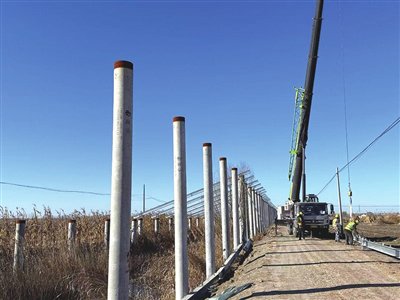
春节不停工 奋战保投产
Xin Lang Cai Jing· 2026-02-15 20:08
Core Viewpoint - The construction of the 200 MW photovoltaic project in Miaozhuang, Ninghe District, Tianjin, is progressing steadily with a commitment to clean energy development, showcasing the responsibility of central enterprises during the Spring Festival [3]. Group 1: Project Development - The project team is focused on key construction milestones, actively carrying out the installation of photovoltaic brackets, component laying, and supporting operations [3]. - The construction workers are maintaining a continuous work schedule during the Spring Festival, emphasizing dedication and practical efforts in advancing the project [3]. Group 2: Commitment to Quality and Safety - The team is strictly adhering to safety and quality standards, ensuring that the project meets its production targets in a timely manner [3]. - The actions of the builders reflect a strong sense of responsibility and commitment to energy transition and green development [3].
美经济学家曾坦言:美国出现严重战略失误,没料到中国会这么强大
Sou Hu Cai Jing· 2026-02-15 11:45
Group 1 - Joseph Stiglitz argues that the U.S. fundamentally misjudged its economic strategy towards China, failing to anticipate China's emergence as a strong competitor [2] - The U.S. initially designed a framework based on tariffs and technology restrictions to maintain its dominance, overlooking China's deep accumulation in industrial layout and innovation [2] - Trade tensions initiated in 2018, with the U.S. imposing tariffs to reshape global supply chains, did not yield the expected results as Chinese companies adapted their market strategies [4] Group 2 - U.S. tariff measures have led to increased domestic inflation, forcing consumers to bear higher prices for goods [5] - Stiglitz highlights that the U.S. mistakenly assumed China's economy was heavily reliant on a single market, not recognizing China's ability to diversify risks through policy guidance and innovation [7] - In the semiconductor storage technology sector, Chinese companies have progressed from relative lagging to achieving comprehensive control over design and production by 2025 [9] Group 3 - By 2025, China's photovoltaic capacity is projected to account for 85% of the global market, with exports reaching $92 billion, enhancing its position in the global energy market [13] - The U.S. has been slow in transitioning to renewable energy, while China has been investing in solar and electric vehicle industries for over a decade [11] - The number of higher education students in China is expected to reach 240 million by 2026, surpassing the U.S. and contributing to a significant increase in research output [13] Group 4 - By 2025, China is expected to complete 93 space launches with a success rate of 96%, showcasing its strong capabilities in independent research and development [15] - China's shipbuilding industry is projected to account for 56% of global deadweight tonnage by 2025, demonstrating efficient management and investment in infrastructure [15] - The share of the Chinese yuan in cross-border payments is anticipated to rise to 53.9% by 2025, diminishing the dollar's dominance and enhancing China's global trade connections [18] Group 5 - By early 2026, China's export volume is expected to reach a new high, with increasing penetration into emerging markets, thereby maintaining economic growth and enhancing geopolitical influence [20] - Over 60% of U.S. companies still view China as a core part of their supply chain, indicating the failure of decoupling strategies [22] - If the U.S. continues to adhere to outdated frameworks, global economic fragmentation may worsen, while China is likely to continue playing a constructive role in a multipolar world [22]

“马斯克传闻”刚澄清,高测股份实控人及多名董事“组团”抛减持计划
Sou Hu Cai Jing· 2026-02-15 07:11
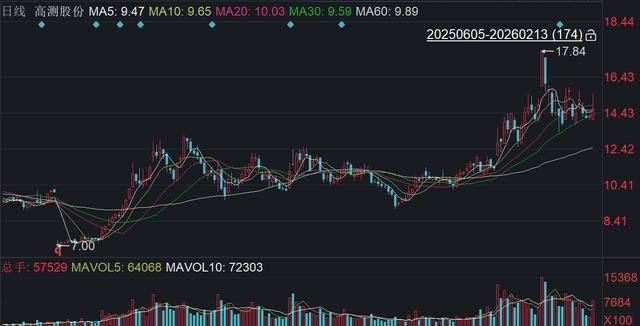
Core Viewpoint - The company, Gaoce Co., Ltd., announced plans for significant share reductions by major shareholders, while clarifying that it has no collaboration with Elon Musk's team regarding space photovoltaic projects, and is facing financial losses due to market conditions in the photovoltaic industry [1][2]. Group 1: Shareholder Actions - The controlling shareholder, Zhang Xu, plans to reduce his holdings by up to 24.92 million shares, representing 3% of the company's total share capital, between March 17 and June 16 [1]. - Other board members, including Zhang Xiutao, Li Xueyu, and Wang Muya, also plan to reduce their holdings by smaller amounts, accounting for 0.1263%, 0.0209%, and 0.0452% of the total share capital, respectively [1]. Group 2: Business Operations and Market Conditions - Gaoce Co., Ltd. focuses on photovoltaic cutting equipment, cutting consumables, silicon wafers, and cutting processing services, primarily in the ground photovoltaic sector, with no significant changes in its main products and services [2]. - The company reported a transition from profit to a loss of 44 million yuan in 2024, with expected losses in 2025 ranging from 35 million to 48 million yuan for net profit and 120 million to 140 million yuan for net profit excluding non-recurring items [2]. - The photovoltaic industry is experiencing a phase of oversupply, leading to low operating rates and a challenging market environment for photovoltaic companies [2]. Group 3: Performance and Market Response - The company's output of silicon wafers and cutting processing services has increased year-on-year, with a high operating rate maintained in the second half of the year [3]. - The stock price of Gaoce Co., Ltd. rose by 2.52% to 14.62 yuan per share as of February 13, with a total market capitalization of approximately 12.146 billion yuan, reflecting a cumulative increase of about 100% over the past year [3].

银价起伏,为何“痛”在新能源?
中国能源报· 2026-02-15 06:33
Core Viewpoint - The demand for silver is increasing due to its essential properties in emerging industries such as photovoltaics, electric vehicles, and artificial intelligence, leading to a supply shortage and rising prices [1][3]. Group 1: Industrial Demand for Silver - In 2024, China's total silver consumption is projected to be 9,428 tons, with industrial demand accounting for 8,567 tons, highlighting the growing industrial metal attributes of silver [5]. - The World Silver Association predicts that global industrial demand for silver will continue to expand over the next five years, driven by core technology sectors [5]. - Silver is crucial in photovoltaic cells, with silver paste containing up to 90% silver, and the shift to more efficient N-type solar cells is expected to increase silver consumption by 40%-100% per watt compared to traditional P-type cells [5]. Group 2: Supply Challenges and Solutions - China's silver supply comes primarily from mining and recycling, with 2024 mining output expected to be 3,426 tons and recycling at 1,233 tons [8]. - Despite having significant silver reserves, the country faces challenges due to the predominance of low-grade ores and a lack of independent silver mines [8]. - To increase silver production, breakthroughs in deep exploration technology, refining processes, and the utilization of tailings are necessary [3][9]. Group 3: Recycling and Urban Mining - The recycling of silver is becoming increasingly important, with projections indicating that by 2025, global recycled silver production could exceed 18,000 tons, with China contributing over 35% [11]. - The concept of "urban mining" is highlighted, where everyday items like old mobile phones can yield significant amounts of silver, emphasizing the potential for recycling in securing the silver supply chain [11]. - The silver recovery process from photovoltaic waste is also noted as a key area for improving supply chain security, although challenges such as high loss rates and lack of standards remain [11].

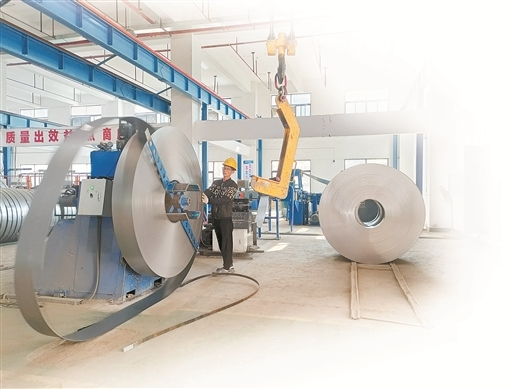
新材料产业园订单足赶工忙
Guang Xi Ri Bao· 2026-02-15 03:48
Group 1 - The core viewpoint of the article highlights the rapid development and promising future of the renewable energy sector in Guangxi, particularly focusing on solar and energy storage materials production [3][4]. - Guangxi Jiali Photovoltaic Technology Co., Ltd. was established in June 2023 and currently has a monthly production capacity of 6,000 tons, with a projected output value of 233 million yuan by 2025 [3]. - The company has been recognized as a high-tech enterprise, emphasizing its commitment to the national energy strategy and the green energy sector [3]. Group 2 - Guangxi Tansai Technology Co., Ltd. is producing energy storage anode materials with an annual output of 100,000 tons and carbon additives of 20,000 tons, utilizing an environmentally friendly process that achieves zero discharge of concentrated salt wastewater [3]. - The industrial park has successfully attracted 11 enterprises, with 7 already in production, including 6 large-scale enterprises, aiming for an industrial output value of 550 million yuan by 2025 and 1 billion yuan by 2026 [4]. - The park is focusing on advanced materials manufacturing, including new energy materials, high-end ceramic materials, and high-performance membrane materials, positioning itself as a new growth driver for the local industrial economy [4].