
商用车

Search documents
且向潮头再扬帆!中国重汽重卡单月出口1.5万辆,再刷行业纪录
Qi Lu Wan Bao· 2025-10-21 02:35
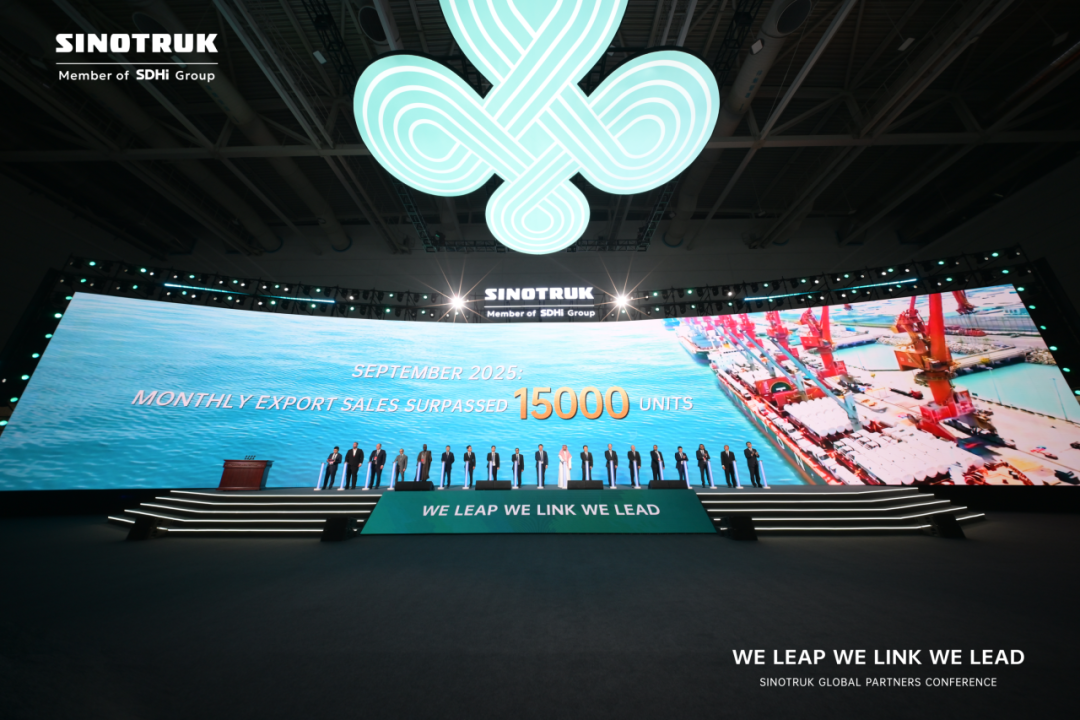
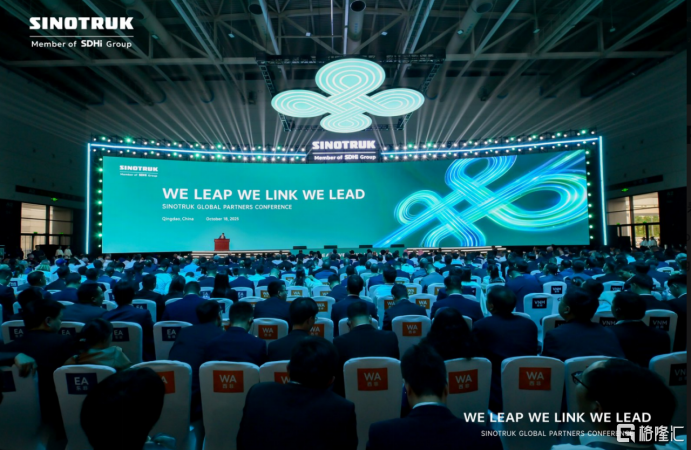
Core Insights - China National Heavy Duty Truck Group (CNHTC) has achieved a record high of 15,000 heavy truck exports in September, bringing the total exports for the month to 15,000 units, marking a new monthly export record for the domestic heavy truck industry [3] - For the first nine months of the year, CNHTC reported total revenue of $22.89 billion, a year-on-year increase of 14.9%, and total vehicle sales of 335,000 units, up 22.8% year-on-year [3] - The company has established a strong global presence, with products sold in over 150 countries and regions, and a global market share exceeding 1 million units [3] Group 1 - CNHTC has maintained its leadership in the domestic heavy truck export market since its overseas expansion began in 2004 [3] - The company has built a comprehensive service network in Vietnam, with 35 service stations and a successful promotional event resulting in over 800 orders [4][6] - CNHTC's after-sales market has shown significant growth, with parts sales revenue increasing by 59% year-on-year in the first nine months [6] Group 2 - The company has implemented a rapid response mechanism to meet urgent customer demands, exemplified by a recent order from an African client [8] - CNHTC operates 10 major production bases in China, with a maximum monthly production capacity of 30,000 heavy trucks [8] - The company is focusing on building more intelligent and efficient factories to enhance production capabilities [8] Group 3 - In traditional markets like Vietnam and Nigeria, CNHTC is expanding its sales and service networks to improve market coverage [11] - The company has established an assembly plant in the Philippines, which has successfully localized production and shortened delivery times [11] - CNHTC's sales in Africa and Southeast Asia have seen significant growth, with increases of 37.4% and 41.5% respectively in the first nine months [11] Group 4 - CNHTC is investing over $4 billion in R&D over the next five years, with plans to establish a specialized R&D team of over 8,000 members [14] - The company is expanding its product offerings to include a full range of commercial vehicles, leveraging its strengths in product quality and design [14] - In the new energy sector, CNHTC has reported a 300% increase in sales of new energy vehicles in the first nine months [16] Group 5 - CNHTC is actively promoting its "Red Pulse Global" brand, integrating political advantages into its international market expansion strategy [17][19] - The company has established a global organizational structure to support its overseas operations, with 21 overseas party branches providing direct service to international markets [19] - CNHTC emphasizes the importance of teamwork and collaboration among its overseas staff to enhance market penetration [21] Group 6 - CNHTC is leveraging its position as a leading player in the heavy truck industry to form strategic partnerships and enhance its competitive edge [24] - The company has opened its first authorized showroom in Libya, aiming to support local reconstruction efforts and provide comprehensive solutions [25] - CNHTC is committed to localizing its operations and workforce, including establishing training centers to develop local talent [27] Group 7 - At the 2025 Global Partner Conference, CNHTC projected heavy truck exports to exceed 150,000 units this year, with ambitious targets set for 2030 [29] - The company aims to achieve a balanced approach between short-term gains and long-term value creation through strategic planning and collaboration [31] - CNHTC is focused on five key transformations: green, digital, service-oriented, international, and diversified development [33]


从技术驱动到场景适配——中国重汽新能源产品的全维度解决方案
Qi Lu Wan Bao· 2025-10-21 02:35
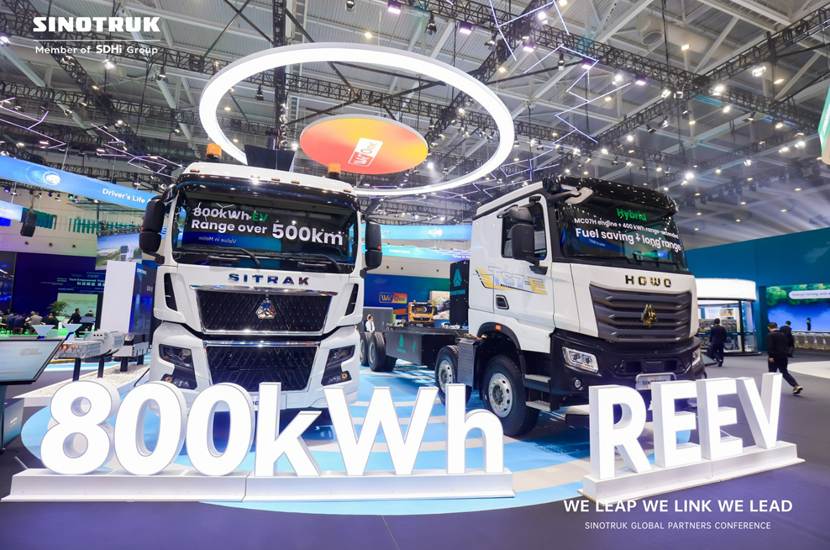
Core Insights - The demand for new energy commercial vehicles has evolved from "usable" to "easy to use, durable, and practical" in the new logistics era [1] - China National Heavy Duty Truck Corporation (CNHTC) is a leader in the new energy commercial vehicle sector, focusing on user needs and developing a comprehensive product matrix for diverse global applications [1][13] Group 1: Product Offerings - The Shandeka G7H pure electric 6X4 tractor is designed for long-distance logistics, featuring over 1100HP and an 800kWh battery system, with a range exceeding 450 km [3] - The Howo TS7 range-extended heavy truck offers a pure electric range of 200 km and a total range of 680 km when fully fueled and charged, addressing complex logistics demands [5] - The Shandeka hydrogen fuel 6x4 tractor provides a zero-carbon solution with a 300 kW hydrogen fuel cell system and an 800L hydrogen storage system, achieving a range surpassing that of comparable pure electric vehicles by 30% [7] Group 2: Versatility and Efficiency - The Shandeka C3H range-extended light truck is tailored for urban delivery and short-distance transport, featuring a peak power of 130 kW and a total range of 1000 km, enhancing operational efficiency [9] - The S6EV pickup truck supports both AC and DC charging modes, with a range of 420 km, making it suitable for various transport needs, including equipment and fresh produce delivery [11] Group 3: Market Positioning - The new logistics era emphasizes the integration of technology and application scenarios, moving beyond simple parameter comparisons to differentiated solutions for core pain points [13] - CNHTC's new energy products leverage core technologies and comprehensive solutions to strengthen market competitiveness and support the green transformation of the global logistics industry [13]
中国重汽集团2025年合作伙伴大会成功举办
Zheng Quan Ri Bao· 2025-10-20 16:39
Core Insights - The 2025 Global Partner Conference of China National Heavy Duty Truck Group was successfully held, showcasing the company's strong performance and strategic direction in the commercial vehicle industry [2][3] Financial Performance - From January to September 2025, the group achieved a total revenue of $22.89 billion, representing a year-on-year growth of 14.9% [2] - The total vehicle sales reached 335,000 units, with a year-on-year increase of 22.8% [2] - Heavy-duty truck exports amounted to 111,000 units, reflecting a growth of 24.5% year-on-year, with September marking a record monthly export of over 15,000 units [2] Strategic Direction - The company emphasizes its commitment to "technology empowering equipment for a better future" and aims to drive five major transformation strategies: green, digital, service-oriented, international, and diversified [3] - By 2030, the company plans to export 250,000 heavy-duty trucks, 100,000 light-duty trucks, 50,000 light vehicles, and 3,000 mining trucks, with an overseas aftermarket revenue target of $1 billion [3] Product and Market Development - The conference highlighted the launch of comprehensive solutions across four key areas: new energy, logistics vehicles, engineering vehicles, and light vehicles [4] - The company showcased various models and key components, focusing on seven core application scenarios, including end-to-end logistics and mining operations [4] Recognition and Awards - The conference awarded partners for excellence in service and marketing, reflecting the company's commitment to fostering strong relationships with its partners [4]
【联合发布】新能源商用车周报(2025年10月第3周)
乘联分会· 2025-10-20 08:37
Core Insights - The article discusses the growth and trends in the new energy commercial vehicle sector, highlighting significant policy changes, market performance, and company developments in the industry. Policy and Regulations - The Ministry of Industry and Information Technology (MIIT) plans to enhance the requirements for vehicle manufacturers regarding intelligence and connectivity, raising production entry barriers [6][8]. - The National Development and Reform Commission (NDRC) aims to establish 28 million charging facilities nationwide by the end of 2027, providing over 300 million kilowatts of public charging capacity to meet the needs of more than 80 million electric vehicles [12][11]. - The Ministry of Housing and Urban-Rural Development, along with nine other departments, is developing an action plan for smart municipal infrastructure construction and renovation [14]. Market Insights - In the first nine months of 2025, sales of new energy light trucks increased by 36.5% year-on-year, reaching 81,600 units, with a penetration rate of 24.8% [20][23]. - The sales of long-range new energy light trucks surpassed 20,000 units, maintaining the top position in the market [23]. - The main types of new energy light truck bodies are platform and box types, with a future shift towards technology-driven and scenario-focused transformations [26][30]. Company Monitoring - Scania has opened its industrial production base in Rugao, China, with a total investment of €2 billion (approximately 16.6 billion RMB), aiming for an annual production capacity of 50,000 vehicles [33]. - SAIC Maxus has launched new models in its electric light truck family, targeting diverse market needs [35]. - Dongfeng Commercial Vehicle has established a new five-year strategic cooperation with CATL, focusing on electric vehicle technology development and market expansion [44][46].
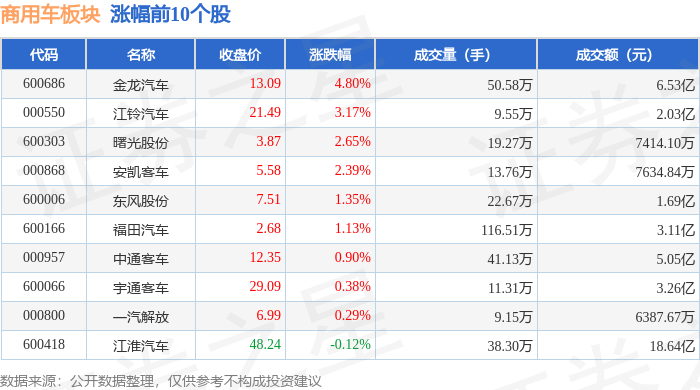
商用车板块10月20日涨0.3%,金龙汽车领涨,主力资金净流入3953.67万元
Zheng Xing Xing Ye Ri Bao· 2025-10-20 08:21
Core Insights - The commercial vehicle sector experienced a 0.3% increase on October 20, with Jinlong Automobile leading the gains [1] - The Shanghai Composite Index closed at 3863.89, up 0.63%, while the Shenzhen Component Index closed at 12813.21, up 0.98% [1] Commercial Vehicle Sector Performance - Jinlong Automobile (600686) closed at 13.09, with a rise of 4.80% and a trading volume of 505,800 shares, amounting to 653 million yuan [1] - Jiangling Motors (000550) saw a closing price of 21.49, up 3.17%, with a trading volume of 95,500 shares, totaling 203 million yuan [1] - Other notable performers included Shuguang Co. (600303) with a 2.65% increase, Ankai Bus (000868) up 2.39%, and Dongfeng Motor (600006) rising 1.35% [1] Fund Flow Analysis - The commercial vehicle sector had a net inflow of 39.54 million yuan from institutional investors, while retail investors saw a net outflow of 23.87 million yuan [2] - Jinlong Automobile attracted a net inflow of 46.41 million yuan from institutional investors, while retail investors had a net outflow of 14.71 million yuan [3] - Other companies like Zhongtong Bus (000957) and Foton Motor (600166) also experienced significant net inflows from institutional investors, indicating strong interest in these stocks [3]

解放超3500 徐工紧追 前十迎新面孔!9月新能源牵引车大卖1.9万辆 | 头条
第一商用车网· 2025-10-20 07:09
Core Viewpoint - The sales of new energy heavy trucks in China have surged significantly, with a record monthly sales of over 24,000 units in September 2025, marking a year-on-year increase of 206% [1][2]. Sales Performance - In September 2025, new energy traction trucks sold 18,900 units, representing a month-on-month increase of 35% and a year-on-year increase of 234%, continuing a strong upward trend [2][12]. - The overall sales of heavy trucks reached 83,400 units in September, with traction trucks accounting for 50,700 units, a year-on-year increase of 124% [8]. Market Share - New energy traction trucks held a market share of 78.28% in the new energy heavy truck segment in September 2025, slightly down from the previous month [4]. - For the first nine months of 2025, the market share of new energy traction trucks was 32.78%, significantly higher than the 17.43% share in 2024 [8]. Growth Trends - The monthly sales figures for new energy traction trucks from March to September 2025 have consistently ranked among the highest in history, indicating robust market performance [6]. - Cumulatively, from January to September 2025, new energy traction truck sales reached 104,000 units, a year-on-year increase of 242% [15][21]. Leading Companies - In September 2025, the top-selling companies included Jiefang with 3,527 units, followed by Xugong with 2,857 units, and SANY with 2,314 units [14]. - The leading companies have shown substantial growth, with Jiefang and Xugong increasing their sales by 364% and 254% respectively compared to the previous year [19]. Market Dynamics - The number of players in the new energy traction truck market has increased, with 30 participants in 2024 and 29 by September 2025, indicating a competitive landscape [15]. - The market is characterized by a high penetration rate of new energy traction trucks, with a record monthly penetration of 37.27% in September 2025 [8][12].






竣工 + 新品双落子!一汽解放无锡研发基地激活商用车“芯动能”
Zhong Guo Qi Che Bao Wang· 2025-10-20 04:25
Core Insights - The completion of the FAW Jiefang (Wuxi) R&D base marks a significant step in enhancing the company's core competitiveness and supporting the development of the powertrain industry [1][3] - The project aims to provide robust support for FAW Jiefang's strategic goal of becoming "China's first and a world-class" provider of green and intelligent transportation solutions [3][4] Strategic Foundation - The core of commercial vehicle technology and product success lies in the power system, which is crucial for FAW Jiefang's competitiveness and its strategic goals [4] - In 2022, FAW Jiefang initiated a series of strategic actions, including the integration of engine, transmission, and axle businesses into a powertrain division [4] - The company has innovatively proposed the "power domain" concept, focusing on collaborative development between chassis and vehicle systems [4] Manufacturing and Global Expansion - FAW Jiefang has invested nearly 4 billion in three "super factories" located in Wuxi, Changchun, and Dalian, ensuring high-quality delivery of power domain products [5] - The company has established dedicated R&D teams for overseas markets, aiming to customize products based on in-depth research of user scenarios [5] Market Strategy and Performance - FAW Jiefang is addressing the cyclical challenges in the commercial vehicle industry by implementing four competitive strategies to enhance its core competitiveness [6] - The company has seen significant market success, with new products like the T-shift AMT transmission achieving monthly sales exceeding 1,000 units [7] - In the non-road sector, FAW Jiefang is expanding its product line and capacity, targeting specific applications such as generators and excavators [8] Future Development Blueprint - The Wuxi R&D base plays a critical role in FAW Jiefang's global R&D layout, focusing on rapid market response and product development [9] - Future product planning includes a clear roadmap for various power domains, such as green low-carbon, pure electric, hybrid, and fuel-cell technologies [10] - The company aims to leverage the Wuxi base as a new starting point to strengthen its industry leadership and support the transition to a greener and smarter commercial vehicle sector [10]

中国重汽2025年全球合作伙伴大会圆满举办
Ge Long Hui· 2025-10-20 02:33
Core Insights - The recent global partner conferences held by Shandong Heavy Industry and China National Heavy Duty Truck Group focused on themes of technological empowerment and global collaboration, gathering 620 partners from 97 countries to discuss industry trends and future strategies [1][3]. Group 1: Strategic Leadership - 2025 is identified as a pivotal year for the transformation and high-quality development of China's commercial vehicle industry, with significant growth in new energy vehicle sales, which increased by 300% year-on-year from January to September [3]. - China National Heavy Duty Truck Group achieved the world's highest production and sales volume of heavy trucks in the same period, marking a new milestone in the global commercial vehicle industry [3]. Group 2: Future Upgrades - The company plans to collaborate with global partners to advance three core upgrades: comprehensive product upgrades, lifecycle win-win upgrades, and a fully upgraded marketing system [5]. - The focus will be on expanding the entire series of commercial vehicle businesses and deepening engagement in the aftermarket and vehicle lifecycle sectors [5]. Group 3: Industry Solutions - The exhibition showcased immersive application scenarios across seven core areas, including logistics, infrastructure, mining, and new energy, highlighting the company's product and innovation capabilities [5]. - The new energy section featured flagship products designed for diverse operational scenarios, promoting a mature and comprehensive new energy technology system aimed at achieving zero-carbon transportation [5]. Group 4: Product Highlights - The showcase included advanced vehicles such as the HOWO TX PRO and the Shandeka G7S, optimized for construction and mining operations, demonstrating enhanced performance under extreme conditions [10][12]. - The HOWO T3H refrigerated truck was highlighted for its significant fuel savings of over 11.8%, making it a preferred choice for cold chain logistics [15]. Group 5: Commitment to Collaboration - The conference emphasized the importance of global partnerships in achieving a green, efficient, and intelligent future for commercial vehicles, reflecting the company's commitment to collaborative growth [23].
中金:通过三季报寻找结构性亮点
Mei Ri Jing Ji Xin Wen· 2025-10-20 00:40
Core Viewpoint - Current internal growth expectations are relatively subdued, leading investors to focus more on fundamental movements during the earnings season, seeking structural highlights through the third-quarter reports [1] Summary by Categories Earnings Highlights - Key areas to focus on in the third-quarter reports include sectors such as gold, TMT (Technology, Media, and Telecommunications) benefiting from high AI demand, and non-bank financials [1] High-Growth Opportunities - High-growth opportunities that are less correlated with economic cycles and external risks include the AI industry chain, as well as white goods, construction machinery, and power grid equipment that are well-positioned for trade with non-US economies and have sufficient overseas production capacity [1] Supply-Side Improvements - Industries that have achieved supply-side clearing in a moderately recovering environment include industrial metals, lithium batteries, innovative pharmaceuticals, commercial vehicles, rail transit equipment, and railway and highway sectors [1]
中金:结合三季报业绩关注三条投资主线
Zheng Quan Shi Bao Wang· 2025-10-20 00:15
Core Insights - The article emphasizes three investment themes to focus on during the third quarter earnings reports, highlighting the relatively subdued internal growth expectations and increased external uncertainties due to the escalation of US-China tariffs [1] Group 1: Earnings Highlights - Key areas to watch in the third quarter earnings include sectors such as gold, TMT (Technology, Media, and Telecommunications) benefiting from high AI demand, and non-bank financials [1] - Investors are encouraged to identify structural highlights through the earnings reports, particularly in sectors with low correlation to economic cycles and external risks [1] Group 2: High-Growth Opportunities - High-growth opportunities include the AI industry chain and sectors with significant overseas capacity layout that cater to non-US economic trade, such as white goods, construction machinery, and power grid equipment [1] - The article suggests focusing on industries that have achieved supply-side clearing in a moderately recovering environment, including industrial metals, lithium batteries, innovative pharmaceuticals, commercial vehicles, and rail and road equipment [1]