保险

Search documents
策略周报:行业轮动ETF策略周报-20260330
金融街证券· 2026-03-30 12:43
Group 1: Report Industry Investment Rating - No relevant content Group 2: Core Viewpoints of the Report - The Financial Street Securities Research Institute constructs a strategy portfolio based on industry and thematic ETFs, and the model recommends allocating sectors such as marine equipment, liquor, and securities in the week of March 30, 2026 [2][12] - The strategy will newly hold products like the Ship ETF Fuguo, Securities and Insurance ETF E Fund, and Aerospace ETF Huatai-PineBridge, and continue to hold products like the Liquor ETF Penghua and Building Materials ETF Guotai in the next week [12] - As of last weekend, the trading timing signals of some ETFs and underlying indexes gave daily or weekly risk warnings [12] Group 3: Summary by Relevant Catalogs Strategy Portfolio Construction - The Financial Street Securities Research Institute constructs a strategy portfolio based on industry and thematic ETFs, referring to the strategy reports "Strategy Portfolio Report under Industry Rotation: Quantitative Analysis from the Perspective of Industry Style Continuity and Switching" (20241007) and "Research on the Overview and Allocation Methods of the Stock ETF Market: Taking the ETF Portfolio Based on the Industry Rotation Strategy as an Example" (20241013) [2] ETF Portfolio Information - The ETF portfolio includes multiple products such as the Ship ETF Fuguo, Liquor ETF Penghua, and Securities and Insurance ETF E Fund, with details on their market values, holding situations, heavy - held Shenwan industries and their weights, as well as weekly and daily timing signals [3] Performance Tracking - From March 23 to March 27, 2026, the cumulative net return of the strategy was approximately - 1.33%, and the excess return relative to the CSI 300 ETF was approximately 0.15% [3] - From October 14, 2024, to March 27, 2026, the out - of - sample cumulative return of the strategy was approximately 27.53%, and the cumulative excess return relative to the CSI 300 ETF was approximately 8.23% [3] ETF Portfolio Changes - In the week of March 23 - 29, 2026, some ETFs such as the Film and Television ETF Yin Hua, Telecommunications ETF E Fund were调出, while the Liquor ETF Penghua and Building Materials ETF Guotai were continued to be held. The average return of the ETF portfolio was - 1.33%, and the excess return relative to the CSI 300 ETF was 0.15% [11]
解码中国平安年报:营运利润重回双位数增长,净资产首破万亿,2026年开启“服务年”
Sou Hu Cai Jing· 2026-03-30 12:13
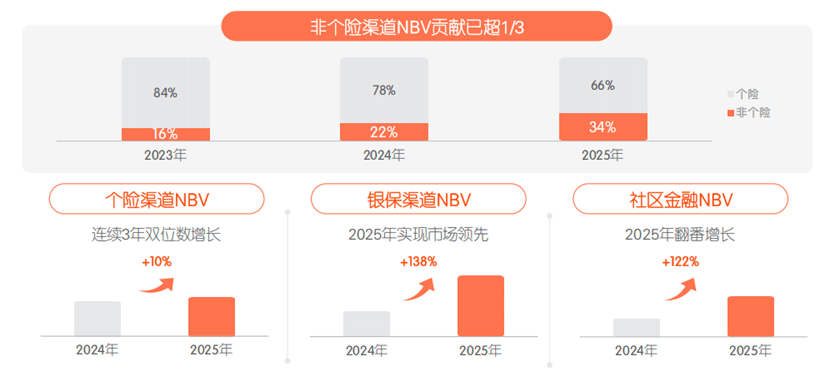
Core Insights - The Chinese insurance industry is undergoing significant structural adjustments, influenced by low interest rates, an aging population, and advancements in AI technology, leading to a transformation in service models and product offerings [1][7] Group 1: Business Performance - In 2025, the company reported a parent operating profit of 134.415 billion yuan, a year-on-year increase of 10.3%, marking a return to double-digit growth [2] - The net assets of the company surpassed 1 trillion yuan for the first time, and the proposed dividend per share was 2.70 yuan, reflecting a 5.9% increase, with cash dividends growing for 14 consecutive years [2] - The insurance business remains the core foundation of the company's strategic layout, with all segments achieving high-quality development in 2025, contributing to the overall performance [3][6] Group 2: Channel Structure and Growth - The company has established a balanced channel structure, reducing reliance on a single channel, with significant growth in new business value from various channels, including a 138% increase from the bancassurance channel [3][5] - The new business value reached 36.897 billion yuan in 2025, up 29.3% year-on-year, with a new business value rate increasing by 5.8 percentage points to 28.5% [3] Group 3: Aging Population and Service Strategy - The aging population is driving the demand for comprehensive medical and elderly care services, prompting the company to transition from traditional financial protection to a full-cycle service model [7] - The company has entered the "service period" of its medical and elderly care strategy, with a focus on enhancing customer engagement and increasing policy values [7][8] Group 4: Technology Integration - The company emphasizes the integration of AI technology across all business operations, with the "AI in ALL" principle guiding its strategy to enhance service delivery and operational efficiency [10][11] - The company has developed a robust technological foundation, with a database of 33 trillion bytes covering 251 million individual customers, facilitating the application of AI in various business processes [10][12] Group 5: Customer Experience and Service Innovation - The company aims to transform its service philosophy into tangible customer experiences, establishing a comprehensive service network supported by AI technology [8][12] - The introduction of a global emergency rescue service system extends the company's service offerings beyond traditional insurance, enhancing its competitive edge in the market [8]


从金融生态到服务生态:中国平安2025年报里藏着一个“新故事”
第一财经网· 2026-03-30 11:09
Core Insights - China Ping An has demonstrated impressive performance in 2025, achieving rapid profit growth and enhanced operational resilience, marking a shift from a product-oriented to a service-oriented model [1][2] - The company's growth strategy focuses on "comprehensive finance + healthcare and elderly care," emphasizing internal growth through deep customer value exploration rather than mere scale expansion [1][4] Financial Performance - In 2025, China Ping An reported a parent operating profit of 134.415 billion yuan, a year-on-year increase of 10.3%, and a net profit of 134.778 billion yuan, up 6.5% [2] - The parent net asset exceeded 1 trillion yuan for the first time, growing by 7.7% from the beginning of the year [2] - The operating profit and net profit growth rates significantly outpaced revenue growth, indicating a shift in the insurance industry towards internal growth strategies [2] Business Segments - The life and health insurance segment was the core growth engine, with new business value increasing by 29.3% year-on-year, achieving double-digit growth for three consecutive years [2] - The property insurance segment showcased strong underwriting control, with a combined cost ratio optimized to 96.8%, and the auto insurance cost ratio further reduced to 95.8% [3] - In the investment sector, the insurance fund investment portfolio reached 6.49 trillion yuan, growing by 13.2%, with a comprehensive investment return rate of 6.3%, the highest in five years [3] Strategic Direction - The strategic focus on "comprehensive finance + healthcare and elderly care" aims to create a closed-loop ecosystem that integrates financial services with healthcare, enhancing customer value [4][5] - The company has established a comprehensive network that integrates online and offline services, enhancing customer experience through a four-dimensional service system [5][6] Service Innovation - In 2026, China Ping An aims to enhance service differentiation, focusing on customer experience, safety, and health value [8][9] - The integration of over 700 million internet users into a unified service platform will streamline access to various services, improving efficiency and customer satisfaction [8][9] - The company's goal is to leverage financial and service integration to create a competitive advantage in a saturated market [9]
友邦保险(01299)3月30日斥资2.25亿港元回购265.7万股
智通财经网· 2026-03-30 11:01
Group 1 - The core announcement is that AIA Group (01299) plans to repurchase 2.25 billion HKD worth of shares, totaling 2.657 million shares [1] - The repurchase price per share ranges from 83.15 to 85.65 HKD [1]

北京出手!智驾车专属险要来了
21世纪经济报道· 2026-03-30 10:59
Core Viewpoint - The Beijing Financial Regulatory Bureau has announced the development of specialized insurance products for intelligent connected new energy vehicles, which will cover levels L2 to L4 of automated driving, addressing the unique risks associated with these vehicles [1][3]. Group 1: Need for Specialized Insurance - The rapid development of the intelligent connected vehicle industry necessitates specialized insurance due to the complexity of risks associated with advanced driving technologies [3]. - Current commercial vehicle insurance does not adequately cover the unique scenarios and hardware/software losses related to intelligent connected vehicles [3][4]. Group 2: Characteristics of Specialized Products - The specialized insurance products will be optimized from existing new energy vehicle insurance, clarifying definitions, standardizing terms, and expanding coverage to ensure uniform adaptation for L2 to L4 vehicles [4]. - Expected characteristics of the specialized products include more comprehensive coverage, increased coverage limits, and improved customer service [4]. Group 3: Timeline for Availability - The specialized insurance products will be rolled out in phases, starting with L2 level vehicles, primarily targeting new energy vehicles purchased in Beijing [6]. - For L3 and L4 vehicles, those legally tested or certified for road use in Beijing will also be eligible for the specialized products, with plans to expand availability as data and experience are accumulated [6]. Group 4: Integration with Existing Insurance Framework - The specialized products will utilize the existing car insurance framework to maintain legal consistency and ensure efficient compensation for accident victims [9]. - This approach aims to balance interests among stakeholders and facilitate rapid resolution of traffic accident disputes, thereby supporting industry innovation [9][10]. Group 5: Future Steps - The Beijing Financial Regulatory Bureau plans to collaborate with industry associations and insurance companies to develop product terms, conduct rate assessments, and enhance data exchange mechanisms [10]. - Efforts will also focus on training personnel and conducting simulations to ensure high-quality service delivery for the new insurance products [10].

险资2025大幅增配红利、成长股
HTSC· 2026-03-30 10:56
Investment Rating - The report maintains an "Overweight" rating for the insurance sector [2] Core Insights - In 2025, insurance companies are expected to significantly increase their allocation to high-dividend and growth stocks, with a notable rise in the average FVOCI stock allocation to 5.4%, up 2.5 percentage points year-on-year, totaling an increase of 633.8 billion RMB [5][12][10] - The net investment yield is projected to face pressure, declining by 0.4 percentage points to 3.0%, while the overall investment return remains stable at 5.0% [6][39] - The trend of increasing allocation to dividend stocks is expected to continue, with an estimated 1.8 trillion RMB allocated to dividend stocks by the end of 2025, indicating a long-term trend towards higher dividend stock allocation [7][10] Summary by Sections Investment Allocation - In 2025, insurance companies are increasing their allocation to high-yield stocks, with major companies like Ping An and China Life leading the increase, accounting for 44% and 31% of the total allocation respectively [5][12] - The allocation to secondary equity investments (stocks and funds) has risen to a historical high of 17.9% by the end of 2025, reflecting a shift towards equities in a favorable market environment [10][25] Investment Returns - The net investment yield is under pressure, with a decrease to 3.0% due to declining interest contributions, while dividend contributions remain stable at 0.9% [6][40] - The total investment return is expected to remain stable at 5.0%, with capital gains from equity investments contributing positively to the profit statement [6][39] Dividend Strategy - The motivation for increasing allocation to dividend stocks persists, driven by the need for stable cash yields in a low-interest environment [7][10] - The insurance sector is estimated to have an under-allocation of 1.1 to 1.9 trillion RMB in dividend stocks, indicating potential future growth in this area [7][10] Bond Allocation - In 2025, there is a slight decrease in bond allocation by approximately 3 percentage points to 57%, as companies adjust their strategies in response to fluctuating interest rates [8][10] - The focus on timing and structural optimization in bond investments is becoming more pronounced, with a preference for long-term bonds [8][10]


交银国际每日晨报-20260330
BOCOM International· 2026-03-30 10:38
Group 1: Haitai Flavor Industry (海天味业) - The company achieved a revenue of 28.87 billion yuan in 2025, a year-on-year increase of 7.3%, and a net profit of 7.04 billion yuan, up 11.0%, slightly exceeding expectations [1] - The three core product categories, soy sauce, oyster sauce, and seasoning sauce, saw revenue growth of 8.6%, 5.5%, and 9.3% respectively, driven mainly by sales volume [2] - The company plans to maintain a dividend payout ratio of no less than 80% from 2025 to 2027, enhancing shareholder return visibility [1] Group 2: Haier Smart Home (海尔智家) - The company reported a revenue of 302.33 billion yuan and a net profit of 19.55 billion yuan for 2025, with year-on-year growth of 5.7% and 4.4% respectively, which was below expectations [3] - The management expects revenue and profit to achieve mid-single-digit growth in 2026, with profit growth anticipated to outpace revenue growth [4] Group 3: Ruipu Lanjun (瑞浦兰钧) - The company turned profitable in 2025, with revenue increasing by 36.7% to 24.33 billion yuan and battery shipments rising by 89% to 82.7 GWh [7] - The gross margin improved by 7.1 percentage points to 11.2%, and the company achieved a net profit of 620 million yuan, compared to a loss of 1.163 billion yuan in 2024 [7] Group 4: Xiansheng Pharmaceutical (先声药业) - The company reported a revenue of 7.73 billion yuan and an adjusted net profit of 1.28 billion yuan for 2025, with year-on-year growth of 16.5% and 27.1% respectively [9] - The management anticipates significant revenue growth in 2026 driven by new product approvals and collaborations, targeting around 10 billion yuan in revenue and 1.6 billion yuan in adjusted net profit [9][10] Group 5: China Biologic Products (中国生物制药) - The company achieved a revenue growth of 10.3% in 2025, with innovative products contributing to 48% of total revenue [11] - The management expects double-digit revenue growth in 2026-27, driven by new product launches and existing product performance [11][12] Group 6: Heng Rui Pharmaceutical (恒瑞医药) - The company reported a revenue increase of 13% in 2025, with innovative drug revenue growing by 26%, accounting for 58% of total pharmaceutical sales [13] - The management expects to achieve over 30% growth in innovative drug sales in 2026, supported by new product launches and collaborations [14] Group 7: Fuyao Glass (福莱特玻璃) - The company reported a revenue of 3.1 billion yuan and a profit of 343 million yuan in Q4 2025, with a significant gross margin increase of 7.5 percentage points to 24.3% [16] - The overseas revenue share in photovoltaic glass increased by 9.7 percentage points to 34.7%, positively impacting the overall gross margin [16] Group 8: AIA Group (友邦保险) - The company achieved an operating profit after tax of 7.14 billion USD in 2025, a year-on-year increase of approximately 7% [17] - The management forecasts a steady growth in premium income over the next three years, with new business continuing to grow steadily [17][18] Group 9: Yuexiu Services (越秀服务) - The company reported a revenue increase of 0.9% to 3.902 billion yuan in 2025, with a decline in net profit by 22.5% to 274 million yuan [19] - The management expects a stabilization in gross margin and moderate growth in business scale in 2026 [19][20]
友邦保险(01299):2025 年核心指标保持稳健;上调目标价
BOCOM International· 2026-03-30 09:22
Investment Rating - The report maintains a "Buy" rating for AIA Group (1299 HK) with an updated target price of HKD 101, indicating a potential upside of 17.9% [1]. Core Insights - AIA Group's 2025 performance is expected to show resilience despite short-term fluctuations due to factors like USD depreciation, driven by growth in new markets and businesses, with operational profit projected to reach USD 7.895 billion in 2026 [1]. - The company emphasizes a long-term strategy focused on "value growth over scale expansion," reaffirmed by management during the earnings release [6]. - The report updates the earnings forecasts for 2026-2028, predicting premium income growth rates of 10%, 9%, and 7% respectively, with strong contributions from the Hong Kong and mainland China markets [6]. Financial Performance - For 2025, AIA Group reported an operational profit (OPAT) of USD 7.14 billion, a year-on-year increase of approximately 7%, and a net profit of USD 6.23 billion, which, while lower than 2024, exceeded market expectations [6]. - The insurance services segment achieved a performance of USD 6.91 billion, reflecting a year-on-year growth of 19.8%, while investment returns surged by 50.6% to USD 17.98 billion [6]. - The report highlights a solid customer base and strong cash flow generation capabilities, with a projected basic free earnings per share (UFSG) growth of around 11% for 2025 [6]. Earnings Forecast Changes - The updated earnings forecasts for 2026 show a slight increase in net profit from USD 6.584 billion to USD 6.714 billion, representing a 1.97% change, while operational profit is revised up by 4.28% to USD 7.895 billion [5]. - The new business value is also adjusted upward, with a forecast of USD 6.105 billion for 2026, reflecting a 1.11% increase [5]. - The report anticipates a robust growth trajectory for new business value margins, projected to increase by 10%, 8%, and 7% over the next three years [6].
中国平安郭晓涛:要在周期风浪里“寻找确定性”
Xin Lang Cai Jing· 2026-03-30 09:17
Core Viewpoint - China Ping An's 2025 performance report highlights a resilient financial performance despite market uncertainties, with a focus on strategic investments in emerging industries and a commitment to enhancing service offerings [1][4][12]. Financial Performance - In 2025, China Ping An achieved an operating profit of CNY 134.41 billion, a year-on-year increase of 10.3%, and a net profit attributable to shareholders of CNY 143.77 billion, up 22.5% [7][10]. - The company's net asset scale surpassed CNY 1 trillion for the first time, reaching CNY 1,000.42 billion [7]. - The company plans to distribute a cash dividend of CNY 1.75 per share for 2025, totaling CNY 48.89 billion, marking 14 consecutive years of steady growth in dividends [9][11]. Investment Strategy - The core investment strategy for 2025 is to "find certainty in uncertainty," focusing on sectors like infrastructure, healthcare, and high-dividend assets [4][6]. - The company aims to deepen its investment in emerging industries such as GPUs, robotics, semiconductors, and brain-machine interfaces [1][12]. - Over CNY 900 billion in floating profits are not included in current profits, providing a solid foundation for the company's financial health [9]. Business Segments - The life and health insurance business showed robust growth, with new business value increasing by 29.3%, becoming a key driver of performance [9][11]. - The property insurance and banking sectors experienced slight declines in net profit, down 2.82% and 4.2% respectively [11]. - The company’s solvency ratio has been declining, with figures of 208%, 204.1%, and 193.3% for 2023 to 2025 [9][11]. Customer Growth and Service Focus - By the end of 2025, the number of customers in protection, asset, and service categories grew by 3.9%, 2.5%, and 4.0% respectively, indicating a shift towards integrated financial and service offerings [12][13]. - 2026 has been designated as the "Service Year," emphasizing the integration of financial services with enhanced customer service capabilities [13][14]. Technological Advancements - The company is committed to AI and technology investments, viewing them as essential for strategic implementation [14]. - A significant technology platform upgrade, the "Nine to One" project, aims to unify various customer accounts and services into a single platform, enhancing user experience [14].
证监会:加强资本市场中小投资者保护,切实提升投资者获得感;覆盖全民的长期护理保险来了!|每周金融评论(2026.3.23-2026.3.29)
清华金融评论· 2026-03-30 09:11
Group 1: Long-term Care Insurance - The central government has issued an opinion to establish a long-term care insurance system, aiming for a nationwide, unified policy within three years [5][6]. - The system will provide basic living care and medical services for individuals who have lost normal activity capabilities, funded through universal participation [6]. - Five principles will guide the implementation: universal coverage, urban-rural coordination, fairness and unity, safety and regulation, and sustainability [6][7]. Group 2: Capital Market Regulation - The China Securities Regulatory Commission (CSRC) plans to enhance protection for small and medium investors, focusing on improving their sense of gain [8][9]. - The CSRC aims to shift from a "financing priority" approach to an "investor-friendly" model, addressing issues like investor rights protection and information asymmetry [9]. - This reform is part of a broader strategy to balance investment and financing relationships, ultimately fostering a virtuous cycle of investor profit, corporate financing ease, and economic transformation [9]. Group 3: Monetary Policy - The People's Bank of China announced a 500 billion yuan MLF operation with a one-year term to maintain liquidity in the banking system [11]. - This operation reflects the central bank's intention to flexibly adjust liquidity amid rising external uncertainties, balancing fiscal policy and market funding needs [12]. - Future attention will be on the coordination of policy financial tools and conventional tools to achieve a dynamic balance between growth stabilization and risk prevention [12].