光通信

Search documents
从狂热到回撤:AI硬件的第一次真实压力测试
美股研究社· 2026-03-22 12:36
Core Viewpoint - The current AI market is more about capital investment than a true productivity revolution, with fears centered on capital withdrawal rather than technological stagnation [1] Group 1: AI Hardware Market Dynamics - The AI market over the past two years has been a revaluation of computing infrastructure rather than a pure AI boom, with companies like Bloom Energy and Micron Technology benefiting as "shovel sellers" [3] - Short-term demand for AI hardware is driven by exponential growth in computing power needs, leading to increased demand for electricity, optical communication, and data center infrastructure [6] - Long-term sustainability of this demand hinges on the ability of AI models to generate stable commercial returns, which is currently lacking as many AI applications remain in low-cost acquisition phases [6][7] Group 2: Market Corrections and Expectations - The rapid rise of AI hardware stocks has led to significant corrections as market expectations shift, particularly regarding capital expenditure and supply-demand dynamics [9][10] - The first correction stems from changing expectations about capital expenditure as the profitability of model companies comes into question, leading to a reassessment of future computing investments [10] - The second correction is due to supply-side adjustments, where previously constrained supply is beginning to meet demand, leading to price elasticity changes [10] - The third correction involves a return to valuation fundamentals, where high growth expectations are recalibrated, causing stock prices to drop even without a fundamental deterioration [11] Group 3: Investment Strategy Shifts - Investors need to transition from a "story-driven" valuation to a "cash flow-driven" approach, recognizing that AI models require longer return cycles and higher capital consumption [13][14] - Investment focus should shift from sector selection to company selection, prioritizing firms with cost advantages and stable cash flows to navigate through market cycles [15] - Understanding the cyclical nature of AI hardware is crucial, with investment strategies needing to adapt based on current market conditions rather than solely future potential [15][16] Group 4: Structural Changes and Future Opportunities - The long-term logic of AI hardware exists but will manifest through complex and volatile patterns rather than linear growth, with structural changes providing clues for navigating cycles [17] - The AI landscape is characterized by a cycle of "explosion—overcapacity—clearing—rebalancing," where companies maintaining healthy balance sheets during downturns will capture greater market share in subsequent cycles [16][17] - The ultimate winners in the AI revolution will be those who create real value rather than merely consuming capital, emphasizing the importance of endurance in the market [19][20]


GTC、OFC小结:光的新起点
GOLDEN SUN SECURITIES· 2026-03-22 11:35
Investment Rating - Maintain Buy Rating [6] Core Insights - The GTC and OFC conferences have outlined a new starting point for the optical communication industry, correcting market misconceptions and expectations [1][23] - Strong demand for optical communication is expected before 2030, driven by both Scale-up and Scale-out strategies [2][24] - The industry is moving towards a multi-technology coexistence model, with both optical and copper technologies being utilized in parallel [4][26] Demand Outlook - NVIDIA anticipates that the procurement of Blackwell and subsequent chips could reach $1 trillion by 2027, with the top five cloud service providers contributing 60% of this demand [2][24] - Lumentum revealed that its capacity will be nearly sold out by the end of 2027, with a compound annual growth rate of 85% for indium phosphide demand in AI data centers by 2030 [2][24] Technology Trends - The concept of "optical and copper coexistence" has become an industry consensus, with NVIDIA emphasizing the importance of both technologies for different dimensions of expansion [4][26] - Various packaging technologies such as LPO, CPO, NPO, and XPO are developing concurrently, each finding its niche in different application scenarios [5][27] Industry Dynamics - Leading companies in the optical module sector are expanding their advantages, transitioning from single module suppliers to system-level solutions, and solidifying their positions across multiple technology routes [10][28] - The report highlights a strong trend of "the strong getting stronger," with leading firms maintaining robust core competencies and comprehensive technology layouts [11][30] Recommended Companies - Key companies to watch in the optical communication sector include Zhongji Xuchuang, Xinyi Sheng, Tianfu Communication, and others [12][17] - The report also suggests monitoring companies involved in liquid cooling and edge computing platforms, as well as satellite communication firms [12][17]


通信行业周报:GTC、OFC小结:光的新起点
GOLDEN SUN SECURITIES· 2026-03-22 10:24
Investment Rating - Maintain Buy rating for key companies in the optical communication sector [6] Core Insights - The GTC and OFC conferences highlighted a strong demand for optical communication, driven by AI computing needs, with expectations of a trillion-dollar chip procurement by 2027 from major cloud service providers [2][24] - The industry is moving towards a multi-technology coexistence model, with both optical and copper technologies being utilized in parallel for different applications [4][26] - The leading companies in the optical module sector are expanding their advantages, transitioning from single module suppliers to comprehensive system solution providers [10][28] Summary by Sections Investment Strategy - The report emphasizes the importance of focusing on the optical communication sector, recommending companies such as Zhongji Xuchuang, Xinyi Sheng, and Tianfu Communication as key investment targets [12][17] Market Review - The communication sector experienced a decline, but optical communication outperformed other segments, with a notable increase in stock prices for leading companies like Xinyi Sheng and Zhongji Xuchuang [19][20] GTC and OFC Summary - The conferences clarified misconceptions about the optical communication market and established new industry coordinates, indicating a robust outlook for the sector leading up to 2030 [23][24] Demand Drivers - The dual drivers of Scale-up and Scale-out were validated, with significant growth expected in AI data centers and optical module demand [2][24][25] Technology Coexistence - The industry consensus is shifting towards a model where both optical and copper technologies coexist, with a focus on their respective strengths in different scenarios [4][26] Competitive Landscape - The report notes a trend of increasing dominance among leading companies, which are enhancing their core competencies and expanding their technological footprints [10][28]
市值950亿,陕西国资赚翻了
投资界· 2026-03-22 08:15
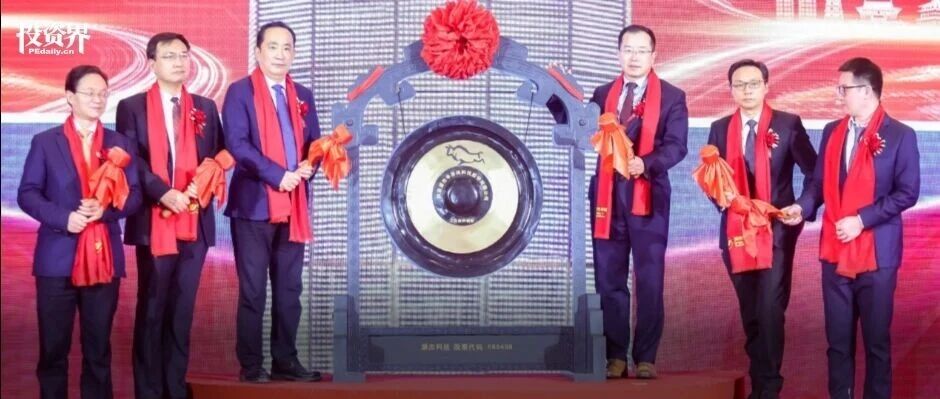
Core Viewpoint - The article highlights the remarkable rise of Yuanjie Technology, which has seen its stock price surge nearly 770% over the past year, making it the first company in the A-share market to reach a stock price of 1000 yuan, with a market capitalization of 958 billion yuan [2][8]. Company Background - Yuanjie Technology was founded by Zhang Xingang, a Tsinghua University graduate, who returned to China in 2013 to break the foreign monopoly in the optical chip market [3][5]. - The company was established in Xi'an and has received significant support from local state-owned enterprises, contributing to its rapid growth [2][13]. Financial Performance - In 2025, Yuanjie Technology reported a net profit of 1.06 billion yuan for the first three quarters, a staggering increase of 19,348.65% year-on-year, and an annual revenue of 6.01 billion yuan, reflecting a year-on-year growth of 138.50% [7][8]. - The company successfully turned around its financial performance after facing challenges in the previous years, including a loss in 2024 due to market conditions [7][8]. Market Position and Future Plans - Yuanjie Technology is positioned as a leader in the optical chip industry, which is critical for AI data centers, and is planning to issue H-shares to enhance its international financing capabilities [6][8]. - The company aims to capitalize on the growing demand for AI computing power, which has significantly boosted the optical module market [15][16]. Investment Landscape - The article discusses the involvement of various investors, including local state-owned funds, which have significantly benefited from their investments in Yuanjie Technology [13][14]. - The company has undergone multiple rounds of financing, with notable investments from firms like Huawei and other private equity funds, indicating strong investor interest [12][14].
海外科技观点更新:复盘英伟达GTC会后行情,对2026年AI算力投资布局有何启示?-20260322
EBSCN· 2026-03-22 07:56
Investment Rating - The report maintains a "Buy" rating for the industry, indicating an expected investment return exceeding the market benchmark by over 15% in the next 6-12 months [16] Core Insights - The NVIDIA GTC conference is pivotal in defining the technological direction of the AI industry, initiating a new growth cycle for the industry chain [1] - The performance of key stocks in the AI computing sector, such as NVIDIA and TSMC, shows a pattern of short-term fluctuations followed by long-term growth driven by strong fundamentals [5][6] - The demand for copper connections and liquid cooling systems is expected to surge due to NVIDIA's NVL72 cabinet, benefiting related industry stocks significantly [8] Summary by Sections AI Computing Platforms - The introduction of the Blackwell and NVL72 systems in 2024 is set to redefine the market, with significant performance improvements and cost reductions [2] - The NVL72 system integrates advanced technologies, including liquid cooling and high-speed copper interconnects, establishing a new industry paradigm [2] High-Speed Interconnects and Network Architecture - The NVLink5 and X800 switch systems will enhance bandwidth capabilities, pushing the industry towards higher performance standards [3] - The ongoing competition between copper and optical technologies is highlighted, with significant advancements expected in optical interconnects by 2026 [3] Stock Performance Analysis - Post-GTC stock performance shows a clear trend: short-term corrections followed by long-term gains, particularly in the computing and optical communication sectors [4][5] - Key stocks like NVIDIA and TSMC have shown substantial price increases over six months, correlating with strong order and delivery performance [5][6] Sector-Specific Insights - The storage and server sectors exhibit mixed performance, with SK Hynix and Micron showing significant growth in 2025 due to rising demand for high-density memory products [9][10] - The optical communication sector is expected to benefit from increased demand for high-bandwidth, low-latency connections, with several companies reporting substantial profit growth [11][12] Recommendations - The report suggests focusing on companies within the optical interconnect industry, such as Lumentum, Coherent, and others, which are poised for growth due to the expanding data center applications [14]
光芯片和光材料的供需双振
KAIYUAN SECURITIES· 2026-03-22 00:50
Investment Rating - The industry investment rating is "Overweight" [1][12] Core Insights - The report emphasizes the expansion plans announced by major optical chip manufacturers at the Optical Fiber Communication Conference (OFC), indicating a high demand for optical chips driven by the growth of AI computing clusters [4] - Lumentum's financial performance exceeded expectations, with a revenue of $666 million for FY2026Q2, representing a year-on-year growth of 65.5%, and a significant improvement in profit margins [5] - The report highlights the dual-track development of traditional solutions and silicon photonics in the optical chip industry, suggesting a continuous increase in demand for optical chips [6] Summary by Sections Industry Overview - The optical chip industry is experiencing a high demand cycle, with major companies like Lumentum and Coherent planning significant capacity expansions to meet the needs of AI infrastructure [4] Company Performance - Lumentum's backlog of orders exceeds $400 million, with expectations for revenue growth to surpass $1 billion by 2027, driven by AI demand [5] - Coherent also anticipates a "double-then-double" growth in InP capacity between 2026 and 2027, indicating strong future prospects [4] Market Trends - The report notes that the optical chip market is transitioning from single-material competition to a collaborative growth phase involving multiple material systems, including InP, silicon, and thin-film lithium niobate (TFLN) [7] - The demand for EML, VCSEL, and CW laser diodes is expected to rise as optical networks continue to upgrade [6] Investment Opportunities - Recommended investment targets in optical chips include companies like Zhongji Xuchuang, Xinyi Technology, and Huagong Technology, while beneficiaries in optical materials include Tiantong Co. and Fuzhijing Technology [8]
光互联时代,要来了?
半导体行业观察· 2026-03-21 02:53
Core Insights - The OFC 2026 conference highlighted AI as a dominant theme in the optical networking industry, indicating a shift in focus on how networks are built and who constructs them [2] - The terms scale-up, scale-out, and scale-across have emerged as key concepts in the current discussions around optical technologies within data centers [2] - Major companies like Ciena, Cisco, and Nokia showcased innovations aimed at enhancing optical network capabilities, with a focus on reducing power consumption and space utilization [3] Group 1 - The debate on bandwidth needs has shifted from speculation to concrete developments, as evidenced by NVIDIA's $4 billion strategic investment in Lumentum and Coherent [4] - Ciena's CEO emphasized the trend of "opticalization," marking a transition from electrical to optical interconnections in data centers [4] - NVIDIA's CEO highlighted a significant increase in computational demand, estimating a growth of approximately one million times over the past two years due to the combined effects of model capability improvements and usage surges [4] Group 2 - The impact of AI on optical networks is significant but still being clarified, particularly regarding the shift from centralized training to decentralized inference that creates broader network demand [5] - The current landscape for traditional telecom operators is challenging, as they navigate between existing customer bases and the need for infrastructure investments that are not yet fully justified [6] - The innovation agenda is increasingly being set by large cloud providers and AI companies, leaving traditional operators in a passive role as they observe the evolving dynamics of the industry [6]
A股失守4000点,机构称或已接近底部
21世纪经济报道· 2026-03-21 02:29
Core Viewpoint - The article discusses the recent volatility in the A-share market, highlighting the divergence between the performance of the Shanghai Composite Index and the ChiNext Index, as well as the impact of external geopolitical risks and regulatory changes on market sentiment and stock performance [1][3][8]. External Risks - The recent market downturn is attributed to the concentration of external risks, particularly the escalation of the Middle East conflict, which has led to increased oil prices and concerns over "stagflation," thereby suppressing risk appetite [3][4]. - The Federal Reserve's hawkish signals have delayed expectations for interest rate cuts, further impacting global equity assets, especially high-valuation tech growth stocks [3][4]. - Concerns about rising oil prices transmitting inflation globally have also contributed to a decrease in risk appetite for equity assets [3][4]. Regulatory Impact - A significant factor in the recent market decline is the upcoming implementation of the second-generation solvency regulatory requirements for insurance companies, which is set to take effect on March 31, 2026. This has led to increased selling pressure from smaller insurance firms, impacting their equity positions [5][6]. - Some analysts argue that while insurance companies' selling has affected the market, it is not the primary cause of the downturn, which is more influenced by geopolitical tensions and uncertainty regarding corporate earnings [5][6]. Market Structure and Investment Strategies - The market is experiencing extreme structural differentiation, with certain sectors like solar energy and CPO (compute power optimization) showing resilience while the majority of stocks decline [1][10]. - Investment strategies are shifting towards defensive positions, with a focus on sectors that offer stable dividends and growth potential, such as traditional low-volatility dividend stocks, technology hardware with improving fundamentals, and cyclical sectors driven by safe-haven demand [11][12]. - Institutions are emphasizing the importance of selecting high-quality stocks in sectors with clear growth trajectories, rather than pursuing broad market rallies as seen in previous years [10][11]. Market Outlook - Despite the current volatility, many institutions believe that the A-share market's long-term trend remains driven by fundamentals and policy support, with short-term fluctuations providing opportunities for structural adjustments and rebalancing [12][13]. - The People's Bank of China has signaled a commitment to maintaining market stability, which could help bolster investor confidence and support the market in the face of external pressures [13].

见证历史,A股新晋千元算力牛股,直逼茅台!1年大涨11倍,净利飙升32倍
21世纪经济报道· 2026-03-20 13:36
Group 1 - The core focus of the article is on the significant rise of Yuanjie Technology (688498.SH), which saw its stock price surge to 1114.99 yuan, marking it as the second highest-priced stock in A-shares, only behind Kweichow Moutai [1][4] - Yuanjie Technology's stock has increased by 1167% from its low of 87.99 yuan in April last year, making it the second thousand-yuan stock on the Sci-Tech Innovation Board and the eighth in A-share history [4][6] - The surge in Yuanjie Technology's stock is attributed to the growing demand for AI computing power, positioning optical chips as essential components in this market [6][7] Group 2 - The company reported a revenue of 601 million yuan for 2025, a year-on-year increase of 138.5%, and a net profit of 191 million yuan, up 3212.6% [6] - The increase in revenue is driven by the growth of the data center business, which has a higher gross margin compared to other products [6] - Recent announcements from major cloud service providers like Alibaba Cloud and Baidu Smart Cloud regarding price hikes for computing power have further fueled interest in Yuanjie Technology's offerings [6] Group 3 - The article highlights a broader market trend where leading companies in the optical module sector, such as Xinyi Technology and Zhongji Xuchuang, also experienced stock price increases on the same day [4] - The GTC and OFC conferences have contributed to the rising interest in the CPO (Chip-on-Board) concept, which is expected to enhance the profitability of cloud service providers [7] - The overall market context shows a mixed performance, with sectors like photovoltaic and energy storage stocks performing well despite broader market declines [9][10]


黄仁勋掀开算力大战的“隐形王牌”
财富FORTUNE· 2026-03-20 13:04
Core Viewpoint - The article highlights the emergence of hollow-core optical fiber technology by Yangtze Optical Fibre and Cable (YOFC) as a significant advancement in the AI computing infrastructure, positioning it as a key player in the industry [1][3]. Group 1: Technological Advancements - YOFC's hollow-core optical fiber has achieved a global minimum attenuation of 0.04 dB/km, which is a 31% reduction in latency and a 47% increase in transmission speed compared to traditional solid-core fibers [3][4]. - The technology allows light to transmit through air rather than glass, overcoming material limitations and offering advantages such as low latency, wide spectrum, and low loss [4]. - YOFC has reached a preform drawing length of 91.2 kilometers, laying the groundwork for large-scale commercialization [4]. Group 2: Market Dynamics - The hollow-core fiber technology is gaining attention from major players, with Amazon Web Services (AWS) deploying it to connect ten data centers, and Microsoft planning to deploy 15,000 kilometers of hollow-core fiber in its Azure global network [6][5]. - The optical fiber market has seen a surge, with prices for mainstream single-mode fibers more than doubling, reaching a seven-year high, driven by optimism for optical communication as a replacement for copper cables [6]. Group 3: Financial Performance - YOFC's revenue for the first three quarters of 2025 was 10.275 billion yuan, an 18.18% year-on-year increase, while net profit decreased by 18.02% to 470 million yuan due to profit lag from previous low-price orders [8]. - The company is still in the early stages of hollow-core fiber commercialization, which has not yet significantly impacted its financial performance [8]. Group 4: Strategic Initiatives - YOFC is pursuing its "INFINITE-2030 plan" to promote international standards and collaborate with global telecom operators and cloud service providers on over 50 commercial and pilot projects for hollow-core fiber [8]. - The company aims to balance its technological advancements with market expectations, navigating the challenges of the industry cycle while striving for quality improvements [7][8].