
医疗健康

Search documents
OpenAI同意以约1亿美元收购一款人工智能医疗健康应用
Xin Lang Cai Jing· 2026-01-13 08:06
Core Insights - OpenAI has agreed to acquire the AI healthcare application Torch for approximately $100 million, with an initial payment of $60 million and the remainder in equity to retain key employees [1][4] - The acquisition aims to enhance OpenAI's plans to introduce a personalized health assistant within ChatGPT, capable of analyzing medical records and providing health advice [1][4] - Torch's application integrates health data from various sources, including medical systems and fitness tracking apps, and is currently available to a select group of private users [1][4] Company Details - All four employees of Torch, including CEO Ilya Abyzov, plan to join OpenAI following the acquisition [2][5] - Torch was founded last year and had previously launched a health clinic operator, Forward, which ceased operations at the end of 2024 [2][5] - The company has received early-stage funding from investors, including Adrian Aoun, a co-founder of Torch and former CEO of Forward [2][5] Industry Context - The acquisition occurs within a growing trend of AI startups leveraging chatbot tools to address public health inquiries and long-standing issues in the healthcare sector, such as the difficulty in consolidating personal health histories [6] - OpenAI recently launched a health feature in ChatGPT, allowing users to consult health issues by integrating personal medical records and data from fitness applications [6] - The addition of the Torch team is expected to provide OpenAI with expertise in integrating and accurately assessing fragmented healthcare information [3][6]
利好来了!刚刚,上海重大发布!28条举措,涉及消费
券商中国· 2026-01-13 07:19
Core Viewpoint - The article discusses the recent policy measures introduced by the Shanghai Municipal Government aimed at enhancing service quality and boosting consumption through a series of initiatives that focus on innovation, financial support, and infrastructure development [1][3][4]. Group 1: Policy Measures Overview - The Shanghai Municipal Government has issued 28 specific measures to promote the quality and efficiency of the service industry and stimulate consumption [1]. - The measures emphasize the importance of quality supply, new growth areas, and addressing weak links in the service sector [1]. Group 2: Financial Support and Innovation - The measures include optimizing auto loan processes, relaxing application conditions, and promoting diverse credit products in large consumption areas like green smart home and home decoration [3]. - Financial institutions are encouraged to innovate consumer financial services tailored to new consumption trends, including holiday and night economies [3]. Group 3: Insurance and Infrastructure - The policy supports innovation in insurance products, enhancing coverage for specific groups and small businesses in the service sector [4]. - There is a focus on strengthening financial support for consumer infrastructure projects, including the issuance of real estate investment trusts (REITs) and local government bonds [4]. Group 4: Cultural and Sports Sector Development - The measures aim to invigorate the cultural and sports sectors by supporting high-level exhibitions and events, as well as enhancing the commercial viability of public sports venues [7]. - There is a push to develop a globally influential esports brand and support for original gaming IPs and high-profile gaming events [8]. Group 5: Health and Wellness Services - The initiatives encourage the development of high-end medical services and diverse health insurance products, promoting international medical services and medical tourism [8].


外资银行集体唱多中国经济:科技医疗成2026投资新宠
Jin Rong Jie· 2026-01-13 00:28
Group 1 - Major foreign banks have released their 2026 economic outlook reports, showing an optimistic view on China's economic prospects, particularly in the technology and healthcare sectors [1] - HSBC forecasts stable global economic growth in 2026, with a potential slowdown in trade export growth, but strong investment in artificial intelligence will support investment and trade growth in the next two years [1] - Deutsche Bank expresses confidence in China's economic outlook, highlighting 2025 as a crucial year for reshaping long-term economic prospects and showcasing technological strength [1] Group 2 - DBS Bank emphasizes the importance of investing in key industries and quality core assets, with technology and healthcare remaining focal points for asset allocation in 2026 [2] - HSBC highlights that innovation-driven growth in China will accelerate in 2025, particularly in AI breakthroughs and innovative drug developments, making innovation a core advantage for attracting foreign investment [2] - Standard Chartered Bank plans to overweight Chinese stocks, focusing on technology, healthcare, and telecommunications sectors in their asset allocation strategy [2]
锐财经丨服务业扩大开放“路线图”上新
Ren Min Ri Bao Hai Wai Ban· 2026-01-12 03:44
Core Viewpoint - The expansion of China's service industry opening-up pilot program is accelerating, with the recent issuance of a roadmap for nine cities, indicating a significant push towards enhancing service sector openness and reform [1][2]. Group 1: Pilot Program Achievements - The national service industry opening-up pilot program has shown remarkable results since its initiation in 2015, with 412.6 billion USD in foreign investment absorbed by 11 provinces and cities in 2024, accounting for 50.2% of the national total in the service sector [2]. - The new pilot cities are expected to promote service industry openness, with the central economic work conference emphasizing the need for orderly expansion of self-initiated openness in the service sector [2]. Group 2: Differentiated Exploration - The pilot cities are encouraged to develop tailored tasks based on their unique resources and industrial strengths, fostering innovation and complementary achievements [3]. - For instance, Ningbo is focusing on technology services and digital trade, while Dalian aims to leverage its position as an international shipping center to support the revitalization of Northeast China [3][4]. Group 3: Project Implementation for Regional Development - The pilot program aims to facilitate regional development through the implementation of specific projects, with the Ministry of Commerce emphasizing the importance of practical execution and coordination among departments [6][7]. - The Ministry will enhance communication with business entities and conduct evaluations of the pilot program's effectiveness to promote high-quality experiences and innovations [7].
大连等9个城市试点任务明确——服务业扩大开放“路线图”上新
Ren Min Ri Bao· 2026-01-12 03:29
Core Viewpoint - The expansion of China's service industry opening-up pilot program is accelerating, with the recent issuance of a roadmap for nine cities, indicating a significant push towards enhancing service sector openness and reform [1][2]. Group 1: Pilot Program Achievements - The national service industry opening-up pilot program has shown significant results since its initiation in 2015, with 412.6 billion USD in foreign investment absorbed by 11 pilot cities in 2024, accounting for 50.2% of the national total in the service sector [2]. - The new pilot cities, including Dalian, Ningbo, and others, are expected to promote self-directed opening in the service sector, leveraging their unique advantages and focusing on key areas such as telecommunications, healthcare, and finance [2][3]. Group 2: Differentiated Exploration - The pilot cities are encouraged to develop tailored tasks based on their unique resources and industrial foundations, promoting innovation and complementary achievements across regions [3]. - For instance, Ningbo is focusing on technology services and international shipping, while Dalian aims to enhance its role as an international shipping center in Northeast Asia [3][4]. Group 3: Project Implementation for Regional Development - The Ministry of Commerce plans to deepen the service industry opening-up pilot program, coordinating with relevant departments to ensure effective implementation of the pilot tasks and promote project landing to stimulate regional development [6][7]. - The program aims to enhance service consumption, moving from physical goods to services, and to cultivate new development momentum while shaping international competitive advantages [6].
服务业扩大开放“路线图”上新(锐财经)
Ren Min Ri Bao Hai Wai Ban· 2026-01-11 23:00
Core Insights - The article discusses the acceleration of service industry opening in China, particularly through the implementation of a comprehensive pilot program in nine cities, including Dalian, Ningbo, and Suzhou, aimed at enhancing foreign investment and promoting various service sectors [4][5][9]. Group 1: Pilot Program Overview - The pilot program for expanding service industry openness has been significantly effective since its initiation in 2015, with 412.6 billion USD in foreign investment absorbed by 11 provinces and cities in 2024, accounting for 50.2% of the national total in the service sector [5][9]. - The latest pilot program, outlined by the Ministry of Commerce, aims to further enhance the role of the nine cities by implementing common tasks and encouraging tailored initiatives based on local advantages [5][6]. Group 2: City-Specific Initiatives - Each of the nine pilot cities is encouraged to develop unique tasks that leverage their specific resources and industrial strengths, focusing on key service areas such as telecommunications, healthcare, and finance [6][8]. - For instance, Suzhou will explore the import of biomedical research materials, while Shenzhen will optimize its free trade account functions [8][9]. Group 3: Expected Outcomes and Future Directions - The shift in consumer behavior from goods to services necessitates the expansion of service industry openness to cultivate new growth drivers and enhance international competitiveness [9][10]. - The Ministry of Commerce plans to strengthen communication with businesses, provide targeted policy guidance, and evaluate the effectiveness of the pilot programs to ensure successful implementation and regional development [10].
蚂蚁阿福的火,ChatGPT Health的势,都指向讯飞医疗的“慢功夫”
Xin Lang Cai Jing· 2026-01-11 10:23
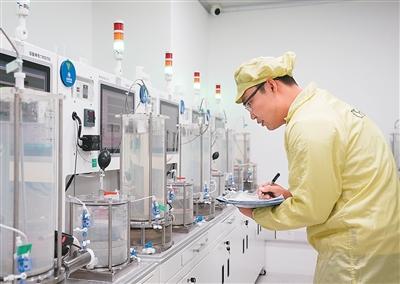
Core Insights - The Hong Kong stock market is experiencing a surge in AI company listings, with notable examples including Zhiyu and MiniMax, which have seen record oversubscription rates and significant market valuations [1][2] - The competitive landscape for medical AI has evolved, with major players like Ant Group's Aifu and OpenAI's ChatGPT Health entering the market, indicating a shift towards health management as a high-frequency AI usage scenario [2][5] - The focus of competition has shifted from whether AI can perform tasks to who can deliver deeper, longer-lasting, and verifiable solutions in the medical AI space [7][20] Market Dynamics - The entry of major tech companies into the health AI sector is driven by the value of establishing a vertical entry point in a competitive AI landscape, where health data integration presents a unique opportunity [8][9] - The medical health sector is characterized by a data flywheel effect, where collaboration among government, institutions, and users can create a sustainable business model [9] - The competition is not just about functionality but also about building trust and compliance in data handling, which is crucial for long-term success [17] Company Strategies - iFlytek Medical has taken a different approach by focusing on the grassroots medical system, emphasizing compliance, delivery, and scalability over creating a viral consumer product [12][14] - The company has secured a significant project with the National AI Application Pilot Base, which positions it to define standards and operational frameworks in the medical AI sector [14][20] - iFlytek Medical's strategy involves enhancing its health management capabilities while maintaining a focus on professional boundaries and sustainability, contrasting with the more rapid growth strategies of its competitors [15][18] Competitive Landscape - The competition between iFlytek Medical and Ant Group's Aifu represents two distinct approaches: an "entry-type" model focused on consumer engagement versus a "system-type" model aimed at embedding AI within existing medical frameworks [15][20] - The future of competition will hinge on who can establish a true data feedback loop and integrate AI capabilities into real-world medical processes, ensuring compliance and operational sustainability [16][18] - The market is witnessing a shift in value perception, where sustainable revenue structures and replicable delivery capabilities are becoming more critical than mere product popularity [19][20]

摩根大通减持阿里健康约2346.78万股 每股作价约5.5港元
Zhi Tong Cai Jing· 2026-01-09 11:59
香港联交所最新资料显示,1月6日,摩根大通减持阿里健康(00241)2346.7799万股,每股作价5.5024港 元,总金额约为1.29亿港元。减持后最新持股数目约12.91亿股,最新持股比例为7.97%。 ...

美丽田园医疗健康(02373)1月8日斥资45.38万港元回购1.75万股
智通财经网· 2026-01-08 11:16
智通财经APP讯,美丽田园医疗健康(02373)发布公告,该公司于2026年1月8日斥资45.38万港元回购1.75 万股股份,每股回购价格为25.44-26港元。 ...
1月8日医疗健康(980016)指数涨0.03%,成份股科伦药业(002422)领涨
Sou Hu Cai Jing· 2026-01-08 10:40
Group 1 - The Medical Health Index (980016) closed at 6402.95 points on January 8, with a slight increase of 0.03% and a trading volume of 27.797 billion yuan, resulting in a turnover rate of 0.92% [1] - Among the constituent stocks of the index, 21 stocks rose, with Kelun Pharmaceutical leading the gains at 6.19%, while 25 stocks declined, with Aier Eye Hospital leading the losses at 3.87% [1] Group 2 - The net outflow of main funds from the Medical Health Index constituent stocks totaled 762 million yuan, while retail investors saw a net inflow of 176 million yuan [2] - Over the past 10 days, there has been an adjustment in the constituent stocks of the Medical Health Index, with one stock added and one stock removed [2]

