
海洋装备

Search documents
青岛国信集团正式成立海洋科创中心
Zhong Guo Jin Rong Xin Xi Wang· 2025-08-28 12:15
Core Points - The Qingdao Marine Equipment Innovation Development Alliance was established to promote collaboration in the marine equipment sector, with a focus on integrating industry, academia, and research [1][3] - The Qingdao Guoxin Group has set up a Marine Science and Technology Innovation Center to drive innovation and commercialization in marine equipment and related fields [3][4] Group 1: Alliance Formation and Objectives - The alliance aims to align with Qingdao's goal of becoming a modern marine economy hub and to accelerate the development of a leading modern marine city [3] - Qingdao Guoxin Group has developed a "4+4+2" modern marine industry system and a "one-two-three-four-five" development strategy to guide its initiatives [3] Group 2: Innovation and Collaboration - The Marine Science and Technology Innovation Center will focus on marine equipment and extend into marine electronic information, addressing challenges in the commercialization of research outcomes [3][4] - The alliance will facilitate close cooperation among various stakeholders, enhancing the development of the marine equipment industry through shared resources and complementary advantages [4] Group 3: Future Directions - Qingdao Guoxin Group plans to leverage the advantages of the Qingdao Marine Group and the Marine Science and Technology Innovation Center to accelerate the application of technology and the industrialization of scientific achievements in the marine equipment sector [4]

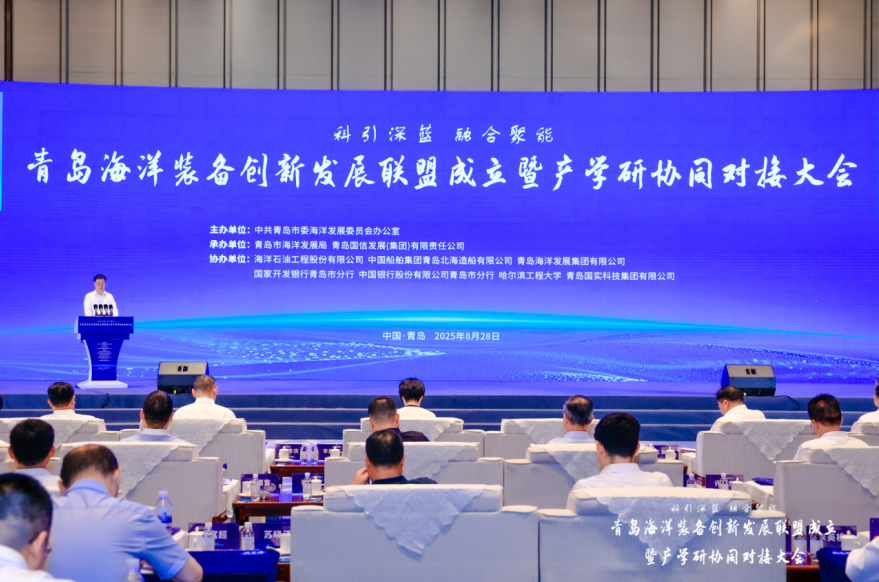
山东青岛成立海洋装备创新发展联盟提升产业整体竞争力
Zhong Guo Xin Wen Wang· 2025-08-28 12:05
Core Points - The Qingdao Marine Equipment Innovation Development Alliance has been officially established to enhance the competitiveness of the marine equipment industry through collaborative efforts in research, development, and innovation [1][3][4] Group 1: Alliance Structure and Objectives - The alliance aims to create a long-term mechanism to drive the upgrade of the marine equipment industry ecosystem [3] - It will establish a regular communication and interaction platform to facilitate the flow of information and efficient resource integration among enterprises, universities, and research institutions [3][4] - The alliance will focus on key issues in the marine equipment sector, promoting collaborative innovation to address industry challenges and enhance core competitiveness [3][4] Group 2: Member Composition and Governance - The first batch of alliance members includes 151 entities, comprising 19 marine shipbuilding units, 16 offshore engineering equipment units, 26 universities and research institutions, and 48 supporting enterprises [4] - The governance structure includes 12 units as chairpersons and 27 units as vice-chairpersons, with Qingdao Guoxin Group serving as the permanent secretariat [4] Group 3: Innovation and Technology Transfer - The alliance will improve the service system for the transformation of scientific and technological achievements, facilitating the transition of innovations from laboratories to the market [3][4] - The establishment of the Marine Science and Technology Innovation Center aims to address bottlenecks in the transformation of research outcomes [4] Group 4: Regional Significance - The establishment of the alliance is a significant step for Qingdao in building a modern marine industry system and promoting self-reliance in marine technology [5] - The event attracted over 240 organizations and more than 460 guests from various sectors, highlighting the collaborative spirit of the initiative [5]

就业援藏诚意满满 25家沪上重点企业带去600余高质量多层次岗位 为西藏学子量身打造“就业超市”
Jie Fang Ri Bao· 2025-08-28 01:42
Group 1 - The "2025 Employment Aid to Tibet and High-Quality Employment Recruitment Event" was held in Shigatse and Yadong, showcasing the importance of employment aid as part of East-West cooperation [1] - The event featured 25 key enterprises from Shanghai, including Zhenhua Heavy Industries, Haili Electric, and Meiwai Technology, offering over 600 high-quality job positions across various industries such as marine equipment, biomedicine, and intelligent manufacturing [1][2] - The job positions catered to a diverse range of talents, including research engineers and management trainees for graduates, as well as skilled positions like logistics operators and nursing caregivers, emphasizing the adaptability and competitive salaries of these roles [1] Group 2 - The recruitment event attracted a large number of graduates from universities and vocational schools, as well as unemployed youth and farmers seeking better opportunities, facilitating direct interactions between Tibetan youth and prospective employers [2] - Companies like Shanghai Zhenhua Heavy Industries highlighted the high technical requirements and competitive salaries of their core skill positions, with monthly wages for welding positions reaching over 10,000 yuan [2] - The Shanghai Employment Promotion Center plans to deepen cooperation between the two regions and explore more diversified employment service models, aiming to bring more quality job resources from Shanghai to Tibet [3]
含新量撬动含金量 读懂江苏经济增量背后的“大”与“强”
Yang Shi Xin Wen Ke Hu Duan· 2025-08-27 07:51
Economic Growth and Structure - Jiangsu's economic total exceeded 6.69 trillion yuan in the first half of the year, with a year-on-year growth of 5.7%, contributing an economic increment of 254.38 billion yuan, ranking first among all provinces in China [1] - The added value of high-tech industries in Jiangsu grew by 9.2%, accounting for 51.8% of the industrial output, indicating that half of the industrial value comes from high-tech sectors [1] - Key high-tech industries such as electronics, aerospace, and computers saw growth rates surpassing 10%, outpacing the national average [1] Technological Innovation Platforms - Jiangsu is focusing on major technological innovation platforms to drive industrial development and technological breakthroughs [2] - The "Future" ship, a deep-sea green intelligent technology test vessel, is designed for modular assembly, allowing various new research equipment to be tested in real marine environments [2][4] - The ship serves multiple roles, including as a mobile laboratory for oceanographic research and a support vessel for deep-sea equipment testing [7] New Industrial Developments - Suqian in Northern Jiangsu has seen a 20% annual growth in high-tech enterprises, marking its emergence in the national innovation landscape [10] - The local laser equipment manufacturing company has reported a 50% increase in overseas clients, with international sales accounting for over 20% of its total revenue [13] - The laser industry in Suqian has developed a complete supply chain, enabling one-stop solutions for production and sales within the industrial park [15] Consumer Market Growth - Jiangsu's social retail sales reached 2.3949 trillion yuan in the first half of the year, with a year-on-year growth of 5%, supported by vibrant sports events and cultural activities [28] - The popularity of water sports in Suzhou has led to a 50% increase in the paddleboard market, indicating a growing trend in sports consumption [24] - The demand for artificial turf has surged, with orders increasing by 30% compared to previous years, driven by the rising popularity of football events [30] Conclusion - Jiangsu's economic growth is underpinned by new engines of innovation, new industrial pathways, and new consumer scenarios, positioning the province for continued high-quality development [31]
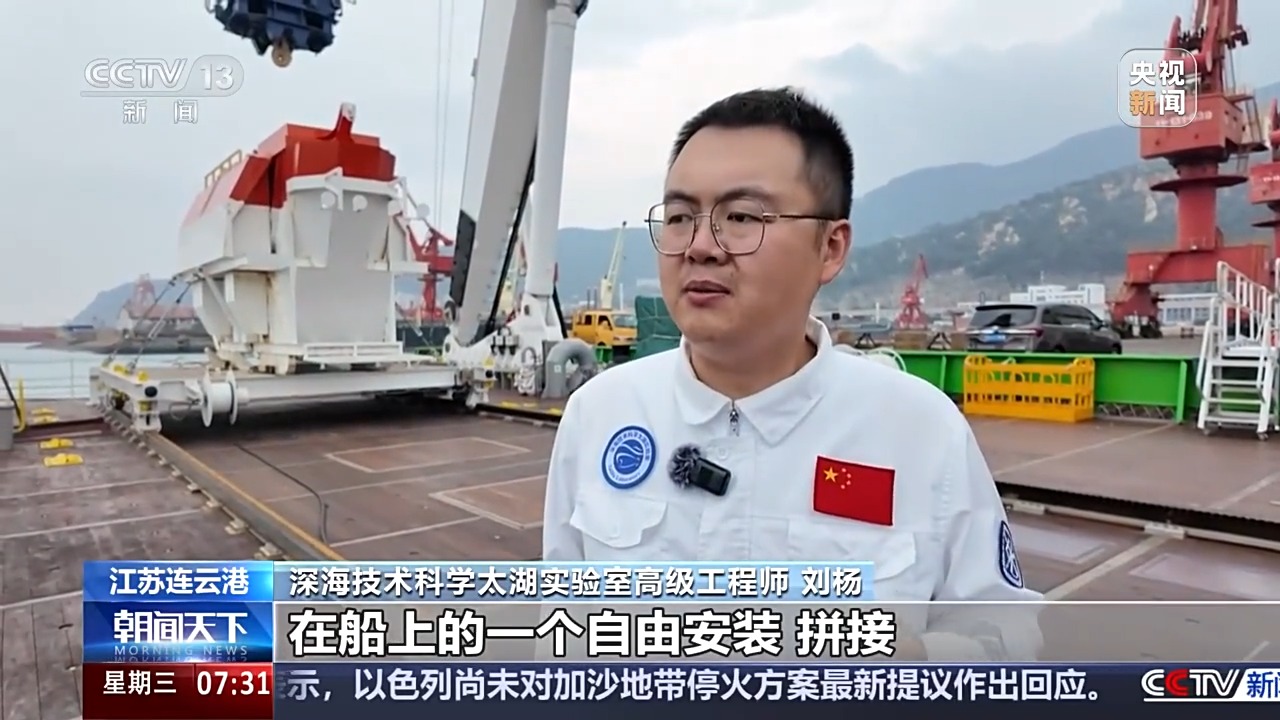
“新引擎”轰鸣、“新赛道”拓宽、“新场景”涌现 从“新”透视经济发展劲头
Yang Shi Wang· 2025-08-27 06:38
Economic Growth - Jiangsu's economic total surpassed 6.69 trillion yuan in the first half of 2025, with a year-on-year growth of 5.7%, contributing an economic increment of 254.38 billion yuan, ranking first among all provinces in China [3] - The industrial added value of high-tech industries in Jiangsu grew by 9.2%, accounting for 51.8% of the total industrial output, indicating that half of the industrial output comes from high-tech sectors [5] Technological Innovation - Jiangsu's artificial intelligence-related industry has exceeded 400 billion yuan, with the industrial software industry chain holding over 20% of the national market share [7] - The province is focusing on major technological innovation platforms to enhance the integration of technological and industrial innovation [10] New Industrial Developments - Jiangsu has established 44 national key laboratories to accelerate breakthroughs in critical common technologies, and is pairing 18 high-tech zones with 37 universities to foster deep integration of technology and industry [18] - The number of high-tech enterprises in Suqian, Jiangsu, has been growing at an annual rate of 20%, showcasing the region's exploration and layout in emerging industries [20] Consumer Market Growth - In the first half of 2025, Jiangsu's total retail sales of consumer goods reached 2.3949 trillion yuan, with a year-on-year growth of 5%, significantly supporting economic growth [24] - The popularity of sports events and cultural tourism activities has stimulated growth in the catering and retail sectors [24][34]
中科海讯涨停封板,海洋经济+深海科技+军工概念叠加
Sou Hu Cai Jing· 2025-08-18 04:00
Group 1 - Zhongke Haixun's stock price increased by 19.99%, reaching 54.56 yuan, with a total market capitalization of 6.441 billion yuan and a trading volume of 106 million yuan, resulting in a turnover rate of 1.71% [1] Group 2 - Zhongke Haixun has been newly included in the "Marine Economy" concept sector, with its sonar technology gaining market attention due to its core applications in national marine equipment and deep-sea exploration, directly linking marine economy with national defense and military industry themes [2] - The recent fluctuations in the deep-sea technology concept sector have attracted capital focus, with Zhongke Haixun benefiting as a core supplier of underwater target detection and communication technology amid industry technological upgrades and enhanced strategic positioning [2] - Zhongke Haixun is primarily involved in the marine economy, deep-sea technology, national defense and military industry, marine engineering equipment, and special electronic information sectors [2]

深圳的“海上科研母港”来了 市海洋科技创新测试平台揭牌
Shen Zhen Shang Bao· 2025-08-16 14:33
Core Viewpoint - The establishment of the Shenzhen Marine Technology Innovation Testing Platform marks a significant step in integrating research testing, achievement transformation, and ecological protection in marine technology, aimed at enhancing the development of the marine industry in Dapeng New District [1][2]. Group 1: Platform Overview - The platform is located in the Shek Ha Bay area and is part of the Dapeng Bay National Marine Ranch Demonstration Zone, designed to be an open sea testing area for marine research enterprises across the country [1]. - It features a stable testing environment with comprehensive facilities, including a popular science education area, multifunctional platform, and coral area, capable of testing underwater and surface instruments [2]. Group 2: Economic and Innovation Impact - The platform is expected to help enterprises reduce costs and enhance efficiency, accelerate innovation, and build a complete innovation ecosystem from basic research to technology transformation and talent support [2]. - It aims to promote deep integration of industry, academia, and research, creating a strong collaborative framework among research institutions, enterprises, and government [2]. Group 3: Future Development Plans - The platform will serve as a pivot to continuously optimize the marine innovation ecosystem, attracting high-end talent and projects, and focusing on the construction of a "dual platform" [3]. - Plans include establishing a marine economic exchange mechanism and creating a technology transformation service platform to ensure the effective transition of original research outcomes into practical applications [3].
“十五五”规划系列报告(五):从新兴支柱产业看“十五五”
Minsheng Securities· 2025-08-14 06:23
Group 1: Policy Direction - The political bureau meetings from April to July shifted focus towards cultivating "internationally competitive" emerging pillar industries, aligning with the dual core demands of the "14th Five-Year Plan" for technological self-reliance and global economic engagement[3] - Emerging pillar industries are expected to play a crucial role in addressing both domestic challenges and international competition, becoming a significant focus in the "15th Five-Year Plan"[3] - The "14th Five-Year Plan" established a precedent for strategic emerging industries, emphasizing the need to bridge gaps in key sectors while fostering new industries[4] Group 2: Historical Context and Trends - Historical analysis from the "12th" to "15th Five-Year Plans" reveals two key trends: continuous investment in critical areas to reduce gaps and proactive positioning in emerging industries to lead global technological innovation[12] - The "14th Five-Year Plan" continued this trend by deploying strategic emerging industries and future industries, focusing on both "bridging gaps" and "nurturing new growth"[15] - Key strategic emerging industries identified include biomedicine, new generation information technology, and advanced structural materials, which are crucial for enhancing global competitiveness[15] Group 3: Future Industry Focus - The "15th Five-Year Plan" is anticipated to expand the scope of strategic emerging industries to include deep-sea space development and intelligent connected vehicles, with a significant increase in exploration of future industries[24] - Key areas of focus for the "15th Five-Year Plan" include intelligent robotics, marine economy, deep-sea technology, low-altitude economy, intelligent connected vehicles, brain-like intelligence, 6G, quantum information, hydrogen energy, and gene technology[27][30] - The development of these industries is expected to enhance production efficiency, resource security, and technological advancement across various sectors[27][30] Group 4: Risks and Considerations - Potential risks include inaccuracies or incompleteness in data and information statistics, which may affect the understanding of industry deployment and development during the "15th Five-Year Plan" period[31] - There is a risk that the actual deployment of emerging pillar industries may not align with current expectations, as future policy directions could evolve beyond existing discussions[31] - The pace of deployment for emerging pillar industries during the "15th Five-Year Plan" may fall short of expectations, despite the rising necessity for accelerated development[31]
周乃翔在东营调研时强调 全力稳增长强创新提质效 扎实推动经济社会高质量发展
Da Zhong Ri Bao· 2025-08-13 01:00
Group 1 - The provincial government emphasizes the importance of stabilizing growth, enhancing innovation, and improving quality and efficiency to promote high-quality economic and social development [2][4] - Companies are encouraged to increase R&D investment, improve process levels, and strengthen industry chain cooperation to meet growing market demands [3] - The government is focusing on accelerating project construction in the new energy sector while ensuring quality and safety, particularly in the green lithium battery industry [3] Group 2 - The economic performance in Dongying has shown a steady improvement this year, with a focus on leveraging development opportunities and enhancing internal demand [4] - There is a strong push for building a modern industrial system, deepening reforms, expanding openness, and achieving breakthroughs in green and low-carbon transformation [4] - The government is also addressing the need for effective risk prevention and mitigation in key areas while ensuring the improvement of people's livelihoods [4]
从“帆船之都”到“新质之城”——青岛推进科技创新和产业创新融合发展纪实
Zhong Guo Zheng Quan Bao· 2025-07-31 21:02
Group 1: Economic Transformation - Qingdao has transformed from a traditional manufacturing hub to a "New Quality City," achieving a remarkable leap in the Global Innovation Index from 80th in 2019 to 20th in 2024 globally, and 8th nationally [1][2] - The city's GDP reached 858.73 billion yuan in the first half of 2025, with a year-on-year growth of 5.3% [1] - Qingdao's industrial structure is continuously evolving, with new and emerging industries growing rapidly, showcasing a blend of technological and industrial innovation [1][2] Group 2: Virtual Reality Industry - The Qingdao Virtual Reality Innovation Center, a new landmark, has become a hub for 137 virtual reality companies, including 3 unicorns and 6 national-level specialized enterprises, with the industry scale exceeding 22 billion yuan, growing by 22% [2][3] Group 3: Unicorn Enterprises - Qingdao is home to 9 unicorn companies, ranking second among northern cities after Beijing, indicating its growing status as a technology innovation city [3][4] - Notable unicorns include Weifang Diamond Aircraft Manufacturing Co., which has made significant strides in the low-altitude economy, producing the first domestically manufactured DA50 aircraft [3][4] Group 4: Specialized Small Giants - Qingdao has developed a matrix of specialized small giants in various sectors, including terahertz technology and marine electronics, contributing to the city's innovation ecosystem [4][6] - The number of innovative small and medium-sized enterprises in Qingdao increased by 40.3% year-on-year, with 1,434 new announcements in the first half of the year [6] Group 5: Marine Economy - Qingdao's marine economy is robust, with a marine production value of 551.32 billion yuan in 2024, growing by 6.6%, and the city is a leader in marine high-end talent and technology [7][8] - The city has made significant advancements in deep-sea resource development, exemplified by the "Sea Anemone No. 1," a major offshore oil and gas processing facility [7] Group 6: Industrial Internet - Qingdao aims to become a "World Industrial Internet Capital," with a focus on integrating traditional industries with new technologies, exemplified by the success of Kaos, a leading industrial internet platform [10][11] - The city has established a comprehensive industrial internet platform system, enhancing the efficiency and competitiveness of its manufacturing sector [10][11] Group 7: Capital Market Support - Qingdao's capital market has seen significant growth, with total deposits and loans exceeding 6 trillion yuan and annual financing surpassing 500 billion yuan by 2024 [13][14] - The city has implemented policies to attract private equity and venture capital, with the number of private equity funds increasing from 414 in 2018 to 2,440 in 2024 [13][14] Group 8: Innovation Ecosystem - Qingdao has a strong innovation ecosystem supported by 29 universities and numerous research institutions, facilitating collaboration between academia and industry [11][12] - The city has seen successful collaborations that have led to breakthroughs in various sectors, including tire manufacturing and high-end lubricants [12][12] Group 9: Future Prospects - Qingdao's focus on "dual new integration" is seen as a key driver for future growth, with the potential to lead in both technology and industrial innovation [19][20] - The city is positioned to leverage its strengths in traditional manufacturing while embracing new technologies to enhance its competitive edge [19][20]

