
纺织服装业

Search documents
纺织服装业:25Q3奢侈品多超预期且北美领增,9月国内纺服社零环比提速
Haitong Securities International· 2025-10-27 06:06
Investment Rating - The report recommends a focus on strong alpha investment opportunities, particularly in quality leaders with marginal performance improvement and light luxury structural demand [2][35]. Core Insights - The luxury goods industry in Q3 2025 exceeded expectations, with North America leading growth and slight improvement in consumption in Mainland China. Major brands like LVMH, Hermès, KERING, and PRADA reported revenue growth of +1.0%, +9.6%, -5.0%, and +8.5% respectively, all improving from Q2 and exceeding consensus expectations [2][35]. - Adidas and Deckers provided annual revenue guidance that fell short of consensus expectations, with Deckers anticipating more tariff impacts in the second half of the fiscal year [3][35]. - In September, China's textile and apparel retail sales grew by 4.7%, showing acceleration from August, while Swiss watch exports improved, indicating a positive trend in consumption [2][5][35]. Summary by Sections Investment Recommendations - Focus on quality leaders with marginal performance improvement, recommending brands such as Shuixing Home Textile, Luolai Lifestyle, HLA Group, and Ellassay Fashion. Additionally, light luxury brands like Prada and Samsonite are highlighted for structural demand opportunities [2][35]. - On the manufacturing side, the report suggests seeking strong alpha manufacturing leaders like Bros Eastern and Anhui Korrun amidst tariff disturbances [2][35]. Industry Performance - The luxury goods sector showed significant improvement in Q3 2025, with most categories and regions experiencing revenue growth. Notably, Miu Miu's revenue surged by 29%, while Hermès and KERING's brands also reported positive growth [2][35]. - The report notes that while there is a slight improvement in consumption in Mainland China, no fundamental changes in the retail environment have been observed [2][35]. Retail and Export Data - In September, China's retail sales of consumer goods and clothing, shoes, hats, and textiles increased by 3.0% and 4.7% year-on-year, respectively, indicating a positive trend in consumer spending [5][17]. - The report highlights that Swiss watch exports to China grew by 17.8% year-on-year, recovering from a low base [5][35].
特步国际(01368):2025Q3经营数据点评:Q3 天气扰动流水表现,维持全年预期
GUOTAI HAITONG SECURITIES· 2025-10-20 09:33
Investment Rating - The report maintains an "Accumulate" rating for the company [6][12]. Core Views - The main brand experienced low single-digit revenue growth in Q3, while the Saucony brand saw revenue growth exceeding 20%. The overall annual expectations remain unchanged [2][12]. - The report anticipates a healthy inventory level, projecting it to decrease to below 2 billion by the end of 2025. The dividend payout ratio is expected to be no less than 50% for the year [12]. Financial Summary - Total revenue is projected to be 14,470 million RMB in 2025, reflecting a 6.6% increase from 2024. Net profit is expected to reach 1,373 million RMB, a 10.8% increase from the previous year [11][12]. - The company is expected to maintain a PE ratio of 10.9 in 2025, with a target price of 8.74 HKD based on a 15X PE for 2026 [12][15]. - The financial ratios indicate a projected ROE of 14.6% and a sales net profit margin of 9.49% for 2025 [13].
山东将搭建适老化产品供需对接平台
Da Zhong Ri Bao· 2025-10-20 00:59
Core Viewpoint - Shandong province is establishing a platform for the supply and demand of elderly-friendly products, aiming to promote the development of innovative products with health monitoring and interaction features, benefiting both the elderly and enterprises [1] Group 1: Industry Development - Shandong is focusing on the development of the elderly products industry, leveraging the growing consumer demand among the elderly [1] - The province is encouraging companies in textiles, furniture, home appliances, medical devices, and robotics to accelerate the development of elderly-friendly products [1] - A total of 119 products have been included in the Ministry of Industry and Information Technology's promotion directory for elderly products, ranking second nationally [1] Group 2: Furniture Manufacturing - The furniture manufacturing industry is a traditional strength of Shandong and is a key area for developing light industry [1] - The provincial government is supporting companies to explore new markets for elderly-friendly products through the "chain leader" mechanism [1] - Notable companies such as Shandong Bangjie and Puzhe Health are accelerating their development in elderly-friendly furniture, with major brands like Haier and Wanhuan also entering this sector [1]

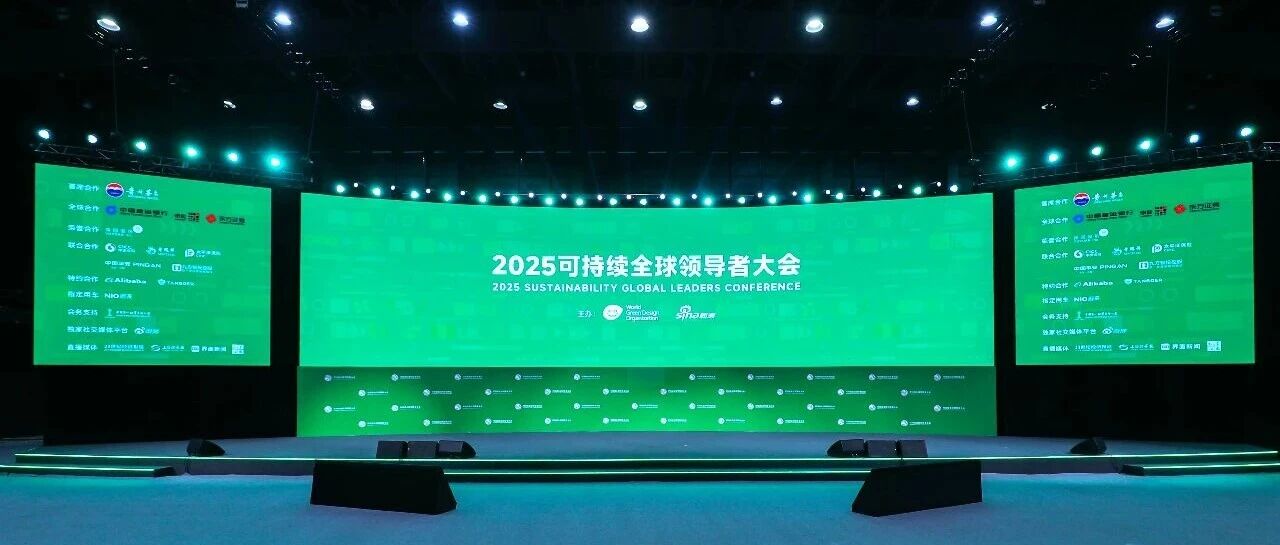
2025可持续全球领导者大会开幕:凯文·凯利现身,数十位企业家共议绿色发展
新浪财经· 2025-10-16 23:39
Core Viewpoint - The 2025 Sustainable Global Leaders Conference, held from October 16 to 18 in Shanghai, focuses on "Facing Challenges Together: Global Action, Innovation, and Sustainable Growth," aiming to explore new paths for sustainable development and inject "Chinese momentum" into global governance [2]. Group 1: Conference Overview - The conference is co-hosted by the World Green Design Organization (WGDO) and Sina Group, with support from the International Financial Reporting Standards Foundation (IFRS Foundation) [3]. - Keynote speakers include prominent figures from various sectors, including finance, academia, and business, discussing sustainable development [2]. Group 2: Sustainable Development Goals - WGDO's mission is to establish green design systems and promote global green transformation to achieve sustainable development [5]. - The conference highlights China's role as a leader in sustainable development, emphasizing the importance of innovation and collaboration [7]. Group 3: Financial Institutions' Role - Financial institutions like China Bank and Bank of Communications are actively participating in carbon market construction and promoting green finance [20][22]. - Shanghai's ESG development is characterized by a high rate of ESG report publication among listed companies, with state-owned enterprises leading the way [24]. Group 4: ESG and Sustainable Finance - The conference emphasizes the integration of ESG principles into corporate governance and financial practices, with various banks and financial institutions committing to enhance their ESG strategies [42][44]. - The need for innovative financial tools to support carbon reduction and sustainable development is highlighted, with a focus on leveraging technology [30][36]. Group 5: Industry Perspectives - Various industry leaders express their commitment to sustainable practices, emphasizing the importance of integrating environmental responsibility into business strategies [65][67]. - The conference showcases how companies across different sectors are adopting sustainable practices as a core part of their operations, reflecting a broader trend towards sustainability in the business landscape [70][72].

Nike FY26Q1 北美、跑步引领修复趋势,大中华仍需耐心
GUOTAI HAITONG SECURITIES· 2025-10-09 14:32
Investment Rating - The report assigns an "Overweight" rating for the industry [4] Core Insights - Nike's FY2026Q1 revenue and profit exceeded expectations, with North America and running categories leading the recovery trend, while Greater China requires patience [2] - The report suggests focusing on related investment opportunities as Nike's performance and product line restructuring are at a bottoming stage, with potential for further improvement [5] Summary by Sections Financial Performance - Nike's FY2026Q1 revenue reached $11.72 billion, a 1% year-over-year increase, surpassing Bloomberg's consensus estimate of $11.02 billion, which anticipated a 4.91% decline. Net profit was $730 million, down 31% year-over-year, exceeding the expected $420 million. Gross margin was 42.2%, down 3.2 percentage points year-over-year, while expense ratio was 34.3%, down 0.5 percentage points [5] - Inventory and revenue growth alignment improved, with FY2026Q1 inventory and revenue growth at -2% and +1% year-over-year, respectively [5] Regional Performance - In FY2026Q1, revenue growth by region was as follows: North America +4%, EMEA +1%, Greater China -10%, and Asia Pacific +1%. North America continues to lead the recovery trend, with significant growth in running, training, and basketball categories [5] - Greater China has approximately 5,000 single-brand stores and requires time for adjustment, with key areas for improvement being offline traffic and seasonal sell-through rates [5] Product and Channel Insights - FY2026Q1 saw a 20% growth in the running category, with North America showing double-digit growth and Greater China experiencing high single-digit growth. Non-traditional sports categories like outdoor ACG, SKIMS, and tennis are also performing well [5] - The report indicates that FY2026Q2 revenue is expected to decline by a single digit year-over-year, primarily due to ongoing pressures in e-commerce and inventory clearance [5] Recommended Stocks - The report recommends several stocks with profit forecasts and valuations, all rated as "Overweight": - Huayi Group (300979.SZ) with a projected PE of 18 for 2025E - Jiuxing Holdings (1836.HK) with a projected PE of 10 for 2025E - Shenzhou International (2313.HK) with a projected PE of 13 for 2025E - Taobo (6110.HK) with a projected PE of 14 for 2025E [6]

深圳推动传统产业“智变”一举三得
Sou Hu Cai Jing· 2025-09-29 23:13
Core Insights - Shenzhen is focusing on upgrading traditional industries to align with modern technological advancements and market demands, aiming to enhance the overall scale of traditional industries to over 700 billion yuan within three years [1][2][3] Group 1: Traditional Industry Development - Traditional industries are characterized by labor-intensive and manufacturing processes, relying on mature technologies and stable market systems, contrasting with emerging industries that are driven by new technologies and high innovation [2] - Shenzhen's traditional industries, such as textiles, packaging, furniture manufacturing, and jewelry, are recognized as national benchmarks, with the watch industry leading global production [2] - The push for traditional industry optimization reflects a pragmatic approach to meet consumer demands and stimulate economic recovery [2] Group 2: Technological Empowerment - Traditional industries can transform into new productive forces through the integration of new technologies, particularly with the ongoing technological revolution represented by artificial intelligence [2][3] - The AI eyewear market is projected to grow significantly, with Shenzhen's eyewear industry expected to reach an annual output value of over 15 billion yuan and account for 50% of the global mid-to-high-end eyewear market by 2024 [3] - The initiative to upgrade traditional industries will enhance their development capabilities, expand market opportunities for tech companies, and foster a robust ecosystem for new products and business models [3]
报喜鸟:9月29日召开董事会会议
Mei Ri Jing Ji Xin Wen· 2025-09-29 12:29
Group 1 - The company Baoxiniang (SZ 002154) held its ninth second board meeting on September 29, 2025, to discuss the proposal for the third extraordinary shareholders' meeting of 2025 [1] - For the first half of 2025, Baoxiniang's revenue composition was 97.0% from the textile and apparel industry and 3.0% from other businesses [1] - As of the report date, Baoxiniang's market capitalization was 6.1 billion yuan [1]

福建第一城,没有悬念
Hu Xiu· 2025-09-18 12:37
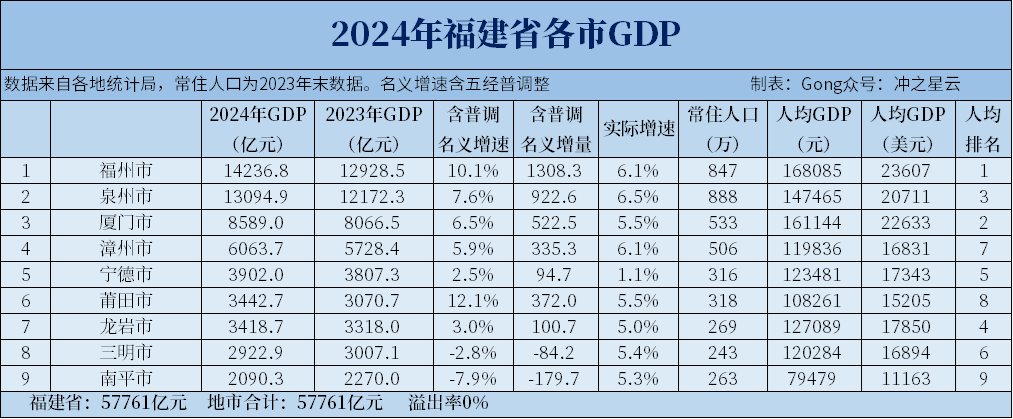
Core Viewpoint - The competition for the title of "First City of Fujian" is intensifying among Fuzhou, Xiamen, and Quanzhou, with Fuzhou currently leading in GDP and structural balance, while each city has its unique strengths and challenges [3][21][59]. Economic Scale - In 2024, the GDP of the three cities is projected to be: Fuzhou at 1,423.68 billion yuan, Quanzhou at 1,309.49 billion yuan, and Xiamen at 858.90 billion yuan [2]. - Per capita GDP figures are: Fuzhou at 168,100 yuan, Xiamen at 161,200 yuan, and Quanzhou at 147,400 yuan [2]. Industrial Structure - Fuzhou's industrial structure is diverse and high-end, with electronic information and high-end equipment manufacturing accounting for 41.6% of industrial added value in 2023, projected to slightly decrease to 38%-39% in 2024 [8]. - Xiamen has made progress in integrated circuits and biomedicine but faces challenges due to high land costs, resulting in fewer large-scale industrial enterprises compared to Fuzhou [9]. - Quanzhou is accelerating industrial transformation through technological upgrades, with traditional industries still making up about 35% of its industrial structure [10]. Tertiary Industry - Fuzhou's tertiary industry added value is 838.92 billion yuan, surpassing Quanzhou's 605.63 billion yuan and Xiamen's 541.53 billion yuan [11]. - Fuzhou's financial sector contributes 12% to its GDP, higher than Xiamen's 10% and Quanzhou's 8% [12]. Resource Allocation - Fuzhou has a larger urban area of approximately 11,968 square kilometers compared to Quanzhou's 11,015 square kilometers and Xiamen's 1,701 square kilometers, but geographical limitations affect development space [25][26]. - In terms of population, Quanzhou leads with 8.91 million residents, followed by Fuzhou with 8.50 million, and Xiamen with 5.35 million [29]. Financial Resources - In 2024, Xiamen's general public budget revenue is 93.32 billion yuan, leading Fuzhou's 75.05 billion yuan and Quanzhou's 57.28 billion yuan [42]. - Xiamen's per capita disposable income is 74,249 yuan, while Fuzhou's is 51,460 yuan and Quanzhou's is 52,214 yuan [43]. Financial Institutions - Fuzhou's financial institutions hold a total deposit balance of 25,209.67 billion yuan, significantly higher than Xiamen's 17,861.82 billion yuan and Quanzhou's 12,558 billion yuan [51]. - Fuzhou's direct financing scale reached 230 billion yuan in 2024, accounting for 48% of the province's total [54]. Conclusion - Fuzhou demonstrates a leading advantage across most core dimensions, including economic scale, industrial structure, resource allocation, and financial strength, positioning it as the current "First City of Fujian" [59].
健盛集团拟在越南清化实施年产6000万双中高档棉袜和3000万件服装项目
Zhi Tong Cai Jing· 2025-09-18 10:33
Core Viewpoint - The company plans to implement a project for an annual production of 60 million pairs of mid-to-high-end cotton socks and 30 million pieces of clothing, with a total investment of 180 million yuan (including 25.18 million USD) located in the Thanh Hoa Industrial Park in Vietnam [1] Group 1 - The project will be funded by Jian Sheng Vietnam Textile Printing and Dyeing Co., Ltd [1] - The new project site demonstrates significant labor resource advantages, providing stable and ample labor supply to support rapid production and subsequent scale expansion [1] - This advantage will help quickly release production capacity and alleviate pressure on existing production bases, aligning with the company's strategy to optimize supply chain layout and reduce regional concentration risks [1]

健盛集团:拟投资1.8亿元建设年产6000万双中高档棉袜和3000万件服装项目
Ge Long Hui· 2025-09-18 10:07
Core Viewpoint - The company has been operating in Vietnam for over a decade, with its cotton socks, seamless products, and auxiliary materials factories performing well in terms of capacity construction, production management, and operational efficiency [1] Investment and Expansion Plans - To meet future customer order demands and enhance production scale, the company plans to invest in a project in the Quang Hoa Industrial Park, Vietnam, which will produce 60 million pairs of mid-to-high-end cotton socks and 30 million pieces of clothing annually [1] - The total investment for the project is 180 million yuan (approximately 25.18 million USD), with fixed asset investment around 150 million yuan (approximately 20.98 million USD) and working capital of 30 million yuan (approximately 4.20 million USD) [1] - The funding for this project will be provided by the company's subsidiary, Jian Sheng Vietnam Textile Printing and Dyeing Co., Ltd. [1] Production Capacity and Market Competitiveness - The existing production capacity in Vietnam is expected to gradually reach saturation with the commencement of the Quang Hoa Phase II project and the project in Nam Dinh Province [1] - The investment aims to leverage the advantages of the Vietnamese factories in international trade, customer import tariffs, and environmentally friendly dyeing processes to enhance the company's competitiveness in the international market [1]