
网络设备

Search documents
自火爆的IPO以来“AI云新贵”CoreWeave高管已“套现”超10亿美元
Hua Er Jie Jian Wen· 2025-10-12 10:13
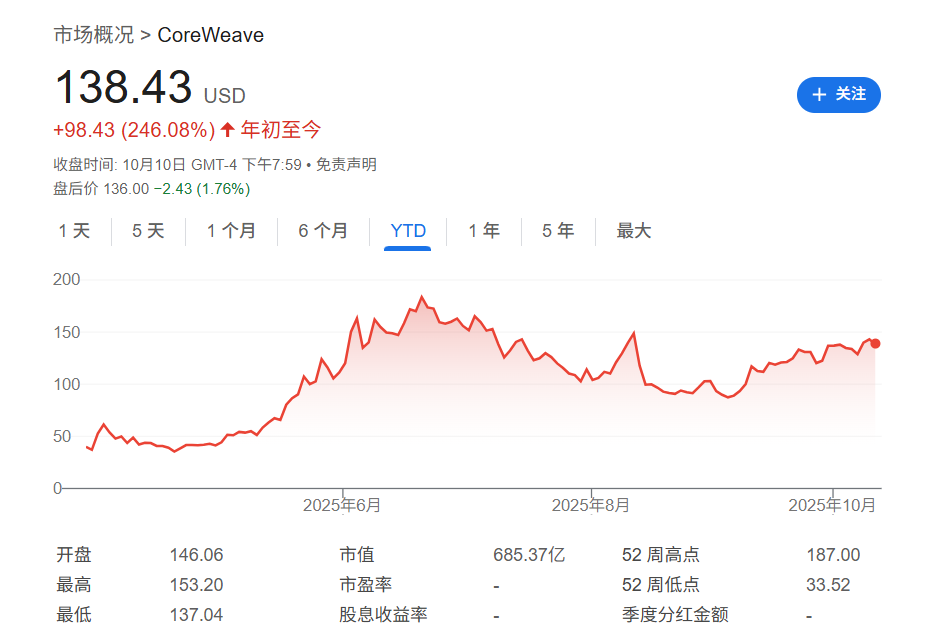
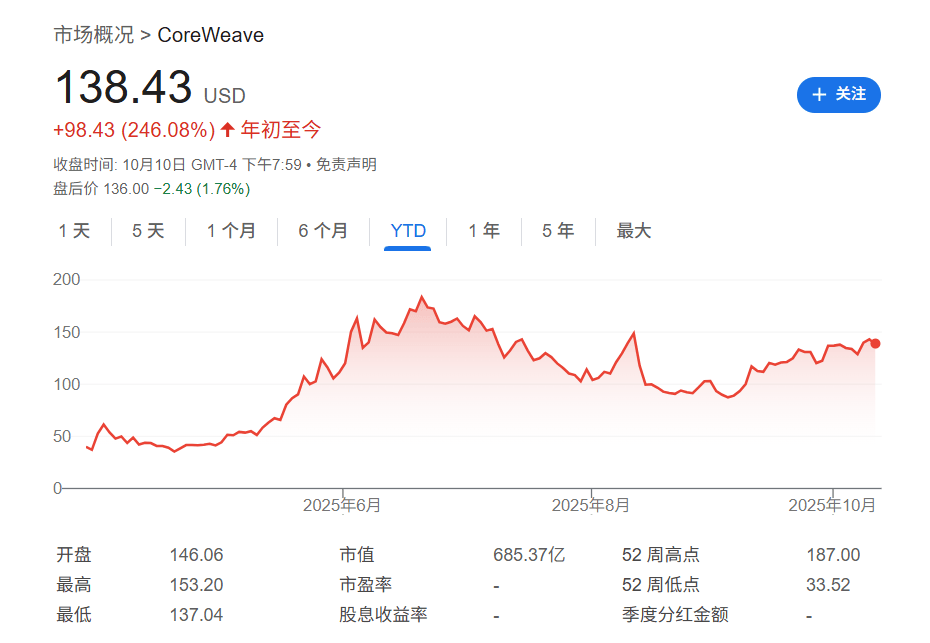
Core Viewpoint - The AI boom is reshaping market dynamics and creating significant wealth for insiders, who are converting paper gains into real cash [1] Group 1: Insider Selling Trends - CoreWeave insiders sold over $1 billion worth of stock after the IPO lock-up period ended in mid-August [1][2] - In the third quarter, seven of the top ten insider sellers were from companies benefiting from AI [3] - CoreWeave executives led the selling trend, with board member Jack Cogen selling $477 million and co-founder Brannin McBee selling $426 million [4] Group 2: Institutional Selling - CoreWeave's largest institutional shareholder, Magnetar Financial LLC, sold nearly $1.9 billion in shares but still holds over 20% of the company's Class A stock [6] Group 3: Notable Sales in the AI Sector - Arista Networks CEO Jayshree Ullal sold over 6 million shares for $861 million, ranking second among sellers [9] - NVIDIA CEO Jensen Huang sold over $743 million in the third quarter, with total insider sales nearing $1.5 billion for the first three quarters of 2025 [10] Group 4: Other Major Sellers - Amazon founder Jeff Bezos topped the list with $4.917 billion in sales, significantly exceeding other sellers [11] - Other notable sellers included Frank Slootman of Snowflake ($463 million), Tony Ressler of Ares Management ($357 million), and Brian Armstrong of Coinbase ($268 million) [12]

自火爆的IPO以来,“AI云新贵”CoreWeave高管已“套现”超10亿美元
Sou Hu Cai Jing· 2025-10-12 06:43
Core Insights - The AI boom is reshaping market dynamics and creating significant wealth for insiders, who are converting paper gains into real cash [1] - CoreWeave's insiders sold over $1 billion worth of stock after the IPO lock-up period ended in mid-August [1][2] - The trend of insider selling is not limited to CoreWeave, with seven of the top ten insider sellers in Q3 coming from AI-related companies [3] CoreWeave Insider Selling - CoreWeave's stock price surged over 250% since its March IPO, leading to substantial returns for early investors and executives [2][4] - Key insiders, including board member Jack Cogen and co-founder Brannin McBee, sold $477 million and $426 million worth of stock, respectively, under pre-established "10b5-1" trading plans [4][5] - CoreWeave's largest institutional shareholder, Magnetar Financial LLC, sold nearly $1.9 billion in shares but still retains over 20% of the company's Class A stock [6] Broader AI Industry Trends - The trend of stock selling among AI executives reflects the broader wealth generation from the AI revolution [8] - Arista Networks' CEO Jayshree Ullal sold over 6 million shares for $861 million, ranking second among Q3 sellers [8] - NVIDIA's CEO Jensen Huang sold over $743 million in stock during Q3, with total insider sales nearing $1.5 billion for the first three quarters of 2025 [8] Notable Sellers - Amazon founder Jeff Bezos topped the Q3 insider selling list, cashing out $4.917 billion from the sale of 21.675 million shares, exceeding the total of the next nine sellers combined [9] - Other notable sellers include Frank Slootman of Snowflake, who sold $463 million, and Tony Ressler of Ares Management, who sold $357 million [9]
菲菱科思10月9日获融资买入6233.01万元,融资余额2.58亿元
Xin Lang Cai Jing· 2025-10-10 01:42
Core Insights - On October 9, 2023, Feiling Kesi's stock fell by 2.63% with a trading volume of 391 million yuan, indicating a decline in investor confidence [1] - The company reported a net financing outflow of 7.27 million yuan on the same day, with a total financing balance of 258 million yuan, which is 5.08% of its market capitalization [1] - For the first half of 2025, Feiling Kesi's revenue decreased by 12.39% year-on-year to 722 million yuan, and net profit dropped by 71.32% to 21.88 million yuan [2] Financing and Trading Activity - On October 9, 2023, Feiling Kesi had a financing buy-in of 62.33 million yuan and a financing repayment of 69.60 million yuan, resulting in a net financing buy-in of -7.27 million yuan [1] - The current financing balance of 258 million yuan is above the 80th percentile of the past year, indicating a high level of leverage [1] - There were no short sales or repayments on the same day, with the short balance also at zero, reflecting a lack of bearish sentiment [1] Shareholder and Institutional Holdings - As of June 30, 2025, the number of shareholders increased by 37.40% to 13,000, with an average of 3,486 circulating shares per person, up by 25.88% [2] - The company has distributed a total of 192 million yuan in dividends since its A-share listing [3] - Notably, Huashang Credit Enhanced Bond A became the ninth largest circulating shareholder with 214,800 shares, while several other institutional investors exited the top ten list [3] Business Overview - Feiling Kesi, established on April 16, 1999, specializes in the research, production, and sales of network equipment, primarily through ODM/OEM partnerships [1] - The company's revenue composition includes 78.42% from switch products, 16.96% from routers and wireless products, and 4.00% from communication equipment components [1]
突发!TP-LINK 芯片事业部全员解散,赔偿最高 N+3
程序员的那些事· 2025-09-22 11:07
Core Viewpoint - The recent disbandment of the chip division at TP-LINK (普联技术) indicates a strategic shift within the company, particularly following a rapid layoff in its WiFi chip department just months prior. This move reflects the company's focus on core technologies amidst increasing competition in the WiFi market. Summary by Sections - The chip division of TP-LINK has been completely disbanded, following a previous layoff in June at its overseas subsidiary, Lianzhou International, which also faced significant job cuts in its WiFi chip department [1][5][6]. - The layoffs at Lianzhou International were rapid, with the process from notification to completion taking only half a day. The compensation scheme for affected employees follows an N+3 standard for those with over a year of service, N+2 for six months to a year, and N+1 for less than six months [2][5]. - The layoffs primarily affected key positions in the WiFi front-end module (FEM) development, which is crucial for connecting WiFi chips to antennas. Despite the layoffs, TP-LINK is not exiting the WiFi chip market entirely but is reallocating resources to focus on core chip technology development [5][6]. - The company has struggled to commercialize its self-developed chip technology since forming its chip team in 2021, continuing to rely on external suppliers like MediaTek and Qualcomm for solutions [5].

路由器巨头芯片团队被爆全员解散! 自研芯片失败,部门全裁,赔偿方案曝光
Xin Lang Cai Jing· 2025-09-20 13:28
Core Insights - TP-Link's chip division has been completely dissolved, marking a significant shift in the company's strategy towards its self-developed chip initiatives [3][5][8] - The layoffs occurred rapidly, with the entire process from notification to completion taking only half a day [4][7] - This decision follows a previous round of layoffs in June, where the WiFi chip department also faced significant cuts, indicating ongoing challenges in the company's chip development efforts [4][8] Company Overview - TP-Link has been a leader in the global router market and initiated its self-developed chip program three years ago to reduce reliance on external suppliers like Qualcomm and MediaTek [8] - Despite successfully developing two chips, the projects were halted before reaching mass production, highlighting difficulties in commercializing their technology [5][8] - The chip team was established in 2021, but the inability to achieve commercial viability in the competitive WiFi 7 technology landscape has led to the current dissolution of the division [5][8] Layoff Details - The compensation plan for the layoffs follows an "N+3" model, where "N" is based on the average social wage, providing additional months of compensation based on tenure [7] - The layoffs affected all positions related to chip development, including recent graduates who had only been with the company for two months [4][7] - The previous layoffs in June primarily targeted the WiFi front-end module (FEM) development area, but the September cuts were more comprehensive, affecting nearly the entire chip department [4][7]
传全员解散!回应来了!
国芯网· 2025-09-19 14:56
过程极为迅速高效,从发出裁员通知到员工办完离职手续,整个流程不到半天时间,上午通知晚上走人,给员工带来极大冲击。 在赔偿方面,该公司为被裁员工提供了"N+3"的赔偿方案,其中"N"按照社会平均工资计算,额外补偿则根据司龄确定:在职满一年员工可获得3个月月薪 补偿,满6个月不足一年获2个月补偿,不足6个月则获1个月补偿。 国芯网[原:中国半导体论坛] 振兴国产半导体产业! 不拘中国、 放眼世界 ! 关注 世界半导体论坛 ↓ ↓ ↓ 9月19日消息,据业内网友爆料,TP-LINK芯片事业部出现大规模人员调整,涉及范围广泛,并非局限于个别岗位,算法、设计等核心岗位首当其冲,随 后产品测试、项目协调等周边岗位员工也陆续接到裁员通知,导致整个WiFi芯片部门几乎陷入全面瘫痪状态。 目前除保留少数骨干外,已难有完整团队正常开展业务。一位接近该公司的消息人士透露,目前整个部门除了那几个被保留的骨干,几乎已经没有能够正 常开展业务的完整团队了。 对于相关传闻,接近普联技术的人士表示,"网传解散芯片事业部的并非普联技术本身,相关主体应为早前关联公司联洲国际。该人士进一步说明,联洲 国际此前与联普技术存在关联,目前已独立运营,其 ...

中国交换机行业发展趋势研究与未来投资分析报告(2025-2032年)
Sou Hu Cai Jing· 2025-09-04 06:14
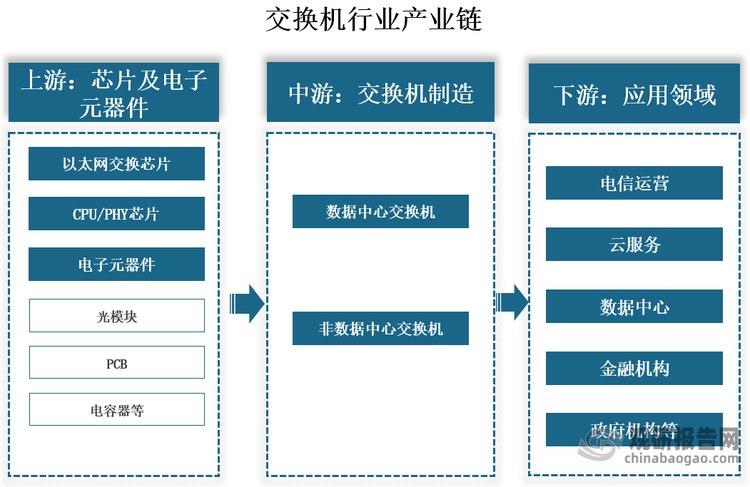
资料来源:公开资料、观研天下整理 交换机(Switch)意为"开关",是一种用于电(光)信号转发的网络设备,。它可以为接入交换机的任意两个网络节点提供独享的电信号通路。最常见的交换 机是以太网交换机。 交换机产业链上游为芯片及电子元器件,包括以太网交换芯片、CPU/PHY芯片、电子元器件;中游为交换机制造,可分为广域网交换机和局域网交换机; 下游应用于电信运营、云服务、数据中心、金融机构、政府机构等领域。 全球市场规模来看,近五年全球交换机行业市场规模呈先升后降走势。2024年全球交换机行业市场规模为418亿美元,同比下降5.4%。 数据来源:IDC、观研天下整理 国内市场规模来看,我国交换机在政策的推动下具有较大的发展潜力,近五年市场规模呈稳步增长。2024年我国交换机市场约为423.6亿元,同比增长 5.9%。 成本构成来看,交换机主要由芯片、光器件、插接件、阻容器件、壳体、PCB等部件组成。其中芯片成本占比最高,占比32%;其次是光器件、插接件、阻 容器件、壳体、PCB,占比分别为14%、10%、10%、8%、7%。 数据来源:公开资料、观研天下整理 数据来源:IDC、观研天下整理 政策方面,近年来,国 ...
国泰海通晨报-20250904
Haitong Securities· 2025-09-04 01:35
Group 1: Company Overview - Hanbell Precise Machinery - Hanbell Precise Machinery is a leading company in the compressor industry, benefiting from the high growth demand in downstream AIDC construction, with its magnetic levitation compressor products expected to see significant sales growth [2][25] - The company has achieved a compound annual growth rate (CAGR) of 17.1% in revenue from 2014 to 2024, with a projected net profit margin of 23.5% and a return on equity (ROE) of 21.77% in 2024, indicating strong operational health [3][28] - The company’s operating cash flow for the first half of 2025 was 410 million, accounting for 27.4% of its revenue, showcasing its strong cash flow generation capability [3][28] Group 2: Market Demand and Trends - The demand for magnetic levitation compressors is expanding due to the surge in data center construction driven by AI applications, with liquid cooling becoming the mainstream cooling technology [4][29] - The estimated market demand for magnetic levitation centrifugal compressors for 100,000 GB300 cabinets is approximately 14.3 billion, highlighting the significant market potential [4][29] - Hanbell is positioned as a leader in the magnetic levitation compressor market, accelerating the import substitution process in the data center cooling market, with production capacity established in multiple regions including Shanghai, Taiwan, Vietnam, the US, and Europe [4][29] Group 3: Industry Insights - Wholesale and Retail - The wholesale and retail industry is expected to benefit from rising gold prices, with the gold and jewelry sector showing low valuations and strong domestic demand support [6][7] - The anticipated increase in gold prices is expected to enhance the sales elasticity of gold jewelry brands, particularly those with a high proportion of sales from investment gold [7][8] - The industry is projected to see a steady net increase in channel expansion despite market challenges, with brands that focus on investment gold and high-value products likely to outperform [7][8] Group 4: Industry Insights - Military Industry - The military industry is experiencing high prosperity, as demonstrated by the recent military parade showcasing new equipment, reflecting China's military technology innovation and strategic deterrence capabilities [11][12] - The focus on modernizing military equipment is expected to drive long-term growth in the military sector, with increased defense spending anticipated due to rising geopolitical tensions [13][21] - Key military companies are expected to benefit from this trend, with recommendations for investment in companies such as AVIC and North Navigation [13][21] Group 5: Overseas Strategy Insights - The current AH premium level has potential downward space, primarily driven by traditional industries, with real estate and banking sectors still having room for premium contraction [10][18] - Emerging industries like semiconductors and hardware are also expected to see a gradual narrowing of AH premiums, indicating a shift in market dynamics [10][18]



锐捷网络(301165):数据中心交换机继续翻倍增长 净利率重回高点
Xin Lang Cai Jing· 2025-09-03 12:57
Core Viewpoint - The company's data center business has shown significant growth, with data center switches experiencing a year-on-year increase of 110%, contributing to over 50% of total revenue, leading to accelerated performance growth [1][2]. Group 1: Financial Performance - The company maintained an "overweight" rating, adjusting revenue expectations for 2025-2027 to 14.659 billion, 17.857 billion, and 21.274 billion yuan, with net profits of 1.082 billion, 1.599 billion, and 2.122 billion yuan respectively [2]. - In the first half of 2025, the company reported revenue of 6.649 billion yuan, a year-on-year increase of 31.84%, primarily driven by data center switches, which generated 3.539 billion yuan, reflecting a 110% year-on-year growth [2]. - The overall gross margin decreased by 2.79 percentage points to 33.19%, influenced by the gross margin of data center switches at 20.79%, down 6.85 percentage points year-on-year [3]. Group 2: Cost and Profitability - The company achieved a remarkable net profit of 4.52 billion yuan in the first half of 2025, a year-on-year increase of 194%, with a net profit margin of 8.38%, nearing the quarterly high since its listing in 2022 [3]. - The expense ratios for sales, management, finance, and R&D were 10.23%, 4.65%, 0.06%, and 11.53% respectively, showing a decrease in most areas, which contributed to the improvement in net profit [3].
菲菱科思8月29日获融资买入9852.72万元,融资余额2.96亿元
Xin Lang Cai Jing· 2025-09-01 02:16
Group 1 - The core viewpoint of the news highlights the significant decline in the stock price of Feiling Kesi, which dropped by 10.71% on August 29, with a trading volume of 873 million yuan [1] - As of August 29, the financing balance of Feiling Kesi was 296 million yuan, accounting for 5.96% of its market capitalization, indicating a high level of financing activity [1] - The company reported a revenue of 722 million yuan for the first half of 2025, a year-on-year decrease of 12.39%, and a net profit of 21.88 million yuan, down 71.32% year-on-year [2] Group 2 - Feiling Kesi has distributed a total of 192 million yuan in dividends since its A-share listing [3] - As of June 30, 2025, the number of shareholders increased by 37.40% to 13,000, with an average of 3,486 circulating shares per person, reflecting growing investor interest [2] - Notable changes in institutional holdings include the entry of Huashang Credit Enhanced Bond A as the ninth largest shareholder, while several other funds exited the top ten list [3]