
水产养殖

Search documents
喜迎农民丰收节!南京高淳一农民合作社北京签下5296万元农产品订单
Yang Zi Wan Bao Wang· 2025-09-23 13:49
Core Insights - A significant agricultural supply order worth over 50 million yuan was successfully signed in Beijing by the Yangtze Evening News, highlighting the growth of modern agriculture in Nanjing [1] - The order, totaling approximately 1,515 tons of products, was a result of a long-term partnership between the He Feng Yuan Cooperative and a logistics company, showcasing the trust built over ten years of collaboration [2] - The cooperative has adopted innovative agricultural practices, including ecological farming methods, which have improved product quality and reduced environmental pollution [2][3] Company Overview - He Feng Yuan Cooperative has evolved from a simple shrimp and crab farming operation in 2014 to a comprehensive agricultural entity that includes aquatic farming, vegetable cultivation, food delivery, and e-commerce [3] - The cooperative employs a "cooperative + base + farmer" model, integrating over 200 local farmers and providing them with seedlings, technical guidance, and market access, resulting in an average annual income increase of over 8,000 yuan per farmer [3] Industry Context - The recent agricultural product promotion event in Beijing served as a vital platform for Nanjing's high-quality agricultural products, attracting numerous buyers and showcasing the region's modern agricultural capabilities [1] - The cooperative's commitment to sustainable practices and technological integration reflects a broader trend in the agricultural industry towards eco-friendly and efficient farming methods [2][3]

中国“河豚之乡”,居然在河北?
3 6 Ke· 2025-09-23 08:29
Core Viewpoint - The article highlights the emergence of Caofeidian in Tangshan, Hebei, as China's largest pufferfish farming base, despite common perceptions that pufferfish are primarily a Jiangnan specialty. The region has developed a robust pufferfish industry, leveraging its unique geographical advantages and early adoption of farming techniques. Group 1: Pufferfish Farming in Caofeidian - Caofeidian is recognized as the birthplace of red-spotted pufferfish farming in China, with a farming area of 19,000 acres and an annual output of 1,150 tons, generating a value of 120 million yuan in 2022 [3][6] - The region accounts for over 90% of the national pufferfish production and 60% of the fish fry production, solidifying its position as the leading area for pufferfish farming in China [3][6] - In 2021, Hebei province exported 253.1 tons of pufferfish, representing 61.1% of the national total, with Caofeidian contributing 90% of that figure [5][6] Group 2: Historical Development and Recognition - Caofeidian was awarded the title of "China's Pufferfish (Red-spotted Puffer) Town" in 2018, reflecting its status as the largest pufferfish farming area [3][6] - The region's pufferfish industry had a total output value of 162 million yuan in 2020, accounting for 12.6% of the total aquaculture output in Caofeidian [6][7] - The area has transformed from a small fishing community into a popular tourist destination centered around pufferfish, attracting food enthusiasts from surrounding provinces [8][12] Group 3: Geographical and Environmental Advantages - Caofeidian's location in the Bohai Bay, at the confluence of several rivers, provides a nutrient-rich environment ideal for marine life, contributing to the area's suitability for pufferfish farming [18][20] - The calm waters and abundant food sources, such as shellfish, create optimal conditions for pufferfish breeding [20][22] Group 4: Future Prospects and Market Dynamics - The recent lifting of restrictions on pufferfish sales in China presents both opportunities and challenges for Caofeidian, as it seeks to expand its domestic market presence while competing with southern varieties [23][25] - The domestic market's growing demand for pufferfish is expected to enhance the region's pricing power in international markets, previously constrained by export pressures [30][32] - The pufferfish industry in China is still in its early stages, with significant potential for growth, as current consumption levels are much lower than in Japan, where pufferfish is a well-established delicacy [32][34]

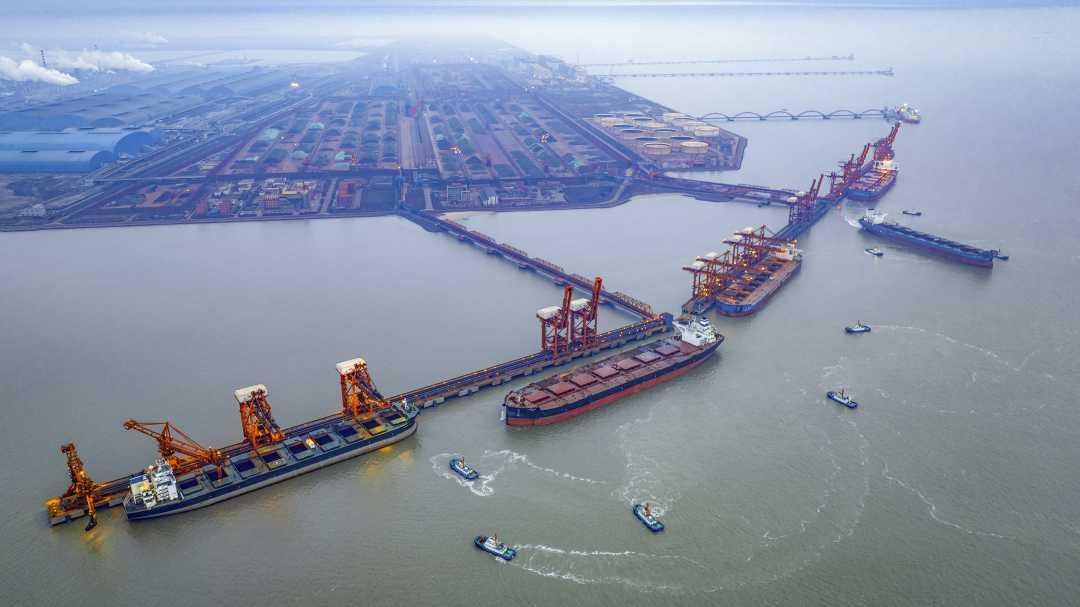
广东培育“千百十亿”特色农业产业集群
Nan Fang Ri Bao Wang Luo Ban· 2025-09-23 07:19
Group 1: Agricultural Production and Development - In 2023, Guangdong's honey pomelo production is expected to exceed 350,000 tons, marking a new high for the region [1] - The province aims to enhance its agricultural strength through the "Hundred Counties, Thousand Towns, and Ten Thousand Villages High-Quality Development Project," focusing on modern rural industrial systems [1] - The total grain production in Guangdong reached 13.134 million tons in 2024, an increase of 2.2% from the previous year, achieving the highest level since 2006 [2] Group 2: Key Agricultural Products - Guangdong's lychee cultivation area is approximately 4.23 million acres, with a production exceeding 1.6 million tons, making it a significant agricultural product in the province [3] - The marine aquaculture production in Guangdong reached 3.7683 million tons in 2024, growing by 5.47%, marking a decade-high growth rate [4] - The flower industry in Guangzhou has an annual transaction value exceeding 15 billion yuan, showcasing the economic potential of the "beautiful economy" [6] Group 3: Modern Agricultural Industry Clusters - Guangdong is focusing on cultivating ten key billion-yuan modern agricultural industry clusters, including grain security as a priority [2] - A number of hundred-billion-level agricultural industries are emerging, contributing significantly to local economies and farmer income [5] - The province is also developing ten billion-level specialty agricultural industries, leveraging unique geographical indicators and innovative practices [8] Group 4: Regional Agricultural Innovations - The "Phoenix Dan Cong" tea industry in Chaozhou is projected to reach an industry chain value of 8.9 billion yuan in 2024, supporting over 200,000 jobs [8] - The "Spring Sand Ren" in Yangchun has a planting area of 95,100 acres and an agricultural output value of 1.438 billion yuan in 2024 [9] - The "Eagle Mouth Peach" in Lianping has a planting area of 88,000 acres, generating an annual output value exceeding 2.1 billion yuan [9]
海大集团20250922
2025-09-23 02:34
Summary of Haida Group's Conference Call Company Overview - Haida Group focuses on aquaculture feed, which is the core profit driver, particularly in domestic and international markets [2][4] - The aquaculture industry chain is fragmented, allowing leading companies to dominate changes and penetrate various segments like seedlings and feed, creating a comprehensive service loop to enhance farming efficiency [2] Key Insights Industry Dynamics - Significant differences exist between aquaculture and livestock farming. Aquaculture upstream is highly fragmented, giving leading companies stronger bargaining power, while livestock farming is more centralized with large enterprises holding more influence [2][6] - Haida Group holds approximately 20% market share in domestic aquaculture feed, with some core varieties reaching 40%-50% in specific regions. Long-term potential exists to increase this to 40%-50% [2][9] - The livestock feed market share is around 10%, with a long-term target of over 15% [2][9] Business Strategy - The strategy for the pig farming segment focuses on cost optimization rather than aggressive growth, with expected stable production levels of 6-7 million pigs over the next two years [2][11] - Haida Group's diversified operations in aquaculture, poultry, and pig feed allow for a robust procurement system and negotiation advantages, thereby reducing costs and solidifying its cost leadership position [2][13] Market Performance and Growth - The aquaculture feed market is performing well this year, with positive growth expected to continue into the next year, despite some marginal changes in overall growth rates [3] - The international strategy has shown significant results, with leading positions in markets like Vietnam, Egypt, and Indonesia, and plans to double overseas business volume by 2030, primarily in aquaculture feed [5][16] Competitive Advantages - Haida Group's core competitiveness in feed business lies in its strong position in aquaculture feed, which remains the most important profit source despite the rapid growth of livestock feed sales [4] - The company has implemented innovative management practices, enhancing operational efficiency and creating a closed-loop development model for feed, seedlings, and health products [14][15] Financial Projections - The pure feed business segment is expected to see profits grow by over 20%, while the pig farming segment is projected to maintain profitability above 1 billion RMB [5][29] - Overall profit for the current year is estimated to exceed 5 billion RMB, with projections for the next year reaching 6 billion RMB, indicating a growth rate of approximately 25-30% [29] Market Trends - The aquaculture industry is expected to experience growth driven by supply-demand changes and price cycles, with specific species like the California sea bass showing strong price performance [20][21] - The pig feed market may face challenges due to high supply levels, but long-term trends suggest potential price recovery and demand stabilization [23] Conclusion - Haida Group's diversified approach, strong market positioning, and innovative strategies provide a solid foundation for future growth, with optimistic projections for market share and profitability across various segments [30]

广西探索离岸深水区白蝶贝养殖技术
Guang Xi Ri Bao· 2025-09-23 02:18
Core Insights - The successful cultivation of white butterfly clams in offshore deep water marks a significant milestone for Guangxi's aquaculture industry, indicating the potential for sustainable pearl farming in previously unexploited marine environments [1][3] Group 1: Cultivation Success - The first batch of white butterfly clam seedlings, measuring an average of 2 centimeters, has shown a high survival rate and uniform growth after two months of careful management [1] - The offshore deep water area provides optimal conditions for the growth of white butterfly clams, including better water quality, less pollution, and abundant natural feed [2][3] Group 2: Historical Context and Importance - Historically, the region has been known for its production of high-quality pearls, with the first successful cultivation of seawater pearls occurring in 1959, marking the end of natural pearl collection in the area [1] - White butterfly clams are classified as a national second-level protected aquatic species due to their declining wild populations, emphasizing the importance of developing sustainable farming practices [2] Group 3: Future Prospects - The innovation team plans to implement a dual-mode cultivation approach using "floating raft farming + seabed farming" to further enhance the growth of white butterfly clams in the offshore area [2] - The successful cultivation in deep water not only expands the possibilities for pearl farming but also lays a solid foundation for the technological revitalization of the local pearl industry [3]
“海上粮仓”秋收忙
Xin Hua Wang· 2025-09-22 21:57
Group 1 - The article highlights the busy autumn harvest in the marine aquaculture sector of Fujian, showcasing the successful operations of fishermen and the advancements in aquaculture technology [1][2] - Fisherman Lu Tongfeng reports that his platform "Dinghai Bay No. 2" is yielding 150,000 large yellow croakers, each weighing over 1 pound, with a market price exceeding 100 yuan per pound, significantly higher than traditional farming [1][2] - The platform's design allows for automated cleaning and real-time monitoring of water quality, which has reduced labor costs by over 50% [1][2] Group 2 - In Xiapu, a major aquaculture county in Fujian, oyster farmers are concluding their harvest season, with each oyster weighing about half a pound after being cultivated for approximately eight months [5][6] - The oyster farming operation involves 180,000 cages and employs 16 permanent workers, with additional temporary workers during peak seasons, earning around 500 yuan per day [6] - The article notes that September is a critical month for oyster harvesting, as the water temperature drops and new seedlings are prepared for planting [6] Group 3 - Fujian is a major province for aquatic product farming, with a projected total aquatic product output of approximately 9.25 million tons in 2024, equating to a per capita availability of 221 kilograms [8] - The province has modernized over 1 million traditional net cages and invested in 25 deep-sea aquaculture facilities, along with more than 6,000 large deep-water net cages [8]
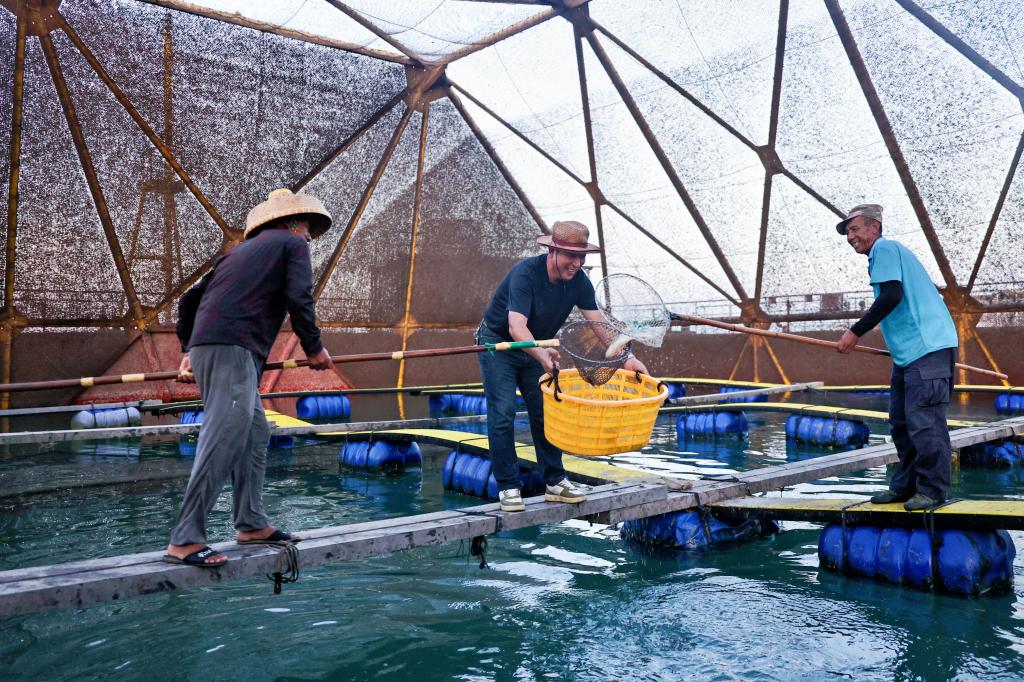
广东现代化海洋牧场臻品涮进重庆火锅
2 1 Shi Ji Jing Ji Bao Dao· 2025-09-22 13:02
Core Viewpoint - The event "Yue Fresh, Yu Good, Chongqing and Guangdong Share" showcases the collaboration between Guangdong's seafood industry and Chongqing's hot pot culture, aiming to enhance consumer experience through the fusion of fresh seafood and spicy flavors [1][5]. Group 1: Industry Strength and Collaboration - Guangdong has established itself as a leader in modern marine ranching, with the highest number of gravity-type deep-water cages in China and nearly half of the national marine fish farming output expected in 2024 [2]. - The production of golden pomfret in Zhanjiang accounts for one-third of the national output, while the production of white grouper exceeds 60% of the total national output [2]. - The collaboration aims to leverage Guangdong's seafood supply and Chongqing's hot pot market, enhancing the supply chain and expanding market reach [5][6]. Group 2: Consumer Experience and Product Innovation - The event featured a unique tasting experience that combined Guangdong's fresh seafood with Chongqing's spicy hot pot, allowing consumers to enjoy a dual flavor experience [3]. - Innovative product handling techniques were introduced, such as the preparation of golden pomfret to meet the fast-cooking demands of hot pot consumers [2]. - The tasting event received positive feedback, breaking preconceived notions about Guangdong seafood being bland and highlighting its compatibility with spicy flavors [3][4]. Group 3: Market Trends and Future Outlook - The hot pot industry is projected to exceed a trillion yuan in annual consumption, with the freshness of ingredients being a critical factor influencing consumer choices [5]. - The collaboration is expected to increase the demand for Guangdong seafood in Chongqing, with current monthly demand for golden pomfret at over 100 tons [6]. - The fusion of fresh and spicy flavors is anticipated to meet the evolving consumer preferences for healthier and more diverse dining options [6].
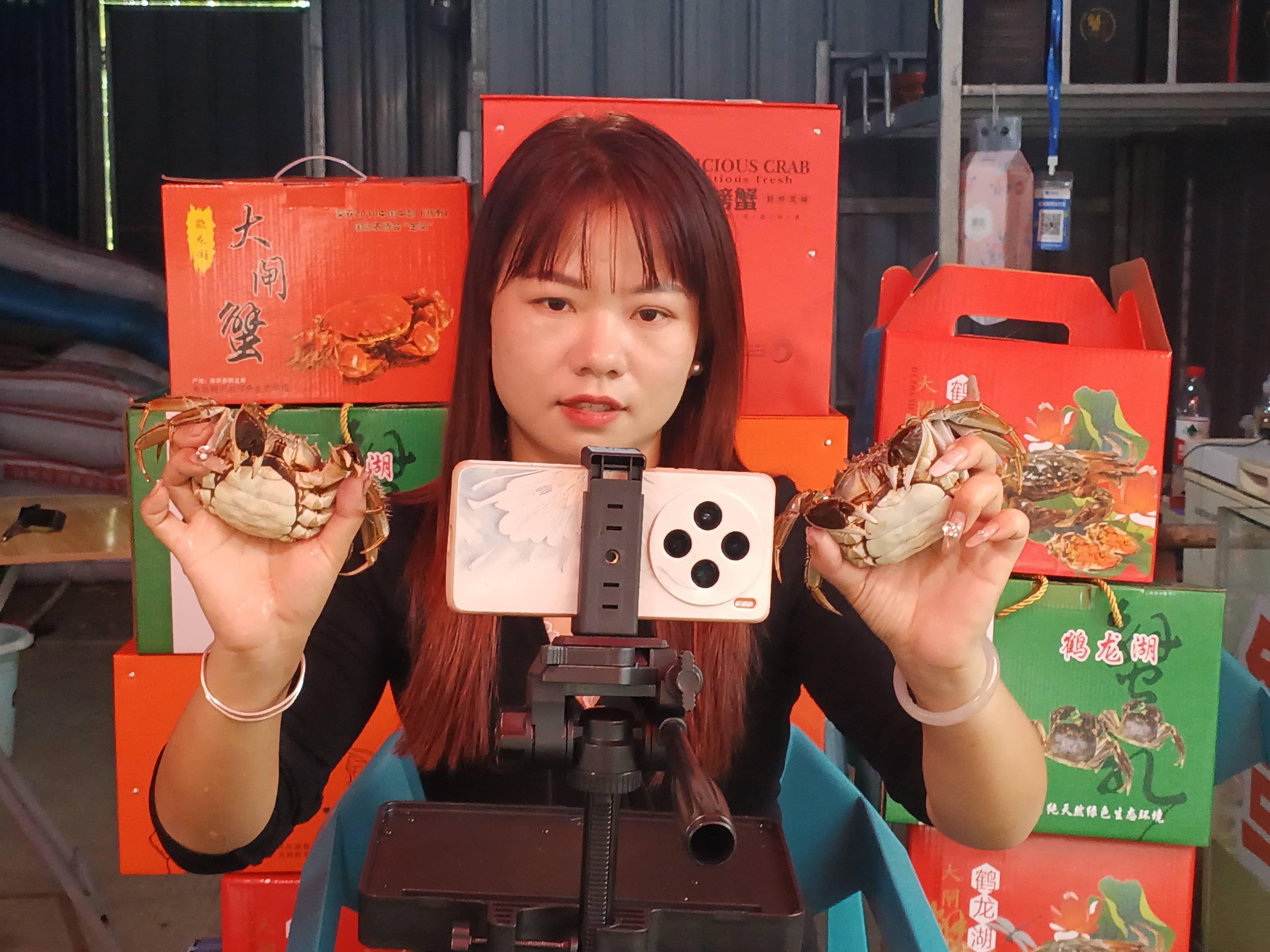
湘阴鹤龙湖螃蟹“爬进”直播间 通过电商销往全国 确保蟹农增收
Sou Hu Cai Jing· 2025-09-22 10:06
Core Insights - The article highlights the successful launch of live-streaming sales for crabs in Helong Lake Town, with sales reaching 2,000 crabs on the first day, three times the amount sold during the same period last year [3]. Group 1: Industry Development - Helong Lake Town has developed a dual industry system focusing on crabs and shrimp, supported by standardized base construction and partnerships with local agricultural universities and service centers [9]. - The town has over 360 crab and shrimp sales stores and more than 100 dining establishments, attracting hundreds of thousands of visitors annually [13]. Group 2: Sales and Marketing Strategies - Many local farmers are utilizing live-streaming and express delivery to sell fresh crabs directly to consumers, significantly broadening their sales channels and increasing revenue [9]. - Influential live-streaming platforms, such as Xiangshuihong Agriculture, are promoting crab sales through engaging content that highlights the product's freshness and quality [13].
IPO动态丨本周美股预告:Megan 等2家公司即将上市
Sou Hu Cai Jing· 2025-09-22 06:06
Group 1: Recent IPOs - Eight new stocks were listed last week, with the planned listing of RSHL postponed, expected to list this week [1] - Notable IPOs include: - CHOW raised $10.4 million by issuing 2.6 million shares at $4 each - PLTS raised $8 million by issuing 2 million shares at $4 each - NTSK raised $908 million by issuing 47.8 million shares at $19 each - WBI raised $634 million by issuing 31.7 million shares at $20 each - PTRN raised $300 million by issuing 21.43 million shares at $14 each - STUB raised $800 million by issuing 34.04 million shares at $23.5 each - SPACs LATAU and CHECU raised $150 million and $110 million respectively [1] Group 2: Upcoming IPOs - Two companies are planning to go public this week: - Megan Holdings Ltd., a seafood farming company, plans to list on September 23, 2025, on NASDAQ under the ticker MGN, aiming to raise up to $7.5 million by issuing 125,000 shares at $4 to $6 each, with projected revenue of $13.5 million and net profit of $1.07 million for 2024 [2][4] - HW Electro Co., Ltd., an electric light commercial vehicle manufacturer, plans to list on September 26, 2025, on NASDAQ under the ticker HWEP, aiming to raise $16.6 million by issuing 415,000 shares at $4 each, with projected revenues of $1.44 million and $1.83 million for the fiscal years 2023 and 2024, respectively, and net losses of $14.28 million and $6 million [2][6]

天山跃出三文鱼!新疆的“反套路”操作藏不住了
Jin Rong Shi Bao· 2025-09-22 04:20
Core Viewpoint - The article highlights the unique capability of Xinjiang to farm salmon, specifically rainbow trout, in its pristine natural environment, showcasing the region's agricultural innovation and potential for high-quality seafood production [1][2][3]. Group 1: Salmon Farming in Xinjiang - Xinjiang's salmon, specifically rainbow trout, is considered a type of salmon, as "salmon" is a common term for various species in the salmonidae family [2]. - The farming environment in Xinjiang, characterized by cold, sweet, and pure glacial meltwater, provides optimal conditions for salmon growth, with an average water temperature of 12 to 20°C [3]. - The slow growth rate of the salmon in this environment leads to higher protein content and better texture, making the fish not only delicious but also nutritious [3]. Group 2: Quality and Safety of Xinjiang Salmon - The salmon from Xinjiang is deemed safe for raw consumption due to the purity of the glacial water and the ecological farming methods that prevent cross-contamination with other aquatic species [4]. - The company employs strict quality control measures, including extensive self-testing and third-party inspections, to ensure the safety and quality of the salmon [4]. Group 3: Financial Support for Industry Growth - The rapid increase in demand for Xinjiang salmon has created financial pressures for companies, necessitating support from financial institutions to manage cash flow and procurement costs [4][5]. - The People's Bank of China has initiated financial products tailored to support unique agricultural industries, including loans for biological assets and inventory [5]. - Specific financial solutions have been developed for Xinjiang Tianyun Organic Agriculture Co., including a 70 million yuan loan to support its salmon farming operations, demonstrating a proactive approach to addressing industry challenges [5][6].