
生物制造

Search documents
济南|济南招商“实”字经
Da Zhong Ri Bao· 2025-05-15 01:36
Group 1 - Jinan's investment attraction is crucial for building a modern industrial system and promoting high-quality development, with this year designated as the "Project Enhancement Year" [1] - The city has adopted a "top-level" and "chain-based" investment strategy, focusing on major industries and aligning with Shandong's 66 key industrial chains [2][3] - In the first quarter, Jinan attracted 655 projects with over 100 million yuan in investment, accounting for 47.78% of total projects [3] Group 2 - Jinan's investment promotion efforts involve collaboration among 13 industry departments, emphasizing practical engagement with enterprises [4] - The city has successfully facilitated the establishment of a biomanufacturing cluster through proactive outreach and collaboration with companies like Guotou Group [4] - Challenges in project implementation are addressed swiftly, as demonstrated by the rapid resolution of land use issues for the Zhongke Shuguang project [5] Group 3 - Jinan is enhancing its business environment by attracting aerospace projects, such as the partnership with Jiangsu Tianbing Aerospace Technology Co., which fills a gap in the local rocket assembly sector [6][7] - The city is developing a logistics hub, including the "Four Ports and Three Districts" initiative, aimed at reducing logistics costs and improving infrastructure [7] - Jinan has opened access to 26.7 billion data entries through its public data platform, supporting businesses in expanding operations [7] Group 4 - The city conducts high-level meetings with various enterprises to gather feedback and improve services, ensuring that business needs are addressed effectively [8] - Jinan's investment promotion bureau is committed to optimizing the investment mechanism and enhancing resource allocation efficiency [8]
多地国资委发文推动省属企业因地制宜构建新质生产力
Zheng Quan Shi Bao Wang· 2025-05-14 13:16
从文件内容看,以定量与定性的目标相结合是两地文件的共同特点。山东国资委出台的《关于推动省属 企业加快发展新质生产力的实施意见》明确,定量方面,要求到2027年,重点制造业企业研发投入强度 达到5%以上,战略性新兴产业营业收入占比达到26%,碳排放强度持续下降;定性方面,要求加快突 破一批关键核心技术,在世界一流"双示范"企业、"双百企业""科改企业"和专精特新、单项冠军企业创 建上取得新成效。 湖北省国资委印发的《实施"五大行动"强化龙头引领整体提升省属企业支点建设支撑力工作方案》中提 出,力争到2027年,省属企业主要经营指标大幅跃升,世界500强企业实现零的突破,5家企业进入中国 500强。到2030年,省属国资国企战略牵引能力、要素集聚能力、资源配置能力、辐射带动能力明显增 强,国有资本布局结构更趋优化,综合实力跨越进位、中部领先。 近期,山东、湖北等省国资委相继发文,定量与定性的目标相结合,推进地方国企因地制宜构建新质生 产力。接受证券时报记者采访的专家认为,新质生产力作为创新驱动发展的核心动能,成为地方落实国 家战略的抓手。山东、湖北作为经济大省,需通过国企改革先行示范,推动产业升级与科技创新深度融 ...
连发三篇论文:蓝晶微生物PHA工业化生产,突破文献最高产量与最低单位成本纪录
生物世界· 2025-05-12 04:15
Core Viewpoint - Shanghai Blue Crystal Microbial Technology Co., Ltd. has achieved significant advancements in the production of polyhydroxyalkanoates (PHA) through innovative technologies, addressing both plastic pollution and carbon neutrality goals [2][24]. Group 1: Technological Innovations - The company developed the "Biohybrid" technology system, achieving the highest levels of unit yield, cost control, and carbon footprint management in PHA industrial production [4][9]. - A theoretical breakthrough was made in oil-based carbon source routes, with a maximum theoretical conversion rate of 130% and a reduced carbon source cost of $590 per ton, compared to traditional methods [6][8]. - The Biohybrid 1.0 technology improved PHA yield to 260 g/L in a 15-ton fermentation scale, enhancing production efficiency by 20% [11][15]. Group 2: Industrial Scale Achievements - Biohybrid 2.0 technology achieved a record PHA yield of 264 g/L and a 100% conversion rate of plant oil carbon sources at a 150-ton production scale [18][22]. - The integration of Biohybrid 1.0 and 2.0 technologies led to a stable production system with PHA yields exceeding 300 g/L and a carbon source conversion rate over 100% [22][30]. Group 3: Lifecycle Carbon Footprint Research - The company, in collaboration with Oxford University, published the first global study on the lifecycle carbon footprint of PHA, demonstrating a reduction of 64% compared to traditional petrochemical plastics [25][28]. - The study established a comprehensive lifecycle assessment model, revealing that using kitchen waste oil can further lower the carbon footprint to 2.01 kg-CO₂e/kg-Polymer [28][29]. Group 4: Economic Impact and Market Potential - The production cost of PHA has decreased by 41% since 2019, while unit yield has increased by 83%, positioning the company favorably for large-scale production of biodegradable materials [30].


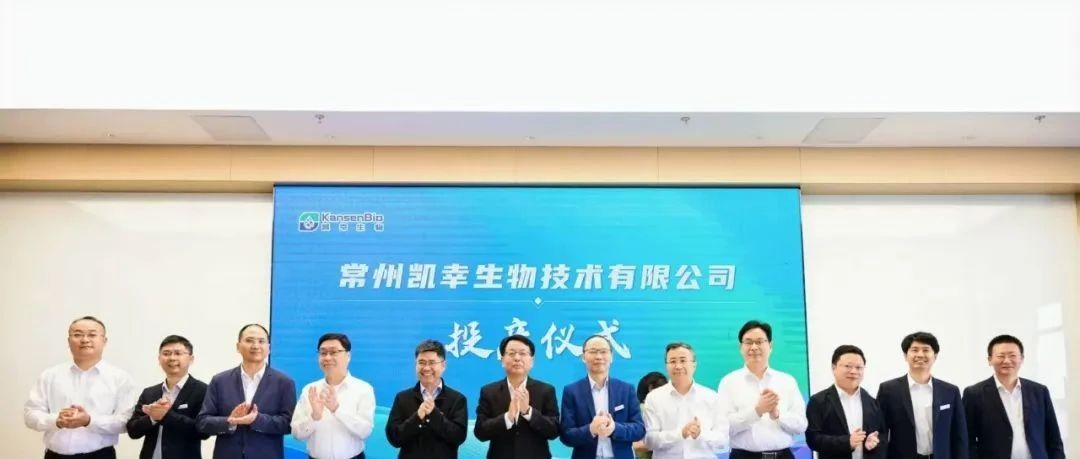
曾安平院士、刘德华教授参与!凯幸生物高端生物活性分子专业化生产线正式投产!
合成生物学与绿色生物制造· 2025-05-11 05:24
Core Viewpoint - The article highlights the launch of a specialized production line for high-end bioactive molecules by KaiXing Bio, marking a significant advancement in the synthetic biology industry in China [1][3]. Group 1: Company Overview - KaiXing Bio, established in May 2024, is a subsidiary of Beijing Green Kangcheng Biotechnology Co., Ltd., stemming from decades of research by Tsinghua University in the biotechnology field [1]. - The company focuses on next-generation biotechnology to create an intelligent manufacturing platform for the green production of high-end chemicals, providing sustainable bioactive raw material solutions for the global market [3]. Group 2: Production and Products - The newly launched factory in Changzhou will mass-produce high-value amino acids and bioactive raw materials, including N-acetylneuraminic acid, L-histidine, carnosine, decarboxylated carnosine, ergothioneine, rhodiola rosea glycosides, and ectoine, which are widely used in dietary supplements, functional skincare, and biomedicine [4]. - KaiXing Bio released the first batch of synthetic biological product standards in Jiangsu Province during the launch ceremony, setting a new quality benchmark for Chinese raw materials [5]. Group 3: Industry Impact and Future Plans - The combination of "raw materials + standards" aims to enhance the domestic substitution and standard system construction in the synthetic biology field, injecting strong momentum into the industry [7]. - The company plans to strengthen industry chain cooperation, promote green and sustainable biomanufacturing technology innovation, and continuously provide high-quality, environmentally friendly, and efficient bioactive raw material solutions to global customers [7]. - KaiXing Bio aims to expand its product matrix and accelerate its global market layout, promoting the concepts of health, beauty, and sustainability, while leading the active raw material industry with "Made in China" initiatives [7].
差异化布局生物制造产业链
Jing Ji Ri Bao· 2025-05-07 22:12
一段时间以来,河北、上海等地发力促进政产学研用紧密结合,建立未来产业投入增长机制,培育生物 制造、量子科技、具身智能、6G等未来产业。眼下,生物制造凭借其先进的生产方式,成为未来科技 竞争的关键驱动力,在医药、农业、能源、环保等诸多领域发挥着日益重要的作用,成为推动经济高质 量发展的关键引擎。 数据显示,2024年我国生物制造市场规模突破2.8万亿元,较2020年增长267%,年复合增长率达 39.6%。其中,生物医药蓬勃发展,近5年来我国生物药品制造企业数量年均增长速度达12%,区域生物 制造发展亮点纷呈。例如,广州市集聚6500多家生物医药与健康领域企业,居全国前列;上海金山区 以"一核多点"的产业布局为引擎,在生物医药、生物材料、生物农业及健康食品等多个领域全面发力, 打造长三角生物制造创新高地。 相关政策支持体系日趋完善,为产业发展注入强劲动力。2022年出台的《扩大内需战略规划纲要(2022 —2035年)》明确提出,加快生物医药、生物农业、生物制造、基因技术应用服务等产业化发展。2024 年发布的《关于加快推动制造业绿色化发展的指导意见》提出,发挥生物制造选择性强、生产效率高、 废弃物少等环境友好 ...
生物制造要素有哪些?凯赛生物刘修才最新分享!
合成生物学与绿色生物制造· 2025-05-07 15:32
Core Viewpoint - The article emphasizes the importance of scaling and cost-effectiveness in the bio-manufacturing industry to compete with traditional manufacturing sectors, particularly the chemical industry, and to achieve carbon neutrality goals [6][10][12]. Group 1: Key Elements of Bio-Manufacturing - Bio-manufacturing is positioned as a manufacturing sector that aims to replace traditional industries, particularly chemicals and inorganic materials [6][10]. - The success of high-tech industries relies heavily on research and development investments, which must be supported by companies possessing core technological capabilities [6][7]. - Intellectual property protection is crucial for fostering innovation and ensuring that companies can profit from their research investments [8][9]. - The supply of raw materials is a significant challenge, as bio-manufacturing must find reliable and stable sources of biomass that do not compete with food supplies [9][10]. Group 2: Resource Factors - Current bio-manufacturing resources primarily include food crops and biomass, with high-energy raw materials like palm oil and soybeans being expensive [13][17]. - Corn is the main raw material for bio-manufacturing globally, but its use in China is limited due to population pressures [17][19]. - The industry faces challenges in utilizing agricultural waste effectively, with many attempts resulting in commercial failures [17][19]. Group 3: Cost Factors - Selecting the right projects is essential to minimize trial and error costs in bio-manufacturing [20][22]. - The bio-manufacturing industry must compete with fossil fuels, and the energy density of bio-based materials is inherently lower than that of traditional chemical products [21][22]. - The cost structure of bio-manufacturing in China is competitive due to lower labor and investment costs compared to the US and Europe [28][30]. Group 4: Market Factors - New bio-manufactured products face significant market entry challenges, including user risk perceptions and complex value chains [31][33]. - The competition is not only from peers but also from established fossil fuel industries, which dominate market standards and decision-making processes [37][38]. - There are negative perceptions about bio-manufacturing being small-scale and high-cost, which can hinder investment and market acceptance [38][40]. Group 5: Recommendations for Bio-Manufacturing in Hainan - Companies should consider competitive energy solutions and the availability of raw materials when establishing bio-manufacturing projects in Hainan [48][49]. - The government should facilitate market access for bio-manufactured products to encourage early adoption and create demonstration cases [49][50].

未来产业,跑出“加速度”
Ren Min Ri Bao· 2025-05-06 22:47
Core Insights - The Chinese government has included four future industries—biomanufacturing, quantum technology, embodied intelligence, and 6G—in this year's work report, highlighting their potential impact on economic development [1][2]. Industry Developments - China has made early advancements in future industries, particularly in embodied intelligence, with companies like Huawei, Tencent, BYD, and UBTECH actively investing in this sector [3][4]. - The concept of embodied intelligence, which integrates physical entities with intelligent decision-making, is gaining traction, especially following its showcase during the Spring Festival Gala [2][3]. - Biomanufacturing is being prioritized across provinces, with significant investments in green biomanufacturing technologies since 2018 [4]. - Quantum technology is also a focus, with platforms like "Kua Fu" demonstrating strong performance metrics and plans for global algorithm competitions [4]. 6G Technology - China has established the world's first 6G outdoor test network, indicating significant progress in this area [5][6]. - The transition from 5G to 6G is expected to drastically reduce download times, with projections suggesting a 1GB movie could download in just 0.03 seconds on a 6G network [6][7]. - Various regions are conducting 6G technology trials, with notable advancements in mobile video transmission and satellite communication networks [7]. Investment Mechanisms - The Chinese government is focusing on establishing a growth mechanism for future industry investments, addressing who invests, where to invest, and how to ensure effective investment [9][10]. - Cities like Shenzhen are implementing policies to facilitate technology innovation loans, with over 570 tech companies receiving a total of 17.2 billion yuan in loans [10]. - A comprehensive investment strategy is being developed to support the entire value chain of future industries, emphasizing the need for patience and long-term capital [12][13].
“五一”假期,山东多地重点项目不停工,建设者奋战一线抢工期
Da Zhong Ri Bao· 2025-05-05 01:15
Group 1 - During the "May Day" holiday, construction workers in Shandong are actively working on key projects to ensure progress [1][2] - A 240-meter super high-rise complex is under construction in Qingdao, which aims to attract more shipping, trade, and financial enterprises [2] - The construction team is collaborating with Qingdao University of Technology to tackle the complex structural challenges of the project using BIM modeling and stress simulation [2][4] Group 2 - The Dongxiao Biological High-end Intelligent Health Deep Processing Project includes the construction of multiple production lines with a total capacity of 120,000 tons [3] - The project aims to produce various products, including dietary fiber and probiotics, to meet diverse customer needs [3] - The construction of the Fuxing Road project in Zaozhuang High-tech Zone is progressing, with 85% of the overall work completed [4] Group 3 - Advanced technology is being utilized on construction sites, including AI cameras and smart inspection robots, to enhance safety and efficiency [4] - The Qingdao project has introduced a "Worker Technology Service Station" for safety training, utilizing VR technology for immersive learning experiences [4]
新签约产业招商项目677个 预计投资总额2274.9亿元 广州首季招商引资“开门红”
Guang Zhou Ri Bao· 2025-04-30 21:30
Group 1: Investment Projects and Trends - In Q1 2025, Guangzhou signed 677 new industrial investment projects with a total expected investment of 227.49 billion yuan, including 422 high-quality projects [1] - The city has seen significant growth in domestic investment, ranking first in total investment and second in growth rate across the province [1] - Major projects in the manufacturing sector, such as a 54.9 billion yuan direct current transmission project and a new automotive technology company, are boosting development confidence [4][5] Group 2: Focus on Emerging Industries - Guangzhou is targeting strategic emerging industries like artificial intelligence and biomanufacturing through "targeted investment," aiming to attract high-tech enterprises [2] - Notable projects include the establishment of the China headquarters for Kasei Rui Biotech and the global headquarters for Micronano Robotics [2] - The digital economy is also expanding, with companies like ByteDance and Alibaba establishing significant operations in the region [2] Group 3: Foreign Investment and Global Engagement - Guangzhou has actively engaged in international investment promotion, hosting multiple delegations to countries like Spain, Japan, and Singapore [6] - The city has been recognized as China's preferred investment destination for eight consecutive years, with a 3.53% year-on-year increase in new foreign investment projects [7] - In Q1, foreign investment in the manufacturing sector reached 4.902 billion yuan, a remarkable increase of 86.8% [7] Group 4: Business Environment and Policy Innovations - Guangzhou has enhanced its business environment by integrating resources and optimizing policies to attract investments [9] - The launch of the "Guangzhou Investment Land Supermarket" allows investors to access real-time information on available land, promoting ease of investment [9] - The city has implemented various measures to streamline project approvals and reduce costs for businesses, addressing common investment challenges [9][10]
凯赛生物一季度营收7.76亿元,同比上升13.3%!长链二元酸产品持续放量
synbio新材料· 2025-04-30 09:30
Core Viewpoint - The article highlights the financial performance of Kasei Biotech in Q1 2025, showcasing significant growth in revenue and net profit, primarily driven by the sales of long-chain dicarboxylic acids [2][4]. Financial Performance - Kasei Biotech reported a revenue of 776 million yuan in Q1 2025, representing a year-on-year increase of 13.3% [2][3]. - The net profit attributable to shareholders reached 137 million yuan, up 30.1% compared to the same period last year [2][3]. - The net profit after deducting non-recurring gains was 135 million yuan, reflecting a 31.4% increase year-on-year [2][3]. - Research and development expenses amounted to 60.55 million yuan, marking a 35.21% increase from the previous year [2][3]. Product and Market Insights - The growth in net profit is attributed to the increased sales volume and gross profit from the series of long-chain dicarboxylic acids [4]. - Long-chain dicarboxylic acids (LCDA) are gaining traction in various applications, including the production of high-performance materials and pharmaceuticals [5]. - Kasei Biotech is positioned as a leading global supplier of bio-manufactured long-chain dicarboxylic acids, capitalizing on the market shift from traditional chemical methods to more sustainable production [5]. Capacity and Future Outlook - Kasei Biotech has a production capacity of 115,000 tons per year for bio-manufactured long-chain dicarboxylic acids and other related products [7]. - The company has successfully ramped up production of new products, such as dodecanedioic acid, contributing to significant revenue growth [6].