软件服务

Search documents
腾讯控股(00700):2025Q3业绩点评:业绩整体超预期,游戏业务高增长
Soochow Securities· 2025-11-18 05:32
Investment Rating - The report maintains a "Buy" rating for Tencent Holdings [3][39] Core Views - The company continues to release strong performance and possesses significant business barriers. The integration of AI is enhancing the company's gaming and advertising business, leading to continuous breakthroughs in models and applications [3][39] - The overall ecosystem of the company remains robust, with revenue growth in online gaming, social platforms, advertising, and fintech [3][39] Summary by Sections 1. Revenue and Profit Performance - In Q3 2025, the company achieved total revenue of 192.9 billion yuan, a year-on-year increase of 15%, exceeding Bloomberg's consensus estimate of 188.8 billion yuan. Non-IFRS net profit reached 70.6 billion yuan, up 18% year-on-year, also surpassing expectations [9][14] - The overall gross margin for Q3 was 56%, an increase of 2.6 percentage points year-on-year [36] 1.1 Online Gaming Revenue - Q3 2025 online gaming revenue was 63.6 billion yuan, a year-on-year increase of 22.8%. Domestic gaming revenue was 42.8 billion yuan, up 15%, exceeding expectations [19][20] 1.2 Social Network Revenue - Q3 2025 social network revenue was 32.3 billion yuan, a year-on-year increase of 4.5%, driven by growth in mini-game platform service fees and paid membership revenues [23] 1.3 Advertising Revenue - Q3 2025 advertising revenue was 36.2 billion yuan, a year-on-year increase of 21%, benefiting from increased ad exposure and AI-driven improvements in ad effectiveness [25] 1.4 Fintech and Enterprise Services Revenue - Q3 2025 fintech and enterprise services revenue was 58.2 billion yuan, a year-on-year increase of 9.6%, supported by growth in consumer loan services and business payment activities [27] 2. User Engagement Metrics - The combined monthly active users (MAU) of WeChat reached 400 million, a year-on-year increase of 2%. QQ's mobile MAU was 517 million, down 8% year-on-year [30] 3. Margin Improvements - All business segments saw improvements in gross margins, with the advertising business achieving a gross margin of 57%, up 4.0 percentage points year-on-year [36] 4. AI Investment Impact - Increased investment in AI has led to higher sales and management expenses, with sales expenses rising to 11.5 billion yuan, up 22% year-on-year [37] 5. Earnings Forecast and Valuation - The report forecasts adjusted net profits of 255.5 billion yuan, 285.8 billion yuan, and 318.2 billion yuan for 2025, 2026, and 2027, respectively, with corresponding PE ratios of 21, 19, and 17 times [39]

A股福建、锂电板块多股跌超10%,比特币跌破9万美元,瑞银预计中国股市将迎丰年
21世纪经济报道· 2025-11-18 04:08
Market Overview - A-shares experienced fluctuations with over 4,000 stocks declining on November 18, indicating a bearish sentiment in the market [1] - Major indices such as the Shanghai Composite Index and Shenzhen Component Index saw slight declines of 0.56% and 0.43% respectively, while the ChiNext Index also fell by 0.43% [2] Sector Performance - AI application concepts surged, with stocks like Fushi Holdings hitting the daily limit up, while semiconductor concepts also performed well, with stocks like Tongyi Co. and Kai Mei Teqi reaching the daily limit [3] - Conversely, the lithium hexafluorophosphate concept faced significant declines, with leading stock Tianqi Lithium nearing the daily limit down, and several other stocks dropping over 10% [3] - New stocks saw explosive growth, with N Nanwang Digital increasing by 229%, N Hengkun by 286.99%, and N Beikuan by 316.42% [3] Foreign Investment Trends - UBS forecasts a prosperous year for the Chinese stock market, driven by factors such as innovation and development in various sectors [6][7] - Foreign institutional investors have increased their holdings in Chinese stocks, with the MSCI China Index projected to reach a target of 100 by the end of next year, indicating a potential 14% upside [7] - The most favored sectors for foreign investment include healthcare, insurance, energy, materials, and the internet [7] Cryptocurrency Market - The cryptocurrency market faced a downturn, with Bitcoin dropping below $90,000 for the first time in seven months, leading to significant losses across various crypto assets [4][5] - Major cryptocurrencies like Ethereum and XRP also experienced declines exceeding 5% [5] Global Market Impact - The Asia-Pacific stock market saw significant declines, with the Nikkei 225 dropping over 1,000 points, reflecting broader market concerns [9]


A股午评:沪指跌0.56% AI应用方向逆势大涨
2 1 Shi Ji Jing Ji Bao Dao· 2025-11-18 04:05
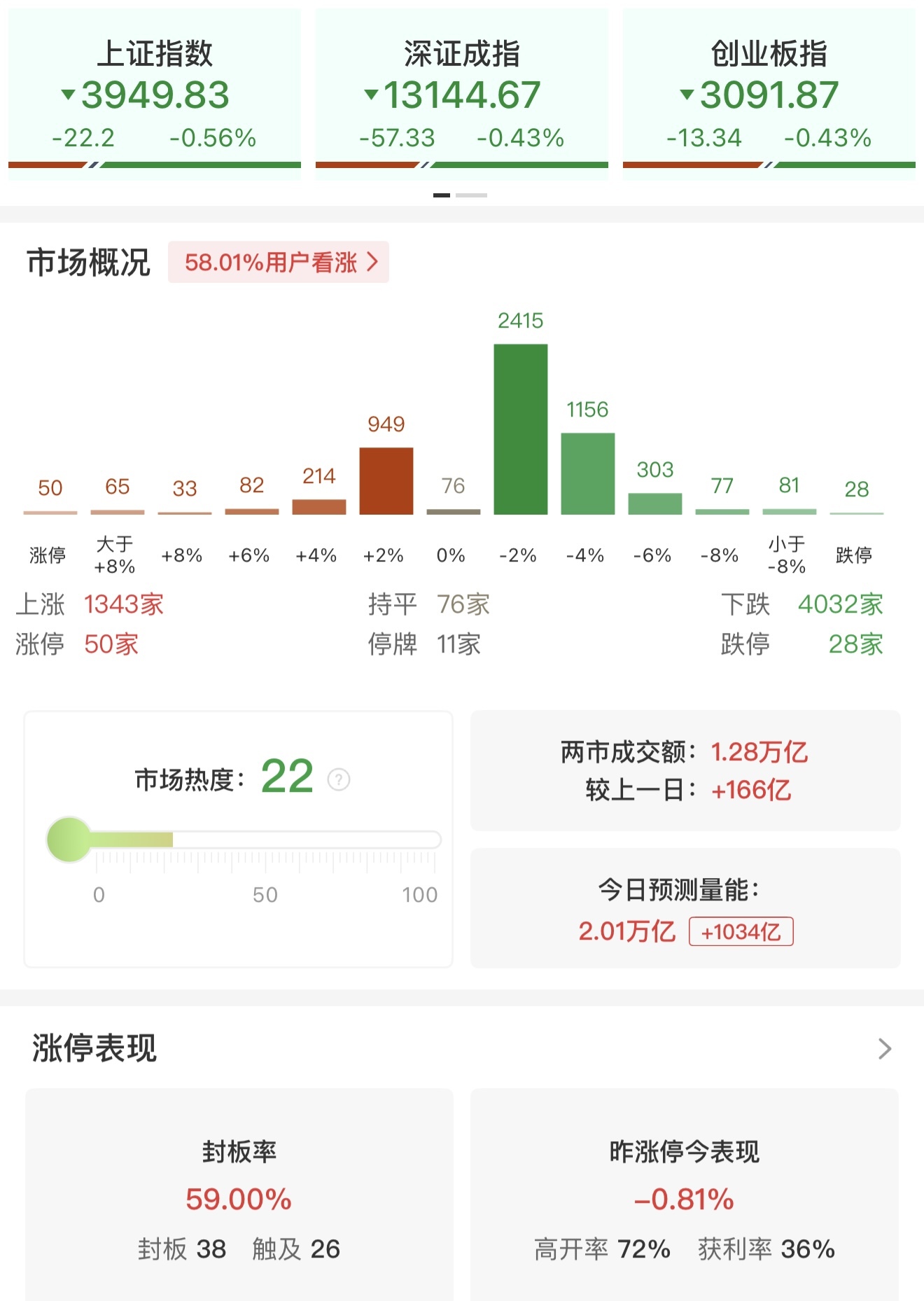
Market Overview - The market experienced fluctuations in early trading, with the Shanghai Composite Index closing down by 0.56%, the Shenzhen Component Index down by 0.43%, and the ChiNext Index also down by 0.43% [1][2] - The total trading volume in the Shanghai and Shenzhen markets reached 1.28 trillion yuan, an increase of 16.6 billion yuan compared to the previous trading day [1][2] Sector Performance - The AI application sector saw significant gains, with stocks like Rongji Software and Inspur Software achieving consecutive gains, and over ten stocks hitting the daily limit [1][2] - The semiconductor sector was also active, with Tongyi Co. and Longxin Co. both hitting the daily limit [1][2] - The robotics sector showed localized strength, with Shoukai Co. achieving three gains in five days [1][2] Declining Sectors - The Fujian and lithium battery sectors experienced collective declines, with the Fujian sector suffering heavy losses, leading to multiple stocks like Fujian Jinsen and Fujian Cement hitting the daily limit down [1][2] - The lithium battery sector showed weakness, with Shida Shenghua hitting the daily limit down [1][2] Summary of Key Stocks - Notable stocks include Rongji Software, Shida Shenghua, Fujian Cement, Tongyi Co., Fujian Jinsen, Xuanyuan International, Inspur Software, Shoukai Co., and Longxin Co. [2][3]



AI应用板块,逆势大涨
财联社· 2025-11-18 03:52
今日A股早盘震荡调整,深成指、创业板指翻红后再度回落。沪深两市半日成交额1.28万亿,较上个交易日放量166亿。盘面上热点较为杂乱,全市 场超4000只个股下跌。 下载财联社APP获取更多资讯 准确 快速 权威 专业 7x24h电报 头条新闻 VIP资讯 实时盯盘 从板块来看, AI应用概念大涨, 榕基软件、浪潮软件2连板,宣亚国际等10余股涨停。半导体概念表现活跃,同益股份20cm涨停,龙迅股 份涨停。机器人概念股局部走强,首开股份5天3板。 下跌方面, 福建、锂电池等热门板块集体下挫。 其中福建板块重挫,福建金森、福建水泥等多股跌停。锂电池板块震荡走弱,石大胜华跌 停。板块方面,AI应用、半导体等板块涨幅居前,煤炭、电池、钢铁等板块跌幅居前。截至收盘,沪指跌0.56%,深成指跌0.43%,创业板 指跌0.43%。 ...

午评:沪指半日跌0.56% AI应用方向逆势大涨
Feng Huang Wang· 2025-11-18 03:43
11月18日,市场早盘震荡调整,深成指、创业板指翻红后再度回落。 涨停表现 | 封板率 | 昨涨停今表现 | | --- | --- | | 59.00% | -0.81% | | 封板 38 触及 26 | 高开率 72% 获利率 | 沪深两市半日成交额1.28万亿,较上个交易日放量166亿。盘面上热点较为杂乱,全市场超4000只个股下跌。 从板块来看,AI应用概念大涨,榕基软件、浪潮软件2连板,宣亚国际等10余股涨停。半导体概念表现活跃,同益股份20cm涨停,龙迅股份涨停。机器人概 念股局部走强,首开股份5天3板。下跌方面,福建、锂电池等热门板块集体下挫。其中福建板块重挫,福建金森、福建水泥等多股跌停。锂电池板块震荡走 弱,石大胜华跌停。 板块方面,AI应用、半导体等板块涨幅居前,煤炭、电池、钢铁等板块跌幅居前。截至收盘,沪指跌0.56%,深成指跌0.43%,创业板指跌0.43%。 ...
清仓英伟达!“风投教父”旗下蒂尔宏观基金出手了
Cai Jing Wang· 2025-11-18 02:35
Core Viewpoint - A notable investor, Peter Thiel, has completely exited his investment in Nvidia, raising concerns about the company's high valuation and the sustainability of the AI hype cycle [2][4]. Group 1: Investment Actions - Peter Thiel's Thiel Macro Fund sold approximately 537,742 shares of Nvidia, representing nearly 40% of its portfolio, with the sale valued at nearly $100 million based on Nvidia's average stock price during the period [2]. - Bridgewater Associates also reduced its Nvidia holdings by nearly 4.72 million shares, decreasing its stake by 65.3% to 2.51 million shares by the end of the third quarter [3]. - Thiel Macro Fund's overall portfolio turnover exceeded 80%, with total holdings dropping from $212 million to $74.4 million [4]. Group 2: New Investments - The Thiel Macro Fund significantly increased its positions in Microsoft and Apple, acquiring 49,000 shares of Microsoft and 79,181 shares of Apple during the third quarter [4]. - The fund completely divested from Vistra Energy Corp, selling 208,747 shares, and reduced its Tesla holdings from 272,613 shares to 65,000 shares, a reduction of 76% [4]. Group 3: Investment Philosophy - Thiel believes that while AI is transformative, it progresses slowly, and that platform-based software service companies provide sustainable economic growth rather than high-valuation "pure chip companies" [5]. - Microsoft and Apple are viewed as stronger investments due to their robust debt structures, solid free cash flow, and mature diversified business models, particularly in the integration of AI, cloud, and devices [5].

平安证券(香港)港股晨报-20251118
Ping An Securities Hongkong· 2025-11-18 02:13
Market Overview - The Hong Kong stock market experienced fluctuations, with the Hang Seng Index closing at 23,831 points, down 145 points or 0.61% [1] - The market turnover decreased to 82.799 billion HKD, with net inflows of 484 million HKD recorded in the Hong Kong Stock Connect [1][5] - The US stock market also faced declines, with the Dow Jones falling 1.2% to 46,590 points, influenced by pressure on the technology sector [2] Sector Performance - In the Hong Kong market, local real estate, software, and 5G concept sectors saw significant declines, while gold stocks performed well [1] - The technology sector in the US was notably affected, with major companies like Nvidia and Apple experiencing stock price drops [2] - The report highlights the performance of various sectors, indicating that electric equipment, pharmaceutical, non-ferrous metals, chemicals, and banking sectors underperformed, while software services, consumer goods, coal, and real estate sectors showed strength [1] Investment Opportunities - The report suggests continued focus on sectors such as artificial intelligence, semiconductors, and industrial software, which are seen as new productivity drivers [3] - It emphasizes the value of Hong Kong stocks with Chinese assets, particularly in state-owned enterprises with lower valuations and higher dividends [3] - The report also points to opportunities in upstream non-ferrous metals benefiting from expectations of interest rate cuts by the Federal Reserve [3] Company Highlights - Baidu, as the largest Chinese search engine, is expanding its AI capabilities, with a focus on intelligent driving and related technologies [10] - The company reported a revenue of 32.713 billion CNY for Q2 2025, a year-on-year decrease of 3.59%, but a net profit increase of 33.42% [10] - The report indicates that Baidu's AI applications are gaining traction, with significant advancements in its AI strategy shared during the Baidu World Conference [10] Economic Data - The Ministry of Finance reported that the national general public budget revenue for the first ten months of the year reached 18.65 trillion CNY, a year-on-year increase of 0.8% [9] - The report highlights a significant increase in securities transaction stamp duty, which rose by 88.1% year-on-year, indicating an active secondary market [9] - The report also notes that the total credit card receivables in Hong Kong reached 151 billion HKD by the end of Q3 2025, reflecting a growing consumer credit environment [11]
Peter Thiel,也清仓了英伟达
3 6 Ke· 2025-11-18 00:28
继软银清仓、桥水大幅减持英伟达后,亿万富翁、硅谷最具影响力的投资人之一Peter Thiel(彼得·蒂 尔)也已清仓离场。 多位投资巨头的接连减持,无疑向狂热的AI市场发出了一个明确的谨慎信号。 根据向美国证券交易委员会(SEC)提交的最新13F持仓报告,Thiel Macro LLC在第三季度完全退出 了对英伟达的投资。 这一举动尤为引人注目,因为它发生在英伟达市值突破5万亿美元、华尔街分析师普遍将其视为"不可动 摇"的领头羊之际。并且,11月19日英伟达即将发布最新财报。 与清仓同步进行的,是一次彻底的投资组合重塑。该基金大幅削减了其美股总持仓,从第二季度的约 2.12亿美元降至仅7440万美元。与此同时,基金建立了在微软和苹果的大额新头寸。 投资组合大换血:清仓AI龙头,总持仓缩水三分之二 Thiel Macro LLC在第三季度的操作堪称激进。文件显示,该基金不仅清仓了占其上一季度投资组合权 重高达40%的英伟达、卖出了全部53.77万股,还抛售了另一笔占权重19%的重要持仓Vistra Energy。 此举与英伟达自身强劲的基本面形成了鲜明对比。据报道,英伟达的季度销售额从393亿美元飙升至467 ...
心动中国资产:四季度外资调研超千次,股票持仓升至1.1%
2 1 Shi Ji Jing Ji Bao Dao· 2025-11-17 23:19
Group 1 - Foreign institutional investors have increased their holdings in Chinese stocks, with the allocation rising from -1.6% to -1.3% in Q3 2025, marking the highest level since Q1 2023 at 1.1% for the top 40 global investment institutions [1][3] - The sectors with the most significant increases in foreign investment include healthcare, insurance, energy, materials, and the internet, while automotive and technology sectors saw reductions [2][3] - The trend of foreign capital inflow into Chinese assets remains strong, with southbound capital inflows reaching $56 billion, maintaining record levels from Q1 2025, particularly in consumer discretionary, financials, and healthcare [4] Group 2 - A significant number of foreign institutions have conducted research on A-share companies, with nearly 1,300 investigations from October 1 to November 14, led by Goldman Sachs, Citigroup, and Morgan Stanley [2][6] - The most researched companies include Huaming Equipment, Optoelectronics, and United Imaging, indicating a strong interest in sectors like electrical components, electronic devices, and healthcare equipment [6] - Foreign investors are optimistic about opportunities in AI, engineering machinery, non-ferrous metals, and the advantages of Chinese manufacturing, suggesting a potential for market recovery and growth [7][8] Group 3 - The outlook for foreign capital inflow into Chinese assets is positive, with expectations of continued liquidity support from the Federal Reserve's policies and a growing attractiveness of A-shares in the global market [9]
Bullish to Report Q3 Earnings: What's in Store for the Stock?
ZACKS· 2025-11-17 18:31
Core Insights - Bullish (BLSH) is expected to report third-quarter 2025 results on November 19, 2025, with total adjusted revenue projected between $69 million and $76 million, and adjusted transaction revenue estimated at $25.5 million to $28 million [1][9] - The Zacks Consensus Estimate for earnings remains steady at 8 cents per share, with the revenue consensus pegged at $74.10 million [1] Revenue Drivers - The third-quarter performance of Bullish is anticipated to benefit from strong growth in Subscription Services and Other revenue, driven by Liquidity Services and CoinDesk-branded products [2][9] - The Liquidity Services business, particularly through collaboration with Solana and agreements with stablecoin issuers, is expected to significantly boost Subscription Services and Other revenue, projected to be between $43.5 million and $48.0 million for the quarter [3] - The CoinDesk Indices business is also expected to contribute positively, especially following the SEC approval of the Grayscale ETF based on the CoinDesk 5 index, which saw assets under management increase to $41 billion, up over $9 billion from the previous quarter [4] Regulatory Developments - The recent approval of the New York BitLicense is a key factor expected to benefit Bullish, allowing the company to officially launch its exchange in the U.S., which is anticipated to become its largest trading market [5] - The BitLicense provides regulatory clarity that is crucial for attracting institutional clients [5] Market Challenges - Fluctuations in Bitcoin prices may negatively impact Bullish's performance due to potential reductions in market-wide digital asset trading volumes [6] Earnings Expectations - According to the Zacks model, Bullish has an Earnings ESP of 0.00% and a Zacks Rank of 2, indicating a moderate outlook for an earnings beat [7]