
中国制造优势

Search documents
货与钱的终极对决:为什么说中国制造才是这场博弈的硬通货?
Sou Hu Cai Jing· 2026-02-21 03:28
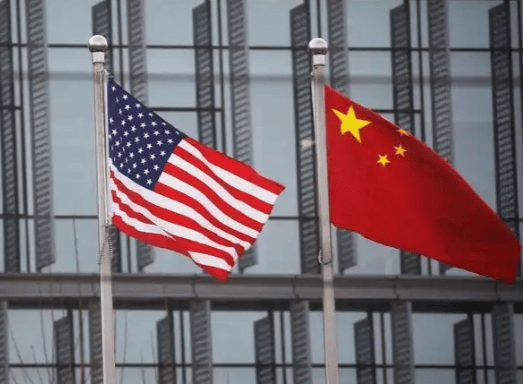
Group 1 - The U.S. national debt of $39 trillion poses a significant burden, with annual interest payments of $1.2 trillion exceeding Sweden's entire GDP [1] - By 2026, military spending and manufacturing repatriation plans will require $1.4 trillion, while the Federal Reserve faces a dilemma between lowering interest rates, which could trigger a mortgage crisis, and maintaining high rates, which exacerbates the debt cycle [1] - Tariffs imposed on China have resulted in 90% of the costs being passed on to American consumers, with Walmart's share of Chinese goods projected to rise to 28% in 2024, indicating that "decoupling from China" is more of a political illusion [1] Group 2 - China remains a dominant player in global manufacturing, producing over 40% of 504 major industrial products, with electric vehicle production at 13 million units annually (65% of global share) and industrial robot installations at 54% [1] - A Boston Consulting report indicates that the comprehensive cost of manufacturing in China is still 17% lower than in Vietnam and 23% lower than in Mexico, leading U.S. dental equipment importers to prefer sourcing from China despite a 25% tariff [1] - Although China's export share to the U.S. has decreased from 19.2% to 14.7%, exports to ASEAN are surging, with an 18.3% increase in 2024, and 60% of these goods are processed for final sale in Europe and the U.S. [1] Group 3 - The dominance of the U.S. dollar is facing challenges, with global foreign exchange reserves falling below 55%, 40 countries initiating local currency settlements, and the Federal Reserve's balance sheet shrinking by $1.5 trillion [2] - The renminbi, supported by China's 31% share of global manufacturing, has become the preferred settlement currency for 23 countries, highlighting a potential shift in global economic power [2] - China's high-tech product exports are projected to reach 29.8% in 2024, with solar components and lithium batteries holding global market shares of 85% and 72%, respectively, indicating a significant industrial transition [2]

德媒:中企正攻击德国工业的最后堡垒
Xin Lang Cai Jing· 2025-11-30 09:25
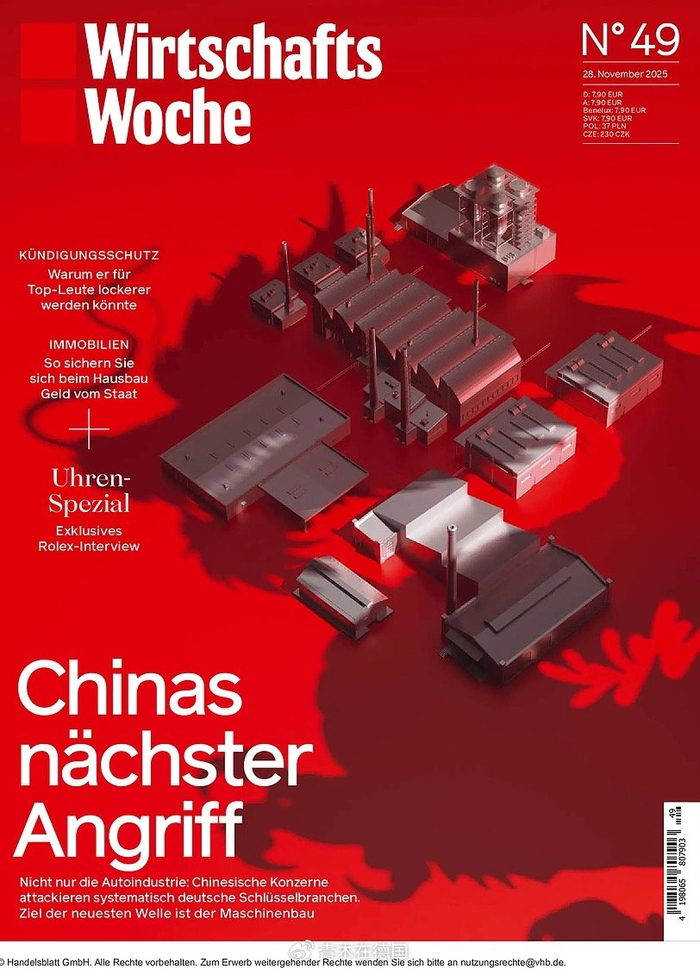
Core Insights - The article discusses the strategic challenge posed by Chinese companies to Germany's mechanical engineering sector, which is considered the last major stronghold of German industry [1][4]. Group 1: Competitive Landscape - A study by Infront reveals that over 60% of European mechanical manufacturers feel they have lost or will lose their technological, quality, or brand advantages by the end of this decade [4]. - 75% of European mechanical manufacturers view competition from Chinese rivals as the "most pressing strategic challenge" globally [4]. - Chinese competitors are increasingly replacing German products in various sectors, such as Sany's forklifts overtaking Jungheinrich's models and Mindray's medical equipment competing with Siemens Healthineers [7]. Group 2: Industry Dynamics - The competitive edge of German mechanical engineering is declining due to late product launches, high prices, and insufficient user focus, leading to a loss of value associated with high-end European products [5][10]. - The COVID-19 pandemic has accelerated the shift, allowing Chinese manufacturers to capture market share as German companies cut production [10]. - Chinese executives perceive the current state of European mechanical engineering as lacking practicality, speed, and scalable innovation [10]. Group 3: Strategic Recommendations - German companies need to adopt more flexible business models and continuously adjust their product range and quality to compete effectively [12]. - Decisions aimed at the Chinese market may increasingly need to be made within China, as exemplified by Volkswagen's ability to independently develop and produce vehicles for the Chinese market [12]. - The value of the "Made in Germany" label is diminishing, while "Made in China" is becoming synonymous with innovation, cost-effectiveness, and new designs [12].
心动中国资产:四季度外资调研超千次,股票持仓升至1.1%
2 1 Shi Ji Jing Ji Bao Dao· 2025-11-17 23:19
Group 1 - Foreign institutional investors have increased their holdings in Chinese stocks, with the allocation rising from -1.6% to -1.3% in Q3 2025, marking the highest level since Q1 2023 at 1.1% for the top 40 global investment institutions [1][3] - The sectors with the most significant increases in foreign investment include healthcare, insurance, energy, materials, and the internet, while automotive and technology sectors saw reductions [2][3] - The trend of foreign capital inflow into Chinese assets remains strong, with southbound capital inflows reaching $56 billion, maintaining record levels from Q1 2025, particularly in consumer discretionary, financials, and healthcare [4] Group 2 - A significant number of foreign institutions have conducted research on A-share companies, with nearly 1,300 investigations from October 1 to November 14, led by Goldman Sachs, Citigroup, and Morgan Stanley [2][6] - The most researched companies include Huaming Equipment, Optoelectronics, and United Imaging, indicating a strong interest in sectors like electrical components, electronic devices, and healthcare equipment [6] - Foreign investors are optimistic about opportunities in AI, engineering machinery, non-ferrous metals, and the advantages of Chinese manufacturing, suggesting a potential for market recovery and growth [7][8] Group 3 - The outlook for foreign capital inflow into Chinese assets is positive, with expectations of continued liquidity support from the Federal Reserve's policies and a growing attractiveness of A-shares in the global market [9]
心动中国资产!四季度外资调研超千次,股票持仓升至1.1%
2 1 Shi Ji Jing Ji Bao Dao· 2025-11-17 13:13
Group 1: Foreign Investment Trends - Foreign institutional investors have increased their holdings in Chinese stocks, with the allocation rising from -1.6% to -1.3% in Q3 2025, marking the highest level since Q1 2023 at 1.1% for the top 40 global investment institutions [1][2] - The sectors with the most significant increases in foreign investment include healthcare, insurance, energy, materials, and the internet, while automotive and technology sectors saw reductions [2][3] Group 2: A-Share Market Research - From October 1 to November 14, foreign institutions conducted nearly 1300 research visits to A-share listed companies, with Goldman Sachs, Citigroup, and Morgan Stanley leading in the number of visits [1][5] - The most researched companies included Huaming Equipment, Optoelectronics, and United Imaging, indicating strong interest in sectors like electrical components, medical equipment, and industrial machinery [5] Group 3: Investment Focus Areas - Foreign institutions are optimistic about opportunities in AI, engineering machinery, non-ferrous metals, and the advantages of Chinese manufacturing, with a belief that the overall valuation of the A-share market remains reasonable [6][7] - The shift in investor sentiment reflects a growing recognition of the resilience and advantages of the manufacturing sector amid the transition from old to new economic drivers [7] Group 4: Future Outlook - There is an expectation that foreign capital inflow into Chinese assets will continue, supported by anticipated monetary easing from the Federal Reserve and a favorable environment for A-shares in the context of global capital rebalancing [8]
收评:沪指微跌0.07%险守4000点 保险板块逆势走强
Xin Hua Cai Jing· 2025-11-12 07:31
Market Overview - The A-share market experienced fluctuations, with the Shanghai Composite Index closing at 4000.14 points, down 0.07%, and total trading volume at 840.5 billion yuan [1] - The Shenzhen Component Index closed at 13240.62 points, down 0.36%, with a trading volume of 1104.6 billion yuan, while the ChiNext Index closed at 3122.03 points, down 0.39%, with a trading volume of 492.9 billion yuan [1] - The total trading volume of the Shanghai and Shenzhen markets was below 2 trillion yuan, showing a slight decrease compared to the previous trading day [1] Sector Performance - The insurance, mining, pharmaceutical retail, medical devices, and beauty care sectors showed the highest gains, while sectors such as photovoltaic equipment, non-metallic materials, wind power equipment, power equipment, grid equipment, and electronic chemicals experienced the largest declines [1] - The oil and gas sector saw significant gains, with companies like PetroChina and Zhenhua Oil reaching their daily limit [2] - The pharmaceutical sector continued to rise, led by cell immunotherapy concepts, with stocks like Kaineng Health and Jimin Health hitting their daily limit [2] Individual Stock Movement - Overall, more stocks declined than rose, with over 1700 stocks increasing in value and nearly 80 stocks hitting their daily limit [3] Institutional Insights - According to Jifeng Investment Advisory, the market showed signs of recovery, particularly in the oil and gas extraction sector, with the China Securities Regulatory Commission emphasizing the need for stability in the capital market [4] - Morgan Stanley believes that the long-term profitability of A-share listed companies will steadily improve, driven by China's manufacturing advantages [4] - CITIC Securities highlights three main investment themes: the pricing power of Chinese manufacturing, the deepening of enterprises going abroad, and the continuation of the technology market [5] Regulatory Developments - The Vice Chairman of the China Securities Regulatory Commission, Li Ming, stated the importance of enhancing the inherent stability of the capital market and preventing extreme market fluctuations [6] - The Shanghai Stock Exchange's International Investor Conference emphasized the need for comprehensive reforms in investment and financing to support the stable operation of the capital market [6]
专访中金公司李求索:资本市场有望呈现“稳进”趋势
Nan Fang Du Shi Bao· 2025-10-28 10:30
Core Insights - The "15th Five-Year Plan" is positioned as a critical period for achieving the 2035 long-term goals, serving as a transitional phase between the previous and upcoming plans [3][4] - The capital market is expected to experience opportunities during the "15th Five-Year Plan," characterized by three main aspects: the ongoing revaluation of Chinese assets, the rise of AI trends, and the advantages of Chinese manufacturing [4][5] Group 1: Historical Context and Strategic Importance - The "15th Five-Year Plan" is a key phase for realizing the 2035 vision of achieving basic socialist modernization, bridging the "14th" and "16th" plans [3] - It is also crucial for completing the reform tasks set out in the 20th Central Committee's third plenary session by 2029, which includes over 300 significant reform measures across various sectors [3] Group 2: Capital Market Opportunities - The capital market during the "15th Five-Year Plan" is characterized by three main opportunities: 1. The ongoing revaluation of Chinese assets, which may still be in its early stages due to the restructuring of the international monetary order [4] 2. The AI wave, where China is positioned favorably in global AI competition, leveraging its market size, industrial ecosystem, and policy support [4] 3. The advantages of Chinese manufacturing, which holds nearly 30% of global manufacturing value added and leads in the production of most major industrial products [5] Group 3: Market Trends and Characteristics - The capital market is anticipated to show a "long-term" and "steady" trend during the "15th Five-Year Plan," supported by several factors: 1. Increased government focus on capital market development, which is expected to play a significant role in achieving the 2035 goals [6] 2. The current A-share market is underpinned by solid fundamentals, benefiting from a large market environment and policy incentives [6] 3. Historical data indicates that A-share valuations remain reasonable, suggesting no overvaluation at present [6] Group 4: Historical Market Performance - Since the "15th" plan in 2001, the A-share market has exhibited three notable characteristics: 1. The index has shown more gains than losses, with increasing resilience over time, as evidenced by varying performance across different five-year plans [6][7] 2. Market performance tends to be stronger in the initial and final years of each five-year plan, indicating a correlation with planning expectations and goal achievements [7] 3. Short-term event-driven effects are significant, with positive market performance observed in the lead-up to and following the release of five-year planning documents [7]


中金深度:“十五五”投资蓝图初探
中金点睛· 2025-10-16 23:32
Core Viewpoint - The "14th Five-Year Plan" is entering a critical policy window, with increased market attention on its implications for capital markets and industry development [2][11]. Group 1: Historical Positioning of the "14th Five-Year Plan" - The "14th Five-Year Plan" is a key phase for achieving the 2035 long-term goals, bridging the previous and upcoming plans [3][12]. - It is also crucial for completing the reform tasks set by the 20th Central Committee by 2029, with over 300 important reform measures proposed [3][12]. Group 2: Important Directions for Capital Markets During the "14th Five-Year Plan" - Key areas of focus include digital technology (AI, 6G, quantum technology), space economy (low-altitude economy, commercial aerospace, deep-sea technology), high-end manufacturing (embodied intelligence, aerospace technology, solid-state batteries), domestic consumption (new consumption, quality upgrades), and healthcare (innovative drugs, high-end medical devices) [4][9]. Group 3: Capital Market Performance Characteristics During Previous Five-Year Plans - Historical data shows that A-share indices have generally risen during five-year plans, with the Shanghai Composite Index showing varied performance: -44.0%, +141.9%, +26.0%, -1.9%, and +13.3% across different plans [5]. - The "14th Five-Year Plan" period has seen a steady increase in A-share resilience and risk resistance, with a market capitalization exceeding 100 trillion yuan [5]. Group 4: Market Outlook for the "14th Five-Year Plan" - The "14th Five-Year Plan" is expected to create opportunities in the context of global monetary system restructuring, AI trends, and China's manufacturing advantages [8][9]. - The capital market is anticipated to exhibit a "long-term" and "steady" trend, supported by government emphasis on capital market development and favorable macroeconomic conditions [9]. Group 5: Industry-Specific Insights - **Digital Technology**: The AI industry is expected to accelerate, with significant advancements in AI applications and quantum technology development [18][19]. - **Space Economy**: The commercial aerospace sector, particularly satellite internet, is poised for growth, supported by government policies and technological advancements [19][20]. - **High-End Manufacturing**: The sector is expected to benefit from technological innovations and policy support, with a focus on embodied intelligence and solid-state batteries [21][24]. - **Domestic Consumption**: New consumption trends are emerging, with a shift towards personalized and quality-driven consumption patterns [25][26]. - **Healthcare**: The innovative drug and high-end medical device sectors are projected to grow significantly, driven by supportive policies and market demand [28][29].

中金:配置上关注产业逻辑相对扎实的行业
Zheng Quan Shi Bao Wang· 2025-09-08 00:13
Group 1 - The report from China International Capital Corporation (CICC) suggests a favorable liquidity outlook, highlighting mid to long-term advantages in sectors such as communication equipment, semiconductors, electronic hardware, solid-state batteries, innovative pharmaceuticals, national defense, and robotics [1] - The competitive edge of Chinese manufacturing is emphasized, with a focus on white goods, construction machinery, and power grid equipment that have established overseas production capacity and are benefiting from trade growth with non-US economies [1] - The recovery in capital market sentiment is expected to boost financial performance, particularly in the insurance and brokerage sectors [1] Group 2 - The "anti-involution" trend is leading to a contraction in industry supply, with policy initiatives expected to stabilize demand, particularly in the photovoltaic sector [1] - There may be differentiation within dividend sectors, with an emphasis on quality cash flow, volatility, and dividend certainty, particularly in telecommunications and banking [1]