乡村旅游

Search documents
联农带农走实共富路
Jing Ji Ri Bao· 2025-06-03 22:14
"五一"假期,湖北谷城县堰河村民俗园成为新的游客打卡点。秀丽山水和独特民俗吸引众多游客,节日 期间,堰河村接待游客4万人次,同比增长30%,综合收入7000多万元。 民俗园项目的顺利推进,得益于村里探索推行的"三三制",即村党委、村委会、经济组织"三位一体"的 组织架构,村党委会议议事、村民代表大会定事、村民委员会理事的"三会治事"民主管理机制,支部联 产业、干部联项目、党员联农户的"三联共建"工作措施。 村党委将合作社、茶场、农业和养殖4个党支部建在产业上,村党委成员"一棵草顶一颗露水珠",在各 自产业上发光发热。闵洪艳说:"新时代的村干部,不仅要会治村,还要能带领村民增收,这样才有号 召力和凝聚力。" 山绿了,水清了,茶山的名气越来越响,来村里买茶品茶的人也多起来了。堰河村顺势发展乡村旅游, 2007年堰河村成立生态旅游经济专业合作社,首期融资60万元用于发展生态旅游以及开发旅游产品。最 初,仅有25户农户抱着试试看的心态参与。随着文旅产业的蛋糕越做越大,2022年,村民全部入 股。"现在的分红比例是55%,今后会逐步提升至100%。入多少就分多少,年年有、年年增。"闵洪艳 底气十足地说。 乡村振兴需要壮 ...
沙漠村吃上旅游饭
Jing Ji Ri Bao· 2025-06-03 22:12
Group 1 - The core viewpoint of the articles highlights the transformation of rural tourism in the Inner Mongolia Autonomous Region, particularly in the village of Guandianfang, where local residents are increasingly engaging in tourism-related activities to boost their income [1][2] - The village has developed a range of tourism services, including homestays, farm experiences, and adventure activities, significantly improving the livelihoods of local residents [1] - The local government is actively promoting rural tourism by enhancing infrastructure, organizing training for service providers, and planning seasonal activities to attract visitors year-round [1][2] Group 2 - The local tourism bureau is focused on upgrading rural tourism by leveraging regional resources, which includes building key tourism towns and demonstration villages [2] - Future plans include the establishment of a premium homestay cluster and the integration of tourism resources to improve service quality and support local economic growth [2]
小镇葡萄园里的“三产融合经”
Ren Min Wang· 2025-06-01 00:50
Core Insights - The article highlights the integration of modern agricultural practices with tourism and local economic development in the Fuling Meixin Red Wine Town, showcasing a successful model of rural revitalization [1][2][3] Group 1: Agricultural Practices - The vineyard employs advanced techniques such as precision pruning and an IoT-based irrigation system, which saves over 40% water per acre [1] - The use of green technologies, including insect-proof bags and bio-fertilizers, has led to a 60% reduction in pesticide usage [2] Group 2: Economic Impact - The vineyard and associated activities attract nearly 7 million visitors annually, benefiting over 200 local households through various income-generating channels [2] - The revenue from the derived industries, including ecological farming and product processing, exceeds 10 million yuan annually [2] Group 3: Future Developments - Plans are in place to introduce shade-tolerant medicinal herbs under the grapevines and develop wellness products related to wine [3] - A new "cloud adoption" program will allow urban residents to remotely adopt grapevines and receive customized wine labels, enhancing consumer engagement [3]
四川出台11条政策措施,支持乡村旅游高质量发展
Zhong Guo Chan Ye Jing Ji Xin Xi Wang· 2025-05-30 22:53
Core Viewpoint - Sichuan province has introduced 11 policy measures to support the high-quality development of rural tourism, aiming to strengthen the rural tourism industry and promote regional economic development, contributing to comprehensive rural revitalization [1] Group 1: Financial Support and Investment - The government encourages the use of various funding sources, including budget investments and special funds, to support eligible rural tourism projects [2] - Financial institutions are encouraged to develop specialized financial products for rural tourism, and social capital is invited to invest in rural tourism projects through various means [2] Group 2: Infrastructure Development - Support is provided for the construction of rural tourism infrastructure, including the transformation of rural roads into tourist routes and the integration of tourism facilities into municipal engineering plans [3] - The policy promotes the revitalization of idle assets for rural tourism, allowing farmers to utilize their properties for tourism projects [4] Group 3: Land Use and Regulations - The policy supports the temporary use of land for tourism facilities without changing the original land use, ensuring compliance with environmental and safety regulations [4][5] - Specific land use guarantees are provided for major rural tourism projects, with a focus on supporting areas with deep poverty [5] Group 4: Market Development and Product Innovation - The initiative encourages the development of unique rural tourism products that highlight local culture and heritage, including outdoor sports tourism [6] - Support is extended to the healthy development of rural homestays, with a focus on safety and regulatory compliance [9] Group 5: Brand and Talent Development - Financial incentives are offered for villages recognized as top tourism destinations, promoting the establishment of distinctive rural tourism brands [10] - The policy emphasizes the importance of talent development in rural tourism, encouraging training programs and professional development for individuals involved in the sector [11]
“人地钱技”破壁流动:解码广东“百千万工程”集成打法
2 1 Shi Ji Jing Ji Bao Dao· 2025-05-30 14:55
Core Viewpoint - The "Hundred Counties, Thousand Towns, and Ten Thousand Villages" project in Guangdong aims to modernize rural areas and reshape the economic landscape by promoting the free flow of resources and enhancing local industries, ultimately driving social transformation [1][4]. Group 1: Project Implementation and Goals - The "Hundred Thousand Project" was launched in December 2022 with a phased goal: achieving initial results in three years, significant changes in five years, and fundamental transformations in ten years [1]. - The project focuses on integrating new industrialization, urbanization, and rural revitalization, with a specific emphasis on developing 22 new urbanization pilot areas and cultivating typical towns and villages [1][2]. Group 2: Economic Growth and Structural Changes - In 2024, 57 counties in Guangdong are projected to have economic growth rates exceeding the provincial average, with 17 districts and counties entering the national top 100 rankings [2][4]. - The county of Zhaoqing's Sihui has successfully established a complete industrial ecosystem in the new energy vehicle sector, attracting 109 key enterprises and achieving an economic total of 81.8 billion yuan in 2024 [3][4]. Group 3: Environmental and Social Improvements - The project has led to significant improvements in rural living conditions, with a 97% sanitation rate for rural toilets and the construction of 4,156 kilometers of beautiful rivers and parks [4][5]. - The initiative has also resulted in the addition of over 2,100 hectares of green space and 7,919 kilometers of green belts, enhancing the ecological landscape [5]. Group 4: Innovative Economic Models - The project promotes a diversified economic model, encouraging the development of high-efficiency ecological agriculture and rural tourism, which helps to revitalize idle resources and increase farmers' incomes [6][7]. - The branding of local agricultural products, such as the "Eastern Love Fruit" lychee, has been emphasized to enhance value and marketability, with significant export agreements reached [7][8]. Group 5: Income Growth - In the first quarter of 2025, urban residents in Guangdong had a per capita disposable income of 18,467 yuan, while rural residents reached 8,021 yuan, with rural income growth outpacing urban growth by 1.8 percentage points [8].
广东“造血”,喀什“焕新”:南疆明珠“粤”来越好
21世纪经济报道· 2025-05-30 14:24
Core Viewpoint - The article highlights the significant impact of Guangdong's aid to Xinjiang, particularly in the Kashgar region, focusing on improvements in education, healthcare, and economic development, which are fostering sustainable growth and enhancing local living standards [4][32]. Group 1: Economic Development - In Q1 2025, Kashgar's GDP reached 32.457 billion yuan, marking a 5.8% year-on-year increase, with industrial output value growing by 22.2% and retail sales of consumer goods increasing by 8.2% [4][5]. - From 2020 to 2024, Kashgar's GDP grew from 1129.81 billion yuan to 1626.88 billion yuan, with a 6.1% increase in 2024, outpacing the national average [31][32]. - The textile industry in Kashgar accounted for 12.1% of the region's industrial output value in Q1 2025, with a remarkable growth rate of 54.5% [18]. Group 2: Healthcare Improvements - The establishment of the Southern Xinjiang National Medical Center has significantly upgraded local healthcare services, with a reported annual outpatient volume exceeding 33,000 and a bed occupancy rate of 85% [10][11]. - The number of healthcare institutions in Kashgar increased from 3,398 in 2020 to 3,785 in 2024, with hospital beds rising from 20,025 to 25,108 [15]. - The introduction of a "group-style" medical aid model has enhanced the quality of healthcare, focusing on both hardware and software improvements in local medical facilities [9][10]. Group 3: Educational Advancements - The establishment of vocational training programs, such as the Cantonese Cuisine Academy, aims to equip local students with skills relevant to the hospitality industry, with 100 full-time students enrolled by 2024 [18][21]. - By 2024, Kashgar had established 122 junior high schools and 59 high schools, with a total enrollment of approximately 329,900 students in junior high and 149,200 in high school [22][23]. - The educational initiatives are transitioning from "giving fish" to "teaching to fish," focusing on long-term talent development in the region [22][24]. Group 4: Cultural and Tourism Development - The transformation of the "Xinjiang National Musical Instrument Village" into a 3A-level tourist attraction has attracted over 70,000 visitors, enhancing local tourism and providing employment opportunities [28][29]. - The tourism market in the Tiemu Chuke city saw a 15.93% increase in visitors, reaching 530,600 in Q1 2025, with tourism consumption growing by 17.92% to 250 million yuan [27][28]. - New businesses, such as eco-friendly restaurants, are emerging in response to the growing tourism sector, contributing to local economic diversification [25][27].


200万元、100万元、50万元……多档资金奖补支持乡村旅游品牌打造
Si Chuan Ri Bao· 2025-05-30 01:29
Core Viewpoint - The Sichuan Provincial Government has introduced a policy to support the high-quality development of rural tourism, providing financial incentives and various forms of support to enhance the sector's growth and sustainability [1][2]. Financial Support - The policy includes one-time project subsidies of 2 million yuan for newly recognized "Best Tourism Villages" by the UN, and 1 million yuan and 500,000 yuan for newly recognized national key rural tourism towns and villages respectively [1][3]. - The government aims to encourage the integration of financial resources across departments to support rural tourism projects, leveraging government investment funds to attract private capital [2]. Infrastructure and Land Use - The policy addresses land use issues critical to rural tourism development, ensuring that land needed for tourism projects is secured, especially in impoverished areas [4]. - It supports the construction of temporary tourism facilities on underutilized land, including campsites and other non-permanent structures, without the need for land conversion [4]. Rural Accommodation Development - The number of rural homestays in Sichuan is projected to exceed 23,000 by 2024, with a focus on enhancing their development through regulatory support and joint approval processes [5]. - The policy emphasizes the importance of rural homestays in extending visitor stays and boosting the rural tourism economy [5]. Talent Development - The policy encourages the professional development of rural tourism personnel, allowing qualified individuals to apply for senior professional titles based on their contributions [5].
让方寸地成为“聚宝盆”(因地制宜发展庭院经济)
Ren Min Ri Bao· 2025-05-29 22:21
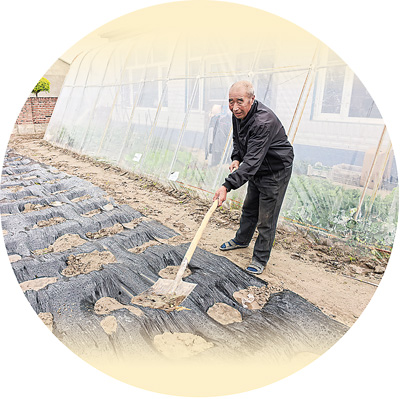
Core Viewpoint - The development of courtyard economy in Longling County has significantly improved the livelihoods of local farmers, with a focus on sustainable and profitable agricultural practices [6][7]. Group 1: Courtyard Economy Development - Longling County has invested nearly 1.29 billion yuan from 2017 to 2024 to encourage the development of courtyard economy, helping farmers establish partnerships with large agricultural enterprises for order-based production [6]. - The county has trained 518 rural revitalization instructors to provide targeted technological guidance and promote advanced agricultural techniques [6]. - The courtyard economy has expanded to 1,067,200 square meters, producing 24,000 tons of fruits and vegetables last year, with an average income increase of 3,800 yuan per household [7]. Group 2: Crop Selection and Management - Initially, villagers were skeptical about the profitability of courtyard farming, but after several trials, they shifted to growing peppers in 2021, which proved to be less labor-intensive and more profitable [5][6]. - The village has implemented a "green planting" policy, prohibiting the use of banned pesticides and promoting the use of organic fertilizers, which has led to better crop quality and safety [6][7]. Group 3: Economic Impact - A local farmer, Li Jingwen, reported an annual income of around 5,000 yuan from growing 4,500 pepper plants, with a guaranteed minimum price of 1.2 yuan per kilogram [7]. - The village's average income reached 17,000 yuan per capita last year, with a total pepper order volume increasing to 400 tons [7]. Group 4: Cultural and Educational Integration - In Xu Chang Village, Henan Province, the integration of traditional craftsmanship with educational experiences has transformed the local economy, attracting visitors and creating new income streams for residents [9][10]. - The establishment of the "Mo Wu Qin Fang" research base has allowed for hands-on learning experiences in traditional guqin making, significantly increasing local engagement and income [9][10].
让“方寸地”变“聚宝盆”
Jing Ji Ri Bao· 2025-05-29 22:03
Core Insights - The rise of "slow travel" trends such as "reverse travel," "county travel," and "courtyard travel" reflects a shift in tourist preferences towards leisurely and immersive experiences [1] - The concept of "courtyard economy" has gained policy support, being included in the central government's directives, emphasizing its role in rural revitalization and economic development [1][2] Group 1: Courtyard Economy - The courtyard economy is a unique economic model that utilizes idle spaces in rural areas, creating economic benefits while enhancing social connections [2] - Examples of successful courtyard transformations include tea houses in Zhejiang, tie-dye workshops in Dali, and cultural displays in Sichuan, showcasing the economic vitality of this model [2] - The courtyard economy not only boosts local economies but also plays a significant role in cultural transmission and community engagement [2][3] Group 2: Cultural Significance - The courtyard economy is seen as a pathway for cultural revitalization, merging traditional practices with modern economic activities [3] - Establishing standards for cultural heritage assessment and funding support can enhance the preservation of traditional courtyards [3] - Innovative "courtyard+" models and digital technologies can improve cultural experiences and promote resource integration within the courtyard economy [3]
成渝一周观察 | 四川首款情感机器人年底推出;成都与叶卡捷琳堡签署三年行动计划
Guan Cha Zhe Wang· 2025-05-29 05:03
Group 1: Robotics and AI Development - Sichuan's first humanoid emotional robot "Ai Qiao EMO1" is expected to be launched by the end of 2025, featuring an emotional recognition system and multimodal data fusion technology [1] - The robot has completed several million yuan in angel round financing and aims to serve medical institutions in Sichuan and Chongqing, particularly for autism intervention and elderly companionship [1] - The AI industry in Sichuan generated revenue of 39.68 billion yuan in Q1, with a year-on-year growth of 20.5% [1] Group 2: Rural Infrastructure and Tourism - Sichuan has built over 10,000 kilometers of "Four Good Rural Roads" with an investment of 132.7 billion yuan, enhancing rural logistics and connectivity [2] - New policies have been introduced to support rural tourism development, providing financial incentives for recognized tourism villages and encouraging local asset utilization [3] Group 3: International Cooperation and Investment - Chengdu and Yekaterinburg signed a three-year action plan to enhance cooperation in trade, culture, education, and urban development [6] - The 20th Western China International Fair resulted in 416 signed projects with a total investment of 354.3 billion yuan, with Sichuan accounting for 316.9 billion yuan [7] - A strategic cooperation agreement was signed between the Sichuan government and iFlytek to boost AI industry development and digital economy [8] Group 4: Transportation Infrastructure - The completion of the Zhenxi River double-line bridge marks a significant milestone for the Yuwan High-speed Railway, enhancing connectivity in the region [9] - Chongqing Beibei released a white paper on the automotive and motorcycle parts manufacturing cluster, with a total project scale of 22.5 billion yuan [10] Group 5: Technology and Innovation - Chongqing has supported 89 technology companies to go public, with a total investment of 45.28 billion yuan, enhancing the local innovation ecosystem [11] - The 7th Western China Investment and Trade Fair concluded with 247 major projects signed, totaling over 300 billion yuan [12] Group 6: Cross-Strait Cooperation - Rongchang District is promoting cross-strait cooperation through online and offline integration, attracting Taiwanese businesses to invest locally [13] Group 7: International Trade Opportunities - African automotive companies signed contracts worth 1.65 billion yuan with Chongqing enterprises, highlighting the potential for collaboration in the automotive sector [14]