
集成电路

Search documents
沐曦股份与江南大学建立联合研究中心
Zheng Quan Shi Bao Wang· 2026-01-20 12:50
人民财讯1月20日电,据沐曦股份官微消息,近日,教育部哲学社会科学实验室"食品安全与国家战略治 理实验室"揭牌暨合作签约仪式、学术委员会会议在无锡隆重举行。活动现场,沐曦集成电路(上海)股 份有限公司与江南大学签署共建协议,并同步揭牌"江南大学沐曦食品安全与人工智能联合研究中心"。 此次合作中,沐曦将核心算力技术与食品安全、食品分子生物合成场景深度绑定,为实验室提供坚实的 AI算力支撑,以产学研协同模式推动技术成果高效转化,加速AI技术在现实场景的落地应用。此外, 沐曦还将助力实验室交叉学科建设及校级人工智能课程设计等。 ...
沪硅产业:国家集成电路产业投资基金已减持2%公司股份
Mei Ri Jing Ji Xin Wen· 2026-01-20 11:31
Core Viewpoint - The company, Hu Silicon Industry, announced a reduction in shareholding by the National Integrated Circuit Industry Investment Fund, which has decreased its stake from 20.64% to 15.49% through a block trade [2] Group 1: Shareholding Changes - The National Integrated Circuit Industry Investment Fund originally held 567 million shares, representing 20.64% of the company [2] - From January 7 to January 19, 2026, the fund reduced its holdings by 54.9435 million shares, at a price range of 22.55 to 23.54 yuan per share [2] - The total amount from the reduction was 1.259 billion yuan, accounting for a 2% decrease in shareholding [2]


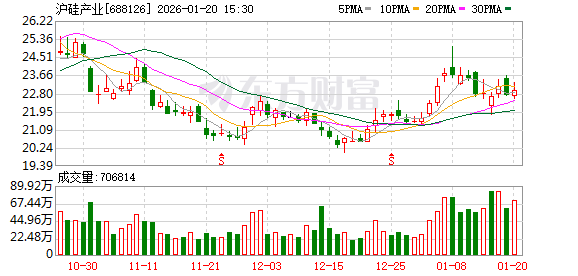
沪硅产业:国家集成电路产业投资基金已减持2.00%股份
2 1 Shi Ji Jing Ji Bao Dao· 2026-01-20 11:30
Core Viewpoint - The announcement indicates that the National Integrated Circuit Industry Investment Fund has reduced its stake in the company through a block trade, aligning with its operational management needs [1] Group 1: Share Reduction Details - The fund sold 54,943,543 shares, representing 2.00% of the company's total share capital [1] - The reduction occurred between January 7 and January 19, 2026, with a selling price range of 22.55 to 23.54 yuan per share, totaling 1.259 billion yuan [1] - Following the sale, the fund's ownership decreased from 20.64% to 15.49% of the total shares outstanding [1] Group 2: Compliance and Consistency - The actual reduction aligns with the previously disclosed reduction plan and does not violate any commitments or regulations [1]
深化制度型开放与协同,为国际金融中心建设注入新动能
Di Yi Cai Jing· 2026-01-20 11:09
Core Viewpoint - The construction of Shanghai as an international financial center has transitioned from a "scale expansion" phase to a "functional upgrade" phase, with a focus on enhancing its competitiveness and influence in the global financial landscape [1][7]. Group 1: Strategic Goals - The "14th Five-Year Plan" emphasizes the establishment of a global RMB asset allocation center and risk management center, highlighting the importance of deepening the interconnection between domestic and international financial markets [1][2]. - The plan includes the establishment of the Shanghai International Financial Asset Trading Platform to enrich RMB-denominated financial products and promote RMB internationalization [1][2]. Group 2: Institutional and Functional Enhancements - A key focus is on deepening institutional openness to enhance internationalization, addressing the current bottleneck of insufficient international functions [2][4]. - The plan proposes optimizing the offshore account system and promoting offshore credit and free trade offshore bond development, requiring pilot offshore financial special laws to stabilize market expectations [2][4]. Group 3: Financial Technology and Innovation - The plan prioritizes strengthening the core position of financial technology, with a focus on developing fintech and green finance, and exploring flexible regulatory sandbox mechanisms [3][5]. - It aims to integrate financial services with technology enterprises, providing comprehensive financial services throughout their lifecycle [3][5]. Group 4: Collaborative Development of the "Five Centers" - The "Five Centers" (financial, trade, shipping, technology, and cultural) need to work synergistically to break down functional barriers and achieve collaborative effects [5][6]. - The plan emphasizes the need for policy coordination and resource sharing to enhance the scale of technology finance and guide capital towards cutting-edge fields like AI and biomedicine [5][6]. Group 5: Global Resource Allocation and Risk Management - Shanghai aims to shift from scale expansion to functional upgrades, enhancing its pricing power and rule-making authority in global markets [6][7]. - The plan includes building a robust risk prevention system, utilizing technologies like blockchain for financial risk identification and management [6][7].
“十四五”没达成3.5万亿GDP的广州,提出10年后要突破6万亿
Sou Hu Cai Jing· 2026-01-20 10:18
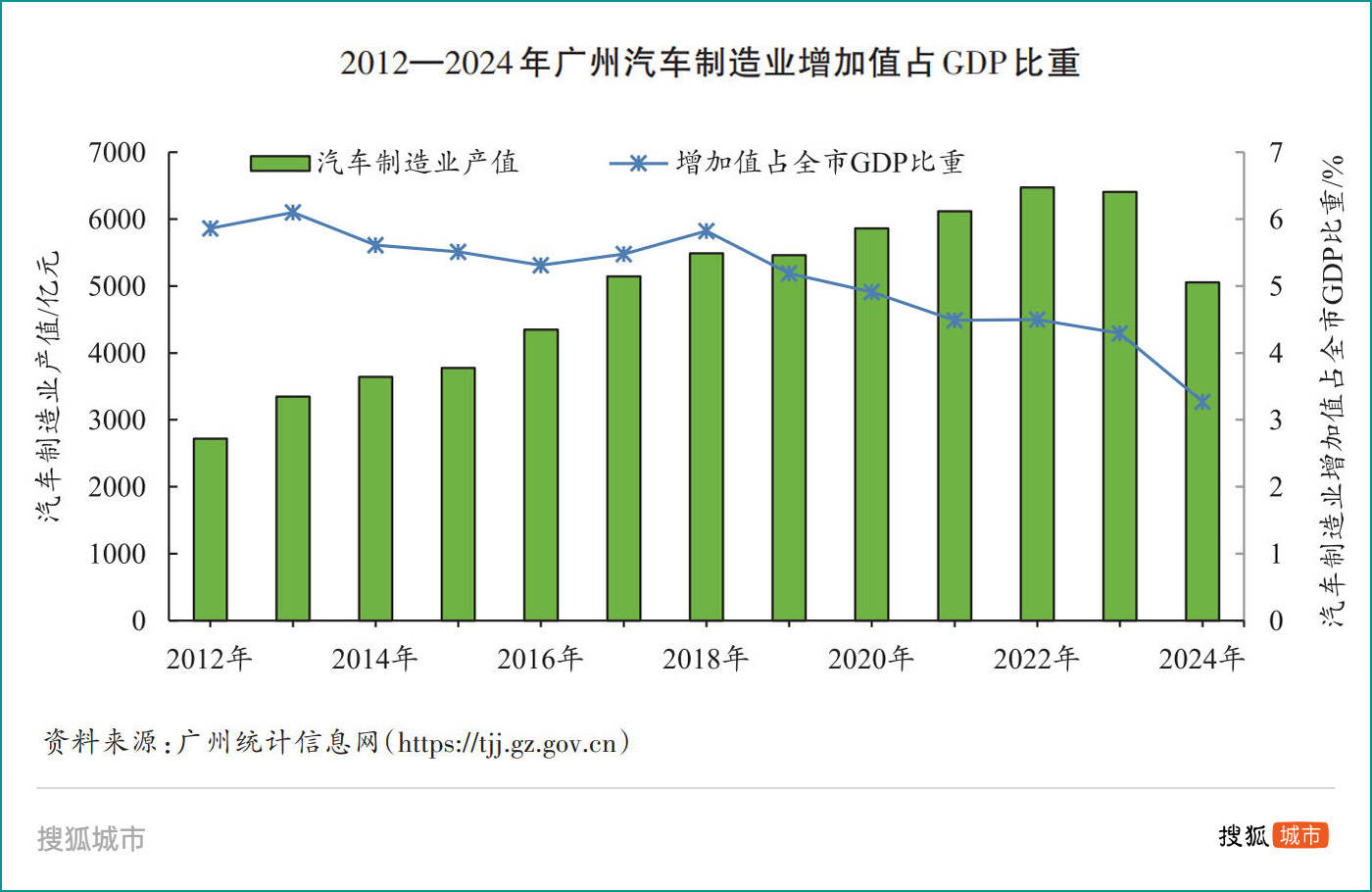
Core Viewpoint - Guangzhou's government work report projects a GDP growth of around 5% for 2026, with a long-term goal of reaching 6 trillion yuan by 2035, necessitating an average annual growth rate of 6.5% over the next decade [1][10]. Economic Growth and Projections - The GDP increment for Guangzhou during the "14th Five-Year Plan" is approximately 700 billion yuan, with a projected GDP of 3.2 trillion yuan by 2025, falling short of the 3.5 trillion yuan target by about 300 billion yuan [1]. - The economic trajectory of Guangzhou over the past five years can be described as a "U-shape," with GDP growth peaking at 8.1% in 2021, dropping to 1% in 2022, and recovering to 4.1% by the third quarter of 2025 [2]. Industrial Investment - Industrial investment in Guangzhou has increased from 103 billion yuan in 2020 to 171.1 billion yuan in 2024, marking a 66% growth over four years [3]. - During the "14th Five-Year Plan," Guangzhou achieved over 730 billion yuan in industrial investment, a 64.6% increase compared to the "13th Five-Year Plan" [3]. Manufacturing Sector Challenges and Developments - The automotive sector, which has been a stronghold for Guangzhou, faced a production decline to 2.54 million units in 2024, with a value-added decrease of 18.2% [5]. - However, the production of new energy vehicles surged by 20.6% in the first three quarters of 2025, indicating a shift towards more sustainable automotive solutions [5]. - The city has established six advanced manufacturing clusters, with strategic emerging industries contributing 35.2% to GDP growth, reflecting a gradual adjustment in industrial structure [6]. Trade and Consumption - Guangzhou has become the third city in China to surpass 1 trillion yuan in both consumption and foreign trade, with retail sales exceeding 1.1 trillion yuan and total import-export value surpassing 1.2 trillion yuan [7]. - The city's logistics and trade infrastructure, including Baiyun Airport and Guangzhou Port, supports its resilience in consumption, despite challenges in the industrial sector [9]. Future Growth Strategies - To achieve the ambitious GDP target of 6 trillion yuan by 2035, Guangzhou must enhance its growth rate from 5% to 6.5%, necessitating investments in advanced industries such as high-end integrated circuits and AI [10][11]. - The city aims to transform its integrated circuit manufacturing from downstream assembly to core manufacturing, with a reported 37.4% increase in the value-added of the integrated circuit sector in the first three quarters of 2025 [11].
抢抓新赛道!广东力推AI与机器人、生物医药等产业实现领跑
Nan Fang Du Shi Bao· 2026-01-20 09:41
Group 1 - In the first three quarters of 2025, Guangdong's advanced manufacturing and high-tech manufacturing industries saw value-added growth of 5.4% and 6.4% respectively, maintaining a leading position nationally in sectors such as artificial intelligence, robotics, biomedicine, integrated circuits, and ultra-high-definition video [1][2] - The Guangdong Provincial Department of Industry and Information Technology has implemented over 30 special measures to stimulate industry and enterprise vitality, focusing on sectors like AI, new chemical materials, advanced equipment, biomedicine, and production services [1][2] - A total of 51 matchmaking events between "chain master" enterprises and local supporting companies were organized, resulting in over 8,500 cooperation intentions worth more than 170 billion yuan [1] Group 2 - Guangdong is actively establishing a leadership group for the AI and robotics industry, with 12 key measures introduced to enhance responsibility across various departments, and 169 initiatives launched by 22 departments [2] - The province is developing innovation platforms such as the "1+1+N" embodied intelligence training ground and the Ascend ecosystem adaptation center to accelerate the AI industry ecosystem [2] - Guangdong has released 78 AI application scenarios and 48 "robot+" typical application cases, with cities like Guangzhou, Shenzhen, and Dongguan recognized as national AI application pilot bases [2] Group 3 - Guangdong has introduced comprehensive policies to support the high-quality development of the medical institution formulation industry and the application of innovative drugs and devices, facilitating partnerships between nearly 300 pharmaceutical companies and over 1,000 medical institutions [3] - The province is advancing the "Guangdong Strong Chip" initiative to establish itself as a third hub for integrated circuits, with chip design revenue leading the nation [3] - Guangdong is also promoting the ultra-high-definition television industry, with panel production capacity and television output ranking first in the country [3]

沐曦股份成立数智科技公司
Zheng Quan Shi Bao Wang· 2026-01-20 09:41
Group 1 - The core point of the article is the establishment of a new company, Muxi Smart (Shanghai) Technology Co., Ltd., which is fully owned by Muxi Co., Ltd. [1] - The legal representative of the new company is Chen Weiliang [1] - The registered capital of Muxi Smart is 100 million yuan [1] Group 2 - The business scope of Muxi Smart includes integrated circuit design, electronic product sales, integrated circuit chip and product sales, and software sales [1]
广东2025年投资1亿元以上制造业项目达4871个
2 1 Shi Ji Jing Ji Bao Dao· 2026-01-20 08:55
Group 1 - Guangdong aims to promote high-quality development of the manufacturing industry by focusing on "major projects and major parks" as dual engines by 2025, tracking 4,871 manufacturing projects with investments over 100 million yuan, including 1,875 new starts and 1,095 new productions [1] - The provincial manufacturing command center oversaw 457 key projects that completed investments of 211.7 billion yuan, exceeding the annual plan by 18.7% [1] - Significant projects include BASF's Zhanjiang integrated base, GAC Group's first large-capacity all-solid-state battery production line, and major projects from BYD and SMIC, covering critical fields like integrated circuits, new energy, and advanced materials [1] Group 2 - Guangdong has recognized three specialized chemical industrial parks and established 16 new characteristic industrial parks, with over 600 new projects introduced, totaling investments exceeding 190 billion yuan [2] - The industrial output value in the eastern, western, and northern regions of Guangdong has approached 50%, positioning industrial parks as the "industrial main engine" for regional coordinated development [2] - The revenue of industrial enterprises above designated size in Guangdong is projected to rise from 14.9 trillion yuan in 2020 to over 19 trillion yuan by 2025, with industrial investment growing approximately 47% [2]
上海未来5年这么干
21世纪经济报道· 2026-01-20 08:25
Core Viewpoint - Shanghai aims to establish itself as a world-class high-end industrial cluster and achieve significant high-quality development over the next five years, with a target of doubling its per capita GDP by 2035 compared to 2020 levels [1][2]. Group 1: High-Quality Development Goals - The "15th Five-Year Plan" emphasizes high-quality development, maintaining economic growth within a reasonable range, and improving total factor productivity while ensuring a reasonable proportion of manufacturing [1][2]. - Shanghai's development strategy includes transitioning from scale expansion to high-quality development and structural optimization, impacting both economic sectors and personal income levels [2][5]. Group 2: Five Centers Construction - Shanghai is tasked with building five centers: international economy, finance, trade, shipping, and technological innovation, with a focus on enhancing its international economic center status [2][5]. - The plan includes accelerating the development of three leading industries and strengthening the capabilities in integrated circuit equipment, manufacturing, and design [2][6]. Group 3: Focus on Emerging Industries - Shanghai aims to tackle key technologies and create a sustainable technological ecosystem to maintain or enhance its global leadership [3][6]. - The city plans to develop six emerging pillar industry clusters, including smart terminals, intelligent connected vehicles, advanced materials, and green low-carbon industries [10][11]. Group 4: Financial Support and Innovation - The plan outlines the need for a robust financial support system to match the world-class high-end industrial cluster, including the establishment of an international financial asset trading platform and promoting technology finance [12]. - Shanghai will support venture capital investments in hard technology and enhance the market for technology credit and insurance [12]. Group 5: National and Global Implications - Shanghai's development trajectory reflects the broader direction of China's top cities in the global competitive landscape, emphasizing innovation-driven high-quality development [13].
聚辰股份股价涨5.24%,国投瑞银基金旗下1只基金重仓,持有1.13万股浮盈赚取9.07万元
Xin Lang Cai Jing· 2026-01-20 05:57
从基金十大重仓股角度 1月20日,聚辰股份涨5.24%,截至发稿,报161.66元/股,成交14.33亿元,换手率5.73%,总市值255.86 亿元。 资料显示,聚辰半导体股份有限公司位于上海市浦东新区张东路1761号10幢,成立日期2009年11月13 日,上市日期2019年12月23日,公司主营业务涉及集成电路产品的研发设计和销售,并提供应用解决方 案和技术支持服务。主营业务收入构成为:芯片销售100.00%。 风险提示:市场有风险,投资需谨慎。本文为AI大模型自动发布,任何在本文出现的信息(包括但不 限于个股、评论、预测、图表、指标、理论、任何形式的表述等)均只作为参考,不构成个人投资建 议。 数据显示,国投瑞银基金旗下1只基金重仓聚辰股份。国投瑞银上证科创板200指数发起式A(023518) 三季度减持1.14万股,持有股数1.13万股,占基金净值比例为1.56%,位居第二大重仓股。根据测算, 今日浮盈赚取约9.07万元。 责任编辑:小浪快报 国投瑞银上证科创板200指数发起式A(023518)成立日期2025年3月18日,最新规模4526.48万。今年以 来收益15.41%,同类排名142/554 ...
