
纺织

Search documents
关税大棒砸向新德里!50%重税点燃贸易战,金砖阵营反制美元霸权
Sou Hu Cai Jing· 2025-08-16 02:50
8月6日,特朗普以"印度购买俄罗斯石油资助战争机器"为由,对印度输美产品叠加25%的惩罚性关税。印度外交部当天深夜反击,直指美国行为"不公平、 不正当、不合理",誓言采取一切措施捍卫国家利益。莫迪在公开讲话中强硬表态:"农民的福祉是至高无上的,印度永远不会损害农民、奶农和渔民的生计 ——即使我个人将为此付出沉重代价。" 印度反击:WTO战场与历史炮弹 面对关税重压,印度迅速启动多线反击。 在WTO框架下,印度累计对美加征关税清单已扩大至64.54亿美元,锁定大豆、葡萄酒等共和党关键选区商品,同时瞄准苹果、谷歌等科技巨头的数字服务 税。更犀利的反击来自外交战场:印度外交部披露欧盟2024年进口俄罗斯天然气高达675亿欧元,而美国自身仍在进口俄罗斯六氟化铀用于核工业、钯用于 电动汽车产业。 印度陆军东部战区在社交媒体翻出1971年旧账,展示泛黄的报纸头条——"美国20亿美元军援巴基斯坦对抗印度",配文"了解历史真相",引发印度网民集体 嘲讽美国"历史性虚伪"。 贸易战中的双输困局 日本野村证券警告,印度纺织出口可能在三个月内"因关税窒息",但第三方国家正虎视眈眈:越南、墨西哥伺机抢夺电子订单,泰国觊觎汽车零部件转 ...

安徽鸿泰新材料有限公司成立 注册资本800万人民币
Sou Hu Cai Jing· 2025-08-16 00:47
Group 1 - Anhui Hongtai New Materials Co., Ltd. has been established with a registered capital of 8 million RMB [1] - The legal representative of the company is Liang Longquan [1] - The company's business scope includes manufacturing and sales of plastic products, textile products, paper products, and various protective equipment [1] Group 2 - The company is involved in the production and sale of non-medical masks, medical masks, and medical protective supplies [1] - It also engages in the manufacturing and sales of rubber products and food-grade plastic packaging containers [1] - The company is permitted to operate various projects that are not prohibited or restricted by laws and regulations [1]
棒杰股份股价下跌0.84% 光伏子公司逾期债务达净资产329%
Jin Rong Jie· 2025-08-15 16:53
Core Viewpoint - The stock price of Bangjie Co., Ltd. is reported at 4.71 yuan, reflecting a decrease of 0.04 yuan from the previous trading day, with significant challenges in its photovoltaic business impacting financial performance [1] Company Overview - Bangjie Co., Ltd. operates in two main sectors: textile and apparel, and new energy [1] - The company has been actively investing in the photovoltaic industry in recent years, particularly in the Zhejiang region [1] Financial Performance - The latest announcement indicates that the company's photovoltaic subsidiary has accumulated overdue debts totaling 986 million yuan, which represents 328.97% of the company's audited net assets for the year 2024 [1] - The company’s two wholly-owned new energy subsidiaries have had their equity frozen by judicial authorities, involving an amount of 390 million yuan [1] - For the first half of 2025, the company anticipates a net loss between 120 million to 180 million yuan, primarily due to the underperformance of its photovoltaic business [1] Capital Flow - On August 15, the net outflow of main funds was 1.5997 million yuan, while the cumulative net inflow over the past five days was 11.8488 million yuan [1]

悦达投资: 悦达投资2025年半年度报告
Zheng Quan Zhi Xing· 2025-08-15 16:24
Core Viewpoint - Jiangsu Yueda Investment Co., Ltd. reported a significant decrease in revenue for the first half of 2025, with a total revenue of approximately 1.36 billion yuan, a decline of 22.01% compared to the same period last year, while net profit attributable to shareholders increased by 27.62% to approximately 14 million yuan [2][3][11]. Company Overview and Financial Indicators - The company is headquartered in Yancheng, Jiangsu Province, and operates in various sectors including new energy, textiles, and specialized vehicles [2][3]. - Key financial metrics for the first half of 2025 include: - Total revenue: 1,358,178,119.31 yuan - Total profit: 10,348,380.66 yuan - Net profit attributable to shareholders: 14,024,716.17 yuan - Total assets: 10,000,537,285.24 yuan - Net assets attributable to shareholders: 4,377,757,979.26 yuan [2][3]. Business Segments - **New Energy**: The company focuses on developing and operating new energy projects, including wind and solar power, with significant investments in projects like the 150MW solar project and the 100MW/200MWh energy storage project [7][12]. - **Textiles**: The textile segment has shown resilience, with a production capacity of 42,000 tons of high-end knitted yarn and 28.8 million meters of home textile fabric [6][11]. - **Specialized Vehicles**: The specialized vehicle segment includes products like garbage trucks and street cleaning vehicles, with a focus on environmentally friendly technologies [6][11]. Industry Context - The new energy sector in China is experiencing rapid growth, with installed capacity for solar power reaching 110 million kilowatts, a year-on-year increase of 54.2% [8][9]. - The carbon market is also expanding, with a cumulative transaction volume of carbon emission allowances reaching 669 million tons by mid-2025 [9][10]. - The agricultural machinery market is facing challenges, with a decline in traditional tractor sales, but high-end products are gaining traction due to policy and technological advancements [10][11]. Operational Highlights - The company has made strategic acquisitions, including a 51% stake in Yueda Energy Service Company, to enhance its capabilities in energy management and sales [12][14]. - The company is actively pursuing projects in carbon asset management and has established a biomass fuel production base to support renewable energy initiatives [13][14]. - The company is also focusing on digital transformation and management innovation to improve operational efficiency and market competitiveness [16].

中泰化学:8月15日召开董事会会议
Mei Ri Jing Ji Xin Wen· 2025-08-15 11:13
Group 1 - The core point of the article is that Zhongtai Chemical announced the results of its board meeting held on August 15, 2025, which included discussions on the performance salary for senior management for the year 2024 [2] - The company's revenue composition for the year 2024 is as follows: Industrial sector accounts for 58.69%, Textile sector for 25.82%, Trade for 10.62%, Other businesses for 3.14%, and Logistics and Transportation for 1.73% [2]

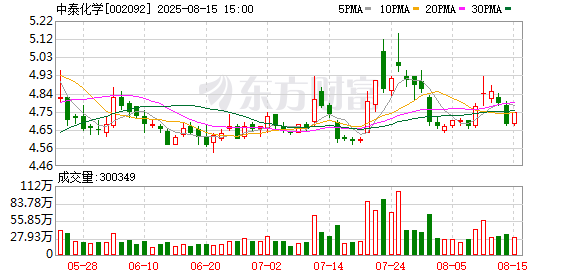
莫迪天塌了,美财长:如果美俄和谈失败,美国将对印加征200%关税
Sou Hu Cai Jing· 2025-08-15 08:09
Core Viewpoint - The geopolitical tensions and trade frictions between major economies are creating significant challenges for emerging markets, particularly India, which faces potential punitive tariffs from the U.S. if negotiations between the U.S. and Russia do not progress [1][3][18] Group 1: Trade Relations and Tariffs - U.S. Treasury Secretary's warning indicates that if U.S.-Russia negotiations fail, tariffs on Indian goods could reach up to 200% [3][5] - The bilateral trade between the U.S. and India was nearly $146 billion in the past year, with Indian exports to the U.S. accounting for about 69% [3][5] - The U.S. has already increased tariffs on certain Indian goods by 50% in July, with plans to raise them to 75% by August 27 [3][5] Group 2: Economic Impact on India - India's consumer price index (CPI) has risen over 6.2% year-on-year since June, marking a three-year high, largely due to increased import costs from tariff hikes [5][10] - Moody's analysis suggests that India's macroeconomic stability is heavily reliant on affordable energy supplies, which are threatened by rising tariffs [5][10] - If the U.S. imposes a 200% tariff, India's GDP growth could be reduced by 1.2 percentage points within six months [14][16] Group 3: Geopolitical Dynamics - India's traditional balancing act between the U.S. and Russia is becoming increasingly difficult, as it finds itself caught in the middle of major power struggles [7][16] - The G7 summit highlighted U.S. pressure on European allies to align on tariff issues concerning India, reflecting the broader geopolitical implications of the trade tensions [7][10] - The ongoing trade friction is prompting a reevaluation of global supply chains, particularly in sectors like IT, textiles, and pharmaceuticals, which may lead to significant shifts in investment [12][14] Group 4: Future Outlook - The outcome of the U.S.-Russia negotiations and the subsequent tariff decisions will have profound implications for India's economic strategy and its role in the global market [18] - The current crisis presents both challenges and opportunities for India, as it navigates its position amid shifting geopolitical landscapes [16][18] - The evolving dynamics among the U.S., India, and Russia will be critical in shaping the future of international trade and economic relations [18]
机构风向标 | 百隆东方(601339)2025年二季度已披露前十大机构持股比例合计下跌4.22个百分点
Xin Lang Cai Jing· 2025-08-15 01:06
Core Viewpoint - Bailong Oriental (601339.SH) reported a decrease in institutional ownership in its A-shares, indicating a potential shift in investor sentiment [1] Institutional Ownership - As of August 14, 2025, five institutional investors disclosed holding a total of 702 million shares of Bailong Oriental, representing 46.82% of the company's total share capital [1] - The institutional ownership decreased by 4.22 percentage points compared to the previous quarter [1] Public Fund Holdings - One public fund, Huatai-PB SSE Dividend ETF, reduced its holdings by 0.48% compared to the previous quarter [1] - Two public funds, Xingquan Business Model Mixed (LOF) A and Xingquan New Vision Periodic Open Mixed Initiated, were not disclosed in this period compared to the last quarter [1]

百隆东方:2025年半年度净利润约3.9亿元,同比增加67.53%
Mei Ri Jing Ji Xin Wen· 2025-08-14 09:24
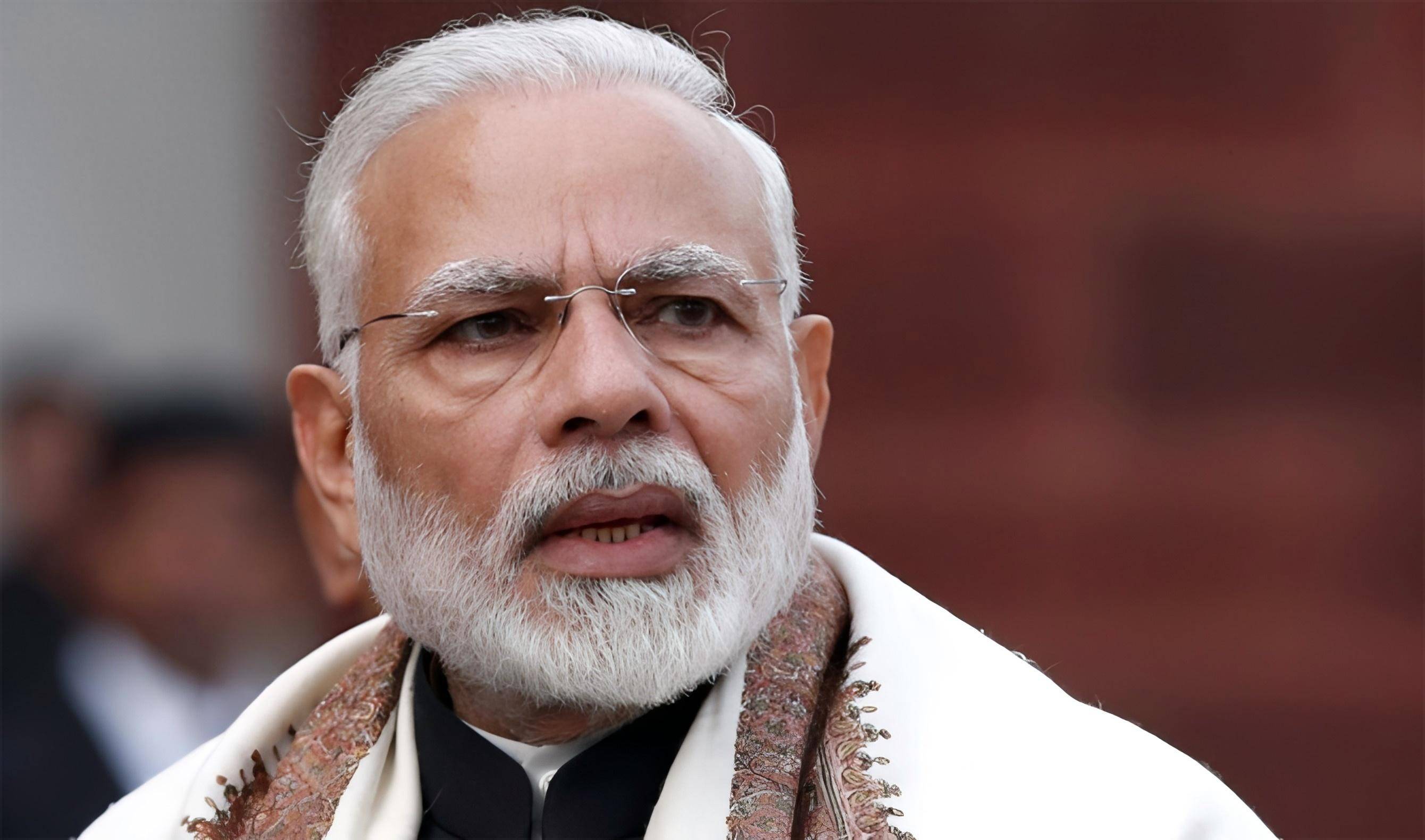
百隆东方(SH 601339,收盘价:5.59元)8月14日晚间发布半年度业绩报告称,2025年上半年营业收入 约35.91亿元,同比减少9.99%;归属于上市公司股东的净利润约3.9亿元,同比增加67.53%;基本每股 收益0.26元,同比增加62.5%。 (文章来源:每日经济新闻) ...
美国再对印度放狠话:次级关税可能加码!
Jin Shi Shu Ju· 2025-08-14 09:24
Core Viewpoint - The U.S. Treasury Secretary Scott Bessent warns that Washington may impose secondary tariffs on India, contingent on the outcome of President Trump's meeting with President Putin regarding the Russia-Ukraine conflict [1][2]. Group 1: U.S.-India Trade Relations - The U.S. has already imposed a 25% punitive tariff on India due to its purchase of Russian oil and weapons [2][5]. - Trump's tariffs are part of a broader strategy to boost the U.S. economy and achieve fair global trade, labeling India as a "tariff abuser" [5]. - The trade negotiations between the U.S. and India have been ongoing for months, with a new round expected to restart on August 25 [5]. Group 2: Impact of Russian Oil Imports - India's imports of Russian oil have surged to account for 35% to 40% of its crude oil imports in 2024, up from just 3% in 2021 [4]. - India defends its purchase of Russian oil as necessary to protect millions of its poor citizens from rising costs [4]. - The increase in Russian oil imports has strained U.S.-India relations and disrupted ongoing trade negotiations [3]. Group 3: Economic Consequences - Trump's new 50% tariff on India is set to take effect on August 27, which some experts believe could amount to a trade embargo [6]. - This would make India the most heavily taxed trade partner of the U.S. in Asia, potentially hindering its export-oriented industries like textiles and jewelry [6]. - The tariffs could lead to a decrease in India's economic growth rate by as much as 0.5 percentage points [6].
百隆东方(601339.SH):上半年净利润同比增长67.53% 拟每股派0.15元
Ge Long Hui A P P· 2025-08-14 07:55
格隆汇8月14日丨百隆东方(601339.SH)公布半年度报告,报告期内,公司完成营业收入35.91亿元,同比 下降9.99%,实现归属于上市公司股东的净利润3.90亿元,同比增长67.53%;归属于上市公司股东的扣除 非经常性损益的净利润3.60亿元,同比增长236.33%。每股派发现金红利0.15元。 ...