Semiconductors

Search documents
Our retail traders are likely lagging S&P due to crypto holdings, says Robinhood's Steve Quirk
Youtube· 2026-03-26 01:23
Group 1: Market Activity and Trends - Retail investors, particularly those using Robinhood, have increased their participation in the energy sector, with their share of trades in ETFs and single names rising from 1.5% to 3% [3] - The entry of customers into the oil and energy complex is driven by risk management strategies, allowing them to trade futures over the weekend to protect their portfolios against price fluctuations [2][3] - The overall activity in prediction markets is considered separate from equity and crypto trading, with no significant cannibalization observed [8] Group 2: Performance Analysis - Retail investors have been underperforming on a quarter-over-quarter basis, particularly due to declines in crypto assets, which have affected assets under management (AUM) [4][5] - However, over a longer time horizon of two to three years, retail investors have significantly outperformed the S&P 500, largely due to their investments in crypto and other assets [5][6] - The future performance of retail investors will depend heavily on the recovery of the crypto market and the performance of popular stocks like Tesla and Nvidia [6][7] Group 3: Trading Strategies - Retail investors are utilizing prediction markets to gain precision in their trading strategies, particularly around specific events like earnings reports [10][11] - These markets are being used as additive instruments for hedging portfolios or capitalizing on short-term opportunities, similar to short-dated options [10][11]



Nanya Technology shares surge 10% after $2.5 billion fundraising
Yahoo Finance· 2026-03-26 01:10
By Faith Hung and Wen-Yee Lee TAIPEI, March 26 (Reuters) - Shares of Taiwanese memory chip maker Nanya Technology opened limit-up 10% on Thursday after raising about $2.5 billion in a private placement from SanDisk Technologies and others to expand advanced chip production. The fundraising comes as chipmakers boost production capacity and their customers seek to lock in supplies through tie-ups amid a global memory chip shortage triggered by the artificial intelligence boom. That in turn has tightened ...
Arm Holdings (ARM) Climbs 16% on AI Chip Foray, Earns Meta Backing
Yahoo Finance· 2026-03-26 00:59
Arm Holdings PLC (NASDAQ:ARM) is one of the 10 Stocks Investors Are Buying Now. Arm Holdings rebounded by 16.38 percent to close at $157.07 apiece, as investors gobbled up shares following news that it is making a foray into chip production and has earned the backing of Meta Platforms for the initiative. In a statement, Arm Holdings PLC (NASDAQ:ARM) announced its entry into silicon production with the launch of AGI CPU, a new product designed for AI data centers, which is capable of addressing a rising c ...

Nvidia vs. Alphabet: Both Are Down Big in 2026 -- but Only 1 Is a Buy Right Now
The Motley Fool· 2026-03-26 00:46
Group 1: Market Performance - The stock market has experienced volatility this year, with both Nvidia and Alphabet seeing declines of 6.6% and 6.38% respectively [1] - Alphabet's current market capitalization stands at $3.5 trillion, with a current price of $289.59 [3] Group 2: Competitive Landscape - Nvidia remains the leading company in AI hardware, with its GPUs being utilized by major AI software companies [2] - Alphabet is strengthening its position in the AI market by developing its own tensor processing unit (TPU) in partnership with Broadcom, which poses a direct challenge to Nvidia's GPUs [4] - Companies like Anthropic are adopting TPUs, indicating a shift towards custom hardware tailored for AI needs, which may reduce reliance on Nvidia [5] Group 3: Investment Considerations - Alphabet is viewed as a stronger investment opportunity compared to Nvidia, given its competitive advantages in both hardware and software within the AI sector [6] - The AI hardware market appears to be more susceptible to competition and replacement than the software market, suggesting Alphabet's potential for growth [5]



存储巨头,被电卡脖子?
半导体行业观察· 2026-03-26 00:36
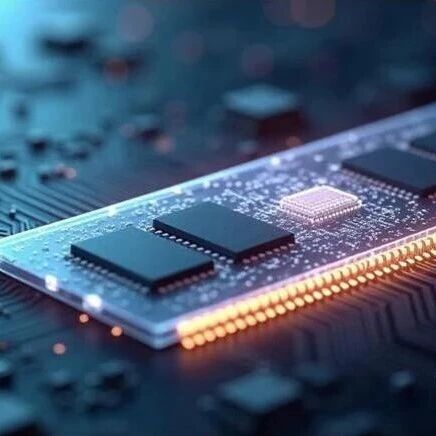
Core Insights - Micron plans to invest $24 billion in expanding NAND flash memory capacity in Singapore, requiring 400 to 500 power transformers, which is more than double the typical requirement for a standard wafer fab [1] - The demand for high-bandwidth memory (HBM) for AI servers has led to a tight capacity situation, prompting major memory chip manufacturers to expand production [1] - The project in Singapore is part of Micron's global expansion strategy, with additional investments in Taiwan, Idaho, New York, and Hiroshima [1] Group 1 - The heavy power equipment needed for semiconductor expansion has become a significant bottleneck due to the high power density of AI-related storage chip factories [1] - Taiwanese heavy electrical equipment suppliers have raised prices by 20% to 30% due to surging orders and rising raw material costs [2] - No single manufacturer can currently handle the large-scale orders from the AI and semiconductor industries, leading to collaboration among local suppliers and secondary vendors [2] Group 2 - Delays in transformer delivery are likely to postpone the production timelines of wafer fabs, which could impact the mass production of storage chips relied upon by AI manufacturers [2] - The competition for heavy electrical equipment and raw materials has intensified, with various projects vying for hundreds of units of equipment [2] - International transformer brands are gaining market share despite higher prices due to their greater production capacity in overseas factories [2]
Tower日本,重大重组
半导体行业观察· 2026-03-26 00:36
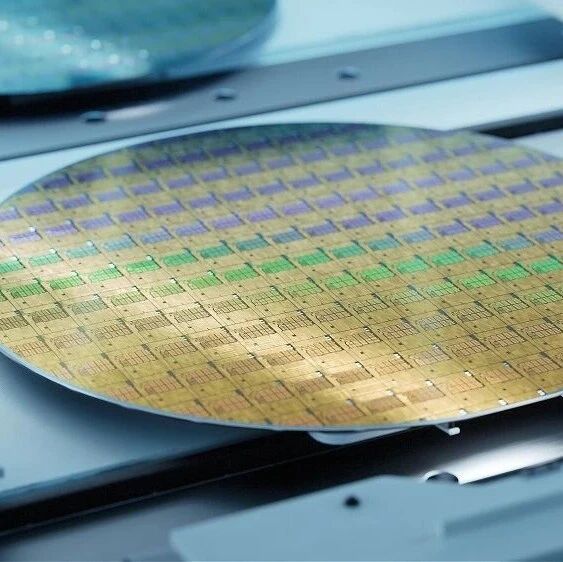
Core Viewpoint - Tower is restructuring its Japanese operations, resulting in full ownership of a 300mm wafer fab while its partner will take over a 200mm wafer fab. This move is expected to enhance production capacity and operational efficiency [1]. Group 1: Restructuring Details - Tower will hold the 300mm Fab 7 through a wholly-owned subsidiary, while Japan's New Tang Technology will fully own the 200mm Fab 5. Both fabs are currently operated by TPSCo, a joint venture where Tower holds 51% and New Tang holds 49% [1]. - The transaction is expected to be completed by April 1, 2027, subject to customary closing conditions and regulatory approvals. A long-term supply agreement will be signed to ensure continuous supply for existing customers [1]. Group 2: Financial and Operational Insights - Tower has the option to acquire the existing buildings and land of Fab 7, with plans to expand 300mm capacity after receiving subsidies from the Japanese Ministry of Economy, Trade and Industry. The company has a strong financial position, with a current ratio of 6.48 and cash exceeding liabilities, supporting its expansion plans [2]. - The goal is to quadruple the total capacity of the 300mm fab in Toyama once all current and planned expansion projects are operational. The photonic technology has been validated and is already in mass production at the Toyama site [2]. Group 3: Recent Performance and Strategic Moves - Tower reported record fourth-quarter revenue of $440 million, a 14% year-over-year increase and an 11% quarter-over-quarter increase, exceeding market expectations. Adjusted earnings per share were $0.78, surpassing analyst forecasts by $0.10, driven by the silicon photonics business [3]. - Following the earnings report, Benchmark raised Tower's target price to $165 while maintaining a buy rating. Additionally, Tower announced a development agreement with Lightwave Logic to integrate high-speed optical modulator designs into its silicon photonics process design kit, targeting applications above 110GHz bandwidth [3].
CPO爆发前夜,回顾硅光40年
半导体行业观察· 2026-03-26 00:36
Core Viewpoint - The article discusses the evolution of silicon photonics technology, highlighting its historical development, current applications, and future potential in the context of AI and data centers. It emphasizes the transition from theoretical concepts to practical implementations, particularly the emergence of Co-Packaged Optics (CPO) as a solution to bandwidth and power challenges in modern computing environments [4][48]. Historical Development - In the late 1980s, the concept of silicon photonics emerged, but it was largely overlooked due to the dominance of silicon-based semiconductor technology and III-V compound semiconductors in communication [7][20]. - Richard Soref's foundational work in the mid-1980s established silicon as a viable platform for photonic integrated circuits, demonstrating the potential for electrical manipulation of light in silicon [10][12]. - The 1990s marked a paradigm shift as silicon photonics began to establish itself with the development of Silicon-On-Insulator (SOI) technology, allowing for precise control of light propagation [20][23]. Technological Breakthroughs - The introduction of low-loss silicon waveguides by Graham Reed's team validated the feasibility of optical circuits on silicon wafers, paving the way for practical applications [12][13]. - The discovery of photoluminescent porous silicon by Leigh Canham challenged the notion that silicon could not emit light, stimulating further research in silicon-based optoelectronics [17][19]. - The 2000s saw significant advancements, including the development of hybrid silicon lasers that combined silicon with III-V materials, enabling active optical components [31][34]. Current Applications - The rise of hyperscale data centers in the 2010s created a demand for high-bandwidth, low-cost optical interconnects, positioning silicon photonics as a key technology to meet these needs [36][40]. - Intel's introduction of 100G silicon photonic modules demonstrated the scalability and cost-effectiveness of silicon photonics, leading to widespread adoption in data centers [40][41]. - The industry has seen a shift towards integrated photonic-electronic solutions, with companies like Luxtera pioneering the monolithic integration of optical and electronic components on a single chip [34][35]. Future Prospects - The ongoing demand for higher bandwidth and lower power consumption in AI and computing applications is driving the development of Co-Packaged Optics (CPO), which integrates optical components directly with ASIC chips to minimize signal loss and power consumption [51][52]. - Innovations in optical I/O architectures aim to embed optical interconnects within computing chips, potentially revolutionizing data transfer speeds and efficiency in high-performance computing environments [53][54]. - The article concludes by highlighting the potential for silicon photonics to play a critical role in the future of computing, particularly as the industry moves towards more integrated and efficient solutions to meet the demands of AI and large-scale data processing [55].


3D封装,怎么散热?
半导体行业观察· 2026-03-26 00:36
Core Insights - The article discusses the increasing challenges of heat dissipation in high-performance computing (HPC) and AI accelerators, as power density exceeds 1 kW, necessitating advanced thermal management techniques [1] - Companies are adopting adaptive mesh finite element modeling and new experimental methods to optimize multi-chip packaging designs and improve longevity [1][2] Group 1: Thermal Management Techniques - Engineers are transitioning from simplified thermal resistance calculations to more complex thermal simulations that incorporate multiple chip configurations and their interactions [2] - The use of active thermal testing wafers allows for direct measurement of temperature distribution and heat dissipation processes, enhancing the accuracy of thermal simulations [1][6] - AMD has developed a software-programmable thermal evaluation platform to assess thermal distribution and cooling needs during chip development [1][2] Group 2: Importance of Early Thermal Simulation - Early thermal simulation during the prototype phase is crucial to avoid significant design errors and additional cooling costs in advanced packaging [5] - The peak temperature, rather than just average temperature, is critical for assessing thermal risks in chip designs [5][6] - AI can help predict hotspot locations, allowing for more efficient mesh generation in thermal simulations, thus reducing simulation time [4][5] Group 3: Challenges in Thermal Simulation - Real workload factors are often overlooked in thermal simulations, as chip heating is directly related to data processing activities [6] - The need for long sequences of real chip load data complicates the simulation process, requiring hardware emulators for accurate modeling [6] - The integration of programmable heating modules and high-resolution sensors in thermal testing platforms can simulate real chip loads and improve model calibration [7][8] Group 4: Multi-Chip Packaging and Thermal Behavior - The thermal behavior of multi-chip systems is increasingly important throughout the product lifecycle, necessitating continuous evaluation of thermal characteristics from initial planning to deployment [10][11] - The interaction of heat between chips can escalate chip-level issues to system-level problems, emphasizing the need for comprehensive thermal management strategies [10][11] Group 5: Mechanical Factors in Thermal Management - Mechanical stress due to mismatched thermal expansion coefficients in multi-chip stacks must also be modeled alongside thermal effects to ensure reliability [13] - The IMEC team demonstrated that optimizing thermal management strategies can significantly reduce peak temperatures in stacked GPU architectures [14] Group 6: Future Directions in Thermal Simulation - The industry is moving towards advanced techniques such as hybrid bonding and back-side power delivery networks, which increase thermal management challenges [8][14] - The reliance on adaptive mesh thermal simulation software is expected to grow, balancing computational time with model accuracy while addressing coupled thermal and mechanical behaviors [14][15]



黄仁勋:希望在工作中突然离世,英伟达市值“极有可能”达到10万亿美元
Xin Lang Cai Jing· 2026-03-26 00:12
Core Viewpoint - Jensen Huang, CEO of Nvidia, discussed life, death, and succession planning in a recent podcast, emphasizing the importance of knowledge transfer within the company and expressing confidence in Nvidia's future growth potential, including a projected market value of $10 trillion [1][9]. Group 1: Succession and Leadership - Huang expressed skepticism about succession plans, stating that he does not trust them and believes in actively sharing knowledge and insights with his team to prepare for the future [3][8]. - He aims to continue working until the end of his life, preferring a sudden departure over prolonged illness [3][8]. - Huang noted that there will never be another CEO like him, as he was cultivated by the company itself [4][9]. Group 2: Market Potential and Financial Performance - Huang projected that Nvidia's market value could "inevitably" reach $10 trillion, driven by the increasing demand for computational power in a new economic landscape [9]. - Nvidia reported record revenue of $68.127 billion for Q4, a 73% increase from $39.331 billion year-over-year, and a net profit of $42.96 billion, up 94% from $22.091 billion [5][10]. - For the full year, Nvidia's revenue was $215.938 billion, with a net profit of $120.067 billion, equating to approximately $328 million per day [5][10]. Group 3: AI and Future Innovations - At the GTC 2026 conference, Huang forecasted that Nvidia's new AI chip architecture, Blackwell, and the next-generation Rubin products could generate at least $1 trillion in revenue by the end of 2027, significantly exceeding previous estimates [10]. - He introduced the concept of a "Token Factory," suggesting that future data centers will evolve from storage centers to factories producing intelligent tokens [10].

My Top 2 Megacap Stocks to Buy After Walmart's Latest Pullback
The Motley Fool· 2026-03-26 00:05
Core Viewpoint - Walmart's high valuation has led to a downgrade by analysts, making it less attractive compared to other megacap stocks like Amazon and Taiwan Semiconductor [2][12] Walmart - Walmart is trading at 43 times earnings and 40 times forward earnings, indicating a high valuation [1] - Analysts at Erste Group downgraded Walmart stock to a hold due to its high valuation, resulting in a 6% decline in stock price since early March [2] Amazon - Amazon plans to spend $200 billion on capital expenditures in 2026, primarily on AI infrastructure, which is a 50% increase from the previous year [3] - Amazon's stock is trading at 28 times earnings and 25 times forward earnings, near its lowest valuation in over 10 years [6] - Wall Street is optimistic about Amazon, with 92% of analysts rating it a buy and a median price target of $285 per share, suggesting a 37% upside [6] Taiwan Semiconductor - Taiwan Semiconductor is positioned well with a low valuation and significant growth potential, currently holding a 70% market share as a foundry chipmaker [7][8] - The company anticipates revenue growth of approximately 36% in 2025, reaching $122 billion, and expects close to 30% growth in 2026 [8] - TSMC's stock is trading at 24 times forward earnings, and 98% of analysts rate it a buy with a median price target of $435 per share, indicating a 28% upside [12]