智能驾驶

Search documents
今日,南沙耀目!科创+金融聚力,大湾区奔赴“星辰大海”!
券商中国· 2025-11-18 03:35
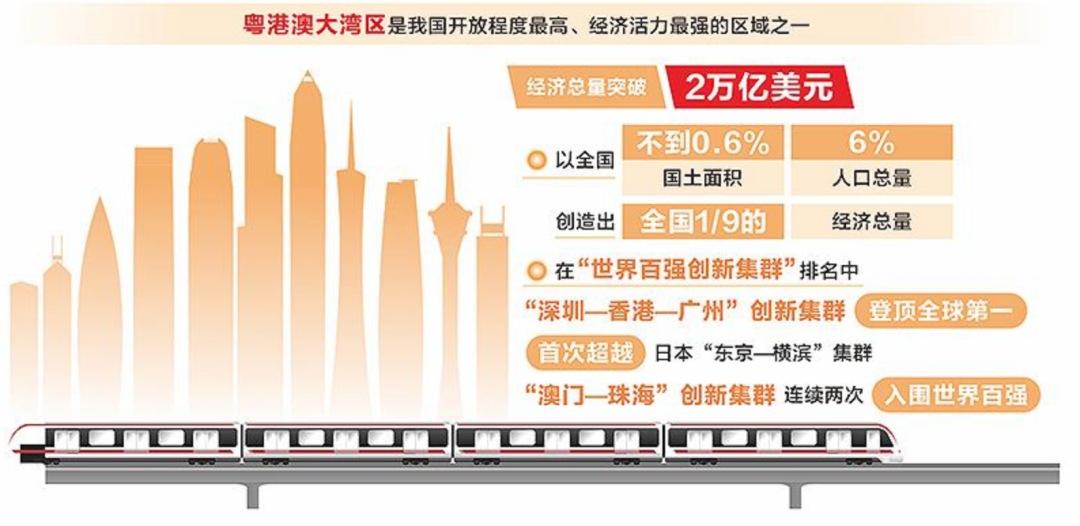
Group 1 - The article highlights the impressive technological innovations showcased at the 15th National Games, emphasizing the vibrant tech scene in the Guangdong-Hong Kong-Macao Greater Bay Area [1] - The Greater Bay Area, covering 56,000 square kilometers, is noted for its high level of openness and economic vitality, contributing to over 2 trillion USD in economic output, which is about 1/9 of the national total [6] - The region is recognized as a fertile ground for technological innovation, with continuous breakthroughs that provide vast opportunities for financial innovation [6][8] Group 2 - The article discusses the deep integration of technology and finance in the Greater Bay Area, where the three regions work together to overcome institutional barriers and accelerate mutual development [8] - Notable innovations include the use of autonomous vehicles for torch relay at the National Games, showcasing advancements in smart driving technology [9] - The article mentions the emergence of unicorn companies and the successful international contracts won by local firms, indicating a robust innovation ecosystem [10] Group 3 - A comprehensive innovation capital system is described, which supports companies from inception to maturity, with active participation from private venture capital firms and state-owned capital [10][11] - The article notes that Guangdong Province leads the nation with 2,466 private equity and venture capital fund managers and approximately 12,000 managed funds [11] - Traditional financial institutions are adapting by developing new financial products tailored to the needs of tech companies, including climate-friendly loans and insurance products [12][13] Group 4 - The article highlights the successful issuance of a knowledge property securitization product, which allows tech companies to leverage intangible assets for financing [14][18] - Various financial products such as tech loans and talent loans are being introduced to support innovation, with significant growth in tech loan balances reported [14] - The cross-border collaboration in the Greater Bay Area is exemplified by the first cross-border marathon event, which symbolizes the seamless integration of the three regions [16] Group 5 - The article concludes with the announcement of the 20th China Economic Forum, which will focus on the development of technology and financial innovation in the Greater Bay Area [20]

今日,南沙耀目!科创+金融聚力,大湾区奔赴“星辰大海”!
Zheng Quan Shi Bao Wang· 2025-11-18 00:54
Core Viewpoint - The 15th National Games showcased over 130 high-tech innovations from the Guangdong-Hong Kong-Macao Greater Bay Area, highlighting the region's vibrant technological and financial innovation landscape [1][3]. Group 1: Technological Innovations - The opening ceremony featured advanced technologies such as a torch carried by an autonomous vehicle and performances by robotic musicians, demonstrating the integration of AI and new information technologies [1]. - The Greater Bay Area is recognized as a leading innovation hub, contributing significantly to China's economic output with a GDP exceeding $2 trillion, representing 1/9 of the national economy despite only accounting for 0.6% of the land area and 6% of the population [1]. - The "Shenzhen-Hong Kong-Guangzhou" innovation cluster has ranked first globally, surpassing the "Tokyo-Yokohama" cluster, while the "Macau-Zhuhai" cluster has also made it to the world's top 100 [4]. Group 2: Financial Innovations - A comprehensive innovation capital system supports enterprises from inception to maturity, with active private venture capital firms and state-owned capital matrices in Shenzhen and Guangzhou driving growth [5][6]. - Traditional financial institutions are innovating to support tech companies, offering tailored financial products such as climate-friendly loans and insurance for R&D risks, which were previously difficult for tech firms to secure [7][8]. - Knowledge-based financial products, including intellectual property securitization, are emerging to convert intangible assets into funding, enhancing the financial ecosystem for tech enterprises [9]. Group 3: Cross-Border Collaboration - The Greater Bay Area is enhancing cross-border cooperation, as evidenced by the first cross-border marathon event, which exemplifies the seamless integration of the three regions through improved infrastructure and regulatory alignment [10]. - Collaborative innovation efforts are being facilitated by joint laboratories and projects across the Greater Bay Area, with significant participation from Hong Kong enterprises [11]. - The introduction of cross-border financing mechanisms for intellectual property is expected to further support companies' international expansion strategies [12].
今日,南沙耀目!科创+金融聚力,大湾区奔赴“星辰大海”!
证券时报· 2025-11-18 00:12
Group 1 - The article highlights the impressive technological innovations showcased at the 15th National Games, including over 130 high-tech products from the Guangdong-Hong Kong-Macao Greater Bay Area, emphasizing the region's vitality in technology innovation [1] - The Greater Bay Area, covering 56,000 square kilometers, is noted for its high level of openness and economic vitality, contributing to 1/9 of China's economic output with a total economic volume exceeding $2 trillion [9] - The collaboration between the three regions aims to break down institutional barriers, accelerating the mutual development of technology and finance, thus enhancing innovation in the Greater Bay Area [11] Group 2 - The article discusses the emergence of unicorn companies in the Greater Bay Area, with significant achievements such as the successful international contract won by Deep Sea Intelligence, marking a breakthrough for Chinese deep-sea robotics [14] - A comprehensive innovation capital system is in place to support startups from inception to maturity, with active participation from private venture capital firms and state-owned capital matrices [12][15] - By the end of 2024, Guangdong is expected to have 2,466 private equity and venture capital fund managers, managing around 12,000 funds, indicating a robust investment landscape [15] Group 3 - Traditional finance is evolving to support technology innovation, with new financial products tailored for tech companies, such as climate-friendly loans and insurance products that mitigate risks during the research phase [17][18] - The article mentions the launch of the first comprehensive insurance for major technological breakthroughs in Guangdong, which addresses the risks associated with early-stage research and development [18] - Various financial products, including technology loans and knowledge property securitization, are being developed to meet the diverse needs of tech enterprises in the Greater Bay Area [19] Group 4 - The article describes the seamless cross-border events, such as the first cross-border marathon, showcasing the integration of the Greater Bay Area through improved infrastructure and regulatory cooperation [21] - Collaborative innovation efforts are highlighted, with over 180 companies participating in the Hong Kong University of Science and Technology's technology transfer base in Nansha, indicating a thriving innovation ecosystem [22] - The successful issuance of the first cross-border knowledge property ABS in Shenzhen represents a significant step in recognizing the value of intellectual property across borders [23]
一线调研 “现代化产业体系”怎么建
Zhong Guo Qing Nian Bao· 2025-11-17 23:04
Group 1 - The core focus of the article is on the development of a modern industrial system in China during the "14th Five-Year Plan" period, emphasizing the integration of technological and industrial innovation to strengthen the real economy [9][10][12] - The article highlights the importance of traditional industries, such as steel and pharmaceuticals, in driving economic growth and their ongoing transformation through digitalization and automation [12][13][14] - The article mentions that since 2016, companies like Hunan Huazhong Steel have been implementing smart manufacturing solutions, resulting in significant efficiency improvements, such as reducing the steel slab rotation time from 6.7 seconds to 3.93 seconds [12][13] Group 2 - The article discusses the emergence of new and future industries, particularly in sectors like renewable energy, aerospace, and low-altitude economy, as part of the strategic focus for the "14th Five-Year Plan" [15][16] - Companies like Hidi Intelligent Driving Technology are capitalizing on market demands for automation in hazardous environments, such as mining, with significant policy support driving growth in this sector [16][18] - The article notes that the humanoid robot market in China is expected to reach approximately 870 billion yuan by 2030, indicating rapid growth in the robotics sector [17] Group 3 - The article emphasizes the need for collaborative innovation among government, enterprises, and research institutions to create a conducive environment for the development of a modern industrial system [19][20] - It highlights the establishment of over 230 excellent smart factories and 1,260 5G factories in China since the beginning of the "14th Five-Year Plan," showcasing the country's commitment to advancing its manufacturing capabilities [13][19] - The article points out that the value added by the "new economy" is projected to exceed 18% of GDP by 2024, indicating a significant shift towards new industries and business models [18][22]




科创与金融齐飞 粤港澳大湾区奔赴星辰大海
Zheng Quan Shi Bao· 2025-11-17 17:00
Group 1: Technological Innovation in the Greater Bay Area - The 15th National Games showcased over 130 high-tech products, highlighting the vibrant technological innovation in the Guangdong-Hong Kong-Macau Greater Bay Area [1] - The Greater Bay Area, covering 56,000 square kilometers, has an economic output exceeding $2 trillion, contributing to 1/9 of the national economy with only 0.6% of the land area and 6% of the population [1] - The "Shenzhen-Hong Kong-Guangzhou" innovation cluster has ranked first globally, surpassing the "Tokyo-Yokohama" cluster, while the "Macau-Zhuhai" cluster has been recognized in the world's top 100 innovation clusters [2] Group 2: Investment and Capital Support - The Greater Bay Area has a comprehensive innovation capital system that supports enterprises from inception to maturity, with active private venture capital firms and state-owned capital matrices exceeding 100 billion yuan [3][4] - As of 2024, Guangdong has 2,466 private equity and venture capital fund managers, managing approximately 12,000 funds, leading the nation [4] - The investment from state-owned capital has significantly contributed to the commercialization of core products for innovative companies, as seen in the case of Deep Sea Intelligence [3] Group 3: Financial Innovation - Traditional financial institutions are innovating to support technology-driven enterprises, developing new financial products tailored for companies with intangible assets like patents and trademarks [6][8] - The introduction of climate-friendly financial services, such as the "climate融担" loan product, has provided tailored financial support for environmentally friendly enterprises [6] - Knowledge-based financial products, including the first knowledge property securitization product in the Qianhai cooperation zone, have enabled technology companies to convert intangible assets into development capital [7] Group 4: Cross-Border Collaboration - The Greater Bay Area has established cross-border mechanisms that facilitate seamless passage for events like the first cross-border marathon, enhancing collaboration among the three regions [9] - Infrastructure developments, such as the Hong Kong-Zhuhai-Macao Bridge, have strengthened connectivity, promoting the integration of innovation resources across the region [9] - The first cross-border financing support through knowledge property pledges has been successfully implemented, allowing companies to leverage their intellectual property for funding [11]
新质生产力六大主线巡礼
Guoxin Securities· 2025-11-17 08:33
Investment Rating - The report maintains an "Outperform" rating for the industry [1] Core Insights - The report highlights six main lines of new productive forces, emphasizing the importance of innovation and advanced technologies in enhancing combat capabilities and operational efficiency [3][6][8] - It anticipates that 2026 will be a pivotal year for the mass production of humanoid robots and the practical implementation of Level 3 autonomous driving [3][43] - The commercial space sector is identified as a strategic emerging industry with significant growth potential, driven by technological advancements and policy support [24][32] Summary by Relevant Sections New Quality Combat Power - New quality combat power is characterized by innovation-driven advancements, moving away from traditional methods of enhancing combat capabilities [6][8] - Key features include the integration of emerging technologies such as AI, big data, and quantum information into military applications [7][8] Unmanned Equipment - Unmanned combat equipment is seen as a core component of new quality combat power, utilizing AI and advanced manufacturing technologies for various military tasks [15][19] - The report predicts that 2026 will be a critical year for the large-scale application of unmanned equipment, driven by new procurement paradigms and practical experiences from recent conflicts [19][20] Commercial Space - The commercial space industry is projected to experience rapid growth, with the global satellite industry revenue reaching approximately $285.3 billion in 2023, reflecting a significant increase [32][31] - The report emphasizes the role of policy support and technological breakthroughs in accelerating the development of the commercial space sector [32] Controlled Nuclear Fusion - Controlled nuclear fusion is highlighted as a key pathway for achieving clean and nearly limitless energy, with the potential to reshape global energy dynamics [35][38] - The report identifies 2026 as a crucial year for the development of controlled nuclear fusion, with multiple international projects reaching significant milestones [38] Intelligent Driving - The report forecasts that the market for Level 3 autonomous driving will exceed 50 billion yuan in 2025, with a long-term potential nearing 300 billion yuan [43] - It notes that 2026 is expected to be the year when Level 3 autonomous driving becomes commercially viable, supported by regulatory advancements [43][46]

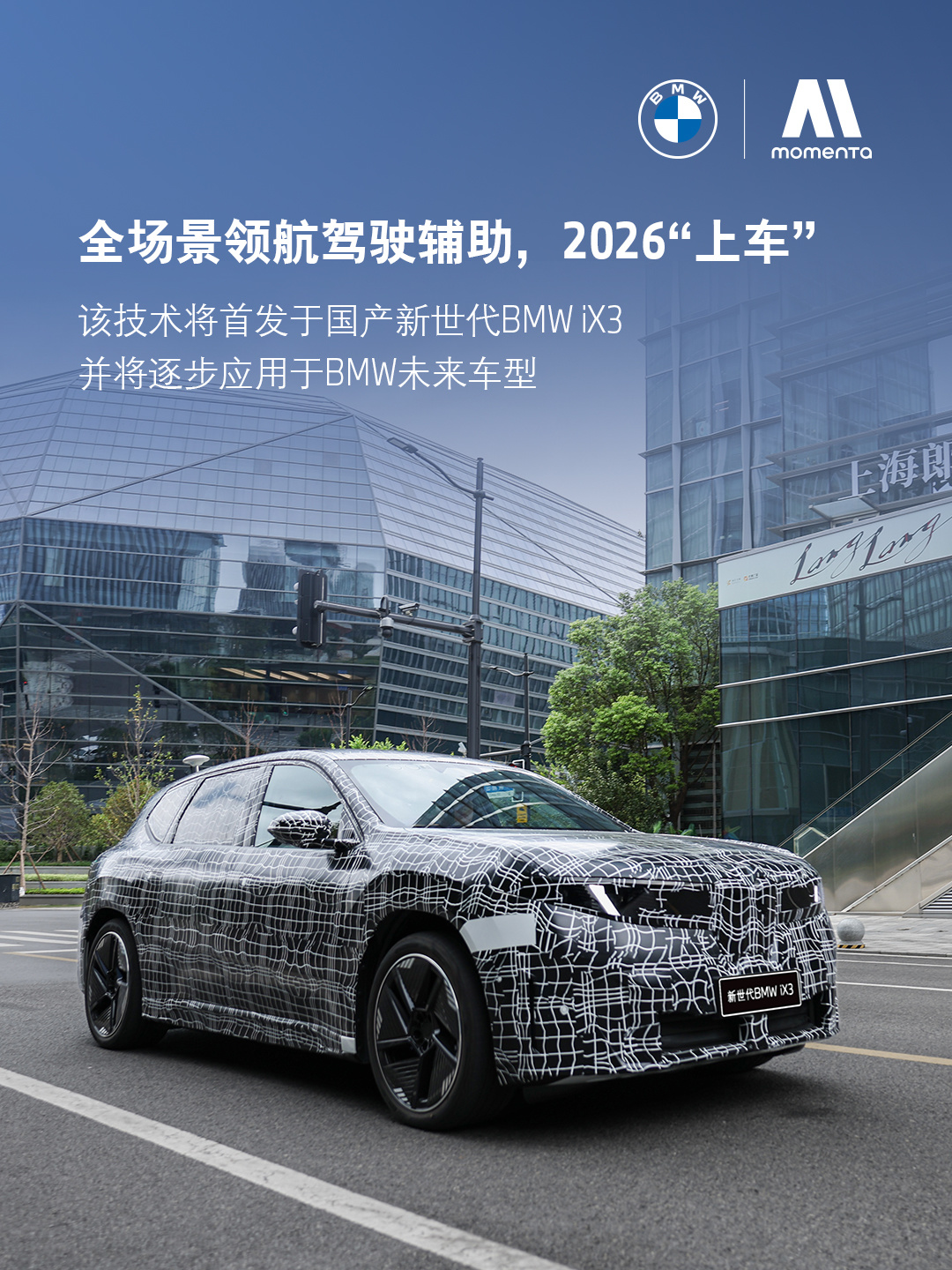
宝马携手Momenta加速联合开发智能驾驶辅助系统
Huan Qiu Wang· 2025-11-17 08:24
Core Insights - Momenta and BMW have established a partnership focused on developing advanced driver assistance systems tailored for the Chinese market [3] - The collaboration involves extensive real-world testing across major Chinese cities, adhering to BMW's stringent validation standards [1][3] Group 1: Partnership Details - The partnership aims to create a new generation of intelligent driving assistance solutions that cater to local driving scenarios in China [3] - The system will utilize Momenta's end-to-end large model, integrating perception, planning, and control into a unified architecture [3] Group 2: Technical Aspects - The solution will leverage large-scale neural networks for environmental perception, path planning, and high-precision vehicle control [3] - Momenta's AI algorithms combined with BMW's expertise in safety and driving strategies will enhance vehicle adaptability to complex road conditions [3] Group 3: Future Applications - The intelligent driving assistance system is expected to be implemented in multiple vehicle models, with the new generation BMW iX3 set to launch in 2026 [3]
VC开抢地平线前员工
投资界· 2025-11-17 08:10
Core Viewpoint - The article discusses the emergence of a new wave of entrepreneurs in China, particularly from the "Horizon" company, highlighting the shift from a "demographic dividend" to an "engineer dividend" in the Chinese tech landscape [12][15]. Group 1: Entrepreneurial Trends - Two prominent companies, DJI and Horizon, are leading the entrepreneurial charge, with many former employees from Horizon starting their own ventures [3][4]. - Recent funding rounds indicate a strong interest from investors in startups founded by former Horizon employees, showcasing a trend where talent from established firms quickly attracts investment [4][7]. Group 2: Key Figures and Companies - Zhang Yufeng, the founder and CEO of Wujie Power, previously held significant positions at Horizon, illustrating the direct lineage of talent from established companies to new startups [4][5]. - Notable figures like Yu Yinan and Sun Yilong have transitioned from Horizon to establish their own companies, such as Weita Power and Jian Zhi Robotics, respectively, indicating a robust entrepreneurial ecosystem [5][6]. Group 3: Investment Landscape - Wujie Power recently completed a 300 million yuan angel round led by Sequoia China, with participation from several prominent venture capital firms, reflecting the high investor confidence in Horizon alumni [4]. - Jian Zhi Robotics received strategic investment from 4D Map New, totaling 1.8 billion yuan, further emphasizing the financial backing for startups emerging from the Horizon network [6][10]. Group 4: The Engineer Dividend - The article emphasizes that China is transitioning from a demographic dividend to an engineer dividend, with a vast pool of engineering talent driving innovation and entrepreneurship [15]. - High-quality talent, efficient supply chains, and large-scale verifiable scenarios position China to produce globally competitive companies in the tech sector [15].

天瞳威视冲刺港股:新获大额融资,有股东却同步“撤退”
Shen Zhen Shang Bao· 2025-11-17 07:51
Core Viewpoint - Suzhou Tiantong Weishi Electronic Technology Co., Ltd. has submitted its main board listing application, despite expanding losses in the first half of the year and significant shareholder equity transfers occurring alongside new financing [1][5][11]. Group 1: Company Overview - Tiantong Weishi is a leading provider of software-centric intelligent driving solutions in mainland China, offering comprehensive solutions for L2-L2+ and L4 automation levels [4]. - The company expects to generate revenue of 243 million RMB from L4 solutions in 2024, accounting for over 50% of total revenue, with a total contract value of approximately 1 billion RMB for L4 solutions covering over 2,500 vehicles [4]. Group 2: Financial Performance - The company has experienced rapid revenue growth but remains in a continuous loss situation, with revenues of 172 million RMB, 200 million RMB, and 483 million RMB from 2022 to 2024, while losses were 325 million RMB, 241 million RMB, and 463 million RMB during the same period [5][7]. - In the first half of 2025, the company reported revenue of 157 million RMB, up from 55.77 million RMB in the same period last year, but losses increased to 193 million RMB from 125 million RMB [7]. Group 3: Profitability and Margin Fluctuations - The company's gross margin has shown significant volatility, with margins of 31.1%, 35.3%, 30.0%, and 32.4% from 2022 to the first half of 2025 [7]. - The fluctuations in gross margin are attributed to changes in the solution mix, with increased contributions from L4 solutions leading to lower margins due to higher software development costs [7][8]. Group 4: Financing and Shareholder Activity - Tiantong Weishi has completed multiple rounds of financing since its establishment, including a recent 1.37 billion RMB C+ round and a 4.48 billion RMB D round in 2025 [9][10]. - Several shareholders have transferred their equity in the company, with notable transactions occurring in 2025, including ZF Holdings transferring shares for 20 million RMB and other shareholders transferring shares for amounts ranging from 200,000 RMB to 8.15 million USD [11][12][13].
希迪智驾第三次递表港交所,上半年营收约4.08亿元
Ju Chao Zi Xun· 2025-11-15 02:54
Core Insights - Xidi Intelligent Driving Technology Co., Ltd. has submitted its third application to the Hong Kong Stock Exchange, with joint sponsors including CICC, CITIC International, and Ping An Securities (Hong Kong) [2] - The company is a leading provider of intelligent driving products and solutions for commercial vehicles in China, focusing on autonomous mining and logistics vehicles, V2X technology, and intelligent perception solutions [2] - Xidi ranks sixth among all intelligent driving commercial vehicle companies in China, holding a market share of approximately 5.2% [2] Financial Performance - Revenue is projected to increase from RMB 31.1 million in 2022 to RMB 410.0 million in 2024, representing a compound annual growth rate (CAGR) of 263.1% [3] - Revenue for the six months ending June 30, 2024, is expected to rise by 57.9% from RMB 258.5 million to RMB 408.0 million for the six months ending June 30, 2025 [3] - Gross profit is anticipated to grow from RMB 26.8 million in 2023 to RMB 101.4 million in 2024, with a gross profit increase of 57.1% from RMB 44.4 million for the six months ending June 30, 2024, to RMB 69.7 million for the six months ending June 30, 2025 [3] Market Position - Xidi has delivered 56 autonomous mining trucks to a mining area in China, operating alongside approximately 500 manned trucks, forming the world's largest mixed-operation mining vehicle fleet [2] - The company has also delivered China's first fully autonomous electric mining vehicle fleet, ranking first in the autonomous mining truck solution market based on projected product sales revenue for 2024 [2] - Xidi is among the first companies in China to launch commercial V2X products [2]