
家用电器

Search documents
险资二季度买了啥?这些个股被重仓持有
Zhong Guo Zheng Quan Bao· 2025-08-08 09:04
炒股就看金麒麟分析师研报,权威,专业,及时,全面,助您挖掘潜力主题机会! 随着A股上市公司陆续披露2025年半年报,险资二季度的重仓股和调仓换股情况陆续出炉。 Wind数据显示,截至8月8日记者发稿时,共有150余家上市公司披露了2025年半年报,其中,31家公司 被险资重仓持有,包括北京文化、西部矿业、同洲电子等。 险资重仓持有31只个股 二季度,在已披露半年报的上市公司中,险资新进成为湘电股份、浙数文化(维权)、高能环境、凯尔 达、神通科技、回盛生物等个股的前十大流通股东。 在业绩方面,在险资重仓持有的上述股票中,26只个股上半年净利润实现同比增长。净利润增幅最高的 是容知日新,上半年实现归母净利润1423.55万元,同比增长2063.42%。同洲电子、回盛生物、华康洁 净、浙数文化等个股的净利润同比增幅也较为靠前。 Wind数据显示,截至8月8日记者发稿时,在已披露半年报的上市公司中,31家公司的前十大流通股东 名单中出现险资身影,合计持股数量为6.29亿股,合计持股市值为122.94亿元(以2025年6月30日收盘价 计算)。 从所属行业来看,在已披露半年报的上市公司中,险资重仓持有的个股分别属于机械 ...
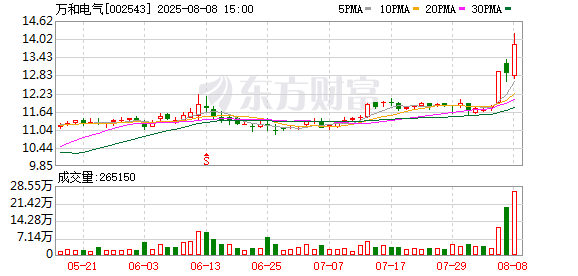
万和电气盘中创历史新高
Zheng Quan Shi Bao Wang· 2025-08-08 07:42
(文章来源:证券时报网) 两融数据显示,该股最新(8月7日)两融余额为4660.62万元,其中,融资余额为4609.15万元,近10日 增加985.53万元,环比增长27.20%。 机构评级来看,近10日共有1家机构对该股进行评级,8月7日天风证券发布的研报给予公司目标价为 14.91元。 公司发布的一季报数据显示,一季度公司共实现营业收入22.95亿元,同比增长15.94%,实现净利润 1.79亿元,同比增长8.01%,基本每股收益为0.2400元,加权平均净资产收益率3.70%。 万和电气股价创出历史新高,截至14:39,该股上涨7.91%,股价报13.92元,成交量1767.28万股,成交 金额2.35亿元,换手率2.67%,该股最新A股总市值达103.51亿元,该股A股流通市值92.10亿元。 证券时报·数据宝统计显示,万和电气所属的家用电器行业,目前整体跌幅为0.07%,行业内,目前股价 上涨的有52只,涨幅居前的有万和电气、倍益康、联合精密等,涨幅分别为7.91%、5.93%、5.69%。股 价下跌的有49只,跌幅居前的有禾盛新材、ST德豪、海立股份等,跌幅分别为7.37%、4.61%、3.75% ...


自由现金流改善趋势进一步强化,同类规模最大的自由现金流ETF(159201)迎较好布局时点
Mei Ri Jing Ji Xin Wen· 2025-08-08 03:22
(文章来源:每日经济新闻) 8月8日,A股三大指数悉数低开,沪指低开0.13%,深成指低开0.19%,创业板指低开0.20%。国证自由 现金流指数低开后震荡上行,现小幅上涨,成分股潍柴重机、捷佳伟创等领涨,华人健康、德邦股份等 领跌。相关ETF方面,同类规模最大的自由现金流ETF(159201)跟随指数翻红,迎较好布局时点。 招商证券指出,自由现金流改善趋势进一步强化,龙头公司自由现金流收益率和内在回报率预期持续提 升。在当前债券收益率低位背景下,高质量上市公司吸引力凸显。从行业层面看,部分必需消费(家用 电器、家居用品)、TMT(消费电子)及中游制造(汽车零部件、自动化设备)等领域中报业绩增速 较高或边际改善,自由现金流改善趋势显著。"反内卷"政策推动产能出清,钢铁、建材、光伏设备等供 给收缩行业盈利触底,现金流修复预期增强。 数据显示,截至2025年7月31日,国证自由现金流指数前十大权重股分别为上汽集团、中国海油、美的 集团、格力电器、洛阳钼业、中国铝业、厦门国贸、上海电气、正泰电器、中国动力,前十大权重股合 计占比57.66%。 自由现金流ETF(159201)紧密跟踪国证自由现金流指数,自由现金流策 ...






自由现金流不同指数有何区别?全景解析来了
Sou Hu Cai Jing· 2025-08-08 03:20
Core Insights - The article emphasizes the importance of free cash flow (FCF) as a measure of a company's ability to generate actual cash available for distribution to shareholders or reinvestment, rather than just accounting profits [1][21] - The market has shifted towards a "value" style since 2022, with a focus on dividends and cash flow, supported by regulatory policies aimed at enhancing the quality and sustainability of corporate earnings and cash flows [21] Free Cash Flow Indices Overview - The CSI All Share Free Cash Flow Index focuses on large, medium, and small-cap stocks, selecting 100 constituents with positive free cash flow and enterprise value, primarily in coal, oil, petrochemicals, and transportation sectors, highlighting defensive attributes [3] - The CSI 300 Cash Flow Index is limited to constituents of the CSI 300, selecting 50 large-cap blue-chip stocks with positive operating cash flow for five consecutive years, concentrated in traditional high-dividend sectors like oil and petrochemicals, suitable for low-volatility investors [4] - The CSI 800 Free Cash Flow Index selects 50 large and medium-cap stocks from the CSI 300 and CSI 500, with over 40% in the energy sector, indicating significant exposure to commodity cycle fluctuations, suitable for tactical strategies [5] - The FTSE China A-Share Free Cash Flow Index includes Hong Kong Stock Connect eligible stocks (approximately 30% from Hong Kong), selecting 50 large and medium-cap stocks, with a high proportion of central and state-owned enterprises, offering cross-border allocation and hedging attributes, but with liquidity risks in Hong Kong stocks [6] - The National Index Free Cash Flow covers a broader range, selecting 100 non-financial and non-real estate stocks from the Shanghai, Shenzhen, and Beijing exchanges, with diversified industries including oil, petrochemicals, automotive, and home appliances, demonstrating both offensive and defensive characteristics [7] Sample Selection Criteria - The selection criteria for these indices include positive free cash flow and enterprise value, exclusion of financial and real estate sectors, and a focus on companies with consistent positive operating cash flow over multiple years [11][17] - The indices are weighted by free cash flow, with individual stock weight limits set at 10%, and are adjusted quarterly [14][17]
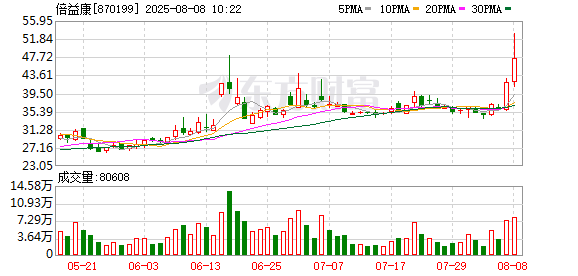
倍益康盘中创历史新高
Zheng Quan Shi Bao Wang· 2025-08-08 02:21
Group 1 - The stock price of Beiyikang reached a historical high, increasing by 17.81% to 49.48 yuan, with a trading volume of 5.51 million shares and a transaction amount of 252 million yuan, resulting in a turnover rate of 14.82% [2] - The latest total market capitalization of Beiyikang in A-shares is 3.37 billion yuan, with a circulating market value of 1.84 billion yuan [2] - In the home appliance industry, the overall decline is 0.11%, with 32 stocks rising, including Beiyikang, which has the highest increase of 17.81% [2] Group 2 - The latest margin trading data shows that as of August 7, the margin balance for Beiyikang is 13.60 million yuan, with a financing balance of 13.60 million yuan, reflecting a decrease of 2.82 million yuan over the past 10 days, a decline of 17.15% [2] - The company's Q1 report indicates that it achieved an operating income of 50.94 million yuan, a year-on-year increase of 1.54%, but reported a net loss of 1.63 million yuan, a year-on-year decline of 138.74%, with a basic earnings per share of -0.0239 yuan [2]
养老金二季度现身6只股前十大流通股东榜
Zheng Quan Shi Bao Wang· 2025-08-08 01:51
二季度末养老金账户对宏发股份的持股量最多,基本养老保险基金八零七组合、基本养老保险基金一五 零二二组合为公司第九、第七大流通股东,合计持股量为2822.27万股;其次是杰瑞股份,基本养老保 险基金八零八组合为公司第十大流通股东,持股量为671.79万股。从期末持股市值看,养老金账户期末 持股市值在亿元以上的有5只股,分别是宏发股份、杰瑞股份、容知日新等。 持股比例方面,养老金账户持股比例最多的是容知日新,二季度末基本养老保险基金二一零一组合为公 司第四大大流通股东,持股量为350.00万股,占流通股比例4.04%。养老金持股比例居前的还有果麦文 化、宏发股份等,持股比例分别为2.40%、1.93%。 养老金二级市场上持续落子布局,二季度末共现身6只个股前十大流通股东榜,其中,新进3只,增持2 只。 证券时报·数据宝统计显示,养老金账户最新出现在6只个股前十大流通股东名单中,合计持股量0.51亿 股,期末持股市值合计13.44亿元。 业绩方面,养老金账户现身个股中,半年报净利润实现增长的有6家,净利润增幅最高的是容知日新, 公司共实现净利润1423.55万元,同比增长2063.42%。(数据宝) 养老金持股明细 ...


社保基金持仓动向:二季度新进10股
Zheng Quan Shi Bao Wang· 2025-08-08 01:51
半年报密集披露,机构最新持仓动向曝光!二季度社保基金新进股共有10只。 目前共有156家公司已经公布半年报,前十大流通股东数据透露出机构行踪。证券时报·数据宝统计显 示,社保基金共现身30只股,调仓动向方面,二季度社保基金新进10股、增持6股、减持8股,社保基金 持股量保持不变的有6股。 社保基金新建仓股票中,从前十大流通股东名单中社保基金家数来看,社保基金家数最多的是苏试试 验,共有3家社保基金出现在前十大流通股东名单中,即全国社保基金六零二组合、全国社保基金六零 一组合、全国社保基金五零二组合,分别位列公司第5大、第7大、第10大流通股东,持股量合计为 1486.20万股,占流通股比例为2.94%。 从持股比例看,新进股中社保基金持有比例最多的是中触媒,持股量占流通股比例为3.45%,其次是北 鼎股份,社保基金持股比例为3.16%,持股比例居前的还有苏试试验、果麦文化、塔牌集团等。 从持股量统计,社保基金新进的个股中,持股量最多的是苏试试验,共持有1486.20万股,塔牌集团、 北鼎股份等紧随其后,持股量分别为1216.58万股、1000.00万股。 业绩方面,社保基金新进股中,半年报净利润同比增长的有9 ...




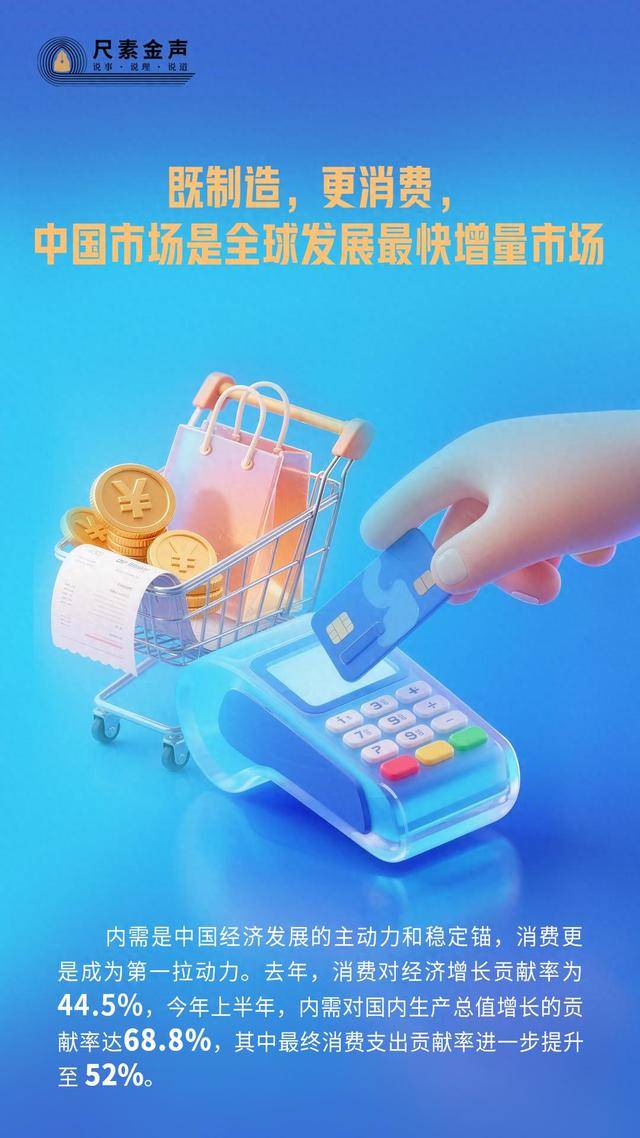
中国市场是全球发展最快增量市场
Sou Hu Cai Jing· 2025-08-07 06:22
Group 1 - The core argument is that recent claims by Western politicians and media regarding China's economic practices are misleading, emphasizing that domestic consumption is a primary driver of China's economic growth [1] - In 2022, consumption contributed 44.5% to economic growth, and in the first half of 2023, domestic demand accounted for 68.8% of GDP growth, with final consumption expenditure contributing 52% [1][3] - The retail sales of consumer goods reached 24.5458 trillion yuan in the first half of 2023, showing a year-on-year growth of 5.0%, indicating a speeding up in sales growth [3] Group 2 - The retail sales of household appliances and audio-visual equipment increased by 30.7% year-on-year, while the retail volume of new energy vehicles surpassed 5 million units, growing by 33.3% [3] - China's manufacturing capabilities are increasingly aligned with domestic consumer demand, enhancing product quality and technological content, which supports the domestic economic cycle [3][4] - The outbound tax refund sales increased by 94.6% year-on-year in the first half of 2023, reflecting a growing interest from foreign consumers in purchasing Chinese goods [3] Group 3 - China's consumer market is one of the fastest-growing globally, with retail sales reaching 48.8 trillion yuan in 2022, a year-on-year increase of 3.5%, providing significant opportunities for global businesses [4] - International brands are increasing their investments in China, opening stores and launching new products to capitalize on the market's growth [4] - China is committed to an open and inclusive economic development model, contributing to global economic growth and job creation through expanded imports [4][5]
融资资金更倾向于追逐基本面稳健、具备长期逻辑的优质标的,自由现金流ETF(159201)优势明显
Mei Ri Jing Ji Xin Wen· 2025-08-07 05:47
Group 1 - The Guozheng Free Cash Flow Index experienced a slight decline of approximately 0.3% on August 7, with stocks like Jinhong Group hitting the daily limit and others such as Huaren Health, Meiyingsen, and Anfu Technology also rising [1] - As of August 5, the margin trading balance in the Shanghai and Shenzhen markets reached 2 trillion 2.59 billion yuan, marking a return to this level after ten years [1] - The chief strategy analyst at Galaxy Securities noted that the rotation between dividend strategies and technology growth sectors has attracted structural capital, leading to a significant improvement in the efficiency of leveraged funds in specific hotspots [1] Group 2 - The Free Cash Flow ETF (159201) focuses on industry leaders with abundant free cash flow, covering sectors such as home appliances, automobiles, non-ferrous metals, power equipment, and petrochemicals, effectively mitigating risks associated with single industry volatility [1] - The fund management annual fee rate is 0.15%, and the custody annual fee rate is 0.05%, both of which are the lowest in the market [1] - The Cash Flow 500 ETF (560120) targets sectors like non-ferrous metals, basic chemicals, transportation, machinery, and biomedicine, combining growth potential and quality with a small and mid-cap style [2]
关注现金流ETF(159399)投资机会,自由现金流改善推动企业内在价值提高
Mei Ri Jing Ji Xin Wen· 2025-08-07 05:47
Core Insights - The trend of improving free cash flow is further reinforced, with leading companies experiencing continuous increases in free cash flow yield and expected intrinsic return [1] - High-quality listed companies are becoming more attractive in the context of low bond yields [1] Industry Summary - Certain essential consumer sectors (home appliances, household goods), TMT (consumer electronics), and midstream manufacturing (automotive parts, automation equipment) have shown high or marginally improved mid-year performance growth, with a significant trend of improving free cash flow [1] - The "anti-involution" policy is driving capacity clearance, leading to a bottoming out of profits in industries with supply contraction such as steel, building materials, and photovoltaic equipment, enhancing expectations for cash flow recovery [1] Company Summary - The cash flow ETF (159399) tracks the FTSE China A-Share Free Cash Flow Focus Index (888888), which selects listed companies with stable free cash flow characteristics from the Chinese A-share market as index samples [1] - This index covers multiple industry sectors and focuses on financially healthy and profitable enterprises, aiming to reflect the overall performance of companies that emphasize cash flow quality in the Chinese market [1] - The index's compilation style emphasizes value investment and quality factor selection [1]