
化肥

Search documents
中东局势扰动,化工板块掀涨停潮
第一财经· 2026-03-13 12:12
Core Viewpoint - The chemical sector is experiencing a significant rally driven by rising costs and supply disruptions, with a shift from expectation-driven to supply-demand-driven market dynamics [5][6]. Group 1: Market Dynamics - Several stocks in the chemical sector, particularly in fertilizers and methanol, have seen substantial gains, with companies like Chitianhua and Jinniu Chemical achieving multiple consecutive trading limits since March [3][4]. - The increase in oil prices, particularly Brent crude, has a direct impact on the costs of downstream chemical products, with a noted correlation where an 8% rise in oil prices leads to approximately a 2% increase in methanol and urea prices [5]. Group 2: Supply Chain Disruptions - The geopolitical situation in the Middle East, particularly the control of the Strait of Hormuz by Iran, is causing significant disruptions in oil and gas supplies, leading to increased international energy prices [5][6]. - Iran, being a major producer of methanol and urea, has seen its production capabilities affected, with a potential reduction in exports leading to a global shortage of these chemicals [6][8]. Group 3: Price Implications - The ongoing tensions in the Middle East are expected to push domestic methanol prices higher, particularly in East China, and could create an international urea shortage during the spring planting season in the Northern Hemisphere [8]. - Companies like Jinniu Chemical have acknowledged the impact of geopolitical factors on their operations and the volatility in international energy prices, indicating a cautious outlook for the near term [8].



一文梳理 | 中东战火如何改变农产品逻辑
对冲研投· 2026-03-13 12:04
Core Viewpoint - The article emphasizes that inflation expectations serve as a "macro engine" for commodity markets, with recent geopolitical tensions in the Middle East significantly influencing commodity trends, particularly leading to a surge in oil prices and a renewed focus on inflation trades, which may also heighten the risk of stagflation [2]. Group 1: Commodity Trends - Since January, commodities have shown overall strength with a structural market characterized by significant increases in energy prices, high levels in precious metals, a rebound in agricultural products, and weaker performance in the black commodities sector, reflecting rising supply chain risks and intensified policy negotiations [2]. - The recent geopolitical conflicts have notably increased market attention on agricultural products, leading to heightened speculative activity and a significant rise in implied volatility, with agricultural prices increasingly following oil price movements, indicating that macro-level influences outweigh basic supply-demand fundamentals [2]. Group 2: Correlation Between Oil and Agricultural Products - Historical data shows varying correlations between oil and agricultural products, with imported agricultural products being most affected. From 2016 to present, the correlation between Brent crude oil and agricultural prices, such as U.S. soybean oil, cotton, and corn, has been notably strong, often exceeding 0.67 [3]. Group 3: Oil Market Dynamics - In early March, the oil market experienced a rapid upward pulse due to U.S.-Iran tensions, although prices have since retreated, establishing a higher price baseline. The oilseed market has strengthened due to both commodity market sentiment and the supportive fundamentals of biodiesel, making oilseeds a preferred choice among agricultural products [6]. - The current oil market dynamics differ from the 2022 Russia-Ukraine conflict, as the oil market is now influenced by ongoing geopolitical tensions, with no clear signals for a ceasefire, leading to a gradual increase in oil price baselines [9]. Group 4: Agricultural Costs and Production - The conflict has raised fertilizer and chemical costs significantly, with the USDA estimating a 92% increase in fertilizer costs and a 54% increase in chemical costs for soybean planting in 2022. This cost increase is expected to persist into 2025 and 2026, leading to an overall rise in planting costs by approximately 9% [11]. - The soybean market is currently under pressure due to several years of high production, resulting in relatively low prices. However, the market sentiment is shifting, with the potential for upward price movement due to geopolitical events and changes in trade policies [12]. Group 5: Cotton Market Outlook - The ongoing U.S.-Iran conflict is expected to impact the cotton industry through increased costs across the supply chain, including planting, processing, and transportation. The ICAC predicts a 4% decline in global cotton production, which, combined with geopolitical uncertainties, may lead to increased price volatility [19]. - Short-term cotton prices are expected to remain strong, with potential for further increases if the conflict continues, as rising energy costs and declining production expectations converge [20]. Group 6: Sugar Market Dynamics - The global sugar market is currently in a production increase cycle, but prices are under pressure due to high industrial inventories. However, the market is showing signs of cost support, and geopolitical tensions may indirectly influence sugar prices through the ethanol market [27]. - The conflict has created disruptions in sugar supply chains, particularly affecting refined sugar exports, which may lead to tighter supply and upward price pressure in the sugar market [27]. Group 7: Corn Market Insights - The geopolitical tensions have led to significant uncertainty in logistics and production in the Middle East, driving up oil prices and subsequently impacting grain markets. Despite a generally loose supply-demand balance for corn and wheat, macroeconomic factors are currently dominating market dynamics [34]. - Domestic corn prices have strengthened due to market speculation and concerns over supply gaps, with expectations of continued price increases in the short term [34]. Group 8: Egg and Pork Markets - The fluctuations in oil prices are impacting the egg market primarily through cost channels, as rising feed prices due to increased demand for biofuels are expected to elevate production costs for eggs [42]. - The pork market is experiencing indirect effects from rising feed costs, which could lead to increased production costs and potential supply pressures in the near term [49].

【研选行业】AI估值大分化!轻资产泡沫化VS重资产洼地,HALO资产配置窗口开启!机构力推这些标的
第一财经· 2026-03-13 10:54
Group 1 - The article highlights a significant valuation divergence in the AI sector, indicating a bubble in light asset-heavy companies while heavy asset companies are seen as undervalued, suggesting an asset allocation window for HALO [1] - The article discusses the hidden profit margins in computing infrastructure, with market size expanding from billions to trillions, and identifies domestic leaders entering the cloud vendor supply chain, showing performance elasticity [1] - The geopolitical situation in the Middle East is affecting energy routes, leading to a price and valuation resonance in the fertilizer sector [1] - The cement industry is expected to reach a profitability inflection point driven by price increases and supportive policies [1]

持仓观望?
第一财经· 2026-03-13 10:38
Market Overview - The A-share market indices are experiencing a volatile adjustment pattern, with the Shanghai Composite Index dipping to 4086.85 points before rebounding, driven by sectors like infrastructure and wind power, but facing pressure again towards the end of trading [3] - The Shenzhen Component Index weakened due to the drag from technology and new energy sectors, while the ChiNext Index saw a narrower decline supported by lithium battery materials [3] Sector Performance - There is a clear divergence in stock performance, with more stocks declining than rising. The cyclical and defensive infrastructure sectors are the main market drivers, with wind power equipment, chemicals, fertilizers, home appliances, and construction decoration leading the gains. In contrast, previously strong technology growth sectors like AI computing, semiconductor equipment, solar energy, and commercial aerospace are collectively weakening [5] Trading Volume and Capital Flow - The trading volume in both markets has slightly decreased, indicating a state of existing capital adjustment and competition. The capital structure shows a shift from high-valuation technology growth sectors to low-valuation cyclical and defensive sectors, with an increased proportion of trading volume in the Shanghai market, highlighting a growing risk aversion among investors [6] Institutional and Retail Investor Behavior - Institutional investors are clearly shifting their positions, moving funds from high-volatility growth sectors to low-valuation, high-dividend, and performance-stable defensive sectors. They are taking profits in computing, electronics, communications, media, and new energy, while increasing positions in power equipment, basic chemicals, coal, oil and petrochemicals, and banks. Retail investors are also adjusting their positions in line with market style changes, chasing high-priced precious metals and state-owned enterprises while selling off AI and semiconductor sectors that are experiencing corrections [8]

复合肥开工继续提升
Hua Tai Qi Huo· 2026-03-13 05:25
1. Report Industry Investment Rating - The report does not provide an industry investment rating [1][2][3] 2. Core Viewpoints - Urea spot prices are stable as they have reached the March guidance price, and it is a critical period for ensuring supply and stabilizing prices during the spring plowing season in China. When the urea futures price strengthens, spot trading improves. The supply has increased as some gas - based and technical - reformed enterprises have resumed production, and some off - season reserves are being released in March. On the demand side, the production of compound fertilizers has continued to recover after the Spring Festival, and the melamine market is also in good condition. The international geopolitical conflict has boosted the market sentiment, leading to inventory reduction in factories and a slight increase in port inventory. However, the high international urea prices cannot be effectively transmitted to the domestic market due to the lack of new information on export quotas. Future attention should be paid to export dynamics, the rhythm of off - season reserve release, and the sustainability of spot purchasing sentiment [2] 3. Summary by Directory 3.1 Urea Basis Structure - The report presents data on Shandong and Henan urea small - particle prices, Henan basis, urea main contract closing price, and 1 - 5, 5 - 9, 9 - 1 spreads [1][6][7] 3.2 Urea Production - It shows the weekly urea production and urea plant maintenance loss volume [22] 3.3 Urea Production Profit and Capacity Utilization - The report includes information on urea production cost, production profit, and capacity utilization of coal - based and natural - gas - based production [24][27] 3.4 Urea Foreign Market Prices and Export Profits - It provides data on urea small - particle FOB in the Baltic Sea, large - particle CFR in Southeast Asia, and Chinese FOB prices, as well as export and on - disk export profits [34][39][44] 3.5 Urea Downstream Production and Orders - The report shows the capacity utilization rates of compound fertilizers and melamine, and the number of days of pre - received orders [45][48] 3.6 Urea Inventory and Warehouse Receipts - It includes data on factory inventory, port inventory, raw material inventory of downstream urea manufacturers in Hebei, urea warehouse receipt quantity, main contract holding volume, and trading volume [46][50][53]
《能源化工》日报-20260313
Guang Fa Qi Huo· 2026-03-13 01:49
1. Report Industry Investment Ratings No relevant content provided. 2. Core Views of the Reports Pure Benzene and Styrene - Due to the tense geopolitical situation, the supply of pure benzene is expected to decline, and the supply - demand outlook has improved. However, the price will fluctuate with oil prices. The strategy is to wait and see on a single - side basis and shrink the EB04 - BZ04 spread when it is high [1]. - The supply of styrene in March remains high, and the supply - demand is expected to slightly reduce inventory. The price will follow oil price fluctuations, and the strategy is the same as that for pure benzene [1]. Urea - The short - term price of urea is relatively firm, but there may be a downward trend after the return - green fertilizer season in mid - March, mainly affected by sentiment. The main contract should focus on whether it can break through the 1860 - 1900 range, and the strategy is to go long at low levels [2]. PVC and Caustic Soda - The short - term rise of caustic soda is due to the optimistic expectations from geopolitical conflicts. The supply - demand situation is still severe, and attention should be paid to the actual delivery volume of downstream and the price fluctuation of liquid chlorine [3]. - The price of PVC is expected to be passively pushed up. The supply - demand situation has slightly changed, and the cost - end transmission has uncertainties [3]. Natural Rubber - The new rubber supply is gradually being released, and the demand has uncertainties. The price is expected to fluctuate within the range of 16500 - 17500, and attention should be paid to the reduction of tire demand in the Middle East [4]. Glass and Soda Ash - The supply of soda ash is strong and the demand is weak, and it is affected by macro fluctuations. The market is expected to fluctuate, and the range is 1150 - 1300. The strategy is to wait and see on a single - side basis and consider the arbitrage of short soda ash and long glass [5]. - The supply of glass has a low daily melting volume, and the inventory has been well reduced. The strategy is to wait and see, with a range of 1000 - 1150, and go long at low levels after the macro situation stabilizes. Also, consider the arbitrage of short soda ash and long glass [5]. Polyolefins - The short - term market of LLDPE and PP is strong due to cost support, supply reduction, and demand recovery expectations. Attention should be paid to the sustainability of cost support and the actual procurement demand of downstream [6]. Methanol - The price of methanol is widely fluctuating due to geopolitical sentiment. The supply may have an actual reduction, the demand is gradually recovering, and the inventory has started to reduce. Attention should be paid to the progress of the conflict, the inventory reduction rhythm, and the implementation of maintenance [7]. Crude Oil - In the short term, oil prices will maintain a pattern of "policy suppression + geopolitical support", and Brent is likely to fluctuate in the range of 80 - 100 US dollars per barrel [8]. Polyester Industry Chain - For PX, the supply is expected to decline, but attention should be paid to the downstream negative feedback. The price will follow oil price fluctuations, and the strategy is to go long at low levels after the market stabilizes [10]. - For PTA, the self - driving force is limited, and the price follows the cost - end. The strategy is to wait and see on a single - side basis [10]. - For ethylene glycol, the supply in March has decreased significantly, and the inventory reduction amplitude may increase. The price has the momentum to rise, but attention should be paid to the risk of a sharp fall [10]. - For short - fiber, the supply - demand pattern is weak, and it follows the raw material fluctuations. The strategy is the same as that for PTA [10]. - For bottle - chips, the supply is expected to increase in March, and the supply - demand is expected to be tight. The strategy is the same as that for PTA [10]. LPG No specific view statement provided. 3. Summaries According to Relevant Catalogs Pure Benzene - Styrene - **Upstream Prices and Spreads**: On March 12, the prices of Brent crude oil, WTI crude oil, CFR Japan naphtha, etc. all increased compared with March 11, while the spreads of pure benzene - naphtha and ethylene - naphtha decreased [1]. - **Benzene - Styrene - Related Prices and Spreads**: The prices of benzene - styrene spot and futures increased slightly, but the spreads and cash - flows decreased to varying degrees [1]. - **Downstream Cash - Flows**: The cash - flows of downstream products such as phenol, caprolactam, and aniline changed, with some increasing and some decreasing [1]. - **Inventory and Operating Rates**: The inventories of pure benzene and benzene - styrene in Jiangsu ports decreased, and the operating rates of some industries changed slightly [1]. Urea - **Futures and Spot Prices**: The futures prices of urea increased, and the spot prices were generally stable [2]. - **Raw Materials and Downstream Products**: The prices of upstream raw materials were mostly stable, and the prices of some downstream products increased slightly [2]. - **Supply and Demand**: The daily production of urea decreased slightly, the operating rate remained high, and the inventory decreased slightly. The demand from agriculture and industry is in a state of recovery [2]. PVC and Caustic Soda - **Spot and Futures Prices**: The prices of caustic soda and PVC increased to varying degrees, and the basis and spreads changed [3]. - **Overseas Quotes and Export Profits**: The overseas quotes of caustic soda and PVC changed, and the export profits increased [3]. - **Supply and Demand**: The operating rate of the caustic soda industry decreased slightly, and the operating rate of the PVC industry decreased slightly. The demand for downstream products of caustic soda and PVC improved [3]. - **Inventory**: The inventory of caustic soda factories increased slightly, and the inventory of PVC upstream factories and the total social inventory decreased [3]. Natural Rubber - **Spot Prices and Basis**: The price of natural rubber in Yunnan increased, and the basis changed significantly [4]. - **Monthly Spreads**: The monthly spreads of natural rubber changed [4]. - **Fundamental Data**: The production of natural rubber in some countries changed, the operating rates of tire industries increased, and the import and export volumes and inventories also changed [4]. Glass and Soda Ash - **Prices and Spreads**: The prices of glass and soda ash increased slightly, and the basis and spreads changed [5]. - **Supply**: The operating rate and weekly output of soda ash increased slightly, and the daily melting volume of glass decreased [5]. - **Inventory**: The inventories of glass and soda ash factories decreased [5]. - **Real Estate Data**: The year - on - year changes in real estate data such as new construction area, construction area, completion area, and sales area improved to varying degrees [5]. Polyolefins - **Futures and Spot Prices**: The futures prices of LLDPE and PP increased, and the spot prices also increased. The basis and spreads changed [6]. - **Upstream and Downstream Operating Rates**: The operating rates of PE and PP devices decreased, and the operating rates of downstream industries increased [6]. - **Inventory**: The enterprise inventory of PE increased, and the social inventory decreased. The enterprise inventory of PP increased slightly, and the trader inventory decreased [6]. Methanol - **Prices and Spreads**: The futures prices of methanol increased, and the basis and spreads changed [7]. - **Inventory**: The inventories of methanol enterprises, ports, and the society decreased [7]. - **Upstream and Downstream Operating Rates**: The operating rate of upstream domestic enterprises remained stable, and the operating rates of some downstream industries increased [7]. Crude Oil - **Prices and Spreads**: The prices of Brent, WTI, and SC crude oil increased significantly, and the spreads also changed [8]. - **Refined Oil Prices and Spreads**: The prices of refined oil products increased, and the spreads and cracking spreads changed [8]. Polyester Industry Chain - **Upstream and Downstream Product Prices and Cash - Flows**: The prices of upstream raw materials such as crude oil and naphtha increased, and the prices and cash - flows of downstream polyester products also changed [10]. - **PX - Related Prices and Spreads**: The prices and spreads of PX changed [10]. - **PTA - Related Prices and Spreads**: The prices and spreads of PTA changed, and the processing fees decreased [10]. - **MEG - Related Prices and Spreads**: The prices and spreads of MEG changed, and the import profit increased [10]. - **Operating Rates**: The operating rates of various industries in the polyester industry chain changed, with some increasing and some decreasing [10]. LPG - **Prices and Spreads**: The futures prices of LPG increased, and the basis and spreads changed [11]. - **External Market Prices**: The external market prices of LPG increased [11]. - **Inventory**: The refinery storage ratio of LPG decreased, and the port inventory and storage ratio increased [11]. - **Upstream and Downstream Operating Rates**: The operating rate of upstream main refineries increased slightly, and the operating rates of downstream industries also increased [11].
美股遭遇抛售潮
财联社· 2026-03-13 00:10
Core Viewpoint - The article discusses the significant impact of the ongoing conflict in the Middle East, particularly the statements from Iran's new Supreme Leader, which have heightened concerns over inflation and led to a sharp decline in U.S. stock markets [1][2]. Market Performance - All three major U.S. stock indices fell by over 1.5%, indicating a broad sell-off, with the Dow Jones down 739.42 points (1.56%), the Nasdaq down 404.16 points (1.78%), and the S&P 500 down 103.22 points (1.52%) [6]. - The energy sector was the only one to see gains, with a 0.98% increase, while other sectors, including industrials and consumer discretionary, experienced declines of 2.52% and 2.21%, respectively [6]. Oil Market Dynamics - WTI crude oil futures rose by 9.7% and Brent crude by 9.2%, nearing $100 per barrel, driven by fears of supply disruptions due to the conflict [4]. - The International Energy Agency (IEA) warned of the largest oil supply disruption in history, exacerbating inflation concerns [3]. Investor Sentiment - Market sentiment has shifted to a "sell first, ask questions later" approach, with investors reacting to geopolitical tensions rather than focusing on fundamentals [4]. - The possibility of the Federal Reserve lowering interest rates later this year is rapidly decreasing due to rising oil prices and ongoing conflict [5]. Sector-Specific Movements - Major tech stocks saw declines, with Nvidia down 1.55%, Amazon down 1.47%, and Tesla down 3.14% [7]. - Concerns in the private credit sector led to Morgan Stanley implementing redemption restrictions on a private credit fund, while JPMorgan downgraded valuations on some private credit loans, resulting in stock declines of 4.1% and 1.6%, respectively [8]. - Chemical companies like LyondellBasell and Dow saw stock increases of 10.3% and 9.3%, respectively, following a rating upgrade from Citigroup, which noted new export opportunities due to supply chain disruptions [9]. - Fertilizer producers experienced significant stock price increases, with CF Industries rising over 13% to a record high due to soaring fertilizer prices linked to the conflict [10].

尿素日报:理性看待盘面:冠通期货研究报告-20260312
Guan Tong Qi Huo· 2026-03-12 10:42
【冠通期货研究报告】 尿素日报:理性看待盘面 发布日期:2026 年 3 月 12 日 【行情分析】 尿素今日高开低走,日内震荡偏强。现货报价目前保持稳定为主,部分工 厂继续以指导价最高价执行。河北、山东及河南尿素工厂出厂报价范围在 1810-1840 元/吨。基本面来看,供给端稳中偏强,高位日产及国储放货之下, 市场流通货源充裕,短期停车与复产频发,基本稳定在 23 万吨以内。而期货连 续走强叠加旺季预期,买涨不买跌的情绪加持之下,高位产量消化速度相对顺 畅,表现为库存数据的良好去化,本期尿素库存大幅去化 12.79%,后续若临时 检修装置有增加,库存去化或有加速。随着元宵节结束及两会的推进,下游工 业需求启动速度加快,本周复合肥工厂开工率增长近 10%,同比偏低 10%左右, 预计月内还有负荷增加的空间,小麦返青肥基本收尾,而复合肥的生产依然处 于农耕旺季需求期,高氮复合肥的终端走货情况提振尿素用量。近日海外战事 对国际尿素的影响波及国内情绪,但目前来看,出口管控严格,后续出口还需 等保障春耕之后,投资者需理性看待盘面波动,谨慎情绪消退后回调。 【期现行情】 期货方面:尿素主力 2605 合约 1917 ...
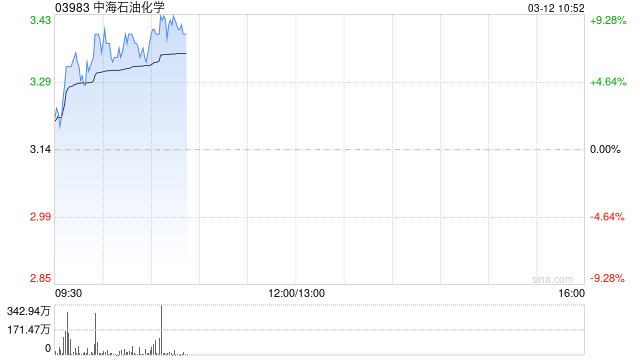
化肥股早盘涨幅居前 中海石油化学涨逾8%中化化肥涨逾4%
Xin Lang Cai Jing· 2026-03-12 02:52
Group 1 - Fertilizer stocks showed significant gains in early trading, with China National Petroleum Corporation (03983) rising by 8.28% to HKD 3.40 [1] - Sinochem Fertilizer (00297) increased by 3.91%, reaching HKD 1.86 [1] - China Heartlink Fertilizer (01866) saw a rise of 2.74%, trading at HKD 12 [1]
格林大华期货早盘提示:尿素-20260312
格林大华期货· 2026-03-12 01:39
Morning session notice 更多精彩内容请关注格林大华期货官方微信 格林大华期货研究院 证监许可【2011】1288 号 2026 年 3 月 12 日星期四 重要事项: 本报告中的信息均源于公开资料,格林大华期货研究院对信息的准确性及完备性不作任何保 证,也不保证所包含的信息和建议不会发生任何变更。我们力求报告内容的客观、公正,但 文中的观点、结论和建议仅供参考,报告中的信息和意见并不构成所述期货合约的买卖出价 和征价,投资者据此作出的任何投资决策与本公司和作者无关,格林大华期货有限公司不承 担因根据本报告操作而导致的损失,敬请投资者注意可能存在的交易风险。本报告版权仅为 格林大华期货研究院所有 任何机构和个人不得以任何形式翻版 如引用、转载、刊发,须注明出处为格林大华期货有限公司。 研究员: 吴志桥 从业资格:F3085283 交易咨询资格:Z0019267 联系方式:15000295386 | 板块 | 品种 | 多(空) | 推荐理由 【行情复盘】 周三尿素主力合约 2605 价格上涨 25 元至 1872 元/吨,华中主流地区现货价格 1860 | | --- | --- | -- ...