智能手机

Search documents
研报 | 2025年全球智能手机产量达12.5亿支,苹果、三星并列第一
TrendForce集邦· 2026-03-09 08:33
Core Insights - The global smartphone production reached 337 million units in Q4 2025, a quarter-on-quarter increase of 2.7%, driven by Apple's new product launch [2] - Apple and Samsung both produced nearly 240 million units in 2025, ranking first globally [2] - The total smartphone production for 2025 is estimated at 1.254 billion units, reflecting a year-on-year growth of 2.5% [2] - In 2026, due to soaring memory prices, global smartphone production is expected to decline by approximately 10%, dropping to 1.135 billion units [2] Brand Performance Summary - **Apple**: In Q4 2025, Apple produced approximately 87 million units, a 54% quarter-on-quarter increase and a 9% year-on-year increase, totaling 239.8 million units for the year [3][5] - **Samsung**: Samsung's Q4 2025 production was around 58.2 million units, an 11.1% year-on-year increase, with a total of 239.8 million units for 2025 [3][6] - **Xiaomi**: Xiaomi produced 41.5 million units in Q4 2025, a 7% decrease from the previous quarter, with an annual total of approximately 169.8 million units [3][7] - **Oppo**: Oppo's production for 2025 was about 143 million units, with a slight decrease in Q4 production [3][8] - **Vivo**: Vivo's Q4 production decreased by 16%, with an annual total of 102 million units [3][9] - **Transsion**: Transsion's Q4 production fell to 21.1 million units, a 28% decrease, with a focus on low-end models [3][10] - **Honor**: Honor's Q4 production increased by 7%, but faces competition and cost pressures in 2026 [3][11] - **Lenovo**: Lenovo's production remained stable in Q4 2025, with an annual total of approximately 61 million units [3][12]





每日市场观察-20260309
Caida Securities· 2026-03-09 05:26
Market Performance - The Shanghai Composite Index rose by 0.38%, the Shenzhen Component Index increased by 0.59%, and the ChiNext Index also gained 0.38%[1] - Over 4,200 stocks rose, with nearly 90 stocks hitting the daily limit, indicating a recovery in market confidence[1] - The total trading volume in the Shanghai and Shenzhen markets exceeded 2.2 trillion yuan, a decrease of nearly 200 billion yuan from the previous day[1] Sector Analysis - Key sectors that saw significant gains included agricultural chemicals, chemical raw materials, and biological products[1] - The technology sector experienced a collective rebound, supported by policies promoting technological self-sufficiency and high-end equipment[1] Investment Trends - Net inflows into the Shanghai Stock Exchange amounted to 32.937 billion yuan, while the Shenzhen Stock Exchange saw net inflows of 27.269 billion yuan on March 6[4] - The top three sectors for net inflows were power grid equipment, software development, and infrastructure construction[4] Government Initiatives - The government plans to invest over 7 trillion yuan in key areas, including infrastructure and public services, as part of the "14th Five-Year Plan"[5][6] - Fiscal spending is expected to exceed 30 trillion yuan, with new government bond issuance reaching 1.189 trillion yuan, marking the highest levels in recent years[7] Industry Growth Projections - By June 2025, China's computing power is projected to reach 962 EFlops, with intelligent computing power accounting for 81% of this total, reflecting a 96% year-on-year growth[9][10] - The artificial intelligence industry is expected to grow to over 10 trillion yuan by the end of the "14th Five-Year Plan"[11] Market Challenges - Global smartphone shipments are forecasted to decline by approximately 7% in 2026 due to supply chain pressures and rising costs, particularly affecting entry-level devices[12] Fund Dynamics - Equity ETFs saw a net inflow of nearly 38 billion yuan over two trading days, indicating strong interest in equity assets[13][14]
未知机构:存储芯片短缺加剧价格大幅上涨冲击中国智能手机市场东京消息-20260309
未知机构· 2026-03-09 02:40
Summary of Conference Call Records Industry Overview - The conference call discusses the **Chinese smartphone market**, which is currently facing significant challenges due to a **shortage of storage chips** leading to increased production costs and widespread price hikes across nearly all brands and product categories [1][1]. Key Points and Arguments - The price increase for newly launched products, such as **Xiaomi's Redmi K90** and **vivo's iQOO 15**, ranges from **100 to 600 CNY** (approximately **14.50 to 87 USD**), with some mid-range models experiencing price hikes of up to **20%** [1][1]. - Chinese brands, including **Xiaomi, OPPO, and vivo**, are preparing for another round of price increases, expected to be implemented soon [1][1]. - The **entry-level smartphone segment** has been crucial for market expansion in China, with brands historically sacrificing profit margins for higher shipment volumes [2][2]. - The **cost increase** is expected to have a more significant impact on low-priced models, as high-end models typically have higher profit margins [2][2]. - Smaller manufacturers with unstable cash flows may be pushed out of the market, as storage chips are likely to be prioritized for leading brands [2][2]. Additional Important Insights - The demand for **AI computing power** has led to a surge in storage chip prices, which are essential for high-performance applications [2][2]. - Some brands focusing on cost-effectiveness have already exited the market due to the challenging environment [3][3]. - **Meizu Technology** announced a halt to all new mobile product hardware projects in China, indicating a significant shift in strategy [4][4]. - Meizu's smartphones have been removed from major e-commerce platforms, leaving only accessories available for sale [5][5]. - **Apple** has introduced a new iPad Air at a lower price point, further intensifying competition in the high-end market, where it holds over **70%** market share for devices priced above **8000 CNY** [5][5]. - Analysts predict an overall market price increase of **18%**, with flagship models potentially seeing price hikes exceeding **30%** [6][6]. - The replacement cycle for smartphones is expected to extend from **18 months to approximately 33 months**, leading to a contraction in the secondary market [6][6]. - **Counterpoint Research** forecasts that the average price of new smartphones in China will rise by **15% to 25%** starting March 2026 compared to the same period in 2025 [6][6]. - **IDC** has revised its forecast, predicting a **13%** downward adjustment in global smartphone shipment expectations due to the memory chip crisis, indicating a more severe situation than previously anticipated [7][7]. - **MediaTek**, the largest mobile chip manufacturer by shipment volume, has echoed concerns about the impact of memory chip shortages on smartphone shipments in 2026 [7][7].
北京一寿司郎曝寄生虫卵风波,日本母公司股价一度大跌14%;蜜雪冰城正试水现磨咖啡;知情人士回应泡泡玛特新IP遇冷丨邦早报
创业邦· 2026-03-07 01:12
Group 1 - A consumer in Beijing reported finding parasite eggs in fish slices at the sushi chain Sushi Lang, leading to a significant drop in the stock price of its parent company, Food & Life Companies, by nearly 14% initially and approximately 7% at the time of reporting [2] - Xibei's founder, Dong Junyi, has been appointed as CEO with the primary goal of ensuring the company's survival amid financial difficulties, including a salary delay for most staff and a 30% pay cut for management [4] - Mixue Ice City is testing a new fresh coffee business, planning to upgrade its coffee product line while maintaining a high-quality and affordable strategy [4] Group 2 - Apple announced a major management reshuffle, including the appointment of Jennifer Newstead as Senior Vice President and General Counsel, reflecting a strategic shift in its executive team [9] - IKEA China has successfully implemented autonomous transport vehicles in its Hefei store, reducing customer pickup wait times by approximately two-thirds [11] - Zeekr has completed its first user deliveries in Germany and is expanding sales into Italy, Spain, and Portugal, with plans to further extend its presence in over 10 European countries [11] Group 3 - Berkshire Hathaway has restarted its stock buyback program, with new CEO Greg Abel committing to invest his entire salary in company stock, following a nearly 10% decline in stock price since last May [15] - Oracle is facing financial pressure due to high costs associated with AI data center expansions, leading to plans for significant layoffs across the company [15] - Google has updated its Play Store developer settlement system, reducing the service fee from 30% to 20%, with further reductions for participating developers [15] Group 4 - SoftBank is reportedly seeking up to $40 billion in loans to fund its investment in OpenAI, marking a significant financial maneuver for the company [16] - Meta's smart glasses have raised privacy concerns as some user videos are being reviewed by third-party data annotators, although the company claims to anonymize sensitive content [16] - Nexperia China has faced operational disruptions due to the disabling of employee accounts, but most business operations have since resumed [16] Group 5 - The China Academy of Information and Communications Technology reported that by June 2025, China's computing power is expected to reach 782 EFlops, a 96% year-on-year increase, with intelligent computing power dominating the market [19] - In February 2026, 35 Chinese companies made it to the global mobile game publisher revenue list, collectively earning $2.18 billion, accounting for 41% of the total revenue of the top 100 publishers [19]
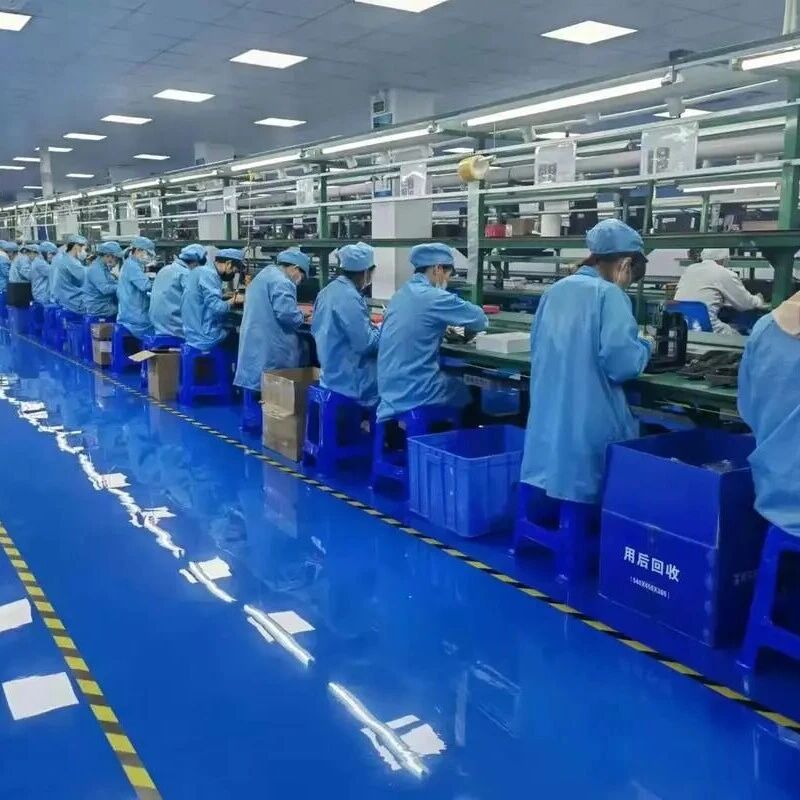
存储厂商高管疯狂扫货奢侈品
第一财经· 2026-03-05 10:57
Core Viewpoint - The storage industry is experiencing a significant shift due to the explosive demand for high bandwidth memory (HBM) driven by AI data centers, leading to a supply-demand imbalance that is causing memory costs to surge, ultimately impacting consumer electronics pricing [3][4][11]. Supply and Demand Dynamics - The demand for HBM is prioritizing server-side production, while DRAM and NAND supply for smartphones is tightening, resulting in a rapid increase in mobile LPDDR4/5 prices, which are expected to reach nearly three times the levels of Q3 2025 by Q2 2026 [4][11]. - Storage capacity expansion will take several quarters to translate into actual supply, with challenges expected to persist until the second half of 2027, particularly affecting low-end models [5][11]. Cost Implications - The rising storage prices are leading to increased costs for consumers, with smartphone manufacturers facing unprecedented cost pressures, which may result in higher retail prices for end products [3][5]. - Some Android OEMs have already raised prices by 10% to 20% as of January 2026, with the material cost of flagship models seeing a significant increase in the proportion attributed to storage [5][10]. Price Adjustments in the Market - Price increases are not just theoretical; several Android brands have raised prices by 10% to 20% for certain models, with some mid-range series seeing increases close to 20% [8][10]. - Samsung's Galaxy S26 series has seen price hikes of approximately $100 in overseas markets, with high-storage versions experiencing a 20% increase [8][10]. Competitive Landscape - Major brands like Huawei have not yet followed the trend of price increases, maintaining competitive pricing in a market where stability is becoming a competitive advantage [10]. - Apple is employing promotional strategies to stabilize sales, with some iPhone models seeing price reductions of about 11% to 14% to counteract the rising costs [10]. Future Outlook - Analysts predict that high storage prices will persist at least until the second half of 2026, with AI demand continuing to exert pressure on production capacity [11]. - The ongoing price dynamics are reshaping the competitive landscape for smartphone manufacturers, testing their pricing power, product capabilities, and supply chain management [11].

存储芯片短缺!手机出货量将创史上最大跌幅!
国芯网· 2026-03-04 11:50
Core Viewpoint - The article highlights the significant impact of the storage chip supply shortage, driven by the AI wave, on the consumer electronics industry, particularly the smartphone market, predicting a historic decline in global smartphone shipments by 12.4% in 2026 [2]. Group 1: Market Dynamics - A report from Counterpoint indicates that the three main factors dragging down the market are the shortage of storage chips, rapid price increases of core components, and the structural weakness of low-end OEM manufacturers [4]. - The mobile-grade LPDDR4/5 prices are expected to rise to nearly three times the levels seen in Q3 2025 by Q2 2026, indicating unprecedented supply pressure [4]. - New production capacity is not anticipated to gradually release until late 2027, suggesting a prolonged period of market recovery [4]. Group 2: Impact on Product Segments - Low-end smartphones are particularly affected, with the rapid contraction of LPDDR4 supply exacerbating cost pressures on entry-level products [4].
小米集团-W:25Q4 业绩前瞻:汽车全年经营层面盈利,存储成本压力逐步体现-20260304
GUOTAI HAITONG SECURITIES· 2026-03-04 05:45
Investment Rating - The report maintains a "Buy" rating for Xiaomi Group (1810.HK) with a target price adjusted to HKD 42.7 [7][15]. Core Insights - The report highlights that the storage price surge is currently impacting Xiaomi's short-term profitability, but the long-term ecosystem value driven by multi-device synergy is promising [3]. - The financial forecasts for Xiaomi's revenue and adjusted net profit have been revised downwards for FY2025E-FY2027E, reflecting a more cautious outlook due to market conditions [15]. Financial Summary - **Revenue Forecast (in million RMB)**: - 2023: 270,971 - 2024: 365,932 (+35.0%) - 2025E: 457,062 (+24.9%) - 2026E: 511,216 (+11.8%) - 2027E: 595,885 (+16.6%) [5] - **Gross Profit and Margin**: - 2023: Gross Profit 57,477, Margin 21.2% - 2024: Gross Profit 76,564, Margin 20.9% - 2025E: Gross Profit 101,281, Margin 22.2% - 2026E: Gross Profit 107,773, Margin 21.1% - 2027E: Gross Profit 131,879, Margin 22.1% [5] - **Adjusted Net Profit**: - 2023: 19,273 (+126.3%) - 2024: 27,235 (+41.3%) - 2025E: 38,186 (+40.2%) - 2026E: 34,040 (-10.9%) - 2027E: 46,178 (+35.7%) [5] Business Segments Overview - **Smartphones**: The report anticipates a decline in smartphone shipments in Q4 2025, with an expected volume of 37.8 million units, down 11.4% year-on-year, primarily due to a contraction in the Indian market [15]. - **Automotive**: Xiaomi's automotive segment is projected to achieve operational profitability in 2025, with Q4 deliveries exceeding 140,000 units. The report notes a slight decline in average selling price (ASP) due to promotional activities [15]. - **IOT and Internet Services**: IOT revenue is expected to decline by 26% year-on-year in Q4 2025, while internet services are projected to grow by 4.7% [15]. Valuation Methodology - The report employs a Sum-of-the-Parts (SOTP) valuation method, assigning a PE of 20x for core businesses (smartphones, IOT, internet) and a PS of 2.4x for the automotive segment, reflecting Xiaomi's competitive advantages in supply chain management and brand strength [15][19].
小米集团-W(01810):25Q4 业绩前瞻:汽车全年经营层面盈利,存储成本压力逐步体现
GUOTAI HAITONG SECURITIES· 2026-03-04 05:09
Investment Rating - The report maintains a "Buy" rating for Xiaomi Group (1810.HK) with a target price adjusted to HKD 42.7 [7][15]. Core Insights - The report highlights that the storage price surge is currently impacting Xiaomi's short-term profitability, but the long-term ecosystem value driven by multi-device synergy is promising [3]. - The financial forecast for Xiaomi shows a projected revenue increase from RMB 270.971 billion in 2023 to RMB 595.885 billion by 2027, with a compound annual growth rate (CAGR) of approximately 16.6% [5][15]. - Adjusted net profit is expected to rise from RMB 19.273 billion in 2023 to RMB 46.178 billion in 2027, reflecting a significant growth trajectory [5][15]. Financial Summary - **Revenue Forecast**: - 2023: RMB 270.971 billion - 2024: RMB 365.932 billion (+35.0%) - 2025E: RMB 457.062 billion (+24.9%) - 2026E: RMB 511.216 billion (+11.8%) - 2027E: RMB 595.885 billion (+16.6%) [5] - **Gross Profit**: - 2023: RMB 57.477 billion - 2024: RMB 76.564 billion - 2025E: RMB 101.281 billion - 2026E: RMB 107.773 billion - 2027E: RMB 131.879 billion [5] - **Adjusted Net Profit**: - 2023: RMB 19.273 billion - 2024: RMB 27.235 billion (+41.3%) - 2025E: RMB 38.186 billion (+40.2%) - 2026E: RMB 34.040 billion (-10.9%) - 2027E: RMB 46.178 billion (+35.7%) [5] Business Segments - **Smartphones**: - Expected shipment of 37.8 million units in Q4 2025, a year-on-year decrease of 11.4%, primarily due to a contraction in the Indian market [15]. - Anticipated gross margin decline to approximately 8.2% in Q4 2025 due to storage cost pressures [15]. - **Automotive**: - Q4 2025 deliveries are projected to exceed 140,000 units, with expectations of achieving operational profitability for the full year [15]. - The automotive segment is expected to see a significant product launch period in 2026, which may enhance demand [15]. - **IOT and Internet Services**: - IOT revenue is expected to decline by 26% year-on-year to RMB 23 billion in Q4 2025, while internet services are projected to grow by 4.7% to RMB 9.8 billion [15]. Valuation Methodology - The report employs a Sum-of-the-Parts (SOTP) valuation method, assigning a price-to-earnings (PE) ratio of 20x for core businesses (smartphones, IOT, internet) and a price-to-sales (PS) ratio of 2.4x for the automotive segment [15][19].
阿里Qwen深夜地震,核心团队或集体出走;马斯克确认SpaceX的IPO目标估值超1.75万亿美元;微信加大对“AI魔改”视频的治理力度丨邦早报
创业邦· 2026-03-04 00:36
Group 1 - Alibaba's Qwen team experiences significant leadership changes as Lin Junyang announces his departure, along with other key members, leaving uncertainty about succession and team structure [2] - Elon Musk confirms SpaceX's IPO target valuation of over $1.75 trillion, indicating plans for funding related to space exploration and colonization [3] - Mark Zuckerberg and his wife purchase a $170 million property in Miami to avoid California's proposed billionaire tax, setting a record for the most expensive residential transaction in Miami-Dade County [5] Group 2 - Saudi Aramco is restructuring its export routes, focusing on the Red Sea port of Yanbu due to disruptions in the Strait of Hormuz, which has affected oil shipments [10] - Huawei unveils a new generation of green AI site and GW-level AIDC solutions at MWC 2026, emphasizing advancements in power supply and cooling systems [12] - Amazon Web Services faces significant operational disruptions after drone attacks on its data centers in the Middle East, affecting service availability and infrastructure [12] Group 3 - OPPO announces the global launch of its Find X9 Ultra series, marking a strategic move to expand its presence in the high-end smartphone market [12] - Honor introduces the MagicAgent, an intelligent agent foundational model aimed at global open-source deployment, showcasing advanced planning capabilities [22] - A report indicates that by 2030, the mobile technology and services industry will contribute approximately $11.3 trillion to the global GDP, representing about 8.4% of it [25]




国产手机里的月亮比较圆
经济观察报· 2026-03-03 10:20
Core Viewpoint - The article discusses the competitive landscape among smartphone manufacturers in enhancing moon photography capabilities, highlighting the importance of algorithms and hardware in achieving superior image quality [2][3][5]. Group 1: Moon Photography Technology - The emergence of moon photography as a standard feature in high-end Chinese smartphones began in 2019 with Huawei's P30 series, which popularized the use of periscope telephoto lenses [2][3]. - Smartphone manufacturers have developed specialized algorithms to enhance moon images, allowing users to capture clearer and more detailed photos compared to what is visible to the naked eye [5][6]. - The moon serves as a standardized object for testing and showcasing the hardware capabilities of smartphones, particularly in long-focus stabilization and large aperture performance [3][5]. Group 2: Algorithmic Challenges and Innovations - Despite advancements, users have reported issues with algorithms misidentifying objects, such as streetlights or other bright objects, as the moon, leading to "fake moon" images [8][9]. - Manufacturers have implemented multi-check mechanisms in their algorithms to improve accuracy, including exposure adjustments and using GPS and gyroscope data to confirm the moon's presence [9]. - The challenge of capturing the moon in various conditions, such as through clouds or with foreground objects, remains a significant technical hurdle for smartphone algorithms [9][10]. Group 3: Market Dynamics and Consumer Behavior - The moon photography feature, while infrequently used, is considered a high-value necessity in the Chinese cultural context, influencing consumer decisions when purchasing smartphones [10][11]. - Manufacturers are investing in both hardware and algorithmic improvements to ensure that their devices can effectively capture moon images, as this capability can differentiate their products in a competitive market [11][12]. - The industry is shifting focus from merely achieving high-quality images to understanding user preferences and enhancing the overall photographic experience, including personalized guidance for capturing unique shots [13].