
智能汽车

Search documents
【智能汽车主线周报】特斯拉FSD订阅量达到110万,看好智能化
东吴汽车黄细里团队· 2026-02-02 12:27
Investment Highlights - The smart car index decreased by 1.3%, while the index excluding Tesla increased by 1.9%, and the index excluding complete vehicles fell by 7.1% as of January 30, 2026 [4][10] - The smart car index PS (TTM) is at 15.2x, placing it in the 99th percentile since the beginning of 2023; the index excluding Tesla is at 5.9x, in the 83rd percentile; and the index excluding complete vehicles is at 9.9x, in the 81st percentile [4][17] Industry Core Changes - By Q4 2025, Tesla's FSD subscription is expected to reach 1.1 million [5] - Key personnel changes include Qianli Technology's Yin Qi becoming the chairman of Jueyue Xingchen [5] - Partnerships formed include Xiaoma Zhixing collaborating with Aite Boda, and Hezhima Intelligent signing a strategic agreement with Baidu's Luobo Kuaipao to build a driverless ecosystem [5] - The latest tracking of North American Robotaxi shows a total of 7.49 billion miles driven by FSD as of January 30, 2026, with Waymo having 96,090 daily active users as of January 27, 2026 [5][25] Current Investment Recommendations - The focus remains on the 2026 L4 RoboX main line, favoring B-end software stocks over C-end hardware stocks [6] - Preferred H-shares include Xiaopeng Motors, Horizon Robotics, Xiaoma Zhixing, Wenyan Zhixing, and Cao Cao Mobility; A-shares include Qianli Technology, Desay SV, and Jingwei Hengrun [6] - Downstream application-related stocks include: - Robotaxi perspective: Integrated models like Tesla and Xiaopeng Motors; technology providers with revenue-sharing models like Horizon, Baidu, Xiaoma Zhixing, Wenyan Zhixing, and Qianli Technology; transformation of ride-hailing/taxi services like Didi, Cao Cao Mobility, and others [6] - Robovan perspective: Desay SV and Jiushi Intelligent [6] - Other autonomous vehicle perspectives: mining trucks (Xidi Zhijia), ports (Jingwei Hengrun), sanitation vehicles (Yingfeng Environment), and buses (Wenyan Zhixing) [6] - Upstream supply chain-related stocks include: - B-end driverless vehicle OEMs like BAIC Blue Valley, GAC Group, Jiangling Motors, and Tongli Co [6] - Core upstream suppliers: testing services (China Automotive Research, China Automotive Technology), chips (Horizon Robotics, Hezhima Intelligent), domain controllers (Desay SV, Jingwei Hengrun), sensors (Sunny Optical Technology, Hesai, Suteng Juchuang), steer-by-wire chassis (Bertley, Nexperia, Zhejiang Shibao), and glass (Fuyao Glass) [6]


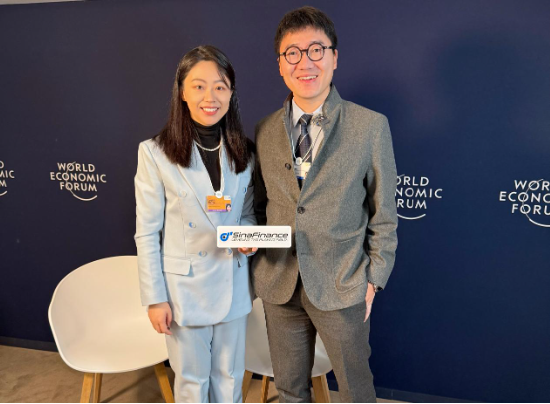
直击达沃斯|禾赛科技达沃斯发声:谈技术出海、全球化竞争与产业未来
Xin Lang Cai Jing· 2026-02-02 11:30
Core Insights - The World Economic Forum in Davos highlighted a shift in discussions around AI from theoretical possibilities to practical applications, reflecting a more pragmatic approach to international cooperation with China [1][3][15] - The changing geopolitical landscape has led to a more rational perception of China, with countries previously hesitant now showing curiosity and willingness to engage with Chinese industries [3][16] Group 1: AI and Geopolitical Context - AI discussions at the forum focused on specific applications that are likely to emerge, contrasting with last year's emphasis on potential [3][15] - Geopolitical themes remain central, with discussions on how to facilitate trade and cooperation in the absence of clear rules [3][16] Group 2: China's Competitive Advantages - China's success is attributed to validated mass production capabilities and a robust quality system, rather than merely cost advantages [5][17] - The unique industrial ecosystem in China, characterized by a solid manufacturing base and efficient supply chains, creates competitive barriers that are difficult for foreign competitors to replicate [5][17][18] Group 3: Innovation and Speed - The rapid iteration and communication within China's automotive and lidar industries allow for faster progress compared to Western counterparts [6][18] - The integration of hardware and software capabilities in China fosters stronger innovation, positioning the country favorably in the global market [6][18] Group 4: International Expansion Strategies - Chinese companies like Hesai Technology are encouraged to adopt strategies of "more communication" and "ecological collaboration" to navigate international markets [7][19] - Collaborations, such as with NVIDIA, streamline processes for Chinese firms, enhancing their ability to reach global customers efficiently [8][20][21] Group 5: Long-term Strategy and Safety Standards - Safety and reliability in lidar technology are paramount, with a focus on minimizing error rates to build competitive advantages [10][22] - Continuous investment in R&D and a commitment to quality are essential for maintaining competitiveness in the face of emerging rivals [10][22] Group 6: Future of Technology - Lidar is viewed as foundational for AI applications, with expectations that autonomous technologies will proliferate across various sectors [12][25] - The evolution of robotics is anticipated, with a shift towards versatile humanoid robots capable of performing diverse tasks across industries [12][25]

蓝思科技:全球精密制造龙头,多极增长开启新篇章-20260202
Caixin Securities· 2026-02-02 08:24
Investment Rating - The report maintains an "Accumulate" rating for the company [4] Core Insights - The company is a leading provider of precision manufacturing solutions across the entire supply chain for smart terminals, leveraging its strong technological foundation in various materials to achieve vertical integration from raw material production to final assembly [6][11] - The financial performance shows steady growth in revenue and profit, with a projected increase in revenue from 544.91 billion yuan in 2023 to 1,395.99 billion yuan by 2027, and net profit expected to rise from 30.21 billion yuan to 83.81 billion yuan in the same period [4][6] - The company is expanding its business into emerging markets such as smart automotive, humanoid robots, AI/XR glasses, and smart retail, which are expected to drive future growth [6][7] Summary by Sections Company Overview - The company has a solid business foundation and high-quality customer resources, being a strategic partner to many global brands like Apple, Samsung, and Tesla [12][11] - It has a diversified business structure covering multiple sectors including consumer electronics and smart automotive [21][11] Financial Performance - Revenue is projected to grow from 466.99 billion yuan in 2022 to 698.97 billion yuan in 2024, with a compound annual growth rate (CAGR) of 22.34% [29] - The net profit is expected to increase from 24.48 billion yuan to 36.24 billion yuan in the same period, with a CAGR of 21.67% [29] Consumer Electronics - The company is positioned to benefit from the AI upgrade and innovation in the consumer electronics sector, with a focus on high-value products like foldable screens and 3D glass [6][48] - The revenue from the smartphone and computer segments is expected to grow significantly, driven by increased demand and product upgrades [30][34] Smart Automotive - The company is expanding into the automotive electronics sector, with innovative products like ultra-thin laminated glass and smart cockpit components, which are expected to enhance the value per vehicle [6][33] - The automotive segment's revenue is projected to grow significantly as the penetration of electric vehicles increases [6][33] Emerging Fields - The company is strategically positioning itself in emerging markets such as humanoid robots and AI data centers, with a focus on vertical integration and technological innovation [7][6] - Collaborations with leading companies in these fields are expected to foster growth and enhance market presence [7][6]

智能汽车ETF(159889)回调超3%显布局机会,把握汽车产业升级机遇
Mei Ri Jing Ji Xin Wen· 2026-02-02 08:17
Core Viewpoint - The smart automotive ETF (159889) has experienced a pullback of over 3%, presenting an opportunity to capitalize on the automotive industry's upgrade driven by AI technology [1] Group 1: Industry Outlook - The automotive industry is expected to undergo significant upgrades due to the current wave of technological advancements represented by AI [1] - By 2026, advancements in high-level assisted driving and robotics are anticipated to open new valuation anchors for the automotive sector, leading to a potential valuation reconstruction [1] - The robotics sector is moving towards large-scale production, indicating a shift in investment opportunities from a dispersed to a concentrated approach [1] Group 2: Sector Analysis - The components sector is accelerating its global capacity layout and expanding its second growth curve [1] - The two-wheeler sector continues to trend towards international markets, with substantial growth potential overseas [1] Group 3: ETF and Index Information - The smart automotive ETF (159889) tracks the CS Smart Automotive Index (930721), which selects listed companies involved in smart automotive hardware and software, as well as vehicle manufacturers [1] - The index emphasizes the comprehensiveness and growth potential of the smart automotive industry chain, covering terminal perception and platform application sectors [1]
港股IPO热潮背后:中资券商的全球化进阶之路
Sou Hu Cai Jing· 2026-02-02 02:53
203+ 410+ 9911+ 007+ L T I t t 来源:梧桐树下v 继2025年IPO募资额问鼎全球榜首之后,港股市场在2026年延续了这份灼热势头——截至1月28日,已有13家企业在港交所敲锣。在这场资本浪潮中,中资 券商已悄然蜕变,凭借对中国资产的深刻理解、跨境资源整合能力,已成为连接内地优质企业与全球资本的核心枢纽,源源不断地为港股市场的持续繁荣注 入新动能。 2025年,港股市场迎来强势复苏,全年共有119只新股成功上市,募资总额高达约2858亿港元,上市数量和募资规模双双攀升。这也是港交所时隔4年IPO募 资规模再度突破2000亿港元整数关口,成功夺回全球IPO募资额榜首。 在这场IPO盛宴中,各大中介机构通力护航,其中中资券商扮演的角色日益关键,Wind数据显示,2025 年港股按承销金额排名的前十大股权承销商中,中 资券商占据六席,合计市场份额56.15%,并形成以中金国际、中信证券(香港)为核心,华泰金控、广发证券(香港)、中信建投国际等紧随其后的竞争 梯队。 从券商2025年三季报可见,上述领先券商均实现营收与利润的显著增长,其中中金公司营收与归母净利润同比分别增长54.4%与1 ...

华为余承东:问界M6将于春天登场, “56789”凑齐
Feng Huang Wang· 2026-02-02 01:24
Core Viewpoint - Huawei's Executive Director announced the upcoming launch of the AITO Wenjie M6, indicating a complete product lineup with the phrase "56789" and hinting at a spring release [1] Group 1: Product Announcement - The AITO Wenjie M6 is set to debut soon, completing the product series [1] - The design of the M6 follows the family style of previous Wenjie models, but it does not feature a贯穿式日行灯 (through-type daytime running light) [1] - The vehicle will have a smooth body design with rounded lines, equipped with a laser radar on the roof and electric running boards at the bottom, and is expected to include multi-piston brake calipers [1] Group 2: Future Product Matrix - In December, Huawei's Yu Chengdong revealed plans for a comprehensive product matrix by 2026, which will include the Wenjie M6 and iterations of existing models, as well as the launch of ultra-high-end luxury vehicles under the Zun Jie brand [1]

华为余承东:问界M6即将登场
Mei Ri Jing Ji Xin Wen· 2026-02-02 00:33
每经AI快讯,2月2日早间,华为常务董事、产品投资评审委员会主任、终端BG董事长余承东发布微 博:新锐王牌问界M6即将登场,"56789"凑齐,春天见! ...
智能汽车主线周报:特斯拉FSD订阅量达到110万,看好智能化
Soochow Securities· 2026-02-02 00:25
证券研究报告 智能汽车主线周报: 特斯拉FSD订阅量达到110万,看好智能化 证券分析师 :黄细里 执业证书编号:S0600520010001 联系邮箱:huangxl@dwzq.com.cn 2026年2月1日 请务必阅读正文之后的免责声明部分 核心结论 注:若无特殊说明,"本周"均代表2026.1.26-2026.2.1 2 ◼ 本周智能汽车行情复盘:我们编撰的智能汽车指数-1.3%,智能汽车指数(除特斯拉)+1.9%,智能汽车指 数(除整车)-7.1%。截至2026年1月30日,智能汽车指数PS(TTM)为15.2x,该估值位于2023年初以来 99%分位数;智能汽车指数(除特斯拉)PS(TTM)为5.9x,该估值位于2023年初以来83%分位数;智能 汽车指数(除整车)PS(TTM)为9.9x,该估值位于2023年初以来81%分位数。智能汽车指数标的池中星宇 股份、如祺出行、经纬恒润、福耀玻璃、理想汽车涨幅前五。 ( ◼ 本周行业核心变化:1)截至2025Q4,特斯拉FSD订阅量达到110万;1)千里科技印奇出任阶跃星辰董事长; 2)小马智行与爱特博达成业务合作;3)文远知行发布通用仿真模型WeRid ...
特朗普称正与伊朗进行对话;水贝黄金平台杰我睿已启动兑付;CME上调黄金、白银期货保证金比例;SpaceX申请部署100万颗卫星丨每经早参
Mei Ri Jing Ji Xin Wen· 2026-01-31 23:04
1 聚焦民生关切与产业升级 一批国家标准2月1日正式施行 记者31日了解到,2月1日起,软件过程能力成熟度模型、5G移动通信安全、能源计量器具配备和管理、科技成果转化为标准、学生体质健康测试器材、中 小学生午休课桌椅、适老家具设计、商品条码符号放置、消费者服务、电梯安全、地震救援队伍能力等一批重要国家标准开始实施,将为引领和规范新兴产 每经编辑|陈鹏程 张喜威 业及未来产业的发展、推动成果与标准的转化应用、保护消费者权益、保障人民群众生命财产安全提供标准支撑。(央视新闻) 2 我国成功发射阿尔及利亚遥感三号卫星B星 1月31日,我国成功发射阿尔及利亚遥感三号卫星B星。(央视新闻) 3 财政部、税务总局发布《关于明确增值税应税交易销售额计算口径的公告》 1月31日,财政部、税务总局发布《关于明确增值税应税交易销售额计算口径的公告》。其中提到,纳税人转让金融商品,以卖出价扣除买入价后的余额计 算销售额。转让金融商品出现的正负差,按盈亏相抵后的余额计算销售额。若相抵后出现负差,可结转下一纳税期与下期转让金融商品销售额相抵,但年末 时仍出现负差的,不得转入下一个会计年度。金融商品的买入价,可以选择按照加权平均法或者移 ...

尚界H5春节OTA升级:新增哨兵模式自动开启、驾驶员失能辅助等功能
Feng Huang Wang· 2026-01-30 07:13
Core Viewpoint - The article discusses the launch of the HarmonyOS Smart Driving H5's Spring Festival OTA upgrade, which introduces multiple enhancements in safety, intelligence, and entertainment features. Group 1: New Features - The upgrade includes an enhanced urban lane cruise assist feature that allows vehicles to stop at red lights and start at green lights based on traffic signals [1] - New safety features include automatic activation of the sentinel mode, driver incapacitation assistance (which can automatically pull over and call for rescue), and a "travel escort" function that reports real-time heart rate and medical information to rescue centers in case of an accident [1] - Additional features include pre-collision automatic window raising, enhanced automatic emergency steering assistance (eAES 2.0), and emergency steering assistance [1] Group 2: Convenience Enhancements - The system now offers nearby parking, three-point narrow road U-turn, karaoke without a microphone, and remote trunk opening functionalities, along with integration of third-party services like "Jie Parking" and "Ping An Good Car Owner" [1] - The OTA also optimizes existing navigation assistance for lane changing decisiveness, intersection passage capability, detour logic, and parking accuracy [1]