航天工程

Search documents
天地接力二十天——记我国载人航天工程首次应急发射
Xin Lang Cai Jing· 2026-01-11 23:24
Core Viewpoint - The successful emergency launch of the Shenzhou spacecraft, following the discovery of a crack in the window, highlights the resilience and rapid response capabilities of China's manned space program [1][2][3]. Group 1: Incident Overview - A crack was discovered on the Shenzhou 20 spacecraft's window during final preparations for its return to Earth, prompting immediate action from the China Aerospace Science and Technology Corporation [2][3]. - The crack was identified as a through-crack, raising significant safety concerns for the astronauts [3][4]. Group 2: Emergency Response - An emergency response was initiated, involving a team of experts to assess the impact of the crack and conduct necessary tests to ensure astronaut safety [5][6]. - The decision was made to delay the return of the Shenzhou 20 crew, prioritizing safety over schedule [5][6]. Group 3: Mission Adjustments - The crew of Shenzhou 20 was reassigned to return on the Shenzhou 21 spacecraft, with the Shenzhou 22 mission scheduled for launch shortly after [7][9]. - The return method was modified from a five-orbit to a three-orbit rapid return, marking a significant technical achievement under pressure [7][9]. Group 4: Launch Preparations - The launch of Shenzhou 22 required extensive coordination among various teams, with a compressed timeline for preparation due to overlapping missions [10][11]. - The teams maintained high standards despite the urgency, ensuring that all safety protocols were followed [12][13]. Group 5: Successful Launch - On November 25, 2025, the Shenzhou 22 spacecraft was successfully launched, completing the emergency mission with a focus on safety and precision [12][13]. - The successful return of the Shenzhou 20 crew and the launch of Shenzhou 22 demonstrated the effectiveness of China's emergency response capabilities in space exploration [14][15].


探月,永无止境(创新图录·历史跨越)
Ren Min Wang· 2026-01-11 22:43
Core Insights - China's lunar exploration program has achieved significant milestones, including the successful landing of the "Yutu" rover on the moon and the "Chang'e 6" mission, which marked the first-ever sample return from the moon's far side, showcasing the country's advancements in space technology and exploration capabilities [4]. Group 1: Lunar Exploration Achievements - The "Yutu" rover successfully conducted its first lunar scientific exploration on January 14, 2014, marking a historic moment for China's space endeavors [2]. - The "Chang'e 6" mission completed the world's first sample return from the moon's far side in June 2024, with research results revealing the evolutionary history of the moon's far side expected in July 2025 [4]. Group 2: Technological and National Pride - The achievements in lunar exploration reflect China's growing space capabilities and serve as a benchmark for the nation's overall strength, significantly enhancing national pride among its citizens [4]. - The successful return of lunar samples from the far side represents a historic first for humanity, contributing to the understanding of lunar geology and evolution [4].


中国空间站“年终总结”出炉 获科学数据超150TB
Zhong Guo Qing Nian Bao· 2026-01-09 01:21
Core Insights - The report released by the China Manned Space Engineering Office highlights significant advancements in the Chinese space station's scientific research and applications for the year 2025, including the implementation of 86 new projects and the collection of over 150TB of scientific data [1][2]. Group 1: Scientific Research and Achievements - In 2025, a total of 265 scientific and application projects were deployed and implemented in three major fields: space life and human research, microgravity physical science, and new technologies and applications [1]. - Key scientific achievements include the successful completion of the first mouse space science experiment, the international first study on sub-magnetic microgravity composite space environment biology, and the discovery of a new magnesium ion binding mode in bacteriophage ATP hydrolase [2]. - The year also saw the publication of over 230 high-level SCI papers and the acquisition of more than 70 patents, with some results already being transferred and applied [2]. Group 2: Operational Milestones - Since entering the application and development phase, the Chinese space station has successfully completed six manned flights, four cargo resupply missions, and five spacecraft return missions, including the first emergency launch [3]. - A total of 18 astronauts have participated in long-term stays in orbit, conducting 13 extravehicular activities and multiple external maintenance tasks, setting a world record for the duration of a single extravehicular activity [3]. - The operational stability and effectiveness of the Chinese space station have been confirmed, demonstrating its successful functioning [3].
早知道:科创板第五套上市标准扩围落地;巴菲特正式退休
Sou Hu Cai Jing· 2026-01-04 23:32
Group 1 - The State Council will no longer approve the construction of ore dressing projects without self-built mines and supporting tailings utilization and disposal facilities [1] - The Ministry of Finance emphasizes the implementation of an active fiscal policy to continuously enhance the effectiveness and precision of macroeconomic regulation [1] - The scale of "West-to-East Power Transmission" is expected to exceed 420 million kilowatts by 2030 [1] Group 2 - The fifth set of listing standards for the Sci-Tech Innovation Board has been expanded, with Blue Arrow Aerospace's IPO application accepted [1] - Shanghai aims for the core industry scale of the low-altitude economy to reach approximately 80 billion yuan by 2028 [1] - During the New Year holiday, Chinese assets performed strongly [1] Group 3 - Warren Buffett has officially retired, stepping down as CEO of Berkshire Hathaway [1]
“玻璃发生撞击,已经裂透了”,人命关天!央视首度披露:从发现裂纹到任务成功,我国载人航天首次应急发射都经历了什么?
Zhong Guo Ji Jin Bao· 2026-01-03 01:47
Core Viewpoint - The successful launch and docking of the Shenzhou-22 spacecraft with the Chinese space station demonstrates China's capability in emergency response and commitment to astronaut safety, following the damage to the Shenzhou-20 spacecraft's window due to a suspected micro-debris impact [1][4][42]. Group 1: Emergency Response and Launch - The Shenzhou-22 spacecraft was launched on November 25, 2025, as an emergency response to ensure the safe return of the Shenzhou-20 astronaut crew after a window crack was discovered [1][4]. - The decision to launch Shenzhou-22 was made after thorough assessments indicated that the risk of returning the Shenzhou-20 crew with the damaged spacecraft was too high [5][7]. - The emergency launch process was expedited, with a 16-day timeline established for the mission, significantly shorter than the usual 30-day preparation period [15][17]. Group 2: Coordination and Collaboration - Various teams, including experts and engineers, worked around the clock to ensure the safety and success of the mission, demonstrating a high level of collaboration and commitment [5][8]. - The launch involved multiple systems working in parallel to optimize the workflow and ensure all safety checks were completed despite the compressed timeline [19][34]. - The Shenzhou-22 mission was characterized by a strong spirit of teamwork, with all personnel contributing to the success of the emergency response [28][41]. Group 3: Technical Challenges and Solutions - The Shenzhou-22 spacecraft underwent rigorous testing and modifications to enhance its capabilities, ensuring it could serve as both a rescue vehicle and a supply ship [28][38]. - During the preparation, a significant anomaly was detected in the rocket's fuel system, which was resolved without impacting the launch schedule [24][25]. - The mission's success relied on meticulous planning and execution, with all systems undergoing thorough checks to prevent any potential issues during the launch [26][41]. Group 4: Successful Docking and Future Implications - The Shenzhou-22 successfully docked with the Tianhe core module of the Chinese space station approximately 3.5 hours after launch, marking a significant achievement in China's space exploration efforts [1][42]. - This mission not only ensured the safety of the astronauts but also reinforced China's commitment to maintaining a robust presence in space and advancing its space station program [44].
中国航天,2026年日程排满
财联社· 2026-01-01 11:08
Group 1 - In 2026, China's manned space program will see significant developments, including the launch of Shenzhou 23 and Shenzhou 24 missions, with astronauts departing from the Jiuquan Satellite Launch Center to the Chinese space station [1][3] - The Tianzhou 10 cargo spacecraft will also be launched, and one astronaut from the Shenzhou 23 crew will conduct a long-term stay experiment lasting over one year [3] - The new generation manned spacecraft "Dream Boat" will make its maiden flight, designed for near-Earth space station operations and crewed lunar exploration missions [3] Group 2 - The Chang'e 7 probe will be launched to explore the lunar south pole, focusing on surface environment surveys and water ice detection, potentially making China the first country to discover water on the moon [5] - The Tianwen 2 probe is set to reach asteroid 2016 HO3 for exploration and sample collection, with a return to Earth expected by the end of 2027, followed by scientific exploration of main belt comet 311P [5] Group 3 - 2026 will mark a year of accelerated development for China's commercial space sector, with the establishment of the Commercial Space Administration leading to increased launch activities [7] - New rocket developments such as Lijian 2, Tianlong 3, and Shuangkuo 3 are gaining attention [7] Group 4 - The next five years are anticipated to bring unprecedented opportunities for China's space industry, contributing significantly to the peaceful use of space and showcasing Chinese innovation [8]

飞天远航行神州!2025大国重器,提气!
Yang Shi Xin Wen· 2025-12-30 22:01
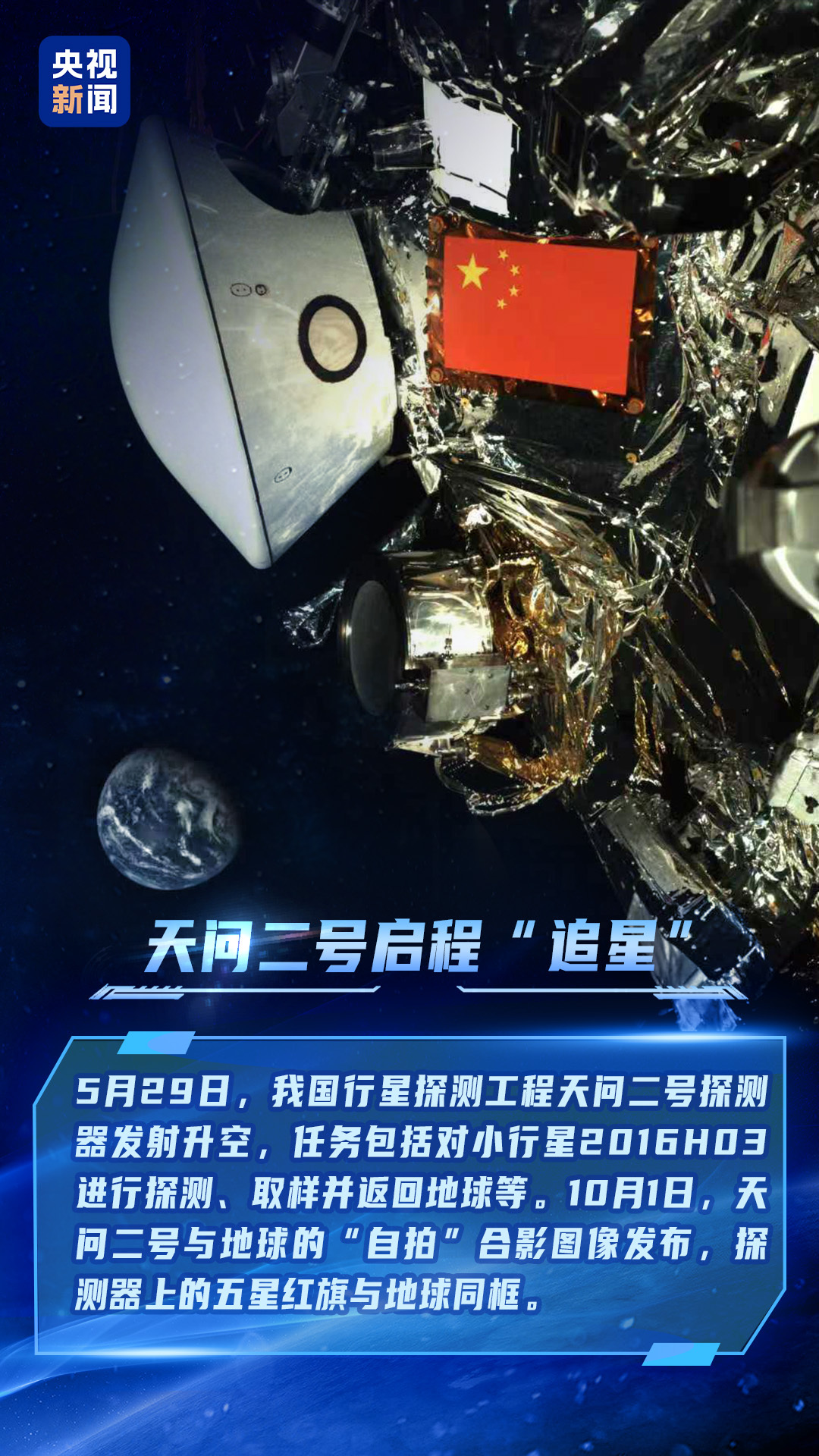
Group 1 - China's planetary exploration program successfully launched the Tianwen-2 probe on May 29, 2025, with missions including the exploration and sample return from asteroid 2016H03 [3] - The Tianwen-3 probe captured a "selfie" with Earth, showcasing the Chinese flag alongside the planet [3] - The Shenzhou-33 manned spacecraft completed its mission, with astronauts spending 204 days in orbit, setting a new record for the longest duration for a single crew in Chinese space history [9] Group 2 - The successful launch of the Shenzhou-33 on November 25 marked China's first emergency manned space mission, achieving full automation in the process [10] - As of December 22, 2025, China has over 400 remote sensing satellites in orbit, enabling all-weather, all-time Earth observation and providing high-quality data for disaster monitoring [13] - The "Fendouzhe" manned submersible completed 43 dives in the Arctic, making China the only country capable of continuous operations in that region [18] Group 3 - The Fujian aircraft carrier, China's first electromagnetic catapult carrier, was officially commissioned on November 5, 2025, marking a significant advancement in naval capabilities [17] - The "Hai Ling Plan" aims to build an underwater telescope in the South China Sea, successfully testing key components in 2025 to capture neutrinos and explore the origins of the universe [21] - China's underwater oil and gas pipeline network exceeded 10,000 kilometers in length, showcasing significant advancements in marine engineering capabilities [24] Group 4 - The CR450 high-speed train prototype achieved a record speed of 453 km/h in 2025, with plans for a 400 km/h operational speed [28] - The Urumqi-Kuerle expressway, a "super highway," reduced travel time from 7 hours to 3.5 hours, enhancing connectivity [31] - The first hydrogen-powered regional train completed trials in July 2025, achieving zero carbon emissions with a range exceeding 1,000 kilometers [34]
长三乙火箭成功发射风云四号03星
Ke Ji Ri Bao· 2025-12-27 02:07
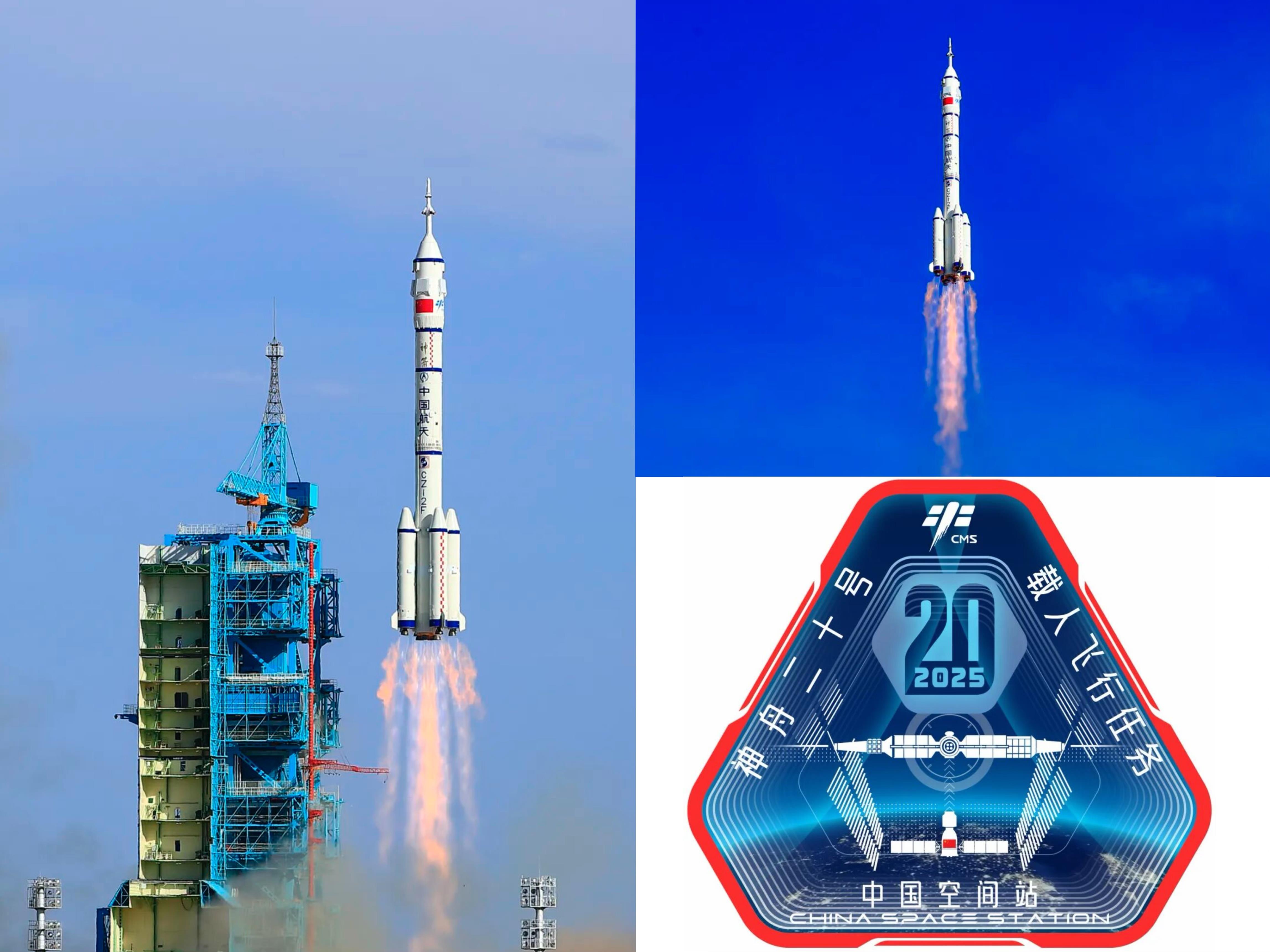
Core Viewpoint - The successful launch of the Fengyun-4 03 satellite marks a significant advancement in China's meteorological capabilities, enhancing weather forecasting, disaster prevention, and ecological monitoring [1][2]. Group 1: Satellite Launch and Capabilities - The Fengyun-4 03 satellite was launched on December 27, 2025, using the Long March 3B rocket, successfully entering its designated orbit [1]. - This satellite is part of China's second-generation geostationary meteorological satellites and is equipped with advanced observation instruments, including four ground observation payloads and two solar observation payloads [1]. - The satellite's capabilities are expected to significantly improve China's weather forecasting, disaster prevention, and response to climate change, providing high-precision data support for meteorological modernization [1]. Group 2: Technological Advancements - The Fengyun-4 03 satellite features upgraded observation capabilities, with key technical indicators improved by 2 to 3 times compared to the Fengyun-4 02 satellite, making it the most powerful geostationary meteorological satellite globally [2]. - The satellite will work in conjunction with previous satellites to create a more efficient observational network, enhancing comprehensive capabilities in weather forecasting, disaster prevention, and ecological monitoring [2]. Group 3: Launch Vehicle and Production - The Long March 3B rocket is part of China's "gold medal rocket" series and has successfully completed 15 launch missions in 2025, setting a new record for annual launches [3]. - The production model for this mission implemented a "de-tasking" batch production approach, significantly reducing the launch interval to just half a month, thereby enhancing high-density launch capabilities [3]. - This launch marks the 621st mission of the Long March series of rockets [4].
美媒盘点2025中国航天“重大进展”
Huan Qiu Wang Zi Xun· 2025-12-26 22:59
Core Insights - In 2025, China achieved significant advancements in its space sector, including record rocket launches, manned lunar exploration hardware tests, and deep space missions, culminating in a total of 87 launches, surpassing the previous record of 68 launches set in 2024 [1][2] Group 1: Launch Achievements - China launched a total of 87 space missions in 2025, breaking its previous record [1] - The increase in launch frequency is partly driven by two low Earth orbit internet constellations, which include thousands of satellites, as a response to Western counterparts like SpaceX's Starlink [2] - The successful launch of 15 low Earth orbit satellites using the Long March 6A rocket on December 9, 2025, is a notable achievement [2] Group 2: Manned Lunar Exploration - China is on track to achieve its first manned moon landing by 2030, with significant hardware tests conducted in 2025 [2] - Key tests included the successful zero-height escape flight test of the Dream Chaser spacecraft and the comprehensive verification of the lunar lander [2] Group 3: Deep Space Missions - The Tianwen-2 probe was successfully launched in May 2025, marking another deep space exploration mission following the Tianwen-1 Mars mission [3] - The Tianwen-2 probe is expected to reach its target asteroid by July 2026, providing new insights and samples from the celestial body [2][3] Group 4: Emergency Response - In November 2025, an emergency situation arose when a crack was found in the Shenzhou-20 spacecraft's window, leading to a swift response where astronauts were transferred to the Shenzhou-21 spacecraft for safe return [4] - The backup Shenzhou-22 spacecraft was prepared and launched within 16 days to ensure the safety of the crew [4] Group 5: Future Plans - The frequency of launches is expected to increase further in 2026, with plans for more reusable rocket tests and the expansion of launch facilities [5] - Major upcoming missions include the Chang'e 7 lunar probe and the SMILE satellite in collaboration with the European Space Agency [5] - The manned space program will see the launch of Shenzhou-23 and Shenzhou-24 missions, with plans for long-term stays in space [6]
逐梦“天宫”,步履不停!中国载人航天2025精彩回眸
Yang Shi Xin Wen Ke Hu Duan· 2025-12-26 13:21
Core Insights - China's manned space program continues to achieve significant milestones, with successful missions and advancements in space station operations, showcasing the nation's commitment to space exploration and technology development [1][5][44] Group 1: Manned Space Missions - The Shenzhou 20 manned spacecraft was successfully launched on April 24, marking the 20th mission in the Shenzhou program and the 35th launch since the program's inception [5] - The crew for this mission included Chen Dong, Chen Zhongrui, and Wang Jie, with Chen Dong serving as the commander [9] - The Shenzhou 19 mission concluded successfully on April 30, with astronauts returning safely after completing their tasks [13] Group 2: Space Station Operations - The Shenzhou 20 crew successfully docked with the Chinese space station, marking the 6th "space reunion" in China's space history [12] - During their stay, the crew conducted three extravehicular activities, setting a world record for the longest single extravehicular activity by astronauts at 9 hours [16] - The crew completed over 90 tasks related to space station construction and maintenance, and conducted more than 80 scientific experiments [16] Group 3: Scientific Research and Experiments - The Tianzhou 8 cargo spacecraft successfully re-entered the atmosphere on July 9, delivering supplies for 36 scientific experiments, including a groundbreaking study on fruit flies in microgravity [20] - The Tianzhou 9 mission launched on July 15, carrying approximately 6.5 tons of supplies, setting a new record for cargo weight delivered to the space station [23] - The Shenzhou 21 mission, launched on October 31, marked the first time rodents were sent to the Chinese space station for research [28] Group 4: Emergency Response and Future Outlook - The Shenzhou 22 mission, launched on November 25, was China's first emergency launch, responding to a potential threat from space debris [44] - The rapid response and coordination among various teams during the emergency launch provided a successful model for handling unexpected events in international space exploration [44] - The industry looks forward to continued advancements and achievements in 2026, building on the successes of the current missions [44]