装备制造业

Search documents
国家统计局:2026年1月份中国制造业采购经理指数为49.3% 比上月下降0.8个百分点
Mei Ri Jing Ji Xin Wen· 2026-01-31 01:41
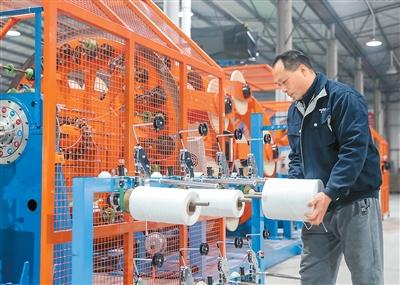
每经AI快讯,国家统计局、中国物流与采购联合会今天(31日)发布2026年1月份中国采购经理指数。数 据显示,1月我国制造业市场需求有所收紧,但企业生产保持扩张态势,产业结构继续优化;服务业运 行态势相对稳定,企业预期持续向好。2026年1月份中国制造业采购经理指数为49.3%,比上月下降0.8 个百分点。1月份装备制造业采购经理指数为50.1%,高技术制造业采购经理指数为52%,装备制造业和 高技术制造业稳中向好发展,制造业产业结构持续优化。 ...
国家统计局服务业调查中心首席统计师霍丽慧解读2026年1月中国采购经理指数
Guo Jia Tong Ji Ju· 2026-01-31 01:35
——国家统计局服务业调查中心首席统计师霍丽慧解读2026年1月中国采购经理指数 2026年1月31日国家统计局服务业调查中心和中国物流与采购联合会发布了中国采购经理指数。对此, 国家统计局服务业调查中心首席统计师霍丽慧进行了解读。 1月份,制造业采购经理指数、非制造业商务活动指数和综合PMI产出指数分别为49.3%、49.4%和 49.8%,比上月下降0.8个、0.8个和0.9个百分点,经济景气水平有所回落。 一、制造业采购经理指数有所下降,生产继续保持扩张 1月份,部分制造业行业进入传统淡季,加之市场有效需求仍显不足,制造业PMI为49.3%,景气水平较 上月下降。 (一)企业生产继续扩张。生产指数为50.6%,高于临界点,制造业生产保持扩张;新订单指数为49.2%, 市场需求有所回落。从行业看,农副食品加工、铁路船舶航空航天设备等行业生产指数和新订单指数均 高于56.0%,产需释放较快;石油煤炭及其他燃料加工、汽车等行业两个指数均低于临界点,相关行业 市场需求放缓,企业生产有所回落。 1月份中国采购经理指数有所回落 (四)高技术制造业持续领跑。高技术制造业PMI为52.0%,连续两个月位于52.0%及以上 ...
中国财政运行平稳有序(锐财经)
Ren Min Ri Bao Hai Wai Ban· 2026-01-31 00:41
Group 1: Fiscal Policy Overview - In 2025, China's general public budget revenue is projected to be 21.6 trillion yuan, a decrease of 1.7% compared to 2024 [3] - Central government revenue is expected to be 939.63 billion yuan, down 6.5%, while local government revenue is projected to grow by 2.4% to 12.21 trillion yuan [3] - Nearly 90% of regions are expected to see revenue growth, with 27 out of 31 provinces, autonomous regions, and municipalities reporting increases [3] Group 2: Tax Revenue Performance - Tax revenue is anticipated to grow by 0.8%, while non-tax revenue is expected to decline by 11.3% due to a high base from 2024 [3] - Specific tax categories show growth: domestic value-added tax up 3.4%, domestic consumption tax up 2%, and corporate income tax up 1% [3][4] Group 3: Expenditure and Support Policies - Total public budget expenditure is projected to be 28.74 trillion yuan, an increase of 1% year-on-year [5] - Key areas of expenditure include social security and employment (up 6.7%), education (up 3.2%), and health (up 5.7%) [5] - Approximately 100 billion yuan is allocated for childcare subsidies, with 904 billion yuan from the central government [6] Group 4: Agricultural and Consumption Support - 1.766 trillion yuan is allocated for high-standard farmland construction, a 53% increase, supporting 7.568 million acres [6] - The government is promoting consumption through policies like the "old-for-new" program, with sales exceeding 2.6 trillion yuan and benefiting over 360 million people [7] - In Hainan Free Trade Port, "zero tariff" policies have led to a significant increase in imported goods, with a value of 857 million yuan, up 243% [7]

“全国已向3000多万名婴幼儿发放育儿补贴”,财政部答中证报记者问
Zhong Guo Zheng Quan Bao· 2026-01-30 13:01
Group 1: Fiscal Revenue and Expenditure - In 2025, the total fiscal revenue is projected to be 21.6 trillion yuan, a decrease of 1.7% compared to 2024, with tax revenue increasing by 0.8% and non-tax revenue decreasing by 11.3% [2][3] - The securities transaction stamp duty revenue reached 203.5 billion yuan, showing a year-on-year growth of 57.8% [1] - The national government fund budget expenditure is expected to be 11.29 trillion yuan, an increase of 11.3% from 2024, driven by accelerated bond fund utilization [1][4] Group 2: Sector Performance - The equipment manufacturing and modern service industries showed strong tax revenue performance, with specific sectors like computer communication equipment manufacturing seeing a 13.5% increase in tax revenue [3][4] - The domestic value-added tax grew by 3.4%, while the domestic consumption tax increased by 2%, primarily driven by tobacco and refined oil [3] - Social security and employment, education, and health sectors received strong budgetary support, with expenditures in these areas growing by 6.7%, 3.2%, and 5.7% respectively [4] Group 3: Hainan Duty-Free Policy Impact - The duty-free shopping policy in Hainan has been optimized, allowing for a broader range of products and increased convenience for consumers, leading to a significant rise in duty-free sales [5][6] - Since the policy's implementation, duty-free sales reached 6.28 billion yuan, with a year-on-year increase of 35.9% [6] - The number of foreign investment enterprises in Hainan increased by 23.56%, indicating a growing interest in the region's economic potential [6]
张瑜:经济结构“黄金交叉”,中游制造“更胜一筹”!——张瑜旬度会议纪要No.130
一瑜中的· 2026-01-30 12:28
Core Viewpoint - The article focuses on "Four Golden Crosses and Their Implications for Investment," highlighting significant economic signals that indicate potential shifts in the economic landscape [2]. Group 1: Golden Cross of New and Old Economy GDP Proportions - A model categorizes the economy into new (equipment manufacturing, information, leasing, and business services) and old (real estate, construction, and building materials) sectors. In 2015, the new economy accounted for 14.5% of GDP, while the old economy was at 24.2%, a 10 percentage point difference. By 2025, the new economy is projected to rise to 20%, surpassing the old economy at 19.7%, marking a significant shift in economic structure [3]. - This change suggests that even if the old economy does not stabilize, the overall economy may still recover due to the growth and increased size of the new economy, aligning with expectations of nominal GDP bottoming out and rebounding by 2026 [3]. Group 2: Golden Cross of Household Wealth Structure - A simplified model of household wealth focuses on urban housing and financial assets. By 2026, financial assets (deposits and non-deposit financial assets) are expected to exceed the total market value of urban residential properties for the first time. Since 2022, the total market value of urban housing has been declining, while financial assets have been growing, indicating a potential shift in household wealth dynamics [6]. - If this golden cross occurs, it could lead to a new phase in household wealth, positively impacting social risk appetite and consumer spending tendencies [6]. Group 3: Recovery of Spending Willingness Across Three Sectors - The article examines the spending willingness of residents, government, and overseas sectors. The combined spending willingness of these three sectors has been declining since 2021. However, a turning point is anticipated in 2024-2025, with a stabilization in 2024 and a potential recovery in 2025, driven by better-than-expected exports and increased fiscal counter-cyclical measures [7]. - If this positive trend continues into 2026, it is expected to gradually reflect in economic data [7]. Group 4: Optimal Midstream Economic Conditions - An analysis of supply-demand structures in the manufacturing sector reveals that the midstream segment currently exhibits the best balance, surpassing the high point of 2021. The downstream sector has just turned positive in terms of supply-demand growth differentials, while upstream conditions may lag behind due to their strong ties to the old economy [10]. - The midstream sector's favorable conditions are clear and independent, suggesting a potential improvement in upstream supply-demand dynamics in the future [10].

广东连续8年成为第一生育大省
Di Yi Cai Jing Zi Xun· 2026-01-30 11:17
根据广东省统计局于1月30日公布的数据,2025年,广东实现地区生产总值145846.76亿元,比上年增长 3.9%。其中,第一产业增加值5891.80亿元,增长4.5%;第二产业增加值54993.50亿元,增长2.4%;第 三产业增加值84961.46亿元,增长4.7%。 广东经济总量连续37年稳居全国首位,占全国经济总量超十分之一,在全国经济格局中地位凸显。广东 服务业增加值、进出口总额、地方一般公共预算收入、市场经营主体、研发经费支出、区域创新综合能 力等多项指标继续稳居全国首位。 目前,广东规模以上工业企业数量达7.6万家,居全国第一,万亿元级产业集群不断发展壮大,20个产 业集群增加值占GDP比重31.7%,国家公布产量的104种工业产品中,广东在全国占比超过10%的有44 种、超过20%的有23种、超过30%的有11种。完备的产业链为广东建设现代化产业体系提供基础性支 撑。 广东省统计局分析称,广东因地制宜布局新质生产力,不断开辟发展新赛道、培育新增长点,现代化产 业体系构建步伐加快,新产业新业态新模式竞相涌现。其中,工业向高端化智能化转型。高技术制造 业、装备制造业增加值占规模以上工业比重分别为 ...
财政部:2025年我国财政收入总体平稳运行
Jing Ji Guan Cha Wang· 2026-01-30 11:05
2025年财政收入总体平稳运行 重点支出保障有力 财政部有关负责人表示,2025年,我国财政收入总体平稳运行,重点支出保障有力。 经济观察网 据央视新闻客户端消息,今天(30日),财政部召开2025年度财政收支情况新闻发布会, 介绍了全年财政收支情况。数据显示,2025年,全国一般公共预算收入216045亿元,比2024年下降 1.7%。其中,全国税收收入176363亿元,增长0.8%;非税收入39682亿元,下降11.3%,主要是2024年 一次性安排中央单位上缴专项收益抬高基数。 2025年,全国一般公共预算支出287395亿元,比2024年增长1%。社会保障和就业、教育、卫生健康等 重点领域支出得到较好保障。 2025年我国主体税种、部分行业表现较好 据介绍,2025年,我国主体税种、部分行业表现较好。分税种看,国内增值税增长3.4%,全年保持平 稳增长;国内消费税、企业所得税都保持了正增长态势。分行业看,装备制造业、现代服务业等行业税 收表现良好。计算机通信设备制造业、科学研究技术服务业税收收入增长都超过13%,电气机械器材制 造业和文化体育娱乐业税收收入增长也比较亮眼。 2025年近九成地区收入实现 ...
广东连续8年成为第一生育大省
第一财经· 2026-01-30 10:30
2026.01. 30 本文字数:1214,阅读时长大约2分钟 作者 | 第一财经 林靖 根据广东省统计局于1月30日公布的数据,2025年,广东实现地区生产总值145846.76亿元,比上 年增长3.9%。其中,第一产业增加值5891.80亿元,增长4.5%;第二产业增加值54993.50亿元, 增长2.4%;第三产业增加值84961.46亿元,增长4.7%。 广东经济总量连续37年稳居全国首位,占全国经济总量超十分之一,在全国经济格局中地位凸显。 广东服务业增加值、进出口总额、地方一般公共预算收入、市场经营主体、研发经费支出、区域创新 综合能力等多项指标继续稳居全国首位。 目前,广东规模以上工业企业数量达7.6万家,居全国第一,万亿元级产业集群不断发展壮大,20个 产业集群增加值占GDP比重31.7%,国家公布产量的104种工业产品中,广东在全国占比超过10% 的有44种、超过20%的有23种、超过30%的有11种。完备的产业链为广东建设现代化产业体系提供 基础性支撑。 广东省统计局分析称,广东因地制宜布局新质生产力,不断开辟发展新赛道、培育新增长点,现代化 产业体系构建步伐加快,新产业新业态新模式竞相涌 ...

广东去年常住人口增加79万,连续8年成为第一生育大省
Di Yi Cai Jing· 2026-01-30 09:32
市场化优势以及人口与改革红利,也为当地的经济发展注入了动能。2025年广东省常住人口总量和增量 均居全国之首。 数据显示,2025年末,广东全省常住人口12859万人,比上年末增加79万人。全年出生人口100.3万人, 人口出生率为7.82‰;死亡人口71.3万人,人口死亡率为5.56‰;人口自然增长29万人,人口自然增长 率为2.26‰。2025年城镇人口占常住人口比重(城镇化率)为76.58%,比上年末提高0.67个百分点。 对一个省份来说,人口增长包括自然增长和机械增长(即"人口净流入")。广东已连续6年成为全国唯 一出生人口超百万的省份,连续8年蝉联"第一生育大省"。 广东常住人口总量和增量均居全国之首 根据广东省统计局于1月30日公布的数据,2025年,广东实现地区生产总值145846.76亿元,比上年增长 3.9%。其中,第一产业增加值5891.80亿元,增长4.5%;第二产业增加值54993.50亿元,增长2.4%;第 三产业增加值84961.46亿元,增长4.7%。 广东经济总量连续37年稳居全国首位,占全国经济总量超十分之一,在全国经济格局中地位凸显。广东 服务业增加值、进出口总额、地方一般 ...
GDP漂亮有用?2025年中国经济这三组数据,真正改写命运的密码?
Sou Hu Cai Jing· 2026-01-30 05:37
本文仅在今日头条发布,谢绝转载 当"140万亿"、"增长5%"这样的宏观数字出现在新闻头条时,大多数人或许只留下一个模糊的印 象:"经济达标了"。 数字背后真正重要的,是中国经济内部正在经历一场深刻而静悄悄的结构性变革。 这场变革的核心,是从过去依赖钢筋水泥的增长逻辑,转向依靠科技创新与消费活力的新发展模式。 理解这一变化,才能看清我们每个人未来赚钱与花钱的轨迹将如何被重塑。 从"拼产量"到"拼技术与服务" 2025年的经济数据揭示了一个关键的结构性特征:第三产业(服务业)增加值占GDP比重已达到 57.7%,而第二产业(工业)占比为35.6%。 这是一个具有标志性意义的信号,它意味着服务和消费已取代传统工业投资,成为经济增长最核心的驱 动力。 这种产业结构向服务业主导的演进,是经济发展到一定阶段的普遍规律。但一个健康的经济体绝不 能"脱实向虚"。 资本形成(投资)的贡献率为15.3%,而净出口则贡献了32.7%。 这表明,经济增长已从过去过度依赖投资和外部市场,转向了以内需消费为主、外需与投资协同拉动的 更均衡模式。 值得庆幸的是,我国工业尤其是制造业的"压舱石"作用依然稳固。 35.6%的工业比重,与日本 ...