
生物医药

Search documents
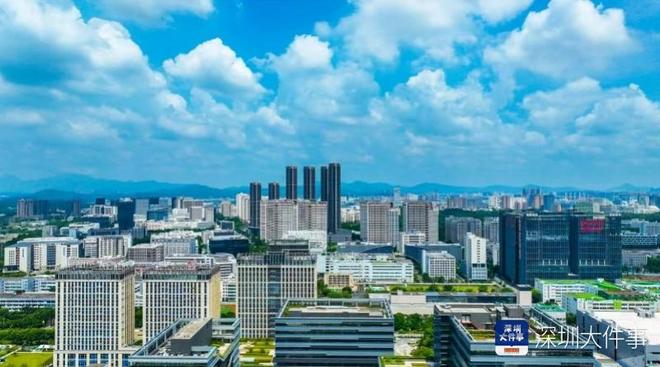
深圳坪山2025年GDP增长10.5% 五年总量翻番
Nan Fang Du Shi Bao· 2026-02-03 08:39
Core Viewpoint - Shenzhen's GDP is projected to reach 38,731.80 billion yuan in 2025, with a year-on-year growth of 5.5%. Meanwhile, Pingshan District is expected to achieve a GDP growth of 10.5% during the same period, aiming for a doubling of its GDP over the "14th Five-Year Plan" period with an average annual growth rate in double digits [1][3]. Economic Growth - Pingshan District's GDP is set to grow by 10.5%, with industrial added value increasing by 15.9% and retail sales of consumer goods rising by 10.2%. The total social R&D investment intensity is expected to reach 11.8%, with 98.39% of this investment coming from enterprises [3][5][8]. - The total foreign trade import and export volume is projected to grow by 13.7% [8]. Industrial Development - Strategic emerging industries account for nearly 90% of the total industrial output value, with industrial investment making up 54% of fixed asset investment. The district is focusing on building a modern industrial system characterized by "vehicle, medicine, chip, and intelligence" [5][9]. - Pingshan is home to over 1,300 biopharmaceutical companies, and a partnership worth 1.64 billion USD has been established in the CAR-T field, setting a record for external licensing transactions in China [5][9]. Innovation and R&D - The social R&D investment intensity is projected to reach 11.8%, with a high innovation index. The district is launching initiatives to enhance technological innovation and has established various platforms for industry-academia collaboration [9]. - Pingshan is developing the first public service platform for vehicle-grade chip standard verification and has built a comprehensive traffic testing base for intelligent connected vehicles [9]. Consumer Market - Retail sales of consumer goods are expected to grow by 10.2%, with overall commodity sales increasing by 28.5%. The district has implemented policies to stimulate consumption, including a "trade-in" subsidy program [11][12]. - The accommodation and catering sectors are also experiencing growth, with accommodation revenue increasing by 7.6% and catering revenue by 4.0% [14]. Service Industry Performance - The software and information technology service industry is showing strong growth, with revenues increasing by 39.4%. The cultural, sports, and entertainment sectors are also performing well, with a revenue increase of 19.0% [15].


千亿之后怎么走?桂城余辉:做“广佛最高端、南海最焦点”
Nan Fang Du Shi Bao· 2026-02-03 08:20
Core Insights - The article highlights the determination and confidence of the Gui Cheng street in Foshan to enter a new development phase, having officially become the first "billion-yuan street" in Guangdong province, with a GDP of 1001.33 billion yuan projected for 2025, two years ahead of the target [2][4]. Economic Performance - Gui Cheng street has achieved a GDP of 1001.33 billion yuan, making it the seventh town in China to surpass the billion-yuan mark [4]. - The street's economy is supported by Foshan's overall economic strength, with a total economic output exceeding 1.3 trillion yuan and industrial output surpassing 3 trillion yuan [4]. - The tertiary sector contributes nearly 70% to the economic growth of Gui Cheng, indicating a strong service industry presence [4]. Development Strategy - Gui Cheng aims to establish itself as a modern vibrant city by focusing on five key areas: enterprise aggregation, financial activity, resident satisfaction, tourist influx, and information utilization [6]. - The street plans to enhance its industrial ecosystem through a "three-pronged" strategy, focusing on headquarters economy, innovation in strategic emerging industries, and the integration of modern finance with traditional manufacturing [7]. Talent Attraction - To attract and retain talent, Gui Cheng is developing projects aimed at creating a youthful urban environment, including international performance venues and recreational facilities [8]. - The street is also improving urban infrastructure, such as schools and hospitals, to enhance living conditions for residents [8]. Infrastructure Development - Gui Cheng will focus on constructing three key areas: the Qian Deng Lake cultural tourism area, the Ying Yue Lake integrated production and city area, and the Wen Han Lake innovation hub, to connect with resources from the Greater Bay Area [9]. - The development will emphasize the integration of culture, commerce, and tourism, as well as collaboration with neighboring regions [9]. Supportive Environment - The street plans to strengthen land, capital, and data support to facilitate development, including optimizing the business and legal environment to ensure efficient operations [10]. - Gui Cheng aims to create a transparent and fair business environment through legal reforms and improved governance [10].

药康生物2025年度归母净利润1.44亿元,同比增长31.49%
Zhi Tong Cai Jing· 2026-02-03 07:45
Core Viewpoint - The company reported a revenue of 793 million yuan for the year 2025, representing a year-on-year growth of 15.49%, and a net profit attributable to the parent company of 144 million yuan, with a year-on-year increase of 31.49% [1] Group 1: Financial Performance - The company's revenue increased by 15.49% year-on-year, primarily due to the expansion of its overseas sales network covering North America, Europe, and the Asia-Pacific regions, leading to a growing customer base and enhanced brand recognition [1] - The net profit attributable to the parent company reached 144 million yuan, reflecting a significant year-on-year growth of 31.49% [1] Group 2: Strategic Focus - The company is focusing on two core strategies: internationalization and innovation, which include continuous efforts to expand overseas markets and maintain high levels of R&D investment [1] - The company is developing new platforms based on universal underlying technologies, such as a fully human antibody platform and a microbiome research platform, to accelerate the transformation of R&D results and provide new growth points for development [1] Group 3: Market Dynamics - The domestic market has benefited from an increase in industry prosperity and a resurgence in R&D investments from downstream industrial clients, leading to a notable recovery in demand from industrial customers [1] - The functional efficacy business of the company has shown rapid revenue growth due to the recovery in demand from industrial clients [1]

险资火力全开!近10亿扫货港股基石,密集调研310家A股公司
2 1 Shi Ji Jing Ji Bao Dao· 2026-02-03 07:39
Group 1 - The core viewpoint of the articles highlights the increasing activity of insurance capital in equity markets, particularly in Hong Kong stocks, driven by a low interest rate environment and asset scarcity [1][4] - Insurance capital has participated in cornerstone investments for seven Hong Kong IPOs in 2026, with a total subscription amount nearing 1 billion yuan, covering sectors from technology to consumer goods [1][2] - The cornerstone investment mechanism in Hong Kong serves as a market value indicator, with insurance capital becoming a key player in this space, particularly in new consumption and hard technology sectors [2][3] Group 2 - Notable examples of cornerstone investments include the IPO of Hunan Mingming Henmang Commercial Chain Co., which raised 3.336 billion HKD, attracting major institutions like Tencent and Temasek [2][3] - Insurance companies like Taikang Life have led the charge in Hong Kong IPOs, participating in multiple cornerstone investments across various sectors, including AI and biomedicine [3][4] - The trend of insurance capital's involvement in Hong Kong IPOs has significantly increased since 2025, with a total of 20 IPOs and a subscription amount of 4.679 billion HKD, reflecting the value of quality assets in the Hong Kong market [4] Group 3 - In addition to Hong Kong, insurance capital is actively researching A-share companies, having surveyed 310 firms in early 2026, focusing on sectors like technology and consumer goods [5][6] - The insurance sector's investment strategy includes a notable stake in Shanghai Airport, marking the first major acquisition of 2026, indicating a proactive approach in the A-share market [6] - The pre-made food sector, particularly companies like Qianwei Yangchu, has attracted attention from insurance capital, with significant revenue growth reported [6][7] Group 4 - The insurance capital's strategy is influenced by the need for asset allocation optimization and value recovery, as the Hong Kong market is currently at a historical valuation low, providing a safety margin [3][4] - Analysts suggest that the low interest rate environment necessitates increased investment in equity assets, particularly high-dividend and stable cash flow companies, to enhance investment returns [7][8] - The ongoing trend of insurance capital entering equity markets is expected to continue, driven by improved global liquidity and policy guidance encouraging long-term investments [4][7]
20cm速递|科技主线景气上行,科创200ETF国泰(589220)涨近4%,连续3日迎资金净流入
Mei Ri Jing Ji Xin Wen· 2026-02-03 07:01
Group 1 - The core viewpoint indicates that the recent performance in the market is concentrated on two main themes: price increases and AI, with a notable improvement in the average year-on-year net profit growth forecast for Q4 2025 compared to Q3 2025 in sectors related to AI hardware and price increase chains [1] - Recent price increases have been observed in electronic components and minor metals, suggesting a favorable structural allocation towards sectors that have not fully realized their potential gains during the current spring market rally [1] - The Guotai Science and Technology 200 ETF (589220) tracks the Science and Technology 200 Index (000699), which includes 200 securities selected from the Sci-Tech Board, reflecting the overall performance of representative listed companies in high-tech and strategic emerging industries [1]
2026年,上海准备这样干!
Shang Hai Zheng Quan Bao· 2026-02-03 06:37
Core Insights - The Shanghai government aims for a GDP growth of around 5% by 2026, with a focus on expanding domestic demand, technological innovation, and urban governance [2][3] - The government plans to enhance the capabilities of five key centers: international economy, finance, trade, shipping, and technology innovation [8][9][10] Group 1: Economic Development - The city will strengthen the role of domestic demand, focusing on consumer spending and effective investment, with a target of completing major project investments of 255 billion yuan [3] - Aiming to increase the proportion of R&D expenditure to 4.6% of GDP, the government will also work to keep urban unemployment below 5% and maintain a consumer price increase of around 2% [2] Group 2: Industry and Innovation - Shanghai will accelerate the implementation of major industrial projects in sectors like integrated circuits, biomedicine, and artificial intelligence, while promoting the development of smart factories [5][8] - The government will enhance the construction of computing power facilities and industry-specific models to support the widespread application of new intelligent terminals and systems [5][6] Group 3: Infrastructure and Urban Development - Major infrastructure projects include the construction of the Xiaoyangshan North Operation Area, the Oriental Hub Shanghai East Station, and the fourth phase of Pudong International Airport [6][10] - The city will also focus on green and low-carbon transformation, aiming to add 500,000 kilowatts of new energy storage capacity and promote deep-sea wind power projects [6][10] Group 4: Social Welfare and Employment - The government plans to create over 600,000 new urban jobs and implement policies to support employment for key groups such as college graduates and those facing employment difficulties [7] - Initiatives will be launched to improve public services and enhance the quality of life for residents [7]
2026上海科技和产业怎么干,政府工作报告划重点
第一财经· 2026-02-03 06:31
Core Viewpoint - Shanghai aims for a GDP growth of around 5% in 2026, with a focus on enhancing its status as an international economic center and promoting technological innovation and industrial integration [3][5][7]. Economic Goals - The main expected targets for Shanghai's economic and social development include a GDP growth of approximately 5%, a 2% increase in local public budget revenue, and a research and development expenditure ratio of 4.6% of GDP [3][5]. Technological and Industrial Focus - Key tasks for 2026 involve deepening the construction of an international technology innovation center, supporting industries such as smart connected new energy vehicles, marine economy, low-altitude economy, aerospace, and satellite internet [5][6][10]. - The report emphasizes the integration of technological and industrial innovation to cultivate new productive forces [7]. Research and Development - In 2025, Shanghai's R&D expenditure was about 4.5% of its GDP, with leading industries like integrated circuits, biomedicine, and artificial intelligence exceeding a scale of 2 trillion yuan [8]. - The city plans to establish 7 high-quality concept verification platforms and 6 incubators, with a technology contract transaction volume of 649.68 billion yuan, marking a 24.9% increase [8]. Modern Industrial System - Shanghai's "14th Five-Year Plan" outlines a modern industrial system characterized by advanced manufacturing, focusing on two transformations (digital and green) and three leading industries (integrated circuits, biomedicine, artificial intelligence) [9]. - The plan also includes six emerging pillar industries and six future industry fields [9]. Specific Industry Initiatives - The "Shanghai High-Level Autonomous Driving Leading Area" plan aims for large-scale implementation of high-level autonomous driving by 2027, with a target for L2 and L3 vehicles to comprise over 90% of new car production [10]. - The low-altitude economy is projected to reach a core industry scale of around 80 billion yuan by 2028, with plans to establish Shanghai as a leading city in eVTOL technology [10][12].

每日投资策略-20260203
Zhao Yin Guo Ji· 2026-02-03 06:19
Market Overview - Global markets experienced significant fluctuations, with the Hang Seng Index closing at 26,776, down 2.23% for the day but up 4.47% year-to-date [1] - The US markets showed a contrasting trend, with the Dow Jones increasing by 1.05% and the S&P 500 by 0.54% [1] - Asian markets faced a sell-off in commodities, with gold prices dropping below $4,400 and silver falling over 15% [3] Industry Insights - The heavy truck industry in China saw a 39% year-on-year increase in sales in January, attributed to a low base from the previous year and manufacturers meeting sales targets ahead of schedule [4] - The outlook for heavy truck demand remains optimistic, with expectations of maintaining over 1.1 million units in 2026, driven by a replacement cycle and continued government subsidies [4] Company Analysis - Gako's (1167 HK) focus on KRAS-targeted therapies positions it as a leader in the field, with a robust product pipeline and a partnership with AstraZeneca to accelerate development [4][5] - Gako's core product, JAB-23E73, is expected to achieve peak sales of $1.9 billion, highlighting its significant market potential [7] - The company has developed innovative platforms for antibody-drug conjugates (ADCs), which are anticipated to enhance treatment efficacy and safety [6] Financial Projections - Gako's target price is set at HKD 10.34, based on a discounted cash flow model, reflecting its strong growth potential in the KRAS market [7] - Mindray (425 HK) is projected to see stable growth driven by its battery box and robotics businesses, with revenue forecasts for the second half of 2025 adjusted upward by 1% to HKD 137 billion [8] - The company is expected to maintain a gross margin of 29.1% despite rising raw material costs, indicating effective cost management strategies [8] Strategic Partnerships - Stone Pharmaceutical (1093 HK) has entered a significant partnership with AstraZeneca, valued at over $18.5 billion, to advance multiple projects in weight management and diabetes [9][10] - This collaboration not only enhances Stone's pipeline but also validates its AI-driven drug discovery capabilities [9]
同标的规模最大的生物医药ETF(159859)近10日获资金净流入超4.4亿元,上海:在生物医药等领域加快实施一批重大产业项目
2 1 Shi Ji Jing Ji Bao Dao· 2026-02-03 06:08
Group 1 - The major indices collectively rose on February 3, with the National Bio-Medical Index (399441) increasing by 1.15%. Notable stocks included Zhaoyan New Drug and Aimeike, both rising over 4%, while Tigermed and Huaxi Biological increased by over 3%, and Kailaiying rose nearly 3% [1] - The Bio-Medical ETF (159859) had a trading volume exceeding 65 million yuan, ranking first among its peers. The net inflow for this ETF on the previous trading day (February 2) was 67.29 million yuan, and it has seen continuous net inflows over the past 10 days, accumulating over 440 million yuan [1] - The latest circulating share of the Bio-Medical ETF is 9.569 billion shares, with a total market size of 3.674 billion yuan, making it the largest in its category [1] Group 2 - The Shanghai Municipal Government's work report emphasized the need to deepen the construction of an international economic center, focusing on modern industrial systems and supporting sectors such as bio-medicine, integrated circuits, and artificial intelligence [2] - According to Zhongtai Securities, the pharmaceutical market opportunities are expected to revolve around thematic opportunities, with potential performances in brain-computer interfaces, AI healthcare, and small nucleic acids. There is also a strategic emphasis on the raw material drug sector, which is at a bottom range and may see a mid-term positive cycle due to rising chemical prices and new business additions [2]
医药主题性机会不断,资金持续布局,生物医药ETF(512290)连续10日资金净流入超4.6亿元
Mei Ri Jing Ji Xin Wen· 2026-02-03 05:20
Group 1 - The core viewpoint of the article highlights ongoing investment opportunities in the pharmaceutical sector, particularly in thematic areas such as brain-computer interfaces, AI healthcare, and small nucleic acids, with a strategic focus on the raw materials pharmaceutical sector [1] - The biopharmaceutical ETF (512290) has seen a continuous net inflow of over 460 million yuan for 10 consecutive days, indicating strong market interest [1] - The raw materials pharmaceutical sector is currently at a price bottom, with expectations of recovery driven by rising chemical prices and the introduction of new business lines such as small nucleic acids and peptides, which may lead to a mid-term positive cycle [1] Group 2 - The CS Biomedicine Index (930726), which the biopharmaceutical ETF tracks, selects listed companies involved in biotechnology, pharmaceuticals, and related life sciences from the Shanghai and Shenzhen markets to reflect the overall performance of the biopharmaceutical sector [1] - The rising prices of chemical products are expected to create cost pressures that will benefit integrated leading companies with cost advantages along the industry chain [1] - Innovative therapies such as GLP-1, small nucleic acid chronic disease drugs, and ADCs are generating significant global demand for APIs and intermediates, providing a second growth curve for raw material pharmaceutical companies [1]