
电池

Search documents
搓衣板 | 谈股论金
水皮More· 2026-01-27 09:36
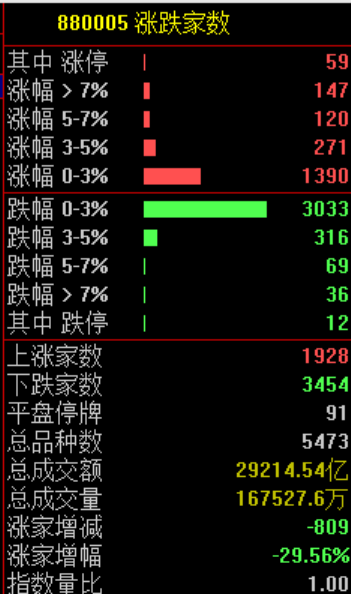
Market Overview - The three major A-share indices collectively rose today, with the Shanghai Composite Index up 0.18% closing at 4139.90 points, the Shenzhen Component Index up 0.09% at 14329.91 points, and the ChiNext Index up 0.71% at 3342.60 points [3] - The total trading volume in the Shanghai and Shenzhen markets was 29.217 trillion yuan, a decrease of 359.3 billion yuan compared to the previous day [3] Market Indicators - Key indicators to assess market cooling include index movements, individual stock performance, and trading volume [4] - Despite a significant drop in the morning, all indices managed to recover by the close, indicating resilience in the market [4] - Approximately 1800 stocks rose while about 3200 fell by the end of the day, with a peak of 4400 stocks declining during the session [4] Sector Performance - The commercial aerospace and photovoltaic sectors showed a V-shaped reversal, recovering after significant morning declines [5] - Strong sectors included precious metals, semiconductors, and insurance stocks, while banking and securities sectors faced declines [5] - The market saw a significant outflow of funds from the non-ferrous sector, while semiconductor hardware stocks attracted substantial inflows [5] Trading Volume and Market Sentiment - Today's market trading volume was 2.88 trillion yuan, a notable decrease from over 3 trillion yuan in previous days, reflecting cautious trading sentiment [5] - The recent rise in the market is viewed as a B-wave rebound, with expectations of further declines following this rebound [5] Regulatory Environment - Recent discussions around the "Dragon and Tiger List" indicate that regulatory authorities will focus on improving and refining the system rather than abolishing it [6] - The management has recognized the misuse of the list for profit-making and is expected to implement targeted regulatory measures [6] Investment Strategy - The core principle for current market operations is to "go with the flow," emphasizing the importance of understanding regulatory intentions and market dynamics [7] - Investors are advised to align their strategies with market trends to avoid significant asset depreciation, even in a narrow trading range around 4100 points [7]

帮主郑重收评:缩量上涨藏玄机!芯片光伏领涨,明日这样操作稳抓机会
Sou Hu Cai Jing· 2026-01-27 09:23
家人们今天的行情是不是有点意思?成交额比昨天少了3592亿,典型的缩量上涨,但创业板硬是探底回 升涨了0.71%,芯片和光伏直接逆势疯涨,你持仓是跟上吃肉了还是还在弱势板块里纠结?我是帮主郑 重,做20年财经记者专做中长线,今天就把这缩量上涨的门道聊透,还得给大伙说说明日怎么操作不踩 坑。 其实缩量上涨一点不奇怪,帮主见得多了,这说明资金没在瞎折腾,而是在悄悄抱团有硬逻辑的赛道。 就说芯片板块,华虹公司都创出历史新高了,这可不是瞎炒,机构早就预测2026年中国半导体市场规模 能到5465亿美元,现在AI算力、汽车智能化都离不开芯片,国产替代的逻辑摆在这里,资金自然愿意 长期拿着。还有光伏,马斯克的200GW光伏计划还在发酵,人家要建太空光伏和地面数据中心供能, 这直接打开了光伏的新赛道,赛伍技术、金辰股份封板也就不意外了,这就是产业趋势的力量。 反观下跌的白酒、电池板块,不是说它们不好,而是短期逻辑没那么硬,白酒面临消费复苏不及预期, 电池则是产能过剩的问题还没解决,资金自然会暂时用脚投票。这里给大家一个中长线的核心知识点, 市场资金永远跟着"确定性"走,缩量行情里更是如此,没有硬逻辑支撑的板块,很难扛住震荡 ...
紫建电子:预计2025年净利润同比下降88.78%~92.52%
Xin Lang Cai Jing· 2026-01-27 09:22
Core Viewpoint - The company, ZhiJian Electronics, anticipates a significant decline in net profit for the fiscal year 2025, projecting a profit of 6 million to 9 million yuan, representing a year-on-year decrease of 88.78% to 92.52 [1] Financial Performance - The net profit attributable to shareholders is expected to drop sharply, with a forecasted range of 6 million to 9 million yuan [1] - The net profit after deducting non-recurring gains and losses is projected to be a loss of 12 million to 15 million yuan, indicating a year-on-year decline of 124.79% to 119.84% [1] Contributing Factors - The decline in performance is primarily attributed to increased investment in research and development [1] - The new consumer battery projects and the construction phase of the Vietnam factory have not fully released their production capacity [1] - Significant increases in the prices of key raw materials have also impacted profitability [1]
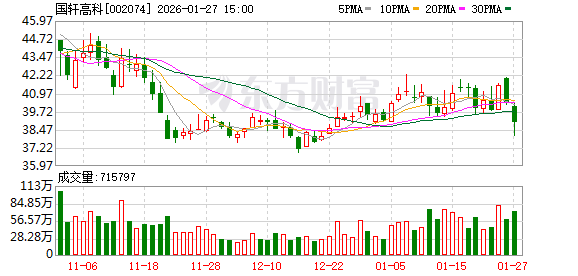
国轩高科:截至2026年1月20日公司股东户数为266364户
Zheng Quan Ri Bao· 2026-01-27 09:08
Group 1 - The core point of the article is that Guoxuan High-Tech reported its shareholder count as of January 20, 2026, which stands at 266,364 households [2]

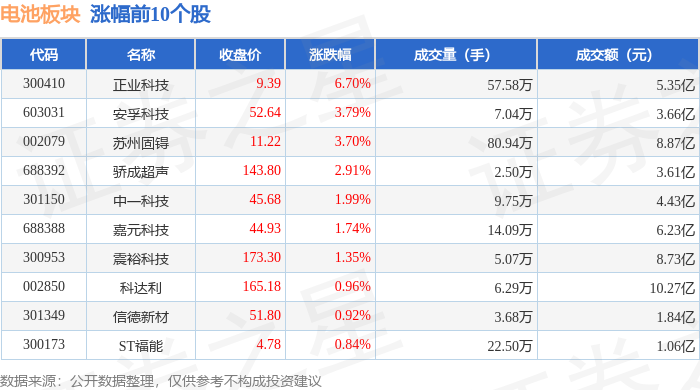
电池板块1月27日跌1.49%,天际股份领跌,主力资金净流出62亿元
Zheng Xing Xing Ye Ri Bao· 2026-01-27 09:06
证券之星消息,1月27日电池板块较上一交易日下跌1.49%,天际股份领跌。当日上证指数报收于 4139.9,上涨0.18%。深证成指报收于14329.91,上涨0.09%。电池板块个股涨跌见下表: | 代码 | 名称 | 收盘价 | 涨跌幅 | 成交量(手) | 成交额(元) | | | --- | --- | --- | --- | --- | --- | --- | | 300410 | 正业科技 | 9.39 | 6.70% | 57.58万 | | 5.35 乙 | | 603031 | 安孚科技 | 52.64 | 3.79% | 7.04万 | | 3.66亿 | | 002079 | 苏州固得 | 11.22 | 3.70% | C 80.94万 | | 8.87亿 | | 688392 | 骄成超声 | 143.80 | 2.91% | 2.50万 | | 3.61亿 | | 301150 | 中一科技 | 45.68 | 1.99% | 9.75万 | | 4.43亿 | | 688388 | 嘉元科技 | 44.93 | 1.74% | 14.09万 | | 6.23亿 | | 30095 ...

星云股份(300648.SZ):公司业务暂不涉及太空光伏领域
Ge Long Hui· 2026-01-27 08:29
格隆汇1月27日丨星云股份(300648.SZ)在互动平台表示,公司业务暂不涉及太空光伏领域。 ...

尾盘!又突发!
Zhong Guo Ji Jin Bao· 2026-01-27 08:25
Market Overview - A-shares experienced a rebound with all three major indices closing higher: Shanghai Composite Index up 0.18%, Shenzhen Component Index up 0.09%, and ChiNext Index up 0.71% [1] - Despite the overall index increase, 1,928 stocks rose while 3,454 stocks fell, indicating a mixed performance in the market [2] Sector Performance - The semiconductor industry showed strength, with stocks like Dongxin Co. and Kangqiang Electronics hitting the daily limit, and Huahong Semiconductor rising over 7% to reach a new high [3] - Precious metals continued their upward trend, with stocks such as Hunan Gold and Zhaojin Mining hitting the daily limit [4] - The commercial aerospace sector was active, with stocks like AVIC Control and Shenglu Communication also hitting the daily limit [5] Declines - The battery supply chain faced a downturn, with Tianji Co. dropping over 7% due to rising raw material prices impacting the economic viability of energy storage projects [7] - Other notable declines included Huasheng Lithium and Keheng Co., which fell by 6.15% and 5.79% respectively [8] Commodity Prices - Gold and silver prices surged, with spot gold increasing by 1.7% and spot silver rising by 9%, reaching $113 per ounce [9]
宁德时代牵手海外电池公司!
鑫椤锂电· 2026-01-27 08:24
Core Insights - The article discusses the strategic collaboration between Times Intelligent and Indonesia Battery Corporation (IBC) to explore local electric vehicle development in Indonesia, focusing on an integrated smart chassis platform [1][2]. Market Analysis - The article outlines various market segments for 2025, including lithium carbonate, electrolytes, copper foil, lithium cobalt oxide, ternary materials, lithium iron phosphate, and sodium-ion batteries, among others [1]. Strategic Collaboration - The partnership aims to leverage Times Intelligent's advanced integrated smart chassis platform, which incorporates critical technologies such as batteries, electric drives, thermal management, and intelligent chassis domain controllers [2]. Product Features - Times Intelligent, a subsidiary of CATL, offers a skateboard chassis product that can achieve a high safety performance, with a maximum speed of 120 km/h without fire or explosion risks, adaptable to various customer vehicle needs [2].

芯片概念爆发多股涨停,华虹公司市值首次突破2000亿
2 1 Shi Ji Jing Ji Bao Dao· 2026-01-27 07:57
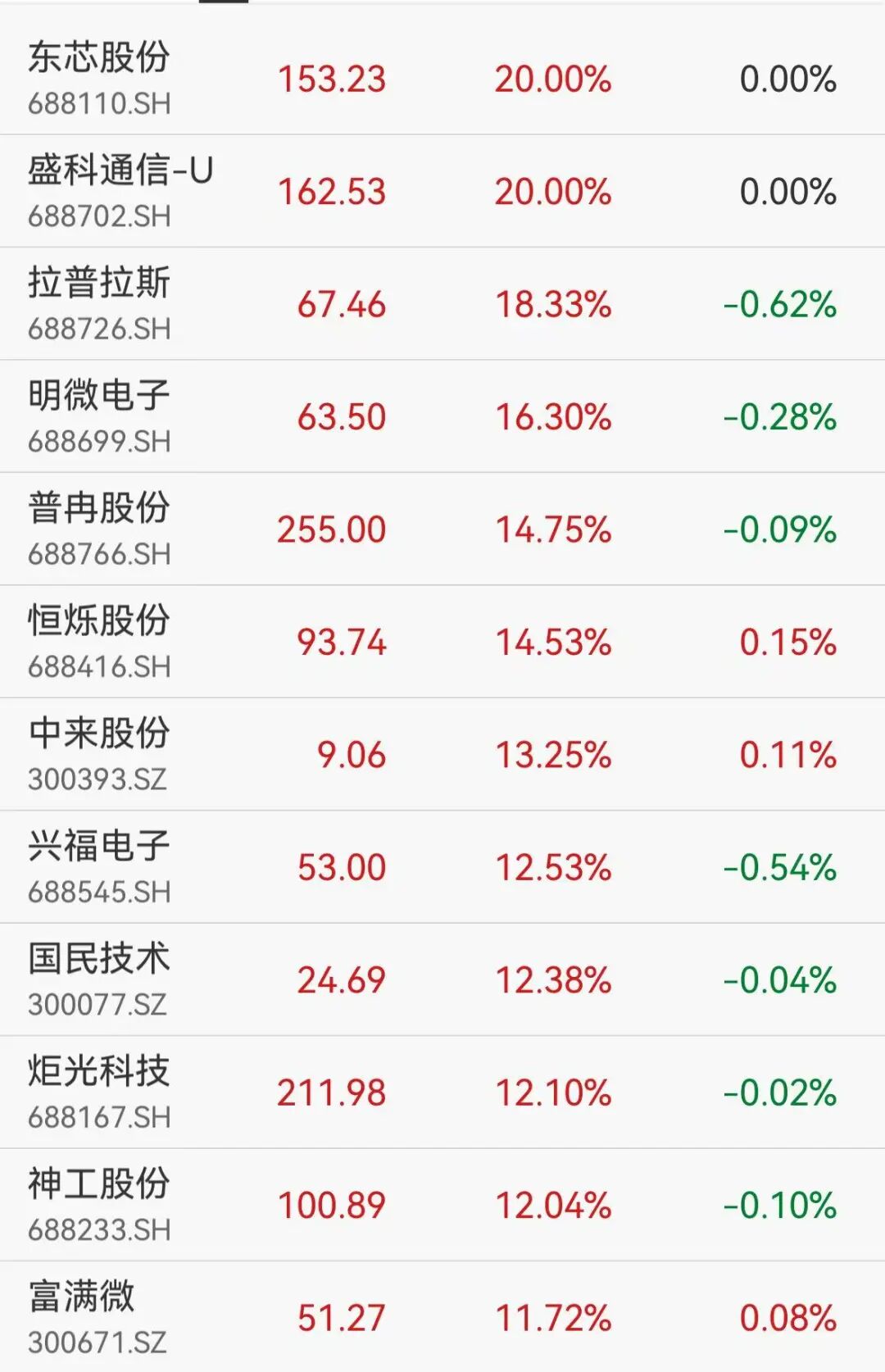
Market Overview - On January 27, the market rebounded after a dip, with all three major indices turning positive; the Shanghai Composite Index rose by 0.18%, the Shenzhen Component Index by 0.09%, and the ChiNext Index by 0.71% [1] - The total trading volume in the Shanghai and Shenzhen markets was 2.92 trillion yuan, a decrease of 359.2 billion yuan compared to the previous trading day [1] - Over 3,400 stocks in the market experienced declines [1] Sector Performance - The chip industry chain continued to rise, with notable performances from companies like Huada Technology and Hanhua Technology, which saw significant gains [1] - Precious metals maintained strong momentum, with China Gold achieving three consecutive trading limit increases and Hunan Gold two consecutive increases [1] - The CPO concept showed active performance, with Yuanjie Technology rising over 10% to reach a historical high [1] - The coal and battery sectors faced the largest declines, with battery-related stocks like Tianji Co. and Huasheng Lithium falling over 6% [1] Chip Sector Highlights - Chip stocks led the market rally, with Huada Technology hitting the trading limit and Huahong Semiconductor rising over 8% during the day, reaching a market capitalization of over 200 billion yuan [1] - Dongxin Co. and Shengke Communication both hit the trading limit, while several other stocks in the sector saw gains exceeding 12% [1][2] External Influences - The surge in stock prices of South Korean memory chip giant SK Hynix, which rose nearly 8% to reach a historical high, was identified as a factor driving the strength of related A-share concept stocks [4] - Samsung Electronics announced a price increase of over 100% for NAND flash memory supply in Q1, significantly exceeding market expectations [4] - Micron Technology plans to invest an additional $24 billion in Singapore over the next decade to expand capacity in response to the AI-driven demand for memory chips [4] Solar and Aerospace Sectors - The space photovoltaic concept saw a rebound, with companies like Laplace and Zhonglai Co. experiencing significant gains [4] - Elon Musk's announcement regarding the deployment of data centers and satellites through Starship over the next 4-5 years is expected to support the growth of the space photovoltaic sector [4] - The commercial aerospace sector also saw short-term gains, with companies like Shenglu Communication hitting the trading limit and others rising over 10% [5] Aviation Sector Developments - The large aircraft sector continued to rise, with companies like AVIC Control and AVIC Technology hitting the trading limit, and others like Tunan Co. and AVIC Power seeing gains over 10% [6] - Individual stock BoHui Innovation experienced a sudden surge, rising over 10% within 10 minutes, following the announcement of its self-developed Nipah virus nucleic acid testing kit [6]



收评:创业板指探底回升涨0.71% 半导体产业链集体走强
Xin Hua Cai Jing· 2026-01-27 07:28
Market Overview - A-shares experienced a rebound on January 27, with all three major indices closing in the green. The Shanghai Composite Index closed at 4139.9 points, up 0.18%, with a trading volume of 12.89 trillion yuan. The Shenzhen Component Index rose 0.09% to 14329.91 points, with a trading volume of 16.05 trillion yuan. The ChiNext Index increased by 0.71% to 3342.6 points, with a trading volume of 7.504 trillion yuan. The STAR 50 Index gained 1.51% to 1555.98 points, with a trading volume of 1.021 trillion yuan [1]. Sector Performance - The semiconductor industry chain showed strength, with stocks like Dongxin Co. and Kangqiang Electronics hitting the daily limit. Huahong Semiconductor rose over 7% to reach a new high. The precious metals sector continued its strong performance, with China Gold achieving three consecutive trading limit increases and Hunan Gold achieving two. The CPO concept stocks were active, with Yuanjie Technology rising over 10% to a historical high and Huilv Ecology hitting the daily limit. The space photovoltaic concept also saw gains, with companies like Saiwu Technology and Jincheng Co. hitting the daily limit. Conversely, the battery industry chain weakened, with Tianji Co. and Huasheng Lithium falling over 6% [1][2]. Institutional Insights - According to Jifeng Investment Advisory, the semiconductor sector remains strong, and investors should focus on leading companies in high-demand industries after recent pullbacks. The long-term outlook for A-shares is positive, with expectations of a turning point in the economy driven by policy stimulus. Recommended sectors include semiconductors, consumer electronics, artificial intelligence, robotics, and commercial aerospace [3]. - Citic Securities conducted a systematic review of the photovoltaic cycle as a reference for the current lithium battery cycle, concluding that price increases have not negatively impacted demand, and that price adjustments are primarily due to capacity increases rather than demand shrinkage. They expect stock prices to follow the upward trend of the industry chain [3]. Policy Developments - The Ministry of Emergency Management and the Ministry of Industry and Information Technology released guidelines to promote innovation in emergency management equipment, emphasizing the integration of new technologies such as AI and satellite internet. The focus is on developing high-performance, innovative equipment and enhancing supply capabilities [5]. - The Ministry of Human Resources and Social Security announced plans to expand the scale of entrusted investments for basic pension insurance funds, aiming to deepen social security system reforms and improve fund management [6]. Educational Initiatives - The University of Chinese Academy of Sciences established the Interstellar Navigation College, focusing on advanced fields such as interstellar propulsion and deep space communication. This initiative aims to cultivate talent with a solid foundation and strategic vision to support national strategies and address talent shortages [7].
