咖啡

Search documents
展商变投资商,上海打造“永不落幕的进博会”
Zhong Guo Xin Wen Wang· 2025-09-10 07:51
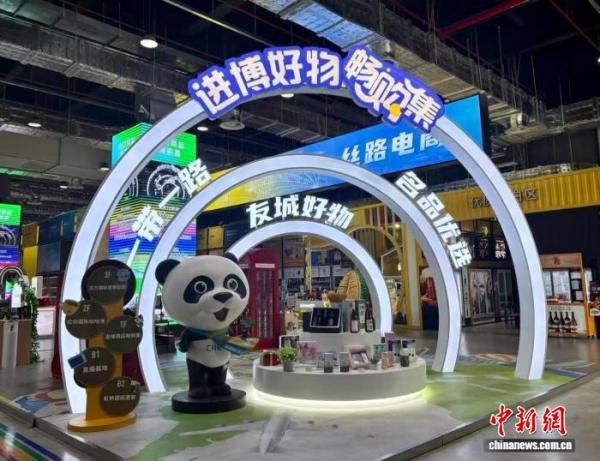
Core Insights - The Hongqiao International Coffee Port is a significant hub for coffee trade in Shanghai, with nearly half of the coffee beans used in the city sourced from this location [1][3] - The Hongqiao Import Commodity Exhibition and Trading Center (Hongqiao Pinhui) serves as a year-round platform for showcasing and trading products from the China International Import Expo (CIIE), featuring over 85,000 products from more than 120 countries [1][3] Trade and Business Development - The Hongqiao International Coffee Port has established deep business collaborations with nearly 100 coffee enterprises, achieving a trade scale of 3 billion RMB and an annual trade volume exceeding 300 million RMB for registered companies [3] - The port has gathered coffee beans from 47 Belt and Road countries and has established regular communication mechanisms with major coffee-producing countries such as Brazil, Peru, Ethiopia, and Vietnam [3] Talent Development and Events - The Hongqiao International Coffee Port has organized four Shanghai Coffee Master Competitions and has developed a professional certification standard for coffee masters, training over 8,000 coffee professionals and more than 700 senior baristas [3] E-commerce and Logistics - The Hongqiao Pinhui Live Streaming Base is recognized as one of the first live e-commerce bases in Shanghai, featuring 60 live streaming rooms to cater to various broadcasting needs [3] - The base has become a crucial part of the "Silk Road E-commerce" information cooperation zone, facilitating the transformation of CIIE exhibits into accessible products through live streaming [3][4] Import and Distribution - The Hongqiao International Wine Cellar has introduced over 5,000 imported wines from more than 60 countries, leveraging the bonded logistics center's display and trading capabilities [4] - The bonded logistics center has achieved a leading position in cross-border e-commerce import business in Shanghai, with daily package processing increasing from 33,000 to 44,000 [6] Economic Impact - The total goods value handled by the bonded logistics center for "Silk Road E-commerce" partner countries amounts to 79.7 million USD, involving 17 partner countries [6] - The center has implemented regularized bonded display trading and various facilitation measures for the CIIE, contributing to the concept of a "never-ending CIIE" [6]

超1300亿,“星巴克祖师爷”被卖了
3 6 Ke· 2025-09-08 00:17
Core Insights - The global coffee market is undergoing significant changes, highlighted by the acquisition of Peet's Coffee by Keurig Dr Pepper (KDP) for €15.7 billion (approximately ¥130 billion) [1][12] - JAB Holdings, a key player in the coffee industry, is behind both KDP and JDE Peet's, indicating a strategic consolidation of coffee assets to enhance global market presence [3][13] - The premium coffee segment, represented by brands like Peet's, faces challenges in balancing high-end positioning with market adaptability, particularly as competition from lower-priced brands intensifies [4][14] Company Overview - Peet's Coffee, founded in 1966 by Alfred Peet, is recognized for revolutionizing the American coffee scene with high-quality beans and deep roasting techniques [5][8] - The brand has historical ties to Starbucks, with several of its founders having trained under Peet, which contributes to its reputation as the "father of Starbucks" [5][7] - After being privatized by JAB in 2012, Peet's expanded internationally, including a successful entry into the Chinese market in 2017 [8][10] Financial Performance - JDE Peet's reported a 7.9% increase in global sales to €8.837 billion (approximately ¥736 billion) for FY 2024, with Peet's Coffee being a significant growth driver [10][11] - Adjusted EBITDA for JDE Peet's reached €1.587 billion, reflecting an 11.3% increase year-over-year [11] - Despite strong performance, Peet's Coffee has seen a slowdown in store openings in China, from 98 in 2023 to a projected 51 in 2024 [10] Market Dynamics - The coffee market is experiencing a shift towards price competition, with brands like Luckin Coffee and Kudi attracting consumers through aggressive pricing strategies [14][16] - Consumer preferences are evolving, with a growing demand for personalized and innovative coffee products, challenging traditional brands to adapt [16][20] - The failure to penetrate lower-tier markets has hindered Peet's growth, while competitors like Luckin have successfully expanded their presence in these areas [17][20] Strategic Responses - Peet's Coffee is launching a sub-brand, Ora Coffee, aimed at price-sensitive consumers, with prices ranging from ¥15 to ¥25, to better compete in the changing market landscape [19][20] - The strategic acquisition by KDP is seen as a move to enhance its global coffee capabilities and address its previous limitations in the coffee sector [12][13]


超1300亿!“星巴克祖师爷”被卖了
Xin Lang Cai Jing· 2025-09-07 16:44
Core Insights - The global coffee market is undergoing significant changes, highlighted by the acquisition of JDE Peet's, the parent company of Peet's Coffee, by Keurig Dr Pepper (KDP) for €15.7 billion (approximately ¥130 billion) [2][4] - The acquisition is part of a broader strategy by JAB Holdings to consolidate its coffee business assets and enhance global market presence [4][14] - The coffee industry is facing challenges, particularly for premium brands like Peet's Coffee, which struggle to balance high-end positioning with market adaptability [5][15] Company Overview - KDP has a strong foothold in the North American beverage market, with a market share of 8.3% in 2024, ranking second in carbonated beverage sales [2] - JDE Peet's operates over 50 brands, including Peet's Coffee and Douwe Egberts, with coffee being a core revenue driver [2][4] - Peet's Coffee has a rich history, founded in 1966 by Alfred Peet, and is known for its high-quality coffee and innovative brewing techniques [5][6] Financial Performance - JDE Peet's reported a 7.9% increase in global sales to €8.837 billion (approximately ¥736 billion) for FY 2024, with adjusted operating profit rising by 52.4% [11][12] - Peet's Coffee has shown strong performance in the Chinese market, with a 23.8% increase in adjusted EBITDA [11] - Despite strong performance, the expansion of Peet's Coffee in China has slowed, with new store openings dropping from 98 in 2023 to 51 in 2024 [11][19] Market Dynamics - The coffee market is experiencing a shift from growth to competition for existing customers, with lower-priced brands like Luckin Coffee and Kudi attracting consumers through aggressive promotions [5][15] - Premium coffee brands face high operational costs due to their focus on prime locations and quality service, making it difficult to compete with lower-cost alternatives [15][16] - The demand for personalized coffee experiences is increasing, challenging traditional brands to innovate and adapt to changing consumer preferences [18][22] Strategic Responses - Peet's Coffee is launching a more affordable sub-brand, Ora Coffee, to target price-sensitive consumers, with prices ranging from ¥15 to ¥25 [22] - KDP's acquisition of JDE Peet's is seen as a strategic move to enhance its global coffee capabilities and address its previous market limitations [13][14] - The coffee giants are adjusting their strategies to maintain brand integrity while meeting diverse consumer demands across different markets [22]

迷你 Labubu 二手市场价格回落;雀巢中国与瑞幸共同研发新品;缺席“外卖大战”的霸王茶姬业绩受挫丨品牌周报
36氪未来消费· 2025-09-07 07:26
Group 1: Nestlé Leadership Change - Nestlé's former CEO Laurent Freixe was dismissed due to a violation of the company's code of conduct related to a romantic relationship with a subordinate [3] - Philipp Navratil, who has over 20 years of experience at Nestlé, has been appointed as the new CEO, effective immediately [3] - Navratil previously led Nestlé's coffee business, which generates nearly 200 billion yuan in sales and accounts for over 22% of the company's total revenue [3] Group 2: Challenges in Greater China - Nestlé's Greater China region reported a 6.5% decline in profits, amounting to a loss of 1.5 billion yuan, and a 1.8% drop in sales for the first half of 2025 [4] - The company's growth strategy in this region is shifting from channel-driven distribution to consumer demand-driven sales, while also reducing inventory [4] - The coffee business in China is a focal point, with ongoing collaboration with Luckin Coffee to enhance product development [4] Group 3: Bubble Mart's Mini Labubu Price Drop - The resale price of the Mini Labubu toy has decreased by 10% to 30% within a week of its launch, with the most popular "L" version dropping nearly 30% [7] - The rapid price decline is attributed to oversupply and consumer dissatisfaction with product quality [7][8] - Bubble Mart's production capacity has increased significantly, with plush product output exceeding ten times that of the previous year [8] Group 4: Bawang Tea's Performance - Bawang Tea reported a 23% decline in monthly GMV, the only negative growth among six listed tea brands [9] - The company is facing challenges from intensified price wars on delivery platforms, impacting customer retention [10] - Despite a strong expansion with 2042 new stores, the rapid growth has led to internal competition, diluting sales performance [10] Group 5: MaxMara's Pricing Strategy - MaxMara maintains prices in China that are over twice those in Europe, leading to consumer backlash and a thriving gray market [11] - The brand's pricing strategy aims to create a high-end image, but risks could arise from regulatory changes and increased competition [11][12] - Chinese consumers are increasingly price-sensitive, seeking value and transparency, which could challenge MaxMara's pricing model [12][13] Group 6: H&M's Expansion in China - H&M has opened two new stores in Shenzhen, including its largest flagship store in Southern China [19] - The brand is adapting to the Chinese market by enhancing its product offerings and entering new e-commerce platforms [20] - H&M's strategy focuses on maintaining affordability while transitioning towards a more fashionable and quality-oriented brand image [21] Group 7: Kweichow Moutai's Stock Performance - Kweichow Moutai regained its position as the highest-priced stock in A-shares, closing at 1476.1 yuan per share [23] - The stock's fluctuation was influenced by a brief surge in the price of another company, which was later corrected [23] Group 8: Elliott's Investment in PepsiCo - Elliott Investment Management has acquired a stake worth $4 billion in PepsiCo, becoming one of its largest investors [24] - The firm has proposed five major reform initiatives aimed at optimizing the beverage business and enhancing accountability [25] Group 9: GAP's Entry into Beauty Market - GAP announced its entry into the beauty market, testing products in 150 Old Navy stores [26] - The initiative aims to expand its product range and attract a broader customer base [26]

投资项目估值飙升数十亿,离职6年后投资经理起诉投资机构讨要1655万奖励
Sou Hu Cai Jing· 2025-09-07 04:49
Core Viewpoint - The case revolves around an investment manager, Mr. Tian, who claims entitlement to a project reward after leaving his position at Tianjiu Group, despite the project being signed after his departure [1][4]. Group 1: Background of the Case - Mr. Tian worked at Tianjiu Group from 2017, focusing on a startup coffee brand project which he believed had significant potential [3]. - He completed most of the project work, including due diligence and internal approvals, before leaving the company on August 31, 2019 [4]. - The coffee brand's market valuation has since exceeded 45 billion yuan, and Mr. Tian believes he is entitled to a reward of 16.55 million yuan based on company policies [1][7]. Group 2: Company Policies and Reward Structure - Tianjiu Group's reward structure includes various incentives for project recommendations, with specific amounts tied to project milestones [5]. - The company’s policies state that rewards are distributed based on the project’s success and the employee's role, with investment managers receiving a percentage of the total rewards [5]. - Mr. Tian claims that he should receive 1.655 million yuan based on the project's valuation and the company's reward guidelines [7]. Group 3: Legal Proceedings - After his arbitration request was rejected due to the expiration of the claim period, Mr. Tian filed a lawsuit which was accepted by the court on August 27, 2025 [1][7]. - The company has stated that Mr. Tian's voluntary departure disqualifies him from receiving any post-departure rewards [1][4].

猫屎咖啡控股与银柘科技订立谅解备忘录
Zhi Tong Cai Jing· 2025-09-05 14:48
Core Viewpoint - Cat Poop Coffee Holdings (01869) has signed a non-binding memorandum of understanding with Yinzhe Technology (Guangzhou) Co., Ltd, aiming to explore collaboration opportunities and optimize the company's strategic planning [1] Group 1 - The memorandum allows both parties to leverage their platform resources for potential cooperation [1] - The board believes that this memorandum will enhance the company's existing strategic planning and provide new development opportunities [1] - The collaboration may expand the company's growth in supply chain, product sales, big data, and digital technology services [1]
猫屎咖啡控股(01869.HK)拟携手银柘科技(广州)探索"咖啡+金融+科技"多元业务整合
Ge Long Hui· 2025-09-05 14:40
Core Viewpoint - The company has signed a non-binding memorandum of understanding with Yinzhe Technology (Guangzhou) Co., Ltd to explore collaborative opportunities in integrating resources across coffee, finance, and technology sectors, aiming for strategic optimization and upgrades [1][2] Group 1 - Both parties agree to collaborate, leveraging their respective resources for deep integration and synergistic development, focusing on the "coffee + finance + technology" business model [1] - The collaboration will involve building a business alliance between the company and Yinzhe Technology, exploring online technology to enhance coffee store operations and drive offline business integration [1] - Yinzhe Technology will facilitate the company's expansion into B2B services, creating business synergies [1] Group 2 - Yinzhe Technology will lead the integration with major internet platforms such as Taobao, Xianyu, and Alipay, establishing a robust e-commerce support system through resource collaboration [1] - Future equity investment cooperation is not ruled out, with both parties considering each other as strategic shareholders to deepen future business collaboration [2] - The partnership aims to utilize Yinzhe Technology's expertise in fintech to build a professional online sales platform, enhancing customer acquisition through the company's offline stores [2]
猫屎咖啡控股(01869) - 自愿公告—业务发展最近情况
2025-09-05 14:29
香 港 交 易 及 結 算 所 有 限 公 司 及 香 港 聯 合 交 易 所 有 限 公 司(「聯交所」)對 本 公 告 之 內 容 概 不 負 責,對 其 準 確 性 或 完 整 性 亦 不 發 表 任 何 聲 明,並 明 確 表 示,概 不 對因本公告全部或任何部份內容而產生或因倚賴該等內容而引致之任何損失 承 擔 任 何 責 任。 Kafelaku Coffee Holding Limited 猫屎咖啡控股有限公司 (於開曼群島註冊成立之有限公司) (股份代號:1869) 自 願 公 告—業 務 發 展 最 近 情 況 猫 屎 咖 啡 控 股 有 限 公 司(「本公司」,連 同 其 附 屬 公 司 統 稱「本集團」)董 事(「董 事」) 會(「董事會」)自 願 作 出。 諒解備忘錄 – 1 – 1. 雙 方 同 意 開 展 合 作,將 推 動 各 自 優 勢 資 源 的 深 度 融 合 與 協 同 發 展,探 索「咖 啡+金 融+科 技」多 元 業 務 整 合,進 一 步 梳 理 優 化 貓 屎 咖 啡 的 業 務 戰 略 定 位 及 規 劃,助 推 戰 略 優 化 升 級; 2. 雙 方 同 意 積 ...
贵阳文旅消费“新三样”如何更具魅力
Sou Hu Cai Jing· 2025-09-05 13:17
Core Insights - The article highlights the rising popularity of coffee, craft beer, and new tea drinks in Guiyang, which are becoming essential components of the city's cultural and tourism consumption landscape [1][6][10] Group 1: Coffee Culture - Guiyang boasts over 3,000 coffee shops, with a density of one coffee shop for every 2,000 residents, comparable to major cities like Shanghai [2] - Local coffee shop owners have achieved national and international recognition, with notable wins in prestigious coffee competitions [2] - The phrase "travel to Guiyang for a cup of coffee" has gained traction, attracting coffee enthusiasts from across the country [6][10] Group 2: Craft Beer Scene - The craft beer market in Guiyang features over 1,200 bars, offering a diverse range of beer styles that cater to various tastes [3] - The vibrant nightlife in Guiyang is characterized by a lively atmosphere in craft beer bars, enhancing the city's appeal as a nightlife destination [3][6] Group 3: New Tea Drinks - Local tea brands are creatively integrating regional culture with modern concepts, resulting in popular products that resonate with both locals and tourists [5] - Unique offerings such as "Longjing Maonai" and "Zhe'er Gen Lemon Tea" showcase the innovative spirit of Guiyang's tea culture [5] Group 4: Economic and Cultural Impact - The emergence of coffee shops, craft beer bars, and tea drink stores enriches the local consumption ecosystem, complementing traditional dining and shopping experiences [6] - Events like the "2025 Guiyang World Flavor Carnival" enhance the visibility and purchasing power of local tourism products [6][9] Group 5: Service and Experience Enhancement - Businesses are focusing on improving service quality to stand out in a competitive market, emphasizing the importance of high-quality ingredients and customer experience [9][10] - Innovative combinations of food and drink, such as "craft beer with barbecue," are being developed to provide unique cultural experiences [9][10] Group 6: Urban Branding and Image - The "New Three Items" contribute to shaping Guiyang's urban identity, aligning with the city's characteristics of being refreshing and vibrant [10] - The integration of these beverage cultures into the city's branding efforts enhances Guiyang's reputation as a dynamic and inclusive destination [10][11] Group 7: Talent and Environment - The development of the "New Three Items" is supported by initiatives like the establishment of a coffee industry academy, aimed at cultivating skilled professionals [14] - A favorable business environment is crucial for the growth of these sectors, emphasizing the need for regulatory support and a comfortable leisure atmosphere [14]

我为什么劝你少喝9.9元的咖啡?
洞见· 2025-09-05 12:36
Core Insights - The article highlights the rising popularity of Yunnan coffee, particularly the high-altitude Arabica beans, which are favored by major brands like Starbucks and Luckin Coffee for their unique flavor profile and health benefits [9][49]. Group 1: Product Features - The Yunnan coffee is made from high-quality Arabica beans grown at an altitude of 1600 meters, offering a balanced flavor and rich aroma [13][44]. - The freeze-drying process preserves the coffee's freshness and flavor, resulting in a product that is rich yet not bitter, and aromatic without being overwhelming [15][24]. - The coffee is free from additives such as artificial flavors, creamers, and sugars, making it suitable for health-conscious consumers [19][52]. Group 2: Health Benefits - The coffee contains soluble dietary fibers that aid digestion and provide a feeling of fullness, making it a good choice for those managing their weight [60]. - Rich in polyphenols, including chlorogenic acid, the coffee may help delay skin aging and improve overall health [64]. - The lower caffeine content of Yunnan Arabica beans makes it easier on the stomach and reduces the risk of jitteriness associated with higher caffeine levels [69]. Group 3: Market Positioning - The product is competitively priced at 59 yuan per can, with promotional offers available, making it an attractive option compared to café prices [39][56]. - The convenience of instant coffee that can be prepared in just three seconds appeals to modern consumers seeking quick and quality coffee experiences [21][32]. - The article emphasizes the product's ability to deliver a taste comparable to freshly brewed coffee, enhancing its market appeal [74][85].