
水产养殖

Search documents
港澳台青年:海南自贸港是创业乐土,更是圆梦舞台
Zhong Guo Xin Wen Wang· 2025-08-12 00:51
中新社海口8月11日电 (张茜翼 黄方舟)"海南不仅是创新创业的乐土,更是青年圆梦的舞台。"台湾青年 洪小贺11日告诉中新社记者,海南自贸港的政策红利和发展空间,正吸引越来越多港澳台青年来此追 梦。 "自贸港青年汇"活动当日在海口启动,港澳台地区的30名青年齐聚一堂,围绕文化交流、创新创业等主 题,共同探讨海南自贸港的发展机遇。 今年12月18日,海南自贸港将正式启动全岛封关运作。彭咏聪认为,海南将成为吸引全球创新人才 的"创意磁场"。 洪小贺的父亲是最早一批来琼发展石斑鱼养殖的台商。2012年,洪小贺追随父亲脚步来到海南。十余年 间,其家族企业已从单一养殖场扩展为拥有6个生产基地的现代化企业,产品远销马来西亚、新加坡等 国家。 "自贸港政策让企业进出口更加便利,为拓展海外市场提供了支撑。"洪小贺认为,海南具有独特的区位 优势,加上政策支持力度大,堪称青年创业的理想之地。 在为期10天的活动中,港澳台青年将赴海口、文昌、琼海、保亭、三亚、儋州等地参访。(完) 祖籍海南的香港青年符晓培深耕体育行业多年,不久前在琼创办一家体育产业公司。他告诉记者,海南 自贸港在人才引进、赛事扶持等方面推出一系列优惠政策,这让他对 ...

“海上牧场”迎丰收季:特色养殖助力渔民增收致富
Yang Shi Wang· 2025-08-11 09:00
Core Insights - Fujian Province's Fuding City has abundant marine fishery resources, particularly in oyster farming, which is currently in peak harvesting season [1] Industry Overview - The oyster farming area in Shacheng Town features a picturesque landscape with organized floating buoys, where fishermen are actively engaged in harvesting operations [3] - The local processing facilities ensure that freshly harvested oysters are quickly cleaned, packaged, and weighed for distribution [3] Production and Quality - Shacheng Bay's clear water and rich natural feed create ideal conditions for oyster farming, with selected oyster varieties exhibiting faster growth, stable meat quality, and strong disease resistance [5] - Mature oysters can reach the size of an adult male's palm, making them highly sought after by buyers [5] Economic Impact - Fuding City has increased technical and financial support for the oyster industry, expanding farming areas into deeper waters [7] - The total oyster farming area is approximately 10,000 acres, with an annual production of 45,000 tons and an annual output value of about 225 million yuan, making the oyster industry a crucial source of income for local fishermen [7]

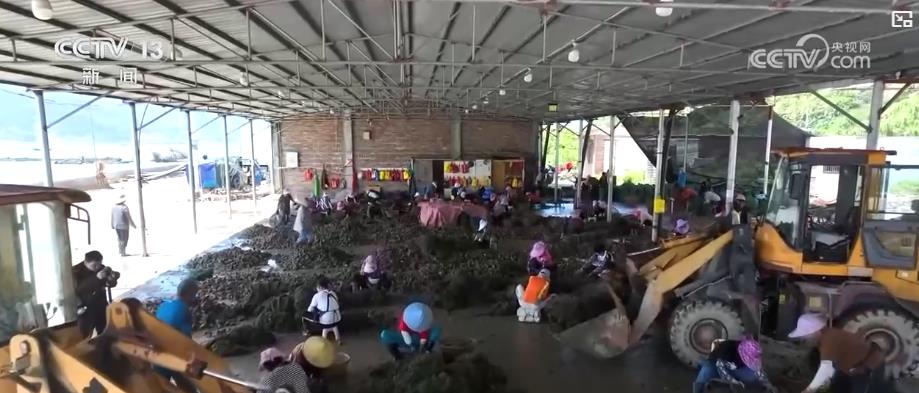
南农晨读 | 千年渔港
Nan Fang Nong Cun Bao· 2025-08-11 01:33
Group 1 - Guangdong reported 1,387 new local cases of Chikungunya fever from August 3 to August 9, showing a continuous decline trend [2][4][3] - The distribution of cases includes 1,212 in Foshan, 103 in Guangzhou, and smaller numbers in other cities [4][5] Group 2 - The National Lychee and Longan Industry Technology System held a performance evaluation meeting for the "14th Five-Year Plan" in Luzhou, Sichuan on August 9 [7][8] - The meeting included reports from chief scientists and station leaders on their work and achievements during their tenure [9][10] Group 3 - A new "Media + Qingyuan Xiniu Bamboo Shoot Integration Development Studio" was established in Qingyuan to promote high-quality development of the bamboo shoot industry [20][21] - The studio aims to integrate media resources across various platforms to enhance brand influence and promote industry stories [24][25] Group 4 - The first socialized service center for the Qingyuan Xiniu Bamboo Shoot industry was established in Yingde, providing comprehensive support across various industry segments [33][36][37] - This center aims to assist in seedling, technology, processing, sales, branding, and financial services for the bamboo shoot industry [38] Group 5 - Guangzhou's modern agriculture sector is set to receive a boost with 15 agricultural projects signed, totaling over 1.5 billion yuan in expected investment [43][44] - The projects focus on advanced agricultural production capabilities, including the artificial breeding of endangered species like the yellow lip fish [41][42]

海南金融助力科技企业向“新”发展
Hai Nan Ri Bao· 2025-08-11 01:04
Core Viewpoint - The financial support in Hainan has significantly boosted the development of technology enterprises, with a total of 159.4 billion yuan in loans directed towards the tech innovation sector, reflecting a 14.9% year-on-year increase [2][4]. Group 1: Financial Support and Impact - As of June 2023, the total balance of technology loans in Hainan reached 159.4 billion yuan, benefiting 2,581 enterprises, which is a 12.2% increase compared to the previous year [2]. - Hainan Blue Grain Technology Co., Ltd. received a 3 million yuan government-bank insurance loan, which allowed the company to increase its production capacity to 150 million fish seedlings annually [2][3]. - The financial support has enabled Blue Grain Technology to maintain its breeding of over 30 species of marine fish and focus on research collaborations with universities to enhance seedling cultivation technology [3]. Group 2: Policy and Strategic Initiatives - The People's Bank of China Hainan Branch has implemented a combination of financial resources to support technology innovation and transformation, including early involvement in project applications to improve project feasibility [4]. - By May 2025, Hainan Province had 1.19 billion yuan in technology innovation and transformation projects approved for re-loan, with 5.114 million yuan in loan interest subsidies already disbursed [4]. - The bank has also guided financial institutions to implement a special guarantee plan for supporting technology innovation, ensuring that eligible projects receive timely financial support [4].
舌尖狂欢!开渔在即,茂名都有哪些海鲜值得吃?
Nan Fang Nong Cun Bao· 2025-08-09 11:06
Core Viewpoint - The upcoming fishing season in Maoming, Guangdong, is set to revitalize the seafood market, with a variety of fresh marine products expected to be available for consumers following a three-and-a-half-month fishing moratorium [3][4][79]. Group 1: Event Overview - The 2025 South China Sea (Maoming Bohe) Fishing Carnival will commence on August 16, marking a significant event for local fisheries [2][3]. - Maoming boasts a coastline of 182 kilometers and is home to the Bohe Fishing Port, a major natural harbor in Guangdong, which supports the region's fishing industry [6][7]. Group 2: Seafood Highlights - Bohe Blue Lobster, a signature seafood product, typically measures 20-40 cm in length and weighs between 0.5-1.5 kg, becoming particularly rich and flavorful after the fishing moratorium [12][13][19]. - Maoming Cuttlefish, measuring 15-25 cm and weighing 100-200 grams, is known for its tender and sweet meat, often caught at night using light traps [21][22][23]. - Dianbai Golden Pomfret, recognized for its rich flavor and minimal bones, is a staple in local seafood recipes, especially when steamed with ginger and scallions [31][37][39]. - Bohe Mackerel, which can exceed half a meter in length, is characterized by its firm, oily flesh and is commonly prepared by pan-frying [41][46]. - Bohe Sand Eel, measuring 10-15 cm and weighing 50-100 grams, is often caught during low tide and is known for its delicate, sweet flavor [50][55]. - Bohe Yellow Croaker, typically 20-30 cm long, is celebrated for its tender meat and is often prepared by steaming or frying [59][64]. Group 3: Economic Impact - The fishing festival is expected to boost seafood procurement and dining consumption, benefiting local fishermen and the broader economy [79][80]. - Preparations at Bohe Fishing Port are complete, with fishermen ready to deliver fresh seafood to the market as the fishing season begins [82][83].
卖爆了!一年狂揽近760亿元!火到30多个国家和地区
Yang Shi Xin Wen· 2025-08-09 00:39
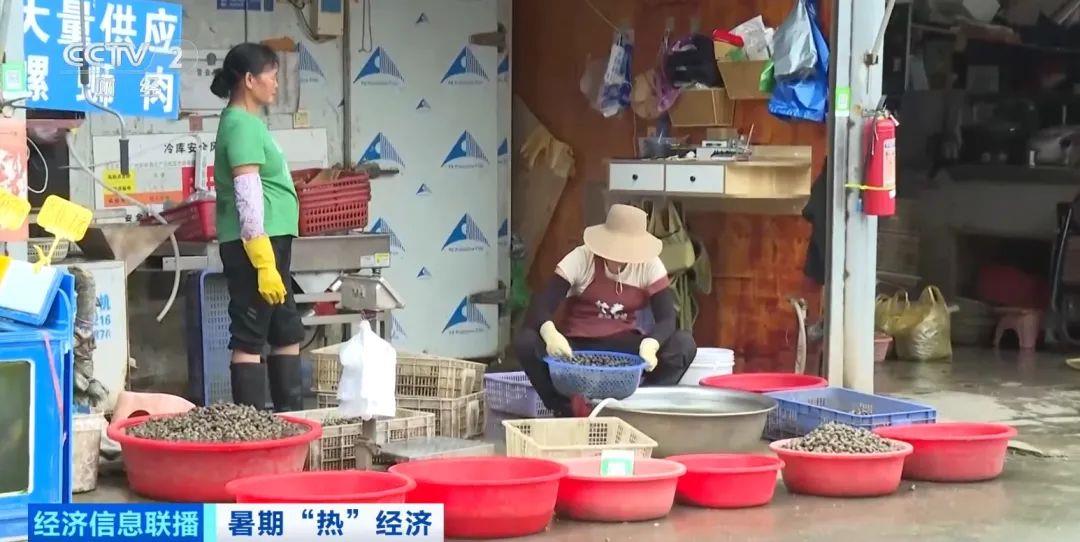
Group 1 - The unique flavor profile of Liuzhou river snail rice noodles has gained significant popularity, characterized by its sour, spicy, fresh, fragrant, hot, and crisp taste [1] - In Liuzhou's Liugang Town, a snail farming base has implemented flowing water cultivation, enhancing both the quality and yield of snails, benefiting over 100 local villagers involved in farming and processing [1] - Snails can be harvested twice a year, with the maturation period for snail seedlings being four months [1] Group 2 - At the Liuzhou Haijixing Agricultural Market, 30 processing shops sell an average of 1,000 pounds of fresh snails daily, with total processing transaction volume reaching 50,000 pounds per day [3] - Whole snails are used to make broth for the rice noodles, while snail meat serves as a fresh ingredient, enhancing the overall taste [5] - The sales revenue for the entire Liuzhou river snail rice noodle industry is projected to reach 75.96 billion yuan in 2024, reflecting a year-on-year growth of 13.4%, with 49,000 physical stores across the country and exports to over 30 countries and regions [5]
小龙虾价格像坐“过山车”,餐饮品牌如何突围?
Sou Hu Cai Jing· 2025-08-08 09:09
Core Viewpoint - The price of crayfish has experienced significant fluctuations in 2025, with a notable increase from low prices in early summer to a sharp rise by late June, impacting the revenue of crayfish restaurants and raising questions about the future growth directions of the industry [1][3]. Industry Overview - The crayfish industry in China is undergoing a transformation, moving from a rapid development phase to a stage of upgrading and innovation, driven by both the farming and restaurant sectors [4][6]. - The overall value of the crayfish industry is high, with a production value ratio of approximately 2:1:7 across the primary, secondary, and tertiary sectors [4]. Farming Sector - The farming sector is experiencing deep transformation, injecting new momentum into the entire industry chain, including breakthroughs in processing and ready-to-eat products [4][6]. - Innovations in farming techniques and diversification of farming models are key trends, with a focus on improving quality and efficiency [4][6]. Restaurant Sector - Crayfish has become a "must-have" dish in various types of restaurants, with brands increasingly focusing on local market penetration while also seeking national expansion [3][8]. - The competition among crayfish restaurants is intensifying, with over 80% of brands operating 10 or fewer outlets, indicating a low level of scale [8][10]. Product Innovation - Crayfish brands are innovating in product offerings, introducing diverse flavors and "crayfish+" strategies to break seasonal limitations [12][13]. - Examples of flavor innovations include unique regional tastes and the incorporation of other food categories into the menu [12][13]. Market Trends - The rise of ready-to-eat crayfish products is notable, with several companies entering the market to offer various flavors through e-commerce platforms [7]. - The trend of self-service crayfish restaurants is emerging, allowing customers to select and cook their own crayfish, enhancing the dining experience [15]. Regional Characteristics - The crayfish market exhibits strong regional characteristics, with notable brands emerging from provinces like Hubei, Anhui, Guangdong, and others, each having a solid local reputation [10][11]. - Some brands are beginning to expand beyond their local markets, indicating a shift towards national presence [10][11]. Consumer Engagement - Brands are focusing on creating immersive dining experiences and enhancing consumer engagement through innovative store designs and marketing strategies [14]. - The integration of online and offline sales channels is becoming increasingly important, with brands actively developing their online presence [14].
40分钟钓出26尾虾!新会钓虾比赛热闹开竿!
Nan Fang Nong Cun Bao· 2025-08-08 06:03
Core Viewpoint - The event of the shrimp fishing competition in Xinhui district highlights the integration of the local shrimp and Chenpi (dried tangerine peel) industries, promoting rural revitalization and high-quality development through cultural and agricultural activities [2][4][50]. Group 1: Event Overview - The shrimp fishing competition took place on August 8 at the Changsheng Chenpi Manor in Sanjiang Town, showcasing the local shrimp industry [6][10]. - The competition featured 22 participants who caught a total of 26 shrimp in just 40 minutes, with the winner being Wu Jiahui [43][49]. Group 2: Industry Development - Xinhui district is known for its rich agricultural resources and has been developing a full industrial chain for Chenpi and shrimp, with over 7,000 citrus growers and more than 1,500 Chenpi businesses [8][9]. - The Chenpi industry is projected to reach a value of 26.1 billion yuan in 2024, while the South American white shrimp industry is expected to exceed 5.5 billion yuan [9][13]. Group 3: Strategic Integration - The district is implementing a "Chenpi + Shrimp" strategy to explore new avenues for the integration of primary, secondary, and tertiary industries, enhancing the local economy [15][17]. - The event served as a practical example of the integration of Chenpi and shrimp industries, promoting tourism and cultural experiences [39][50]. Group 4: Recognition and Future Plans - Eighteen Chenpi gardens were awarded the "Xinhui Chenpi Garden" plaque, marking a significant step in the integration of the three industries [23][25]. - The district plans to continue leveraging its unique agricultural advantages to create more integrated scenarios of "Agriculture + Tourism + Culture" for comprehensive rural revitalization [51][52].
小龙虾价格一路坐“过山车”,餐饮品牌如何突围?
Xin Lang Cai Jing· 2025-08-08 03:56
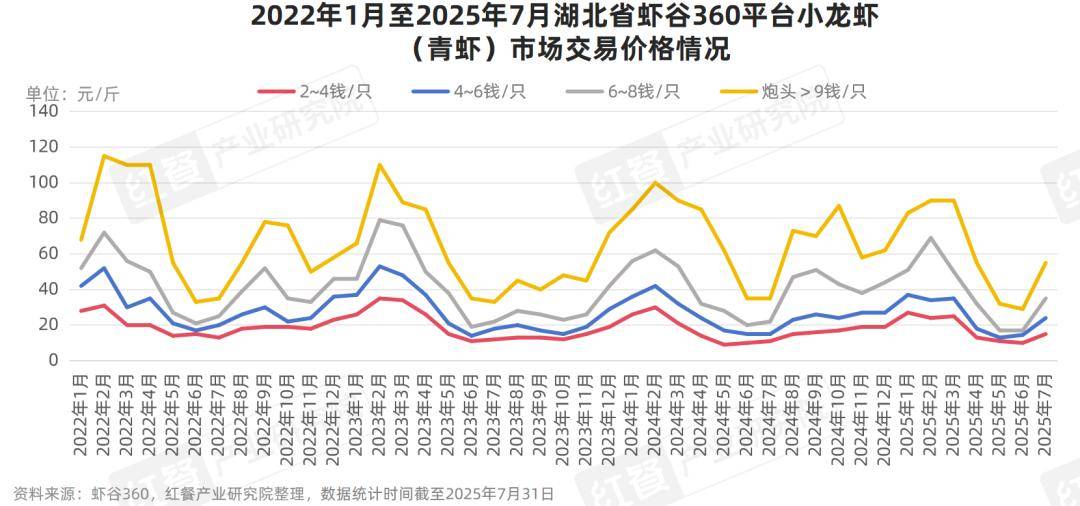
Core Viewpoint - The small lobster industry is experiencing significant price fluctuations, with prices rising sharply after a period of low prices, impacting restaurant revenues and prompting a need for brands to build core competitiveness amidst these changes [1][3][5]. Industry Overview - The average price of small lobsters in early June 2025 was at a historical low, with prices for 6-8 money (1 money = 5 grams) lobsters at 17 yuan per jin and 29 yuan per jin, representing declines of 66.7% and 65.1% respectively from January 2025 [3]. - By July 2025, prices surged to 35 yuan per jin and 55 yuan per jin for the same categories, indicating a rapid market reversal [5]. - The small lobster industry is transitioning from a rapid development phase to a transformation and upgrade phase, driven by both the breeding and restaurant sectors [6][7]. Breeding and Restaurant Sector Dynamics - The breeding sector is undergoing deep transformation, injecting new momentum into the entire industry chain, while the restaurant sector is characterized by regional deep cultivation and a drive to expand into national markets [6][11]. - The small lobster industry is marked by a high overall output value and a strong integration of primary, secondary, and tertiary industries, with a value ratio of approximately 2:1:7 [11]. Market Trends and Innovations - The popularity of pre-made small lobster dishes is rising, with various brands entering the market to offer diverse flavors through e-commerce platforms [11]. - Local brands are deeply rooted in their respective markets, with over 80% of small lobster brands having 10 or fewer outlets, highlighting a lack of scale [13][15]. - Regional brands such as "肥肥虾庄" and "靓靓蒸虾" are expanding beyond their local markets, with "肥肥虾庄" opening stores in multiple cities [18]. Product and Service Innovations - Small lobster brands are innovating in product offerings, introducing diverse flavors and combining small lobsters with other food categories to create a varied product matrix [19]. - The emergence of self-service small lobster restaurants is enhancing customer engagement, allowing diners to select and cook their lobsters according to personal preferences [21].
虾业遭关税冲击,印尼瞄准中国市场
Huan Qiu Shi Bao· 2025-08-07 22:50
Group 1 - The Indonesian shrimp industry is accelerating its efforts to explore the Chinese market due to the impact of increased tariffs imposed by the United States, which has significantly affected exports [1][2] - The U.S. tariffs on Indonesian products were initially set at 32% and later reduced to 19%, but this still poses a serious threat to the shrimp industry, which heavily relies on the U.S. market [1] - In 2022, Indonesia's shrimp exports to the U.S. reached $1.68 billion, accounting for 60% of its total shrimp exports, and the 19% tariff could lead to a 30% decline in overall shrimp export volume, threatening the livelihoods of approximately 1 million workers [1] Group 2 - Prior to the tariff impact, China accounted for only 2% of Indonesia's shrimp exports, but the industry is now shifting focus to markets such as China, the Middle East, South Korea, and the European Union [2] - The Indonesian shrimp farmers' association is actively seeking to negotiate with Chinese importers and other stakeholders, with the goal of capturing a 20% share of China's annual shrimp import market, which is approximately 1 million tons [2]