
新能源

Search documents
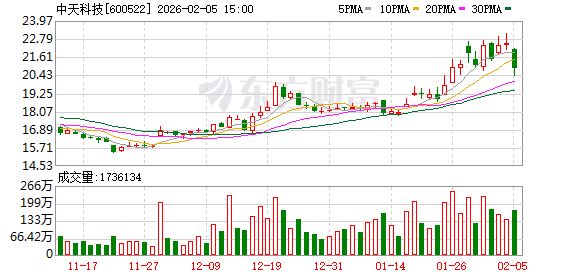
中天科技:公司构建多元技术矩阵,打通“发-储-用”全链条产业生态
Zheng Quan Ri Bao· 2026-02-05 12:13
Core Viewpoint - Zhongtian Technology is focusing on the forefront of energy transformation, aiming to become a builder of smart energy ecosystems and drive a zero-carbon future through its diverse technology matrix and comprehensive solutions in the renewable energy sector [2] Group 1: Company Strategy - Zhongtian Technology is deeply engaged in key materials and core equipment for renewable energy [2] - The company is constructing a multi-dimensional technology matrix to support its operations [2] - It aims to integrate the entire "generation-storage-usage" industrial ecosystem [2] Group 2: Industry Positioning - Zhongtian Technology is positioned to provide global solutions for renewable energy equipment manufacturing and system integration [2] - The company is committed to contributing to the development of a smart energy ecosystem [2]


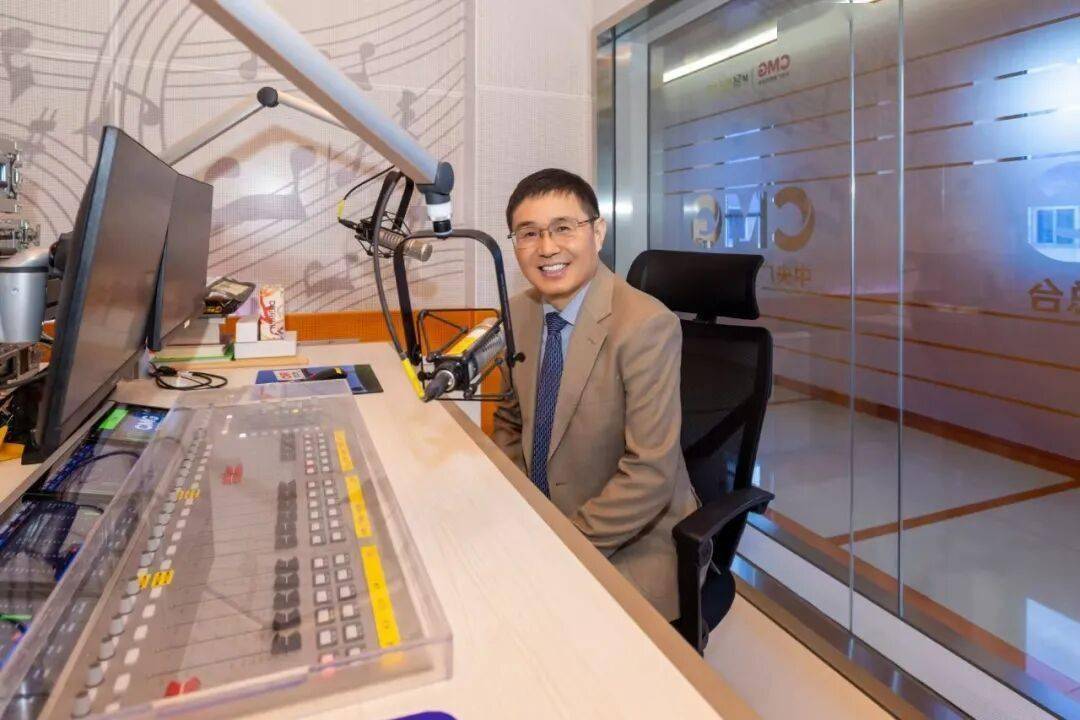
报时中国经济丨钟宝申:技术创新的终点,是让每个人用上“放心电”
Sou Hu Cai Jing· 2026-02-05 10:43
Core Insights - The chairman and general manager of Longi Green Energy, Zhong Baoshen, emphasized that humanity is on the brink of a green industrial revolution, with a fundamental shift in the energy system from resource attributes to technological attributes [1][3] - The goal of this transformation is to build a more inclusive and resilient zero-carbon future [1] Group 1: Energy Transformation - The ultimate significance of energy is to spread development opportunities universally, akin to sunlight [3] - The transition to green electricity as a global infrastructure will reshape the underlying logic of industrial development and help bridge regional energy gaps, promoting global fairness and sustainable development [3] - Energy transformation is a complex system engineering that connects industry, economy, and people's livelihoods [3] Group 2: Technological Innovation - The future of energy lies at the intersection of technology and people's livelihoods, focusing on providing affordable, reliable, and clean electricity to everyone [3][4] - Continuous innovation is essential for renewable energy to evolve from a supplementary role to a primary energy source, enhancing coverage, reliability, and economic viability [4] - Artificial intelligence is becoming a new engine for optimizing the energy system, enabling a shift from traditional mechanical scheduling to intelligent collaboration [4] Group 3: China's Leadership in Renewable Energy - China has made a historic leap from being a latecomer to a global leader in green technology and supply chains [3][4] - The key to sustainable high-quality development in the industry lies in deeper self-innovation and breakthroughs in original technologies [3] - China's renewable energy industry is positioned to contribute significantly to the global energy transition, leveraging its accumulated technological and industrial advantages [4]
和展能源:公司新能源业务已取得一定进展,多个项目已获得指标和核准
Zheng Quan Ri Bao Zhi Sheng· 2026-02-05 10:09
Core Viewpoint - The company has made significant progress in its renewable energy business, focusing on wind power, solar energy, and energy storage, with multiple projects set to be developed by 2026 [1] Group 1: Business Focus - The company is primarily concentrating on the full-cycle development and operation of renewable energy projects, including wind power, solar energy, and energy storage [1] - The company has undergone a business transformation over the past two years, leading to advancements in its renewable energy sector [1] Group 2: Project Development - Several projects have received necessary approvals and indicators, with plans for development and construction to commence in 2026 [1] Group 3: Investor Relations - The company aims to enhance investor relations management and improve the quality of information disclosure [1] - There is a commitment to elevate the overall quality of the listed company and increase its long-term investment value [1]

热门赛道速递|A股市场“春节效应”大数据观察,这些赛道值得关注!
和讯· 2026-02-05 09:59
Core Viewpoint - The article discusses the "Spring Festival Effect" in the A-share market, emphasizing that it is not merely about price increases or decreases, but rather about market rhythm and style shifts during this period [3][4]. Group 1: Market Trends - Historical data from 2015 to 2025 indicates that the A-share market exhibits systematic and quantifiable characteristics around the Spring Festival, particularly in overall trends and style rotations [5]. - Pre-festival, market sentiment is generally stable, with the average increase of the Shanghai Composite Index and CSI 300 Index being approximately 0.62% and 0.77% respectively in the last five trading days before the festival, and an upward probability of about 63.6% [6][11]. - Post-festival, the market often enters a sustained upward phase, with the average increase of major indices turning positive within the first ten trading days after the festival, showing an upward probability of 72.7% for the Shanghai Composite Index and 81.8% for the CSI 1000 Index [11][12]. Group 2: Style Rotation - There is a clear rotation in market style before and after the Spring Festival. Before the festival, larger-cap stocks tend to outperform due to lower trading activity and higher certainty in earnings, as indicated by the better performance of the CSI 300 Index compared to the CSI 1000 Index [13][15]. - After the festival, the market sees a significant reversal in style, with the CSI 1000 Index showing an average increase of 2.47% in the first five trading days post-festival, outperforming the CSI 300 Index, which only saw a marginal increase of 0.01% [15][16]. - This shift indicates a return of funds and an increase in risk appetite, with investors favoring smaller-cap growth stocks that are more sensitive to liquidity [15][20]. Group 3: Future Market Predictions - For the 2026 Spring Festival, the report suggests a high probability of a phase of market recovery post-festival, driven by valuation levels, policy expectations, and capital inflows, although the path may be more complex than in previous years [18][19]. - The rotation logic of preferring defensive large-cap stocks before the festival and more elastic assets afterward remains relevant, with a focus on sectors that align with current policy support for technological innovation and new production capabilities [20][21]. - Key sectors to watch post-festival include artificial intelligence, high-end manufacturing, and renewable energy, which are expected to benefit from strong policy drivers and high industry growth [21][22].

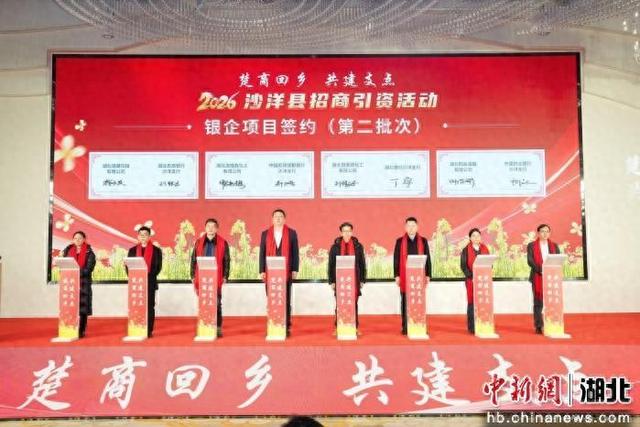
沙洋楚商回乡 签约8大项目引资70.8亿元
Zhong Guo Xin Wen Wang· 2026-02-05 09:34
Core Viewpoint - The "Chushang Returns to Build a Support Point" investment promotion event in Shayang County resulted in the signing of 8 key industrial projects with a total investment of 7.08 billion yuan, alongside intention agreements worth 1.178 billion yuan with 8 enterprises, focusing on advanced sectors such as new materials, new energy, high-end equipment manufacturing, and green food processing [1][3]. Group 1 - The event gathered over 130 representatives from Shayang, including business leaders and alumni, to discuss cooperation and development [1]. - Shayang County's Secretary Chen Wei emphasized the importance of the 14th Five-Year Plan period for the county's development and expressed a strong desire for returning entrepreneurs to invest [3]. - The county aims to create a favorable investment environment by adhering to principles that support and enrich businesses, ensuring entrepreneurs feel secure in their investments [3]. Group 2 - During the event, guests visited various local sites, including the Shayang Education City and the Huazhong Clothing Industrial Park, to understand the county's development trends and investment environment [3]. - Chengdu Jingmen Chamber of Commerce President Guan Weihua highlighted the positive investment opportunities in Shayang and expressed intentions to promote the region to attract more entrepreneurs [5]. - Shayang County's GDP growth is projected to reach 5.5% by 2025, ranking third in Jingmen City, with the county holding multiple accolades for its urban development and unique agricultural brands [5]. Group 3 - The county is focusing on three key industries: glass, film, and wind power, transitioning from single-point breakthroughs to cluster development during the 14th Five-Year Plan [5]. - Minghong Group has established a strong local presence with new projects annually, leading in photovoltaic and float glass production capacity in the province [5]. - Tian Shun Wind Power has developed the only complete wind power equipment industrial chain park in the province, enhancing the local industrial ecosystem [5].
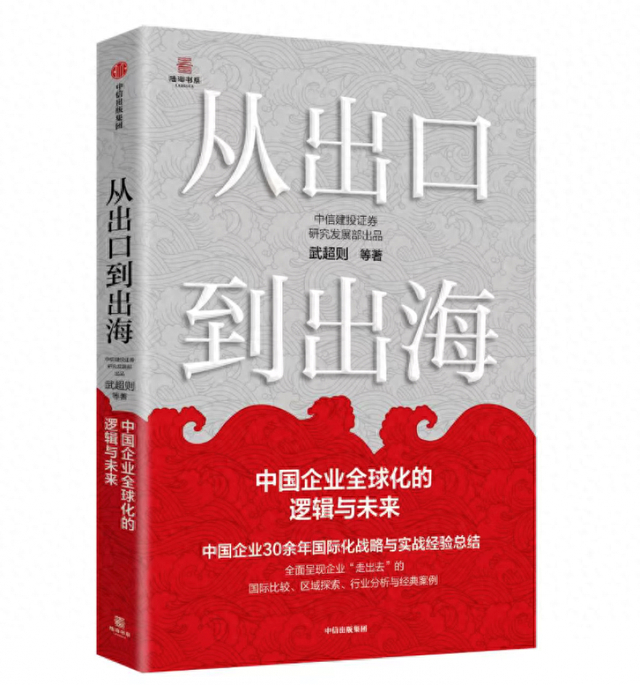
中国企业出海的十大展望
Hua Xia Shi Bao· 2026-02-05 09:01
Group 1: Global Expansion of Chinese Manufacturing - The trend of Chinese manufacturing companies expanding globally is accelerating, particularly in tariff-sensitive sectors such as automotive, consumer electronics, and machinery, which are relocating production to countries with lower tariffs or favorable policies to reduce costs and mitigate trade risks [2][3] - Chinese manufacturers are diversifying their global supply chains by exploring emerging markets in Latin America, the Middle East, and Africa, thereby enhancing supply chain stability and risk resilience [2][3] - The implementation of regional economic cooperation mechanisms and free trade agreements, such as RCEP, is creating a more favorable policy environment for the globalization of Chinese manufacturing [3] Group 2: Overseas Mergers and Acquisitions - Chinese manufacturing companies are leveraging overseas mergers and acquisitions to transition from OEMs to self-owned brands, gaining market share, sales channels, and high-end brand images [3][4] - The focus of these acquisitions is shifting towards strategic alignment in brand, market, technology, and supply chain integration, enhancing global competitiveness [3][4] - Companies like Haier exemplify this trend by achieving breakthroughs in the European and American markets through acquisitions, thereby strengthening their global competitive advantage [3][4] Group 3: Labor-Intensive Industries and Cost Migration - Labor-intensive industries are increasingly relocating to low-cost regions such as Southeast Asia and South Asia, benefiting from local labor advantages and policy support [4][5] - The trend of regional industrial clusters is forming as companies seek to reduce costs and improve response efficiency through localized production [4][5] - The global supply chain is becoming more regionalized, with multinational companies establishing collaborative industrial clusters in emerging regions to enhance supply chain resilience [4][5] Group 4: Resource Sector Globalization - Chinese resource companies are accelerating their global expansion by constructing complete industrial chains from mining to processing and application, enhancing their control and influence in the global resource sector [6][7] - The focus is shifting from merely acquiring resources to deep integration of upstream and downstream operations, utilizing diverse cooperation methods such as equity investments and joint ventures [6][7] - Notable examples include the acquisition of cobalt mines in the Democratic Republic of Congo and lithium companies in Australia, showcasing the strategic foresight of Chinese enterprises [6][7] Group 5: Digital Transformation and Brand Value - Chinese companies are transitioning from low-cost manufacturing to brand value creation, utilizing digitalization to enhance brand building and global competitiveness [9][10] - Companies like Anker and Xiaomi are leveraging localized operations and digital marketing to establish strong brand identities and achieve significant sales growth [9][10] - The focus on digital transformation is enabling companies to create differentiated brand matrices and improve supply chain management, enhancing market competitiveness [9][10] Group 6: Compliance and Localization - Compliance and localized operations are becoming core competitive advantages for Chinese enterprises in international markets, with a focus on establishing robust global compliance systems [11][12] - Companies are actively building global compliance monitoring systems to ensure adherence to regulations in areas such as data security and environmental standards [11][12] - The ability to navigate compliance challenges is increasingly seen as integral to brand value and international market acceptance [11][12] Group 7: Policy Support for Globalization - Recent policy initiatives from the Chinese government are creating unprecedented opportunities for enterprises to expand internationally, emphasizing high-level openness and integration into the global economy [13][14] - The focus on developing new production capabilities and promoting the integration of the real economy with the digital economy is expected to provide clear guidance for companies in the new round of global competition [13][14] - Structural monetary policies are anticipated to offer targeted financial support to foreign trade enterprises, aiding their internationalization efforts [14] Group 8: Cultural and Ideological Export - Chinese enterprises are increasingly integrating cultural content with brand ideology to enhance cultural soft power and global brand value [18][19] - The growth of cultural consumption globally is driving the export of diverse cultural products, including games and films, with significant revenue growth reported [18][19] - The focus on building a robust IP ecosystem and localizing content production is crucial for enhancing global appeal and emotional resonance with audiences [18][19]



宁德时代:深度布局云南 多维度战略合作开启 “绿电 + 先进制造” 新征程
Zhong Guo Qi Che Bao Wang· 2026-02-05 07:22
Core Insights - CATL has signed a comprehensive strategic cooperation agreement with the Yunnan Provincial Government, marking the initiation of extensive collaboration in "green electricity + advanced manufacturing" across multiple fields [1][3] - The signing ceremony included various agreements with local enterprises, establishing a solid framework for future cooperation [3] Group 1 - The cooperation will focus on three core areas: deep development and utilization of Yunnan's green energy, accelerating the electrification of the transportation and logistics network, and systematically building charging and battery swapping infrastructure along with a comprehensive energy service network [3] - The collaboration aims to create an integrated green industrial ecosystem covering "source, network, load, and storage," contributing to the optimization and upgrading of Yunnan's energy structure and promoting high-quality green industrial development [3]

市场监管总局:去年在脑机接口等领域牵头制定发布ISO、IEC国际标准285项,增长26.7%
Sou Hu Cai Jing· 2026-02-05 04:39
Core Viewpoint - The State Administration for Market Regulation (SAMR) is promoting the internationalization of Chinese standards, aiming for high-level openness by 2025 through standard interconnectivity and cooperation with international standards organizations [2][3]. Group 1: Standardization Efforts - By 2025, SAMR aims to achieve an overall international standard conversion rate of 88.9%, with 1,510 international standards converted in that year, particularly in cultural and meteorological fields reaching a 100% conversion rate [2]. - In the "going out" aspect, SAMR plans to lead the formulation and release of 285 ISO and IEC international standards in fields such as renewable energy and traditional medicine, representing a year-on-year growth of 26.7% [2]. - Proposals for 505 international standards in biotechnology, artificial intelligence, and industrial networks will be submitted to ISO and IEC, showing a year-on-year increase of 15.8% [2]. Group 2: Language and Communication - SAMR will deploy 1,176 foreign language versions of standards in areas like "new three samples" and large complete equipment by 2025, with 441 foreign language standards published in artificial intelligence and engineering machinery [3]. - The agency will conduct specialized publicity for foreign language versions of standards through platforms like the China International Import Expo and the China-Arab States Expo, making Chinese standards more accessible globally [3]. Group 3: International Cooperation - By 2025, SAMR aims to sign multiple standardization cooperation documents with key countries, having established 130 agreements with 75 countries and organizations [3]. - The first Shanghai Cooperation Organization Standardization Cooperation Meeting and the eighth Hongqiao International Economic Forum Standard Sub-Forum have been successfully held, expanding the network of standardization cooperation [3]. - Future initiatives will include pilot projects for standard system openness, inviting international experts to participate in the construction of China's standard system, and enhancing the supply of foreign language standards in key areas [3].
学习规划建议每日问答丨如何理解发展分布式能源
Xin Hua Wang· 2026-02-05 03:13
Core Viewpoint - The development of distributed energy is emphasized as a crucial component of the new energy system, which is significant for optimizing energy structure, promoting energy conservation and emission reduction, and advancing sustainable economic and social development [1][2]. Group 1: Considerations for Development - The deployment of distributed energy aims to better promote carbon peak and carbon neutrality, as it aligns with the resource and technical characteristics of renewable energy, leading to significant carbon reduction effects [2]. - It addresses the energy needs of the population by providing flexible energy solutions that can cater to various scenarios, especially in remote areas and for users with high energy stability requirements [2]. - The development enhances energy security by increasing the supply of clean energy and reducing reliance on large energy systems, while also serving as backup and peak-shaving resources [2]. - It encourages social investment and the growth of related industries due to its smaller project scale and lower investment thresholds compared to large energy projects [2]. Group 2: Key Development Areas - Focus on constructing zero-carbon parks in regions with high industrial loads and favorable resource conditions, integrating various energy sources to meet diverse energy demands [3]. - Actively promote zero-carbon rural development through pilot projects that implement distributed solar and wind energy solutions [3]. - Advance the integration of photovoltaic systems in buildings, encouraging the use of rooftops and facades for solar energy generation [3]. - Strengthen the integration of clean energy with transportation by developing charging and hydrogen stations along transportation infrastructure [3]. - Strategically plan the construction of distributed natural gas energy stations to support peak shaving and backup needs in areas with reliable gas supply [3]. Group 3: Quality Development Precautions - Prevent blind expansion of scale by carefully planning the development scale and layout of distributed energy projects [4]. - Ensure adequate supporting infrastructure by scientifically constructing distribution networks and enhancing the capacity for renewable energy integration [4]. - Avoid unfair competition by regulating the development and management of distributed solar energy, promoting a fair market environment for all investment entities [4].
锦富技术:一场由易主驱动的蜕变之路
Quan Jing Wang· 2026-02-05 02:33
Core Insights - The article discusses the evolution of Jinfu Technology, highlighting its ability to adapt to market changes and seize new opportunities in various industries, particularly in the fields of new energy, robotics, and liquid cooling technology [1][10][15] Historical Context - Jinfu Technology was originally established as Suzhou Jinfu Technology Co., Ltd. in 1998 by founders Fu Guoping and Yang Xiaowei [2] - The company initially focused on optical display film devices and went public on the Growth Enterprise Market in October 2010, achieving significant revenue growth in its first year with revenues of 768 million yuan and net profits exceeding 80 million yuan [3] Challenges Faced - The company faced increasing competition from new entrants in the LCD market, leading to a decline in its core business profitability and a need for strategic change [4][6] - Despite attempts at external acquisitions to navigate these challenges, the company struggled to maintain its competitive edge and faced a decline in its core business performance [5][7] Strategic Shift - In 2019, a significant change occurred when the company’s controlling stake was transferred to the Jiangsu Province Taixing High-tech Industrial Development Zone Management Committee, marking a shift to state-owned control [8] - The new management implemented a strategic focus on core businesses such as optical materials and automation equipment, while scaling back on non-core areas like photovoltaics and data centers [9] Current Developments - Since the strategic shift, Jinfu Technology has seen steady revenue growth, with a clear focus on high-end manufacturing and new energy sectors [10] - The company has made notable advancements in high-end detection equipment, particularly with a custom-developed AOI detection device for NVIDIA, which has been recognized as a key component in their data centers [11] Future Outlook - Jinfu Technology is actively expanding into emerging sectors such as robotics and liquid cooling, positioning itself to capitalize on anticipated growth in these areas [14][15] - The company is focusing on enhancing its core competencies in detection technology and system integration, which are critical for competing in the evolving robotics market [12][15] - In the liquid cooling sector, the company is addressing the urgent cooling needs of high-performance AI chips, establishing itself as a key player in the infrastructure supporting AI capabilities [16]
